
Chandigarh to Tirthan Valley Winter Drive: Snow & Safety Guide
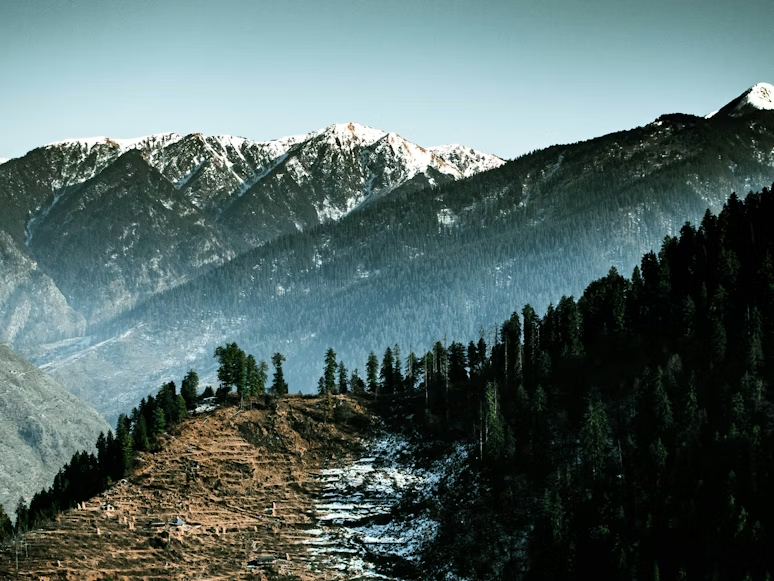
The Chandigarh to Tirthan Valley drive is considered safe in winter when the Aut–Banjar route is open and weather conditions are stable. Snowfall typically affects higher elevations near Jalori Pass, not the main valley road. Travelling during daylight, monitoring local advisories, and preparing the vehicle for cold conditions are critical for safety.
In this Blog
Chandigarh to Tirthan Valley Route in Winter
The Chandigarh to Tirthan Valley route is preferred in winter because it avoids extreme high-altitude passes and remains connected via national highways for most of the journey.
The drive transitions from plains to mid-hills gradually, reducing sudden weather shocks that often cause closures on steeper Himalayan routes.
Primary winter route overview:
- Chandigarh → Bilaspur (plains to foothills)
- Bilaspur → Mandi (river valley driving)
- Mandi → Aut (highway tunnel zone)
- Aut → Banjar → Tirthan Valley villages
Why Aut–Banjar is critical in winter
Aut serves as the gateway to Tirthan Valley and houses the Atal Tunnel diversion infrastructure, snow-clearing equipment, and traffic monitoring units. This makes the stretch more reliable than interior mountain roads during winter disruptions.
Distance, Driving Time, and Seasonal Variations
The Chandigarh to Tirthan Valley distance varies based on the final village but averages 250–270 km.
Seasonal driving time comparison:
- Summer: 8–9 hours
- Winter (clear weather): 9–11 hours
- Winter (post-snowfall): 12–14 hours
Winter delays are usually caused by:
- Fog-induced slowdowns near Bilaspur
- Temporary traffic holds near Aut
- Reduced speed on narrow village roads
Buffer time is essential, especially when returning to Chandigarh.
Winter Weather Conditions Along the Route
Winter weather along this route changes in stages rather than all at once.
Typical winter pattern:
- Chandigarh to Bilaspur: Fog and cold mornings
- Bilaspur to Mandi: Cold rain or overcast conditions
- Mandi to Aut: Sharp temperature drops
- Beyond Aut: Frost, ice, and occasional snowfall
How black ice affects driving
Black ice forms on shaded mountain curves where sunlight does not reach. It is visually undetectable and most common early morning and after sunset, making controlled speeds and engine braking crucial.
Snowfall Impact and Road Safety Considerations
Snowfall impacts different parts of the drive unevenly.
Low-risk zones:
- Chandigarh to Mandi
- Aut to Banjar (after clearance)
High-risk zones:
- Banjar to Shoja
- Shoja to Jalori Pass
- Narrow interior village roads post-snowfall
How authorities manage winter safety
Local administration may:
- Temporarily stop uphill traffic
- Enforce tyre chain usage
- Redirect vehicles to waiting zones near Banjar
These measures prioritise safety over speed and should be factored into travel planning.
Best Time and Daylight Window for the Drive
Winter daylight is limited, especially in valleys.
Why early starts matter:
- Better visibility before fog thickens
- Softer road surfaces before freezing sets in
- Easier navigation of hairpin bends
Ideal arrival strategy
Reaching Tirthan Valley by mid-afternoon allows time to:
- Assess road conditions near accommodation
- Avoid frozen village paths after sunset
- Coordinate assistance if required
Vehicle Preparation
Winter readiness goes beyond vehicle type.
Cold-weather essentials:
- Fully functional heater and defogger
- Battery health check (cold drains batteries faster)
- Windshield washer fluid rated for low temperatures
- Emergency torch and reflective triangle
Sedan vs SUV in winter
Sedans manage the main valley roads well in dry conditions. SUVs offer better clearance on slushy or uneven patches but do not replace cautious driving.
Places to Visit in and Around Tirthan Valley in Winter
Winter changes how Tirthan Valley is experienced. Instead of covering long distances, travel focuses on short, accessible locations that remain motorable and safe even during colder months.
Great Himalayan National Park (Eco Zone Areas)
The Great Himalayan National Park (GHNP) lies at the heart of the valley and remains a defining landmark year-round.
In winter:
- Entry is limited to buffer and eco-zone areas
- Higher-altitude core zones may be inaccessible due to snow
- Short forest walks near village boundaries are still possible
Snow-dusted deodar forests and quiet trails make the lower GHNP areas ideal for slow exploration without technical trekking.
Tirthan River and Riverside Villages
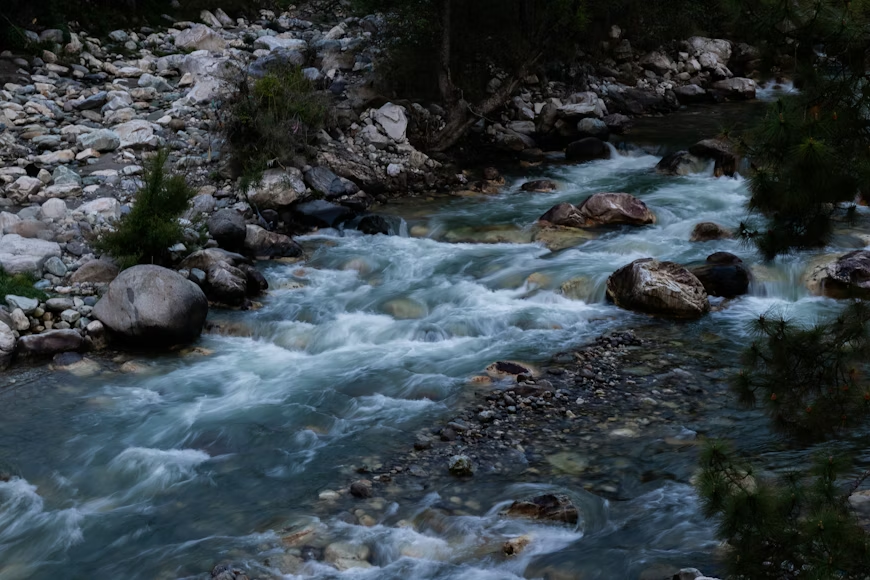
The Tirthan River continues to flow year-round, creating striking contrasts against winter landscapes.
Winter highlights include:
- Clear riverbanks with minimal tourist footfall
- Calm stretches near Gushaini and nearby villages
- Frost-covered mornings along the water
These areas are easily accessible from the main road and do not require additional driving into snow-prone zones.
Gushaini Village
Gushaini serves as one of the most practical and accessible villages in Tirthan Valley during winter.
Why it works well in winter:
- Located along a maintained road
- Proximity to basic shops and supplies
- Central access to nearby villages and river stretches
It functions as a natural base for winter travellers who prefer limited daily driving.
Banjar Town
Banjar is the administrative and connectivity hub for the region and remains fully operational throughout winter.
Key winter advantages:
- Reliable road access even after snowfall
- Fuel stations, ATMs, and medical access
- Local markets that remain open year-round
Many travellers underestimate Banjar, but in winter it becomes a logistical anchor for the entire valley.
Serolsar Lake (Weather Permitting)
Serolsar Lake, accessed via Jalori Pass, is a conditional winter visit.
Important winter considerations:
- Accessible only if Jalori Pass is open
- Requires checking local advisories on the same day
- Snow cover may restrict walking access
When conditions allow, the snow-covered approach offers a dramatically different experience compared to other seasons.
Shoja (Subject to Road Conditions)
Shoja lies beyond Banjar and sits at a higher elevation, making it more weather-sensitive.
In winter:
- Access depends on recent snowfall and clearance
- Roads may close temporarily
- Visits are best planned as short, same-day drives
Shoja is recommended only during clear weather windows, not as a guaranteed winter stop.
Fuel Stops, Connectivity, and Emergency Access
Infrastructure reliability improves as you approach Aut but reduces deeper into the valley.
Route essentials:
- Fuel pumps: Mandi, Aut, Banjar
- ATMs: Available till Aut (limited beyond)
- Mobile networks: Jio and Airtel work reliably till Gushaini
- Medical facilities: Major hospitals in Mandi and Kullu
Short power outages may occur after snowfall, but road clearance to the valley is prioritised.
During heavy snow, response times may increase. Staying in accessible villages improves emergency reach compared to isolated high-altitude locations.
Where to Stay in Tirthan Valley During Winter
Accommodation choice affects winter travel comfort and accessibility. Tirthan Valley’s inhabited villages like Banjar and Gushaini remain accessible even in colder months, making them practical bases for winter travellers.
StayVista properties in and around Tirthan Valley are typically located in accessible village zones rather than high-altitude snowbound areas. These villas focus on:
- Reliable road access in winter
- Heated indoor spaces and insulated construction
- Proximity to motorable roads for safer arrivals
Choosing accommodation closer to the main valley road reduces dependency on snow clearance and local transport.
What to Expect in Tirthan Valley During Winter
Winter changes how the valley functions.
Seasonal realities:
- Fewer tourists and quieter villages
- Limited cafés and shops operating on shorter hours
- Clear mountain air and snow-dusted landscapes
- Slower pace of local life
This season suits travellers seeking calm environments rather than activity-heavy itineraries.
Winter Driving Tips for Tirthan Valley
Experience-based precautions matter more than generic advice.
- Avoid sudden steering corrections on icy bends
- Keep headlights on during foggy daylight hours
- Listen for local advisories near Aut and Banjar
- Do not rely solely on navigation apps for interior roads
- Keep at least half a tank of fuel at all times
Small decisions significantly affect winter driving outcomes.
FAQs
Is the Chandigarh to Tirthan Valley drive open in January?
Yes. The main route usually remains open, though temporary closures may occur after heavy snowfall near higher elevations.
Does snowfall block access to Tirthan Valley?
Snowfall rarely blocks the valley itself. Disruptions are more common on routes beyond Banjar towards Jalori Pass.
Is winter a good time to visit Tirthan Valley?
Winter suits travellers seeking solitude, cold-weather scenery, and quieter villages rather than outdoor trekking.
Are snow chains required for village roads?
They are not required for main valley roads but can be useful for slushy or steep village approaches.
Can taxis be arranged locally in winter?
Yes, but availability may be limited during snowfall. Self-drive planning offers greater flexibility.
Is food availability affected in winter?
Basic supplies remain available, but choice is limited. Staying at accommodations with in-house meals is advisable.
Is night driving safe in winter?
Night driving beyond Aut is not recommended due to ice, wildlife movement, and reduced visibility.
Do ATMs work reliably in winter?
ATMs function till Aut, but outages can occur. Carry sufficient cash.