
Dol Jatra 2026 in Kolkata: Date, Rituals & Best Places to Visit
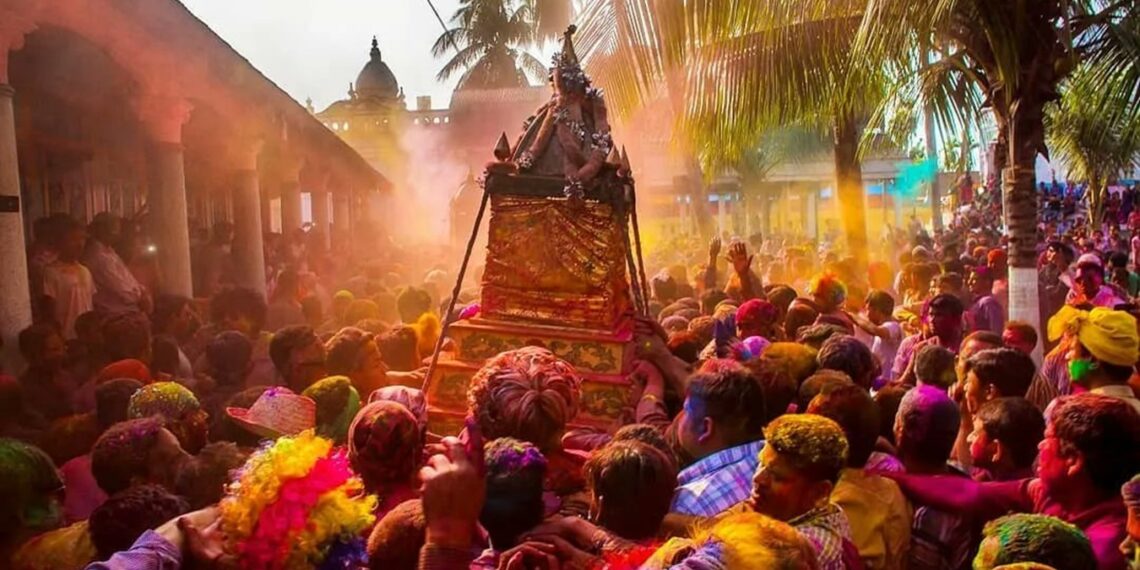
Dol Jatra 2026 in Kolkata will be celebrated on Dol Purnima, the full moon day of Phalguna, which falls on 3 March 2026 (Tuesday). Dol Purnima 2026 timing is expected around early morning hours (exact tithi timing to be confirmed by regional Panchang). The festival marks the worship of Radha-Krishna and coincides with Holi in West Bengal.
In this Blog
What is Dol Jatra and what is the dol jatra meaning?
Dol Jatra is a Vaishnav festival celebrating Lord Krishna and Radha, observed on the full moon day (Purnima) of the Hindu month of Phalguna.
In simple terms, it is a spring festival in eastern India where idols of Radha and Krishna are placed on decorated swings (dol), worshipped and taken out in processions with music, colours, and devotional songs.
The festival is called দোলযাত্রা (dol jatra in Bengali), and it holds deep cultural significance in West Bengal, especially among Vaishnav communities influenced by the Bhakti movement.
It is also known as:
- Doljatra
- Dola Jatra
- Dol Utsav
- Dol Purnima
States Where Dol Purnima / Dol Jatra Is Celebrated
Dol Purnima is regionally known as Dol Jatra, Dol Yatra or Dol Utsav, and is celebrated most prominently in certain eastern states.
- West Bengal: Celebrated as Dol Purnima, Dol Jatra or Dol Utsav, with Radha–Krishna processions and colour play, especially in places like Nabadwip, Mayapur and Shantiniketan.
- Odisha: Known as Dol Jatra / Dola Purnima, with decorated swings (dola) carrying Radha–Krishna idols in processions, notably in Puri and other Vaishnav centres.
- Assam: Also observes Doul/Doul Jatra in Vaishnavite satras (monasteries), combining kirtan, processions and colours.
When is Dol Purnima 2026? Date and timing details
Here are the precise calendar and muhurat details:
- Dol Purnima / Dol Jatra 2026 Date: Tuesday, 3 March 2026
- Purnima Tithi Begins: 02 March 2026, 05:55 PM IST
- Purnima Tithi Ends: 03 March 2026, 05:07 PM IST
- Moonrise (approx.): around 06:21 PM IST
Suggested Auspicious Timings on 3 March 2026 (IST)
These windows are traditionally recommended for puja, offerings, rites and devotional activity before the end of tithi:
- Laabh Muhurat: 10:49 AM – 12:17 PM
- Amrit Muhurat: 12:17 PM – 01:44 PM
- Shubh Muhurat: 03:12 PM – 04:39 PM
Devotees are advised to complete idol worship, offerings and colour rituals while the Purnima Tithi is active (before 05:07 PM).
In West Bengal, rituals are typically performed during the daytime, while colour celebrations follow temple worship and processions.
How is Dol Jatra celebrated in West Bengal?
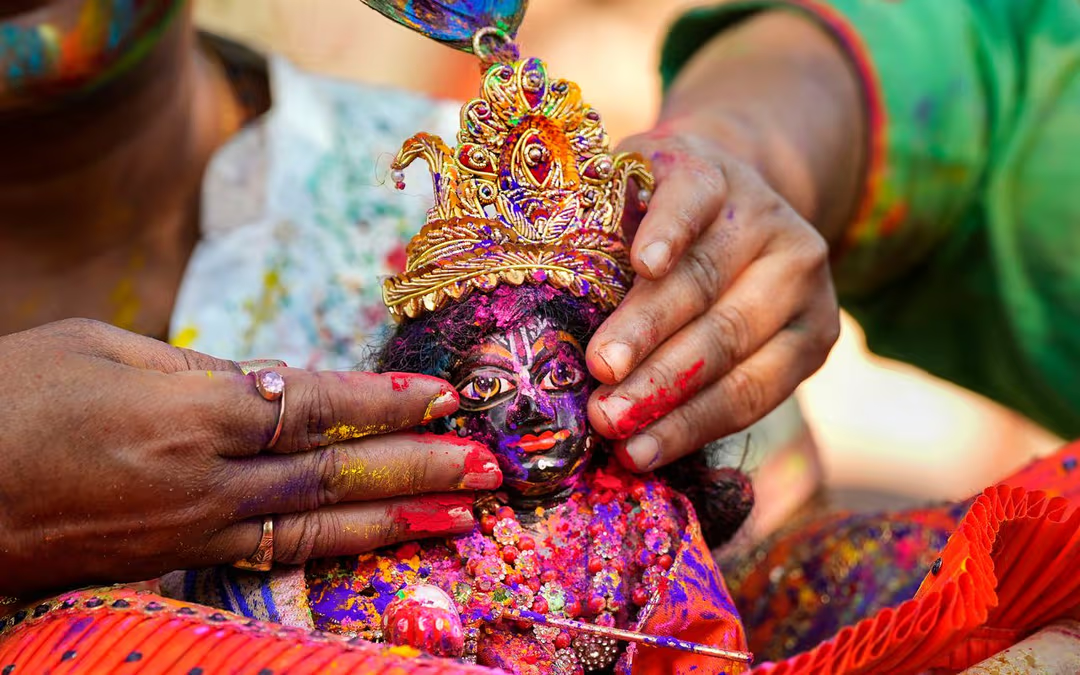
Dol Jatra in West Bengal blends devotion, culture and community celebration. Unlike the more boisterous Holi celebrations in North India, the Bengali observance is more ritualistic before colours take over.
Key elements include:
- Idols of Radha and Krishna placed on decorated palanquins
- Priests swinging the idols ceremonially (symbolising divine play)
- Devotional songs (kirtan)
- Application of abir (coloured powder) on deities and devotees
- Cultural performances and community feasts
The festival has strong associations with the teachings of Chaitanya Mahaprabhu, who popularised Krishna bhakti in Bengal.
Where to celebrate Dol Jatra 2026 in Kolkata?
If you are searching for dol jatra in West Bengal, Kolkata offers some of the most culturally rich experiences.
1. ISKCON Temple Kolkata
A major spiritual hub for Vaishnav followers. Expect:
- Grand Radha–Krishna swing (dol) rituals
- Structured puja aligned to auspicious timings on Dol Purnima
- Devotional bhajans, kirtans, and parikrama
- Community gatherings with food offerings and abir application
It’s ideal if your focus is religious observance and temple rituals. Renowned for devotional celebrations, kirtans, temple rituals and structured puja windows aligned to auspicious timings. Arrive early to avoid heavy crowds.
2. Dakshineswar Kali Temple
Although primarily dedicated to Goddess Kali, the surrounding areas witness vibrant Dol celebrations, especially among Vaishnav groups.
Temples around Dakshineswar Kali Temple and nearby ghats host community rituals that blend:
- Morning idol processions
- Local singing and chanting
- Devotee participation
These areas are often quieter and more traditional compared to larger, more organised temple festival events.
3. Kumartuli
Kumartuli — the artisan district — often hosts local processions and swing decorations created by makers of festival idols. Community groups may organise smaller street celebrations with:
- Colour exchanges
- Devotional singing
- Shared sweets and social interaction
This feels very Bengali and community-centric rather than tourist-oriented. It offers a more local, cultural experience compared to large temples.
4. Santiniketan (Day Trip Option)
About 160–170 km from Kolkata, Santiniketan’s Basanta Utsav (spring festival) dives deeper into cultural arts, music, and collective colour celebration inspired by Rabindranath Tagore’s traditions. It features:
- Student performances
- Rabindra Sangeet and folk dances
- Joyful colour play tied to art and culture rather than just ritualistic rites
Visitors often pair temple-based devotion in Kolkata with this day trip for a broader Dol Jatra experience.
Dol Jatra vs Holi: What’s the difference?
Here is a simplified comparison for quick reference:
| Aspect | Dol Jatra | Holi |
| Region | Primarily West Bengal & Odisha | Pan-India |
| Focus | Radha-Krishna worship | Celebration of spring & Holika Dahan |
| Ritual Base | Vaishnav tradition | Mythology of Prahlad & Holika |
| Celebration Style | Processions + devotional colours | Large-scale public colour play |
In West Bengal, Dol Jatra and Holi often occur on the same day, but the morning is typically devotional, and the afternoon becomes more festive.
What rituals are performed during Dol Jatra?
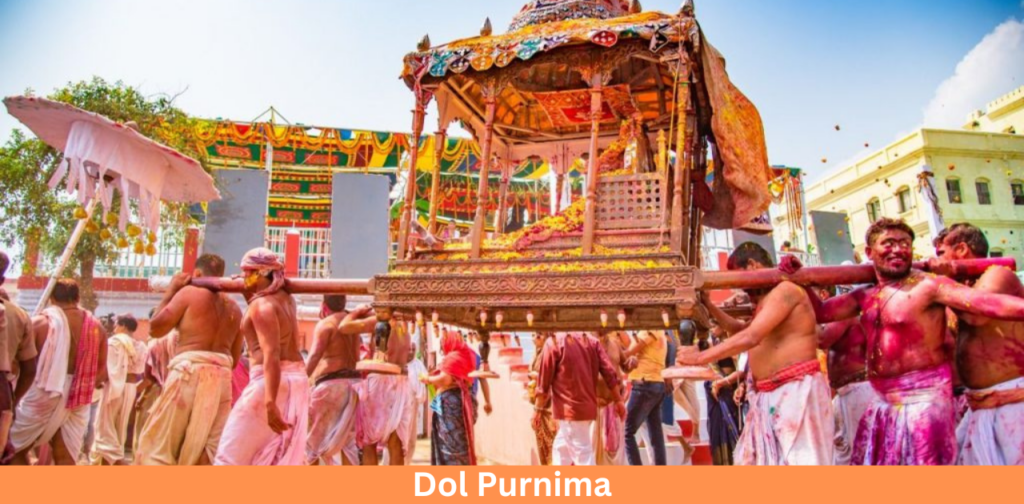
The standard sequence of rituals includes:
- Morning bath and preparation
- Decorating idols of Radha and Krishna
- Placing them on a swing (dol)
- Offering flowers, sweets, and coloured powder
- Community singing and chanting
- Procession through neighbourhoods
The application of abir is first offered to the deities, then exchanged among people as a sign of blessings. A traditional greeting is exchanged during the festival, “Subho Dol Jatra” which means “Auspicious Dol Jatra” in Bengali.
Weather in Kolkata during Dol Jatra 2026
Early March in Kolkata typically sees:
- Day temperatures: 28–32°C
- Evening temperatures: 18–22°C
- Dry weather with increasing summer warmth
Light cotton clothing is advisable, especially if participating in colour celebrations.
FAQs About Dol Jatra 2026
1. What is Dol Jatra?
Dol Jatra is a Hindu festival celebrated on Phalguna Purnima honouring Lord Krishna and Radha. It involves devotional worship, ceremonial swinging of idols, and the application of coloured powders, especially in West Bengal and eastern India.
2. When is Dol Purnima 2026?
Dol Purnima and Dol Jatra occur on 3 March 2026, with Purnima Tithi from 05:55 PM on 02 March to 05:07 PM on 03 March.
3. What are Dol Purnima 2026 puja timings?
Suggested mukhya puja windows on 03 March are 10:49 AM–12:17 PM (Laabh), 12:17 PM–01:44 PM (Amrit) and 03:12 PM–04:39 PM (Shubh), before the Purnima Tithi ends at 05:07 PM.
4. Is Dol Jatra the same as Holi?
No. Dol Jatra is a Vaishnav religious observance centred on Radha-Krishna worship. Holi is a broader spring festival celebrated across India. In West Bengal, both occur on the same day but differ in ritual focus.
5. How is dol jatra in Bengali celebrated?
In Bengali tradition, idols are placed on swings, devotional songs are sung, and coloured powder is first offered to deities before being shared among devotees. Cultural performances are common in Kolkata and Santiniketan.
6. What is the dol jatra meaning in simple terms?
Dol Jatra means “festival of the swing.” It refers to the ritual of placing Radha and Krishna idols on a decorated swing and celebrating divine love and the arrival of spring.
7. Where can I celebrate Dol Jatra near me in Kolkata?
Popular locations include ISKCON Temple Kolkata, Dakshineswar area gatherings, and community celebrations across North Kolkata. Santiniketan is a well-known day-trip option for Basanta Utsav.
8. What is Dol Utsav 2026?
Dol Utsav 2026 refers to the broader cultural celebration of Dol Jatra on 3 March 2026, including temple rituals, colour application, music and community events across West Bengal.
If you are planning to witness dol jatra in Kolkata in 2026, early arrival at temples, awareness of local traffic restrictions, and respectful participation in rituals will help ensure a meaningful experience.