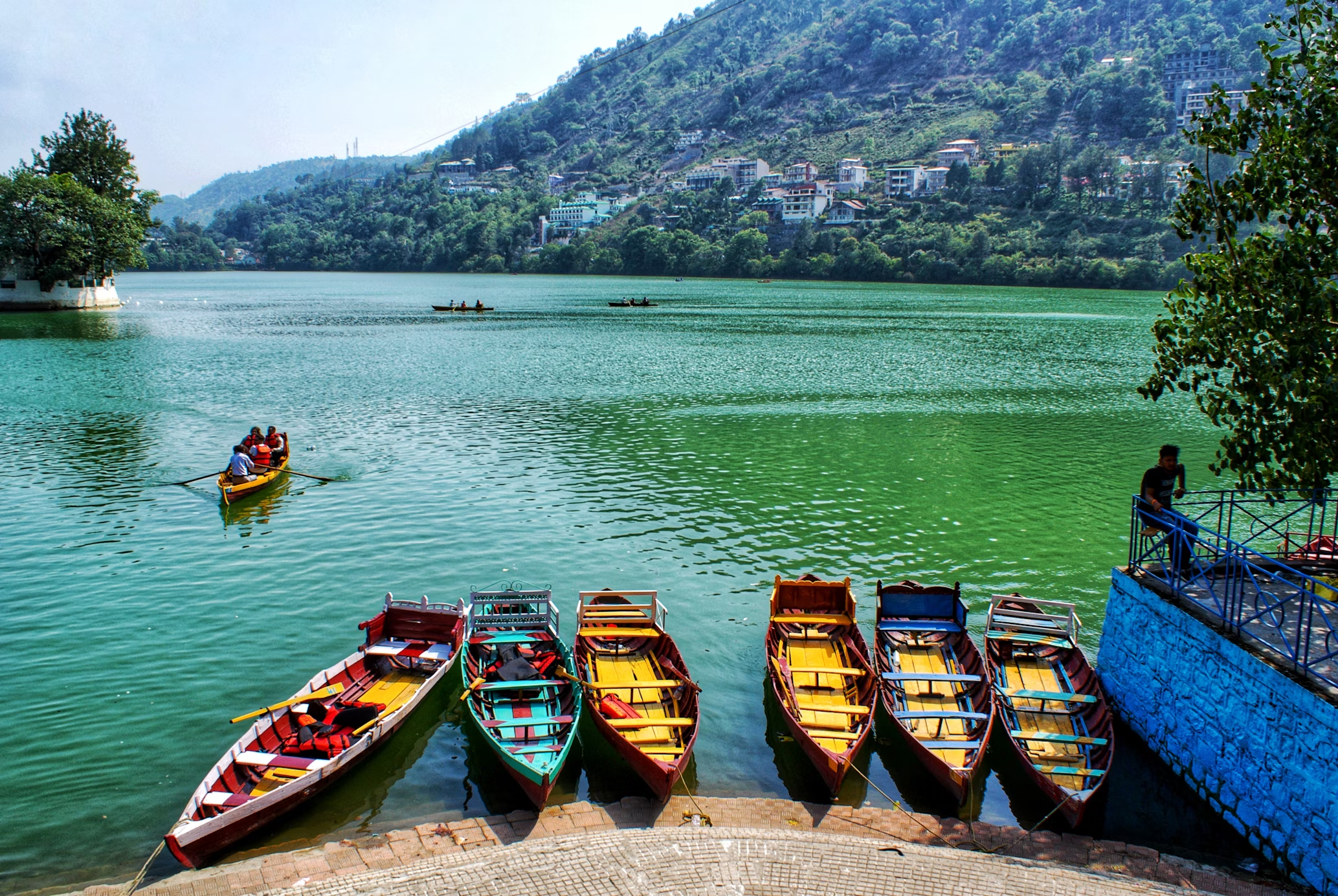

Mahashivratri Varanasi 2026 | Kashi Vishwanath Guide & Timings
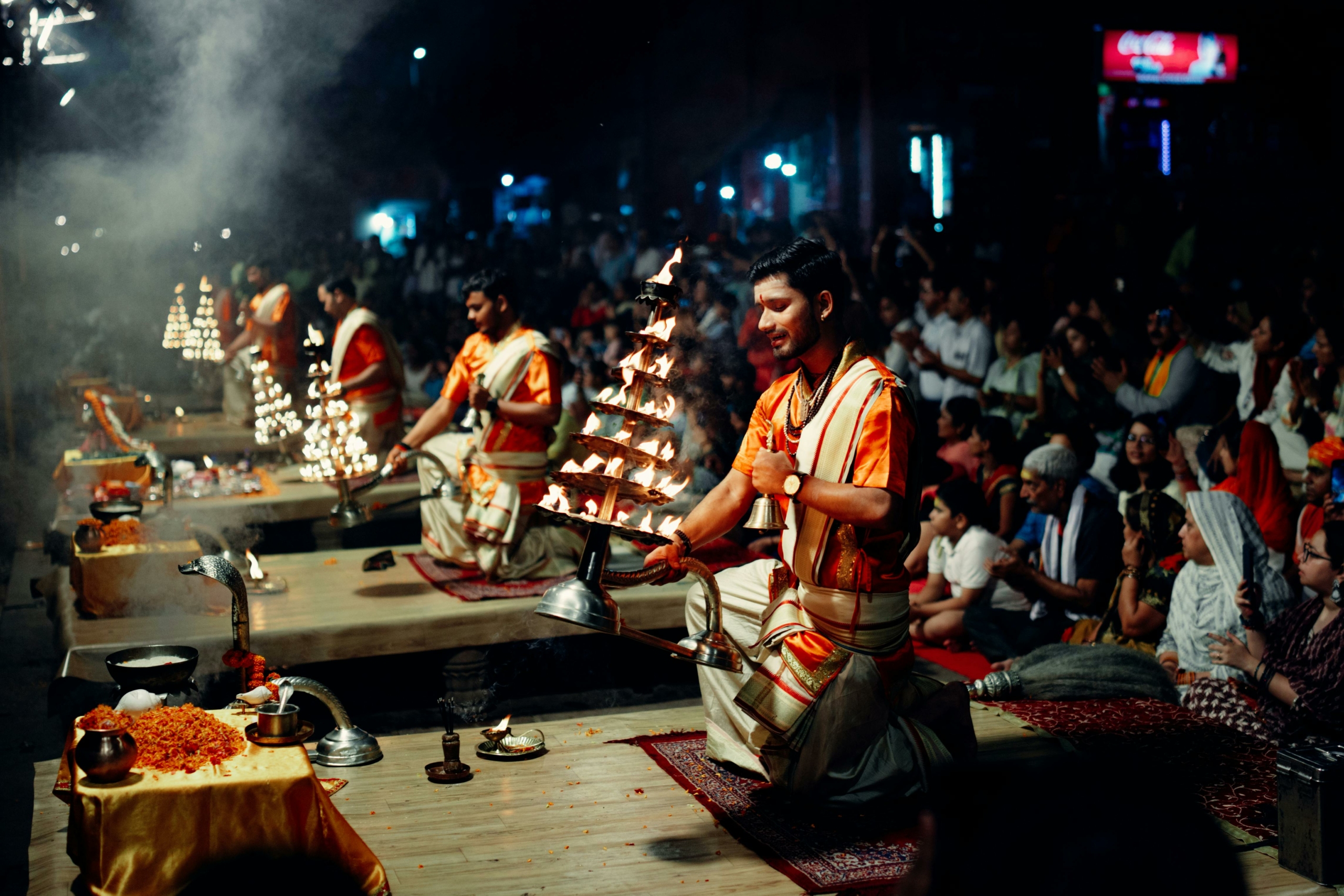
Mahashivratri 2026 in Varanasi will be observed on 15 February 2026 (Phalguna Krishna Chaturdashi). At Kashi Vishwanath Temple, the festival includes four prahar night pujas, extended darshan hours, Mangala Aarti before sunrise, special Rudrabhishek rituals, and peak midnight worship during Nishita Kaal. Due to heavy pilgrim turnout, advance Sugam/VIP darshan booking via the official temple portal is strongly recommended.
In this Blog
Mahashivratri Varanasi 2026
| Detail | Information |
|---|
| Festival Date | 15 February 2026 |
| Tithi | Krishna Paksha Chaturdashi |
| Most Auspicious Time | Nishita Kaal (midnight) |
| Main Temple | Kashi Vishwanath Temple |
| Location | Varanasi, Uttar Pradesh |
| Expected Crowd | Very High |
| Booking | Online via official temple portal |
| Nearby Landmark | Dashashwamedh Ghat |
Why Mahashivratri in Varanasi Is Spiritually Different
Mahashivratri is celebrated across India.
But in Varanasi, it becomes something deeper.
Varanasi — historically known as Kashi — is believed to be the eternal abode of Lord Shiva. According to tradition, Shiva never leaves this city. Devotees believe that liberation (moksha) is closest here.
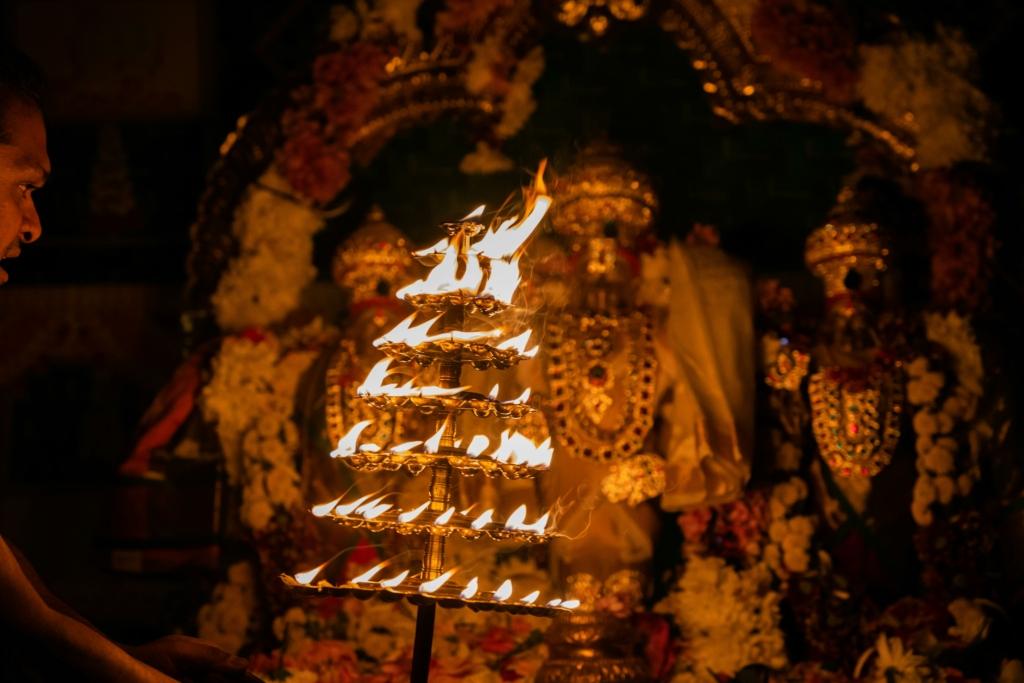
On Mahashivratri, that belief transforms into lived experience.
The city stays awake.
Temple bells do not pause.
Chants ripple through narrow alleys.
Processions move through ancient lanes.
The Ganga reflects flickering lamps through the night.
In many cities, Mahashivratri is observed.
In Varanasi, it is embodied.
When Is Mahashivratri 2026? (Date & Tithi Explained)
Mahashivratri 2026 falls on 15 February 2026.
It is observed on Krishna Paksha Chaturdashi of the Hindu month Phalguna. The most spiritually significant period during the night is the Nishita Kaal, traditionally associated with Shiva’s cosmic dance (Tandava).
Because the festival falls in mid-February:
- Evenings are cool and comfortable
- Late-night hours can be chilly
- Pilgrim numbers increase due to pleasant weather
It is one of the most prominent February 2026 religious observances in North India.
Mahashivratri Varanasi 2026 Timings — What Happens at Kashi Vishwanath
On a regular day, Kashi Vishwanath Temple follows a structured aarti schedule.
On Mahashivratri, that rhythm expands dramatically.
The festival revolves around four prahar pujas — four segments of worship throughout the night.
Festival Structure Overview
| Phase | What Happens |
|---|---|
| Pre-Dawn | Mangala Aarti |
| Morning | Darshan & Rudrabhishek |
| Afternoon | Steady queue movement |
| Evening | Saptirishi Aarti |
| Night | Four Prahar Puja |
| Midnight | Nishita Kaal worship |
Official timings are announced by temple authorities closer to the festival.
Is Kashi Vishwanath Open All Night on Mahashivratri?
In recent years, the temple has operated extended hours and near-continuous darshan on Mahashivratri.
However, “open all night” does not mean unrestricted access.
Expect:
- Batch-based entry
- Security-controlled queue corridors
- Temporary pauses during ritual transitions
- Peak congestion around midnight
If your priority is midnight darshan, arrive at least 90–120 minutes before Nishita Kaal.
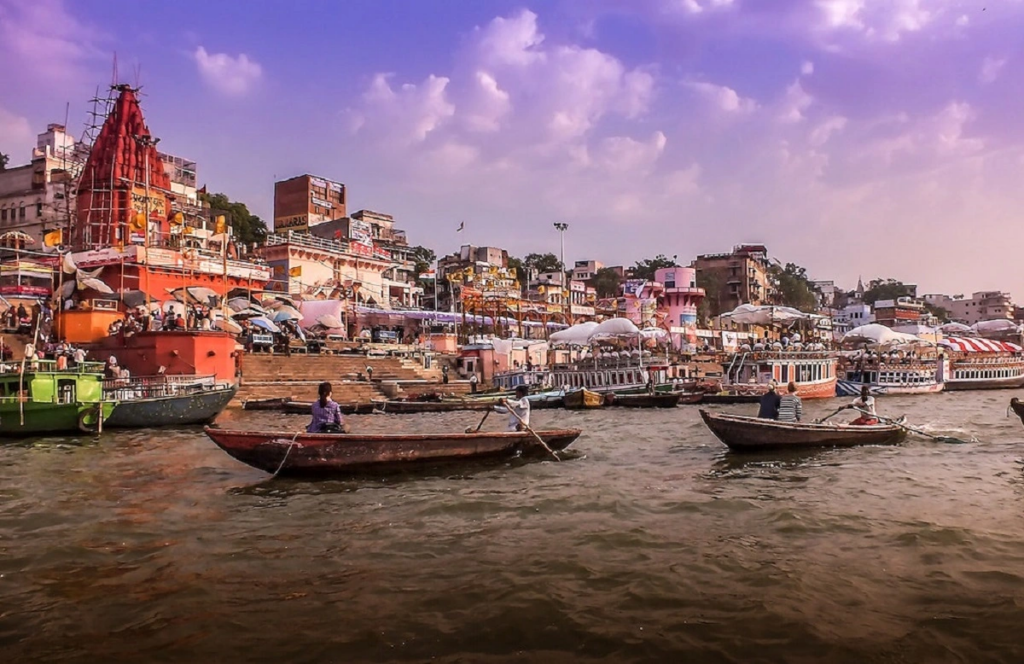
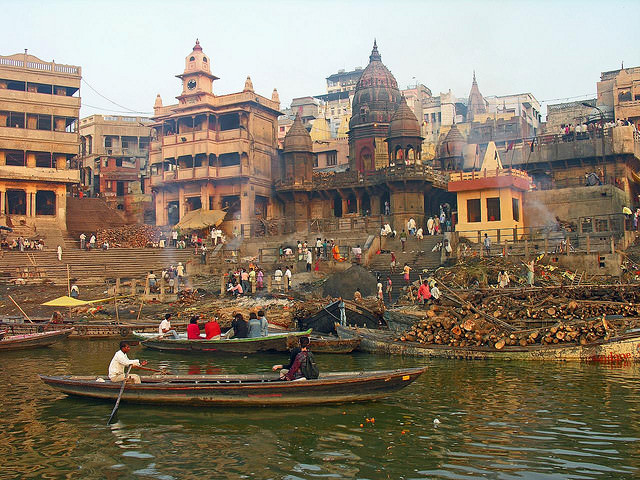
Picture Credits: Varnam Malaysia
The Meaning Behind the Four Prahar Puja
Mahashivratri night is divided into four Prahars — symbolic spiritual stages.
First Prahar — Awakening
Represents spiritual awareness.
Second Prahar — Discipline
Symbolizes devotion and surrender.
Third Prahar (Midnight) — Transformation
Associated with ego dissolution and inner stillness.
Fourth Prahar — Illumination
Represents clarity before dawn.
Each Prahar includes:
- Abhishek of the Jyotirlinga
- Bilva leaf offerings
- Mantra chanting
- Devotional recitations
Understanding this sequence deepens the experience. It is not repetition — it is progression.
Aarti Timings at Kashi Vishwanath on Mahashivratri
While final timings vary, the following aartis are central to the festival.
Mangala Aarti (Early Morning)
The Mangala Aarti is the first ritual of the day, performed before dawn, typically around 3:00 AM on regular days. On Mahashivratri, it marks the beginning of an intense day of worship.
Entry for Mangala Aarti is limited and usually ticketed. Devotees who attend often describe it as one of the most serene moments of the entire festival — the temple is lit softly, chants echo in the sanctum, and the day’s energy has not yet surged into peak crowd levels.
If you are planning to attend this aarti, booking in advance is essential.
Bhasma Aarti — What Makes It Special?
The Bhasma Aarti is among the most talked-about rituals at Kashi Vishwanath. It involves offering sacred ash to Lord Shiva — symbolising detachment and the transient nature of life.
On ordinary days, Bhasma Aarti is conducted with limited entry. During Mahashivratri, access may be further restricted due to security and crowd management. Not all festival-day Bhasma rituals are open for general attendance.
If witnessing this ritual is important to you, monitor official announcements well before the festival date.
Saptirishi Aarti (Evening)
As the sun sets over Varanasi and the ghats begin to glow with lamps, the Saptirishi Aarti takes place inside the temple. By this time, footfall in the corridor and surrounding lanes increases significantly.
For many pilgrims, this evening aarti is easier to attend than late-night prahar rituals. However, queues are longer than in the morning hours.
Arriving early — at least 45 to 60 minutes before the scheduled time — improves your chances of a smoother entry.
Night Shringar & Prahar Rituals
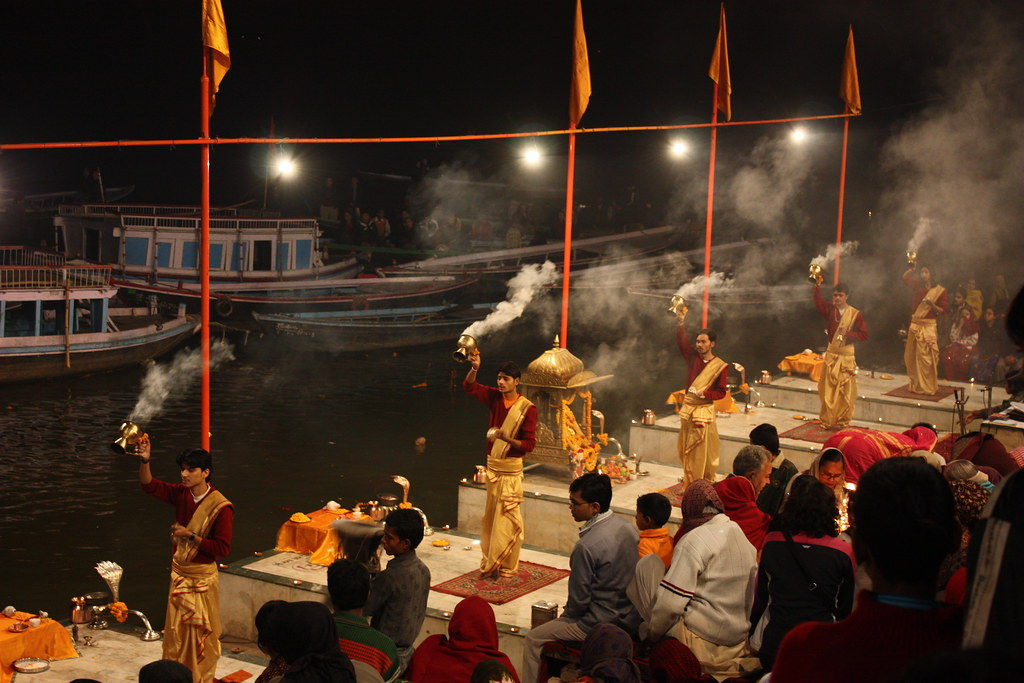
Mahashivratri is fundamentally a night festival. After evening hours, the temple transitions into the four prahar pujas — four segments of worship spread across the night.
The midnight segment, known as Nishita Kaal, is considered spiritually powerful. This is when the temple atmosphere is at its most intense — chants, bells, devotional singing, and continuous movement of devotees.
If you prefer a calmer experience, early morning may suit you better. If you want to experience the full devotional intensity of Mahashivratri in Varanasi, the midnight hours are unforgettable.
How to Book Sugam or VIP Darshan for Mahashivratri 2026
Booking is handled through the official Kashi Vishwanath portal.
Step-by-Step Booking Process
- Visit official website
- Select “Online Services”
- Choose Sugam Darshan / Puja booking
- Select 15 February 2026
- Choose available time slot
- Complete payment
- Carry confirmation and valid ID
Sugam Darshan
Paid priority entry
Reduced waiting time
Limited slots
Rudrabhishek Booking
High demand
Advance reservation required
Booking early significantly reduces stress on festival day.
Kashi Vishwanath Darshan Process Explained
For first-time visitors, clarity reduces anxiety.
Arrival → Security check → Locker (if required) → Queue corridor → Sanctum darshan → Guided exit.
Estimated waiting time:
- General queue: 2–6 hours during peak
- Sugam darshan: 30–90 minutes
The darshan moment is brief.
The emotional buildup is not.
Crowd & Safety Advisory — What to Expect in Varanasi
Mahashivratri brings large pilgrim gatherings.
Expect:
- Road closures around Godowlia
- Pedestrian-only routes near temple
- Heavy police deployment
- Medical assistance stations
- Temporary barricades
Peak congestion window:
7 PM – 1 AM
Relatively calmer:
Pre-dawn hours
Where to Stay for Mahashivratri 2026
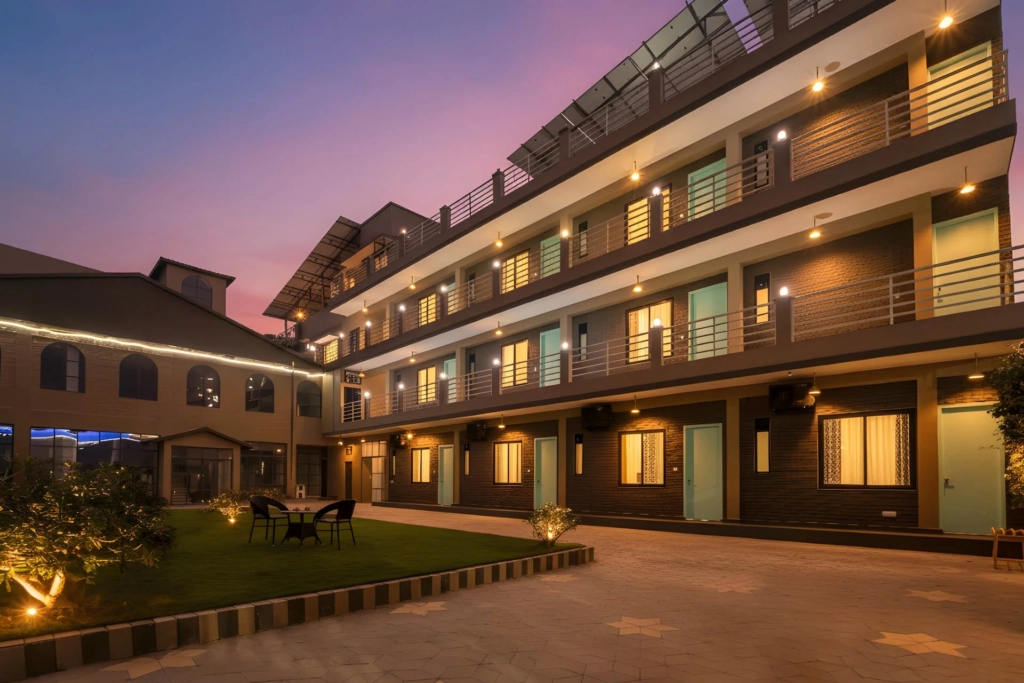
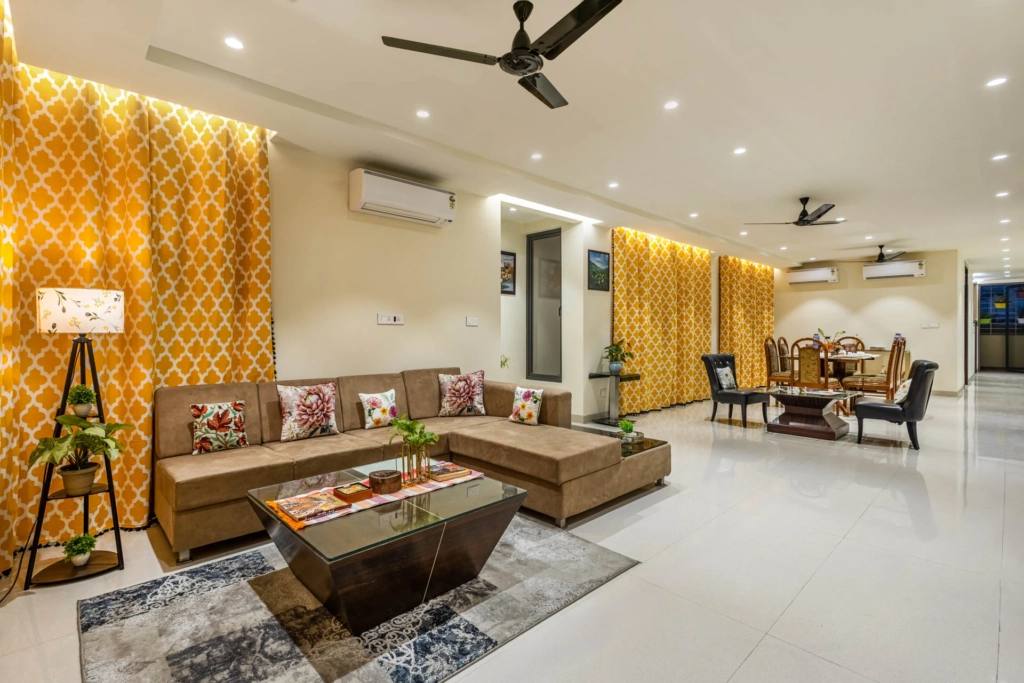
Best locations:
- Vishwanath Corridor
- Godowlia
- Dashashwamedh Ghat
- Assi Ghat

How to Reach Kashi Vishwanath
From Varanasi Cantt railway station
5–6 km
20–40 minutes
From Lal Bahadur Shastri International Airport
25 km
45–75 minutes
Final access often requires walking through designated corridors.
Ganga Aarti During Mahashivratri
The Ganga Aarti at Dashashwamedh Ghat becomes especially powerful during Mahashivratri.
Arrive 60–90 minutes early.
Boat viewing options provide a panoramic perspective.
Suggested 24-Hour Mahashivratri Plan
Early Morning
Mangala Aarti & darshan
Afternoon
Rest, explore ghats
Evening
Ganga Aarti
Night
Prahar Puja participation
Next Morning
Sunrise boat ride
Frequently Asked Questions — Mahashivratri Varanasi 2026
Mahashivratri 2026 falls on 15 February 2026 during Krishna Paksha Chaturdashi of the Hindu month Phalguna.
The temple operates extended hours and near-continuous worship. However, access may be regulated through batch-based entry and crowd control measures.
The night is divided into four segments — early night, late evening, midnight (Nishita Kaal), and pre-dawn. Midnight is considered the most auspicious.
Visit the official temple website, select Online Services, choose Sugam Darshan, select 15 February 2026, and complete the booking.
Before sunrise generally has shorter queues compared to late evening and midnight.
Foreign nationals may visit subject to standard temple entry rules and valid identification.
Mahashivratri draws extremely large pilgrim gatherings, especially near Kashi Vishwanath Temple and Dashashwamedh Ghat.
Mahashivratri in Varanasi is not just a date on the calendar.
It is a night when devotion reshapes the city.
The temple glows.
The ghats shimmer.
The chants do not fade.
Plan carefully.
Book early.
Arrive patient.
The experience unfolds beyond logistics.