
How Many Days for Sikkim and Darjeeling Trip? Perfect 6 to 8 Day Itinerary (2026)
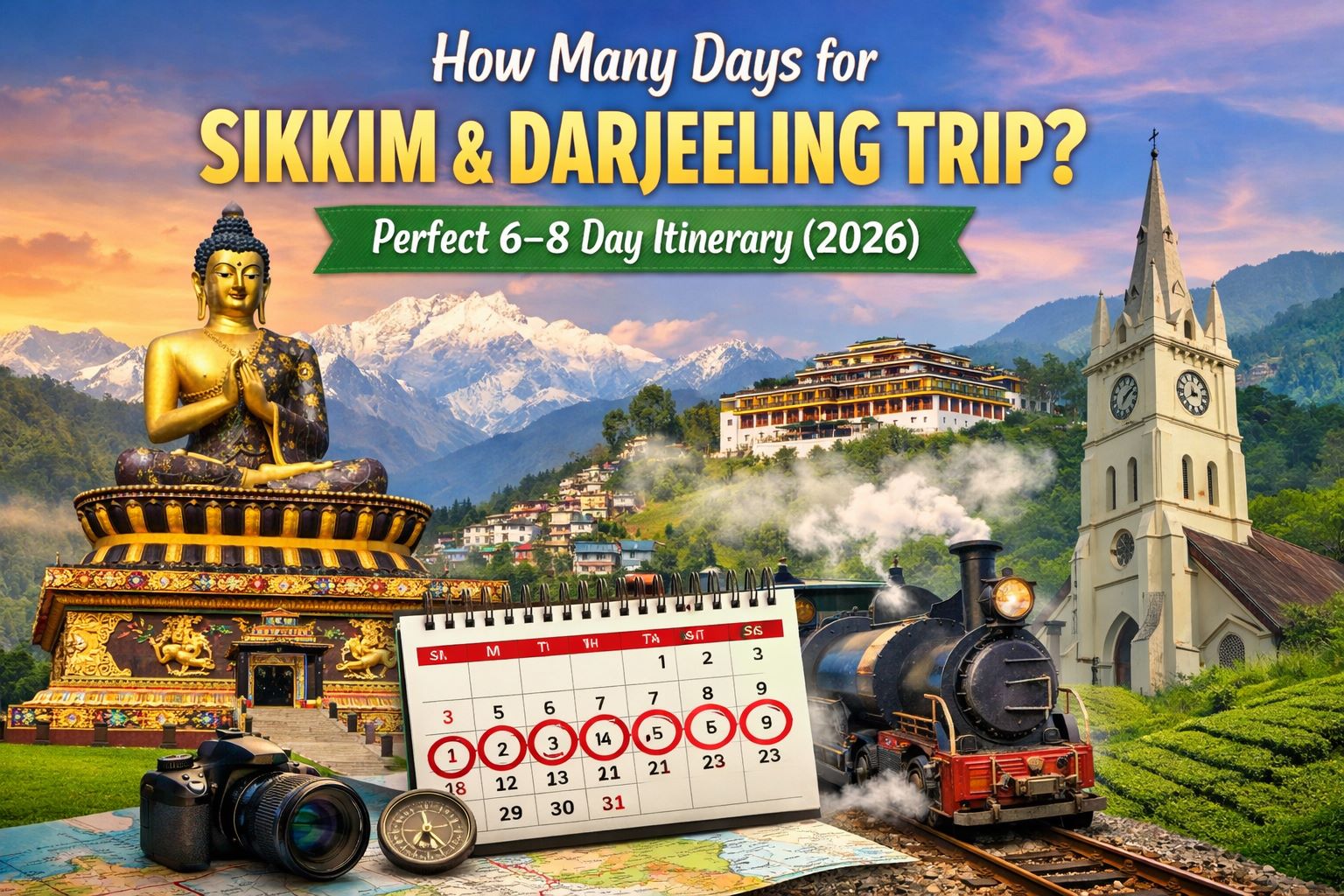
Six to eight days is the right amount of time for a Sikkim and Darjeeling trip that does not feel rushed. Seven days covers Darjeeling, Gangtok, and either Pelling or North Sikkim without cutting corners. Six days works if you are skipping one leg. Eight days gives you breathing room for a day hike, a tea estate deep dive, or a slower pace between towns. Anything under five days means you will spend more time in transit than at the destination, which in this part of India is a real problem given the mountain road distances.
In this Blog
Best Time to Go
March to May and October to November are the two windows that deliver the most reliable experience.
March to May brings rhododendron blooms across Sikkim, clear Kanchenjunga views from Darjeeling’s Tiger Hill, and pleasant temperatures between 10 and 20 degrees. The tea gardens in Darjeeling are at their first flush during March to April, which is the most prized harvest of the year. May starts bringing some pre-monsoon clouds but the first two weeks are still largely clear.
October and November offer the clearest post-monsoon skies and are considered the best months for sustained mountain visibility. The landscapes are greener than spring, the air is crisp, and accommodation prices are competitive before the year-end holiday spike.
Avoid June to September unless you are on a tight budget and have low expectations for views. Heavy monsoon rainfall causes frequent landslides on mountain roads, particularly between Gangtok and North Sikkim. Some stretches of the Siliguri to Darjeeling road close for days at a time. The best time to visit Darjeeling guide has a month-by-month breakdown if you are still deciding your window. For those curious about the monsoon experience, the Darjeeling and Gangtok monsoon guide makes an honest case for June to September that is worth reading.
How to Get There
The nearest airport is Bagdogra (IXB), around 70 km from Darjeeling and 120 km from Gangtok. Bagdogra is connected to Delhi, Mumbai, Kolkata, Bengaluru, Hyderabad, and Chennai with direct flights. Alternatively, the New Jalpaiguri (NJP) railway station in Siliguri connects to most major Indian cities and is a practical overnight train option from Kolkata, Delhi, and other north Indian cities.
From Bagdogra or NJP, shared cabs (the most common local transport) to Darjeeling take 2.5 to 3 hours and cost around Rs 300 to 350 per person. Private cabs cost Rs 1,500 to 2,000. To Gangtok, the journey is 4 to 4.5 hours by road. Helicopter service between Bagdogra and Gangtok is available when weather permits (around 30 minutes, roughly Rs 4,500 to 5,000 per person one way).
The 7-Day Itinerary
Day 1: Arrive in Darjeeling
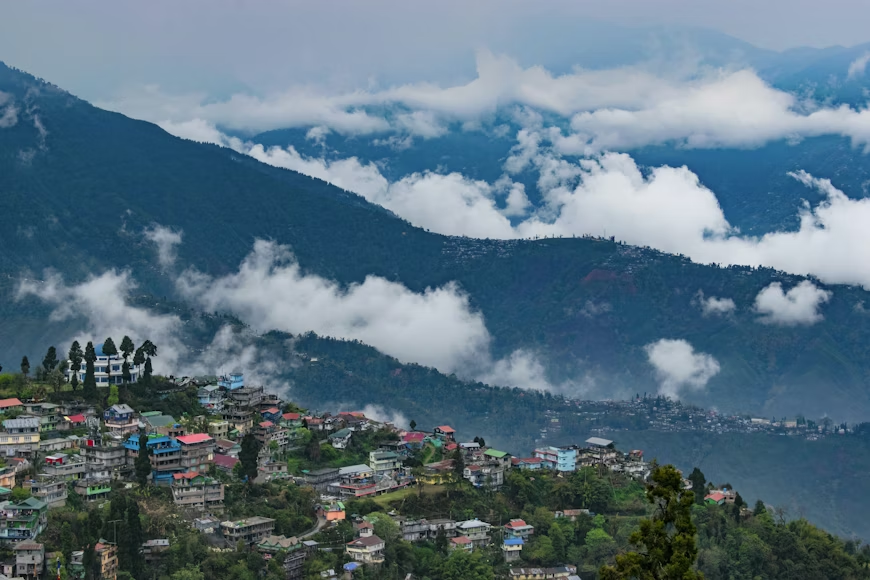
Arrive at Bagdogra or NJP and transfer to Darjeeling. If you arrive by afternoon, settle in and walk Mall Road in the early evening. Chowrasta at the top of Mall Road is the natural gathering point for the town. Darjeeling sits at 2,050 m. Give yourself a quiet first evening to adjust to the altitude, especially if you are coming from a plains city. The temperature will drop sharply after sunset.
Day 2: Darjeeling Sightseeing
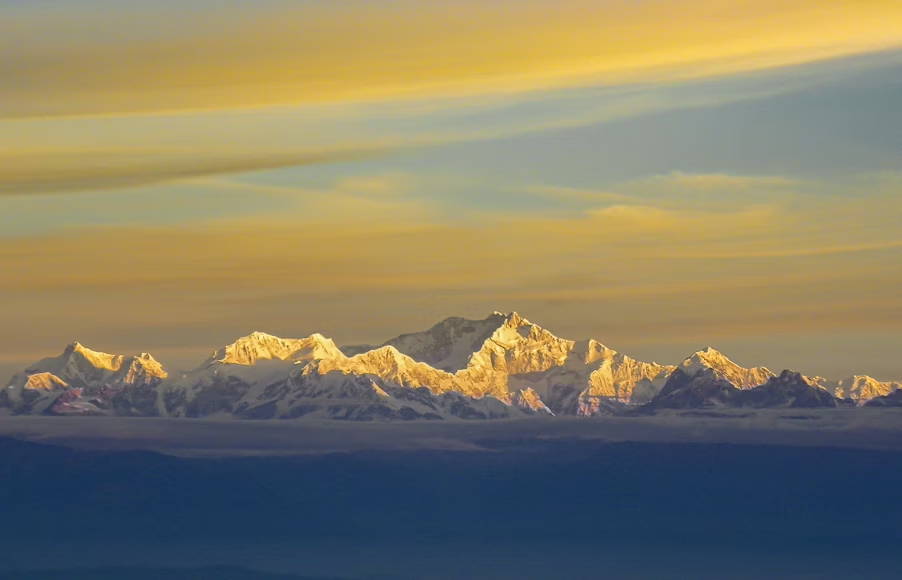
Set an alarm for 3:30 AM. Tiger Hill, 11 km from Darjeeling town, is where the Kanchenjunga sunrise happens. On clear mornings, you can see the Kanchenjunga (8,586 m, the world’s third highest peak), Kabru, Kabru Dome, and on very clear days, even Everest on the horizon. Shared jeeps run from Darjeeling at 4 AM. Return for breakfast and spend the rest of the day at Batasia Loop (the toy train spiral with war memorial and Kanchenjunga backdrop), the Himalayan Mountaineering Institute (one of the most respected mountaineering institutes in Asia, founded in 1954), the Padmaja Naidu Himalayan Zoological Park next door, and the Ghoom Monastery, the oldest in the Darjeeling district. The Darjeeling Himalayan Railway joyride between Darjeeling and Ghoom (around one hour, UNESCO heritage) is worth fitting in, even at a quick pace.
Day 3: Tea Estate Morning, Travel to Gangtok
Visit a tea estate in the morning. Happy Valley Tea Estate (3 km from Darjeeling town) and Makaibari Tea Estate in Kurseong (on the way down to NJP) are both open to visitors with guided factory tours and tastings. Happy Valley tours start around 8 AM on weekdays. Depart for Gangtok by 11 AM to 12 PM, arriving in the early to mid-afternoon after a 3.5 to 4 hour drive. Gangtok, the capital of Sikkim, sits at 1,650 m and has a compact commercial area that is walkable from most hotels.
Day 4: Gangtok and Tsomgo Lake
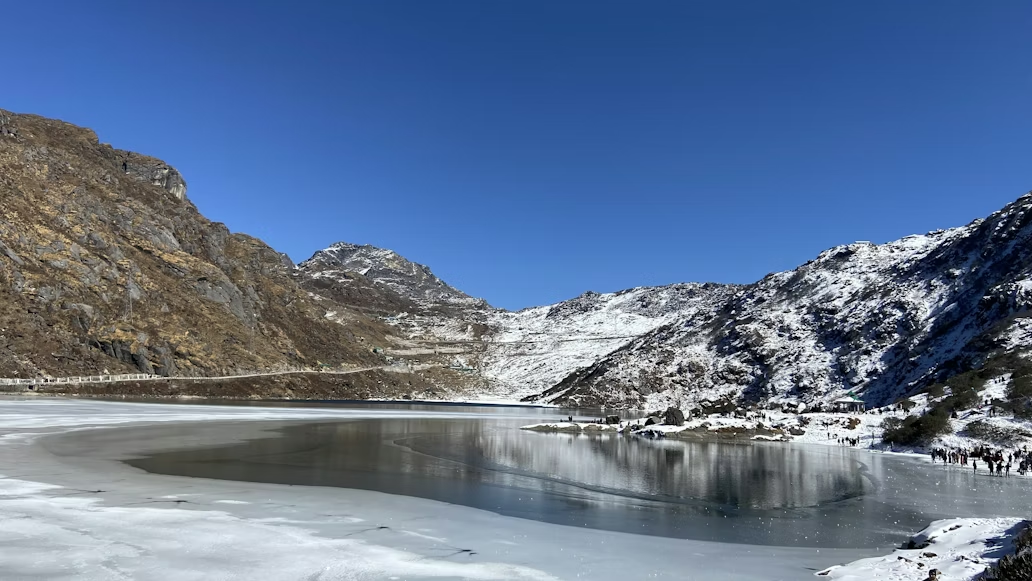
Rumtek Monastery (23 km from Gangtok) is one of the most significant Kagyu Buddhist monasteries outside Tibet and the primary day trip from Gangtok. For those interested in the Nathula Pass experience (4,310 m, on the India-China border), a permit from the Sikkim Tourism office needs to be arranged the prior day. Indian nationals only, foreign nationals are not permitted. Tsomgo Lake (3,753 m, pronounced Changu) is combined with Nathula as a single day excursion. The lake sits above the treeline and has snow on its banks well into May. If you skip Nathula (the road beyond Tsomgo is often snowbound early in the season), the Tsomgo visit alone takes half a day.
Day 5: Travel to Pelling (West Sikkim)
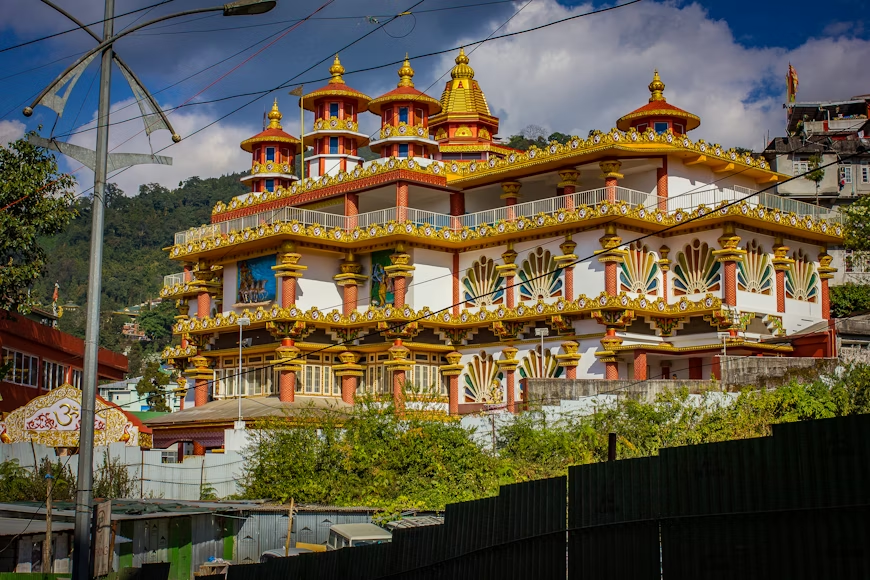
Pelling is a 4 to 5 hour drive from Gangtok through the scenic Ravangla route or directly via Jorethang. At 2,150 m in West Sikkim, Pelling has unobstructed Kanchenjunga views from the town itself on clear days. Check in and spend the late afternoon at Sangachoeling Monastery, the oldest in Sikkim, reached by a 30-minute uphill walk through a forest trail. The approach walk itself is worth the effort for the bird life and quiet.
Day 6: Pelling Sightseeing
Cover Khecheopalri Lake (a sacred lake in the forest, 27 km from Pelling and a short easy walk from the road), Rabdentse Ruins (the 17th-century capital of Sikkim before Gangtok, with Kanchenjunga framing the backdrop), and Pemayangste Monastery (one of the oldest Nyingma monasteries in Sikkim, founded in 1705). This is a genuinely full day with different character at each site. If you are on an 8-day itinerary, use Day 7 for Yuksom, the first capital of Sikkim (1642) and the starting point for the Goecha La trek, 22 km from Pelling.
Day 7 or 8: Return to Bagdogra or NJP
Drive back to Siliguri via the Jorethang road, the more direct Western Corridor route that has improved significantly in recent years. Allow 5 to 6 hours to Bagdogra with stops. Build extra time if there has been any rain the previous day, as sections of the road can slow significantly.
Where to Stay
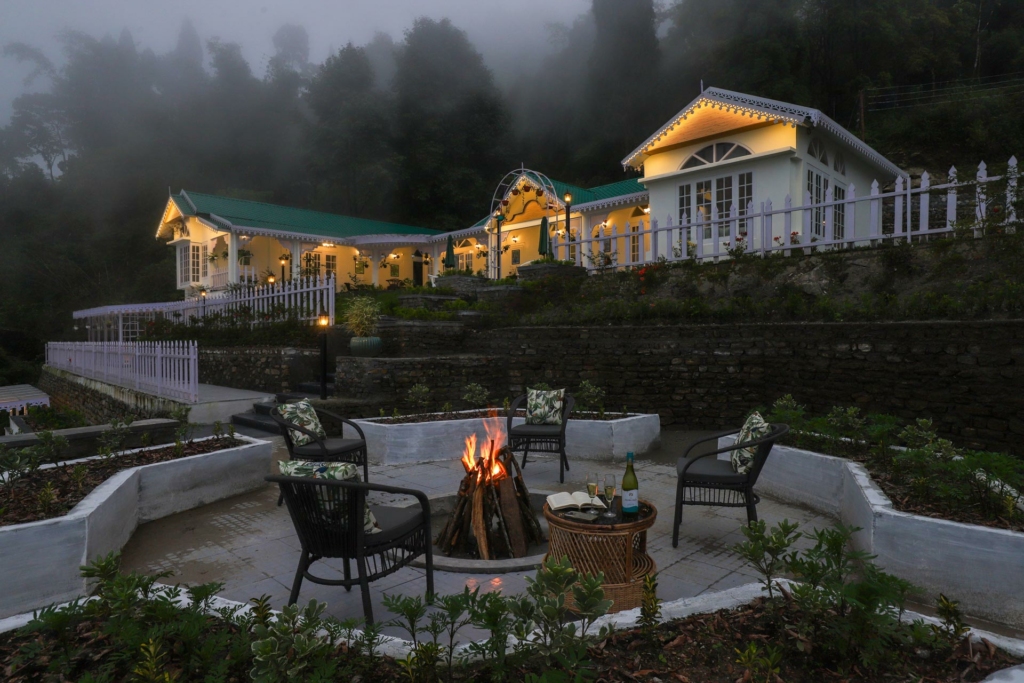
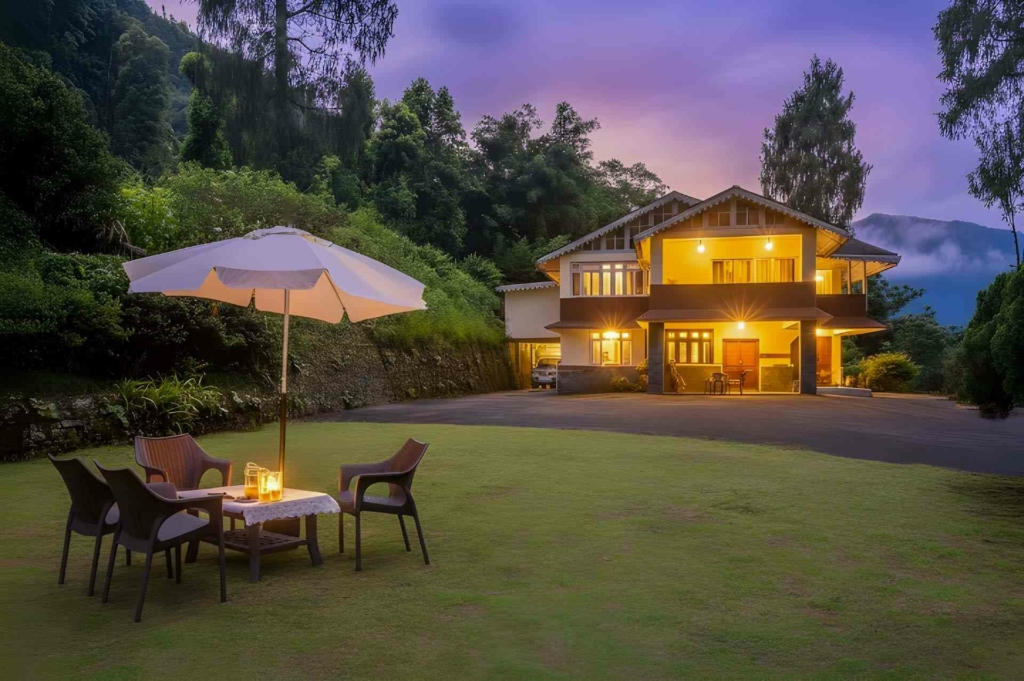
Darjeeling has a mix of heritage properties and mountain-view homestays that suit multi-night itineraries well. Gangtok’s accommodation is more hotel-heavy but private homes and guesthouses exist in quieter pockets. Pelling has the best views of any of the three towns, making the stay there particularly rewarding. StayVista’s Darjeeling properties and Gangtok villas are worth booking 6 to 8 weeks ahead for the peak March to May and October to November windows, when the best properties fill quickly.
Permits You Need to Know
North Sikkim (Lachen, Lachung, Gurudongmar Lake) requires a Protected Area Permit for Indian nationals. This is arranged by a registered Sikkim tourism operator and cannot be done independently. Nathula Pass requires a separate permit from the Sikkim tourism office in Gangtok, Indian nationals only. Tsomgo Lake requires the same Nathula permit even if you are not going to the pass itself. West and East Sikkim, including Gangtok and Pelling, require no special permits for Indian nationals. Foreign nationals need a Restricted Area Permit for all of Sikkim.
What to Pack
Light layers that can be added and removed through the day work best. Even in May, temperatures drop to 8 to 12°C at night in Darjeeling and Pelling. Good walking shoes are essential, several of the best sites (Sangachoeling, Rabdentse) involve unpaved uphill trails. A small daypack, a reusable water bottle, and sunscreen for the high-altitude Tsomgo trip. Carry some cash, ATMs exist in Darjeeling and Gangtok but are unreliable in Pelling and most of West Sikkim.
Frequently Asked Questions
Seven days covers both comfortably. Six days is the minimum if you skip one destination within Sikkim, either Pelling or North Sikkim. Eight days is better for a relaxed pace.
Only if you choose between Darjeeling and Sikkim, not both. Five days split between two places means one or both feel incomplete.
March to May for rhododendrons and spring views, October to November for the clearest post-monsoon mountain visibility.
Fly to Bagdogra (around 2 hours), then take a shared or private cab to Darjeeling (2.5 to 3 hours). Alternatively, take the overnight train from Delhi to NJP.
North Sikkim and Nathula Pass require permits. West and East Sikkim, including Gangtok and Pelling, require no permits for Indian nationals.
Yes. Both are among the safest multi-day hill destinations in India. The primary risk is road conditions during and immediately after the monsoon season.