
40+ Birds in 2 Safaris? Why April Is the Best Time for Bird Watching in Jim Corbett
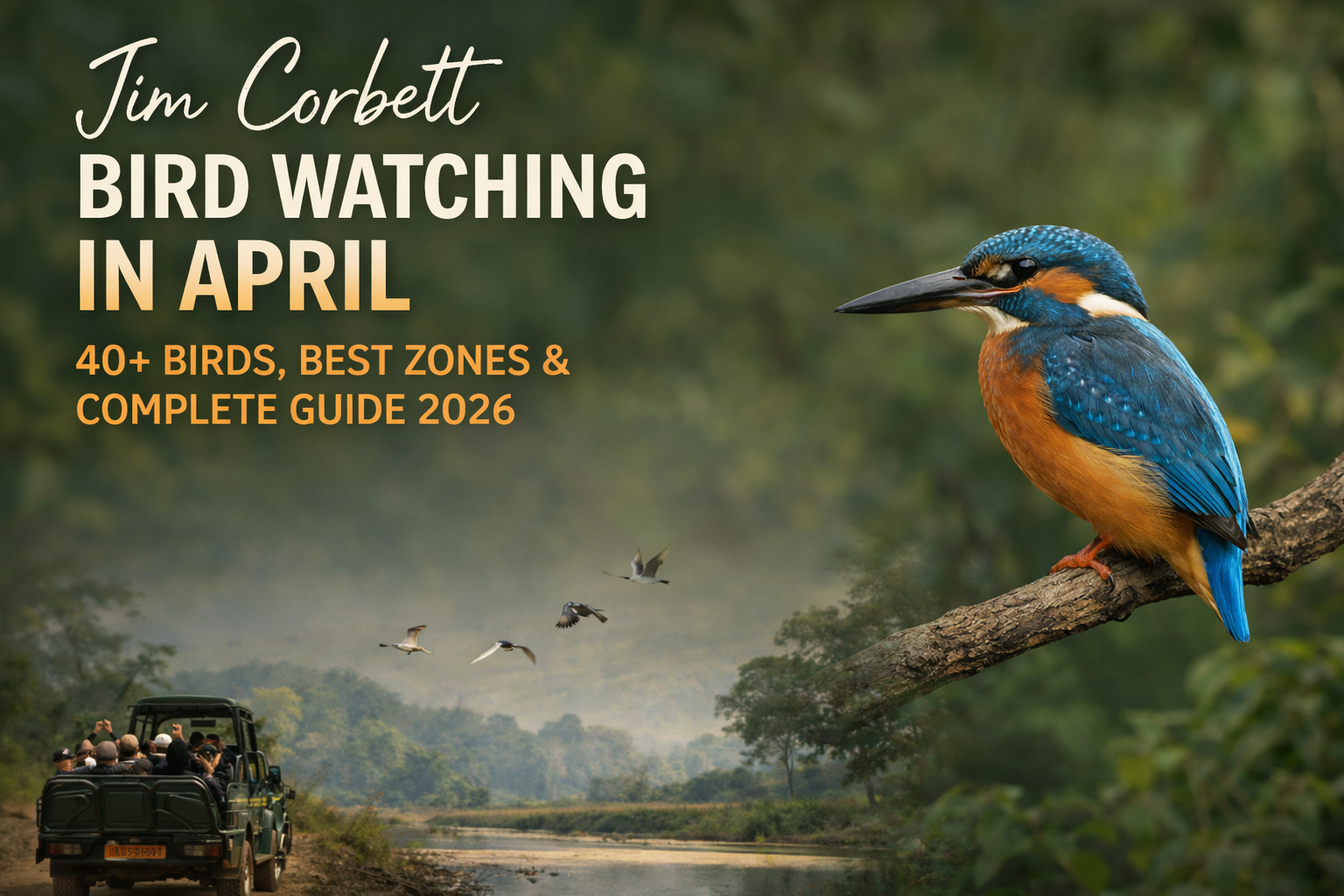
Jim Corbett National Park isn’t just tiger country. With over 650 documented bird species — more than any other national park in India — it’s one of the subcontinent’s finest birding destinations. And April? It’s when the real show begins. Breeding plumage is at its peak, summer visitors like the Indian Pitta and Paradise Flycatcher have arrived, and the dry heat pushes hundreds of birds toward waterholes where you can spot them with ease.
If you’re planning bird watching in Jim Corbett National Park this April, here’s the honest answer: you can easily spot 40+ species across zones like Bijrani and Dhikala—often within just a couple of safaris.
April is when the forest begins to thin out, water sources become central, and birds grow far more visible and vocal. Unlike winter, where numbers dominate, this is the season of behaviour—courtship calls, nesting activity, and birds returning repeatedly to the same waterholes. For a birdwatcher, that translates to better sightings, cleaner frames, and far less guesswork.
This guide maps exactly which birds you’ll find in which zone, what you’ll pay for safari permits, and how to plan a birding trip that actually delivers 40+ species in a weekend.
Jim Corbett’s 650+ bird species make it India’s richest birding park (Avibase, 2025). April’s breeding season brings Paradise Flycatchers and Indian Pittas to waterholes across Bijrani, Dhikala, and Dhela zones. Jeep safaris cost INR 1,200-1,400 per person (shared), and mornings between 6:30-9:30 AM yield the best sightings.
In this Blog
Quick Info: Jim Corbett Birding at a Glance
BirdLife International designated Jim Corbett as an Important Bird Area (IBA) based on its 650+ documented species and 30 globally threatened birds (BirdLife International, IBA designation). Here’s everything you need to plan your trip at a glance:
| Detail | Information |
|---|---|
| Total bird species | 650+ (669 per Avibase) |
| Best time for birding | November-June (April = breeding season peak) |
| Nearest airport | Pantnagar (80 km) |
| Nearest railway station | Ramnagar (12 km from park boundary) |
| Distance from Delhi | ~260 km (5-6 hours by road) |
| Ideal duration | 2-3 days for 40+ species |
| Zones open in April | Dhikala, Bijrani, Dhela, Jhirna, Sitabani, Durga Devi |
| Safari booking | corbettgov.org — book 45 days ahead |
Who This Guide Is For
This guide is designed for anyone looking to make the most of Jim Corbett bird watching in April, whether you’re a first-time visitor or someone planning a more focused birding trip.
It will help if you are:
- Trying to figure out the best zones for Jim Corbett birdwatching in April
- Planning safari bookings like Bijrani jeep safari
- Comparing options like the Dhikala canter safari birds April prices for Indians
- Looking for a beginner gear list for Jim Corbett birding
- Interested in improving your shots with wildlife photography tips, Corbett safari beginners
Why Is Jim Corbett India’s Best-Kept Birding Secret?
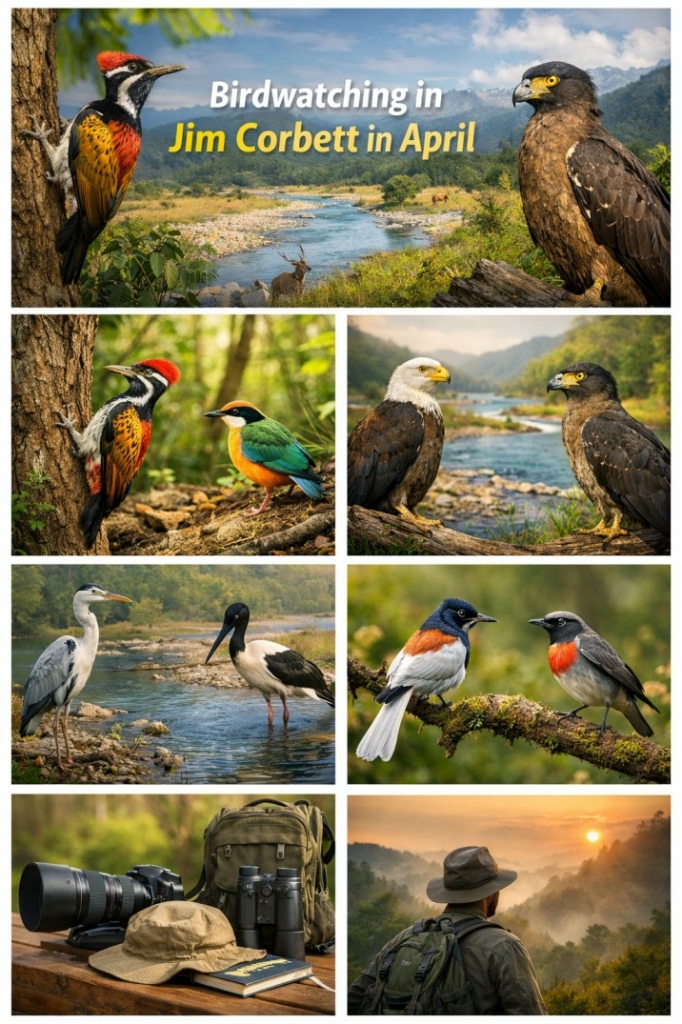
With 669 species recorded on the Avibase checklist (Avibase/BirdLife International, 2025), Jim Corbett holds more bird species than Keoladeo/Bharatpur (400+), Kaziranga (480+), and Nameri (380+) combined, with its tiger reputation. BirdLife International designated it an Important Bird Area (IBA), yet most visitors come only for tigers — leaving the birding trails blissfully uncrowded.
The numbers tell the story. Corbett shelters 51 of India’s 69 diurnal raptor species and 15 of its 26 woodpecker species (indiabirdwatching.com). Thirty globally threatened species call this park home, including three critically endangered vultures that you won’t find in most other Indian parks.
So why doesn’t Corbett appear in “best birding destinations in India” lists? Simple: it’s the Tiger brand that overshadows everything else. That’s actually good news for birders — you’ll share trails with far fewer tourists than at Bharatpur, and the diversity is unmatched.
Which Zones Are Best for Bird Watching in April?
Bijrani, Dhela, and Dhikala consistently deliver the highest species counts during April, according to field guides and birding tour operators across Corbett (corbett-national-park.com). Each zone offers different habitats — dense sal forests, open grasslands, and riverine stretches — so the birds you’ll encounter vary dramatically by zone.
Here’s the zone-by-zone breakdown that no other guide provides:
| Zone | Safari Type | Open Period (2026) | Entry Gate | Key April Birds | Best For | Difficulty |
|---|---|---|---|---|---|---|
| Bijrani | Jeep (6 seats) | Oct 15-Jun 30 | Amdanda | Great Hornbill, Great Slaty Woodpecker, Paradise Flycatcher, Crested Serpent Eagle | Forest birds, woodpeckers, breeding displays | Beginner-friendly |
| Dhikala | Canter only (16 seats) | Nov 15-Jun 15 | Dhangari | Pallas’s Fish Eagle, Black Stork, Tawny Fish Owl, vultures | Grassland raptors, riverine birds | Intermediate |
| Dhela | Jeep (6 seats) | Year-round | Dhela | Herons, kingfishers, minivets, barbets | Waterhole clusters, beginners | Easiest |
| Durga Devi | Jeep | Nov-Jun | Durga Devi | Wallcreeper, Forktails, Brown Dipper, Ibisbill | Serious birders, hill birds | Advanced |
| Jhirna | Jeep | Year-round | Jhirna | Owls, woodpeckers, barbets, nightjars | Mixed forest, night birds | Beginner-friendly |
| Sitabani | No permit needed | Year-round | Sitabani | Vultures, Emerald Dove, White Bush Chat | Photography, no-cost birding | Easiest |
| Sonanadi | Varies | Seasonal | Sonanadi | Diverse avifauna, 500+ species in range | Uncrowded, underrated | Intermediate |
Also read: Jim Corbett Safari Zones Explained: Which Zone is Best for Tiger Sightings in 2026?
Bijrani Zone Birds in April: Best Area for Forest Bird Sightings
Located near the Amdanda gate, Bijrani is often the first choice for serious birders—and for good reason. In April, the sal forests begin to thin out, making visibility significantly better.
This is where Bijrani zone birds’ April sightings become incredibly consistent, especially during morning safaris.
What Makes Bijrani Ideal in April
- Dense forest with open patches = perfect for scanning
- Multiple waterholes where birds return repeatedly
- Less dependence on luck—more pattern-based sightings
Birds You’re Likely to Spot
- Great Slaty Woodpecker
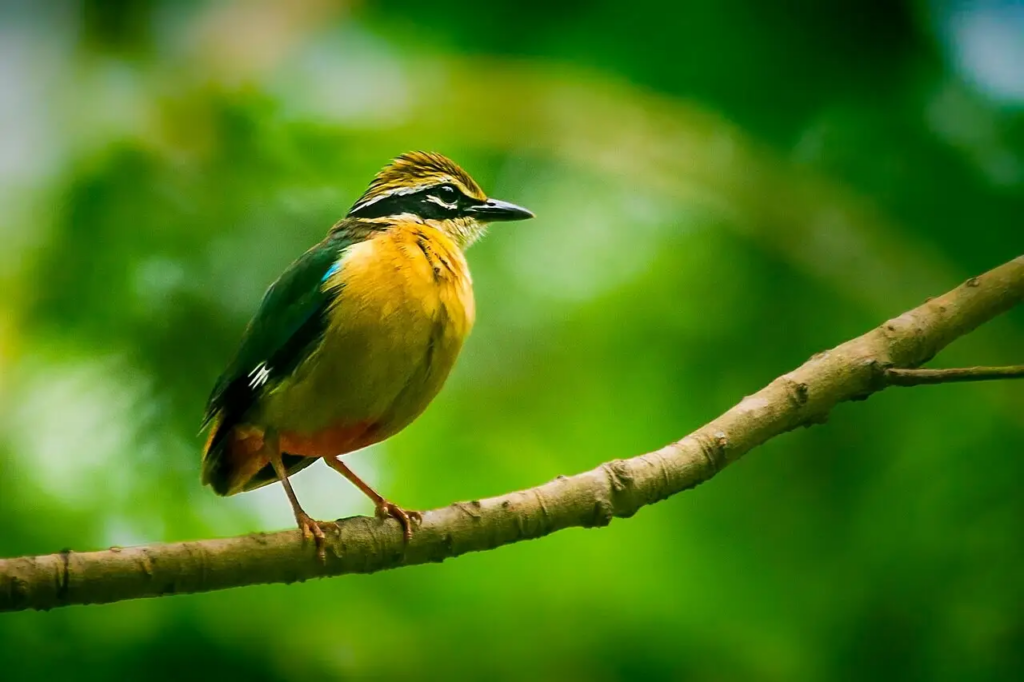
- Indian Pitta
- Scarlet Minivet
- Blue-throated Barbet
- Oriental Magpie Robin
- Paradise Flycatcher
You’ll also notice increased woodpecker activity, especially along fire lines and older tree clusters.
Safari Strategy for Bijrani
If you’re planning a Bijrani jeep safari birdwatching April booking, aim for:
- Morning safaris (6:00–9:30 AM) for maximum activity
- Routes covering waterholes and fire lines
- A guide who understands bird movement, not just wildlife tracking
A well-planned morning here can easily give you 20–25 species in a single drive.
Bijrani is your best bet if you’ve got one day. The dense sal forests along fire lines shelter woodpeckers in the morning, and waterholes #2 and #4 attract flycatchers and minivets by mid-morning. Ask your driver to slow down near stream crossings — that’s where hornbills feed.
Dhikala Bird Safari April 2026: Best Zone for Raptors & Waterbirds
Dhikala is a completely different experience. Unlike Bijrani’s forest density, this zone opens up into grasslands and riverbanks, making it ideal for spotting larger birds and water-dependent species.
If you’re considering a Dhikala bird safari in April 2026, this is where you’ll see the landscape do half the work for you.
What Makes Dhikala Unique
- Ramganga River attracts constant bird movement
- Open terrain allows long-distance spotting
- Ideal for raptors, storks, and large waterbirds
Birds You’re Likely to Spot
- Pallas’s Fish Eagle
- Crested Serpent Eagle
- Black-necked Stork
- Grey Heron
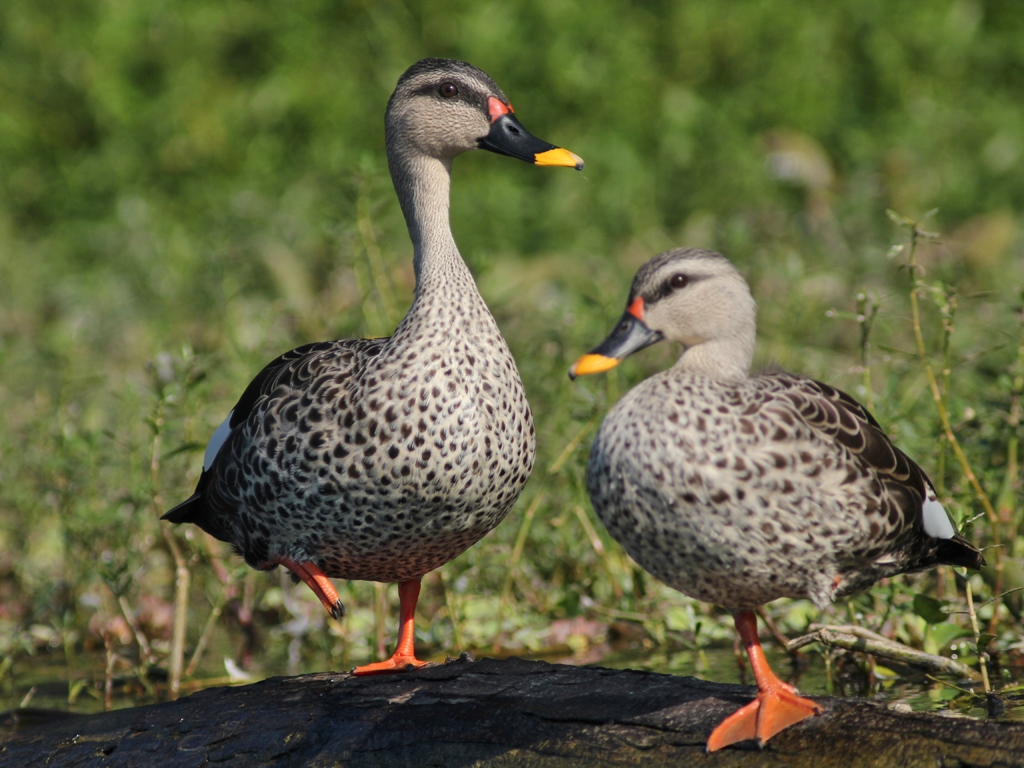
- Spot-billed Duck
- Darter
This is also one of the best zones for observing Corbett April waterbirds, kingfisher hornbill activity, especially near riverbanks.
Safari Format & What to Know
Dhikala primarily operates on canter safaris.
Dhikala requires advance planning. It’s canter-only (no private jeeps), and you’ll need to book at least 45 days ahead. But the Ramganga riverbanks here are a raptor paradise. Fish eagles, storks, and vultures patrol this stretch like clockwork between 7-9 AM.
If you’re researching Dhikala canter safari birds April prices for Indians, here’s what matters more than price:
- You get a higher vantage point (better visibility)
- It’s less flexible than a jeep, but it covers wider terrain
- Ideal for scanning large areas rather than stopping frequently
For birders, Dhikala is less about close-ups and more about diversity and scale.
Dhela Zone Birdwatching in April: Least Crowded but Highly Rewarding
Dhela is often overlooked, but in April, it can outperform expectations—especially if you want a quieter, less crowded safari.
It combines forest patches, grasslands, and water bodies, giving it a balanced ecosystem for birding.
Why Dhela Works in April
- Fewer vehicles = less disturbance
- Multiple micro-habitats in one zone
- Good mix of forest and water species
Birds You’re Likely to Spot
- Rosy Minivet
- Hodgson’s Bushchat
- White-capped Redstart
- Kingfishers and herons
- Drongos and leafbirds
Because of its mixed terrain, Dhela is great for those trying to understand migratory vs resident birds, Jim Corbett’s summer patterns in one place.
Sitabani is also the birder’s hack. No permit, no vehicle limit, open year-round. You can walk the trails at your own pace and spend as long as you want photographing vultures and bush chats. It’s technically a buffer zone, but the birding rivals the core zones on a good morning.
Which Zone is Best for Birdwatching in Jim Corbett in April?
The answer depends on what kind of birding experience you want.
- Choose Bijrani for dense forest species and close sightings
- Pick Dhikala for large birds, raptors, and river ecosystems
- Go for Dhela if you prefer fewer crowds and varied terrain
If you’re planning a 2–3 day trip, the smartest move is to combine at least two zones rather than repeating the same one.
40+ Bird Species You Can Spot in Jim Corbett in April
Of Corbett’s 650+ documented species, roughly 400 are year-round residents, and another 40-50 summer visitors arrive between March and May (Avibase, 2025). That means April delivers 440+ potential species — the breeding season’s vocal displays and waterhole concentrations make 40+ sightings per trip entirely realistic. We’ve organized this list by habitat so you can match species to zones during your trip.
Forest Birds in Bijrani Zone (High Probability Sightings)
If you’re exploring Bijrani zone birds in April, this is where forest species dominate. These birds thrive in sal forests and are most active during early mornings.
Key species to look out for
- Great Slaty Woodpecker
- Himalayan Flameback
- Blue-throated Barbet
- Indian Pitta
- Scarlet Minivet
- Rosy Minivet
- Oriental Magpie Robin
- Red Junglefowl
- Collared Falconet
- Drongos and Leafbirds
These species are often spotted along fire lines and near older tree clusters, especially where water is accessible.
What makes sightings easier here
- Birds move between predictable feeding zones
- Repeated calls help in identification
- A dense canopy still allows decent visibility in summer
Raptors & Owls in Dhikala Zone (River & Grassland Specialists)
A Dhikala bird safari in April 2026 is where you’ll see some of the most powerful bird species in Corbett.
With open landscapes and access to the Ramganga river, this zone is ideal for spotting birds of prey and large ground species.
Key species to look out for
- Pallas’s Fish Eagle
- Crested Serpent Eagle
- Lesser Fish Eagle
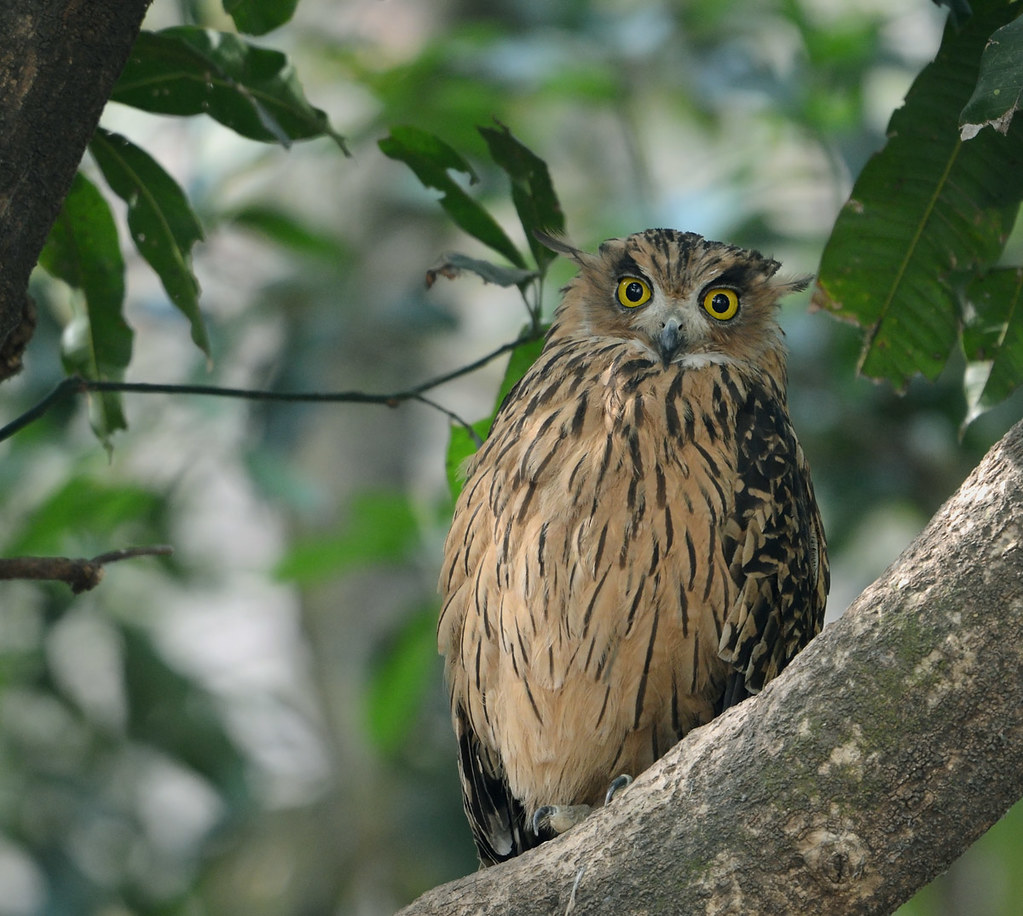
- Tawny Fish Owl
- Brown Fish Owl
- Spot-bellied Eagle Owl
- Cinereous Vulture
Why Dhikala stands out
- Open terrain makes scanning easier
- Birds are often seen perched or gliding
- River proximity increases hunting activity
If you’re into photography, this is also one of the best places to apply wildlife photography tips, especially for Corbett safari beginners, and for birds in flight.
Waterbirds & Riverine Species (Best Near Ramganga & Kosi Belt)
April birding in Corbett revolves heavily around water. As temperatures rise, bird activity becomes concentrated around rivers and waterholes.
This is where Corbett April waterbird kingfisher hornbill sightings peak.
Key species to look out for
- Grey Heron
- Cattle Egret
- Black-necked Stork
- Spot-billed Duck
- Darter
- Great Crested Grebe (occasional)
- Common Kingfisher
- White-capped Redstart
- Ibisbill (rare but possible)
Where to focus
- Ramganga River (Dhikala)
- Smaller streams and reservoirs (Dhela)
- Waterholes in Bijrani
These areas offer some of the most consistent birding opportunities in April.
Flycatchers, Chats & Summer-Active Birds (Across All Zones)
April is when some of Corbett’s most photogenic birds become active. These species are often seen darting between branches or perching briefly—making them a favourite among photographers.
Key species to look out for
- Paradise Flycatcher
- Verditer Flycatcher
- Hodgson’s Bushchat
- White-tailed Rubythroat
- Bright-headed Cisticola
- Large Pied Wagtail
These are the species that reward patience. If you’re using tools like the Merlin app for Corbett species identification, this is where it becomes incredibly useful.
Open Grassland & Edge Species (Dhela + Dhikala)
Open patches and forest edges are often underestimated but can be incredibly productive.
Key species to look out for
- Indian Peafowl
- Wagtails
- Wallcreeper (rare)
- Lapwings and ground birds
- Smaller raptors
These areas are best explored during early mornings or late evenings when activity is highest.
Quick Checklist: 40+ Birds You Can Expect in April
Here’s a simplified checklist you can actually use during your trip:
Forest Birds
- Great Slaty Woodpecker
- Indian Pitta
- Scarlet Minivet
- Blue-throated Barbet
- Red Junglefowl
Raptors & Owls
- Pallas’s Fish Eagle
- Crested Serpent Eagle
- Tawny Fish Owl
Waterbirds
- Grey Heron
- Black-necked Stork
- Common Kingfisher
- Darter
Flycatchers & Small Birds
- Paradise Flycatcher
- Verditer Flycatcher
- Bushchats
- Wagtails
Others
- Indian Peafowl
- Collared Falconet
- Drongos
- Leafbirds
What Makes April Special for Birding in Corbett?
Summer visitors like the Indian Pitta and Paradise Flycatcher arrive by late March, joining 400+ resident species already in breeding mode (corbett-national-park.com). April isn’t the “off-season” birders assume it is — it’s actually one of the most productive months for species variety.
Here’s why April works so well for birders:
Breeding behaviour makes birds visible. Males sing loudly from exposed perches, build nests in conspicuous locations, and display colourful plumage. You’ll hear before you see, and that’s half the battle in birding.
Heat concentrates birds at the water. With temperatures reaching 35-40°C, every waterhole becomes a congregation point. A single Dhikala waterhole can yield 15-20 species in an hour — something December’s dispersed birds can’t match.
Fewer tourists mean quieter safaris. Winter (Nov-Feb) draws the biggest crowds. April’s safari vehicles carry birders and photographers, not noisy first-timers hoping for a tiger selfie. Your guide can stop longer at birding hotspots.
Summer migrants add to the count. Species like Black-naped Monarch, Asian Paradise Flycatcher, and Indian Pitta are April exclusives — you won’t find them during the popular winter season.
| Season | Months | Strengths | Drawbacks |
|---|---|---|---|
| Winter (Peak) | Nov-Feb | Migratory waterfowl, Wallcreeper, highest diversity | Crowded safaris, cold mornings |
| Spring/Summer | Mar-Jun | Breeding displays, summer visitors, waterholes | Heat limits midday activity |
| Monsoon | Jul-Sep | Most zones closed | Only Jhirna and Sitabani open |
| Post-Monsoon | Oct-Nov | Park reopens, early migrants | Migratory waterfowl, Wallcreeper, and the highest diversity |
Jim Corbett Safari Booking, Prices & Planning (April 2026 Guide)
If you’re planning Jim Corbett bird watching April, getting your safari bookings right is just as important as choosing the right zone. April sits in a sweet spot—high birding activity but still manageable crowds—which means slots fill up faster than you’d expect.
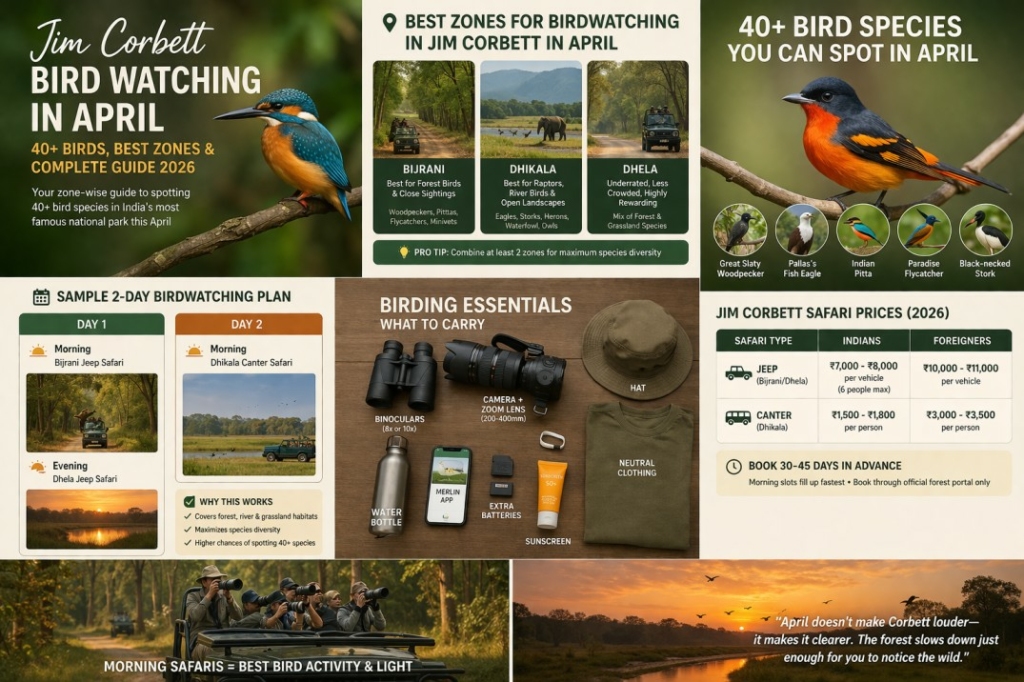
For April 2026, book your Jim Corbett safaris at least 30–45 days in advance, especially for Bijrani and Dhikala zones, as morning slots get fully reserved first.
Safari Pricing Table (2026 Rates)
| Component | Indians (per jeep) | Foreigners (per jeep) | Per Person (6 Indians) |
|---|---|---|---|
| Permit | INR 3,380 | INR 6,680 | INR 563 |
| Vehicle charge | INR 2,700-3,000 | INR 2,700-3,000 | INR 450-500 |
| Guide fee | INR 900 | INR 900 | INR 150 |
| Total (Jeep – Bijrani/Dhela) | INR 7,000-7,900 | INR 10,300-11,000 | INR 1,200-1,400 |
| Canter (Dhikala, per seat) | INR 1,770 (incl. GST) | INR 3,540 | — |
Booking process: Book online at corbettgov.org at least 45 days ahead. Select zone, date, and shift (morning 6:30-9:30 AM or evening 2:30-6 PM). For birding, always choose the morning shift — bird activity drops dramatically after 10 AM in April’s heat.
Camera fees: Some zones charge an additional INR 500-1,000 for professional camera equipment (lenses over 200mm). Check at the gate.
Money-saving tip: Share a jeep with fellow birders to split the INR 7,000 cost six ways. Solo travellers can join shared jeep groups organised by Ramnagar hotels and safari operators.
Jim Corbett Safari Prices (2026): Indians vs Foreigners
Understanding pricing helps you plan smarter, especially if you’re comparing zones or safari types.
Jeep Safari (Bijrani / Dhela)
| Component | Indians | Foreigners |
|---|---|---|
| Permit | ₹3,000–₹3,500 | ₹6,500+ |
| Vehicle | ₹2,500–₹3,000 | Same |
| Guide | ₹900 | ₹900 |
| Total (per jeep) | ₹7,000–₹8,000 | ₹10,000–₹11,000 |
👉 Per person cost (6 people sharing): approx. ₹1,200–₹1,400
Sample Birding Itinerary: 2 Days in Jim Corbett
A two-day trip covering three habitat types — sal forest (Bijrani), grassland/river (Dhikala), and open buffer (Sitabani) — can yield 40-50 species based on April field reports from birding operators. Here’s the day-by-day plan:
Day 1: Bijrani Zone (The All-Rounder)
| Time | Activity | Target Species |
|---|---|---|
| 5:30 AM | Leave accommodation near Amdanda gate (1-2 km) | — |
| 6:30-9:30 AM | Morning jeep safari — fire lines, waterholes #2 and #4 | Great Slaty Woodpecker, Paradise Flycatcher, Crested Serpent Eagle, minivets |
| 10 AM-1 PM | Return, brunch, veranda birding at forest rest house | Barbets, drongos, Oriental Magpie Robin |
| 1-3 PM | Rest — heat peaks at 35-40°C | — |
| 3-6 PM | Afternoon jeep safari — stream crossings, forest edges | Great Hornbill, Serpent Eagle, kingfishers |
| 6:30 PM | Exit gate, log sightings (expect 25-30 species) | — |
Day 2: Dhikala + Sitabani (Raptors and Vultures)
| Time | Activity | Target Species |
|---|---|---|
| 5:00 AM | Sitabani buffer zone (no permit needed) — walk trails at your own pace | — |
| 6:30-10 AM | Dhikala canter safari — Ramganga riverbank, grasslands | Pallas’s Fish Eagle, Black Stork, Tawny Fish Owl, vultures |
| 11 AM-2 PM | Return to Ramnagar, lunch | — |
| 3-5:30 PM | Sitabani buffer zone (no permit needed) — walk trails at own pace | White-rumped Vulture, Emerald Dove, Bush Chats, Lapwings |
| Evening | Total trip species count: 40-50 species | — |
Budget estimate for 2 days (per person, Indians): INR 2,400-3,200 for safaris (2 jeep + 1 canter) + INR 3,000-8,000 for accommodation + INR 1,000-1,500 for meals = INR 6,400-12,700 total.
What Gear and Apps Do You Need for Corbett Birding?
Binoculars are the single most important piece of birding equipment — experienced birders use them 3-4x more than cameras during a typical safari, according to birding tour operators in Corbett. Don’t overthink the rest of the gear list. Here’s what actually matters for April’s conditions:
Essential Kit
- Binoculars: 8×42 or 10×42 compact (Nikon Monarch, Celestron Nature DX). Non-negotiable — you’ll use them more than your camera.
- Camera: An entry-level mirrorless camera with a 100-400mm lens is enough for most species. Canon R10 + RF 100-400mm is the sweet spot for value.
- Clothing: Neutral tones (khaki, olive, brown) — bright colours spook birds: long-sleeve cotton shirt, breathable trousers, wide-brim hat.
- Sun protection: SPF 50+ sunscreen, DEET insect repellent, reusable water bottle (2 litres minimum).
- Footwear: Trail shoes or light hiking boots. No sandals — forest tracks are rough.
Best Birding Apps
- Merlin Bird ID (free) — Photo and sound identification. Point your phone at a calling bird, and it’ll tell you the species. Works offline once you download the India pack.
- eBird (free) — Log sightings, check recent hotspot reports for Corbett. Other birders’ recent logs tell you exactly what’s being seen this week.
- Collins Bird Guide app (INR 800-1,200) — Covers 1,000+ Indian subcontinent species with illustrations, calls, and seasonal plumage details.
What NOT to Bring
Avoid bright red or white clothing (scares birds), single-use plastics (park rules prohibit them), heavy tripods (banned on jeep safaris — use a monopod instead), and Bluetooth speakers for bird call playback (unethical and against park guidelines).
Best Camera for Corbett Birds in Flight Photography
If you’re specifically looking for the best camera for Corbett birds in flight photography, prioritise:
- Fast autofocus (AF-C / continuous tracking)
- High burst rate (10–20 fps or more)
- Crop sensor advantage (extra reach)
Recommended setups (practical, not overkill)
- Entry-level: Mirrorless with 100–400mm lens
- Mid-range: APS-C body (better reach for birds)
- Pro: Full-frame with 100–500mm lens
You don’t need the most expensive setup—you need a responsive one.
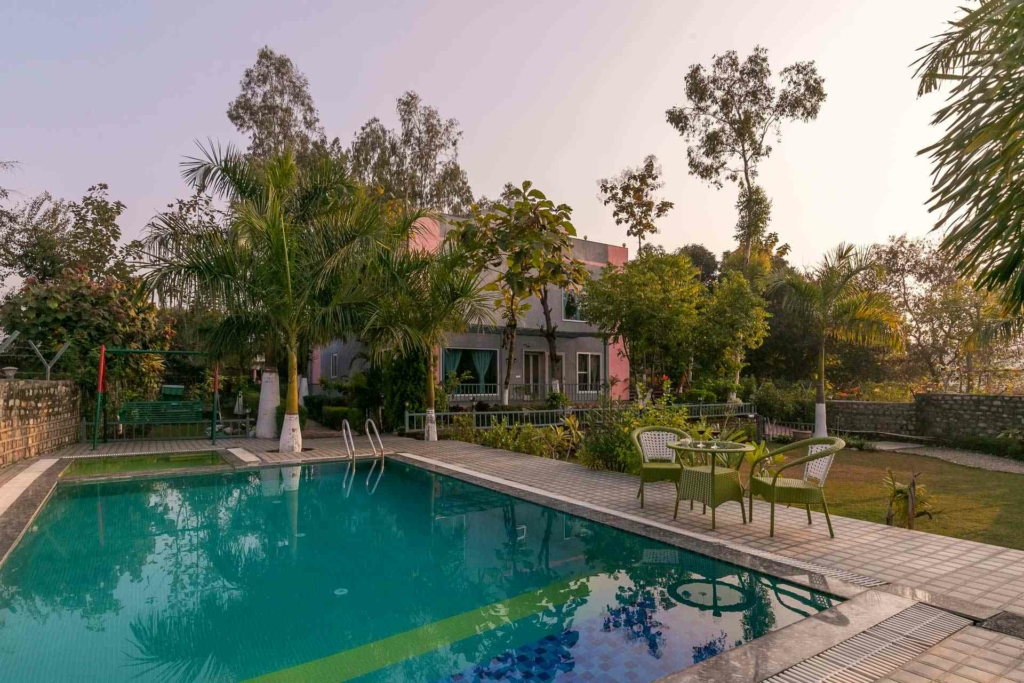
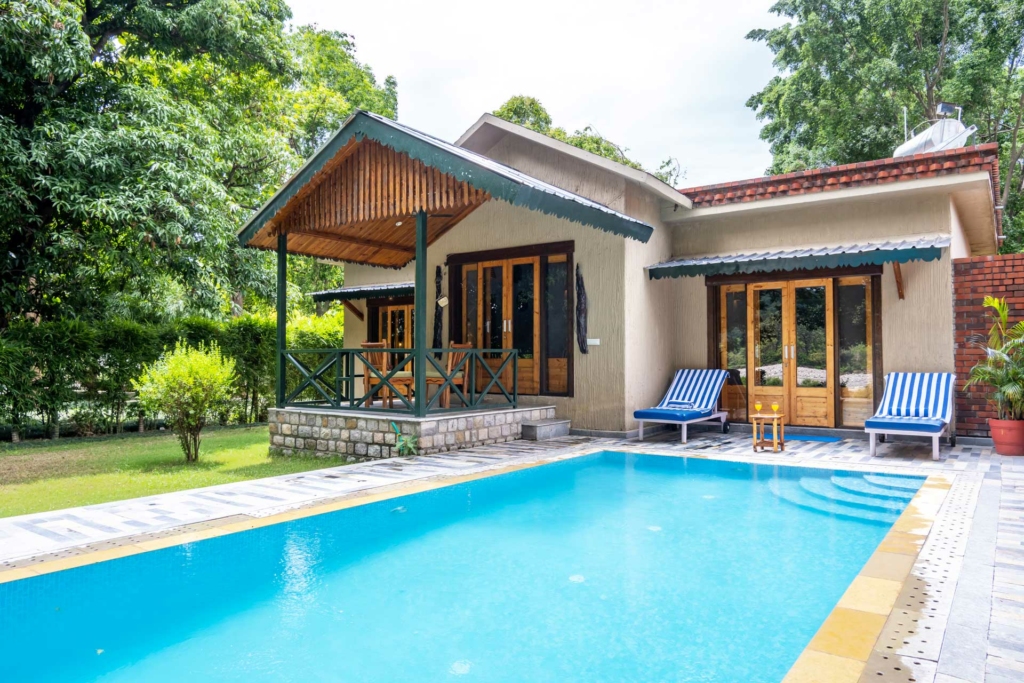
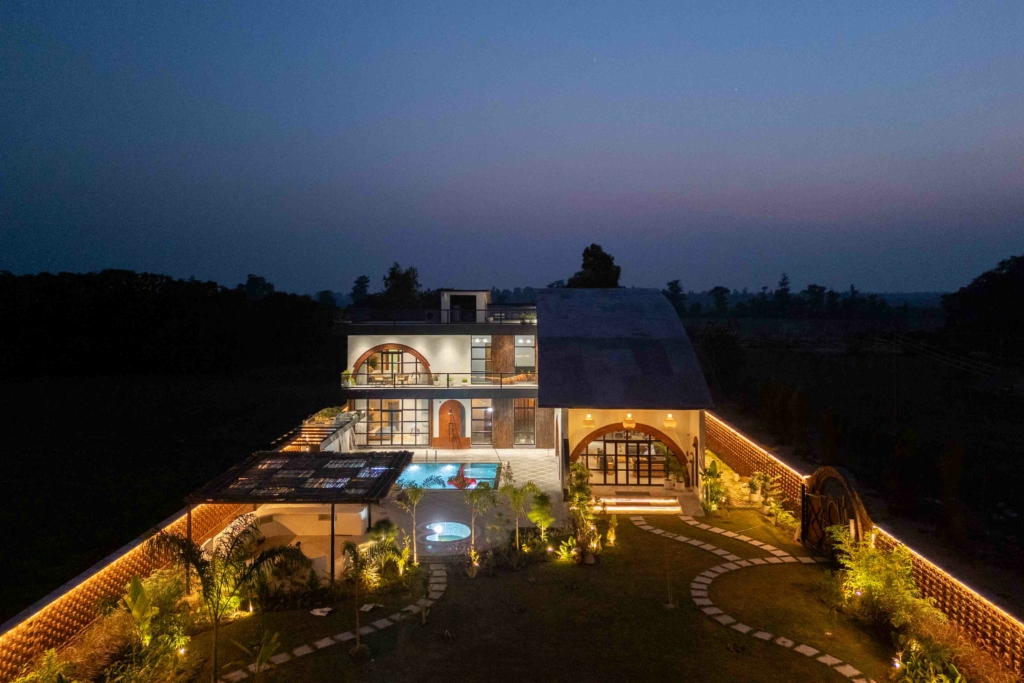
Where to Stay (Strategic Location Tip)
For early access and smoother logistics, staying near entry gates like Amdanda or Dhangari makes a big difference.
FAQs: Jim Corbett Bird Watching April (2026 Guide)
Yes, April is one of the best months for birdwatching in Jim Corbett National Park because birds gather around water sources, making sightings more predictable across zones like Bijrani, Dhikala, and Dhela. Unlike winter, April focuses on resident and breeding species, which are more active, vocal, and easier to observe.
Bijrani offers the best all-round birding with dense sal forests, waterholes, and 25-30 species per morning safari across its 230 sq km area. Dhikala’s 350+ sq km of grasslands and Ramganga riverbanks are unbeatable for raptors and waterbirds. For rare hill birds like Wallcreeper and Ibisbill, Durga Devi is the specialist’s choice. Beginners should start with Dhela or Sitabani (no permit needed).
Jim Corbett hosts over 650 documented bird species — 669 per the Avibase checklist (Avibase, 2025). That’s more than any other national park in India, including Bharatpur (400+) and Kaziranga (480+). The count includes 30 globally threatened species and 51 raptor species.
Early morning safaris (6:00 AM to 9:30 AM) offer the highest bird activity. This is when birds are feeding, calling, and moving between perches, making them easier to spot and photograph. Evening safaris can still be productive, but are generally less active than mornings.
Yes — for all 6 core zones (Bijrani, Dhikala, Dhela, Jhirna, Durga Devi, Sonanadi), you need a safari permit booked at corbettgov.org. Permits cost INR 3,380 for Indians per jeep. Sitabani buffer zone requires no permit and is open year-round with no vehicle restrictions — it’s ideal for self-paced birding.
Jeep safari (Bijrani/Dhela) costs INR 7,000-7,900 per vehicle for Indians (INR 1,200-1,400 per person when shared among 6). Dhikala canter costs INR 1,770 per seat. Foreigners pay approximately 50% more. A guide fee of INR 900 per vehicle is mandatory.
November to February for 100+ migratory waterfowl species from Siberia and Central Asia. March to June for 400+ breeding residents and 40-50 summer visitors. April specifically offers the best combination of species variety, breeding activity, and uncrowded safaris. Only Jhirna and Sitabani remain open during the monsoon (July-September).
Plan Your Birding Trip to Jim Corbett
Jim Corbett isn’t just India’s oldest national park — with 650+ bird species, it’s the country’s richest birding ground. April brings the best of both worlds: summer migrants in dazzling plumage and resident birds concentrated at waterholes.
Key takeaways:
- Corbett has more bird species (650+) than Bharatpur, Kaziranga, or any other Indian park
- Bijrani, Dhikala, and Dhela are the top three zones for April birding
- A 2-day trip covering three zones can yield 40-50 species
- Morning safaris (6:30-9:30 AM) are non-negotiable — afternoon heat kills activity
- Book safaris 45 days ahead at corbettgov.org
- Sitabani requires no permit and is perfect for self-paced photography
- Budget: INR 6,400-12,700 for a 2-day birding trip (per person, Indians)
Pack your binoculars, download Merlin Bird ID, and book that morning safari. Corbett’s 650+ species aren’t going to spot themselves.
Last updated: March 2026. Safari fees and zone opening dates are subject to change — verify at corbettgov.org before booking. Species sightings vary by weather, time, and luck. This guide is based on field reports, birding tour operator data, and the Avibase species checklist.