
Munnar Jacaranda Bloom 2026: Where to See It, When to Go & How to Catch the Purple Season Right
In this Blog
Munnar Jacaranda Bloom Explained: Why Munnar Turns Purple in Spring
The first time you see it, you almost miss it.
A tree here, a faint wash of colour there. Nothing dramatic. And then, somewhere along the drive out of Munnar, the landscape begins to shift.
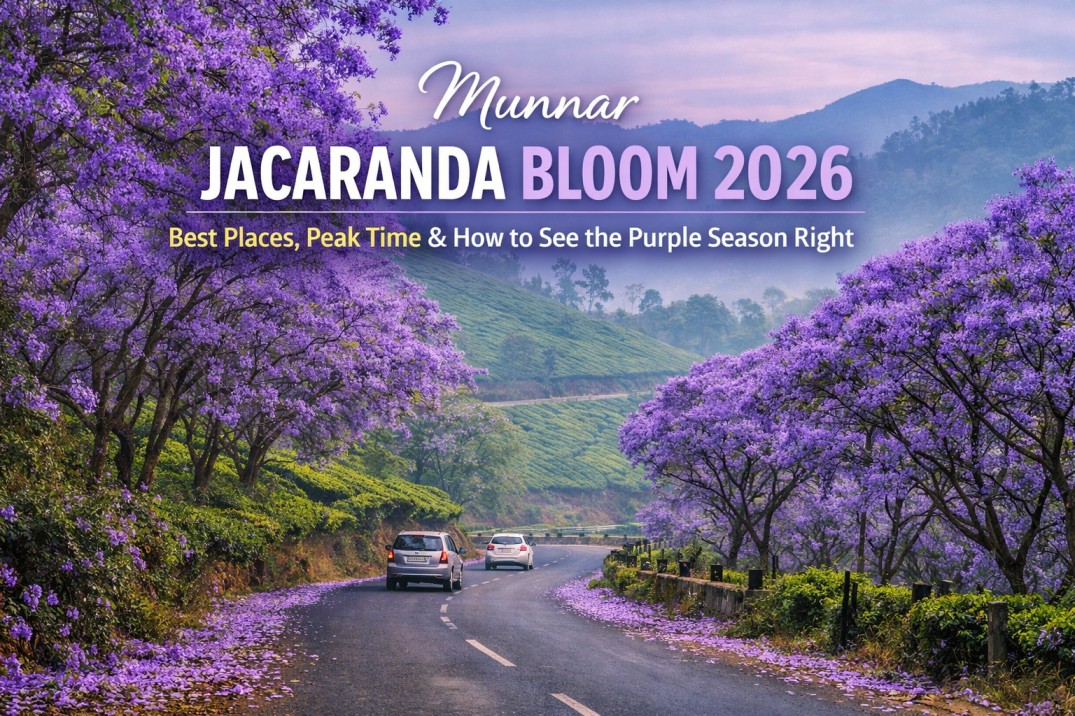
You’re suddenly in the middle of the Munnar jacaranda bloom—where jacaranda trees in Munnar line the roads, and the hills take on that soft violet tone people describe as “Munnar turning purple.”
It doesn’t arrive like a festival. No signboards, no entry points. Just stretches of road where everything quietly changes.
Best Time to See Munnar Jacaranda Bloom 2026 (Jacaranda Flowering Season March–April)
If you’re planning this around dates, this is where most people get it wrong.
The bloom begins subtly in late February, builds through March, and peaks when everything aligns—usually between the last week of March and early April.
This is the heart of the jacaranda flowering season in Munnar, March and April.
After that, it drops faster than expected. Not gradually—noticeably.
If you’re aiming for 2026:
- Late March → safest
- Early April → still strong
- Mid-April → inconsistent
Jacaranda Bloom Best Time of Day in Munnar (When Colours Look Their Best)
The same road can feel completely different depending on when you drive it.
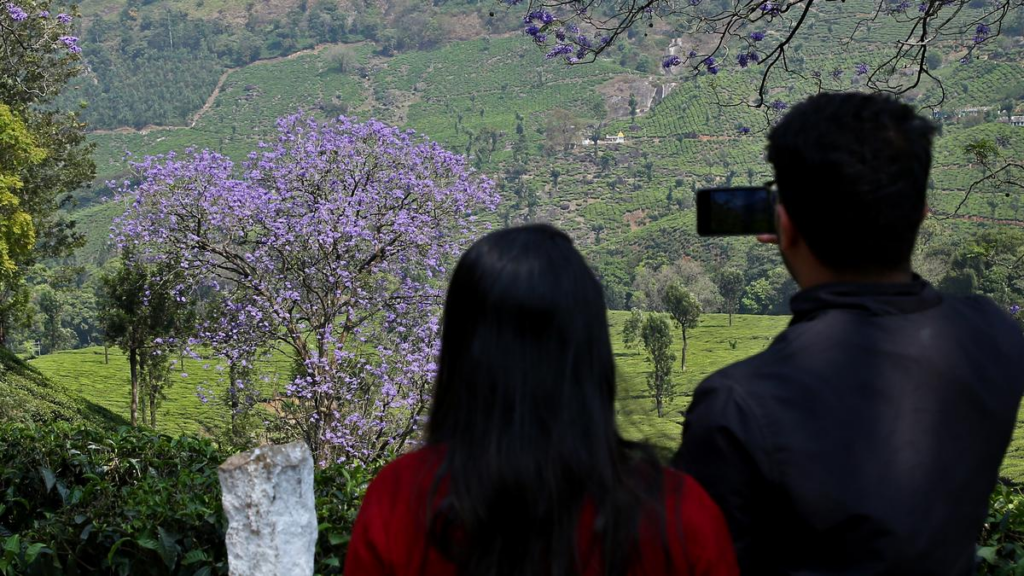
Early morning is when the hills are quieter, the air lighter, and the colours lean cooler—closer to the blue jacaranda flowers in Munnar hills you see in photos.
Evening brings warmth. The purples deepen, shadows stretch, and everything feels more layered.
Midday? It flattens the experience.
If you’re choosing:
- 6:30–9:30 AM → best for atmosphere
- 4–6 PM → best for depth
Where to See Jacaranda Bloom in Munnar 2026 (Exact Viewpoint Locations & Routes)
This is the part most people are actually trying to figure out.
Not what the bloom is—but where to see jacaranda bloom in Munnar 2026 without wasting time.
The answer isn’t a single point. It’s a route.
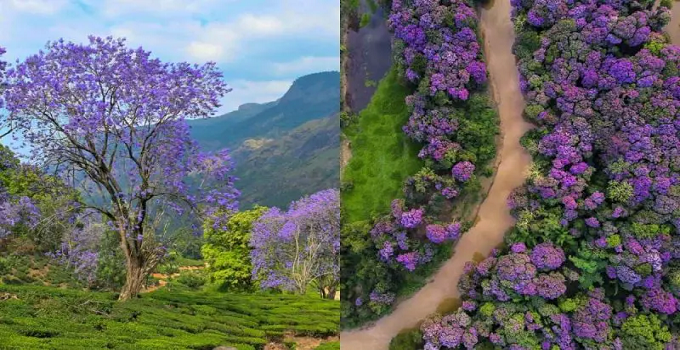
📍 Pallivasal Munnar Jacaranda Viewpoint (Closest Stretch)
About 10–15 km out of Munnar, this is where you start seeing the first real clusters.
This stretch is often referred to as the Pallivasal Munnar Jacaranda Viewpoint, but in reality, it’s a series of roadside sections—not a fixed stop.
📍 Vaguvarai Tea Estate Jacaranda Bloom (18 km from Munnar)
This is where things shift from scattered to immersive.
The vaguvarai jacaranda trees, which are 18 km from Munnar, create long stretches where the road is lined on both sides—what people often call the “purple corridor.”
If you’re prioritising one area, make it this.
📍 Lakkam Waterfalls, Jacaranda Flowers & Nearby Viewpoints
As you move further, towards Lakkam Waterfalls, the bloom becomes more spaced out—but the setting changes.\
More forest. More open views. And often, petals gathered along the roadside.
This is where the Munnar jacaranda viewpoint near Lakkam waterfall becomes less about density and more about atmosphere.
📍 Munnar–Marayoor Road Jacaranda Trees (The Main Route That Connects Everything)
Everything sits along this drive.
The Munnar Marayoor road, with its stretch of jacaranda trees, is what ties Pallivasal, Vaguvarai, and Lakkam together.
You don’t jump between spots—you stay on this road long enough to see the bloom unfold.
Why the Munnar Jacaranda Bloom Feels Different From Other Flower Seasons
Most flower experiences are static.
You arrive. You see. You leave.
This one moves.
The experience builds gradually:
- First, a few trees
- Then clusters
- The entire stretches
And just as you settle into it, it starts thinning again.
That’s what makes the short jacaranda season in Munnar feel less predictable—and more rewarding when you catch it right.
What Most Travellers Get Wrong About the Munnar Jacaranda Bloom
They treat it like a checklist.
Try to locate the exact pins. Rush between stops. Expect one “main viewpoint.”
That’s not how this works.
The best moments aren’t marked:
- A curve in the road
- A sudden canopy
- Light hitting at the right angle
And those don’t show up on maps.
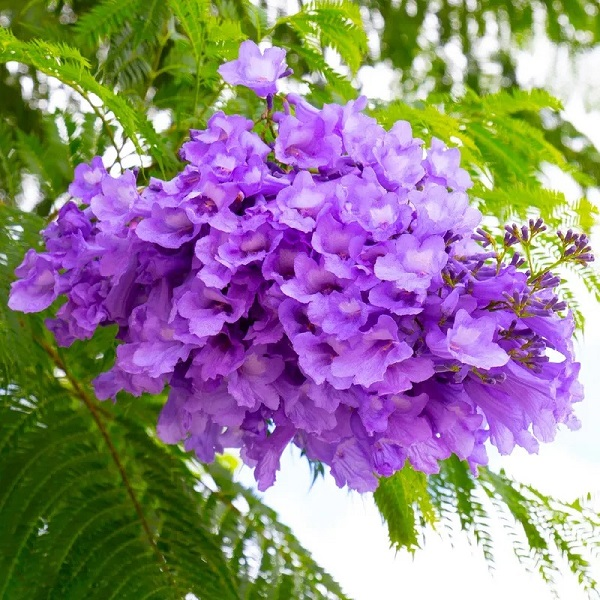
How to Reach Jacaranda Viewpoints in Munnar (Pallivasal, Vaguvarai & Lakkam Route Guide)
One of the easiest ways to get this wrong is by searching for exact pins.
There aren’t any.
The Munnar jacaranda viewpoint locations aren’t marked on maps—they appear along a single driving route. Once you understand that, everything becomes simpler.
From Munnar, you’re essentially following one direction:
→ towards Pallivasal
→ continuing towards Marayoor
→ extending till Lakkam
That’s it.
How to Reach Pallivasal Jacaranda Trees from Munnar
- Distance: ~10–15 km
- Time: 25–30 minutes
Start from Munnar town and take the main road heading towards Pallivasal / Marayoor. Within 15–20 minutes, you’ll begin noticing trees along the roadside.
There’s no “entry”—you slow down where the bloom appears.
How to Reach Vaguvarai Tea Estate, Jacaranda Bloom (18 km Stretch)
- Distance: ~18 km
- Time: ~40 minutes
Stay on the same road. Don’t turn off.
As you move further, the clusters get denser. By the time you reach this stretch, the bloom becomes immersive—the kind where both sides of the road begin to line up.
If you’re limited on time, this is the one stretch you don’t skip.
How to Reach Lakkam Waterfalls Jacaranda Viewpoints
- Distance: ~24–26 km
- Time: ~1 hour
Continue further along the same route until you reach the signboards for Lakkam Waterfalls.
Park near the falls and explore the surrounding road.
The bloom here is more spaced out, but the setting changes—more forest, more depth, and often petals collected along quieter edges.
Munnar Jacaranda Road Trip from Kochi (How the Bloom Fits Into the Drive)
If you’re starting from Kochi, the journey itself becomes part of the experience.
- Distance: ~125 km
- Time: 4–5 hours
The early part of the drive is mostly green—waterfalls, tea estates, winding roads. The jacaranda bloom doesn’t appear immediately.
But as you get closer to Munnar, especially near Pallivasal, you’ll begin spotting the first trees.
How to Plan This Smartly
Instead of reaching Munnar late:
- Arrive a day before
- Stay overnight
- Start early the next morning for the bloom
This gives you control over timing, which is everything here.
One-Day Munnar Jacaranda Itinerary (Cover All Viewpoints Without Rushing)
This is where most people struggle—trying to fit everything without understanding the flow.
6:30 AM — Start from Munnar
Leave early. This is what sets the tone for the entire experience.
7:00–9:00 AM — Pallivasal Stretch
- First clusters
- Light mist
- Minimal traffic
Take short stops, don’t overstay—this is your warm-up.
9:30–12:00 PM — Vaguvarai Tea Estate
- Main bloom zone
- Long stretches
- Best for photos
This is where you spend the most time.
1:30–4:00 PM — Lakkam Waterfalls + Nearby Roads
- Walk down to the falls
- Explore nearby stretches
- Slower, more relaxed pace
4:00–6:00 PM — Return Drive
Everything looks different on the way back.
The same roads feel warmer, deeper, more layered.
This is when you stop again—not because you have to, but because you want to.
Best Jacaranda Photo Spots in Munnar (How to Find Them Without Maps)
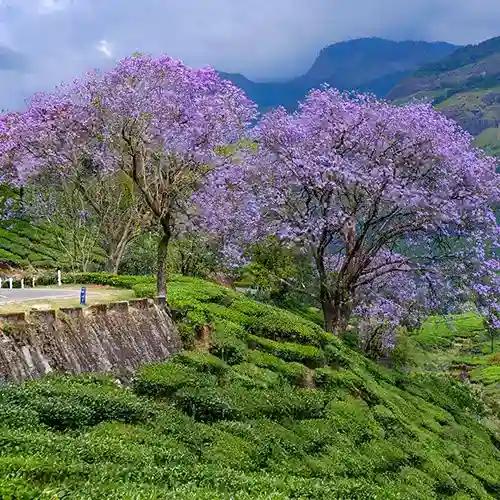
There are no “top 5 spots.”
But there are patterns.
The best Munnar jacaranda bloom photo spots usually appear where:
- The road curves slightly
- Trees lean inward, forming a canopy
- Light filters through at an angle
- You see 2–3 cars already parked
Hidden Extensions: Chinnakanal, Thalayar & Gap Road Jacaranda Trees
If you have more time, you’ll notice smaller clusters beyond the main route.
These show up around:
- Chinnakanal
- Thalayar
- Gap Road
Think of them as bonus sightings—not the main event.
How to Photograph Munnar Jacaranda Bloom (Best Angles, Light & Photo Spots)
The instinct is to zoom in.
But the munnar jacaranda bloom photo spots work best when you step back.
What makes this landscape stand out isn’t the flower—it’s the way it sits in the scene. The road cutting through it, the tea estates opening up behind it, the way the trees lean inward just enough to frame everything.
What actually works
- Wide shots → road + trees together
- Slightly lower angles → make the canopy feel immersive
- Long stretches → capture repetition, not isolation
Timing your shots
- Morning → softer, bluish tones (closer to blue jacaranda flowers in Munnar hills)
- Evening → warmer, richer purples
- Midday → avoid unless necessary
If you’re shooting reels
- Walk into the frame, don’t just stand
- Capture moving shots (driving clips work beautifully)
- Focus on petals on the road—it adds depth
Is Munnar Jacaranda Bloom Worth Visiting in April 2026?
This is the real decision point.
Yes — but only if you time it right.
The munnar jacaranda bloom isn’t something you can visit anytime in April and expect the same experience.
FAQs: Munnar Jacaranda Bloom 2026 (Everything People Ask Before Going)
The bloom typically begins in late February, peaks between late March and early April, and fades by mid-April.
You’ll find the best stretches along the Pallivasal–Munnar road, near Vaguvarai Tea Estate, and around Lakkam Waterfalls.
Early morning (6:30–9:30 AM) or late afternoon (4–6 PM) offers the best light and least traffic.
Yes. If you start early from Munnar and follow the road towards Pallivasal, Vaguvarai, and Lakkam, you can comfortably cover all major stretches in a day.
Not necessarily—but early April is ideal. By mid-April, the bloom starts fading quickly.
No. The trees are visible along the main road towards Marayoor. Knowing the direction is more important than having a guide.
Where to Stay Near Munnar Jacaranda Bloom (For Easy Access to Viewpoints)
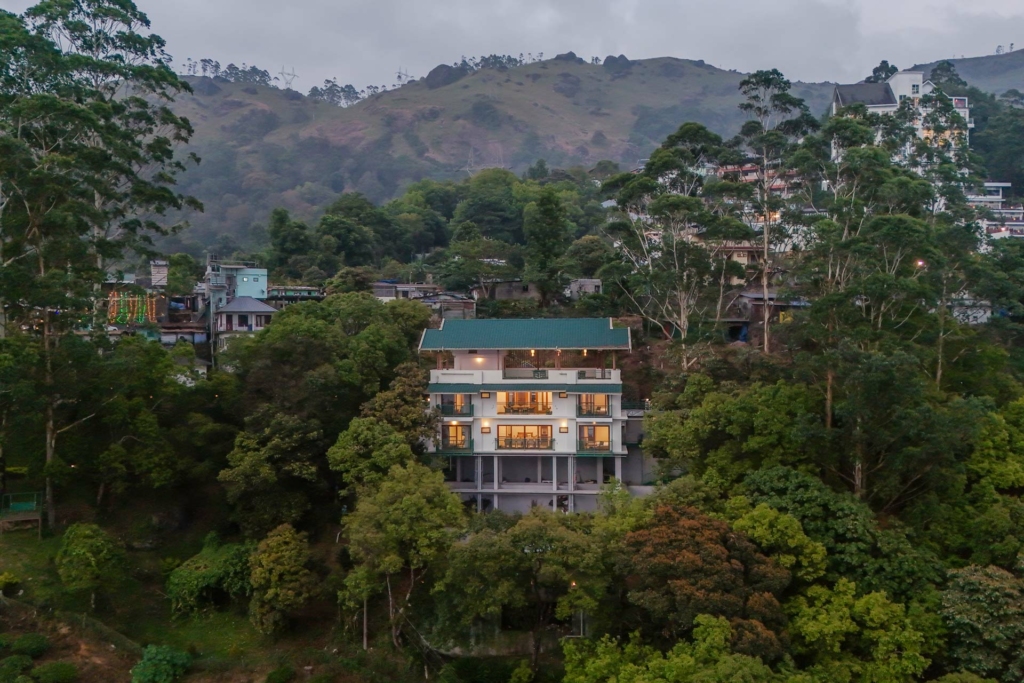
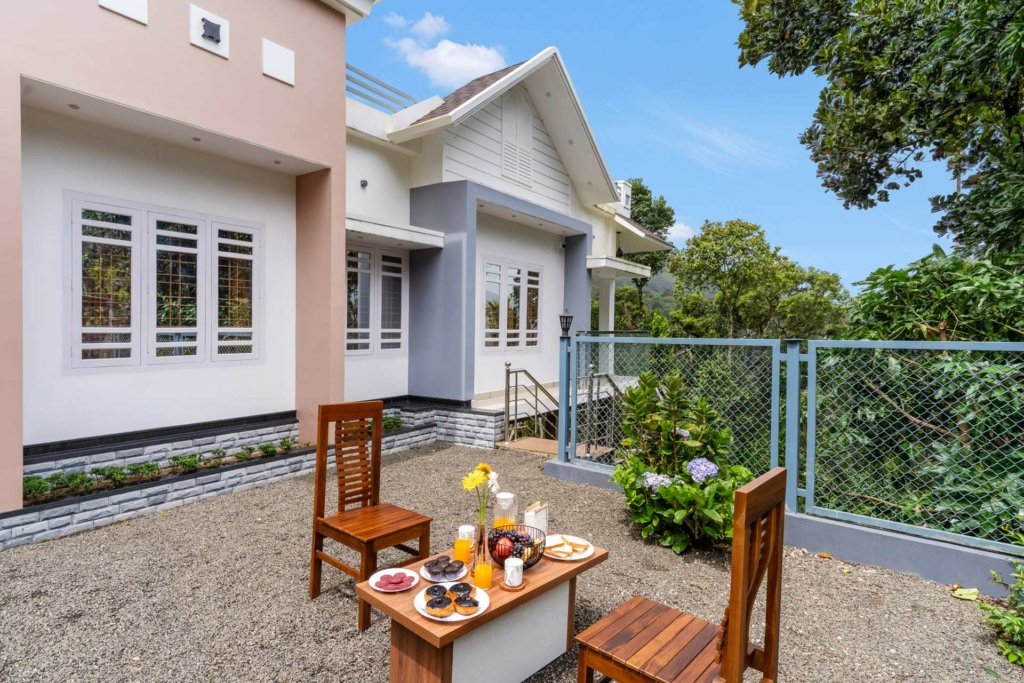
If you’re planning to explore this properly, where you stay changes the experience.