
91% of Indians Now Want Nature-First Trips in 2026: 12 Escapes That Deliver
For the first time in a long time, the numbers and the feeling on the ground are saying the same thing. A Booking.com Travel Trends report for 2026 confirmed that 91% of Indian travellers want to spend time in places with beautiful natural scenery, and 87% said their primary goal is to mentally unwind rather than check off attractions. These are not small numbers. They represent a clear shift in what Indian people are looking for when they take a break. The interest is no longer in covering the most ground or posting from the most recognisable spots. What people want is time outdoors, some quiet, and the kind of rest that only proper nature travel in India 2026 can deliver.
According to Booking.com’s 2026 Travel Trends report, 91% of Indian travellers want trips built around natural scenery, and 83% want to step away from daily demands entirely. The best nature places in India for this kind of trip in 2026 include Tirthan Valley, Pachmarhi, Netarhat, Mudumalai, Araku Valley, Kaziranga, Pench, Thattekad, Agumbe, Kanatal, Dzukou Valley, and the Rann of Kutch.
In this Blog
What 2026 Travel Data Says About Nature Getaways in India
The 91% figure from Booking.com is the headline, but there are other data points worth understanding alongside it. Separately, Deloitte’s 2026 global survey found that 70% of Indian Gen Z and millennial workers reported workplace burnout. That context matters, because it helps explain why the pull toward nature getaways in India is not a casual preference. For a large section of the country’s working population, a trip built around forests, rivers, and open air is not a luxury but a recovery. Skyscanner’s 2026 Travel Trends report added that 59% of Indians plan to travel more this year than the last, with a strong lean toward domestic, experience-rich destinations. The result is that lesser-known natural destinations across India are seeing more interest than they have in years, and the twelve places listed here represent a cross-section of what that interest looks like in practice.
1. Tirthan Valley, Himachal Pradesh: Best Nature Stay in the Himalayas
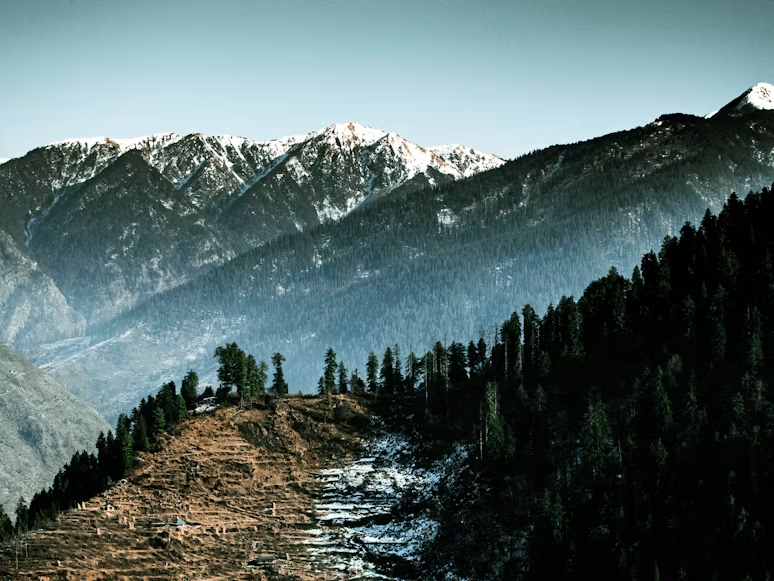
Tirthan Valley in the Kullu district of Himachal Pradesh is one of those places that rewards people who are willing to look slightly beyond the obvious hill station circuit. The valley takes its name from the Tirthan River, which originates inside the Great Himalayan National Park, a UNESCO World Heritage Site covering 754 square kilometres of protected high-altitude terrain. The river runs cold and clear through the valley, and one of the more unusual things to do in Tirthan Valley is trout fishing in its waters.
Fishing permits can be arranged through the Fisheries Department in Gushaini village, and catch-and-release is standard practice. The valley has over 200 recorded bird species, including the Western Tragopan, one of the rarest pheasants in the world.
The nature stays in India category has very few options that feel as unhurried as a riverside homestay in Tirthan. The villages of Gushaini, Ropa, and Jibhi each have small family-run cottages where guests typically eat with the hosts, walk to nearby waterfalls in the morning, and spend evenings by a bonfire. There are no malls, no loud markets, and no crowds. The best time to visit Tirthan Valley is April to June and September to November, when the trails into the national park are open and the river is in its most photogenic state.
How to reach Tirthan Valley: The nearest railhead is Joginder Nagar or Kiratpur Sahib, with onward travel by bus or cab via Aut Tunnel. Villas near Tirthan Valley are available in Jibhi and Shoja for those who prefer a more private setup with mountain views.
2. Pachmarhi, Madhya Pradesh: India’s Only Hill Station With a Biosphere Reserve
Pachmarhi sits at 1,067 metres above sea level in the Satpura Range and holds the distinction of being the only hill station in Madhya Pradesh. Its name comes from the Sanskrit words for five caves, referencing the ancient rock shelters in the area. What makes it stand apart from the typical hill station is the fact that it sits inside a UNESCO Biosphere Reserve, which means the forest cover, wildlife, and ecological rules here are far stricter than at most popular mountain destinations in India.
The Satpura National Park, which surrounds the town, covers 524 square kilometres of sandstone peaks, dense sal forests, narrow gorges, and deep ravines. It is home to tigers, leopards, Indian gaur, sloth bears, and the giant squirrel. Walking safaris are permitted in certain zones here, which is something most tiger reserves in India do not allow. Dhoopgarh, the highest point in the Satpura Range, is famous for a 360-degree view that works equally well at sunrise and sunset. The Bee Falls, which supply drinking water to the entire town, are unusual in that they are one of the few waterfalls in India you can actually walk behind. Villas near Pachmarhi have grown in number in recent years, with forest-facing cottages available on the outskirts of town. The best time to visit Pachmarhi is October to March, when the air is cool and the forest paths are at their most walkable.
3. Netarhat, Jharkhand: The Queen of Chotanagpur Plateau
Netarhat sits on the Chotanagpur Plateau in Jharkhand at about 1,127 metres and has been quietly receiving visitors for decades without ever becoming overcrowded. It is called the Queen of Chotanagpur, and the title suits it. The plateau terrain here is unlike the Himalayas or the Western Ghats; the hills are lower, the forests are denser at the ground level, and the light during sunset is unusually long and warm. Magnolia Point, the most visited spot in town, owes its name to a colonial-era story. A British woman named Magnolia reportedly fell in love with a local shepherd, was ridiculed for it, and leapt to her death from this cliff on horseback. The point was named in her memory, and small murals of the two remain on the surrounding walls.
Lodh Falls, about 60 kilometres from Netarhat, is Jharkhand’s highest waterfall and the 21st highest in all of India, plunging from a height of roughly 143 metres. What makes it particularly striking is that nobody has ever been able to measure its depth. The 2026-27 Jharkhand state budget proposed a skywalk at Magnolia Point and a glass watchtower at the Koel View Point, which means Netarhat’s infrastructure is set to improve significantly for nature travel in India for 2026 visitors. The best time to visit Netarhat is October to February for clear skies. Villas near Netarhat are limited, with most accommodation being mid-range guesthouses in the town, though private bungalow rentals are available through local agents.
4. Mudumalai, Tamil Nadu: The Oldest Wildlife Sanctuary in South India
Mudumalai was established in 1940, making it the oldest wildlife sanctuary in South India. The name means “ancient hills” in Tamil, and the forest is believed to be roughly 65 million years old, formed when the Western Ghats rose from the sea. It sits at the point where the borders of Tamil Nadu, Karnataka, and Kerala meet, sharing habitat with Bandipur Tiger Reserve to the north and Wayanad Wildlife Sanctuary to the west. This tri-state position makes Mudumalai part of one of the largest connected forest blocks in peninsular India.
One fact that surprises most visitors is that Mudumalai has the highest density of Asian elephants in Asia. Elephant herds are commonly seen near the road, especially in the early morning. The park also has 266 documented bird species, including several endemic to the Western Ghats. Nature stays in India near Mudumalai range from simple forest-adjacent guesthouses in Masinagudi to more structured jungle lodges on the Sigur Plateau. The best time to visit Mudumalai is October to March, when wildlife congregates near water sources and the forest roads are in good condition.
How to reach Mud
umalai: Ooty is 40 km away, and Mysuru is about 90 km, both well connected by road.
5. Araku Valley, Andhra Pradesh: Coffee, Tribes and the Eastern Ghats
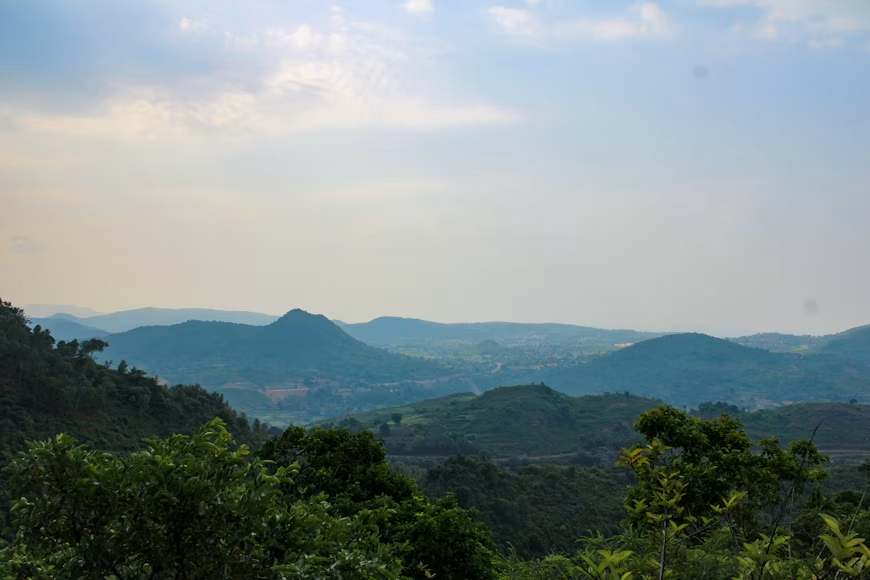
Araku Valley is one of those best nature places in India that has been changing character quietly for the past few years. Located in the Eastern Ghats of Andhra Pradesh at around 900 metres above sea level, it is home to several Adivasi communities, including the Kondh, Savara, and Gadaba tribes. The coffee grown here is organically farmed by tribal cooperatives at high altitude, and Araku coffee has now earned recognition in specialty coffee markets both within India and abroad. The valley’s Borra Caves, formed by stalactites and stalagmites over a million years, are among the deepest natural limestone formations in India.
The train journey to Araku on the Visakhapatnam-Kirandul line is considered one of the most scenic rail routes in the country, passing through 58 tunnels and 84 bridges along the Eastern Ghats. For visitors who want to go beyond the usual itinerary, guided walks through tribal hamlets are possible with advance arrangements through local community tourism groups. Villas near Araku Valley have grown in number, with several plantation-stay properties now offering rooms surrounded by coffee and pepper vines. The best time to visit Araku Valley is October to February.
How to reach Araku Valley: The Visakhapatnam-Araku Express departs from Vizag and takes about five hours.
6. Kaziranga, Assam: Where the Rhino Outnumbers the Tourist
Kaziranga National Park in Assam is a UNESCO World Heritage Site and home to more than two-thirds of the world’s one-horned rhinoceros population. The park sits on the southern bank of the Brahmaputra River in the floodplain of the Assam Valley, and its ecology changes dramatically with the annual floods. The flooding, which most parks would consider a problem, is actually what makes Kaziranga work: it replenishes the soil, keeps the grasslands fertile, and ensures that the park cannot be built upon or encroached. The best nature stays in India near the park are found in Kohora, the main access zone, where a handful of forest lodges sit very close to the park boundary.
The park has five ranges, each offering a different mix of terrain. The Kohora range is best for rhino sightings, the Agoratoli range is particularly good for elephants, and the Ghorakati range takes visitors into the more forested eastern sections. Morning jeep safaris run at 5:30 AM and the light at that hour, with mist over the grasslands and animals at the water’s edge, is genuinely special. The best time to visit Kaziranga is November to April, when the park is open to visitors.
How to reach Kaziranga: The nearest airport is in Jorhat, about 97 km away, and Guwahati is connected by road in roughly five to six hours.
7. Pench National Park, Madhya Pradesh and Maharashtra
Pench National Park straddles the border of Madhya Pradesh and Maharashtra and was the inspiration for Rudyard Kipling’s The Jungle Book. The Pench River, after which the park is named, flows through the heart of the reserve and creates a long, narrow waterway that attracts wildlife year-round. The park is known for having some of the most relaxed tiger behaviour in India; animals here tend to be less nervous around vehicles than in parks with heavier footfall, which makes sightings more extended and more natural.
The teak forests that make up most of Pench’s tree cover are striking in the dry season, when the leaf canopy thins and visibility into the forest improves. Spotted deer and Indian gaur are seen in large numbers throughout the day, and the park has a healthy leopard population that is often overlooked in the excitement of tiger tracking. Nature stays in India near Pench include some genuinely thoughtful options, with a few forest lodges using elevated treehouses and open-sided dining areas that let the forest stay present at all times. The best time to visit Pench National Park is February to May.
How to reach Pench: Nagpur airport is the closest major airport, about 90 km from the Turia gate.
8. Thattekad Bird Sanctuary, Kerala
Thattekad in Kerala’s Ernakulam district is described by ornithologists as the richest bird habitat in peninsular India. The sanctuary sits in the valley of the Periyar River and covers 25 square kilometres of tropical evergreen and moist deciduous forest. It was the ornithologist Dr Salim Ali who first brought attention to Thattekad’s biodiversity, calling it India’s richest bird habitat. The sanctuary is home to over 300 bird species, including several endemics found nowhere else in the world, such as the Sri Lanka Frogmouth and the Malabar Grey Hornbill.
What makes Thattekad particularly interesting as a nature getaway in India is its scale. Because it is not a large park, the experience is intimate. A morning walk with a local guide along the river covers perhaps three kilometres but can yield sightings of twenty or more species. There are no jeep safaris; all exploration is on foot. The best time to visit Thattekad is September to March, when migratory birds arrive from the north and resident species are most active.
How to reach Thattekad: Kothamangalam town is the nearest major point, about 12 km away, and Kochi airport is roughly 60 km. Villas near Thattekad are available along the Periyar riverbank.
9. Agumbe, Karnataka: India’s Only Rainforest Research Station
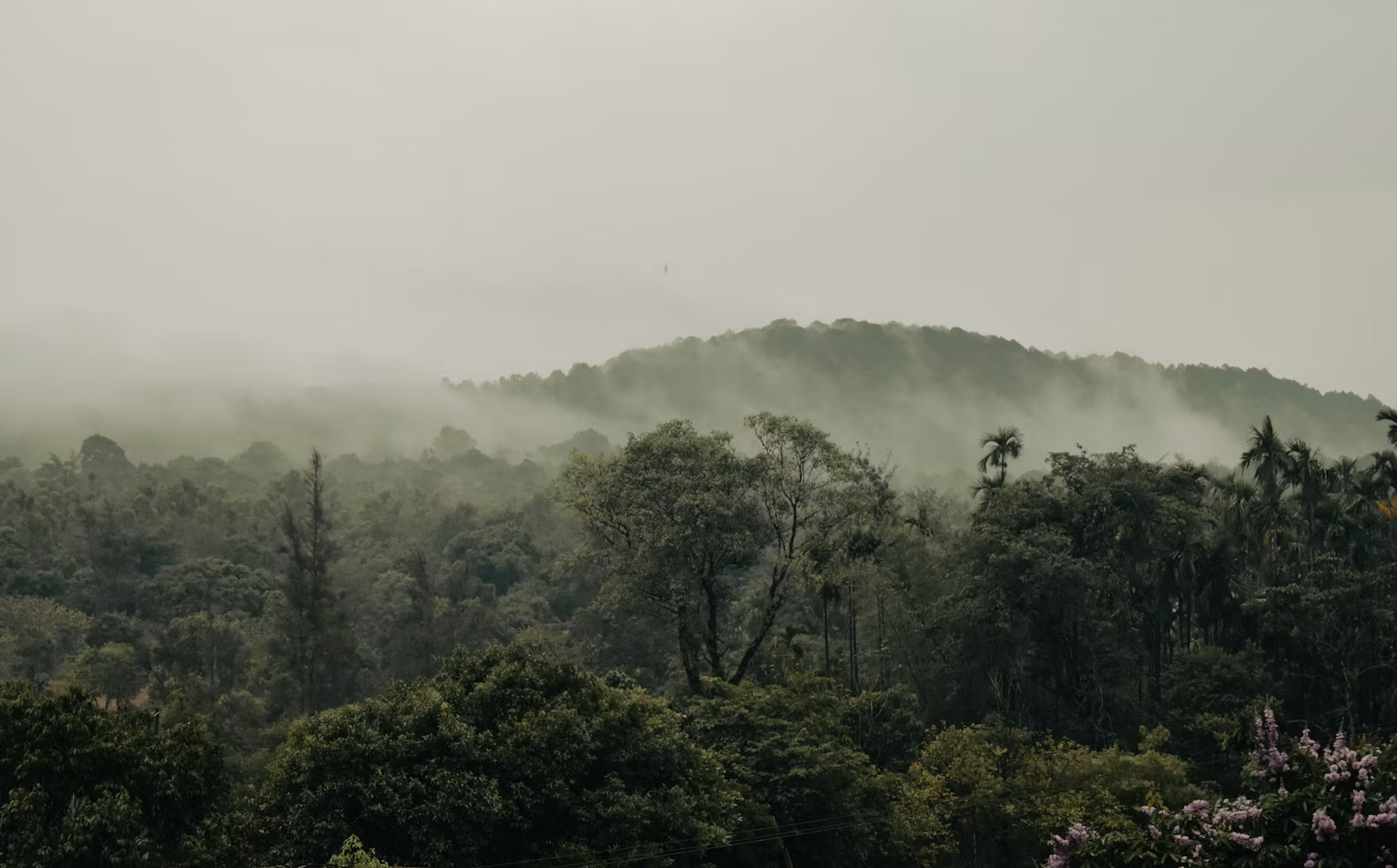
Agumbe in Karnataka’s Shivamogga district receives one of the highest rainfall amounts in India, comparable to Cherrapunji, and is considered the only permanent rainforest in peninsular India outside the Andaman Islands. It is home to the king cobra, the largest venomous snake in the world, and is one of the few places in India where researchers have been able to study the species at close quarters. The Agumbe Rainforest Research Station, set up by renowned herpetologist Romulus Whitaker, continues to operate here.
The village itself is small and receives far fewer visitors than its ecological significance might suggest. The canopy walks through the rainforest, available through local eco-guides, allow visitors to observe the forest at different vertical levels, which is how the ecosystem functions rather than as a flat ground-level trail. Sunset Point in Agumbe overlooks the Arabian Sea on the horizon and is considered one of the finest sunset viewpoints in Karnataka. The best time to visit Agumbe is October to February, when the heavy monsoon has passed and the forest is at its densest and greenest.
How to reach Agumbe: Udupi is about 55 km by road and is the nearest major town with rail and road connectivity.
10. Kanatal, Uttarakhand: A Quiet Alternative to Mussoorie
Kanatal sits in the Garhwal region of Uttarakhand at about 2,500 metres above sea level, along the route between Chamba and Mussoorie. It is one of those places that people tend to end up in when they are looking for the feel of a hill station without the crowds, and it delivers that consistently. The surrounding forests of oak and rhododendron provide a cover that keeps temperatures lower than at most comparable altitudes. Surkanda Devi Temple, a short trek from the town, sits at a ridge from which both the Gangetic plains and the Himalayan snowline are visible on a clear morning.
For people focused on nature travel in India 2026, Kanatal works particularly well as a quiet base for multi-day forest walks. The trails are not heavily signposted or commercialised, which means a guide is genuinely useful rather than optional. Nature stays in India here range from basic campsites to more comfortable tented resorts that maintain a low footprint within the forest. The best time to visit Kanatal is March to June and September to November.
How to reach Kanatal: Dehradun is the nearest major city, about 78 km away by road via Chamba.
11. Dzukou Valley, Nagaland and Manipur
Dzukou Valley sits on the border of Nagaland and Manipur at about 2,400 metres above sea level and is known for a seasonal bloom of Dzukou lilies that colours the entire valley floor in shades of white and pale yellow each summer. The valley is a glacial formation and remains snow-covered in winter, making it one of the more dramatic natural settings in Northeast India. It can only be reached on foot, which is a 4-5 hour trek from the Viswema village side in Nagaland or the Mao gate side in Manipur.
Because access requires walking, Dzukou receives far fewer visitors than better-known natural destinations, and the valley floor still feels genuinely remote. Camping at the valley’s rest huts overnight is the preferred way to experience both the sunset and the dawn light, both of which land differently at this altitude and in this open terrain.
How to reach Dzukou Valley: Kohima in Nagaland is the nearest city, about 25 km from the Viswema trailhead. The best time to visit Dzukou Valley is June to September for the lilies, or December to February for snow coverage.
12. Rann of Kutch, Gujarat: A Salt Desert Unlike Anything Else in India
The Rann of Kutch is the world’s largest seasonal salt marsh and occupies roughly 30,000 square kilometres in Gujarat’s Kutch district. In the monsoon months, the entire area floods with shallow water from the Arabian Sea. As the water recedes, it leaves behind a flat white crust of crystallised salt that stretches to the horizon in every direction. During the winter months, this surface becomes firm enough to walk on, and the experience of standing in the middle of a white salt plain under a clear blue sky is genuinely unlike anything else available in India.
The Rann is also the last stronghold of the Indian wild ass, a species found nowhere else in the world outside this region. The Wild Ass Sanctuary, covering nearly 5,000 square kilometres, protects this population as well as several grassland birds including flamingos, pelicans, and the great Indian bustard. The Rann Utsav festival, held each winter from November to February, brings cultural events and craft markets alongside the natural spectacle. Villas near Rann of Kutch in Dhordo village have grown into a solid accommodation cluster, with several heritage tents and cottages. The best time to visit Rann of Kutch is November to February.
How to reach Rann of Kutch: Bhuj is the gateway city, 80 km from Dhordo, and is well connected by air and rail from Mumbai.
Why This Shift Toward Nature Travel in India Matters
The 91% figure from Booking.com is useful not just as a travel statistic but as a signal about how people are feeling right now. When nine out of ten surveyed travellers say they want to be near natural scenery, it reflects something deeper than a preference for greenery over monuments. It suggests that Indian people are increasingly aware of what rest and recovery actually feel like, and they are beginning to plan around that awareness rather than around obligation. The twelve places above cover a range of geographies, budgets, and physical demands, but they share one quality: none of them require you to be somewhere else in order to feel that you have arrived. For nature getaways in India in 2026, that might be the most important thing.
FAQs
According to Booking.com’s 2026 Travel Trends report, 91% of Indian travellers want trips that include places with natural scenery. Additionally, 87% say their goal is to mentally unwind and 83% want to step away from daily demands entirely. Separate data from Skyscanner shows that 59% of Indians plan to travel more in 2026 than they did last year.
The best nature places in India for a nature-first trip in 2026 include Tirthan Valley in Himachal Pradesh, Pachmarhi in Madhya Pradesh, Netarhat in Jharkhand, Mudumalai in Tamil Nadu, Kaziranga in Assam, Pench in Madhya Pradesh, Thattekad in Kerala, Agumbe in Karnataka, Araku Valley in Andhra Pradesh, Kanatal in Uttarakhand, Dzukou Valley in Nagaland, and the Rann of Kutch in Gujarat.
Multiple factors are at play. A Deloitte survey found that 70% of Indian Gen Z and millennial workers reported workplace burnout in 2026. Combined with better awareness of wellness and mental health, there is a genuine need for restorative travel rather than sightseeing-heavy itineraries. Nature travel in India 2026 fills that gap in a way that city tourism and cultural trips generally do not.
Nature stays in India refer to accommodation that is designed within or adjacent to a forest, river valley, grassland, or other natural setting, and where the natural environment is the primary experience rather than just a backdrop. They range from community homestays in Tirthan Valley and jungle lodges in Pench to heritage tents in the Rann of Kutch and riverbank cottages in Thattekad.
Thattekad in Kerala is one of the most species-rich bird habitats in peninsular India, with over 300 documented species. Mudumalai in Tamil Nadu has 266 species. Tirthan Valley in Himachal Pradesh has over 200, including several Himalayan endemics. The Rann of Kutch is excellent for flamingos, pelicans, and grassland birds, including the great Indian bustard.
Pachmarhi and Kanatal are good starting points because they have a mix of accessible trails, comfortable accommodation, and well-documented wildlife without requiring any specialised outdoor skills. Kaziranga is another strong choice for first-timers since the jeep safaris are well-organised and wildlife sightings are relatively reliable.
The essentials for any nature getaway in India are comfortable walking shoes with ankle support, a lightweight waterproof layer, a small daypack, insect repellent, a basic first aid kit, and a torch. Binoculars are worth carrying if any wildlife or birdwatching is planned. For high-altitude destinations like Dzukou Valley or Tirthan Valley, warm layers are necessary even in the warmer months.
Yes, most of the twelve destinations listed here are family-friendly. Pachmarhi, Kaziranga, and the Rann of Kutch in particular work very well for families because the activities are varied, the terrain is not extreme, and the wildlife experiences are accessible without long treks. Dzukou Valley is the one destination that requires a reasonably fit adult-paced walk and is better suited to older children or teenagers.
Written by: Ruben Saha