
Ajanta Caves: Timings, Entry Fee & a 2-Day Ellora–Ajanta Plan
Ajanta Caves timings trip up more travellers than the ghat roads do: the caves shut every Monday, Ellora shuts every Tuesday, and the two sites sit 100 km apart — get the days wrong and you’ll drive three hours to a locked gate. This guide fixes that with the exact timings, current entry fees, and a 2-day plan that sequences Ellora and Ajanta the way locals and guides actually do it.
We’ve also answered the questions everyone asks on the drive up: can you do both in one day (technically, but don’t), what the mandatory shuttle costs, and where to break the journey if you’re coming from Mumbai — including two StayVista villas that turn the temple run into a proper road trip.
TL;DR: Ajanta Caves are open 9 AM–5:30 PM, closed every Monday; entry is ₹40 for Indians, ₹600 for foreigners, free under 15, plus a mandatory ₹25–30 shuttle from the T-point. Ellora closes Tuesdays instead. The right 2-day plan: Day 1 Ellora + city sights, Day 2 Ajanta — never the reverse on a Monday–Tuesday.
In this Blog
Quick Info: Ajanta Caves at a Glance
| Field | Details |
| Timings | 9:00 AM – 5:30 PM; closed every Monday |
| Entry fee | ₹40 (Indian & SAARC nationals), ₹600 (foreign nationals), free for children under 15 |
| Shuttle (mandatory) | ₹25 non-AC / ₹30 AC per trip, from Fardapur T-point to the caves (4 km) |
| Where | Ajanta, near Fardapur, Chhatrapati Sambhajinagar district (Aurangabad), Maharashtra |
| Nearest airport | Chhatrapati Sambhajinagar (Aurangabad) — ~102 km |
| Nearest railway station | Jalgaon Junction — ~60 km (on the Mumbai–Delhi/Howrah trunk line) |
| Ideal duration | 3–4 hours at the caves; 2 days for the Ellora–Ajanta circuit |
| Best time to visit | November–February for cool weather; July–September for the green gorge and waterfalls |
What Are the Ajanta Caves’ Timings and Entry Fees?
Ajanta Caves, Maharashtra are open 9 AM to 5:30 PM, Tuesday through Sunday — they’re closed every Monday without exception. Entry costs ₹40 for Indian and SAARC nationals and ₹600 for foreign nationals, with free entry for children under 15. Tickets are sold at the counter near the shuttle station and on the ASI’s online portal; counters accept UPI.
One cost surprises first-timers: private vehicles stop 4 km short of the caves, at the Fardapur T-point. From there, everyone boards the pollution-control shuttle — ₹25 per trip in a non-AC bus, ₹30 in an AC one. It exists to keep exhaust away from 1,500-year-old paintings, which is hard to argue with.
| Ticket | Price |
| Indian nationals | ₹40 |
| SAARC / BIMSTEC nationals (with ID) | ₹40 |
| Foreign nationals | ₹600 |
| Children under 15 | Free |
| Shuttle from T-point (each way) | ₹25 non-AC / ₹30 AC |
Two timing tips from everyone who’s done it: arrive by 9:30 AM — tour buses land around 11, and the painted caves feel very different with ten people inside versus sixty. And keep 30 of your final minutes for the viewpoint across the gorge (more on that below). Weekends and public holidays run far busier; a Wednesday or Thursday is the connoisseur’s slot.
What Exactly Are the Ajanta Caves?
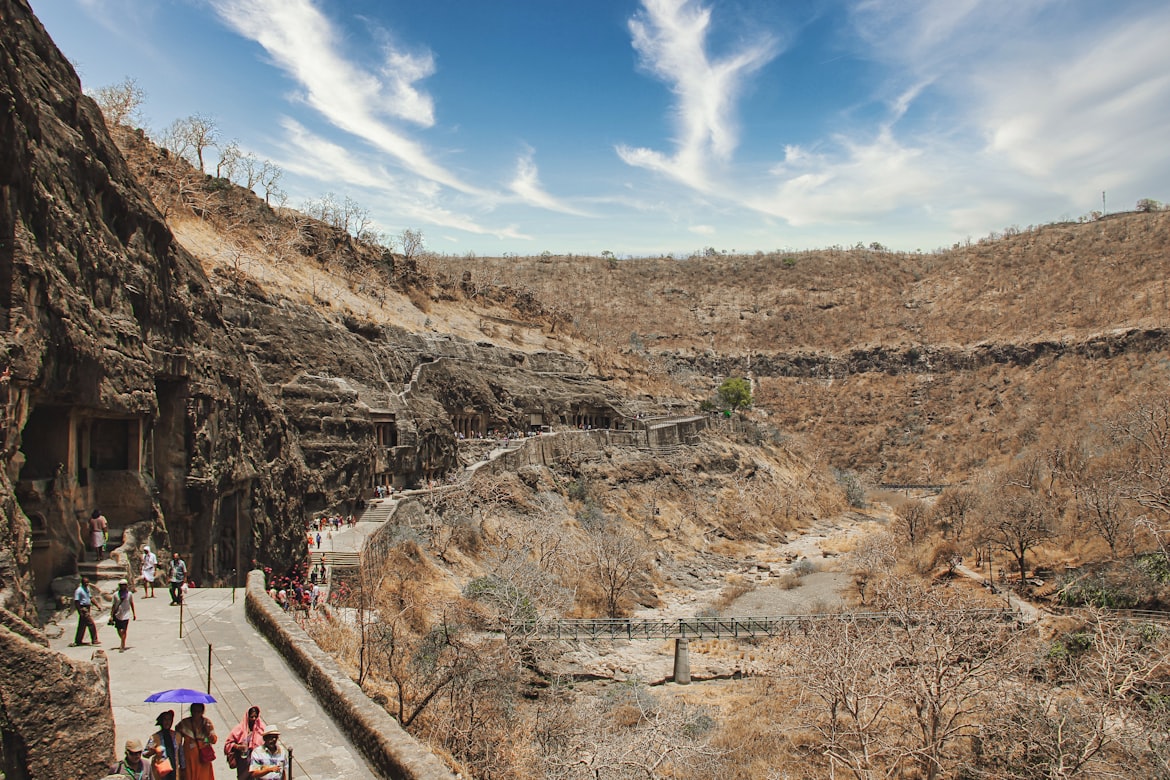
Ajanta is a crescent of about 30 Buddhist caves cut into a horseshoe-shaped basalt cliff above the Waghora river, carved in two bursts between the 2nd century BCE and the 6th century CE. A UNESCO World Heritage Site since 1983, it holds the finest surviving ancient paintings in India — murals that influenced Buddhist art from Sri Lanka to Japan.
The site vanished from memory for a thousand years after Buddhism declined in the region, swallowed by forest — until 1819, when a British officer named John Smith spotted a carved arch across the gorge while hunting. He scratched his name on a pillar in Cave 10. It’s still there, a piece of graffiti that reopened an art gallery 15 centuries old.
If your time is short, prioritise these five:
- Cave 1 — home of the Bodhisattva Padmapani, the painting you’ve seen in every Indian history textbook. Low light protects the murals; let your eyes adjust.
- Cave 2 — the painted ceiling, all mandalas and florals, is the site’s best neck-ache.
- Caves 9 and 10 — the oldest chaitya (prayer hall) caves, from the 2nd century BCE. Cave 10 carries John Smith’s pencil signature.
- Cave 17 — the largest surviving spread of murals, including the famous “Wheel of Life” doorway.
- Cave 26 — the sculptural climax: a 24-foot reclining Buddha entering mahaparinirvana, lit softly from the doorway.
Photography is allowed, but flash is strictly banned inside the painted caves — the pigments are light-sensitive. Guides with ASI licences wait near the entrance; a good one turns two hours of dim rooms into the best history lesson you’ve had since school.
How Do You Reach Ajanta Caves?
Ajanta sits 102 km north of Chhatrapati Sambhajinagar (Aurangabad), a 2.5-hour drive on a good highway — that’s the standard approach. Coming by train from Mumbai, Delhi, or Kolkata? Jalgaon Junction, just 60 km from the caves on the main trunk line, is actually the closer railhead; plenty of travellers see Ajanta between Jalgaon and Aurangabad rather than as a round trip.
- From Mumbai: ~430 km, 8 hours by road via Nashik — which is exactly why a night’s break in Igatpuri or Nashik makes sense (see Where to Stay). Alternatively, an overnight train to Jalgaon and a morning taxi.
- From Pune: ~235 km to Aurangabad via Ahmednagar (about 5 hours), then the 102 km leg to Ajanta the next morning.
- From Aurangabad city: taxis and MSRTC buses run daily; start by 7:30–8 AM to beat both the heat and the tour coaches.
- Last mile: every vehicle parks at Fardapur T-point; the ₹25–30 shuttle covers the final 4 km.
As of July 2026, the Samruddhi Mahamarg expressway has cut Mumbai–Aurangabad drive times significantly — many drivers now do Mumbai to Aurangabad in around 5.5–6 hours using it, though the Nashik route remains the scenic, break-friendly option.
The 2-Day Ellora–Ajanta Plan (Get the Closed Days Right)
Here’s the rule that shapes every good itinerary: Ajanta closes on Mondays, Ellora closes on Tuesdays. They’re 100 km apart, in opposite directions from Aurangabad. So the plan that always works: Ellora on Day 1 (it’s only 30 km from the city, leaving time for forts and tombs), Ajanta on Day 2 with an early start. Just never schedule Day 1 on a Tuesday or Day 2 on a Monday.
Day 1 — Ellora, Daulatabad and the City (30 km circuit)
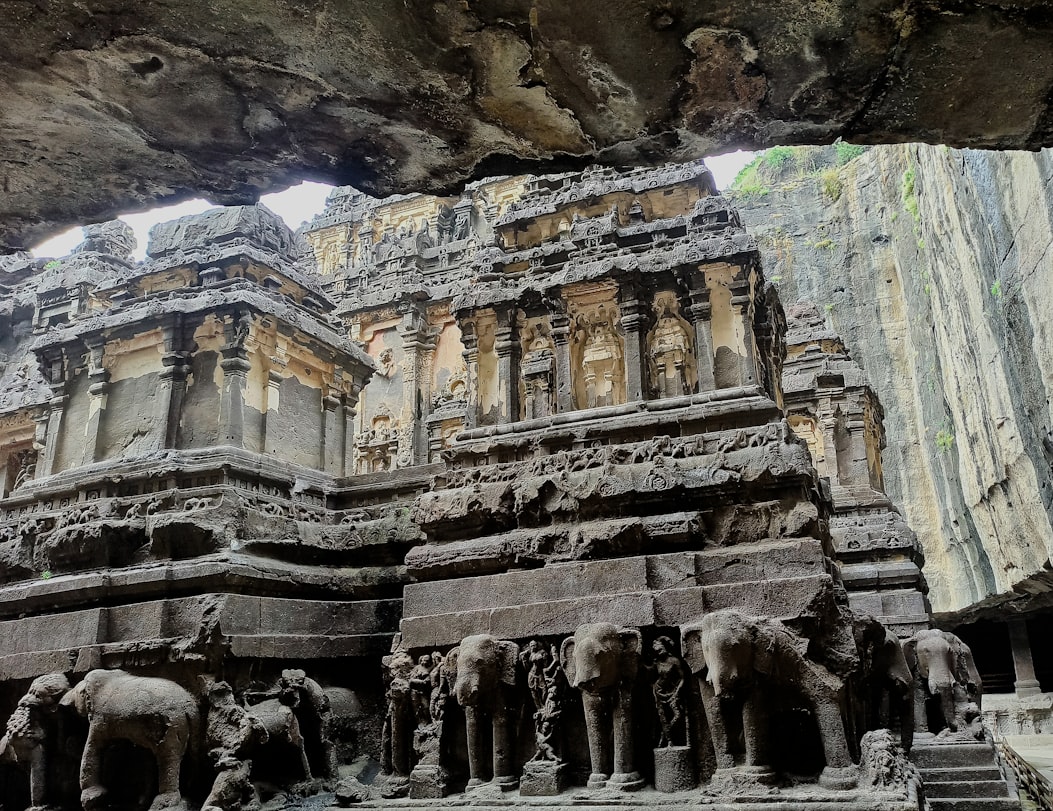
Start at Ellora Caves by 8:30 AM — 34 caves spanning Buddhist, Hindu and Jain traditions, carved between the 6th and 10th centuries. Go straight to Cave 16, the Kailasa temple: the largest monolithic structure on Earth, an entire temple complex carved top-down from a single basalt hill under Rashtrakuta king Krishna I (756–773 CE). Give Kailasa an hour on its own, then sample the Buddhist group (Caves 10–12) and the Jain cluster (30–34).
| Ellora essentials | Details |
| Timings | Sunrise to sunset (roughly 6 AM–6 PM); closed every Tuesday |
| Entry fee | ₹40 Indian/SAARC, ₹600 foreign, free under 15 |
| Distance from Aurangabad | ~30 km (45 minutes) |
| Time needed | 3–4 hours |
On the return leg, stop at Daulatabad Fort (a 14th-century hill fortress with a deliberately disorienting dark passage — entry ₹25 Indians, closes around 5 PM) and Grishneshwar Temple, one of the 12 Jyotirlingas, barely a kilometre from Ellora’s gate. Back in the city by late afternoon? Bibi ka Maqbara — the “Deccan Taj,” built by Aurangzeb’s son for his mother — is gorgeous in the last light.
Day 2 — Ajanta (102 km, start early)
Leave Aurangabad by 7:30 AM, reach the T-point around 10, and you’ll have the painted caves at their quietest. Do Caves 1 and 2 first while your patience for detail is fresh, then work along the crescent to the chaityas and Cave 26. Budget 3–4 hours including the shuttle both ways.
Before leaving, drive (or hike 20 minutes) up to the Viewpoint on the opposite rim of the gorge — the spot from which John Smith first saw the caves. The full horseshoe opens up below you, and in monsoon, waterfalls thread down the cliff between the cave mouths. From the T-point, either return to Aurangabad (2.5 hrs) or continue 60 km to Jalgaon for an evening train — the routing trick most itineraries miss.
Can you squeeze both into one day? Physically, yes — leave at 6 AM, accept 5+ hours of driving, and skim both sites. We’d talk you out of it. These are two of the greatest artistic achievements in human history; giving each a half-day is the entire point of coming this far.
When’s the Best Time to Visit Ajanta and Ellora?
November to February is the comfortable answer — 12–28°C, clear skies, perfect for the exposed walk along Ajanta’s crescent. But the insider’s answer is the monsoon: from July to September the Waghora gorge turns deep green, seasonal waterfalls spill past the cave entrances, and the Viewpoint delivers its best photograph of the year. Carry grip footwear; the stone steps get slick.
The season to avoid is April–May, when this part of the Deccan crosses 40°C and the black basalt radiates heat like a tawa. Whatever the month, weekdays beat weekends by a wide margin — and remember the golden pairing: no Ajanta on Mondays, no Ellora on Tuesdays.
Where to Stay: Make It a Road Trip
Aurangabad city has the standard hotel options for the sightseeing nights themselves — StayVista doesn’t have villas at the caves yet. What it does have is both ends of the drive covered, and two patterns that work: leave Mumbai on Friday evening, clear the city traffic, and sleep at a villa in Wada so Saturday’s long leg starts fresh — or put real kilometres behind you on day one and break at Igatpuri instead. Two live picks:
Tinted Skies, Wada — the Friday-Night Head Start

Tinted Skies is a 3-bedroom pool villa in Wada — part of StayVista’s villas-around-Mumbai belt — rated 4.7/5 across 171 reviews and sleeping up to 9. Leave Mumbai after work, be at the villa by dinner (about 2 hours out), and Saturday’s run to Aurangabad becomes a fresh-morning six hours via the Wada–Shahapur link to NH-160. The pool is a family-friendly 17.6×7 ft at roughly 3.3 ft deep — shallow enough for kids — there’s a lawn for the evening, and in-house meals mean nobody’s hunting for dinner at 9 PM.
| Detail | Info |
| Why here | The night-zero stop: clear Mumbai’s traffic on Friday, start the long leg fresh at dawn |
| The villa | 3 bedrooms, up to 9 guests, private pool, lawn, meals available — 4.7/5 (171 reviews) |
| Getting there | ~2 hrs from Mumbai; Wada bus stand 13 km; Mumbai airport 117 km |
| Onward to the caves | Rejoin NH-160 at Shahapur; ~6 hrs to Aurangabad, ~7 to Ajanta’s T-point direct |
Sunset on the Lake, Igatpuri — the Proper Mid-Way Break
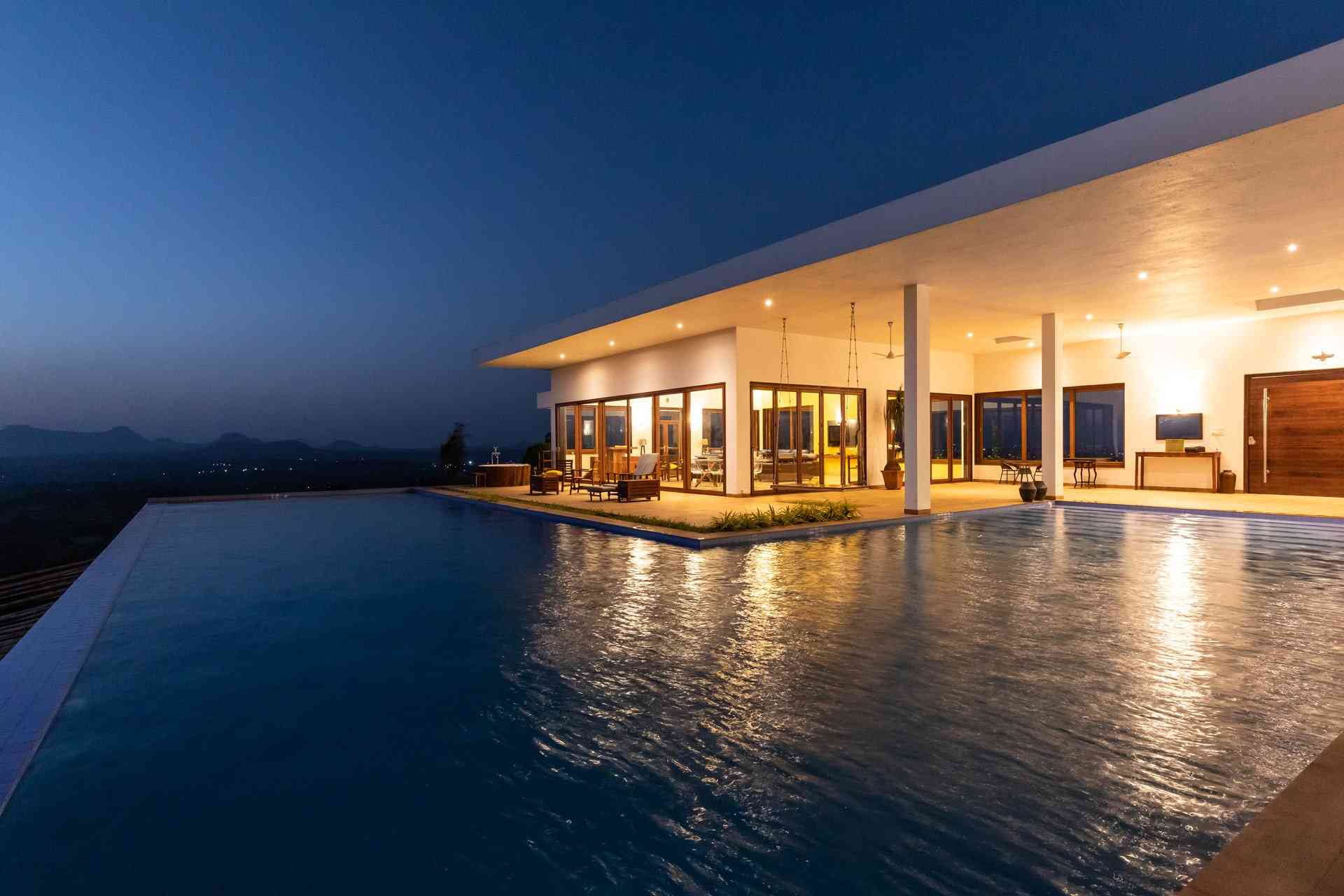
Sunset on the Lake is the big-group alternative: a 5-bedroom hilltop villa for up to 20 guests, rated 4.5/5 across 76 reviews, with an L-shaped 15×50 ft infinity pool that visually merges into the lake below. It sits ~120 km from Mumbai — a clean first-night stop with real distance done — leaving a 4.5-hour run to Aurangabad (~215 km) the next morning. Ground-floor rooms have lake-facing bathtubs, and meals are handled in-house. From ₹78,563/night (July 2026).
Browse the wider villas around Mumbai collection for more Wada-belt options — the practical pattern either way is villa night, caves days, home.
Frequently Asked Questions
Yes — Ajanta Caves are closed every Monday, all year. Ellora Caves close on Tuesdays instead. Plan the circuit so you’re at Ellora on the day Ajanta is shut (or any other day except Tuesday), and never arrive at Ajanta on a Monday expecting a side gate. There isn’t one.
₹40 for Indian and SAARC nationals, ₹600 for foreign nationals, and free for children under 15. Add the mandatory shuttle from Fardapur T-point — ₹25 per trip non-AC or ₹30 AC — since private vehicles must stop 4 km from the caves. Tickets are available at the counter (UPI accepted) and via the ASI’s online portal.
It’s possible but not recommended. The sites are about 100 km apart — Ellora is 30 km west of Aurangabad, Ajanta 102 km northeast — and each deserves 3–4 hours. Doing both in a day means 5+ hours of driving and rushed visits. The standard 2-day plan (Ellora + city sights, then Ajanta) is far better.
Plan 3–4 hours at the site: around 2.5 hours for the main painted caves and chaityas, plus the shuttle ride each way and the climb to the crescent. Add 30–45 minutes if you’re driving up to the Viewpoint across the gorge — worth it, especially in monsoon.
Yes, photography is allowed, but flash is strictly prohibited inside the painted caves — the 1,500-year-old pigments are light-sensitive. Tripods need special permission. The murals sit in low light by design, so a camera that handles high ISO (or simply your patience) beats any flash.
Jalgaon Junction, about 60 km away, is the nearest major railhead — it sits on the Mumbai–Delhi/Howrah trunk line with excellent connections. Aurangabad station is ~102 km from Ajanta but better placed for Ellora. A smart routing: arrive via one, depart via the other, and see Ajanta in between.
November to February offers the most comfortable weather (12–28°C). July to September is the scenic pick — the Waghora gorge turns green and seasonal waterfalls appear around the horseshoe cliff. Avoid April and May, when temperatures cross 40°C. On any week, weekdays are noticeably quieter than weekends.
The Short Version
Ajanta rewards the traveller who plans around three numbers: 9 to 5:30 (the timings), Monday (the closed day), and 102 km (the drive from Aurangabad). Pair it with Ellora on a two-day circuit — Ellora first, Ajanta second, never on their respective closed days — and you’ll see the two greatest rock-cut monuments in India without a single wasted hour.
And if you’re driving from Mumbai, don’t grind it out in one push. Break the journey at a StayVista villa in Wada or Igatpuri, arrive fresh, and let the road trip be part of the holiday the caves deserve.