
Bangalore to Jog Falls Road Trip 2026: Route, Stops, Distance & Best Time to See India’s 2nd-Highest Waterfall

Jog Falls is roughly 400–423 km from Bangalore, a 7–9 hour drive via Tumakuru, Shivamogga and Sagara. The waterfall plunges 253 metres (830 feet) down the Sharavathi River, making it India’s second-highest plunge waterfall. Visit between August and December to catch all four cascades – Raja, Rani, Roarer and Rocket – in full flow. A relaxed two-day weekend trip lets you enjoy the route’s elephant camps, forts and Malnad scenery without rushing.
There’s a particular thrill to chasing a waterfall after the rains. The Sharavathi River swells, the Western Ghats turn an almost unreal green, and Jog Falls – quiet and thin all summer – suddenly roars back to life. For anyone in Bangalore with a long weekend and a full tank, this Bangalore to Jog Falls road trip is one of South India’s most rewarding drives.
We’ve mapped this road trip end to end so you can plan with confidence: exact distances, the route that actually has good roads, where to break the journey, current entry fees, and the realistic timing that decides whether you see a trickle or a torrent. A StayVista villa on either end of the drive turns a tiring dash into a proper getaway – more on that later.
In this Blog
Info Table
| Field | Details |
| Distance from Bangalore | ~400–423 km (route-dependent) |
| Drive time | 7–9 hours one way |
| Best time to visit | August–December (peak flow June–September) |
| Waterfall height | 253 m / 830 ft — India’s 2nd-highest plunge waterfall |
| River | Sharavathi River |
| Location | Sagar taluk, Shivamogga district, Karnataka |
| Nearest airport | Shivamogga Airport (~100–120 km); Hubballi (~133 km) |
| Nearest railway station | Talaguppa (~14 km); Sagara (~30 km) |
| Ideal duration | 2 days (weekend); 3 days to add detours |
| Entry fee | ₹20 per Indian adult (revised 2025) |
How far is Jog Falls from Bangalore?
Jog Falls sits about 400 to 423 km from Bangalore, depending on your route, and the drive takes 7 to 9 hours with breaks. Most navigation apps clock the straightforward highway route at 422.9 km. That puts the falls comfortably within reach of a two-day weekend, though squeezing it into a single day means roughly 16 hours of driving — possible, but punishing.
The journey climbs gradually from the Deccan plateau into the Malnad region of the Western Ghats. You’ll trade dry, open highway for forested ghat roads as you near Shivamogga and Sagara. The good news for 2026: the bulk of the route runs on four-lane national highways, so the slow, winding stretches are concentrated in the final leg.
There are two sensible routes from Bangalore, and the difference between them is small but worth knowing before you set off.
Route comparison: which way to drive
| Route | Via | Distance | Drive time | Best for |
| Route 1 (NH48 + NH69) | Tumakuru → Chitradurga → Shivamogga → Sagara | ~420 km | 8–9 hrs | Adding Chitradurga Fort; fastest highway |
| Route 2 (Tiptur–Arsikere) | Tumakuru → Tiptur → Arsikere → Shivamogga → Sagara | ~400 km | 7–8 hrs | Slightly shorter, fewer trucks |
Route 1 follows NH48 toward Chitradurga before turning toward Shivamogga, then NH69 onward to Sagara and Jog. It’s the classic, well-signposted option and the one to pick if you want to break the drive at the dramatic seven-walled Chitradurga Fort.
Route 2 cuts across via Tiptur and Arsikere — marginally shorter, often lighter on highway traffic, and it links up with Shivamogga all the same.
The Bangalore to Jog Falls road trip covers roughly 400–423 km and takes 7–9 hours by car, with the most popular route running via Tumakuru, Shivamogga and Sagara on NH48 and NH69.
As of 2026, the NH48 stretch from Bangalore to Chitradurga is smooth four-lane highway. The Shivamogga–Sagara section on NH69 has been resurfaced in parts, so it’s better than it was a few years ago. Expect the surface to deteriorate slightly in the Malnad ghat sections after heavy monsoon — a few potholes are normal once the rains set in.
What is the best time to visit Jog Falls?
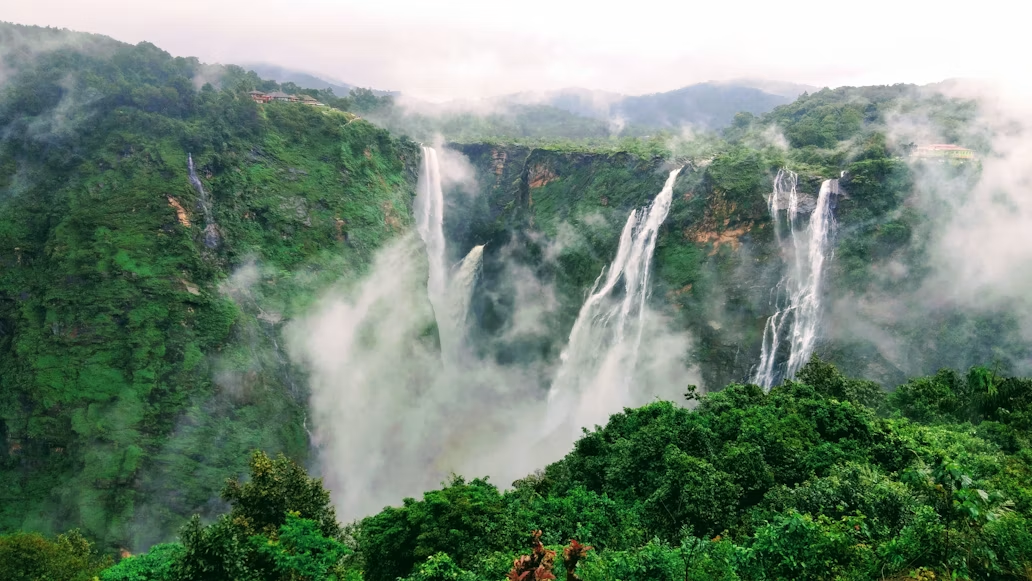
The best time to visit Jog Falls is August to December, when the Sharavathi River carries enough water for all four cascades to fall in full force while the roads stay drivable. For the most dramatic spectacle, time your trip for the monsoon peak between June and September, when the falls thunder at their loudest. Avoid March to May, when summer reduces Jog to thin ribbons of water.
Jog Falls is unusually season-dependent because the Linganamakki Dam, built across the Sharavathi in 1964, regulates the river’s flow. Through the dry months the dam’s gates stay largely shut and the falls dwindle. When the monsoon fills the reservoir, water is released and the full four-stream spectacle returns. This is why two visitors can describe completely different waterfalls depending on when they came.
Jog Falls water-flow calendar
| Months | Water flow | What to expect |
| June – September | Peak | All four cascades roaring; heavy rain, misty views |
| October – December | Strong | Full flow plus pleasant, clear weather — the sweet spot |
| January – February | Moderate | Decent flow, comfortable temperatures |
| March – May | Low / dry | Thin streams; skip if the waterfall is your goal |
October and November offer the best balance. The Sharavathi is still swollen from the monsoon, the skies clear up enough for photographs, and the ghat roads are safer than during peak rains. If you only care about raw power and don’t mind getting soaked, come in August.
Best stops on the Bangalore to Jog Falls road trip
The drive is half the joy here, and the route is dotted with forts, elephant camps, temples and Western Ghats viewpoints. Below are the best stops, grouped by where they fall along the way. The first set sits directly on or near the highway; the later detours are for travellers stretching the trip to three days.
1. Chitradurga Fort
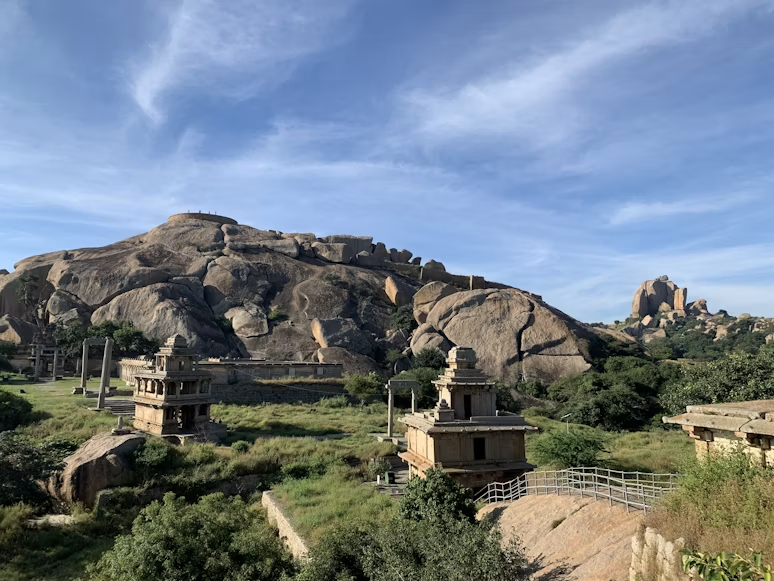
This colossal seven-walled hill fort, built between the 10th and 18th centuries, is the most rewarding break on Route 1. Spread across boulder-strewn hills, it’s a maze of gateways, water tanks and watchtowers with sweeping views from the top.
- Entry fee: ₹25 for Indians, ₹300 for foreign nationals
- Timings: 6:00 AM – 6:00 PM
- Best time: Early morning to beat the heat
- How to reach: ~200 km from Bangalore, right off NH48
- Time required: 1.5–2 hours
- Ideal for: History lovers, photographers, families
Pro tip: Wear proper walking shoes — there’s a lot of climbing on uneven rock, and shade is scarce by midday.
2. Tyavarekoppa Lion and Tiger Safari
Just outside Shivamogga, this safari park lets you spot lions and tigers in a semi-wild enclosure from the safety of a park vehicle. It’s a genuine hit with children and a welcome leg-stretch after hours on the highway.
- Entry fee: ₹30 per adult, ₹10 per child; car parking ₹50
- Timings: 10:00 AM–1:00 PM and 2:15–5:00 PM; closed Tuesdays and public holidays
- Best time: Morning slot, when animals are most active
- How to reach: ~10 km from Shivamogga on the Sagar road
- Time required: 1–1.5 hours
- Ideal for: Families with kids
Pro tip: Check the calendar before you build this in — it’s shut every Tuesday, which catches many travellers out.
3. Sakrebailu Elephant Camp
On the banks of the Tunga River, this government elephant camp is best known for its morning bathing and feeding session, when mahouts scrub the elephants in the river. It’s an unhurried, surprisingly intimate wildlife experience.
- Entry fee: Nominal, plus camera and parking charges
- Timings: Elephant bathing 8:30–11:30 AM
- Best time: Before 9:00 AM, to catch the full bathing routine
- How to reach: ~14 km from Shivamogga
- Time required: About 1 hour
- Ideal for: Families, animal lovers
Pro tip: Arrive early – once the bathing ends, there’s little reason to linger, so this is a morning-only stop.
4. Gajanur Dam (Tunga Anicut)
A quick, pretty pause on the Tunga River near Sakrebailu, the Gajanur Dam is an easy add-on rather than a destination in itself. The reservoir and surrounding greenery make for a calm photo stop.
- Entry fee: Likely free
- Timings: Daytime
- Best time: Late afternoon
- How to reach: ~12 km from Shivamogga, en route to Thirthahalli
- Time required: 30–45 minutes
- Ideal for: A short scenic break
Pro tip: Pair it with Sakrebailu Elephant Camp, since the two sit close together on the same side of Shivamogga.
5. Mandagadde Bird Sanctuary
This small river-island sanctuary becomes a noisy, wonderful spectacle in the monsoon months when migratory birds – egrets, cormorants and herons – nest in their thousands. There’s a watchtower for unobstructed viewing.
- Entry fee: Free
- Timings: 6:00 AM – 6:00 PM
- Best time: July to October, peaking in August
- How to reach: ~32 km from Shivamogga on the Thirthahalli road
- Time required: 45 minutes to 1 hour
- Ideal for: Birdwatchers, nature photographers
Pro tip: Carry binoculars and visit early morning, when the birds are most active and the light is soft.
6. Ikkeri and Keladi Temples
Near Sagara lie the twin historic towns of Ikkeri and Keladi, former capitals of the Keladi Nayaka dynasty. The Aghoreshwara Temple at Ikkeri, with its blend of Dravidian and Hoysala styles, is the highlight.
- Entry fee: Free (temples)
- Timings: Daytime, with a midday break common at temples
- Best time: Morning or late afternoon
- How to reach: Ikkeri is ~6 km from Sagara; ~32 km from Jog Falls
- Time required: 1–1.5 hours for both
- Ideal for: History and architecture enthusiasts
Pro tip: Visit Ikkeri and Keladi together – they’re close, and the small museum at Keladi adds useful context.
7. Linganamakki Dam
The dam that controls Jog Falls is worth seeing in its own right, especially in the monsoon when its gates open. The vast Sharavathi reservoir stretches to the horizon, ringed by forested hills.
- Timings: Daytime
- Best time: Monsoon, when water is being released
- How to reach: Near Sagara, a short drive from Jog Falls
- Time required: About 45 minutes
- Ideal for: Photographers, anyone curious about the river’s source
Pro tip: The dam is most dramatic when the gates are open – ask locally about release timings before driving out.
8. Honnemaradu
On the Sharavathi backwaters, Honnemaradu is Karnataka’s quiet adventure-sports hub, offering kayaking, canoeing and windsurfing on calm reservoir waters. It’s a detour, but a memorable one for active travellers.
- Entry fee: Activity-based, through operators
- Timings: Daytime
- Best time: October to February
- How to reach: ~25 km from Sagara
- Time required: Half a day
- Ideal for: Adventure seekers, groups of friends
Pro tip: Book your water-sports session and any lakeside camping in advance – facilities here are limited and operator-run.
9. Sigandur
Across the Sharavathi reservoir, the Sigandur Chowdeshwari temple is a popular pilgrimage stop reached by a vehicle-carrying barge — an experience in itself. It pairs naturally with the backwaters around Sagara.
- Entry fee: Free (temple)
- Timings: Daytime
- Best time: October to March
- How to reach: ~40 km from Sagara
- Time required: Half a day, including the crossing
- Ideal for: Pilgrims, offbeat travellers
Pro tip: A new Sharavathi bridge was under construction – confirm whether the barge crossing or the bridge is operational before you go.
10. Agumbe
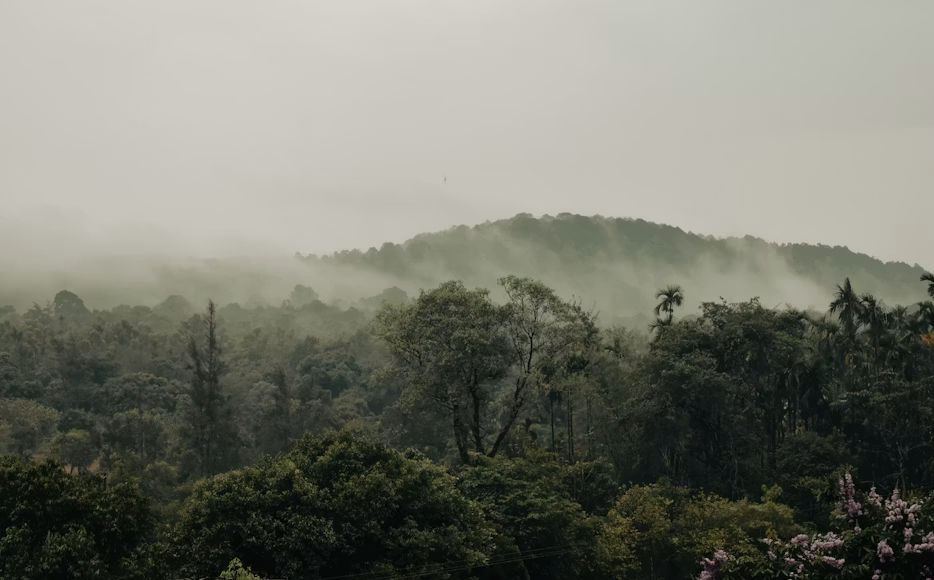
Known as the “Cherrapunji of South India” for its heavy rainfall, Agumbe is famous for its Western Ghats sunset point and dense rainforest. It’s a longer detour off the Thirthahalli road but a favourite for those extending the trip.
- Entry fee: Free (sunset viewpoint)
- Timings: Best at sunset
- Best time: November to January, for clear evening skies
- How to reach: ~90 km from Shivamogga
- Time required: 1–2 hours at the viewpoint
- Ideal for: Couples, photographers, slow travellers
Pro tip: The sunset point is a short walk from the road; arrive 30 minutes early to claim a clear spot facing the valley.
11. Kodachadri Peak
For trekkers, the 1,343-metre Kodachadri Peak near Kollur offers one of the Ghats’ finest ridge walks, often reached by a rough jeep ride. It’s strictly for those building a three-day-plus trip.
- Timings: Daytime; start early
- Best time: October to February
- How to reach: ~115 km from Shivamogga
- Time required: Half to full day
- Ideal for: Trekkers, adventure travellers
Pro tip: You’ll need a local jeep for the final rocky stretch – this isn’t a casual stop on a Jog-and-back weekend.
Jog Falls: What to expect at the waterfall
Jog Falls is the headline, and it earns its billing. Located in Sagar taluk, Shivamogga district, Karnataka, the Sharavathi River drops 253 metres (830 feet) in a single dramatic plunge, splitting into four named cascades – Raja, Rani, Roarer and Rocket. Because the water free-falls rather than tumbling over rocks, Jog ranks as India’s second-highest plunge waterfall, after Nohkalikai in Meghalaya.
Jog Falls drops 253 metres (830 feet) on the Sharavathi River in Karnataka, forming four cascades – Raja, Rani, Roarer and Rocket — and is recognised as India’s second-highest plunge waterfall.
A quick note on the “highest waterfall” claim you’ll see online: India has taller waterfalls overall, including Kunchikal Falls (also in Karnataka), which is a tiered cascade. Jog’s distinction is the single uninterrupted vertical drop, which is what makes it so photogenic. So “second-highest plunge waterfall” is the accurate, defensible description.
Entry fee, timings and the 2025 makeover
Jog Falls reopened in May 2025 after a major development project, and the rules changed with it. Entry now costs ₹20 per Indian adult, ₹100 for foreign tourists, and ₹10 for students aged 6–16. A camera permit is ₹100 and drones cost ₹500. The upgrade added a new viewing tower, a modernised entry gate and improved parking; a ropeway, musical fountain and other attractions were also planned.
| Charge | Amount |
| Indian adult | ₹20 |
| Foreign tourist | ₹100 |
| Student (6–16) | ₹10 |
| Camera permit | ₹100 |
| Drone | ₹500 |
| Two-wheeler parking | ₹30 |
For the fittest visitors, a stepped trail of around 1,400 steps descends to the base of the falls, taking roughly 45 minutes down and considerably longer back up. It’s a moderately tough climb and best attempted outside peak monsoon, when the steps can be slippery.
Bangalore to Jog Falls road trip itineraries
How you structure the trip depends on how much time you have. Here are three realistic plans.
One-day trip (for the determined)
A single-day Jog Falls run from Bangalore is possible but demanding – expect to leave by 4:00 AM, reach the falls around midday, spend two hours, and drive back through the evening. You’ll cover roughly 800–850 km in about 16 hours of driving. We’d only recommend it for confident drivers in a group who can share the wheel, and not during heavy monsoon when ghat visibility drops.
Two-day weekend (recommended)
This is the sweet spot.
• Day 1: Leave Bangalore early, break at Chitradurga Fort, push on to Shivamogga. Visit Sakrebailu Elephant Camp or Tyavarekoppa Safari in the late afternoon. Overnight near Shivamogga or Sagara.
• Day 2: Early start to Jog Falls for the best light and thinner crowds. Add Linganamakki Dam, then drive back to Bangalore by night.
Three-day extended trip
With a third day you can slow right down. Add Agumbe for sunset, Honnemaradu for water sports, or Sigandur and the Sharavathi backwaters. This pace suits families and anyone who wants the Malnad region to feel like a holiday rather than a mission.
Where to stay on your Jog Falls road trip
Accommodation right at Jog Falls is limited, so most travellers base themselves around Shivamogga or Sagara, both within striking distance of the waterfall. These towns put you close enough for an early-morning visit while keeping comfortable rooms, restaurants and fuel within reach.
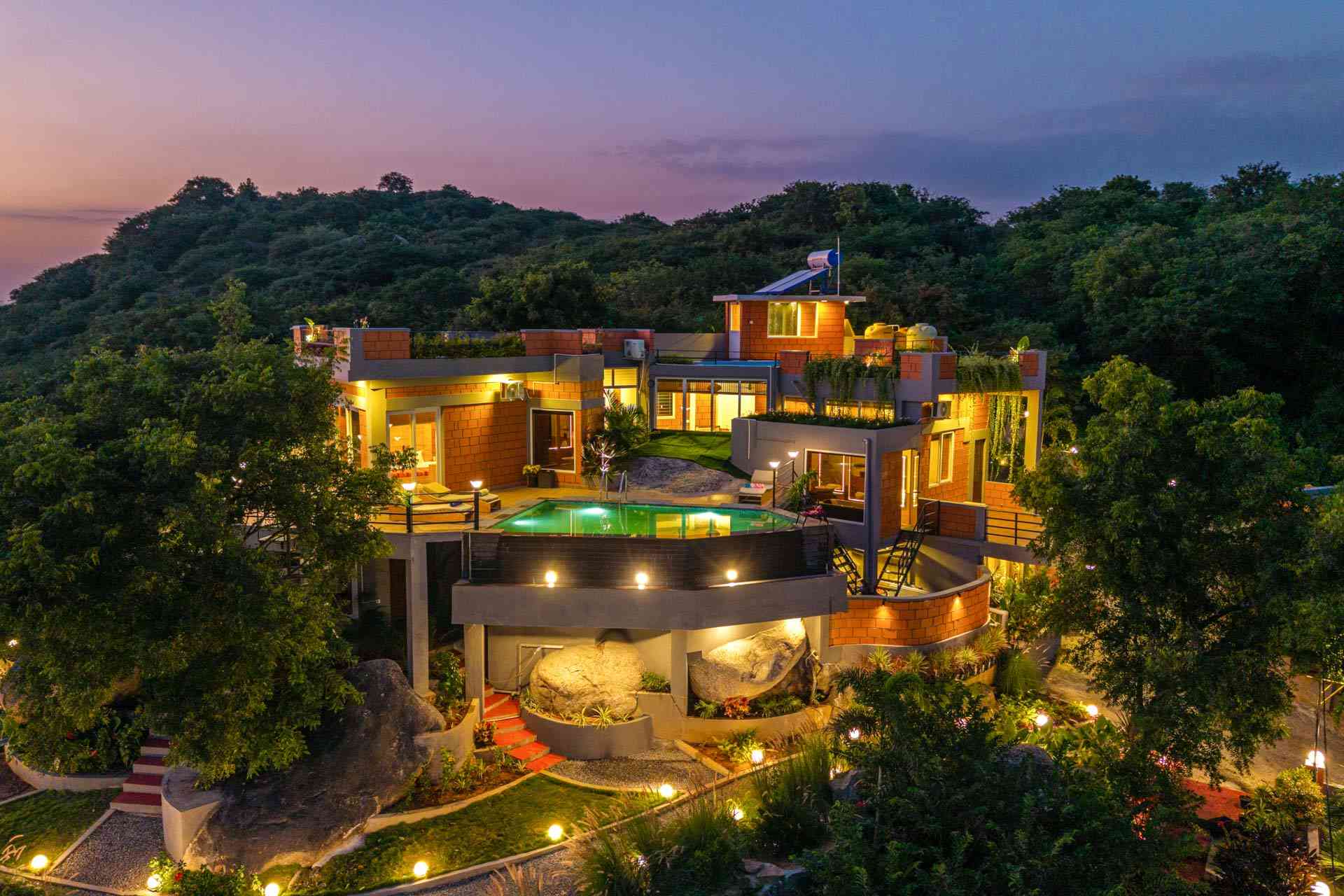
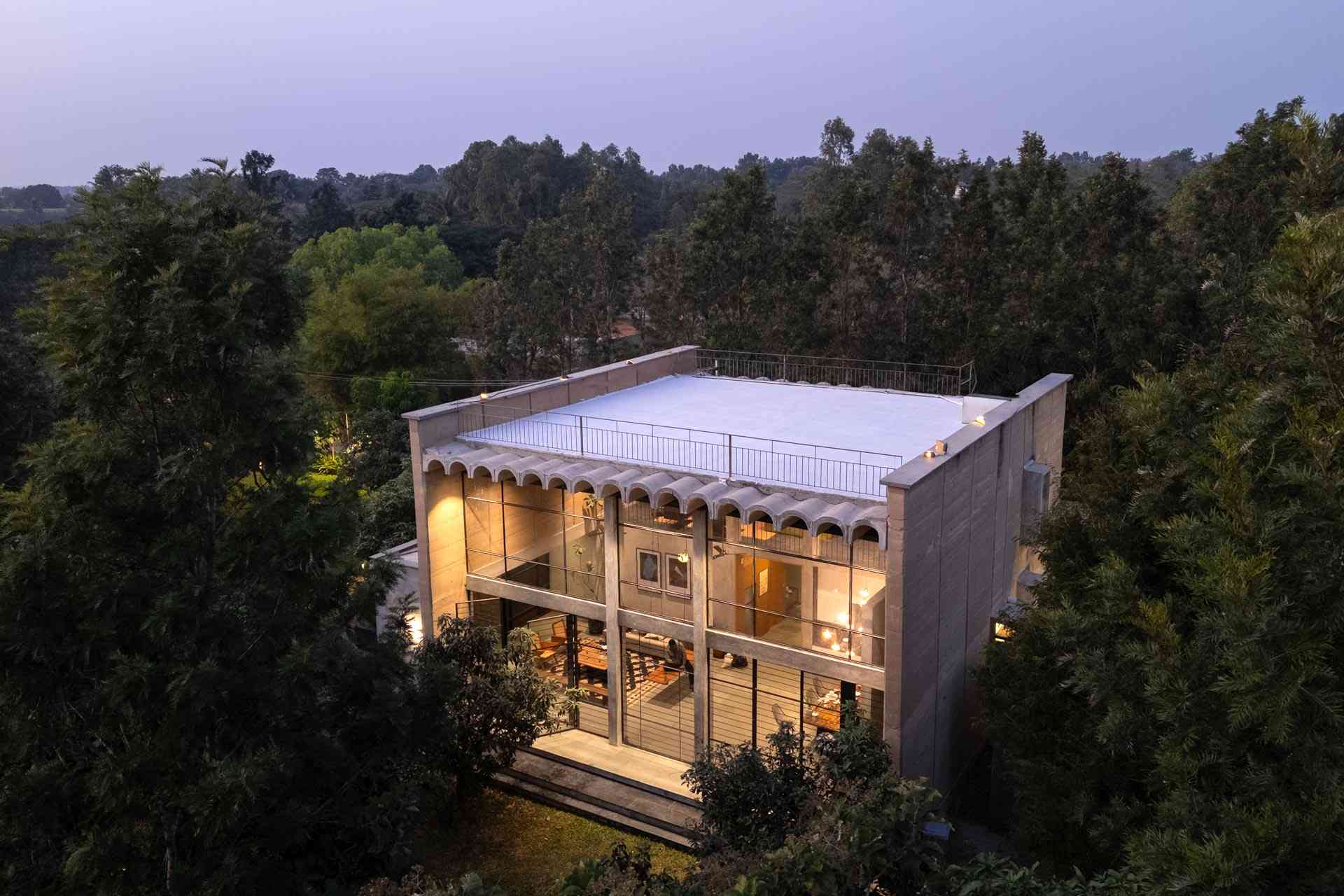
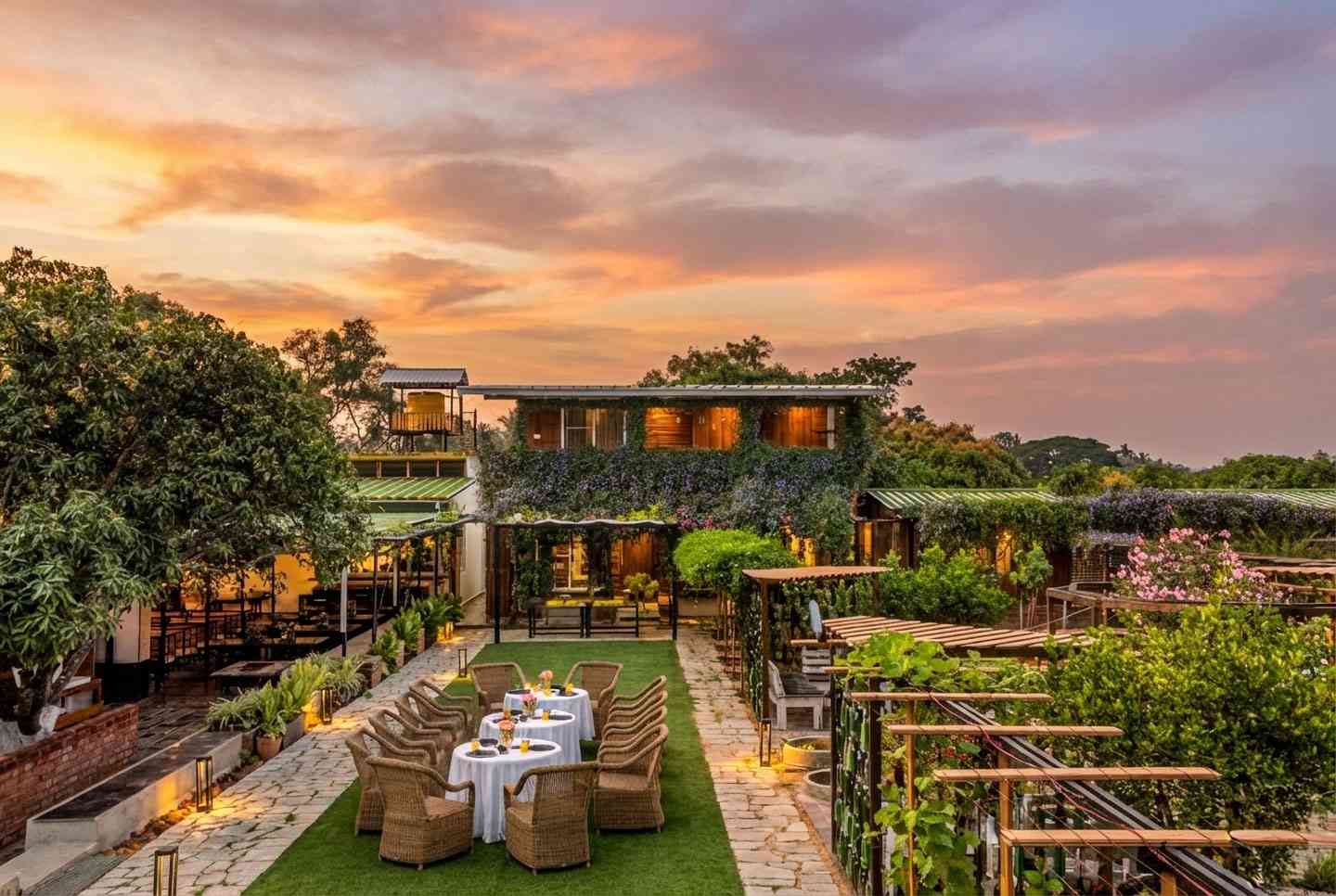
For the road trip itself, we usually suggest bookending the drive with a relaxed stay. A spacious StayVista villa in Bangalore – many with private pools – is the perfect place to gather your group, pack the car and set off fresh, or to unwind once you’re back. For travellers willing to broaden the loop into Karnataka’s coffee country, StayVista’s homestays around Chikmagalur and Coorg make a scenic alternative base within a few hours of the Malnad belt.
Where to stay: Base near Sagara/Shivamogga for the closest access to Jog Falls. Use a StayVista villa in Bangalore as your trip’s start and end point.
Travellers often tell us the drive feels far less tiring when there’s a comfortable, private space waiting at each end – especially with kids or older family members along for the ride.
Road trip tips for the Bangalore-Jog Falls drive
A few practical pointers from the route:
• Fuel up smartly. Petrol stations and dhabas are frequent until Shivamogga, then thin out toward Jog. Top up at Shivamogga.
• Start before dawn. Leaving Bangalore by 5:00 AM beats the city’s exit traffic and gives you daylight for the ghat sections.
• Carry rain gear in monsoon. Umbrellas help little in heavy spray — a light raincoat and a dry bag for phones and cameras are better.
• Mind the ghat roads. The final stretch has curves and occasional potholes after rain. Drive slowly and avoid night driving in the hills.
• Pack snacks and water. Options are limited past Sagara, and the falls area can get crowded on weekends.
• Check Jog’s timings and fees before you arrive, as both were revised in 2025.
Is the Bangalore to Jog Falls road trip worth it?
For a long weekend, few drives from Bangalore deliver as much as this one – a genuine Western Ghats waterfall at the end, elephant camps and forts along the way, and Malnad’s green hills rolling past your window. Time it between August and December, take it slow over two days, and Jog Falls rewards you with a spectacle that summer visitors never get to see.
When you’re ready to plan, a StayVista villa or homestay gives the trip a comfortable home base at either end – somewhere to start rested and return to unwind. Pack the car, check the water-release season, and point yourself northwest. Sharavathi is waiting.
Frequently Asked Questions
Jog Falls is about 400–423 km from Bangalore, depending on your route. The drive takes 7–9 hours via Tumakuru, Shivamogga and Sagara on NH48 and NH69.
Yes, but it’s a long day – roughly 800 km and 16 hours of round-trip driving. A two-day weekend trip is far more comfortable and lets you enjoy stops along the route.
August to December is best, with peak water flow during the monsoon from June to September. October and November offer the ideal mix of strong flow and clear, pleasant weather.
Jog Falls drops 253 metres (830 feet) and is formed by the Sharavathi River in Shivamogga district, Karnataka. It splits into four cascades: Raja, Rani, Roarer and Rocket.
Jog Falls is India’s second-highest plunge (free-fall) waterfall, after Nohkalikai in Meghalaya. India has taller tiered waterfalls, such as Kunchikal Falls, but Jog has the country’s most dramatic single vertical drop.
Following its 2025 reopening, entry is ₹20 for Indian adults, ₹100 for foreign tourists and ₹10 for students aged 6–16. Camera permits cost ₹100 and drones ₹500.
The nearest airport is Shivamogga Airport (around 100–120 km), with Hubballi about 133 km away. The closest railway station is Talaguppa (~14 km), though Sagara (~30 km) is more practical.
Two days is ideal for a relaxed weekend. Add a third day if you want to include detours like Agumbe, Honnemaradu or the Sharavathi backwaters at Sigandur.