
What’s It Really Like to Celebrate Eid in Kashmir in 2026?
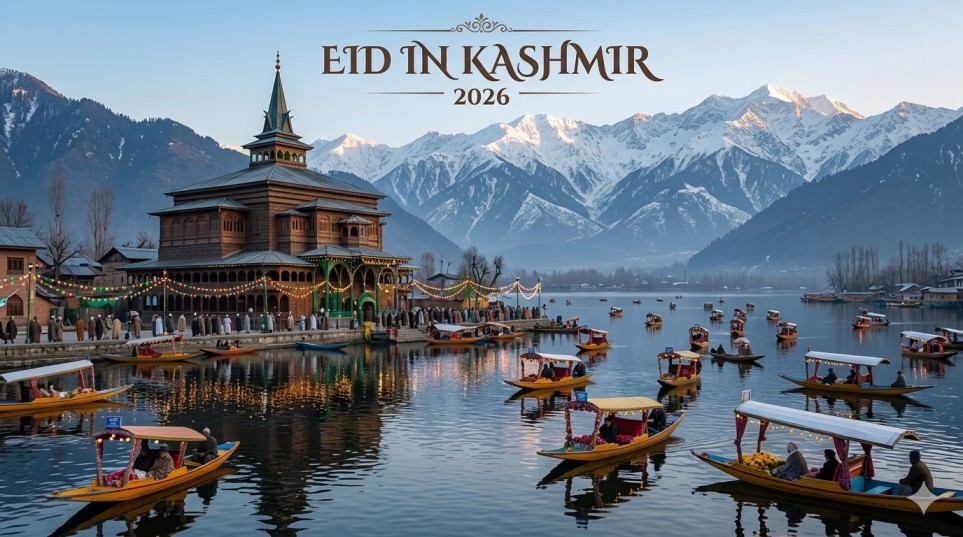
Eid Kashmir 2026, the vibrant Srinagar Eid celebrations, and rising interest in Kashmir Eid tour packages are turning the Valley into one of the most fascinating festival travel experiences in India. If you’ve ever wondered what Eid actually feels like in Kashmir, imagine morning prayers echoing across Dal Lake, shikaras gliding through floating markets, families sharing Wazwan feasts, and tulips blooming across the valley.
Jammu and Kashmir recorded 23.6 million tourist visits in 2024 — the highest the region has ever seen (Greater Kashmir, 2025). And in late March 2026, two things collide in a way that doesn’t happen every year: Eid ul-Fitr falls right when Kashmir’s spring season peaks, tulips bloom across Srinagar, and the valley shakes off winter.
Most travel guides will list prayer timings and restaurant names. This one’s different. We’ve pulled together what the experience actually feels like — the floating markets at dawn, the sound of the azan echoing off Dal Lake, the 36-course Wazwan feast you didn’t know you needed, and the Gujjar tribal parades most tourists never hear about.
Whether you’re planning a family trip from Mumbai or a solo cultural detour, here’s everything you’ll want to know before booking.
This guide answers the real traveler questions:
- When is Eid ul Fitr 2026 dates Kashmir?
- Where are the best places to celebrate Eid in Srinagar 2026?
- What are the Eid prayer timings Jama Masjid Srinagar?
- Where can tourists enjoy Wazwan restaurants near Dal Lake for Eid tourists?
- And how to plan a complete Eid tulip festival Kashmir 2026 itinerary?
Experiencing Eid in Kashmir means witnessing a rare blend of spirituality, food, culture, and spring landscapes — all happening at the same time.
In this Blog
Quick Facts: Eid in Kashmir 2026
| Detail | Information |
|---|---|
| Expected Eid dates | March 20-21, 2026 (subject to moon sighting) |
| Weather | 15-20°C days, 4-8°C nights |
| Tulip Garden opening | March 16, 2026 (1.8 million blooms) |
| Main prayer venue | Jama Masjid, Srinagar (est. 1400 AD) |
| Wazwan cost range | ₹500-2,000 per person |
| J&K visitors (2024) | 23.6 million (Greater Kashmir, 2025) |
| Tourism’s share of J&K GSDP | 7-8% (J&K Economic Survey, 2025) |
| Tourism employment | 2 million people (Business Today, 2025) |
When is Eid ul-Fitr 2026 in Kashmir, and Why Does the Timing Matter?
Eid ul-Fitr 2026 is expected around March 20-21, based on the Islamic lunar calendar — though the exact date depends on the moon sighting announced by Anjuman Auqaf Jama Masjid the evening before (Kashmir Life, 2025). This timing is unusually good for travelers.
Here’s why. Late March puts you right at the start of Kashmir’s spring season. Daytime temperatures hover around 15-20°C — warm enough for outdoor exploration, cool enough that you won’t break a sweat on a shikara ride. Nights dip to 4-8°C, so you’ll want layers for evening walks along the Boulevard.
But the real bonus? The Indira Gandhi Memorial Tulip Garden opens on March 16, 2026, showcasing 1.8 million tulips across 70+ varieties (Kashmir Thunder, 2026). The garden drew a record 8.55 lakh visitors in 2025, up from 4.65 lakh in 2024 — an 84% jump in a single year (Travel and Tour World, 2025).
So you’re getting Eid celebrations, peak tulip bloom, and mild spring weather — all in the same week. That convergence is rare, and it won’t repeat at this scale for several years.
Know more about the Kashmir Tulip Festival in March 2026
Worth noting: Eid and the Tulip Festival overlapping in the same week happens roughly once every 3-4 years due to the lunar calendar shift. 2026 is one of those years, making it an unusually strong window for cultural-meets-nature travel in Kashmir.
Know more about Kashmir in April and March’26:
What Makes Eid on Dal Lake Different from Anywhere Else?
India’s domestic tourism hit 2,948 million visits in 2024 — a 17.5% year-on-year increase (India Tourism Data Compendium, 2025). But Kashmir during Eid isn’t just another domestic travel destination. It’s a sensory experience that most of India never sees.
Floating Markets at Dawn
Picture this: 5:30 AM, mist rising off Dal Lake, and dozens of shikaras converging at the “Rad” — Srinagar’s floating vegetable market. During Eid, the market transforms. Alongside the usual lotus stems and tomatoes, vendors sell pashmina shawls, paper-mâché boxes, saffron pouches, and embroidered phirans (traditional Kashmiri cloaks) from their boats.
You can hire a shikara for ₹500-800 to glide through the market. The best time? Between 5:30 and 7:00 AM, before the tourist boats crowd the channels.
The Festive Atmosphere on Boulevard Road
After prayers, Srinagar’s Boulevard Road along Dal Lake fills with families in new clothes. Kids clutch Eidi (cash gifts from elders). Street vendors set up stalls selling halwa, sheer khurma, and kahwa — Kashmir’s signature saffron-almond tea served in samovars. The energy is somewhere between a carnival and a family reunion.
What catches most visitors off guard is how welcoming Kashmiris are to tourists during Eid. Don’t be surprised if a stranger invites you for kahwa, or a shopkeeper presses a plate of firni into your hands with “Eid Mubarak.”
According to the J&K Economic Survey 2024-25, tourism now contributes 7-8% of J&K’s GSDP, valued at approximately ₹18,500-21,200 crore annually (Greater Kashmir, 2025). Eid season is one of the peaks that drives this figure, particularly for the houseboat and shikara economy on Dal Lake.
Where Can You Join Eid Prayers in Kashmir as a Tourist?
Spiritual tourism accounts for roughly 60% of all domestic travel in India, a segment valued at $59 billion by 2028 (TGM Research, 2025). Kashmir’s Eid prayers offer a window into this — even if you aren’t Muslim, the experience of watching thousands gather at dawn is something you won’t forget.
Jama Masjid, Srinagar
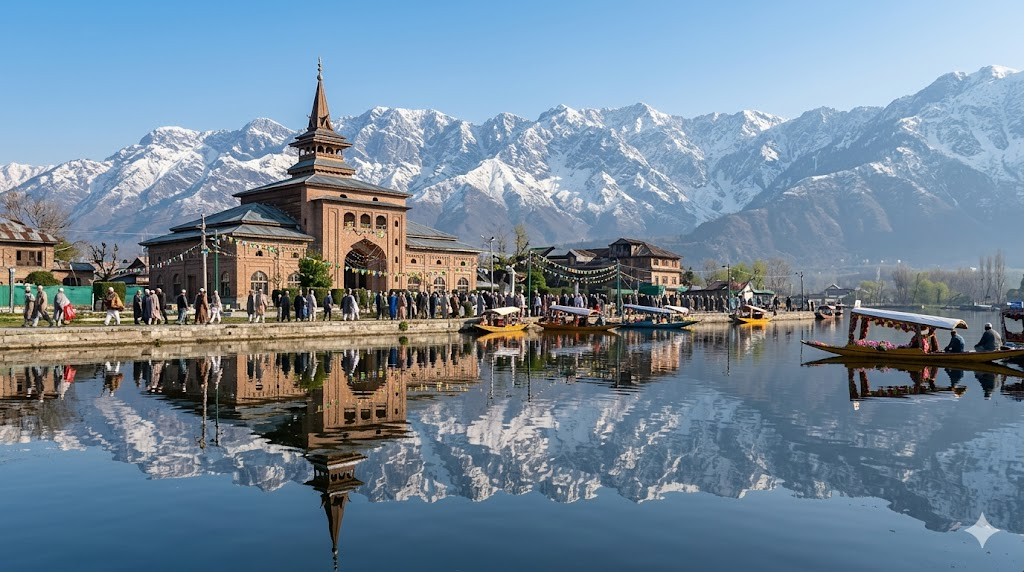
The main congregational prayer happens at Jama Masjid in Nowhatta — a 15th-century mosque with 370 carved wooden pillars and a courtyard that holds over 33,000 worshippers. The Eid sermon starts around 8:00-8:30 AM, with the main prayer at 9:00-9:30 AM (Kashmir Life, 2025).
Traveler etiquette:
- Arrive by 7:30 AM if you want to observe
- Wear modest clothing (long sleeves, covered legs; headscarves for women)
- Remove shoes before entering the mosque compound
- Stand at the back or sides as a respectful observer
- Greet people with “Eid Mubarak” after prayers — it’s always appreciated
Hazratbal Shrine
Sitting directly on the shore of Dal Lake, Hazratbal is where the Moi-e-Muqaddas (a relic believed to be a hair of Prophet Muhammad) is displayed on special occasions. Eid prayers here are quieter than Jama Masjid — more contemplative, with the lake as a backdrop. You can combine a morning prayer visit with a shikara ride back along the lake.
Eidgah Ground
When the weather permits, the largest open-air prayers happen at Eidgah, Srinagar’s dedicated prayer ground. The sight of thousands of men in white prayer caps, lined up in rows across the green field, is genuinely striking. Women pray separately. Security is visible but friendly.
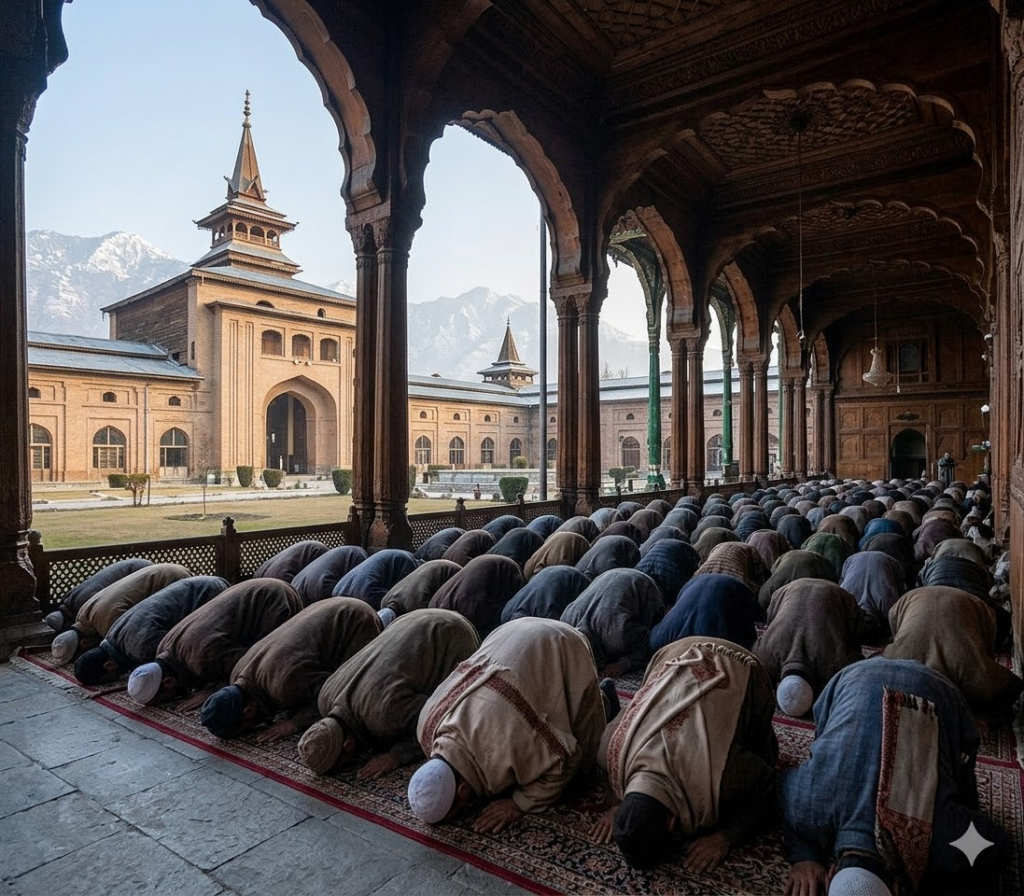
Traveler tip: If you’re observing from outside the prayer area, a telephoto lens or zoom phone camera works best. Don’t walk through the prayer rows. Post-prayer, the mood shifts completely — people hug, exchange sweets, and the streets come alive with greetings.
What Is Wazwan, and Where Should You Eat It During Eid?
You haven’t done Eid in Kashmir until you’ve sat cross-legged on a dastarkhwan (floor mat) and eaten Wazwan. This multi-course feast can stretch to 36 dishes, all meat-based, all prepared by traditional wazas (chefs) who’ve inherited recipes across generations.
Kashmir was ranked India’s No. 1 culinary destination for 2024, endorsed by 84.2% of 190+ food industry experts in the Godrej Food Trends Report (Kashmir Life, 2024). Wazwan is the crown jewel of that reputation — and Eid is when it shines brightest.
Wazwan isn’t just a meal. It’s a ritual. The trami (large copper plate) is shared between four people. You eat with your hands. The courses roll out in a specific order: tabak maaz (fried ribs), then methi maaz, then seekh kebab, then the stars — rogan josh, gushtaba (pounded meatballs in yoghurt gravy), and rista (red meatballs).
During Eid, Wazwan takes centre stage. Families that fasted through Ramadan break the month with their most elaborate feast, and restaurants prepare special Eid menus for tourists.
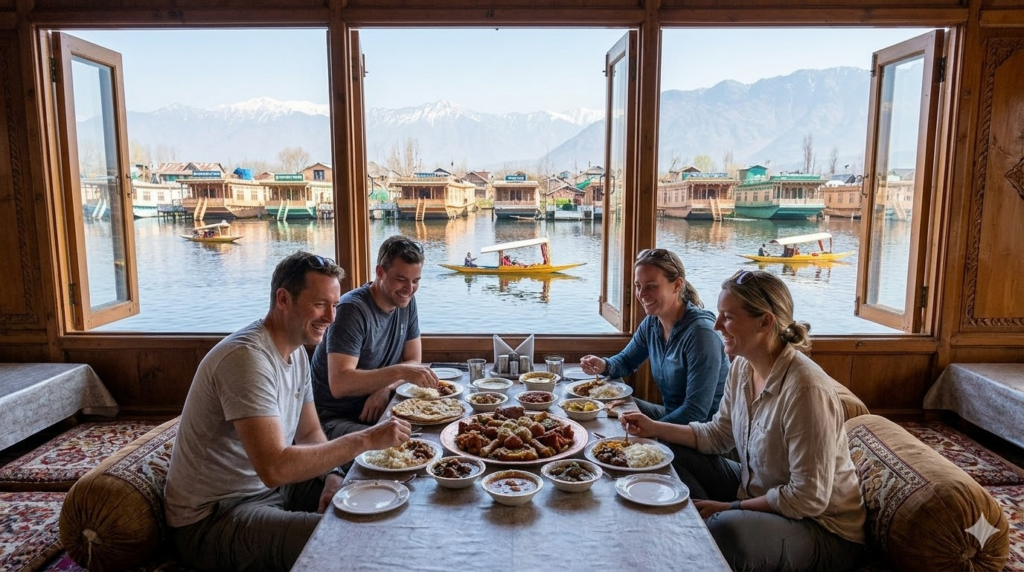
Top Wazwan Spots Near Dal Lake
| Restaurant | Location | Rating | Price/Person (₹) | Best For |
|---|---|---|---|---|
| Stream Restaurant | Boulevard Road, opp. Ghat No. 2 | 4.7 | 700-1,200 | Lake views, family seating |
| Ahdoos | Residency Road, central Srinagar | 4.5 | 600-1,000 | Iconic, tourist-friendly |
| Clove Srinagar | Near Dal Lake | 4.6 | 800-1,500 | Ambience, veg options too |
| M Y Foods | Rajouri Kadal | 4.8 | 800-2,000 | Most authentic full trami |
| Dawate E Wazwan | Gagribal Boulevard | 4.4 | 550-900 | Budget groups, lake-view |
Booking Tips for Tourist Groups
Call or WhatsApp restaurants 3-7 days before Eid. Demand surges after prayers. For groups of 5+, ask about full trami service (15-36 courses). Most spots accept 50% advance via UPI.
If you’re staying in a houseboat or villa, ask about doorstep Wazwan delivery. Providers like Mir’s Kashmiri Wazwan (phone: 7006943437) and Wazwan Stories (phone: 9796662330) deliver full trays starting at ₹800/person.
Indian travelers now allocate 15-20% of their annual income to travel, up from 10% in previous years, with 36% opting for premium experiences like boutique stays and heritage dining (EY India, 2025). A Wazwan feast at a lake-view restaurant fits squarely into that trend — it’s premium dining at a fraction of city prices.
How Do Gujjar Tribes Celebrate Eid in Kashmir?
This is the part most travel blogs skip entirely. And honestly, it might be the most memorable thing you’ll experience.
Kashmir’s Gujjar and Bakerwal tribes — semi-nomadic pastoralists who live in the upper reaches of districts like Bandipora — celebrate Eid with three days of festivities that feel completely different from the urban celebrations in Srinagar (Village Square, 2024).
What Happens in a Gujjar Eid Celebration?
Days before Eid, families clean their kothas (traditional homes), women apply intricate henna designs, and children get fitted for new skull caps and colourful phirans. On Eid morning, the men walk together to the nearest Eidgah, chanting takbeer along mountain paths.
After prayers, the real spectacle starts. Colourful parades wind through alpine meadows, with locals in vibrant attire performing Gojri folk songs and energetic group dances — think rhythmic clapping, drums, and call-and-response singing that echoes across the valley.
The feasting is communal. Families pool resources for rogan josh, goshtaba, modur pulao (sweet saffron rice), and tabak maaz, shared on large mats spread across meadows. There’s no restaurant bill. No reservation. Just food, music, and open-air celebration in one of the most beautiful landscapes on earth.
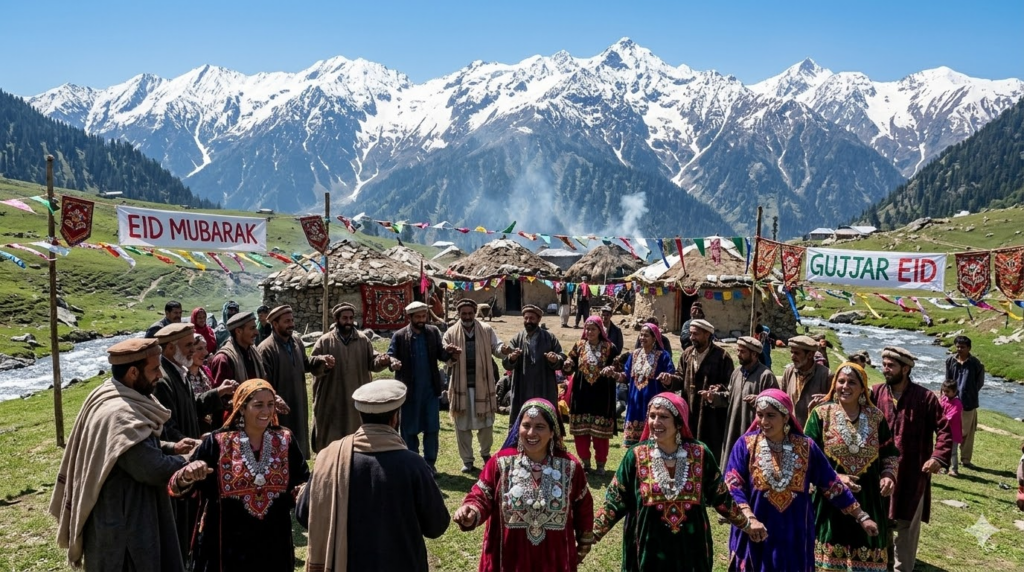
Our observation: Gujjar Eid celebrations in Bandipora and Bonyar are among the few remaining examples of pastoral festival traditions in the Kashmir valley. No competitor travel page currently covers this as a tourist attraction — which is precisely why it’s worth the 2-hour drive from Srinagar.
How to Visit
Head to Bandipora district (approximately 2 hours north of Srinagar) on Eid morning. Hire a local guide through your hotel or homestay — they’ll know which meadow gatherings are happening. Dress modestly, ask before photographing, and bring something sweet to share. You won’t need much else.
What Eid Celebrations Happen Beyond Srinagar?
Srinagar gets the attention, but Eid unfolds across the entire Kashmir valley — and some of the best experiences are outside the city.
Anantnag and Pahalgam: Nature Meets Devotion
In Anantnag, prayers centre at the local Jamia Masjid (typically 8:30 AM), followed by small markets selling sheer khurma and local handicrafts. It’s quieter, more intimate. Some families picnic along the nearby Lidder River after prayers.
Pahalgam takes it further. Imagine Eid prayers at a small riverside mosque, followed by a family picnic in Betaab Valley or Aru Valley — crisp air, pine forests, the Lidder bubbling past. Temperatures around 10-15°C in Pahalgam make it cooler than Srinagar, so pack an extra layer.
These towns are 1.5-2 hours south of Srinagar and work well as a day trip or an overnight stay if you want the mountains without the city.
Jammu City: Eidgah Ground and Cross-Cultural Harmony
Jammu’s largest Eid gathering happens at Eidgah Ground in the city centre — an open-air prayer space that draws hundreds. What makes Jammu different is the interfaith element. Hindu and Sikh neighbours come by with sweets after prayers. You’ll hear “Eid Mubarak” exchanged across religious lines in a way that feels natural, not performative.
Post-prayers, hit the markets around Raghunath Bazaar for dry fruits, phirans, and sheer khurma.
The Scenic Drive: Srinagar to Jammu via NH-44
If you want to cover both Srinagar and Jammu Eid celebrations, the 305 km NH-44 drive is one of India’s most beautiful road trips. Budget 5-7 hours by private cab (₹7,000-10,000 for 4-6 passengers).
Start early — 5-6 AM from Srinagar — and you’ll catch Jammu’s Eidgah prayers by mid-morning if you push through. But the smarter play is to stop at Patnitop for meadow walks and reach Jammu by afternoon for the festive market buzz.
How Much Does an Eid Kashmir Trip Cost from Mumbai?
Let’s break this down honestly. Kashmir during Eid isn’t as expensive as most people assume — especially compared to international alternatives like Dubai or Istanbul during Ramadan.
| Expense | Budget (₹) | Mid-Range (₹) | Premium (₹) |
|---|---|---|---|
| Flights (Mumbai-Srinagar return) | 6,000-8,000 | 10,000-14,000 | 18,000-25,000 |
| Accommodation (per night) | 1,500-2,500 | 4,000-8,000 | 12,000-30,000 |
| Wazwan feast (per person) | 550-800 | 800-1,200 | 1,500-2,000 |
| Shikara ride (1 hour) | 500 | 800 | 1,500 |
| Private cab (per day) | 1,500 | 2,500 | 4,000 |
| Tulip Garden entry | 50 | 50 | 50 |
| 5-day trip total (2 people) | ~25,000 | ~55,000 | ~1,20,000+ |
Pro tip: Book flights 7-10 days before Eid via MakeMyTrip or Cleartrip. Prices spike 2-3 days before the holiday. For buses, JKSRTC runs Srinagar-Jammu services at ₹400-600 but takes 10-12 hours. Private cabs from Batmaloo terminal run ₹500-800 per seat shared.
Accommodation is where the range gets wild. A houseboat on Dal Lake starts at ₹2,500/night for a basic room, but a private villa through StayVista — with a garden, kitchen, and mountain views — can transform the trip into something you’ll talk about for years.
Frequently Asked Questions
Expect pleasant spring weather with daytime highs of 15-20°C and nighttime lows of 4-8°C. There’s a 20-50% chance of light showers, which makes the tulip gardens and Dal Lake even more scenic (AccuWeather, 2026). Pack layers and a light rain jacket. Sunscreen is necessary — UV index ranges 3-7 in late March.
Yes, respectful tourists are welcome to observe prayers at Jama Masjid, Hazratbal Shrine, and Eidgah. Wear modest clothing, remove shoes in mosque compounds, and avoid walking through prayer rows. Post-prayer, locals warmly greet visitors with “Eid Mubarak” and often share sweets.
Absolutely — the garden opens March 16, 2026, with 1.8 million tulips across 70+ varieties (Kashmir Thunder, 2026). Entry is ₹50. Online ticketing is available for the first time in 2026, so book ahead to skip queues. The garden drew 8.55 lakh visitors in 2025 — expect similar or higher footfall this year.
Call restaurants 3-7 days ahead of Eid. Stream Restaurant (Boulevard Road: +91-194-2470190) and Dawate E Wazwan (Gagribal) take group bookings for 5-20 people. Specify full trami (15-36 courses). Pay 50% advance via UPI. For delivery to houseboats or villas, try Mir’s Kashmiri Wazwan at 7006943437 — they deliver across Srinagar starting ₹800/person.
Yes, but note that Vaishno Devi is a Hindu shrine in Katra (2-3 hours from Jammu) with no Eid-specific events. The smart itinerary: celebrate Eid in Srinagar (March 20-21), drive to Jammu on March 22 with scenic stops at Patnitop, visit Vaishno Devi on March 23, and fly home from Jammu. The Delhi-Amritsar-Katra expressway under construction will eventually cut Delhi-Katra travel to 6 hours (Greater Kashmir, 2025).
Planning Your Eid in Kashmir: What It Comes Down To
Here’s what you’ll take away from an Eid trip to Kashmir:
- The atmosphere is genuinely welcoming. Kashmiris don’t just tolerate tourists during Eid — they actively include them. Expect impromptu invitations for kahwa, sweets, and conversation.
- The Eid-Tulip overlap in 2026 is a rare window. Spring bloom, festival energy, and mild weather won’t align like this again for several years.
- Wazwan is worth the trip by itself. A 36-course feast shared with strangers on a houseboat changes how you think about food and hospitality.
- Go beyond Srinagar. Gujjar parades in Bandipora, riverside prayers in Pahalgam, and the NH-44 drive to Jammu add layers that most tourists miss.
- Book early. Flights, restaurants, and premium accommodation fill fast around Eid. A 7-10 day lead time makes everything smoother and cheaper.
Early 2026 data already shows recovery momentum — Gulmarg, Pahalgam, and Sonamarg reported 100% hotel occupancy in the first months of 2026 (Zee News, 2026). Kashmir saw 23.6 million visitors in 2024 and that number is climbing again (Greater Kashmir, 2025). Eid 2026 offers something you won’t find in a regular Kashmir trip — a window into the valley’s living culture, its most festive food traditions, and the warmth of a community celebrating together.