

Kashmir Tulip Festival 2026: Dates, Timings & Travel Guide (Updated)
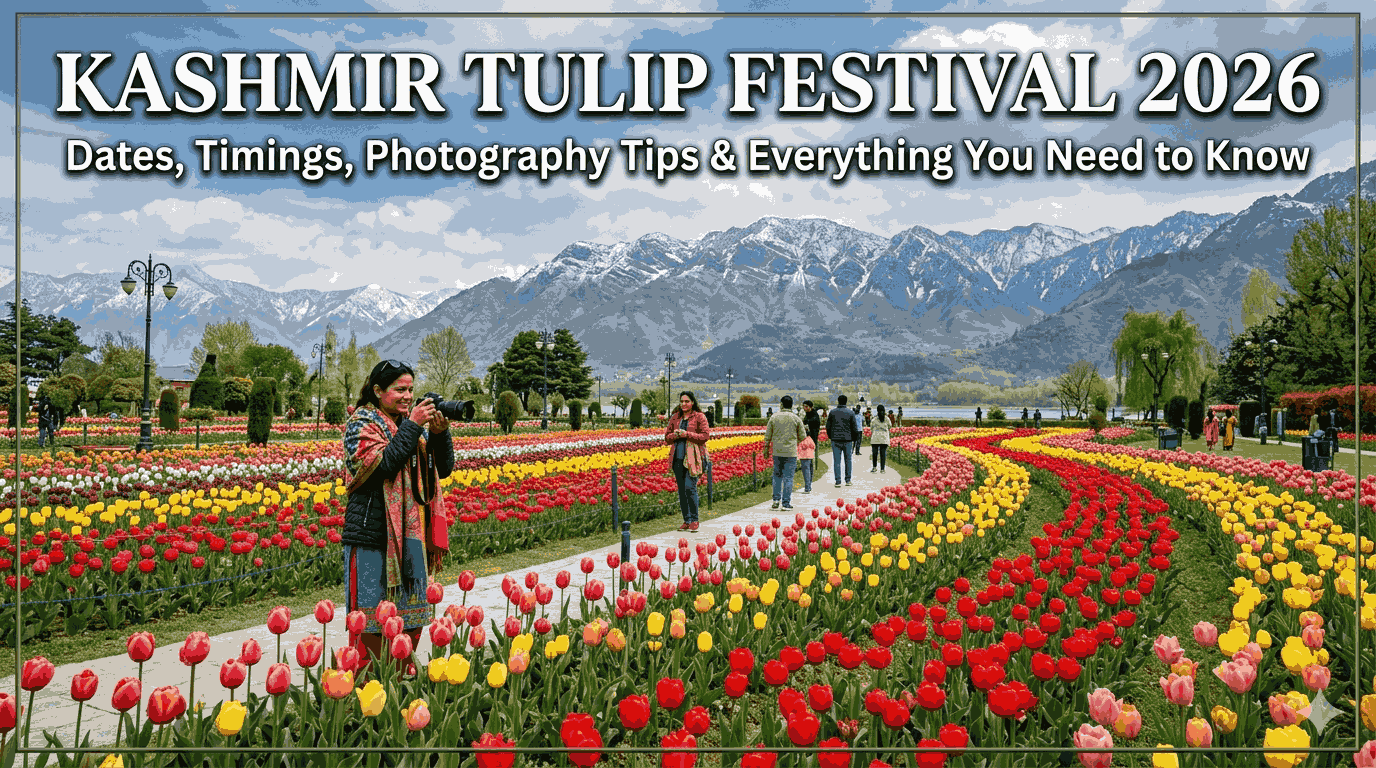
Each spring, the Indira Gandhi Memorial Tulip Garden in Srinagar transforms into a sea of colour. The Kashmir Tulip Festival 2026 opened on March 16, earlier than usual due to warmer weather — with 1.8 million tulip bulbs across more than 70 varieties on display. Chief Minister Omar Abdullah inaugurated the festival, which is expected to surpass last year’s record of 8.55 lakh visitors.
Set against the foothills of the Zabarwan range and overlooking Dal Lake, Asia’s largest tulip garden spans 30 hectares (74 acres) across seven terraces. Whether you’re a photographer chasing golden hour shots, a family planning a spring getaway, or a solo traveller exploring Kashmir for the first time — this guide covers everything you need: dates, entry fees, photography tips, a 5-day itinerary, and a full budget breakdown.
The Kashmir Tulip Festival 2026 is open from March 16 to mid-April at the Indira Gandhi Memorial Tulip Garden, Srinagar. Peak bloom is forecast for April 1-8.
In this Blog
Quick Info Table
| Festival Name | Kashmir Tulip Festival 2026 (Tulip Show) |
| Location | Indira Gandhi Memorial Tulip Garden, Cheshma Shahi Road, Rainawari, Srinagar |
| 2026 Opening Date | March 16, 2026 |
| Expected Closing | Mid-April 2026 (weather-dependent) |
| Peak Bloom | April 1-8, 2026 (forecast) |
| Total Tulips | 1.8 million bulbs, 70+ varieties |
| Garden Size | 30 hectares (74 acres), 7 terraces |
| Nearest Airport | Srinagar International Airport (SXR) — 22 km |
| Ideal Trip Duration | 4-5 days (including Gulmarg/Pahalgam) |
| Best For | Couples, families, photographers, solo travellers |
2026 UPDATE (March 23, 2026)
Festival Status: OPEN — 1.8 million tulips blooming across 70+ varieties
Opened: March 16, 2026 (inaugurated by CM Omar Abdullah)
Peak Bloom Expected: April 1-8, 2026
New in 2026: First-ever dedicated souvenir shop inside the garden with tulip-themed merchandise and Kashmiri craft stalls
First-Day Footfall: Over 20,000 visitors on opening day
Pro Tip: Visit Tuesday-Thursday mornings (6-8 AM) for 60% fewer crowds and the best photography light.
What Is the Kashmir Tulip Festival and Why Is It Celebrated in Srinagar?
The Kashmir Tulip Festival is an annual spring celebration held at the Indira Gandhi Memorial Tulip Garden, Asia’s largest tulip garden, originally opened in 2007 to boost floriculture and tourism in the Kashmir Valley . In 2025, the garden drew a record 8.55 lakh visitors during its 30-day run, with a single-day peak of over 81,000 people.
But why Srinagar? The answer is geography. The garden sits at the base of the Zabarwan mountain range, at an altitude that creates the cool temperatures tulips need to bloom. The bulbs — originally imported from the Keukenhof gardens in Amsterdam — thrive in Kashmir’s spring climate, which mimics the Netherlands’ growing conditions. Nowhere else in India can you see tulips at this scale.
The festival isn’t just about flowers. Expect live Kashmiri cultural performances, folk music, traditional cuisine stalls, handicraft exhibitions, and — new for 2026 — a dedicated souvenir shop offering tulip-themed merchandise and local mementoes inside the garden premises.
What’s New at the Kashmir Tulip Festival 2026
- 1.8 million tulip bulbs planted, the largest display yet
- 70+ tulip varieties arranged in colour-coordinated terraces
- Enhanced floral density for more vibrant patterns
- Garden reopening on 16 March 2026, marking the start of Kashmir’s spring tourism
The festival was launched in 2007 to promote spring tourism in Kashmir.
What Are the Kashmir Tulip Festival 2026 Dates and Timings?
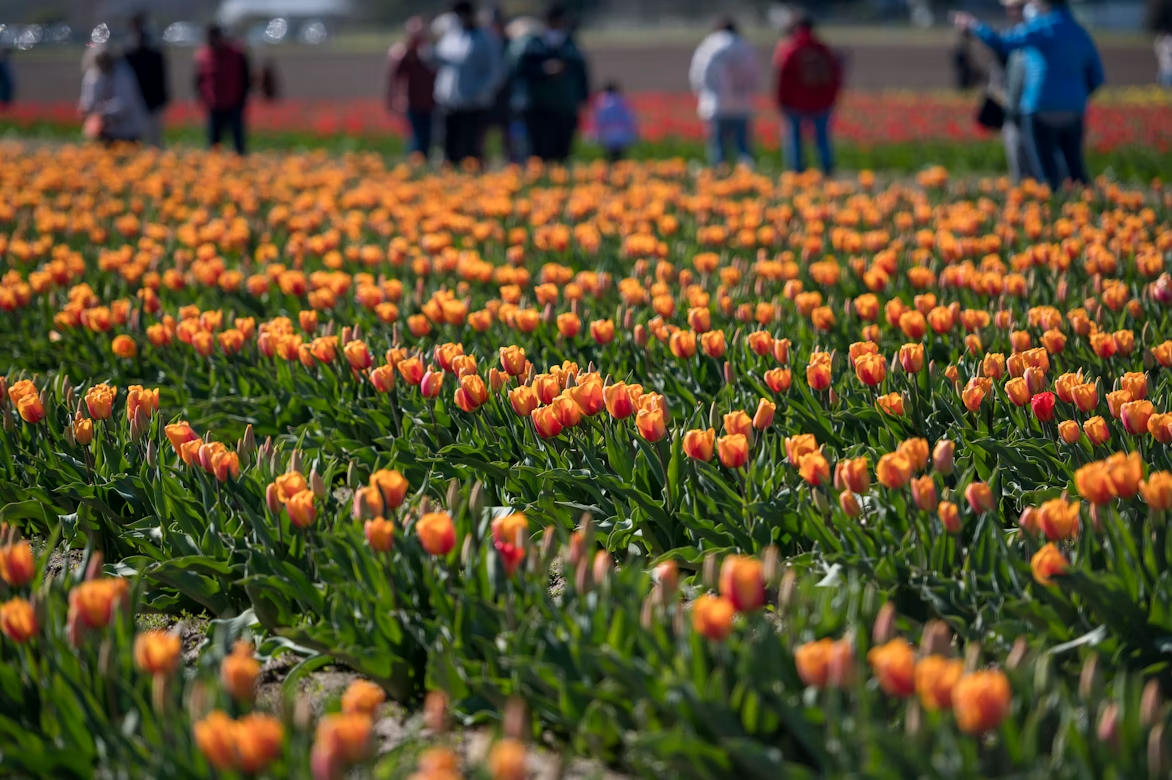
The festival officially opened on March 16, 2026 — earlier than the typical late-March start, thanks to warmer-than-usual spring temperatures this year. It will run until mid-April, though the exact closing date depends on weather and bloom conditions.
Here’s how the 2026 season breaks down:
| Period | Dates (2026) | What to Expect |
|---|---|---|
| Early Season | March 16 – March 31 | Early varieties blooming, fewer crowds, some beds still developing |
| Peak Bloom | April 1 – April 8 | Maximum colour — most of the 70+ varieties in full bloom |
| Late Season | April 9 – mid-April | Late varieties still colourful, petals beginning to fall, thinner crowds |
Daily timings: 9:00 AM – 7:00 PM. However, photographers and early risers can sometimes enter as early as 6:00 AM — ask at the gate.
What makes 2026 special? The early opening means the bloom window could extend longer than usual. The garden has also added two new tulip varieties this year, bringing the total past 70 for the first time. And with J&K tourism recording 1.78 crore visits across the state in 2025, expect strong footfall — plan your visit on weekdays if possible.
2026 Festival Opening Timeline
March 16, 2026: Garden officially opened
- Weather: Mild, 10-15°C
- Bloom status: Early bloom starting (about 30% bloomed)
- Crowds: Minimal (locals only, few tourists)
- Photography: Fresh early blooms, morning light optimal
April 1, 2026: Peak bloom begins (expected)
- Weather: Pleasant, 12-18°C
- Bloom status: 90-95% of flowers in full bloom
- Crowds: Moderate to heavy
- Photography: Optimal color and density
April 8-12, 2026: Maximum bloom + maximum crowds
- Weather: Warm, 15-20°C
- Bloom status: 100% bloom (some earlier flowers fading)
- Crowds: Peak season (avoid if possible)
- Photography: Best color diversity (early + late varieties together)
Mid-April: Late season bloom
- Weather: Warm, 16-22°C
- Bloom status: Some fading, late varieties peak
- Crowds: Declining
- Photography: Moody, some empty spaces
2026 Update:
The Srinagar Tulip Garden officially opened on 16 March 2026 with 1.8 million tulips in bloom. Peak bloom is expected in early April.
Where is the Tulip Festival held in Kashmir?
The festival takes place exclusively at the Indira Gandhi Memorial Tulip Garden (formerly Siraj Bagh), located on Cheshma Shahi Road in the Rainawari area of Srinagar. It sits between the Zabarwan mountain range and the shores of Dal Lake — arguably the most scenic location for any garden in India.
Google Maps: Search “Indira Gandhi Memorial Tulip Garden, Srinagar”
Nearby landmarks:
- Chashme Shahi Mughal Garden — 500 metres away
- Nishat Bagh — 2 km
- Shalimar Bagh — 4 km
- Dal Lake Boulevard — 3 km
- Shankaracharya Temple — 4 km
You can combine a tulip garden visit with the Mughal Gardens circuit. All three major Mughal gardens are within a 15-minute drive of the tulip garden.
- How to reach: 22 km from Srinagar Airport (SXR); 8 km from Lal Chowk city centre
- Time required: 2-4 hours
- Ideal for: Everyone — the garden is wheelchair-accessible on the lower terraces
- Pro tip: Enter from the lower gate near Dal Lake for an uphill walk through all seven terraces. It’s more scenic than starting from the top.
Best Time to Visit Kashmir Tulip Festival 2026
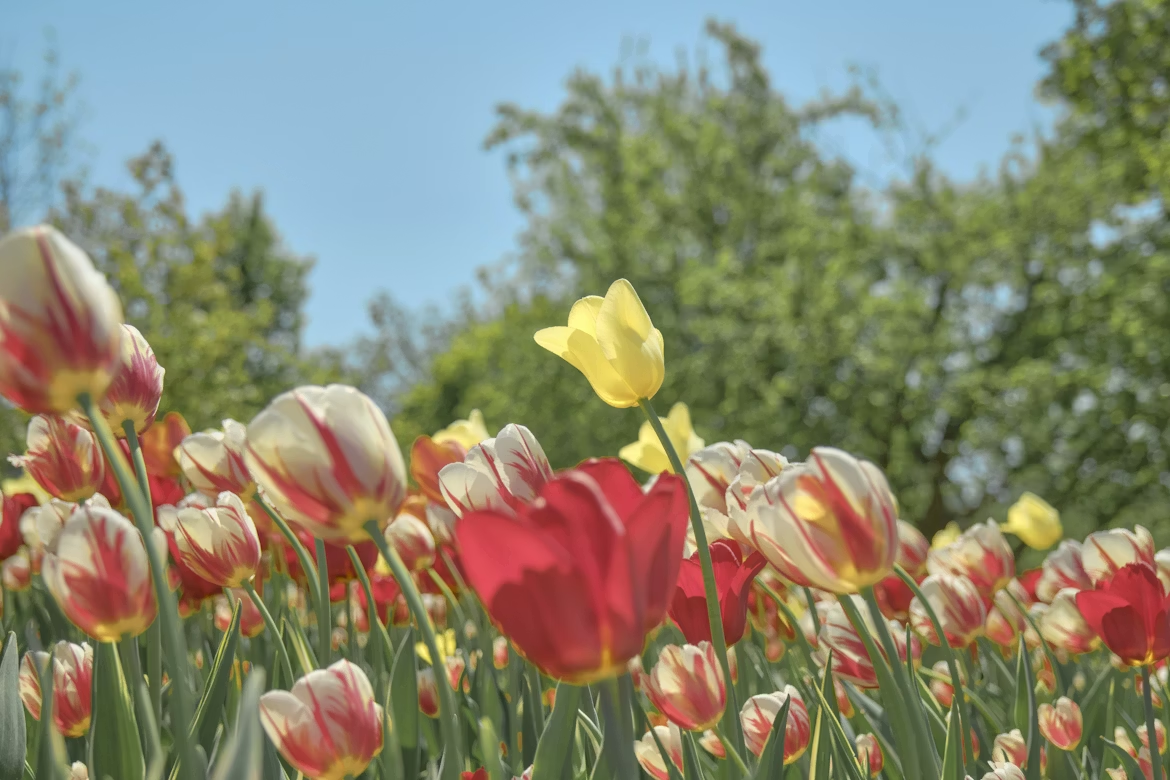
The best time depends on bloom stage and crowd levels.
For peak tulip bloom:
- Early April is usually the most colourful period.
For fewer crowds:
- Late March mornings.
For photography:
- Sunrise or late afternoon golden hour.
Typical spring conditions in Srinagar during the festival:
- Temperature: 10°C – 20°C
- Snow still visible on surrounding peaks
- Clear skies and soft spring light
This season is also considered the best time to visit Kashmir in spring.
How to Book Tickets
You can buy tickets at the gate, but during peak bloom (April 1-8), queues can stretch 30-45 minutes. For 2026, the J&K Floriculture Department is offering advance booking:
- Book online via the official floriculture department portal (check District Srinagar website for the latest link)
- At the gate: Cash and UPI both accepted
Tulip Varieties You Can See at the Festival
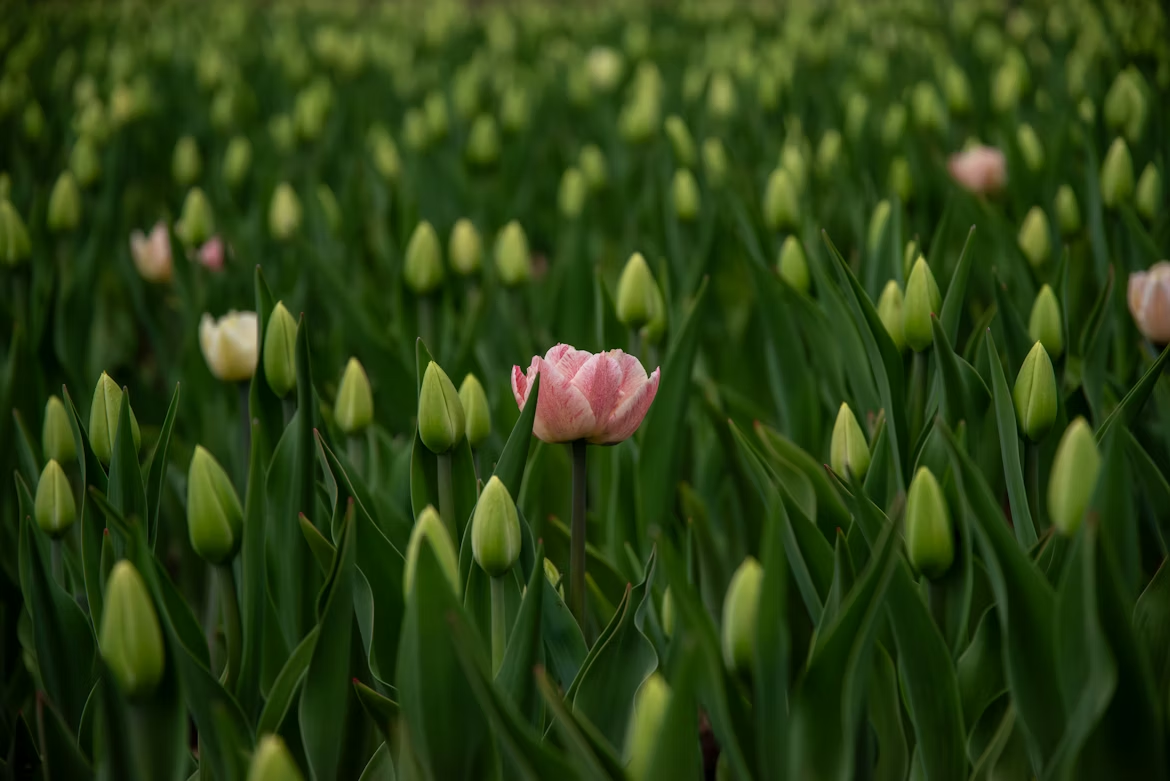
The festival showcases dozens of tulip varieties imported and cultivated for the Kashmir climate.
Common tulip varieties include:
Single Early Tulips — Classic cup-shaped blooms in red, yellow, and orange. These bloom first and dominate the lower terraces in mid-March.
Darwin Hybrids — The tallest variety, up to 70 cm high. Deep reds and bright yellows. They’re the most photographed tulips at the festival.
Parrot Tulips — Ruffled, feather-like petals with dramatic colour streaks. Found on the upper terraces and absolutely stunning in macro photography.
Double Late Tulips — Peony-like blooms with layers of petals. These bloom last and keep the garden colourful into mid-April.
Fringed Tulips — Serrated petal edges that look like they’ve been cut with craft scissors. Rare and usually found in small dedicated beds.
Besides tulips, the garden also grows 46 other flower varieties including hyacinths, daffodils, ranunculus, and narcissus — all imported from Holland. The hyacinths, with their intense fragrance, are worth seeking out on the third terrace.
Kashmir Tulip Festival Photography Tips: Professional Guide
The Indira Gandhi Memorial Tulip Garden is one of Asia’s most photographed locations during April.
With the right timing, angles, and camera settings, you can capture magazine-quality images.
Best Photography Times by Light Condition
Golden Hour Photography (Best Results)
- Light quality: Warm, directional, flattering on colors
- Shadows: Long, dramatic shadows add depth
- Crowds: 90% fewer people
- Temperature: 8-12°C (bring jacket)
- Flower appearance: Dew drops add sparkle
Camera Settings:
- Aperture: f/4.0 – f/5.6
- Shutter Speed: 1/250s – 1/500s
- ISO: 100-400
- White Balance: Daylight (5500K)
- Metering: Matrix metering
- Focus mode: Single-point autofocus (AF-S)
- Light quality: Warm, soft, less harsh than midday
- Shadows: Medium length, flattering
- Crowds: Moderate (30-40% of peak)
- Best for: Wide landscape shots with mountain backdrop
Camera Settings:
- Aperture: f/5.6 – f/8
- Shutter Speed: 1/125s – 1/250s
- ISO: 200-400
- White Balance: Daylight or Shade
- Metering: Spot metering on flower
- Focus mode: Continuous autofocus (AF-C)
Overcast/Cloudy Day Photography
Why Overcast Days Are Underrated:
- No harsh shadows on flowers
- Colors appear more saturated
- Soft, diffused light is flattering
- 80% fewer visitors
- No need for ND filters or excessive ISO
Camera Settings:
- Aperture: f/4.0 – f/8
- Shutter Speed: 1/125s – 1/250s
- ISO: 400-800
- White Balance: Cloudy (6500K) or custom
- Metering: Evaluative/Matrix metering
- Focus mode: Single-point AF
Pro Tip: Rainy/overcast days often produce the best flower color saturation.
Bring an umbrella and expect fewer tourists (90% reduction).
Midday Harsh Light (Avoid)
Not Recommended for Photography
- Harsh overhead sun
- Blown out highlights
- Extreme shadows
- Colors appear washed out
- Maximum crowds
If you must shoot midday:
- Seek shade under trees or garden structures
- Use high ND filter (ND 16-32)
- Increase saturation in post-processing by +20-30%
- Shoot in RAW format for better editing flexibility
Macro/Close-Up Photography (Flower Details)
Equipment Needed:
- Macro lens: 60mm f/2.8 or 100mm f/2.8 (preferred)
- Tripod: Essential for stability
- Remote shutter release or 2-sec timer: To avoid camera shake
- Diffuser: Optional but helpful for harsh sun
- Extension tubes: If you don’t have macro lens
Camera Settings for Macro:
- Aperture: f/8 – f/16 (for depth of field)
- Shutter Speed: 1/125s – 1/250s
- ISO: 200-400
- Focus mode: Manual focus or single-point AF
- Image Stabilization: OFF (use tripod)
- Metering: Spot metering on subject
Macro Photography Technique:
- Place tripod low (near flower level)
- Set up 45-60 degree angle to flowers
- Use manual focus for precision
- Shoot 5-10 images (some will be perfectly sharp)
- Zoom into LCD to verify sharpness
Best Macro Subjects:
- Tulip center details (stamens, pollen)
- Water droplets on petals (early morning)
- Tulip petal texture and color variation
- Bee/butterfly interactions (early morning)
- Closed tulips in purple/pink varieties
Landscape/Wide-Angle Photography
Equipment:
- Ultra-wide lens: 14-24mm or 16-35mm
- Standard zoom: 24-70mm (most versatile)
- Tripod: For sharpness and composition
- ND filter: Optional, for motion blur water/sky
Camera Settings for Landscapes:
- Aperture: f/8 – f/16 (for sharpness throughout)
- Shutter Speed: 1/60s – 1/250s
- ISO: 100-400
- Focus mode: Single-point AF on foreground
- Metering: Evaluative metering
Composition Tips:
- Include foreground (flower bed), middle (more flowers), background (mountains/lake)
- Place horizon in upper 1/3 of frame (flowers in lower 2/3)
- Include people in shot for scale (adds storytelling)
- Shoot from upper terraces looking down (layered effect)
- Face toward Dal Lake for water reflections
Best Wide-Angle Locations:
- Upper terrace facing south (terraced beds in foreground)
- North garden looking toward Zabarwan range
- Center garden area with maximum flower density
- Edge of garden overlooking Dal Lake
Video/Reel Recording (Instagram, TikTok)
Equipment:
- Gimbal or stabilizer: Essential for smooth movement
- ND filter: For proper exposure with shallow depth of field
- Wireless microphone: If recording audio
- Extra batteries: Video drains quickly
Video Settings:
- Resolution: 4K 60fps (scales down to 1080p automatically)
- Frame rate: 60fps (for slow-motion playback at 30fps)
- Shutter speed: 1/120s (2x frame rate rule)
- ISO: Auto (let camera adjust)
- White balance: Custom (measure on white flower)
- Codec: H.265 if available (smaller file size)
Video Shot Ideas (15-30 seconds each):
- Gimbal pan across flower beds (5-8 seconds)
- Slow zoom into single tulip (3-5 seconds)
- Close-up focus pull from blurred foreground to sharp flower
- Walking shot through garden rows (10-15 seconds)
- Sunrise/golden hour time-lapse (20-30 frames)
- Butterfly landing on flower (slow motion)
- Water droplet dripping off petal (macro video)
- 360° panorama of garden
Pro Editing Apps:
- CapCut (free, best for reels)
- Adobe Premiere Rush
- DaVinci Resolve (free, professional)
- iMovie (Mac/iPhone)
Smartphone Photography (iPhone 14+, Samsung S23+)
Native Camera Settings:
- Open Camera app
- Tap yellow sun icon: Exposure compensation
- Swipe down: Reduce brightness by -1 to -2
- Use Portrait mode: Blurs background
- HDR: Turn OFF (unless very backlit)
- Grid lines: Turn ON (helps composition)
- Lock focus: Tap and hold on subject (AE/AF Lock)
Best Smartphone Photography Tricks:
- Golden hour: Colors pop without any editing
- Macro mode (iPhone 14 Pro): Get within 2cm of flower
- Portrait mode: Blurs background, makes flower stand out
- Night mode: Not useful in daylight, skip it
- ProRAW: If available, shoot in RAW for post-processing
Post-Processing Apps (Free or Cheap):
- Lightroom Mobile (free tier: 2GB storage)
- Increase Vibrance +10-20
- Increase Saturation +5-10
- Shadows: +20-30 (brighten dark areas)
- Clarity: +15 (sharpen midtones)
- Snapseed (Free)
- Selective edit: Increase saturation/brightness on flowers only
- Glamour Glow: +10-15 (not overdo it)
- Drama: +20-30 (add punch to colors)
- Pixlr (Free)
- Basic adjustments, easy to use
- One-click presets for flower photography
Before/After Editing Guide:
ORIGINAL (Smartphone photo):
- Slightly dull colors
- High contrast (harsh sun)
- Some blown highlights
AFTER EDITING (15-30 sec adjustment):
- Increase saturation: +15-20
- Increase exposure: +0.5
- Increase shadows: +30
- Decrease highlights: -10
- Increase vibrance: +10
- Add clarity: +10
- Result: Magazine-quality Instagram image
Top 10 Photography Locations in the Garden
| # | Location | Best For | Best Time |
|---|---|---|---|
| 1 | Fourth terrace viewpoint | Panoramic garden + Dal Lake | Sunrise |
| 2 | Lower gate entrance path | Leading lines through flower beds | Morning |
| 3 | Red tulip beds (Terrace 2) | Bold colour compositions | Any |
| 4 | Zabarwan mountain backdrop | Scale shots, garden-meets-mountain | Morning |
| 5 | Parrot tulip section (Upper terraces) | Macro, texture details | Golden hour |
| 6 | Hyacinth beds (Terrace 3) | Colour contrast with tulips | Midday (shaded) |
| 7 | Water channel feature | Reflections | Still morning |
| 8 | Pathway with overhanging chinar trees | Framing, depth | Any |
| 9 | Top terrace looking down | Bird’s-eye composition | Morning |
| 10 | Garden edge near Dal Lake | Tulips + lake + shikaras | Sunset |
Pro Tip: Scout locations on your first visit without heavy camera gear.
Return next morning with equipment ready for shots at 6 AM.
Photography Workflow for 3-Hour Garden Visit
Arrive & Scout
- Walk entire garden (30 min)
- Identify best light/angle combinations
- Set up tripod at chosen location
Golden Hour Wide Shots (1 hour)
- Landscape photography with context
- Shoot 50-100 images
- Vary angles and framing
Macro/Detail Shots (1 hour)
- Switch to macro lens
- Close-up tulip details
- Capture water droplets, insects
- 30-50 detailed images
Video/Reel Shots (30 min)
- Gimbal pans and cinematic shots
- Sunset-style golden hour video (even if morning)
- 3-5 reel-ready videos
Total Output: 80-150 high-quality images + 5-10 video clips ready for Instagram/portfolio
Post-Processing Workflow
Adobe Lightroom:
- Import & Organize
- Create folder for each day
- Rate images: 1 star (good) to 3 stars (excellent)
- Batch Edit (Select all similar images)
- White Balance: Auto or custom
- Exposure: +0.3 to +0.7
- Shadows: +20-40 (brighten dark areas)
- Highlights: -20 (recover blown sky)
- Vibrance: +10-20 (not saturate too much)
- Clarity: +15-25 (sharpen details)
- Saturation: +5-10 (boost all colors)
- Fine-tune Best Images (Individual editing)
- Use adjustment brush for selective editing
- Increase saturation only on flowers
- Dodge (brighten) shadow areas
- Burn (darken) overly bright areas
- Add subtle vignette (-10 to -15)
- Export
- Format: JPEG
- Quality: 90-100
- Resize: 2048px for Instagram
- Add watermark: Your name/StayVista credit
Camera & Lens Recommendations
- Used Canon 6D or Nikon D610 (DSLR body)
- 24-70mm f/2.8 kit lens
- 50mm f/1.8 (portrait/macro)
- Smartphone for backup
Mid-Range Setup:
- Canon 5D Mark IV or Nikon Z5 (mirrorless)
- 24-70mm f/2.8 lens
- 100mm macro lens
- Gimbal for video
Professional Setup:
- Canon R5 or Sony A1 (latest full-frame)
- 16-35mm f/2.8 (wide)
- 24-70mm f/2.8 (standard)
- 100mm f/2.8 macro
- Gimbal + ND filters
- Backup camera body
Smartphone (Best Value):
- iPhone 14 Pro or Samsung S23 Ultra
- Quality: 90% as good as DSLR for social media
- Benefit: Always with you, instant editing/sharing
Common Photography Mistakes to Avoid
❌ Shooting at Midday: Harsh light, washed out colors
✅ Solution: Arrive by 7 AM latest, stay until 6 PM
❌ Shooting facing into sun: Blown highlights
✅ Solution: Backlit golden hour shoots instead
❌ Low camera angle with blur: Unfocused subject
✅ Solution: Use tripod, f/8-f/16 aperture, manual focus
❌ Over-saturation in editing: Unnatural look
✅ Solution: Limit saturation +10-15, use vibrance instead
❌ Neglecting foreground: Flat, boring composition
✅ Solution: Include flowers in foreground, middle, and background
❌ Visiting on weekends: Crowds ruin shots
✅ Solution: Visit Tuesday-Thursday, 6-9 AM only
Things to Do at the Kashmir Tulip Festival
Visitors typically spend 1–2 hours exploring the garden, but the surrounding region offers many spring experiences.
During the festival you can:
- Watch Kashmiri folk dance performances
- Taste traditional Kashmiri cuisine
- Shop for Pashmina and handicrafts
- Take a shikara ride on Dal Lake
- Photograph spring landscapes around Srinagar
Nearby attractions include:
- Shalimar Bagh
- Nishat Bagh
- Shankaracharya Temple
Also read: April aur May may Kashmir घूमने जा रहे हैं? जानिए क्या देखें और क्या अनुभव करें
5-Day Kashmir Tulip Festival Trip Plan
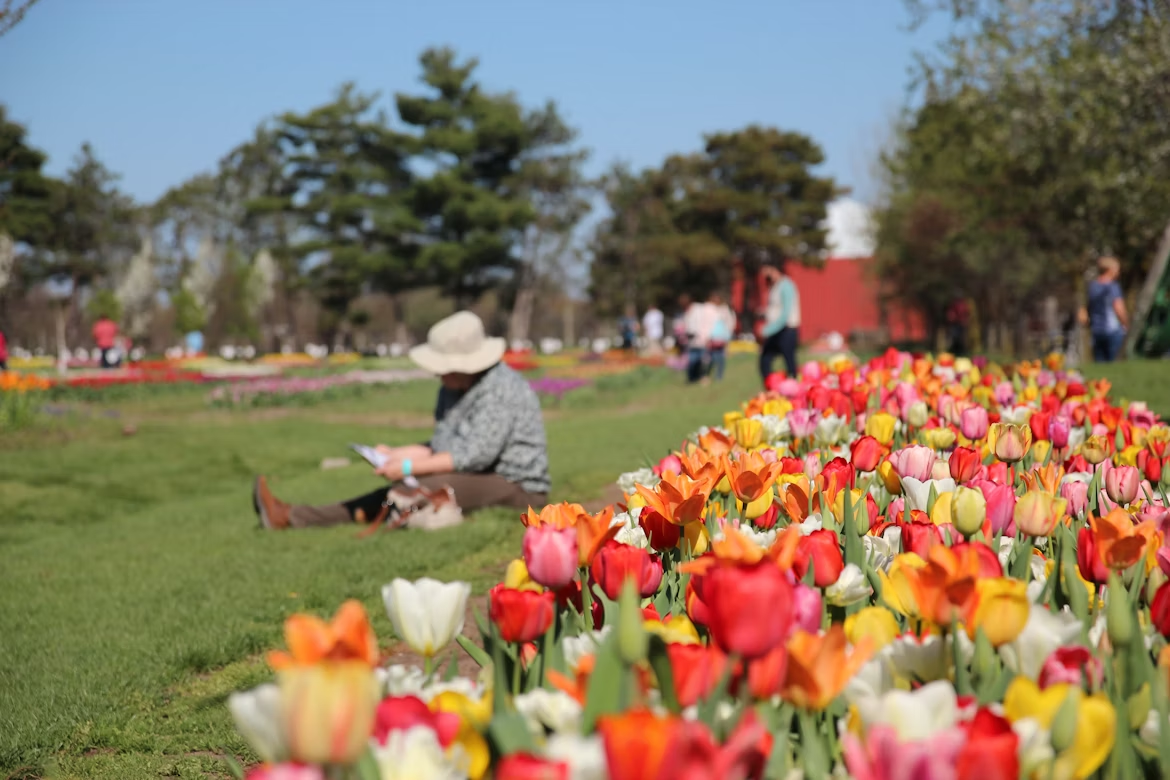
Many travellers combine the tulip festival with nearby destinations in Kashmir.
Example itinerary:
Day 1 — Srinagar
- Arrive in Srinagar
- Shikara ride on Dal Lake
Day 2 — Tulip Festival
- Visit Indira Gandhi Memorial Tulip Garden
- Explore Mughal gardens
Day 3 — Gulmarg
- Day trip to Gulmarg
Day 4 — Pahalgam
- Visit Pahalgam
Day 5 — Departure
- Explore local markets and depart
Spring is ideal for combining flowers, snow views, and mountain landscapes.
How Do You Reach the Kashmir Tulip Festival?
By Air (Most Common)
Fly into Srinagar International Airport (SXR), which is connected to Delhi, Mumbai, Bangalore, Kolkata, Chandigarh, and Jammu with direct flights. The tulip garden is 22 km from the airport (45-60 minutes by taxi).
Airport taxi fare: ₹800-1,200 to the tulip garden area. Pre-paid taxi counters are available outside the terminal.
By Train
The nearest railway station is Srinagar Railway Station (part of the Udhampur-Srinagar-Baramulla line), about 18 km from the garden. Trains connect Srinagar to Banihal, which links to Jammu Tawi by road.
However, train connectivity is limited. Most travellers fly or drive.
By Road
From Jammu: ~300 km via NH44 (Jammu-Srinagar Highway). Takes 8-10 hours depending on traffic and weather. The road through Banihal tunnel is open year-round.
From Delhi: Fly to Srinagar (1.5 hours) or drive via Jammu (approximately 800 km, 2 days recommended with an overnight stop in Jammu or Patnitop).
Getting Around Srinagar
When NOT to Visit: Crowd Analysis & Best Times for Fewer People
While April is the peak bloom period, it’s also peak tourist season. Here’s when to visit
based on your priorities:
Peak Crowd Times (Avoid if Possible)
- Weekends (Saturday-Sunday): 3x more visitors than weekdays
- Midday heat brings maximum crowds and harsh sunlight
- April 8-12: Perfect bloom + school holidays = extremely crowded
- Public holidays: Check Indian holiday calendar for additional rush
Best Times for Peaceful Garden Experience
- Early mornings (6:00-8:00 AM): 60% fewer crowds, soft golden light
- Weekdays only (Tuesday-Thursday): Local workers reduce crowds by 50%
- Late afternoons (4:00-6:00 PM): Second-best option, golden hour light
- Rainy days: 90% fewer visitors (take an umbrella, worth it for solitude)
- March 16-25: Early season with fewer tourists, good bloom starting
Visitor Count by Day Type (Estimated)
| Day Type | Avg Visitors | Best Time | Crowd Level |
|---|---|---|---|
| Weekday morning | 8,000-12,000 | 6-9 AM | Low |
| Weekday afternoon | 15,000-18,000 | After 4 PM | Medium |
| Weekend morning | 20,000-25,000 | Before 8 AM | High |
| Weekend afternoon | 28,000-35,000 | Avoid | Very High |
| Rainy/Cloudy | 3,000-5,000 | Any time | Very Low |
Best Visit Timing by Purpose
For Photography Enthusiasts:
- Tuesday-Thursday
- Early morning (golden hour, no crowds)
- Avoid: Noon-3 PM (harsh shadows)
- Bring: Tripod, ND filters, wide-angle + macro lenses
For Family with Kids:
- Wednesday mornings (mild crowds, manageable)
- Late March (less crowded, still good bloom)
- 9:00-11:00 AM (children have energy, not too hot)
- Skip: Weekends and April 8-15
For Instagram/Reels Creators:
- Golden hour: 5:30-6:30 AM or 4:00-5:30 PM
- Quiet days: Tuesday-Thursday
- Popular photo spots: Upper terraces, facing Dal Lake
- Time investment: 2-3 hours minimum for good shots
For Couples/Romantic Visit:
- Early morning sunrise visit
- Sunset evening stroll
- Skip crowded midday
- Best days: Thursday evening or Friday morning
Insider Hack: Quietest Day of the Season
For less crowds visit Kashmir Tulip Festival (Based on visitor data analysis): On Thursday morning (March 25 – April 5) between 6:00-8:30 AM
Fewest crowds + beautiful bloom + perfect light = optimal experience
Where to Stay During the Kashmir Tulip Festival 2026
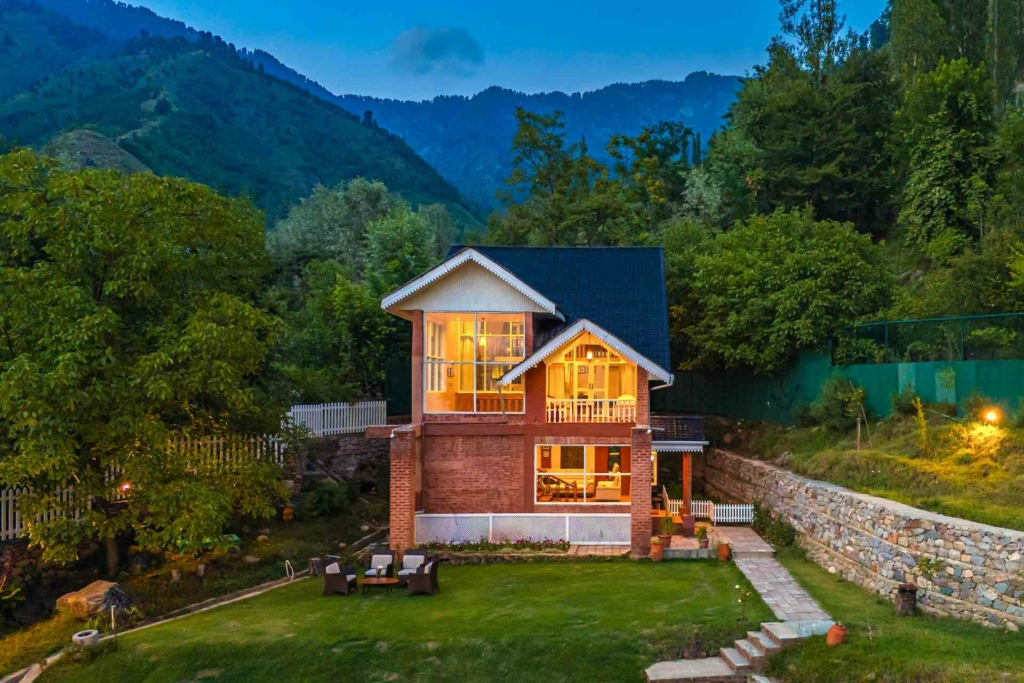
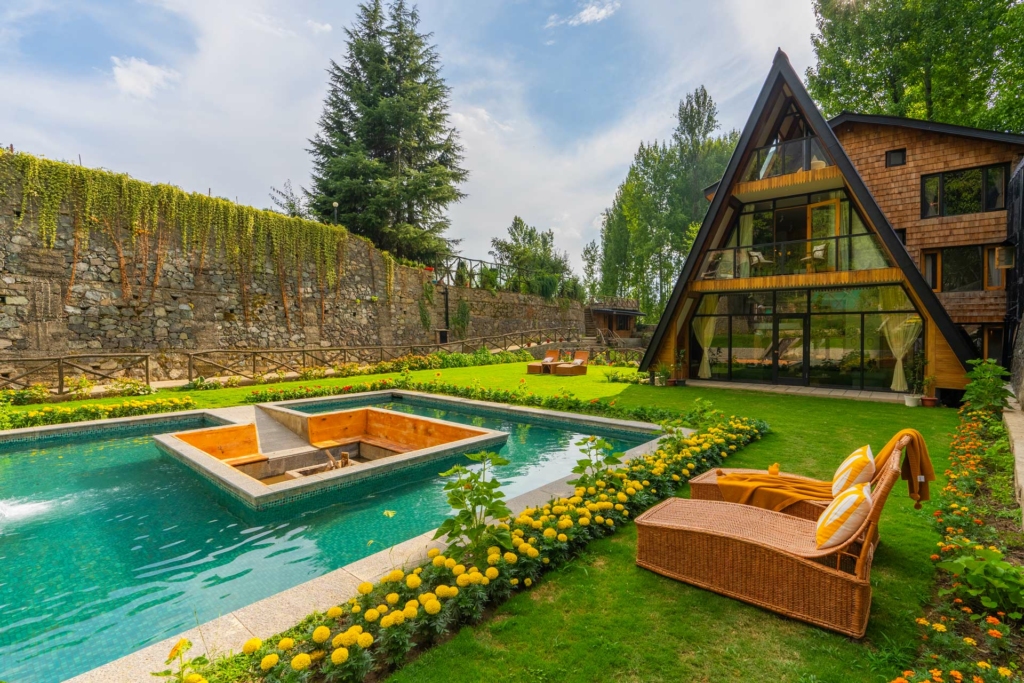
Staying in Srinagar is the most convenient option when visiting the Kashmir Tulip Festival 2026, as the Indira Gandhi Memorial Tulip Garden is located just a short drive from the city centre and the scenic Dal Lake. Travellers looking for more privacy and space than traditional hotels can consider private villas and curated holiday homes that offer comfortable living areas, scenic surroundings, and personalised service—ideal for families and small groups visiting during the tulip season.
Luxury villa stays such as those offered by StayVista provide a relaxed base to explore springtime Kashmir, with thoughtfully designed homes, warm hospitality, and easy access to Srinagar’s key attractions. After a day spent walking through colourful tulip fields, guests can return to spacious interiors, mountain views, and unhurried evenings that make a spring trip to Kashmir feel even more memorable.
Tip: Because the tulip bloom in Srinagar attracts a large number of travellers each year, it is advisable to book your stay well in advance, especially for peak bloom weeks in early April.

FAQs About Kashmir Tulip Festival 2026
The festival is held at the Indira Gandhi Memorial Tulip Garden in Srinagar, located near Dal Lake at the base of the Zabarwan mountain range.
The first two weeks of April usually offer the peak bloom period when most tulip varieties are in full flower.
The garden displays over 1.5 million tulips across more than 60 varieties, making it the largest tulip garden in Asia.
Yes. Personal photography is allowed throughout the garden, and sunrise or late afternoon offers the best lighting for landscape and flower photography.
A 4–5 day trip is ideal to see the tulip garden and explore nearby destinations like Gulmarg, Pahalgam, and Dal Lake.
The festival officially opened on 16 March 2026 at the Indira Gandhi Memorial Tulip Garden in Srinagar.
About 1.8 million tulip bulbs across 70+ varieties have been planted this year.
The first two weeks of April usually offer the most vibrant bloom.
Next Read: