

Glowing Beach in Goa: When & Where to See Bioluminescence in 2026
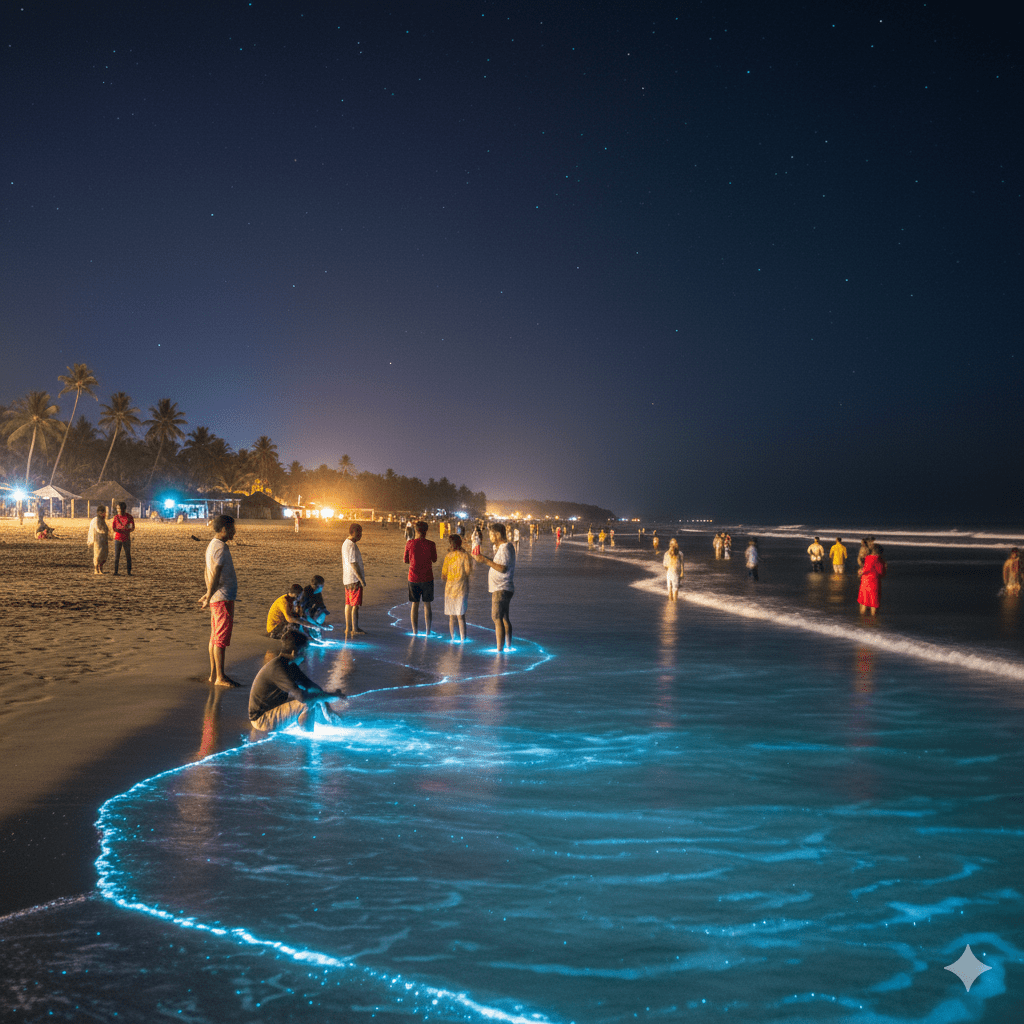
If you’re planning to chase the magical bioluminescence beach in Goa 2026, you’re in for an unforgettable experience. Every year during winter, stretches of South Goa shimmer with blue-green light as tiny bioluminescent plankton glow along the shoreline. This guide is for travellers planning a trip to Goa in 2026, as bioluminescence is a recurring seasonal phenomenon that appears under the right natural conditions every year. Let’s start as we begin with the best beaches, exact timings, safety tips, photography settings, and expert-backed local insights to help you witness the glowing waves at their brightest.
In this Blog
What Is the Glowing Beach in Goa?
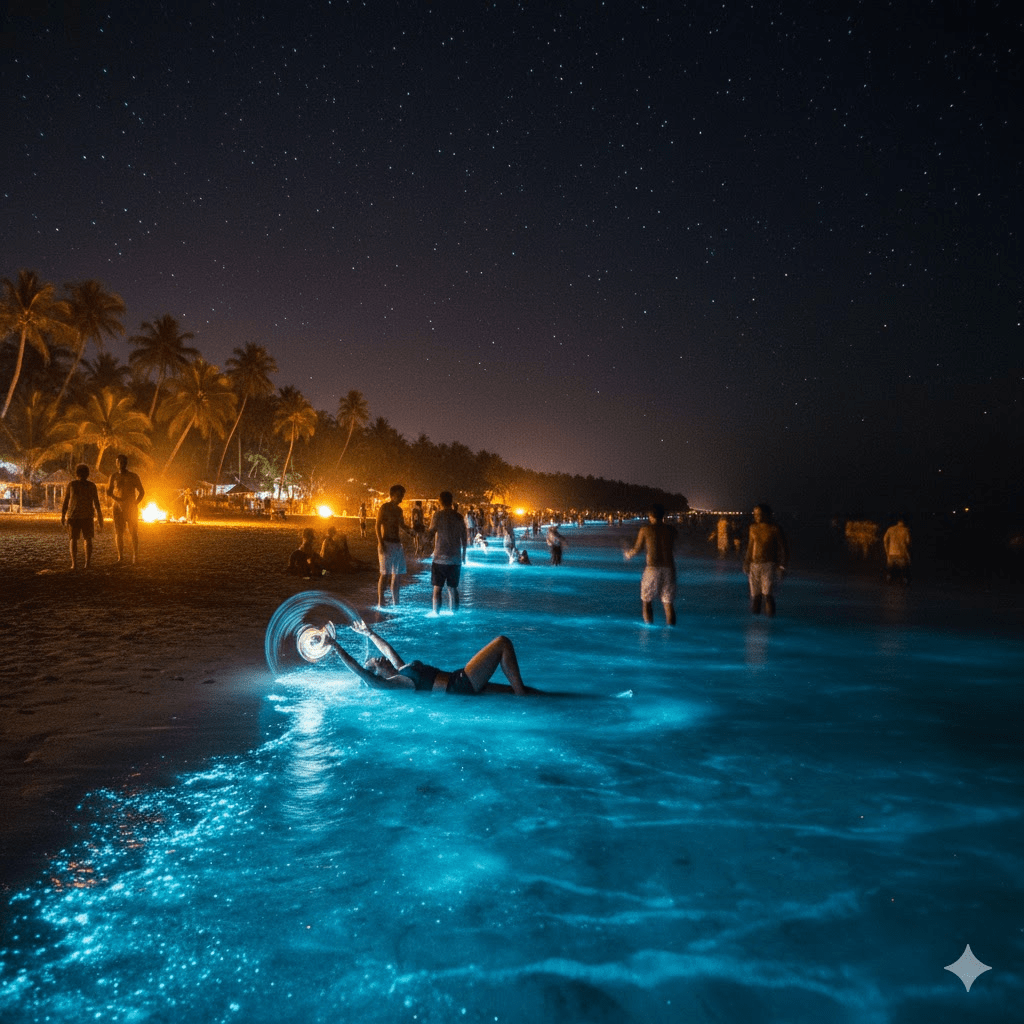
The glowing beach in Goa is created by bioluminescent phytoplankton—microscopic organisms that emit blue-green light when disturbed by movement in the water.
You’ll see the glow when waves crash, when you walk along the wet sand, or when the water is gently stirred.
This natural phenomenon is most reliably visible at Betalbatim Beach, making it the top glowing beach in Goa for 2026.
What Causes Bioluminescence in Goa?
Bioluminescence in Goa is caused by dinoflagellates—tiny marine microorganisms that release a chemical light reaction when they’re agitated by waves or human movement.
In Goa’s waters, the most common species responsible for this glow is Noctiluca scintillans, also known as “sea sparkle.”
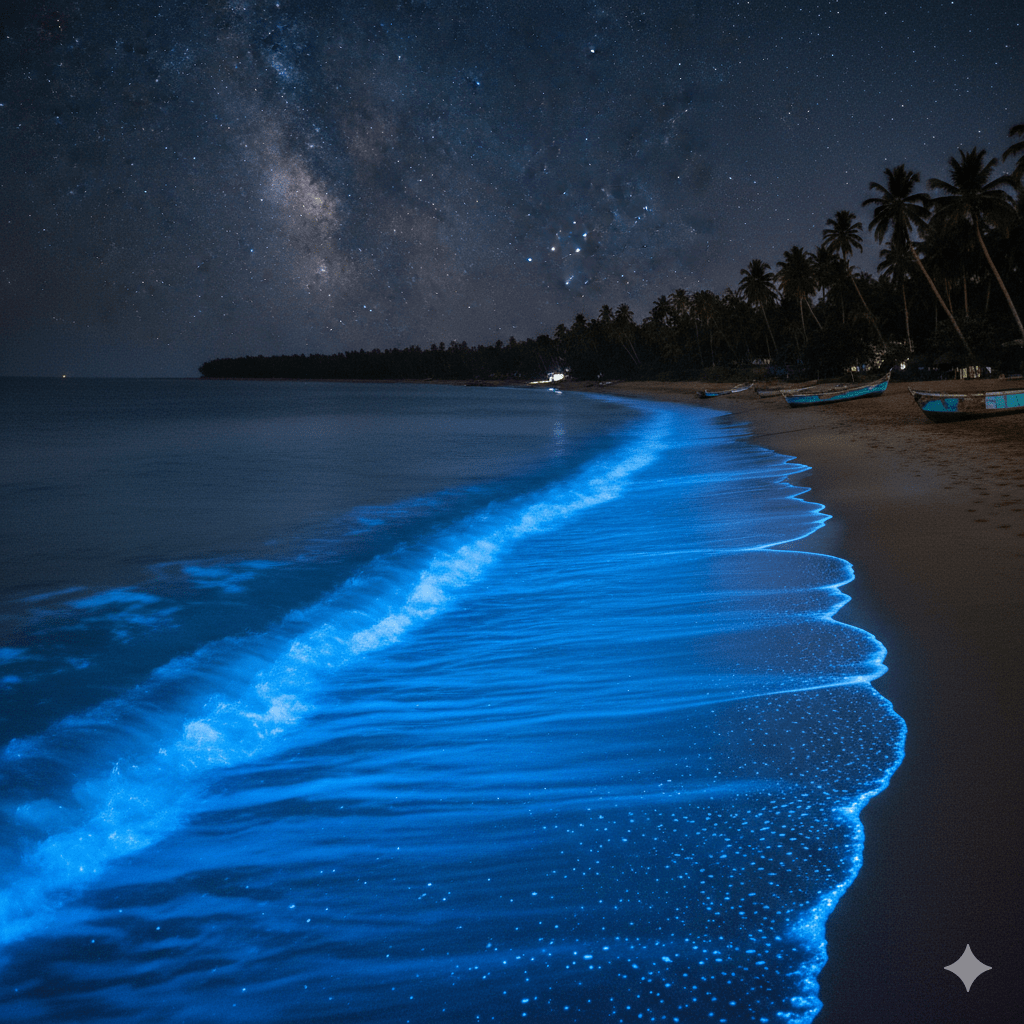
Why It Peaks in Winter
The Jan-February and October-December 2026 window offers:
- Clearer skies
- Calmer seas
- Post-monsoon nutrient levels
- Cooler winter temperatures
These conditions dramatically improve glow visibility making January and February 2026 the ideal months to visit.
Where to See Bioluminescence in Goa (Updated for 2026)
Betalbatim Beach — The Most Reliable Glowing Beach in Goa
If you have time for only one glowing-wave attempt, make it Betalbatim Beach. With minimal light pollution, gentle waves, and a quiet stretch of coastline, this is Goa’s most consistent glowing beach.
Why Betalbatim is the best spot:
- Low light interference
- Calm winter waters
- Close to Colva & Majorda
- Easy access from most South Goa villas
- High historical sighting frequency
How to reach:
- 10 minutes from Colva
- 15 minutes from Majorda
- 30–40 minutes from Vasco
- Well-connected by taxis, scooters & local roads
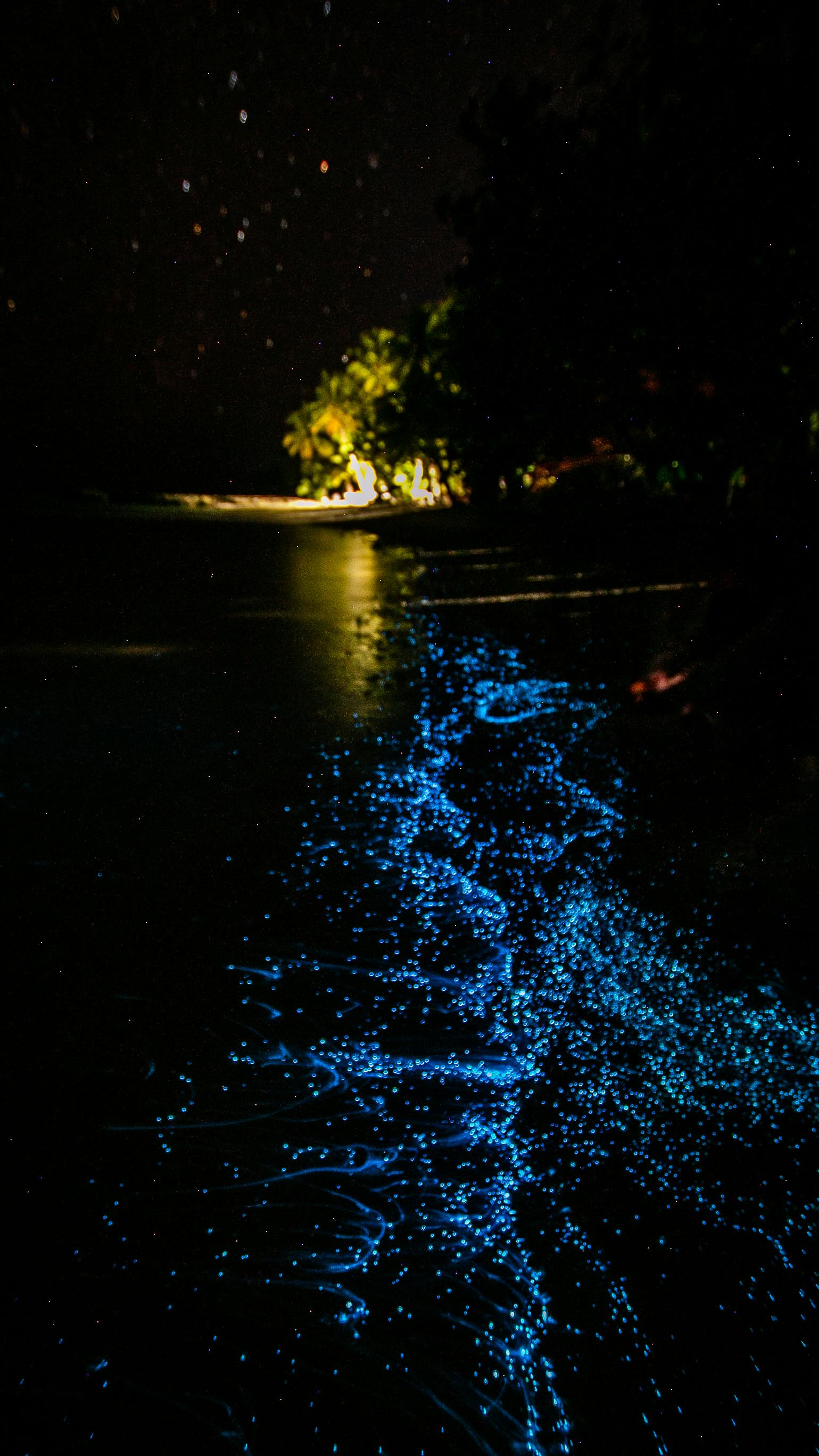
Picture Credits: Maldives Local Adventure
Palolem Beach
A favourite for night kayaking, Palolem occasionally displays glowing plankton along its crescent-shaped shoreline. The darker corners of the beach enhance visibility.
Butterfly Beach
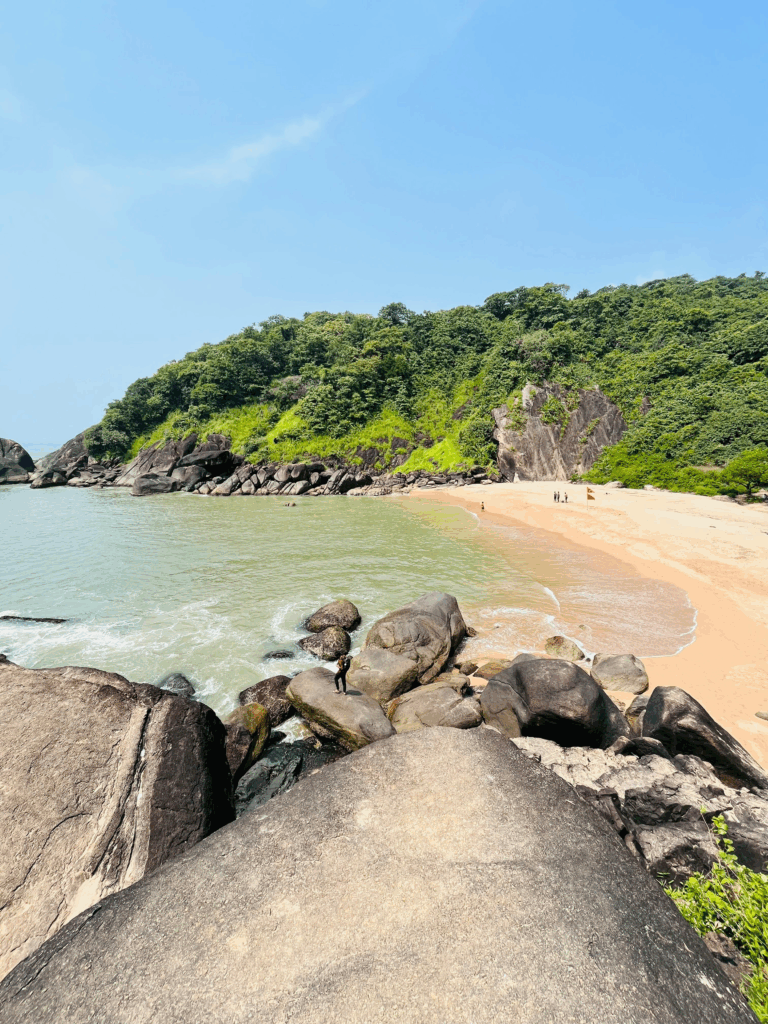
An adventurer’s delight — this secluded cove sees some of the darkest skies in Goa. Occasional bioluminescence sightings have been reported, especially on moonless nights.
Galgibaga Beach
Quiet, untouched, and beautiful. Although sightings are less frequent, the dark environment makes this one of the best backup spots.
Keri Beach (North Goa)
North Goa’s best chance, but still “potluck”. If you’re staying nearby, check it out — but set expectations accordingly.
When to See the Glowing Beach in Goa in 2026 Guide
Best Viewing Times
The best time to see bioluminescence in Goa 2026 is between 8 PM and 2 AM on moonless or low-moon nights with calm sea conditions.
Ideal Conditions:
- New moon or crescent moon nights
- Low light pollution
- Clear skies
- Low or gentle tides
- Cool winter temperatures
Key 2026 Lunar Tips
When planning your Goa trip in January- February (including Valentine’s Day) or October- December 2026 (Christmas/ New Year), aim for these dark-sky windows for the best chance to see the “glow”:
2026 Goa “Dark Sky” Calendar
For the best bioluminescence and stargazing, you should aim for the New Moon window (approx. 4 days before and 4 days after the New Moon date).
| Month | The “Dark Sky” Window (Best for Glow) | New Moon Date (Peak Darkness) |
| January | Jan 14 – Jan 23 | Jan 19 |
| February | Feb 12 – Feb 21 | Feb 17 |
| March | Mar 14 – Mar 23 | Mar 19 |
| April | Apr 13 – Apr 21 | Apr 17 |
| May | May 12 – May 20 | May 16 |
| June | Jun 11 – Jun 19 | Jun 15 (Super New Moon) |
| July | Jul 10 – Jul 18 | Jul 14 |
| August | Aug 8 – Aug 16 | Aug 12 |
| September | Sep 6 – Sep 14 | Sep 10 |
| October | Oct 6 – Oct 14 | Oct 10 |
| November | Nov 5 – Nov 13 | Nov 9 |
| December | Dec 4 – Dec 12 | Dec 8 |
Avoid the “Glow Killers” (Full Moons)
If your goal is to see the bioluminescent tide, you should avoid the dates around the Full Moon, as the bright light washes out the effect:
- Jan 1–6: Full Moon is on Jan 3 which is a “Supermoon” in 2026)
- Jan 29 – Feb 5: (Full Moon is Feb 1)
- Feb 27 – Mar 6: (Full Moon is Mar 3)
- May 28 – June 4 (Blue Moon on May 31)
- December 20–28 (Supermoon on Dec 24)
Step-by-Step: How to Improve Your Chances of Seeing the Glow in Goa 2026
Step 1 — Check the moon phase
Avoid full-moon nights.
Step 2 — Arrive after 8 PM
Allow the beach to get completely dark.
Step 3 — Walk along the wet shoreline
Your footsteps may activate the glow.
Step 4 — Gently swirl or splash water
Movement stimulates the plankton.
Step 5 — Keep phones & torches OFF
Let your eyes adjust for 10–15 minutes.
Step 6 — Head to quieter beaches
South Goa > North Goa for visibility.
Is It Safe to Visit the Glowing Beach in Goa?
Yes, walking along the glowing beach is safe. Night swimming, however, should be approached with caution. Always:
- Go with the company
- Stay near shallow waters
- Avoid isolated corners
- Follow local advisories
- Watch tides & currents
Photography Guide: How to Capture Bioluminescence in Goa
Because bioluminescence emits very faint natural light, capturing it requires slower shutter speeds and stable gear.
Photography Settings Table
| Setting | Recommended Range | Purpose |
|---|---|---|
| Aperture | f/1.8 – f/2.8 | Allows more light into the camera |
| ISO | 1600 – 3200 | Captures faint glow; balance noise |
| Shutter Speed | 10–20 sec for waves; 30–60 sec for soft glow | Adjust depending on light activity |
| Focus | Manual (set to infinity) | Auto-focus will not work in darkness |
| Tripod | Essential | Prevents blurring during long exposures |
Smartphone Tips:
- Use manual mode/night mode
- Stabilize the phone on a rock or mini-tripod
- Use an 8–15 second long exposure
- Increase ISO manually if available
Photography Tips For 2026
Modern smartphones with advanced night modes, AI noise reduction, and astrophotography features can capture bioluminescence more effectively in 2026. Using a tripod and long-exposure settings can further enhance results.
Things to Do in Goa in December (Perfect Add-Ons to Your Glow Hunt)
Dolphin Spotting Near Colva & Betalbatim
Morning dolphin cruises are among the most magical things to do in Goa, especially during Goa in January and February, when the seas are calm. It’s a serene contrast to nightlife and pairs beautifully with a glowing-wave experience at Betalbatim.
Explore Majorda’s Cafés & Local Bakeries
Majorda is one of the best places to visit in South Goa, offering artisanal cafés, fresh Goan bread (poi), and iconic desserts. Ideal for a relaxed afternoon before heading out for nighttime bioluminescence spotting.
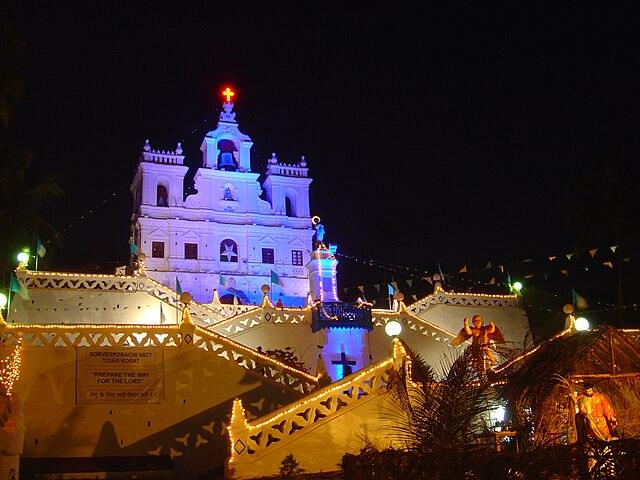
Visit Our Lady of Remedios Church
A peaceful cultural landmark near Betalbatim. Its heritage charm and serene surroundings make it perfect for travellers exploring beyond beaches during their Goa trip in 2026.
Parasailing & Watersports at Colva
For adventure lovers, Colva Beach offers parasailing, jet skiing, and banana rides. Winter seas make watersports safer and smoother — one of the top things to do in Goa in 2026.
Sunset Dining Along the South Goa Coast
From Utorda to Cansaulim, upscale shacks offer incredible seafood, grills & sunset cocktails. Dine at golden hour and return later to catch the night glowing beach in Goa — a perfect evening combo.
Read to know more: Sunset Spots in Goa: Places to Visit in Goa for the Best Views
Night Markets & Christmas Events
If you’re planning Valentine’s Day in Goa, don’t miss festive markets, live music, and Christmas pop-ups. Great for travellers wanting coastal beauty and seasonal celebrations.
Explore Fort Aguada & Vagator
If heading north, Fort Aguada and Vagator viewpoints are classic places to visit in North Goa, especially stunning in the winter season of 2026.
Beach-Hopping to Palolem & Butterfly Beach
These pristine South Goa beaches are perfect for day trips. Butterfly Beach occasionally showcases bioluminescence in Goa, offering a secluded spot for glow-hunters.
After a night of strolling at the glowing beach, it will be a huge loss if you miss the sunrise! Read this guide to know the best morning experiences in Goa in 2026.
Where to Stay in Goa
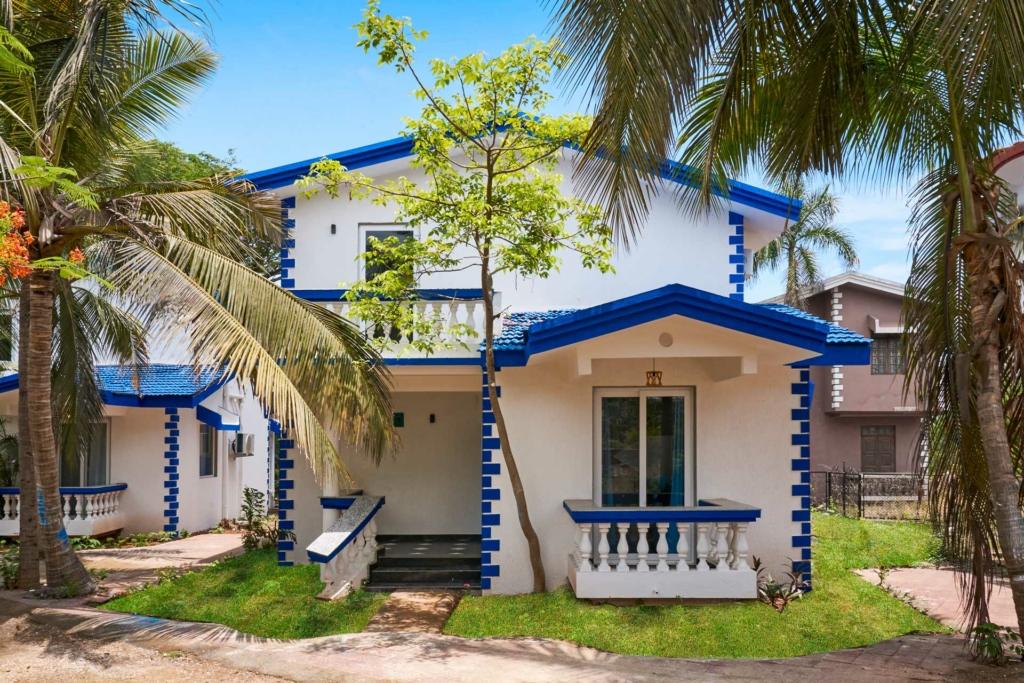
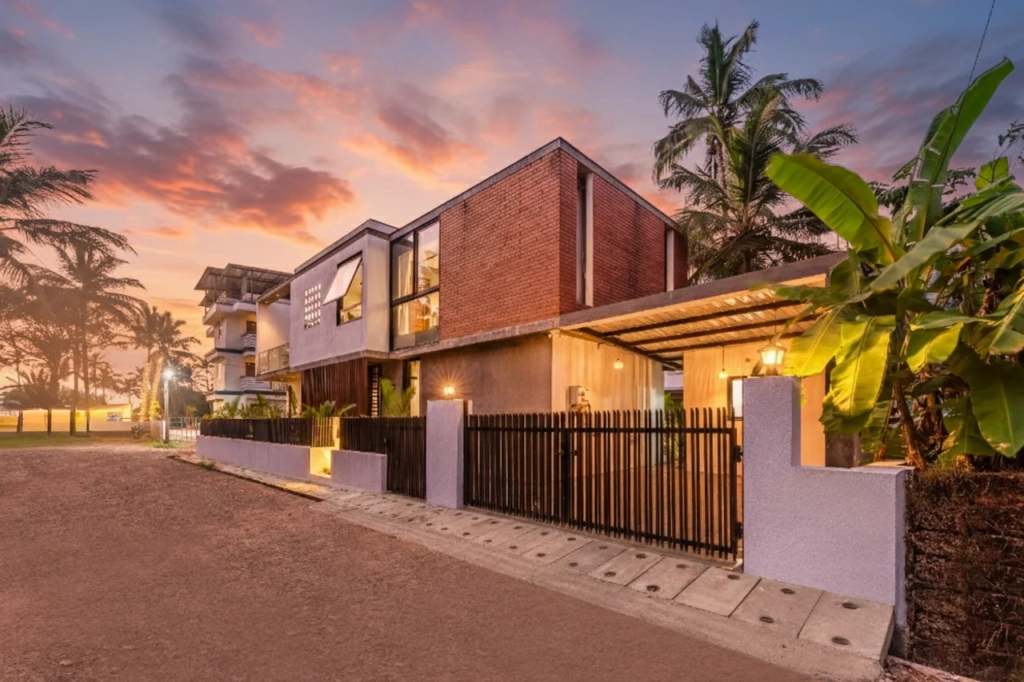
To maximise your chances of seeing the glowing waves, stay close to Betalbatim Beach.

Expert Tip: If you’re planning your Goa trip in 2026, align your beach visits with the new moon or crescent moon phases, as darker skies significantly improve visibility of the glowing plankton.
People Also Ask
It is a beach where bioluminescent plankton glow blue-green when disturbed, creating a magical neon effect in the water.
Betalbatim Beach in South Goa is the most famous and reliable glowing beach.
Yes. The ideal time to visit Goa in 2026 falls under the October–February window, offering clear skies and calm winter seas perfect for plankton visibility.
The glow itself isn’t harmful, but avoid swimming alone at night and always check local water advisories.
Between 8 PM and 2 AM on moonless nights.
Yes, bioluminescence is a natural seasonal occurrence, and travellers visiting Goa during the winter months of 2026 may witness it under suitable conditions.
No, sightings depend on tides, water movement, moonlight, and plankton concentration, which vary naturally each year.
January to March and October to December in 2026 offers the highest probability due to clear weather, calm waters, and darker winter nights.
The glowing beach in Goa is one of India’s most enchanting natural wonders — and 2026 offer the perfect window to witness it at Betalbatim Beach. With the right timing, expert insights, and a tranquil South Goa villa stay, your glowing-wave experience will be nothing short of unforgettable.
Note: As bioluminescence depends on fragile marine ecosystems, visitors in 2026 are encouraged to avoid using flashlights, camera flashes, or loud disturbances near the shore to help preserve this rare natural phenomenon.