

Jim Corbett Safari Zones Explained: Which Zone is Best for Tiger Sightings in 2026?
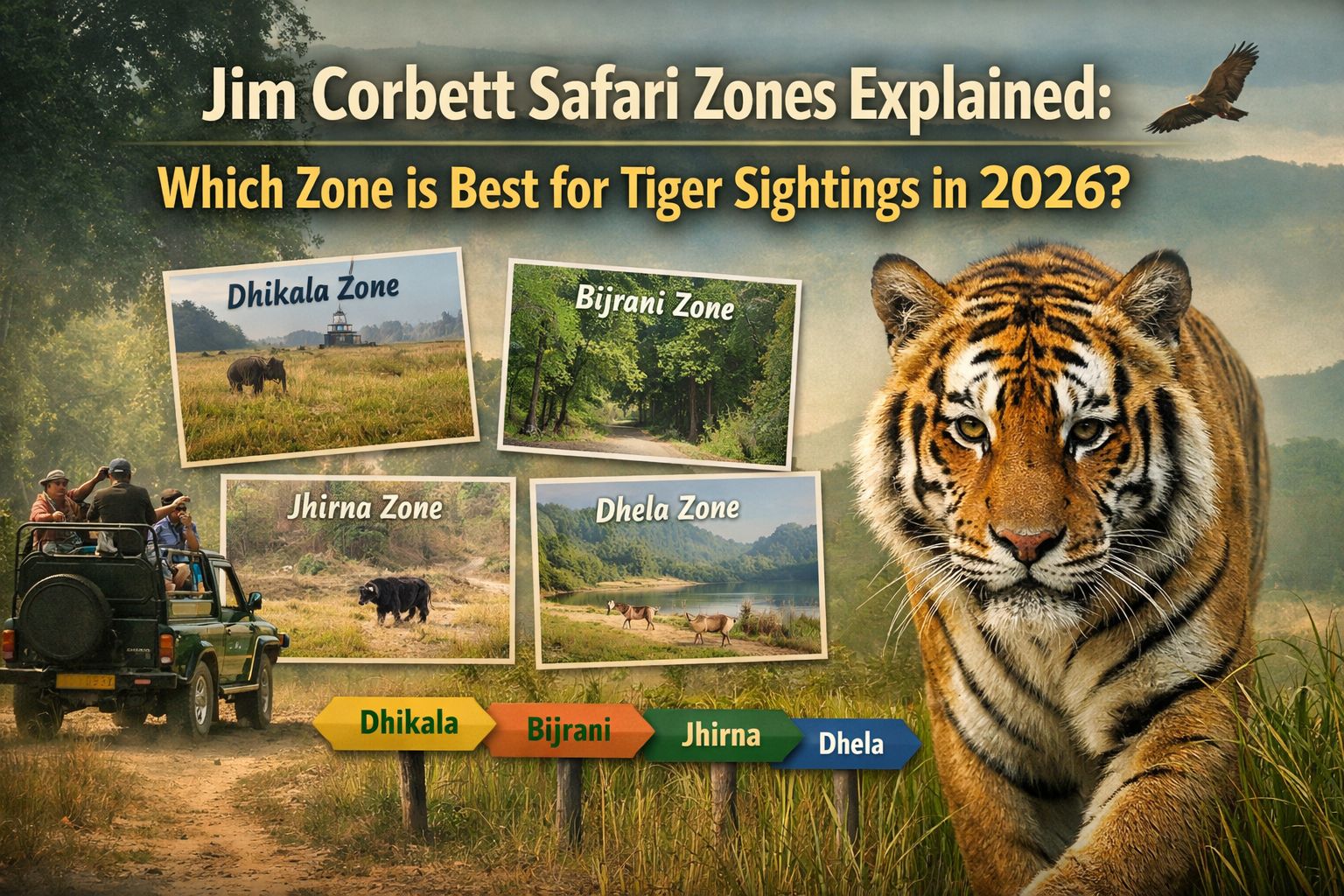
Planning a safari in Jim Corbett National Park is rarely just about booking a jeep and showing up. The park is divided into multiple zones, each with its own terrain, wildlife movement patterns, and seasonal access—factors that directly influence what you’ll actually see. For travellers prioritising tiger sightings in 2026, understanding how these zones function on the ground becomes far more important than simply picking the most popular one.
Jim Corbett best zone tiger sighting 2026:
For the highest probability of tiger sightings in Jim Corbett National Park in 2026, the Dhikala Zone remains the most reliable due to its vast grasslands and high prey density. Bijrani and Jhirna Zones also offer consistent sightings, especially in peak summer (March–June), when wildlife congregates around water sources.
In this Blog
What are the different Jim Corbett Safari Zones and how do they differ?
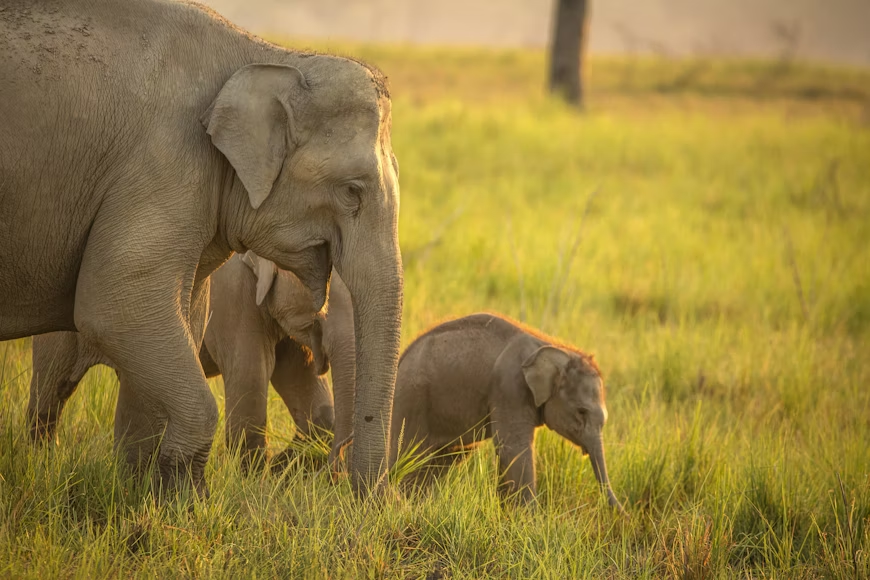
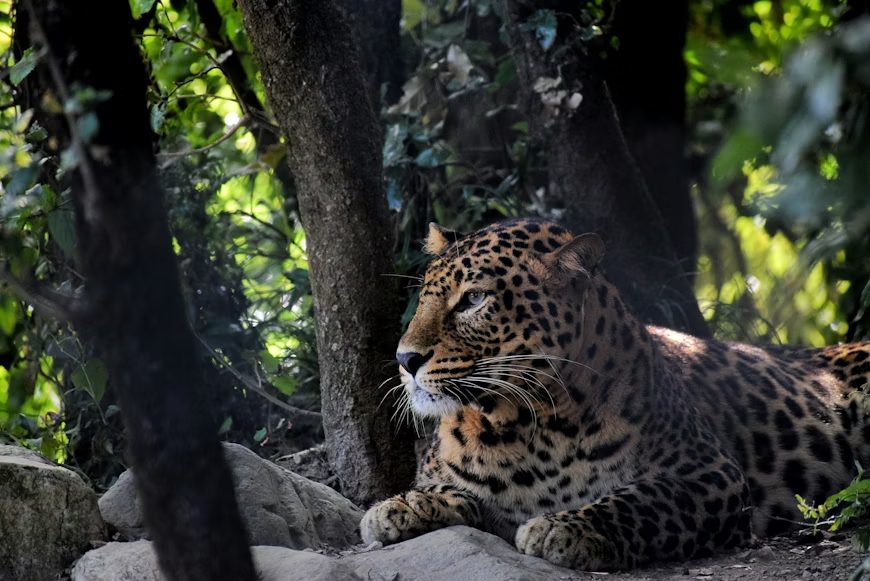
Jim Corbett National Park is divided into multiple safari zones, each offering a distinct terrain, wildlife density, and safari experience.
Key safari zones explained:
- Dhikala Zone – Core forest area; best for tiger sightings and landscape diversity
- Bijrani Zone – Dense forest + open grasslands; high tiger movement
- Jhirna Zone – Open year-round; good for sloth bear and occasional tiger sightings
- Dhela Zone – Less crowded; emerging hotspot for wildlife activity
- Durga Devi Zone – Hilly terrain; better for birding and leopards
- Garjia Zone – Newer zone; moderate wildlife visibility
Each zone has a capped number of entries per day, making advance booking essential.
Dhikala Zone: Core wilderness with the highest wildlife density
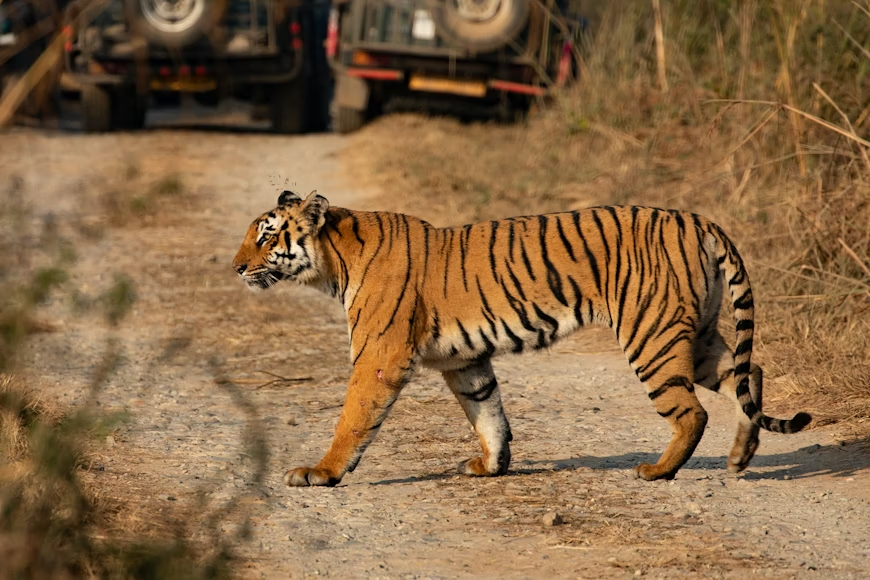
Overview:
Dhikala is the largest and most ecologically diverse zone, located deep within the park’s core area.
Key characteristics:
- Dominated by vast grasslands (chaurs) and riverine belts
- Fed by the Ramganga reservoir, attracting prey and predators
- Minimal human disturbance due to restricted access
- Nearest major cities: Delhi (approx. 260 km), Nainital (approx. 90 km)
Wildlife profile:
- High probability of tiger sightings
- Large herds of elephants and deer
- Gharials near water bodies
Access & logistics:
- Entry via Dhangarhi Gate
- Requires overnight stay or canter safari
- Limited permits; high demand
Best for:
Serious wildlife enthusiasts prioritising tiger tracking and immersive forest stays.
Bijrani Zone: Balanced terrain with consistent tiger movement
Overview:
Bijrani offers a mix of dense sal forest and open grasslands, making it one of the most accessible yet productive zones.
Key characteristics:
- Blend of forest cover and clearings
- Multiple waterholes increasing wildlife congregation
- Nearest major cities: Delhi, Nainital
Wildlife profile:
- Frequent tiger and leopard movement
- High density of herbivores and elephants
Access & logistics:
- Entry via Amdanda Gate
- Ideal for day safaris
- Easier booking than Dhikala
Best for:
Travellers seek strong sighting probability with convenient access.
Jhirna Zone: Year-round access with open landscapes
Overview:
Located in the southern part of the park, Jhirna remains open throughout the year, including monsoon.
Key characteristics:
- Dry deciduous forest with open patches
- Better visibility due to lower canopy density
- Nearest major cities: Delhi, Haldwani
Wildlife profile:
- Common sightings of sloth bears and elephants
- Tigers present but less predictable
Access & logistics:
- Entry via Dhela Gate
- Open in all seasons
- Moderate tourist traffic
Best for:
Off-season travellers and those planning flexible travel dates.
Dhela Zone: Emerging hotspot with lower crowd density
Overview:
Dhela is a relatively newer zone, steadily gaining attention for increasing wildlife movement.
Key characteristics:
- Mix of grasslands, forests, and water bodies
- Less crowded compared to core zones
- Nearest major cities: Delhi, Haldwani
Wildlife profile:
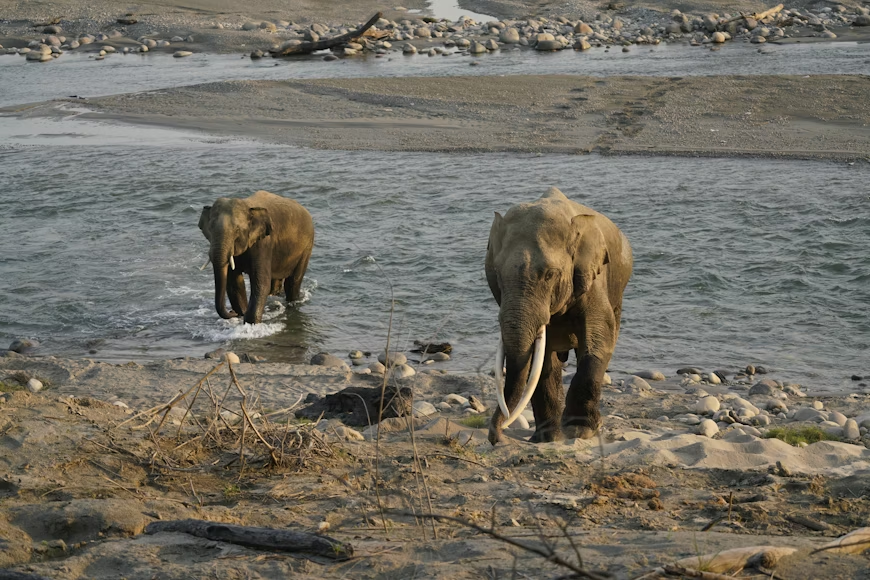
- Growing frequency of tiger sightings
- Strong presence of elephants and deer
Access & logistics:
- Entry via Dhela Gate
- Open year-round
- Easier permit availability
Best for:
Travellers looking for quieter safaris with improving sighting chances.
Durga Devi Zone: Hilly terrain with niche wildlife experiences
Overview:
Located in the northeastern edge, this zone offers a completely different landscape profile.
Key characteristics:
- Hilly terrain and riverine ecosystem
- Rich biodiversity due to Kosi River influence
- Nearest major cities: Nainital, Almora
Wildlife profile:
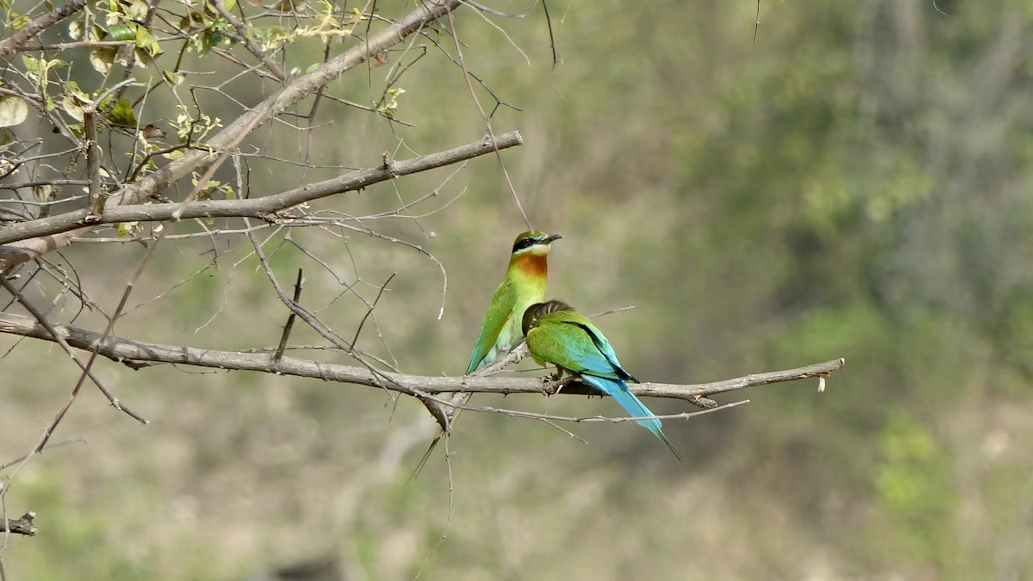
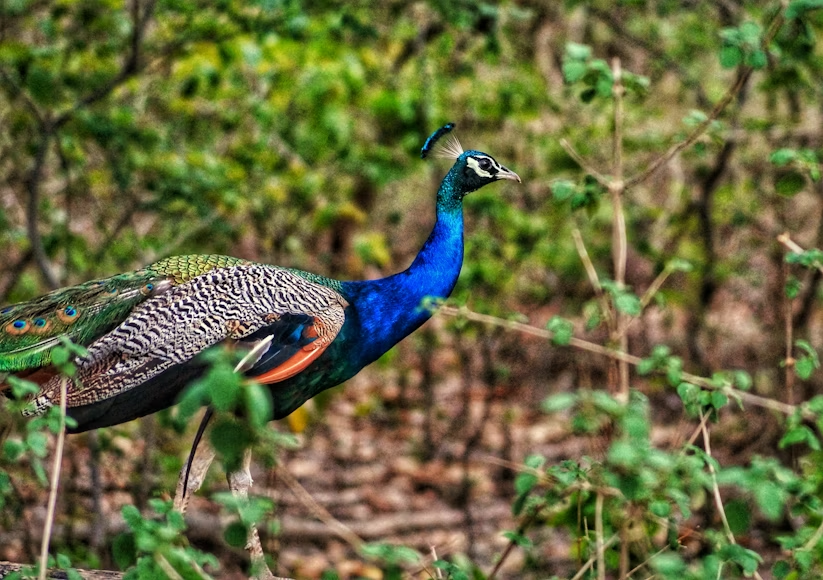
- Known for leopards, otters, and birdlife
- Lower tiger sighting frequency
Access & logistics:
- Entry via Durga Devi Gate
- Limited safari routes
- Less crowded
Best for:
Birdwatchers and travellers interested in diverse terrain over big cat sightings.
Garjia Zone: Newer zone with moderate wildlife visibility
Overview:
Garjia is one of the newer additions, located close to popular tourist circuits.
Key characteristics:
- Combination of forest patches and open areas
- Still developing as a safari circuit
- Nearest major cities: Delhi, Nainital
Wildlife profile:
- Moderate chances of spotting elephants and deer
- Occasional tiger movement
Access & logistics:
- Entry via Garjia Gate
- Suitable for short safaris
- Lower booking pressure
Best for:
First-time visitors combining safari with a relaxed holiday plan.
Lesser-Known Safari Zones in Jim Corbett (2026)
Beyond the popular zones, Jim Corbett National Park also includes a few buffer zones that see lower tourist traffic and, consequently, lower tiger sighting consistency-but they still add depth to the overall safari landscape.
These include:
- Sonanadi Zone – Remote and less explored; ideal for quiet forest drives and birding
- Pakhro Zone – One of the newest zones with evolving safari routes and limited sighting data
What to expect:
Tiger sightings in these zones are possible but not frequent, as they fall outside the core tourism circuits and have wider, less predictable wildlife movement patterns.
When to consider them:
They work best as secondary options-either when core zones are fully booked or for travellers who prioritise solitude, landscape diversity, or repeat visits over high-probability tiger encounters.
Which zone is best for tiger sightings in Jim Corbett in 2026?
The best zone depends on seasonality, but the hierarchy for tiger sightings remains consistent.
Top zones ranked for tiger sightings:
| Rank | Zone | Why it stands out |
|---|---|---|
| 1 | Dhikala | Largest core zone, grasslands, high tiger density |
| 2 | Bijrani | Frequent sightings, balanced terrain |
| 3 | Jhirna | Open all year, reliable in summer |
| 4 | Dhela | Increasing sightings, less tourist pressure |
| 5 | Garjia | Accessible, growing wildlife movement, occasional tiger sightings |
| 6 | Durga Devi | Limited tiger sightings, better for birding |
For serious wildlife enthusiasts, Dhikala offers the best odds, while Bijrani provides a strong alternative with easier access.
Why is Dhikala Zone considered the best for tiger sightings?
Dhikala’s advantage comes from ecological and logistical factors:
- Expansive grasslands (chaurs) improve visibility
- Ramganga River proximity attracts prey and predators
- Core zone protection limits disturbance
- Higher tiger territory overlap
Unlike buffer zones, Dhikala allows deeper forest penetration, increasing encounter probability.
Bijrani vs Dhikala: Which safari zone should you choose?
A quick comparison helps decision-making:
| Factor | Dhikala Zone | Bijrani Zone |
| Tiger sighting probability | Very high | High |
| Accessibility | Requires overnight stay | Day safari possible |
| Landscape | Grasslands + river + forest | Dense forest + clearings |
| Booking difficulty | High | Moderate |
| Ideal for | Serious wildlife tracking | Short trips from Delhi/Nainital |
Verdict:
Choose Dhikala for maximum sighting probability; choose Bijrani for convenience without compromising too much on wildlife experience.
Best time for tiger sightings in Jim Corbett
Tiger sightings in Jim Corbett National Park vary significantly with seasons.
Seasonal breakdown:
- March to June (Peak Summer):
Best time overall; water scarcity drives animals into the open - November to February (Winter):
Scenic but lower sightings due to dense vegetation - July to October (Monsoon):
Core zones like Dhikala remain closed; Jhirna/Dhela stay open
If your priority is tiger sightings, plan between April and June.
How to choose the right Jim Corbett safari zone based on your travel style
Your ideal zone depends on intent, duration, and accessibility.
Choose based on your priorities:
- Maximum tiger sightings: Dhikala
- Short weekend trip from Delhi: Bijrani
- All-season travel: Jhirna or Dhela
- Birdwatching & landscapes: Durga Devi
- Lower crowd experience: Dhela
How to book a Jim Corbett safari in 2026
Booking a Jim Corbett National Park safari requires planning due to limited permits.
Step-by-step process:
- Choose preferred zone and safari type (jeep/canter)
- Check availability on official portal
- Book 45–60 days in advance for core zones
- Carry valid ID (mandatory at entry gate)
- Reach gate at least 30–45 minutes before safari time
Where to Stay
FAQs:
Dhikala Zone has the highest tiger density due to its core forest status, expansive grasslands, and strong prey base. It consistently reports the most frequent sightings compared to other zones in the park.
No. Dhikala offers higher sighting probability overall. However, Bijrani is a strong alternative with easier access and still delivers frequent tiger sightings, especially in summer months.
Yes, tiger sightings occur in the Jhirna Zone, particularly during summer. While less consistent than Dhikala or Bijrani, it remains a reliable option and is open throughout the year.
Jhirna and Dhela Zones remain open throughout the year, including monsoon months when core zones like Dhikala and Bijrani are closed due to weather conditions.
Early morning safaris offer the best chances, as tigers are more active during cooler hours. Evening safaris can also yield sightings, especially near water bodies during summer.
Yes. Dhikala provides the most immersive wildlife experience with higher tiger sighting probability, diverse landscapes, and deeper forest access, making it worth the additional planning and overnight stay requirement.
At least 2–3 safaris are recommended to improve chances. Wildlife sightings are unpredictable, and multiple drives across different zones increase probability significantly.
Bijrani Zone is the most practical choice for weekend travellers due to its accessibility, availability of day safaris, and relatively high probability of tiger sightings.