
Mani Mahesh Yatra 2026: Dates (Aug–Sep), Trek Route & How to Reach Bharmour

Quick Answer: The Mani Mahesh Yatra 2026 runs from 4 September (Chhota Snan, Krishna Janmashtami) to 19 September (Bada Snan, Radha Ashtami), with the helicopter season open from roughly 10 August to 30 September. The pilgrimage trek begins at Hadsar village near Bharmour, Chamba district (Himachal Pradesh), and covers about 14 km one way to Manimahesh Lake at 13,000 ft. The nearest railway station is Pathankot (~180 km) and the nearest airport is Gaggal/Kangra (~185 km).
In this Blog
Mani Mahesh Yatra 2026 Quick Info:
Here is the snapshot most pilgrims search for before booking. We have pulled these figures from the official Chamba district administration and the Himachal Pradesh tourism portal.
| Detail | Information |
| Yatra 2026 dates | 4 Sep (Chhota Snan) – 19 Sep (Bada Snan) |
| Helicopter season | ~10 Aug – 30 Sep 2026 |
| Best time to visit | Mid-August to late September |
| Base village | Hadsar (13 km from Bharmour) |
| Trek distance | ~14 km one way / 28–30 km round trip |
| Manimahesh Lake altitude | ~13,000 ft (4,080 m) |
| Nearest airport | Gaggal / Kangra (DHM), ~185 km |
| Nearest railway station | Pathankot (PTK), ~180 km |
| Ideal duration | 2–3 days from Bharmour |
| Registration | Mandatory – manimaheshyatra.hp.gov.in (₹50 fee) |
What Is the Mani Mahesh Yatra?

The Mani Mahesh Yatra is one of Himachal Pradesh’s most revered Hindu pilgrimages, leading devotees to the glacial Manimahesh Lake at the foot of Mani Mahesh Kailash Peak (18,564 ft) in the Budhil Valley of Bharmour, Chamba district. Hindus believe this peak is an abode of Lord Shiva, and the lake’s still waters are said to mirror the summit on clear mornings.
Every year, lakhs of pilgrims from Himachal, Punjab, and across North India make the journey on foot during the monsoon-end window. The yatra is timed to the Hindu lunar calendar: it opens on Krishna Janmashtami and concludes on Radha Ashtami, roughly two weeks later. A holy dip in the icy lake on these days is considered deeply auspicious.
Unlike many Himalayan treks, this is as much a devotional event as an outdoor one — you will share the trail with barefoot sadhus, Gaddi shepherds, and families of all ages, which gives the route a distinct, communal energy.
Mani Mahesh Yatra 2026 Dates (August–September)
For 2026, the lunar calendar pushes the main bathing days about three weeks later than the 2025 season. The Chhota Snan (smaller holy bath) falls on Krishna Janmashtami and the Bada Snan (main holy bath) on Radha Ashtami. These two dates draw the biggest crowds, so plan around them.
| Event | Date (2026) | Significance |
| Helicopter service opens | ~10 August | Air shuttle Bharmour–Gaurikund begins |
| Chhota Snan | 4 September | Krishna Janmashtami – first holy bath |
| Bada Snan | 19 September | Radha Ashtami – main holy bath, peak crowd |
| Season closes | ~30 September | Weather worsens; trail and heli wind down |
The Mani Mahesh Yatra 2026 officially runs from 4 September (Chhota Snan on Janmashtami) to 19 September (Bada Snan on Radha Ashtami), while the Bharmour–Gaurikund helicopter service operates from roughly 10 August to 30 September 2026.
If you want fewer crowds, target the early September window (just after the helicopter service opens) rather than the Radha Ashtami weekend, when Hadsar and Bharmour see their heaviest footfall of the year.
Mani Mahesh Yatra Trek Route: Hadsar to Manimahesh Lake

The classic mani mahesh yatra trek starts from Hadsar, the last motorable village, and climbs roughly 14 km one way to the lake. Most fit pilgrims complete the ascent in a single long day (8–11 hours), but staying overnight at Dhancho makes it far more comfortable and helps with acclimatisation.
Here is the full stage-by-stage breakdown of the route, with distances and terrain so you can plan your pace.
| Stage | Distance | Terrain / Notes |
| Bharmour → Hadsar | ~13 km (by road) | Drive/shared taxi to trek base |
| Hadsar → Dhancho | ~7 km (4–6 hrs) | Gentler first half; waterfall, tea stalls, camping |
| Dhancho → Sundrasi → Gaurikund | ~5 km | Steep, rocky switchbacks; thinning air |
| Gaurikund → Manimahesh Lake | ~1 km | Final climb; Gauri Kund bathing pool en route |
Stage 1: Hadsar to Dhancho (~7 km)
This is the gentlest section and a good warm-up. The trail follows the Manimahesh stream past a pretty waterfall, with regular dhabas selling tea, Maggi, and rajma-chawal. Many trekkers pitch tents or use the langar facilities at Dhancho overnight.
- Time required: 4–6 hours at a steady pilgrim pace.
- Ideal for: First-timers and families with older relatives.
- Pro tip: Refill water and use the washrooms at Dhancho — facilities thin out beyond this point.
Stage 2: Dhancho to Gaurikund (~5 km)
The toughest stretch of the mani mahesh yatra trek. Expect steep stone steps, loose scree, and noticeably thinner air past Sundrasi. Take it slow, hydrate often, and don’t rush the climbs if you feel breathless.
- Time required: 3–5 hours depending on fitness and crowds.
- Ideal for: Trekkers with reasonable fitness; pace yourself to avoid altitude sickness.
- Pro tip: Start before sunrise from Dhancho so you clear this section before afternoon weather sets in.
Stage 3: Gaurikund to Manimahesh Lake (~1 km)
The final, emotional push. Gauri Kund is a small bathing pool reserved for women, about a kilometre below the main lake; Shiv Karoti marks the men’s bathing area. The trail then opens onto Manimahesh Lake at ~13,000 ft, with Kailash Peak towering behind it.
- Time required: 1–2 hours including the holy dip and darshan.
- Pro tip: Carry a quick-dry towel and change of clothes — the water is glacial and the wind is biting.
How to Reach Bharmour (Base for the Mani Mahesh Yatra)
Bharmour, in Chamba district of Himachal Pradesh, is the gateway town for the yatra. There is no railway or airport in Bharmour itself, so almost everyone routes through Pathankot or Chamba first. From Bharmour, Hadsar (the trek base) is a short 13 km drive.
By Air
The nearest airport is Gaggal / Kangra Airport (DHM) near Dharamshala, about 185 km from Bharmour, with flights from Delhi and occasional Chandigarh services. From the airport, hire a taxi or take a bus via Chamba. Pathankot’s heliport-adjacent airstrip is limited, so most flyers still use Gaggal.
By Train
Pathankot Railway Station (PTK), ~180 km away, is the most practical railhead and is well-connected to Delhi, Chandigarh, and Amritsar. Take an overnight train to Pathankot, then a taxi or HRTC bus to Chamba and onward to Bharmour (a 6–7 hour mountain drive).
By Road
Bharmour is connected by HRTC buses and taxis via Chamba (~60 km). Driving distances and times from major cities:
| From | Distance to Bharmour | Approx. drive time |
| Pathankot | ~180 km | 6–7 hours |
| Chamba | ~60 km | 2–2.5 hours |
| Chandigarh | ~420 km | 12–13 hours |
| Delhi | ~650 km | 16–18 hours |
To reach Bharmour for the Mani Mahesh Yatra, the nearest railway station is Pathankot (~180 km, 6–7 hours by road) and the nearest airport is Gaggal/Kangra (~185 km); Bharmour is ~60 km from Chamba and ~650 km from Delhi.
Pro tip: Roads from Chamba to Bharmour are narrow and landslide-prone in monsoon. Avoid night driving and keep buffer time.
Helicopter Service for the Mani Mahesh Yatra

If you cannot do the full trek, a helicopter shuttle runs between Bharmour and the Gaurikund helipad (~13,300 ft) during the season. The flight takes about 7 minutes each way, after which a short but steep ~1.5 km hike (around 60 minutes) still leads up to the lake.
| Route | One way | Round trip |
| Bharmour – Gaurikund | ₹3,340 | ₹6,680 |
| Holi – Gaurikund | ₹4,995 | ₹9,990 |
- Pro tip: Book early — slots sell out before the season starts, especially around the Snan dates.
- Note: Flights are frequently delayed or cancelled in bad monsoon weather. Keep a buffer day.
Even with a helicopter, you still hike the last leg to Manimahesh Lake, so basic fitness and warm clothing are essential.
Mani Mahesh Yatra Registration & Medical Certificate
Registration is mandatory for every yatri. As of the 2026 season, you register online at the official portal manimaheshyatra.hp.gov.in (or offline on arrival at Bharmour) for a nominal ₹50 fee. A Medical Fitness Certificate is non-negotiable given the altitude.
- Register online beforehand or at the Bharmour counter; carry a printout and a valid photo ID.
- Obtain a Medical Fitness Certificate from a registered doctor before you travel.
- Expect health checkpoints at Bharmour and Hadsar, where staff check your pulse and paperwork.
Keep digital and physical copies of your registration and medical certificate — you may be asked for them more than once on the trail.
How Difficult Is the Mani Mahesh Yatra Trek?

The trek is rated easy-to-moderate, and complete beginners do complete it every year — but that doesn’t mean it’s casual. The Dhancho-to-Gaurikund section involves steep, rocky climbs at altitude, and the thin air above 12,000 ft makes even fit walkers breathless.
- Fitness: Build basic stamina with 2–3 weeks of walking or stair climbing before the trip.
- Hydration: Drink water constantly; this is the single best defence against altitude sickness.
- Acclimatise: Don’t gain altitude too fast. Splitting the climb with a Dhancho night helps your body adjust.
- Support: Ponies and porters are available from Hadsar for those who cannot walk the full distance.
What to Pack for the Mani Mahesh Yatra
Weather swings sharply from warm valley sun to near-freezing nights near the lake. Pack light but smart:
- Layered woollens, a windproof jacket, and a raincoat/poncho (monsoon timing).
- Sturdy, broken-in trekking shoes with good grip for wet, rocky trails.
- Personal medicines, a basic first-aid kit, and any prescribed altitude medication.
- A quick-dry towel and a change of clothes for the holy dip.
- Water bottle, ORS sachets, dry snacks, torch/headlamp, and a power bank.
- Cash — ATMs and digital payments are unreliable beyond Bharmour.
Things to See Around Bharmour
Chaurasi Temple Complex

In the heart of Bharmour sits the Chaurasi Temple complex, a cluster of stone shrines roughly 1,400 years old (7th century). It is the spiritual centre of town and a natural place to begin your yatra with darshan and to witness Gaddi rituals.
- Entry fee: Free entry.
- Timings: Open daily, roughly sunrise to evening aarti.
- How to reach: In the centre of Bharmour town, walkable from the bus stand.
- Time required: 1–2 hours.
- Pro tip: Visit at morning or evening aarti for the most atmospheric experience.
Bharmani Mata Temple

Many pilgrims visit Bharmani Mata Temple, a few kilometres above Bharmour, before starting the yatra — local tradition holds that the pilgrimage is incomplete without paying respects here first. The short uphill walk also rewards you with sweeping valley views.
- Entry fee: Free entry.
- How to reach: ~4–5 km from Bharmour; reachable by taxi plus a short walk.
- Time required: Half a day including travel.
- Pro tip: Go early to combine it with your registration and medical check in Bharmour.
The Legend Behind Manimahesh Lake

Manimahesh translates loosely to ‘the jewel (mani) on Lord Shiva’s crown,’ and devotees believe Shiva resides on the Kailash peak that overlooks the lake. Local lore says the summit has never been conquered, and that a shepherd who once tried to climb it was turned to stone — one of the rocky pinnacles near the peak is pointed out as proof.
Another belief holds that a single ray of moonlight reflecting off the snow (‘mani’) can be seen on clear nights, signalling Shiva’s presence. Pilgrims also revere a glacier above the lake called Shiva’s Chaugan, said to be where the deity performs his cosmic dance. These stories are part of what makes the dip in the icy water feel so charged for those who make the climb.
Recognising Altitude Sickness on the Trail
Because the lake sits above 13,000 ft, mild acute mountain sickness (AMS) is common, especially for those who climb in a single push. Knowing the early signs can keep a small problem from becoming serious.
- Headache, nausea, dizziness, loss of appetite, or trouble sleeping are the usual early signs.
- If symptoms appear, stop ascending, rest, hydrate, and do not push higher until you feel better.
- If symptoms worsen, descend immediately — going down even a few hundred metres usually brings quick relief.
- Consult a doctor about preventive medication beforehand, particularly if you have a heart or lung condition.
Medical and first-aid posts operate along the route during the season, and porters or rescue help can be arranged at the major halts if needed.
Suggested Mani Mahesh Yatra Itineraries
3-Day Trekking Itinerary (Recommended)
- Day 1: Reach Bharmour, complete registration and medical check, visit Chaurasi and Bharmani Mata temples. Drive to Hadsar; overnight at Hadsar or Dhancho.
- Day 2: Trek Hadsar → Dhancho → Gaurikund → Manimahesh Lake. Holy dip and darshan; descend to Dhancho or Gaurikund for the night.
- Day 3: Descend to Hadsar, drive back to Bharmour/Chamba, onward journey.
2-Day Helicopter Itinerary
- Day 1: Reach Bharmour, register and complete the medical check, overnight stay.
- Day 2: Helicopter Bharmour → Gaurikund, hike up to Manimahesh Lake, return flight to Bharmour, onward journey.
Where to Stay for the Mani Mahesh Yatra
Bharmour and Hadsar offer basic guesthouses, dharamshalas, and tented langar accommodation during the season — book ahead, as rooms vanish near the Snan dates. For a comfortable base before or after the trek, many travellers spend a night or two in the wider Chamba–Dalhousie–Dharamshala belt, which is far better served for stays.
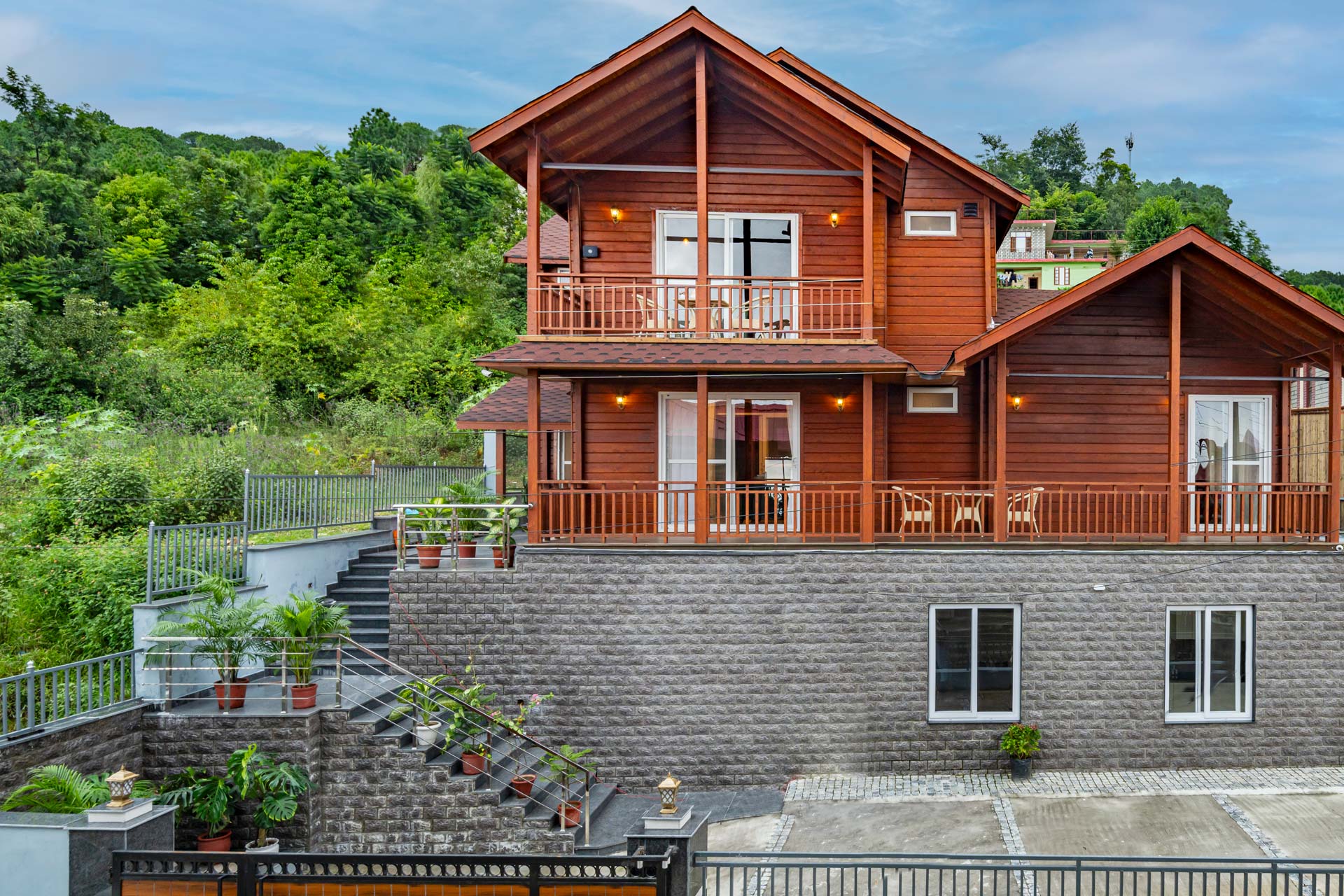
Planning a relaxed buffer before or after your pilgrimage? StayVista offers handpicked homestays and cottages across Himachal hubs like Dharamshala and Dalhousie — ideal for resting up near the Gaggal airport and Pathankot route. Browse StayVista’s Himachal homestays to pair your Mani Mahesh Yatra with a quiet mountain stay.


Final Tips Before You Go

The Mani Mahesh Yatra rewards preparation. Register early, carry your medical certificate, pack for cold and rain, and respect your body’s pace at altitude. Whether you trek the full route from Hadsar or take the helicopter shuttle, the first sight of Kailash Peak mirrored in the lake makes every hard step worthwhile.
Build a day of rest into your plan, and consider basing yourself in a comfortable Himachal homestay with StayVista on either side of the trek so you arrive and recover well. Safe travels and Har Har Mahadev.
Frequently Asked Questions (FAQs)
The Yatra 2026 runs from 4 September (Chhota Snan on Janmashtami) to 19 September (Bada Snan on Radha Ashtami). The helicopter service typically operates from around 10 August to 30 September 2026.
The trek is about 14 km one way from Hadsar to Manimahesh Lake, or roughly 28–30 km round trip. Fit trekkers finish the ascent in 8–11 hours, though many split it with an overnight at Dhancho.
The nearest railway station is Pathankot (~180 km) and the nearest airport is Gaggal/Kangra (~185 km). From either, drive via Chamba to Bharmour. Bharmour is about 60 km from Chamba and 650 km from Delhi.
Yes. Registration is compulsory via manimaheshyatra.hp.gov.in (₹50 fee) and a Medical Fitness Certificate is required. Health checkpoints at Bharmour and Hadsar verify your pulse and paperwork.
The Bharmour–Gaurikund helicopter fare is about ₹3,340 one way and ₹6,680 round trip, while the Holi–Gaurikund route is around ₹4,995 one way and ₹9,990 round trip. Book early as slots fill fast.
Yes, beginners with basic fitness complete the trek every year. The Dhancho–Gaurikund section is steep and at altitude, so build stamina beforehand, stay hydrated, and consider ponies or the helicopter if needed.
The pilgrimage window of mid-August to late September is the main season, peaking around the Snan dates. The trail and helicopter service generally close by the end of September as weather deteriorates.