

Matheran in Monsoon 2026: Asia’s Only Car-Free Hill Station – What to Do in August & How to Reach (Near Mumbai)

Most hill stations are known for their viewpoints, waterfalls or cool weather. Matheran stands apart for a completely different reason. It is one of the few places in India where motor vehicles are not allowed beyond a certain point. The absence of cars, buses and traffic noise creates an experience that feels surprisingly rare in modern India.
During the rainy season, this small hill station in Maharashtra becomes even more special. Forest paths turn green, seasonal waterfalls appear along the hillsides, and clouds often drift across walking trails. For visitors looking for a peaceful break from city life, Matheran in monsoon remains one of the most refreshing destinations near Mumbai.
Unlike many weekend destinations that focus on adventure activities, Matheran encourages visitors to slow down. Walking becomes the primary mode of transport, and that simple change completely alters the experience of the place.
Matheran in monsoon is one of the best rainy-season destinations near Mumbai. Known as Asia’s famous car-free hill station near Mumbai, it offers forest walks, viewpoints, waterfalls and fresh mountain air. Visitors reach Matheran via Neral and Aman Lodge, then continue on foot, by horse, by e-rickshaw or on the Aman Lodge–Matheran shuttle train. The main Neral–Aman Lodge toy train is suspended from 15 June to 15 October 2026. Hand-pulled rickshaws have been discontinued following a Supreme Court order and replaced by e-rickshaws.
What August 2026 looks like: Matheran averages around 470mm of rain across 22 rainy days in August, and it’s the most humid month of the year here at roughly 89%. The wider picture helps: India’s monsoon is running 12% below the long-period average as of 2 August, but Central and Western India is the one region the IMD expects above-normal rain this August and September (Down To Earth). Matheran sits squarely in that zone — so unlike much of the country, it should get the full monsoon this month, waterfalls and cloud banks included.
In this Blog
Quick Summary (Featured Snippet Target)
| Detail | Information |
|---|---|
| Location | Raigad District, Maharashtra |
| Distance from Mumbai | ~85 km |
| Distance from Pune | ~120 km |
| Best time to visit (monsoon) | July to September; August is peak greenery, September the clearest views |
| Toy train status (2026) | Neral–Aman Lodge suspended 15 June – 15 October 2026. Aman Lodge–Matheran shuttle still running. |
| Vehicles allowed | Only up to Dasturi Naka |
| Nearest railhead | Neral Railway Station |
| Ideal trip length | 1–2 days |
Why Matheran in Monsoon Feels Different from Other Hill Stations?
Many hill stations become crowded with vehicles during holiday periods. Matheran follows a completely different approach.
Vehicles are permitted only up to Dasturi Naka. Beyond that point, everyone walks. This creates an atmosphere that visitors often remember long after the trip ends.
The absence of traffic means birds can be heard throughout the day. During the monsoon, the sound of rainfall mixes with rustling trees and distant waterfalls. Even simple walks between viewpoints become enjoyable experiences.
This is one of the biggest reasons why many visitors consider it the best car-free hill station near Mumbai in the monsoon.
How to Reach from Mumbai/Pune for Matheran in Monsoon
From Mumbai (Recommended Route)
- By train to Neral: Take a Central Railway local or express train from CSMT or Dadar to Neral Junction (~1.5–2 hours). This is the most reliable option during monsoon when road conditions can be unpredictable.
- Aman Lodge to Matheran: On foot (about 2.5 km), by horse, or by e-rickshaw — ₹35 per seat, shared three to a vehicle, running 7.30am to 10pm. The Aman Lodge–Matheran shuttle train also runs right through the monsoon: six trips on weekdays, eight at weekends, roughly ₹55 per seat, about 18 minutes each way. Note that shuttle tickets can’t be booked online — buy them at the Neral, Aman Lodge or Matheran counters.
- Aman Lodge to Matheran: On foot (2–3 km walk), by horse, or by hand-pulled rickshaw. The toy train shuttle between Aman Lodge and Matheran may operate on select days — confirm with Indian Railways before travel.
From Pune
- Drive or take a bus to Neral via Pune–Mumbai Expressway, then follow the same Neral–Aman Lodge–Matheran route above.
- Total road distance: approximately 120 km; journey time varies with traffic.
Important: No Private Vehicles Beyond Dasturi Naka
Vehicles are strictly prohibited past Dasturi Naka. Visitors must park at designated lots near Aman Lodge — around ₹50 entry plus ₹50 a day — and continue on foot, by horse, or by e-rickshaw. This restriction applies year-round, including during the monsoon.
A change worth knowing about: hand-pulled rickshaws are gone. If you’ve visited Matheran before, you’ll remember the hand-pulled rickshaws that carried visitors up from Dasturi. They no longer operate. In a 2025 judgment, the Supreme Court held that “one human pulling another in a cart” was inhuman and unconstitutional, ordering Maharashtra to phase them out within six months and replace them with e-rickshaws, with licences going first to the roughly 400 former pullers (LiveLaw).
What that means for your trip: only about 20 e-rickshaws are currently in service against 40 sanctioned, and drivers struck in February 2026 over the shortfall. Expect queues at Dasturi on weekends and holidays — including the 15 August weekend. Arriving early, or simply walking the 2.5km, is the reliable move.
Matheran Toy Train 2026 Status During Monsoon
The Neral–Matheran Hill Railway, a UNESCO-listed heritage narrow-gauge railway, is one of Matheran’s signature experiences. The full Neral–Aman Lodge service was suspended on 15 June 2026 and is scheduled to resume on 15 October 2026, on account of landslide risk and track damage from heavy rainfall. Worth knowing: that resumption date depends on a post-monsoon safety inspection, and in past years it has slipped into early November — so treat 15 October as the earliest date, not a guarantee.
What runs during monsoon 2026:
- The Aman Lodge–Matheran shuttle runs throughout the suspension — Central Railway has published a monsoon schedule of six trips on weekdays and eight at weekends. The journey takes about 18 minutes.
- Confirm the current schedule with the Central Railway division before planning your trip.
Visitor note: While missing the toy train is disappointing for some, many monsoon visitors find the railway track itself becomes a scenic walking route through the forest — particularly beautiful when mist rolls in.
Things to Do in Matheran During the Monsoon
One of the biggest attractions of Matheran is that sightseeing happens naturally while walking.
The forest paths connect dozens of viewpoints, each offering a slightly different perspective of the surrounding hills.
Things to do in Matheran include viewpoint hopping, forest walks, photography, horse riding, shopping along the market street and local snacks at the roadside cafés. Entry to the town is ₹50 per person, and most viewpoints are free — the cost of a Matheran day is mostly transport and lunch.
Many visitors spend an entire day simply walking between attractions without feeling rushed.
1. Matheran in Monsoon: Panorama Point

Panorama Point is Matheran’s most celebrated viewpoint and the one most visitors make a priority on any trip. Positioned at the northernmost tip of the Matheran plateau, it offers a near-360-degree sweep of the surrounding Sahyadri landscape — forested valleys below, distant ridge lines, and on clear days, the plains extending far toward the horizon.
During the monsoon, the experience here is defined by cloud movement rather than clear visibility. Thick cloud banks roll in from the valley, completely obscuring the view for stretches of 10–20 minutes, then parting suddenly to reveal the full panorama beneath. Many visitors describe standing at Panorama Point watching clouds move like a slow tide across the valleys below as one of the most memorable experiences of the trip — more dramatic, in some ways, than a fully clear-sky view.
The platform at the viewpoint is wide and reasonably sheltered on the sides, making it comfortable to wait during brief rain spells. Early morning (6:00–8:30 AM) typically offers the most frequent cloud breaks before the day’s weather settles into sustained overcast or rain. Photographers find this window the most productive for capturing mist-and-valley compositions.
tip: The path from the market to Panorama Point is one of the better-maintained trails in Matheran. It passes through a mix of open laterite sections and short canopy stretches. Carry water — there are no refreshment stalls at the point itself, though vendors sometimes operate near the trailhead.
August 2026 note: with humidity near 89% this month, that early-morning window matters more than usual — by mid-morning the cloud tends to settle in and stay.
2. Louisa Point

Louisa Point sits on the western edge of the Matheran plateau and is one of the few viewpoints in Matheran where the drama is both horizontal and vertical — you see the valley stretching away below and also look across at cliff faces where seasonal waterfalls appear during the monsoon. This dual perspective makes it feel more immersive than purely panoramic viewpoints.
The rock formations at Louisa Point are part of the Deccan Basalt escarpment that defines the Western Ghats. During monsoon, water runs down these layered dark rock faces in sheets and thin cascades, depending on rainfall intensity. The rock itself takes on a deep charcoal-grey colour when wet, which contrasts sharply with the bright green of the surrounding vegetation. For anyone interested in landscape photography or geology, this is one of the most interesting stops in Matheran.
The trail approaching Louisa Point from the main market passes through one of the densest canopy sections in the hill station. On rainy days, the canopy absorbs much of the rainfall, making the walk surprisingly comfortable even without an umbrella.
What makes Louisa Point distinct from other Matheran viewpoints:
- You can hear seasonal waterfalls before you see them, making the approach itself anticipatory
- The cliff faces provide foreground interest for photography, unlike open-valley viewpoints
- The location is less crowded than Panorama Point, even on peak weekends
- The return trail offers different sightlines from the approach path
tip: Wear footwear with ankle support. The final section of the path descends slightly on wet laterite — manageable with grip-sole shoes but slippery in flat sandals.
3. Charlotte Lake

Charlotte Lake is Matheran’s main freshwater reservoir and has been the hill station’s primary water source since the colonial period. The lake sits in a forested depression in the central-western part of the plateau, surrounded by trees on three sides and accessible via a well-worn perimeter path.
During the monsoon, Charlotte Lake fills to its highest levels and becomes one of Matheran’s most photographed locations. The water takes on a deep green-grey hue reflecting the surrounding forest and overcast sky. When mist settles over the lake in the early morning, the scene has a quality that is genuinely difficult to find at more accessible tourist destinations near Mumbai.
The lake’s historical context adds another layer to a visit. The reservoir was constructed during British administration of the hill station in the 19th century, and some of the original stonework structures remain visible near the water’s edge. These colonial-era elements alongside the monsoon forest create an atmosphere that feels removed from contemporary Maharashtra.
Things to do at and around Charlotte Lake:
- Walk the full perimeter trail (approximately 20–25 minutes at a leisurely pace)
- Sit on the low wall near the water’s edge and watch the mist
- Photography — the reflections on still early-morning water are among the best shots available in Matheran
- Birdwatching — the trees surrounding the lake attract kingfishers and waders during monsoon months
- Visit the small temple near the lake which is a quiet rest point before continuing on the trail circuit
One thing worth noting: swimming in Charlotte Lake is not permitted, as it is a functioning water supply. Visitors should stay on the perimeter path and respect the reservoir’s protected status.
In August, with roughly 470mm falling across the month, Charlotte Lake is at or near full — which is when the overflow at the spillway is worth walking down to see.
tip: Charlotte Lake is one of the closest major attractions to the market, making it a good first stop after arriving and settling in. Many visitors loop from the market to Charlotte Lake, then continue to Louisa Point on the same morning walk.
4. Echo Point

Echo Point is positioned on the eastern edge of the Matheran plateau, overlooking a deep valley. The viewpoint takes its name from the natural echo produced by shouting toward the opposite valley wall — a geological phenomenon caused by the curved rock face across the gorge that reflects sound back with a short delay.
The echo effect is a genuine draw for families and first-time visitors. Children in particular respond strongly to it, making this one of the most memorable stops on a family trip to Matheran. The valley itself drops steeply from the viewpoint, and during the monsoon, waterfalls become visible on the opposite cliff face when rainfall has been heavy in the preceding days.
What distinguishes Echo Point during the monsoon compared to other seasons is the cloud behaviour at this specific location. Because the point sits at the plateau edge overlooking a deep valley, clouds frequently move upward through the gorge below — rising from the warm valley floor. Visitors sometimes watch clouds form literally in front of them, rising from the valley and moving across the viewpoint at eye level. This upward cloud movement is an unusual experience for visitors accustomed to clouds forming high overhead.
Monsoon-specific observations at Echo Point:
- Cloud formations rise from the valley floor and move across the viewpoint at eye level during certain weather conditions
- The echo effect works best when the valley is partially clear — full cloud cover absorbs the sound
- The valley opposite, when visible, shows seasonal waterfalls after heavy rain
- The trail leading to Echo Point from the market passes through forest that is particularly rich with birdlife in the mornings
tip: Echo Point and Panorama Point can be combined in a single morning loop of approximately 3–4 hours. The trail connecting the two passes through forested sections that offer good shade during non-rainy stretches.
5. One Tree Hill Point

One Tree Hill Point gets its name from a lone tree that stands visibly isolated on a rocky promontory, visible from specific angles along the approach trail. The tree has become a recognisable landmark and a frequent photography subject — the image of a single tree silhouetted against monsoon clouds and valley haze is one of the more iconic visual motifs associated with Matheran.
The viewpoint itself looks west over a forested valley, with the plateau edge dropping away sharply. What makes this location genuinely different from Matheran’s other viewpoints is the quality of the trail approaching it. The path from the main circuit passes through a dense mixed-forest section where the canopy is particularly high and the undergrowth is thick. During monsoon, this trail section is intensely green — one of those forest walks where the surrounding vegetation creates an almost tunnel-like effect of layered greens.
Small seasonal streams cross the path in two or three places during heavy monsoon periods. These temporary water features add to the sensory experience of the walk — the sound of moving water in a quiet forest, with no traffic noise anywhere, is specific to Matheran in a way that is difficult to replicate elsewhere near Mumbai.
Why One Tree Hill Point is worth including in a Matheran itinerary:
- The approach trail through dense forest is as visually rewarding as the viewpoint itself
- The lone tree at the viewpoint provides an unusual foreground element for landscape photography
- The location is moderately visited but rarely overcrowded, even on peak weekends
- The viewpoint offers a westward perspective that is distinct from the valley-floor views at Echo Point
tip: Combine One Tree Hill Point with Louisa Point in a single west-side walk. The two viewpoints are in the same general direction from the market, and the combined loop takes approximately 3 hours.
Matheran vs Lonavala in Monsoon
This is one of the most-searched monsoon destination comparisons for Mumbai travellers. Here is a direct comparison:
| Factor | Matheran | Lonavala |
|---|---|---|
| Vehicles | Banned beyond Dasturi Naka | Fully open to traffic |
| Waterfalls | Seasonal, smaller scale | Famous large waterfalls (Bhushi Dam, Kune Falls) |
| Pace | Slow, walking-focused | Can be fast-paced, crowded on weekends |
| Accessibility | Train to Neral + walk/horse | Road trip or train direct |
| Crowd type | Walkers, quiet seekers | Road-trippers, larger groups |
| Best for | Peace, forest walks, car-free experience | Waterfalls, large-resort stays, highway accessibility |
Bottom line: If the goal is to escape traffic and spend time in a forest environment without noise, choose Matheran. If waterfalls and road-trip convenience are the priority, Lonavala serves that better.
Weekend Getaway from Mumbai in the Monsoon
Two dates to plan around this month. Saturday 15 August is Independence Day, with Hariyali Teej falling the same day — a natural two-day break, or three with Friday off. But the IMD has flagged heavy rainfall across Maharashtra in the second week of August, which overlaps that weekend. If you’re going then, build in flexibility, expect long e-rickshaw queues at Dasturi, and consider the shuttle train over the walk.
Friday 28 August is Raksha Bandhan, giving a clean three-day weekend — and by late August the rain typically eases slightly while the greenery holds. If your dates are flexible, that’s the better of the two windows.
- Matheran continues to rank among the most practical options for a weekend getaway from Mumbai in the monsoon.
- The travel time is manageable, accommodation options suit different budgets, and the destination does not require extensive planning.
- Many visitors arrive on Saturday morning and return Sunday evening after exploring the major viewpoints.
- The compact nature of the hill station makes short visits surprisingly fulfilling.
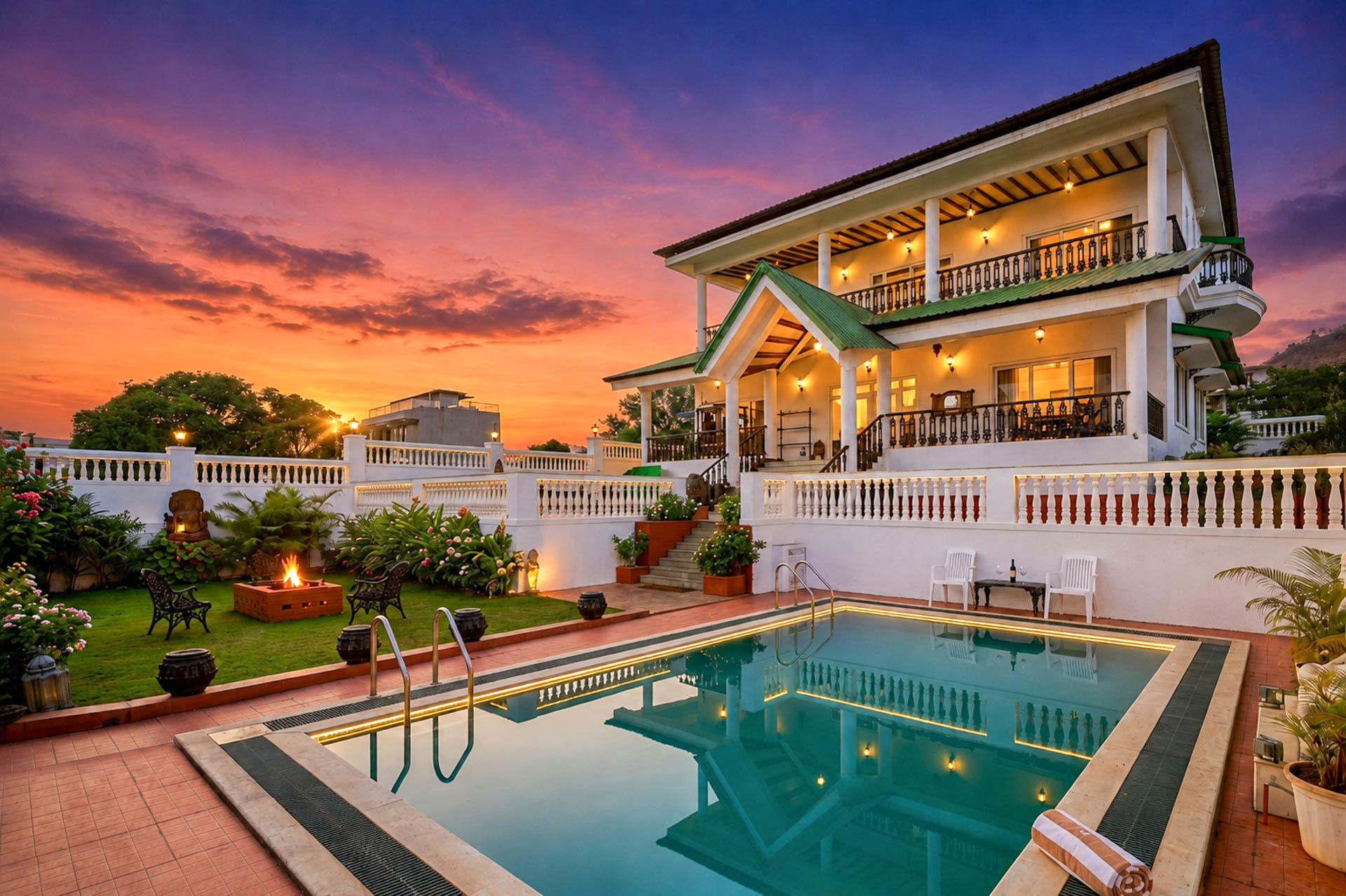
Stay Options
Best Stays Matheran


Why Matheran Remains a Unique One-Day Monsoon Trip from Mumbai Without a Car
- Few destinations near Mumbai allow visitors to leave traffic behind completely.
- This is why Matheran remains one of the best options for a one-day monsoon trip from Mumbai without a car.
- The experience begins the moment visitors stop using vehicles and continue on foot.
- The change feels surprisingly refreshing, particularly for people accustomed to city life.
- Even a single day spent walking through forest paths can feel like a much longer break from routine.
Conclusion: Is Matheran Worth Visiting in Monsoon 2026?
For visitors seeking waterfalls, viewpoints and cool weather, Maharashtra offers many monsoon destinations. Yet Matheran remains different because of its car-free environment.
The simple act of walking everywhere creates a slower and more enjoyable pace that many visitors find refreshing. Combined with seasonal waterfalls, forest trails and changing cloud views, Matheran in monsoon delivers an experience that few destinations near Mumbai can match.
For August 2026 specifically, the answer is yes — with two caveats. Western India is the one region forecast above-normal rain this month, so Matheran should deliver the full monsoon rather than a thin version of it. Just go in knowing the Neral toy train won’t run until 15 October at the earliest, and that only 20 e-rickshaws are serving Dasturi, so weekends mean queues.
Whether it is a family outing, a short escape with friends or a quiet solo break, Matheran continues to justify its reputation as the best car-free hill station near Mumbai in the monsoon.
FAQs
Yes. Matheran remains open throughout the monsoon season. Some shuttle transport and horse-riding services may be temporarily paused during exceptionally heavy rainfall, but the hill station itself does not close.
The full Neral–Aman Lodge toy train service is suspended from approximately mid-June to 15 October each year due to monsoon safety protocols including landslide risk and track vulnerability. A shorter Aman Lodge–Matheran shuttle may run on select days. Verify with Central Railway before your trip.
Take a Central Railway train to Neral Junction, then a shared or private taxi to Aman Lodge/Dasturi Naka (~8–10 km). From Aman Lodge, enter Matheran on foot, by horse, or by hand-pulled rickshaw. The full journey from Mumbai takes approximately 2.5–3 hours.
Private motor vehicles are prohibited inside Matheran by a Supreme Court of India order, enacted to protect the hill station’s ecology and maintain its quiet character. The ban applies year-round and is enforced at checkpoints.
They offer different experiences. Matheran suits those seeking a car-free, slow-paced forest environment. Lonavala suits those prioritising large waterfalls and easy road-trip access. Neither is objectively better — the right choice depends on what kind of monsoon experience you want.
Matheran is approximately 85 kilometres from Mumbai by road. The nearest railhead is Neral Junction on the Central Railway line.
Popular walking routes remain accessible, but visitors should wear proper footwear, follow local advice and avoid risky trails during heavy rainfall.
July and August offer the most dramatic greenery, full waterfalls and cloud cover. September is slightly drier with clearer viewpoint visibility. Weekdays are significantly quieter than weekends.
Written By: Ruben Saha