
Nagchandreshwar Mandir: The Temple That Opens for 24 Hours a Year Opens on 17 August 2026
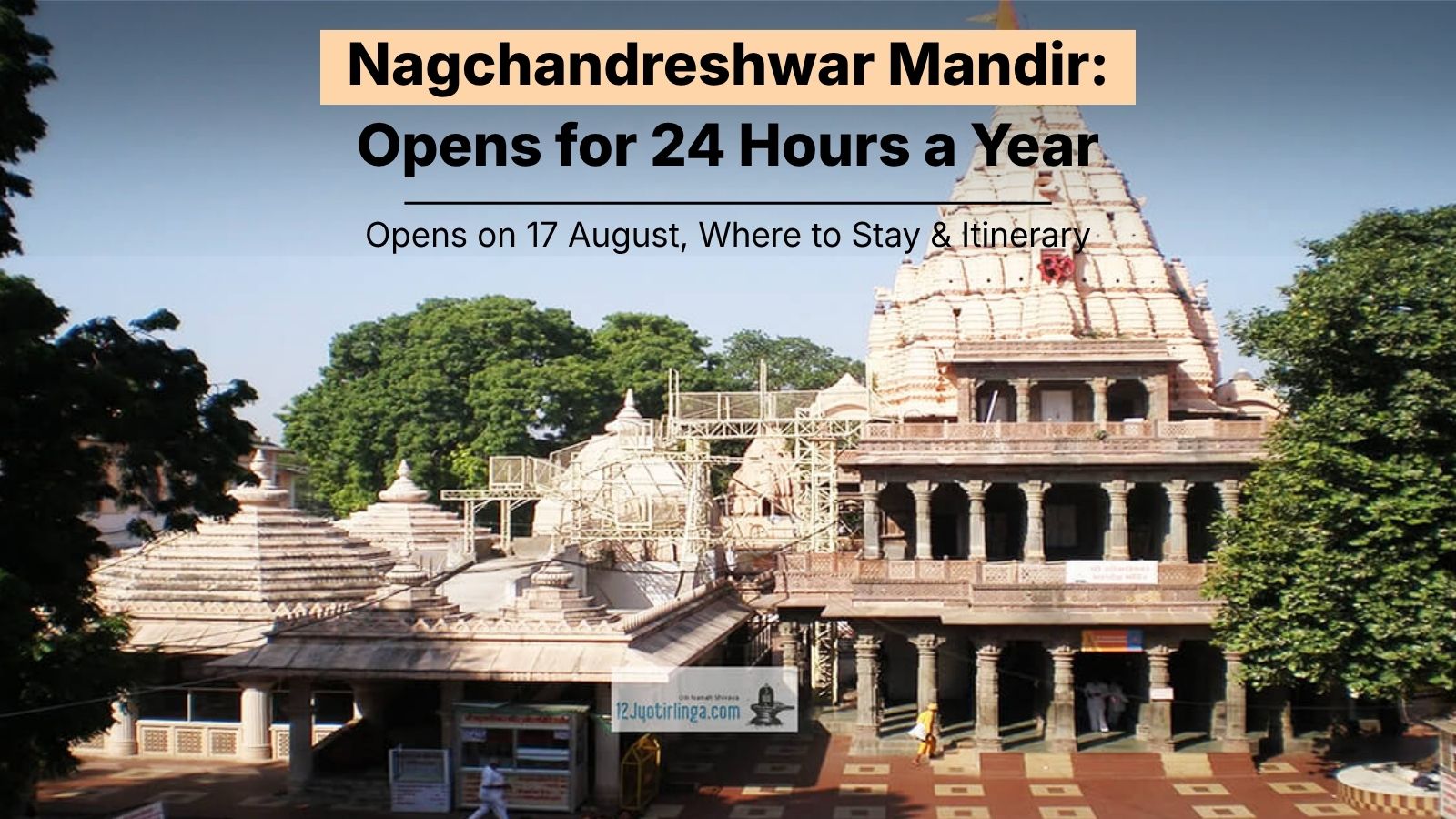
Quick Answer: Nagchandreshwar Mandir in Ujjain, Madhya Pradesh opens to the public for exactly 24 hours a year, on Nag Panchami. In 2026 that day is Monday, 17 August. The doors on the third floor of the Mahakaleshwar temple open just after midnight following the Trikaal Puja and close 24 hours later. The same date also carries the third Sawari of Lord Mahakal, the Shravan Monday procession that leaves the temple at 4:00 PM for Ram Ghat. Three occasions stacking on one date is rare, and the temple administration is preparing for roughly 8–10 lakh visitors. If you are going, plan the day around the crowd, not around the clock.
In this Blog
What Is Nagchandreshwar Mandir and Why Does It Open Only Once a Year?
Nagchandreshwar Mandir is a shrine on the third and topmost floor of the Mahakaleshwar Jyotirlinga temple complex in Ujjain, and it is the only temple in the country that stays locked for 364 days and opens for a single 24-hour window on Nag Panchami. The rest of the year, the staircase to that floor is sealed. No darshan, no exceptions, no VIP pass.
The idol is what makes it unusual. Most Hindu iconography places a serpent bed under Vishnu — Shesh Naag coiled beneath the reclining god. Here, it is Shiva seated on a ten-hooded serpent throne, with Parvati beside him and Ganesha alongside. Devotees and temple historians describe it as the only depiction of its kind, and the idol is traditionally believed to have been brought to Ujjain from Nepal.
For many visitors the draw is astrological rather than architectural. In Vedic astrology, Kaal Sarp Dosh is said to form when every planet in a birth chart falls between Rahu and Ketu. Because both are serpent-linked shadow planets, Nag Panchami is considered the most potent day of the year to perform remedial puja, and Ujjain — with a Jyotirlinga, the Shipra river, and a serpent shrine in the same complex — draws people who travel specifically for it.
Worth knowing: on a normal Nag Panchami, over two lakh people pass through this one small floor. 2026 will be heavier.
Why 17 August 2026 Is Different
Three things land on the same Monday.
1. Nag Panchami. The Panchami tithi of Shukla Paksha in Shravan begins at 4:52 PM on 16 August and ends at 5:00 PM on 17 August 2026. Because the tithi is current at sunrise on the 17th, that is the observed date across most of India. The commonly cited morning puja window runs roughly 5:51 AM to 8:39 AM, though this shifts by 15–30 minutes depending on your city’s sunrise.
2. Nagchandreshwar Mandir opens. Doors open just after midnight on the night of 16–17 August, following the Trikaal Puja, and stay open through the whole of the 17th.
3. The third Mahakal Sawari. Through Shravan and Bhadon, Mahakal is carried through the old city on a silver palanquin every Monday. The 2026 schedule runs 3 August, 10 August, 17 August, 24 August, 31 August, with the grand Shahi Sawari on 7 September. The third of those six falls on 17 August.
The last time the third Shravan Monday and Nag Panchami coincided was 2019, which is why the administration is planning for 8–10 lakh visitors rather than the usual two lakh. Drinking water points are being set up every 200 metres along the Sawari route, along with a PA system and additional cameras.
One practical consequence you should plan around: the Sawari route runs through the same lanes you will want to walk to reach the temple. From roughly 3:00 PM, streets between Mahakal Lok and Ram Ghat progressively close to traffic. If you have an afternoon darshan slot, get into the complex before 2:30 PM or accept that you are walking the last two kilometres.
Hour-by-Hour: How 17 August 2026 Will Actually Run
| Time | What happens | Where |
| 12:00 AM | Trikaal Puja concludes; Nagchandreshwar Mandir doors open | 3rd floor, Mahakal complex |
| 12:00–4:00 AM | First darshan wave — heavy, but the queue moves | Third-floor staircase |
| 2:30–4:30 AM | Bhasma Aarti (Shravan Monday timing; doors open 2:30 AM) | Garbhagriha |
| 5:00 AM onwards | Peak morning rush begins; queues extend past Mahakal Lok | Entire complex |
| 5:51–8:39 AM | Nag Panchami puja muhurat — busiest stretch of the day | Everywhere |
| 11:00 AM–2:00 PM | Relatively lighter window. This is your best bet. | Third floor |
| 3:30 PM | Sawari puja at the Sabha Mandap | Mahakal temple |
| 4:00 PM | Third Sawari departs on the silver palki | Mahakal Lok → Gudri Chauraha |
| ~5:30 PM | Shipra Jal Abhishek at Ram Ghat | Ram Ghat |
| ~7:00 PM | Palki returns via Gopal Mandir and Patni Bazaar | Old city |
| Through the night | Nagchandreshwar darshan continues until the 24 hours close | 3rd floor |
The 11:00 AM to 2:00 PM window is the one locals use. The muhurat crowd has cleared, the Sawari crowd has not yet gathered, and the afternoon heat thins the queue further. Carry water and a cap. The Sawari itself is worth staying for even if you are not queuing again. The palanquin leaves the temple at 4:00 PM and moves through Mahakal Lok, Gudri Chauraha, Bakshi Bazaar and Kaharwadi to reach Ram Ghat on the Shipra, where priests perform the Shipra Jal Abhishek. The return leg goes through Ramanujkot, Kartik Chowk, Dhaba Road, Tanki Chowk, Chhatri Chowk, Gopal Mandir, Patni Bazaar and Gudri Bazaar. Mahakal is carried in a set of distinct forms — Manmahesh, Chandramouleshwar, Umamaheshwar, Shivtandav and Holkar — with more palanquins added as the season progresses toward the Shahi Sawari.
Best spot to watch: the Ram Ghat steps, if you get there by 4:30 PM. The abhishek happens at the water’s edge and the ghat’s tiered layout means you can see over the crowd. The alternative is Gudri Chauraha early in the route, where the palki passes within the first 20 minutes.
Getting Darshan on 17 August: What Actually Works

A few things have changed for Shravan 2026, and they matter.
All devotees can now offer water to the Jyotirlinga. This was previously restricted to Kanwar Yatris. It is a meaningful change, and it also means the garbhagriha queue moves slower than in past years.
Chalit (moving) darshan is in force. From the first three rows of the Kartik Mandapam, you can view the aarti while moving, rather than standing still. Do not plan on a long, stationary darshan — you will be kept moving.
Bhasma Aarti timings shift on Mondays. Through Shravan, doors open at 2:30 AM on Mondays and the Bhasma Aarti runs 2:30–4:30 AM, against the 3:00–5:00 AM slot on other days.
Booking: Bhasma Aarti passes are issued only through the official portal. Regular bookings open 60 days ahead, and a limited Tatkal quota opens the previous day. For 17 August 2026, the regular window has already passed at the time of writing — Tatkal on 16 August is your remaining option, and it will be contested.
Indicative charges. Please verify current rates on mahakaleshwar.nic.in before booking.
| Option | Approx. cost |
| General darshan queue | Free (3–4 hr wait on a normal day; far longer on 17 Aug) |
| Shighra Darshan | ₹250 |
| Garbh Grah Darshan | ₹750 |
| Nandi Mandapam (Bhasma Aarti) | ₹1,500 |
| VIP Kartikeya / Ganesh Mandapam | ₹3,000 |
| Abhishek services | ₹500 – ₹5,000+ |
Five things our team would tell a friend travelling that day:
- Reach Ujjain on 16 August, not the morning of the 17th. Trains and highways into the city will be saturated. A night’s sleep before a 3 AM start is not a luxury here.
- Do Nagchandreshwar first, Mahakaleshwar second. The third-floor shrine is the time-limited one. The Jyotirlinga will still be there on the 18th.
- Leave your phone in the locker. Photography is not permitted in the sanctum, and free cloakrooms operate near the entry gates. You will move faster without a bag.
- Wear something you can be soaked in. Shravan in Malwa means afternoon rain, and the Sawari route offers no shelter.
- Do not hire a “quick darshan” agent outside the gates. Every legitimate paid darshan is bookable only on the government portal.
12 Best Monsoon Destinations and Temples to Visit in Ujjain
Ujjain is at its best in Shravan. The Shipra runs full, the Malwa plateau turns green, and the temple city moves at festival pitch through August and early September — which is exactly when you will be here for Nag Panchami. The trade-off is rain: expect afternoon showers most days, slippery ghat steps, and queues that do not pause for weather.
Most of the core cluster — Mahakaleshwar, Harsiddhi, Bade Ganeshji, Ram Ghat — is walkable, which matters more in monsoon than any other season. Here are the 15 places worth your time, with what you need to plan each stop.
1. Shri Mahakaleshwar Jyotirlinga

The reason Ujjain exists on the pilgrimage map. Mahakaleshwar is the third of the twelve Jyotirlingas and the only one considered Dakshinamukhi — facing south — which is why the Bhasma Aarti here has no equivalent anywhere else. The lingam sits in an underground garbhagriha, and the 4 AM ash ritual draws people who fly in for that one hour.
Entry: Free (general queue) · Timings: Approx. 3:00 AM – 11:00 PM; Bhasma Aarti 3:00–5:00 AM, 2:30–4:30 AM on Shravan Mondays · Best time: Bhasma Aarti, or 12–3 PM for a shorter queue · How to reach: 2 km from Ujjain Junction; auto ₹40–60 · Time needed: 2–4 hrs · Ideal for: Everyone · Pro tip: Book Bhasma Aarti 60 days ahead on mahakaleshwar.nic.in. Same-day passes do not exist except via Tatkal.
2. Nagchandreshwar Mandir
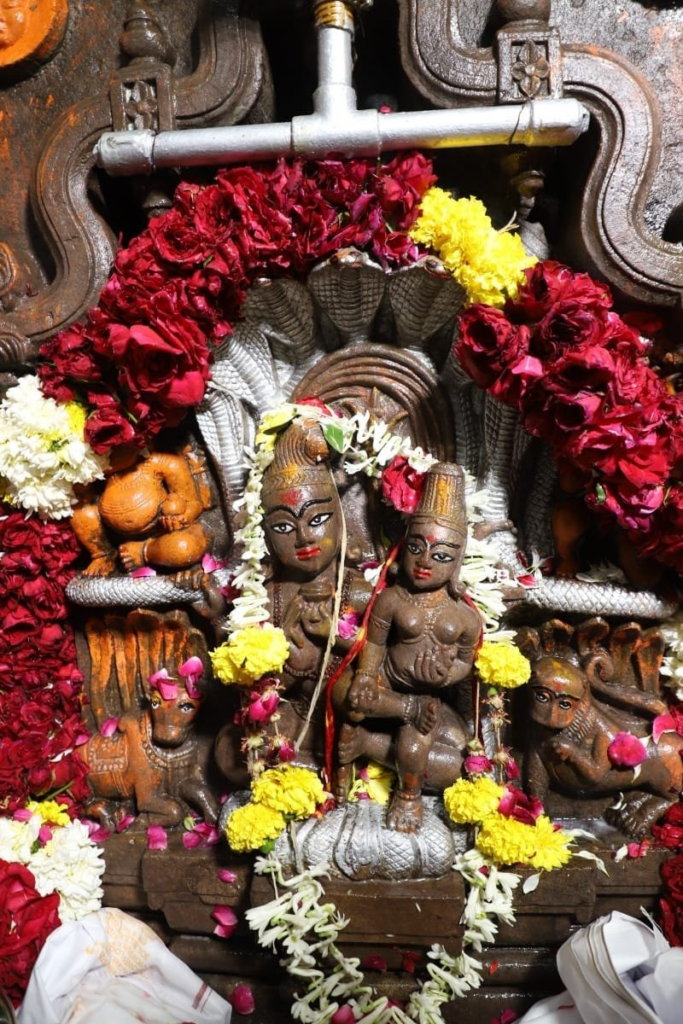
Directly above Mahakaleshwar, on the third floor. Open only on Nag Panchami — 17 August in 2026 — for 24 hours from just after midnight. The ten-hooded serpent throne with Shiva, Parvati and Ganesha is the draw, and the shrine is small enough that the queue is the entire experience.
Entry: Free · Timings: 24 hours, once a year only · Best time: 11 AM – 2 PM on Nag Panchami · How to reach: Inside the Mahakal complex; staircase from the main temple · Time needed: 20 min darshan, 2–5 hrs queue · Ideal for: Pilgrims, anyone performing Kaal Sarp Dosh remedies · Pro tip: The staircase is narrow and one-directional. If you are travelling with elderly parents or small children, use the midnight-to-2 AM window instead of daylight hours.
3. Mahakal Lok Corridor
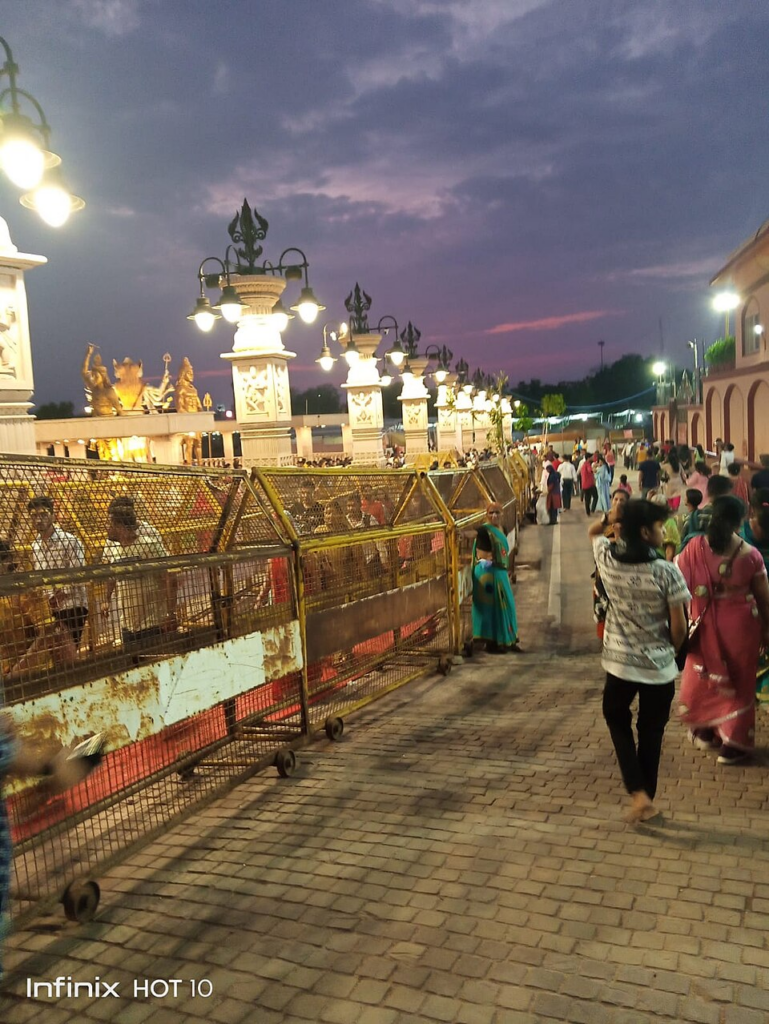
The 900-metre corridor built along Rudrasagar lake, lined with 108 pillars and sculptures depicting 32 episodes from the Shivpuran. It functions as the approach to the temple, but it is a genuine evening walk in its own right, especially when the light show runs.
Entry: Free · Timings: 5:00 AM – 10:00 PM weekdays; 4:30 AM – 10:30 PM weekends · Best time: 7 PM for the light show (7:30 PM and 8:30 PM daily) · How to reach: Adjacent to Mahakaleshwar temple · Time needed: 1–1.5 hrs · Ideal for: Families, photographers · Pro tip: Photography is allowed in the corridor but not in the sanctum. The corridor is open to the sky for most of its length, so carry a poncho rather than an umbrella in August — you will be walking shoulder to shoulder and an open umbrella is a nuisance to everyone behind you.
4. Kal Bhairav Temple

Ujjain’s guardian deity, and the temple where liquor is offered to the idol as prasad — poured from a bowl held to the deity’s lips, a practice visitors find genuinely startling the first time. It sits on the Shipra bank, away from the main temple cluster.
Entry: Free · Timings: 5:00 AM – 7:00 PM · Best time: Early morning or after 5 PM · How to reach: 7 km from Ujjain Junction; auto ₹120–150 one way · Time needed: 45 min · Ideal for: Everyone; especially those doing the full Ujjain circuit · Pro tip: Liquor for the offering is sold at stalls right outside — do not buy it elsewhere and carry it in. Combine this with Mangalnath, which is in the same direction.
5. Harsiddhi Temple

One of the 51 Shaktipeeths, where the elbow of Sati is said to have fallen. The two blackened stone deep stambhs in the courtyard, each holding over 500 lamps, are lit during Navratri and are the single most photographed sight in Ujjain after Mahakal Lok.
Entry: Free · Timings: 5:00 AM – 7:00 PM; aarti 7:00–8:00 AM and 6:00–7:00 PM · Best time: Evening aarti, or any evening during Navratri · How to reach: 500 m walk from Mahakaleshwar · Time needed: 30–45 min · Ideal for: Devotees, photographers · Pro tip: Time your visit to the 6 PM aarti. If you are in Ujjain during Navratri, the lamp towers are lit at dusk and it is worth rearranging your day for.
6. Chintaman Ganesh Temple

Believed to be among the oldest Ganesh temples in the country, housing three forms — Chintaman, Ichchhaman and Siddhivinayak — said to relieve worry, fulfil desire and grant accomplishment respectively. Newly married couples come here before beginning life together, and the temple is busiest on Wednesdays.
Entry: Free · Timings: Approx. 5:00 AM – 8:00 PM [VERIFY: Chintaman Ganesh exact timings] · Best time: Wednesday mornings, or any weekday before 9 AM · How to reach: 7 km from the city centre on the Fatehabad road; auto or cab · Time needed: 45 min · Ideal for: Families, couples · Pro tip: It is a bit out of the main cluster — pair it with Kaliadeh Palace on the same half-day loop rather than making a separate trip.
7. Bade Ganeshji Ka Mandir
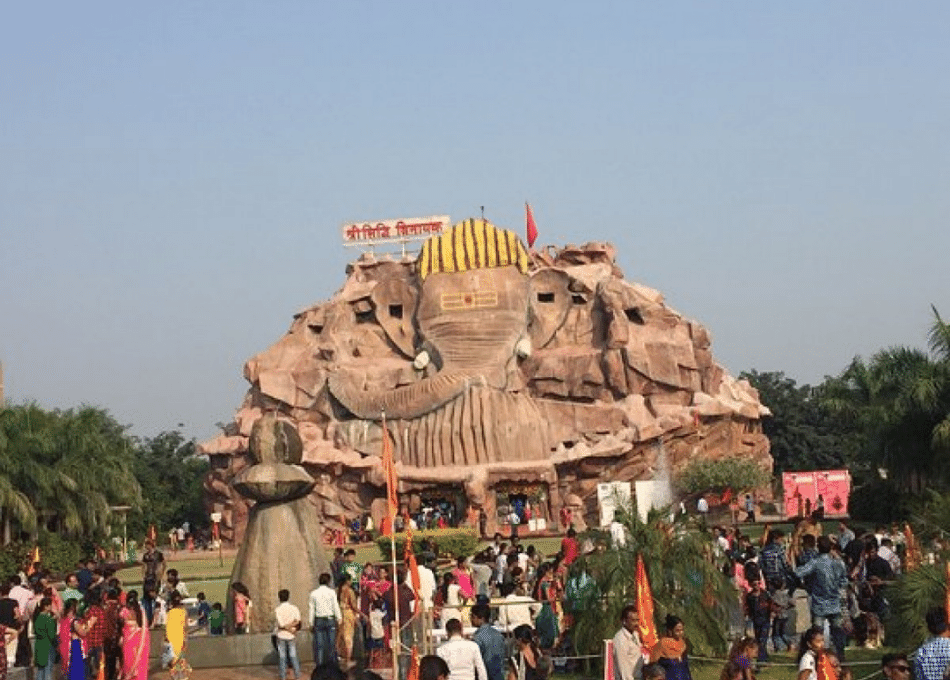
A short walk from Mahakaleshwar, this temple holds one of the largest artistic Ganesh idols in the country, coated in limestone and coloured. There is also a Sanskrit school and an astrology centre attached, which gives it a working, lived-in quality that many tourist-facing temples lack.
Entry: Free · Timings: 5:00 AM – 7:00 PM · Best time: Right after Mahakal darshan · How to reach: 300 m from Mahakaleshwar, near the Harsiddhi approach · Time needed: 20–30 min · Ideal for: Everyone · Pro tip: The panchmukhi Hanuman idol here is easy to miss. Ask a priest to point it out — most visitors walk past it.
8. Mangalnath Temple

Hindu tradition places the birth of the planet Mars (Mangal) here, which makes it the primary destination in India for Mangal Dosh puja. It sits high on the Shipra bank, and the river view from the temple platform at sunset is the quiet reward for coming this far out.
Entry: Free · Timings: 4:00 AM – 8:00 PM · Best time: Tuesdays for puja; sunset for the view · How to reach: 6 km from Mahakaleshwar, near Kal Bhairav; auto ₹100–130 · Time needed: 45 min–1 hr · Ideal for: Those performing astrological remedies; anyone wanting a calm hour · Pro tip: Tuesday is the ritual day and the crowd triples. If you are here only for the setting, come on any other evening.
9. Sandipani Ashram

The site where, by tradition, Krishna, Balaram and Sudama studied under Guru Sandipani. The Gomti Kund here is said to have been created by Krishna to bring all sacred waters to one place for his guru. Modest in scale, but historically the reason Ujjain was a centre of learning.
Entry: Free · Timings: 9:00 AM – 7:00 PM · Best time: Morning, before 11 AM · How to reach: 4 km from Mahakaleshwar in the Mangalnath direction · Time needed: 45 min · Ideal for: Families with school-age children, history-minded travellers · Pro tip: Opens later than most Ujjain temples at 9 AM — do not put it first on a morning itinerary.
10. Shri Dwarkadhish Gopal Mandir

A 19th-century marble temple built by Bayajibai Shinde, and the largest Krishna temple in Ujjain. The silver-plated sanctum doors have a real history — they are said to have been carried off to Ghazni, then returned via Lahore. The Sawari route passes right by it.
Entry: Free · Timings: Approx. 5:00 AM – 8:00 PM · Best time: Janmashtami; otherwise early evening · How to reach: In Patni Bazaar, 1 km from Mahakaleshwar — walk it · Time needed: 30 min · Ideal for: Everyone · Pro tip: On 17 August the Sawari palki passes here on its return leg around 6:30 PM. If you want to see the procession without the Ram Ghat crush, stand here instead.
11. Ram Ghat

The oldest of Ujjain’s Shipra ghats and one of the four Simhastha Kumbh Mela bathing sites. The evening Shipra aarti here — lamps, bells, the river going gold — is the single best free thing to do in Ujjain, and on 17 August it is where the Sawari abhishek happens.
Entry: Free · Timings: Open 24 hours; aarti at dusk · Best time: 6:30–7:30 PM for the aarti; Shravan for the fullest river · How to reach: 1.5 km from Mahakaleshwar; walkable or ₹40 auto · Time needed: 1 hr · Ideal for: Couples, families, photographers · Pro tip: In monsoon the Shipra rises and the lower steps go under — sit on the upper tier on the temple side. You see the whole ghat, and you are not standing in the river when the aarti lamps come out.
12. Navagraha Mandir, Triveni

Situated at the Triveni confluence on the Shipra, this is one of very few temples in India dedicated to all nine planets together. Amavasya draws large numbers, particularly people performing Shani and Rahu-Ketu remedies — which makes it a natural second stop after Nagchandreshwar.
Entry: Free · Timings: Approx. 6:00 AM – 8:00 PM · Best time: Amavasya; Saturdays for Shani puja · How to reach: 8 km from Mahakaleshwar on the Ujjain–Agar road · Time needed: 45 min · Ideal for: Those doing planetary remedies · Pro tip: If Kaal Sarp Dosh puja is your reason for coming on Nag Panchami, most panditji-led rituals in Ujjain include this temple. Confirm it is in your package before paying.
Ujjain and Omkareshwar: Two Jyotirlingas in One Trip

Omkareshwar is 140 km from Ujjain, roughly a 3.5–4 hour drive, and it is the fourth of the twelve Jyotirlingas — which makes the Ujjain and Omkareshwar pairing the most common two-Jyotirlinga circuit in Madhya Pradesh.
The route runs Ujjain → Indore on NH-52 (55 km, about 1 hour), then Indore → Omkareshwar via Barwah on NH-47 (85 km, about 2.5 hours). Roads are good throughout. There is no direct train; rail travellers change at Indore or Khandwa, and buses take around 5 hours, which is why almost everyone drives.
Omkareshwar sits on Mandhata island in the Narmada, shaped — as the name suggests — like the Om symbol. Two temples matter here: Omkareshwar on the island and Mamleshwar on the south bank, and tradition holds you should visit both to complete the Jyotirlinga darshan. A rope bridge and a road bridge connect the island; boats also run across.
Planning notes for the 2026 trip: if you are in Ujjain for 17 August, do not attempt Omkareshwar on the 18th if you have been up since midnight. Give yourself the 18th to recover and travel, and do Omkareshwar on the 19th. Also worth knowing — the Statue of Oneness, a 108-foot Adi Shankaracharya statue, was inaugurated at Omkareshwar in 2023 and now anchors a large visitor complex on the island. Budget an extra 90 minutes for it.
If you have a fourth day, Maheshwar is 60 km from Omkareshwar — Ahilyabai Holkar’s fort town on the Narmada, with ghats that are, by some distance, the most photogenic in Madhya Pradesh.
Distances and Routes: Planning Your Ujjain Circuit
| From Mahakaleshwar | Distance | Travel time | Best transport |
| Nagchandreshwar Mandir | 0 km (3rd floor) | 2 min + queue | On foot |
| Mahakal Lok | Adjacent | 5 min | On foot |
| Bade Ganeshji Ka Mandir | 300 m | 5 min | On foot |
| Harsiddhi Temple | 500 m | 8 min | On foot |
| Gopal Mandir | 1 km | 15 min | On foot |
| Ram Ghat | 1.5 km | 20 min | Walk or e-rickshaw |
| Ujjain Junction (UJN) | 2 km | 10 min | Auto ₹40–60 |
| Sandipani Ashram | 4 km | 15 min | Auto |
| Mangalnath Temple | 6 km | 20 min | Auto ₹100–130 |
| Kal Bhairav Temple | 7 km | 25 min | Auto ₹120–150 |
| Chintaman Ganesh | 7 km | 25 min | Auto or cab |
| Indore Airport (IDR) | 55 km | 1–1.5 hrs | Cab ₹1,200–1,800 |
| Omkareshwar | 140 km | 3.5–4 hrs | Cab or self-drive |
Route logic that saves you a half-day: Ujjain’s sites fall into three clusters. The walkable core (Mahakaleshwar, Nagchandreshwar, Mahakal Lok, Bade Ganeshji, Harsiddhi, Gopal Mandir, Ram Ghat) needs no vehicle at all. The eastern loop (Kal Bhairav, Mangalnath, Sandipani Ashram) is one auto trip of about three hours if you negotiate a round-trip fare. The northern and outer sites (Bhartrihari Caves, Vedh Shala, Navagraha Triveni, Kaliadeh Palace, Chintaman Ganesh) form a third loop. Doing them in clusters rather than in list order cuts roughly four hours of travel out of a two-day trip — and in monsoon it also cuts the number of times you get caught in the open when a shower starts.
Itineraries
The 17 August 2026 Day Plan (Nag Panchami + Third Sawari)
- Night of 16 Aug: Arrive Ujjain, check in, sleep by 9 PM
- 11:30 PM: Reach the Mahakal complex
- 12:00–1:30 AM: Nagchandreshwar darshan in the first wave
- 2:30–4:30 AM: Bhasma Aarti, if you hold a pass
- 5:00–8:00 AM: Rest at your stay. Do not try to power through.
- 9:00–11:00 AM: Harsiddhi, Bade Ganeshji, Gopal Mandir on foot
- 11:00 AM–1:00 PM: Mahakaleshwar general darshan — the calmest window of the day
- 1:00–3:00 PM: Lunch and rest
- 3:30 PM: Position yourself at Gudri Chauraha or Ram Ghat
- 4:00–7:00 PM: Third Sawari
- 7:30 PM: Shipra aarti at Ram Ghat, then dinner
Classic 1-Day Ujjain
Bhasma Aarti (pre-booked) → Mahakaleshwar → Nagchandreshwar exterior → Bade Ganeshji → Harsiddhi → breakfast → Kal Bhairav → Mangalnath → Sandipani Ashram → lunch → Gopal Mandir → Vedh Shala → Ram Ghat evening aarti → Mahakal Lok light show at 7:30 PM.
2-Day Ujjain
Day 1 — the walkable core and the eastern loop, as above, ending at Ram Ghat.
Day 2 — Bhartrihari Caves and Vedh Shala in the morning; Chintaman Ganesh and Kaliadeh Palace after lunch; Navagraha Mandir at Triveni if time allows; Mahakal Lok in the evening at a slower pace.
3-Day Ujjain and Omkareshwar
Days 1 and 2 as above. Day 3 — leave Ujjain by 6 AM, reach Omkareshwar by 10 AM, darshan at Omkareshwar and Mamleshwar, Statue of Oneness in the afternoon, return to Indore or Ujjain by evening. Add a fourth day for Maheshwar if you can.
Where to Stay in Ujjain
Ujjain fills up completely on Nag Panchami, and 2026 will be worse than usual. Hotels near the temple sell out early and rates climb sharply through Shravan. If you are travelling as a family or a group — and most people doing the Mahakal circuit are — a private villa works out better on both cost and sanity than three or four hotel rooms in the old city.
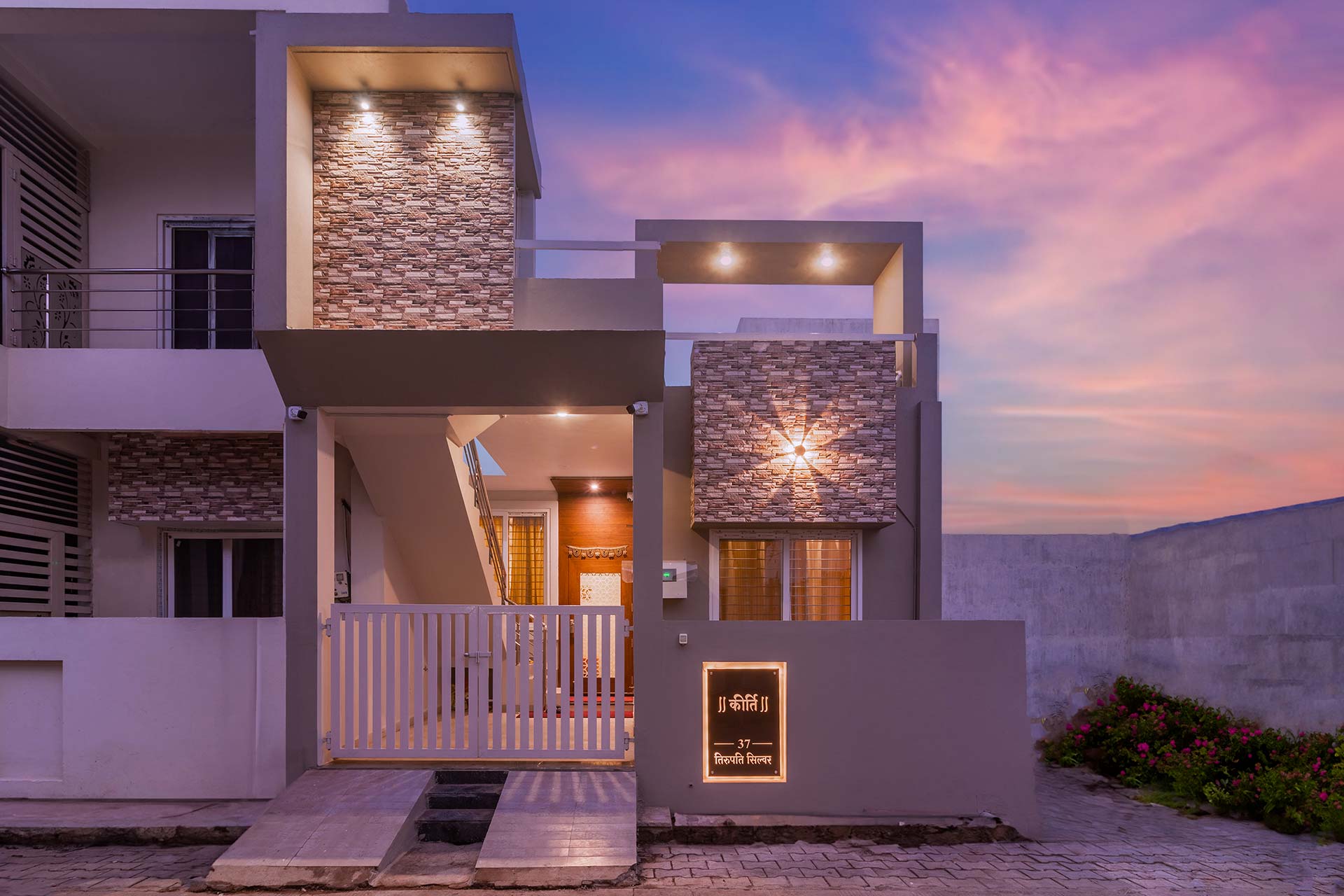
StayVista has Villa Orchid in Ujjain, roughly eight minutes from Mahakaleshwar — close enough to walk back at 2 AM after Nagchandreshwar darshan without negotiating with an auto driver, which on that particular night is worth a great deal. It is air-conditioned, has private parking, and is pet-friendly.
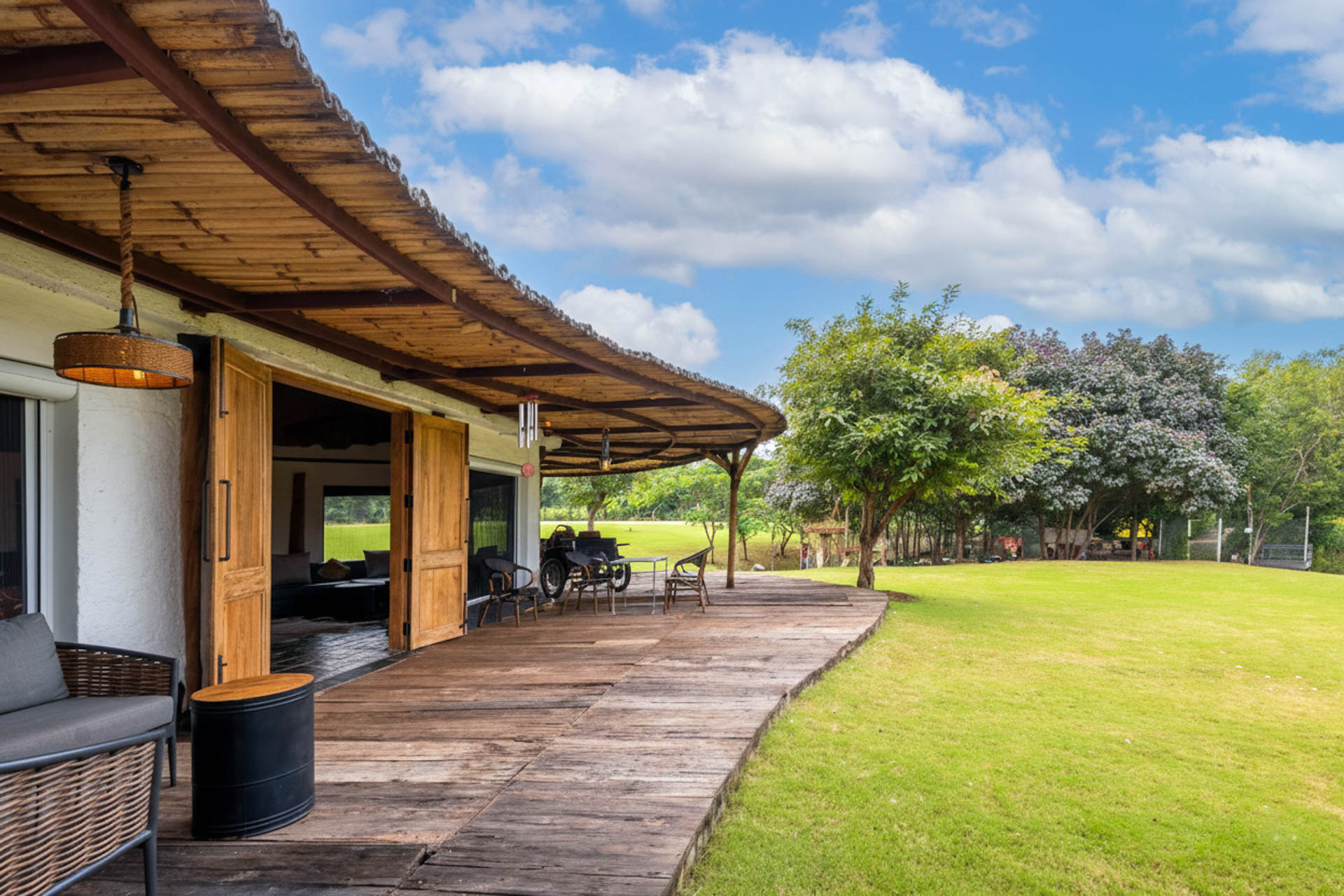
For groups splitting time between Ujjain and Omkareshwar, staying in the Indore district puts you roughly midway between the two. StayVista’s Water Song Garden is a lakeside property there with a lawn, a bar and indoor-outdoor games — a reasonable base if you are travelling with children who will not tolerate three straight days of temples.
Whatever you book, book it now. Accommodation within 5 km of Mahakaleshwar for the night of 16–17 August 2026 is already tightening.
Before You Go
If Nagchandreshwar Mandir is on your list, 2026 gives you one date and no alternatives — Monday, 17 August, and then not again until 2027. The upside of the Sawari falling the same day is that a single trip gives you the year’s rarest darshan and one of Shravan’s grandest processions. The downside is eight to ten lakh other people had the same idea.
Book your stay now, arrive on the 16th, do Nagchandreshwar in the small hours, and keep the 18th free. Ujjain rewards people who give it two days instead of one — and if you can stretch to three, the drive to Omkareshwar closes a Jyotirlinga circuit that most people only half-complete.
Frequently Asked Questions
Nagchandreshwar Mandir opens on Monday, 17 August 2026, the day of Nag Panchami. The doors open just after midnight following the Trikaal Puja and remain open for exactly 24 hours before closing again for the year.
It is on the third and topmost floor of the Shri Mahakaleshwar Jyotirlinga temple complex in Ujjain, Madhya Pradesh. You reach it by a staircase from within the main temple. There is no separate entrance or separate ticket.
No. Entry is free, and there is no paid or VIP queue for this shrine — unlike Mahakaleshwar, where Shighra Darshan and Garbh Grah passes are sold. Everyone uses the same staircase.
By tradition, the serpent king Takshak performed penance at this spot and asked Shiva that his solitude remain undisturbed. The temple has therefore been kept closed year-round, opening only on Nag Panchami, when serpent worship is considered most auspicious.
Three occasions coincide: Nag Panchami, the annual opening of Nagchandreshwar Mandir, and the third Sawari of Lord Mahakal, the Shravan Monday procession. The last such coincidence was in 2019, and the temple administration expects 8–10 lakh visitors.
Priests perform the puja at the Sabha Mandap at 3:30 PM, and the silver palanquin departs the temple at 4:00 PM. It reaches Ram Ghat for the Shipra Jal Abhishek and returns through the old city by about 7:00 PM.
Most visitors cover 8–12 in two days, though the city has well over twenty significant sites. The core cluster — Mahakaleshwar, Nagchandreshwar, Harsiddhi, Bade Ganeshji, Gopal Mandir and Ram Ghat — is walkable. Kal Bhairav, Mangalnath and Sandipani Ashram need a vehicle.
Omkareshwar is about 140 km from Ujjain, a 3.5–4 hour drive via NH-52 to Indore and then NH-47 through Barwah. There is no direct train. Most travellers hire a cab and make it a day trip or an overnight extension.
Regular bookings open 60 days in advance on mahakaleshwar.nic.in and that window has closed for 17 August. A limited Tatkal quota opens on 16 August. Book only on the official portal — no agent or third-party site issues valid passes.
Between 11:00 AM and 2:00 PM. The morning muhurat crowd has dispersed by then and the Sawari crowd has not yet gathered. The midnight-to-2 AM window is the other workable option, particularly for elderly visitors.