
Sarnath Is India’s 45th UNESCO World Heritage Site: What Got Inscribed, Timings, Entry Fee and How to Reach From Varanasi
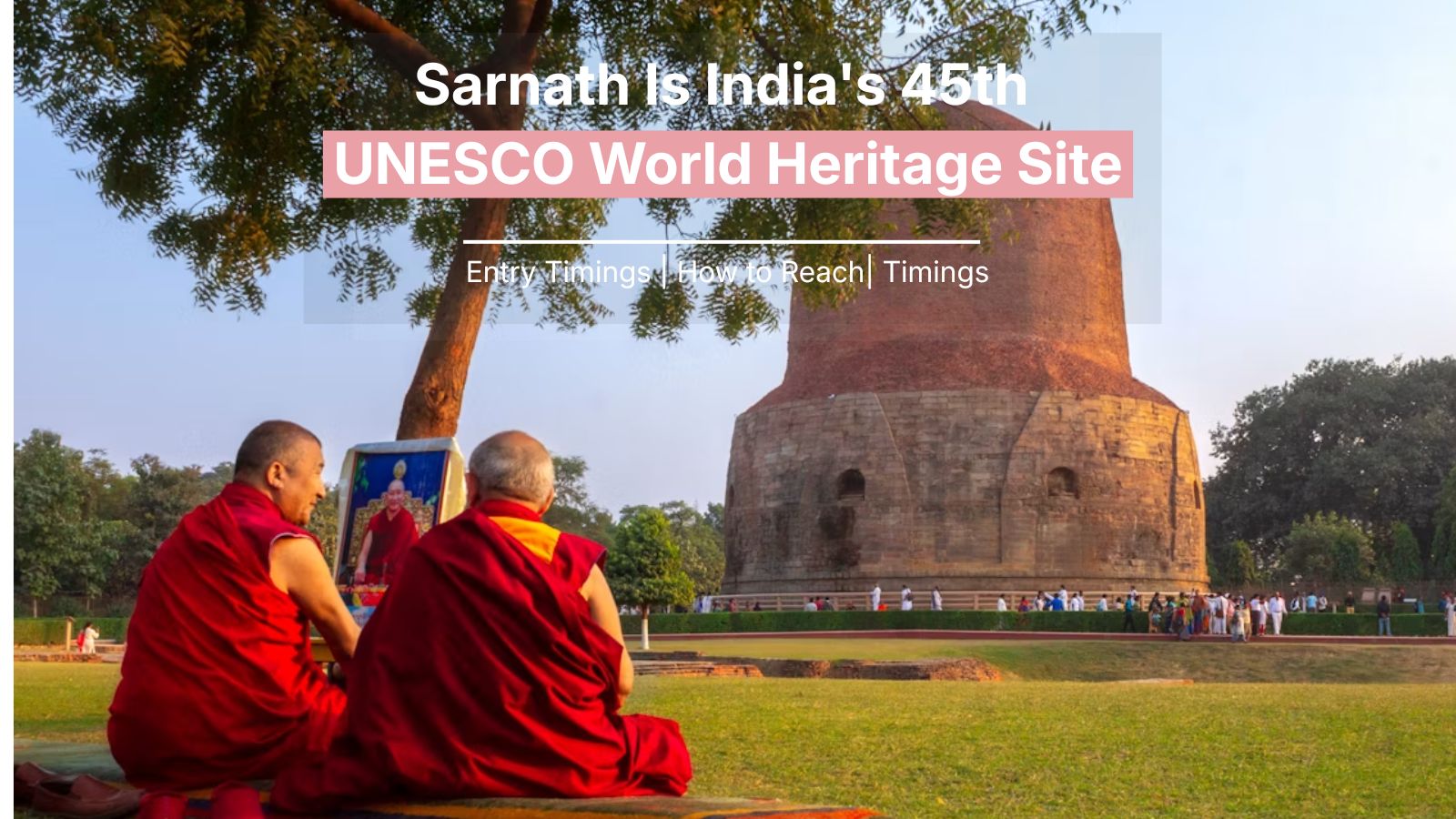
Sarnath just became India’s 45th UNESCO World Heritage Site. On 25 July 2026, the World Heritage Committee inscribed the “Ancient Buddhist Site, Sarnath” during its 48th session in Busan, South Korea (UNESCO, 2026).
For most visitors, Sarnath has always been a short detour from Varanasi — a quiet stop with a tall stupa and a museum. That status just changed. This piece breaks down exactly what got inscribed, what it costs to visit, when it’s open, and how to get there from Varanasi without wasting a day.
TL;DR: Sarnath was inscribed as India’s 45th UNESCO World Heritage Site on 25 July 2026, covering the Dhamek Stupa, Ashoka Pillar, and Chaukhandi Stupa (UNESCO, 2026). It’s about 10 km from Varanasi, roughly 25-45 minutes by auto or taxi.
In this Blog
What Exactly Got Inscribed at Sarnath?
UNESCO inscribed a single property called the “Ancient Buddhist Site, Sarnath,” made up of two protected zones: the Chaukhandi Stupa and the wider Archaeological Remains of Sarnath (UNESCO, 2026). That second zone is the part most tourists actually walk through.
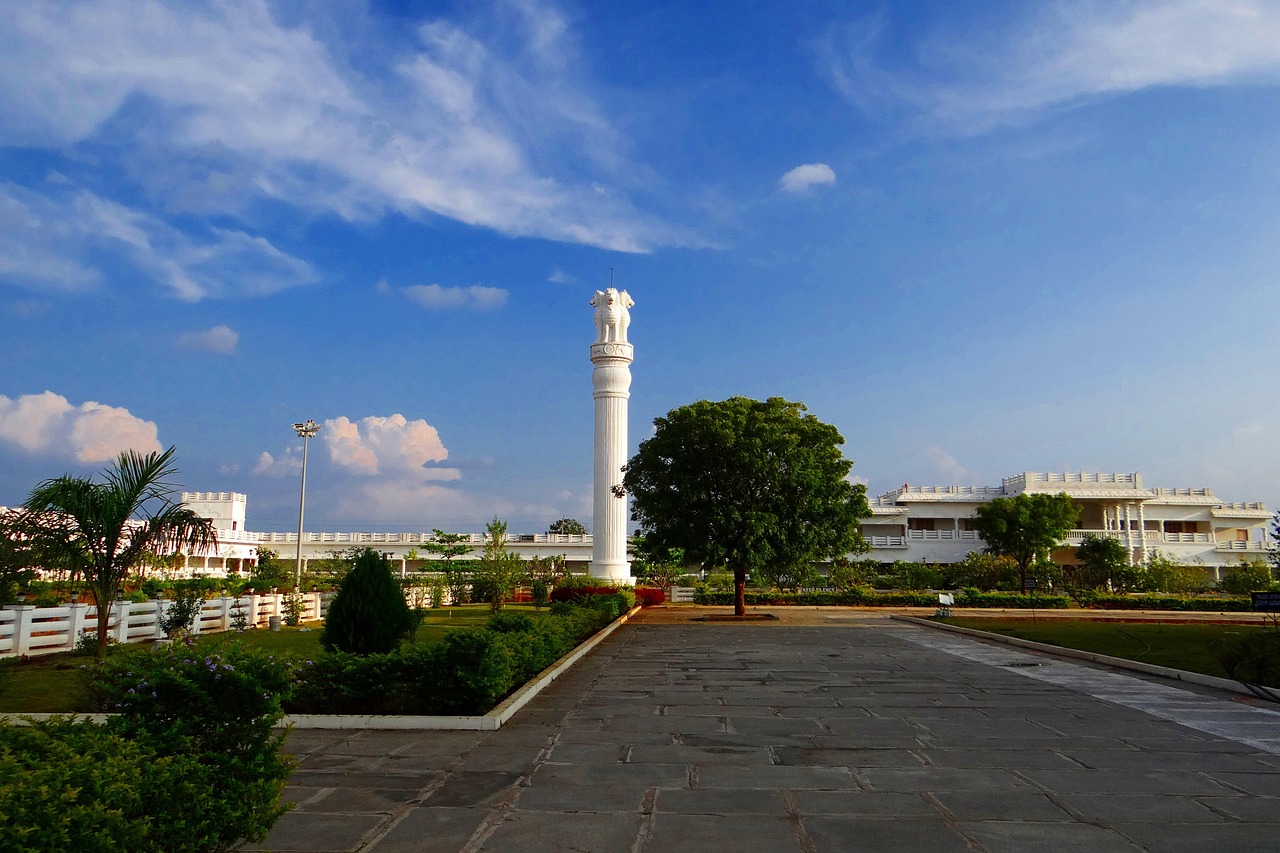
It includes the Dhamek Stupa, the Dharmarajika Stupa, the Mulagandhakuti Vihara, the base of Ashoka’s pillar, and the excavated monastery ruins that surround them — together known historically as the Deer Park. The Lion Capital that once topped the pillar isn’t out there anymore; it sits in the Sarnath Archaeological Museum a short walk away.
Most travel guides describe Sarnath as one site. Technically, it’s two. The Chaukhandi Stupa sits about a kilometre from the main Deer Park complex, on the road you’d take in from Varanasi — easy to miss if you’re only chasing the Dhamek Stupa photo.
Sarnath was first placed on India’s UNESCO Tentative List back in 1998 and was finally submitted as India’s official nomination for the 2025-26 cycle (Deccan Herald, 2025). Nearly three decades on a waiting list — that’s not unusual for World Heritage nominations, but it’s still a long wait for a site this significant.
For readers planning a Buddhist-circuit itinerary, [INTERNAL-LINK: Kushinagar and Lumbini travel guide → guide covering the other principal Buddhist pilgrimage sites].
Why Did UNESCO Give Sarnath World Heritage Status?
UNESCO inscribed Sarnath under criteria (iii) and (vi) — recognizing it as exceptional testimony to Buddhist cultural tradition and as the place directly linked to the Buddha’s first sermon (UNESCO, 2026). That sermon, delivered in the 6th century BCE, is the event Buddhists call the Dharmachakra Pravartana — the turning of the Wheel of Dharma.
Sarnath is where the Buddha, after attaining enlightenment at Bodh Gaya, taught for the first time and gathered his first five disciples. UNESCO names it one of four principal Buddhist pilgrimage sites, alongside Bodh Gaya, Kushinagar, and Lumbini (UNESCO, 2026). That’s the short version of why a stupa and a pillar base carry this much weight.
The site grew for centuries under royal and monastic patronage, most visibly during Ashoka’s reign, before declining by the 12th century CE. It sat forgotten until its rediscovery in the 18th century (UNESCO, 2026). Uttar Pradesh Chief Minister Yogi Adityanath called the inscription “a proud moment for every Indian and a shining reflection of Uttar Pradesh’s glorious spiritual and cultural legacy” (GKToday, 2026).
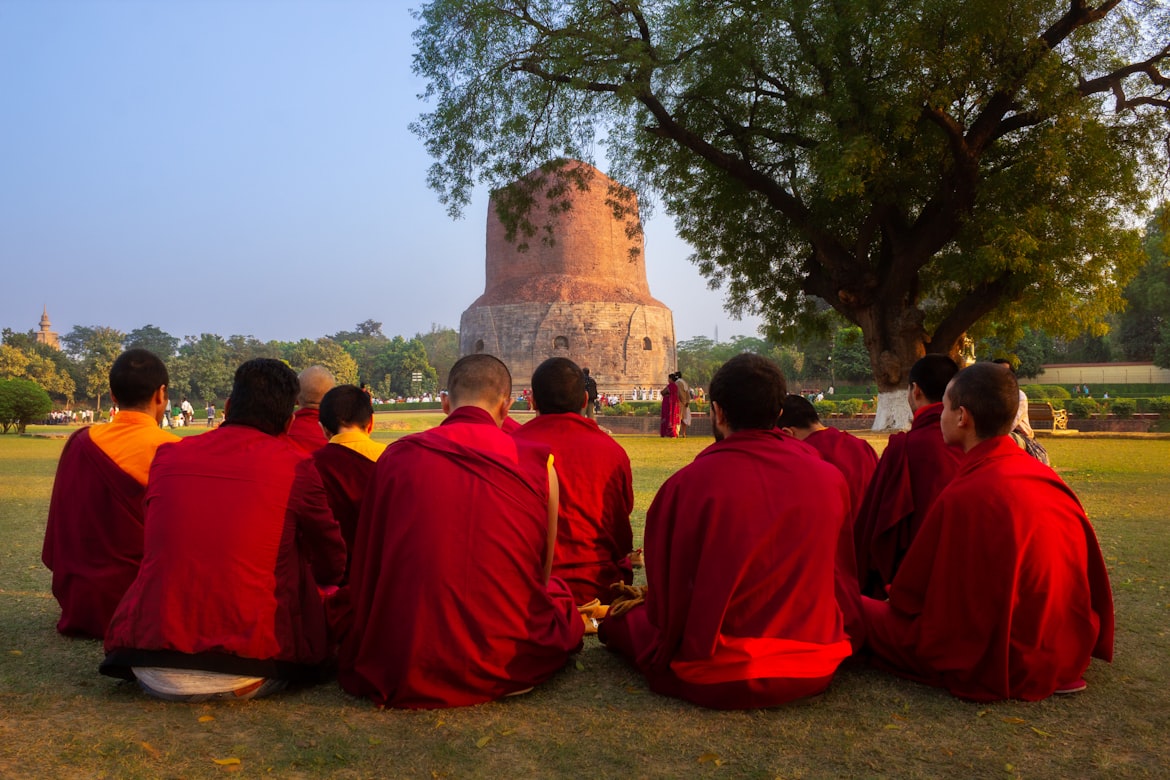
Isn’t it worth asking why this took so long? Sarnath has been on pilgrimage maps for over 2,500 years — the UNESCO paperwork just caught up.
What Are Sarnath’s Visiting Timings in 2026?
The Sarnath archaeological site is open daily, roughly 6 AM to 6 PM, sunrise to sunset (Kashitaxi, 2026). The Sarnath Archaeological Museum keeps shorter hours: 9:30 AM to 5 PM, and it’s closed every Friday (Sarnath Museum ASI, 2026).
That Friday closure catches people off guard. If your Varanasi trip only has room for one Sarnath visit, check the day of the week before you lock your itinerary — arriving on a Friday means the museum, including the Lion Capital, stays shut.
October to March is the most comfortable window, when Varanasi’s heat and humidity ease off. Buddha Purnima in May draws the heaviest pilgrim crowds, so expect longer queues and a more devotional atmosphere rather than a quiet walk through the ruins.
Planning a longer Varanasi stay around the visit? [INTERNAL-LINK: best time to visit Varanasi → seasonal guide to Ganga Aarti, weather, and festival timing].
What’s the Entry Fee for Sarnath?
Reported entry fees vary across sources, and no source we found confirms a fee revision tied to the July 2026 inscription. The most commonly repeated figures put the archaeological site at roughly ₹25 for Indian nationals and ₹300 for foreign nationals, with the museum charging a separate ₹5 (Sarnath Museum ASI; Kashitaxi, 2026).
[UNIQUE INSIGHT] Comparable ASI-run World Heritage Sites charge more: Khajuraho is ₹40 for Indian nationals and Sanchi is ₹35. ASI has historically nudged ticket prices up to match its standard World Heritage tier once a site crosses into that status, so don’t be surprised if Sarnath’s fee moves closer to that range.
Camera fees aren’t mentioned in any official Sarnath source we checked, and most of the standalone Buddhist temples inside the complex, like the Mulagandhakuti Vihara, charge no entry fee at all. Carry small change regardless — ticket counters at Indian heritage sites rarely break large notes.
How to Reach Sarnath From Varanasi
Sarnath sits about 10 km northeast of central Varanasi, and the drive takes 25 to 45 minutes depending on traffic (UNESCO; Rome2Rio, 2026). An auto-rickshaw is the cheapest way there; a taxi or ride-hailing cab is faster and easier if you’re short on time.
UPSRTC buses also run from outside Varanasi Junction (Varanasi Cantt) railway station, taking around 45 minutes — slower, but useful if you’d rather not negotiate a fare. NH31 is the main road connecting the two, and it’s the route most auto and cab drivers take by default (Delhi Tempo Travellers, 2026).
Coming straight from Varanasi’s Lal Bahadur Shastri International Airport? Most drivers still route you through the city rather than a direct bypass, so budget the extra time even if Sarnath looks closer to the airport on a map.
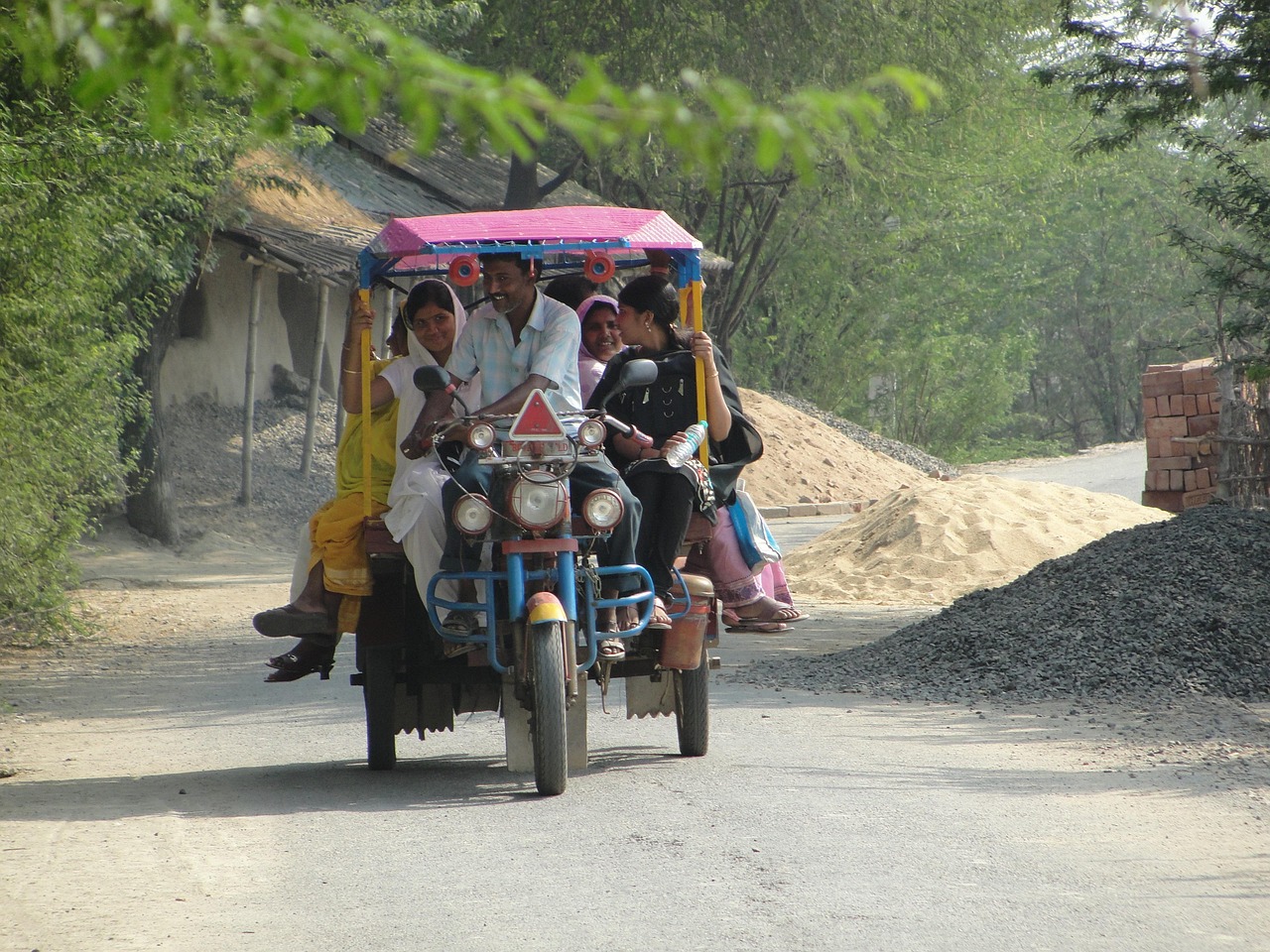
Most travelers pair Sarnath with a Varanasi morning — the Ganga Aarti at night, Sarnath the next day, back in time for lunch.
Where to Stay Near Sarnath and Varanasi
Pick a base close enough that Sarnath doesn’t eat your whole morning. The Ganga House sits right on Trilochan Ghat and is about 7.1 km from Sarnath, the shortest run of the two options here; Sunrise Apartment sits closer to Kashi Vishwanath Temple, roughly 12.7 km out (StayVista property data, 2026).
The Ganga House
The Ganga House is a three-storey villa built into the ghat, with four river-facing bedrooms across its upper floors and a terrace made for watching the sun come up over the Ganges. It sleeps up to 10 guests, comes with breakfast included, and rates 4.5/5 across 82 reviews. Getting there is part of the experience — most guests arrive by a short boat ride or on foot through Varanasi’s old bylanes rather than by road.
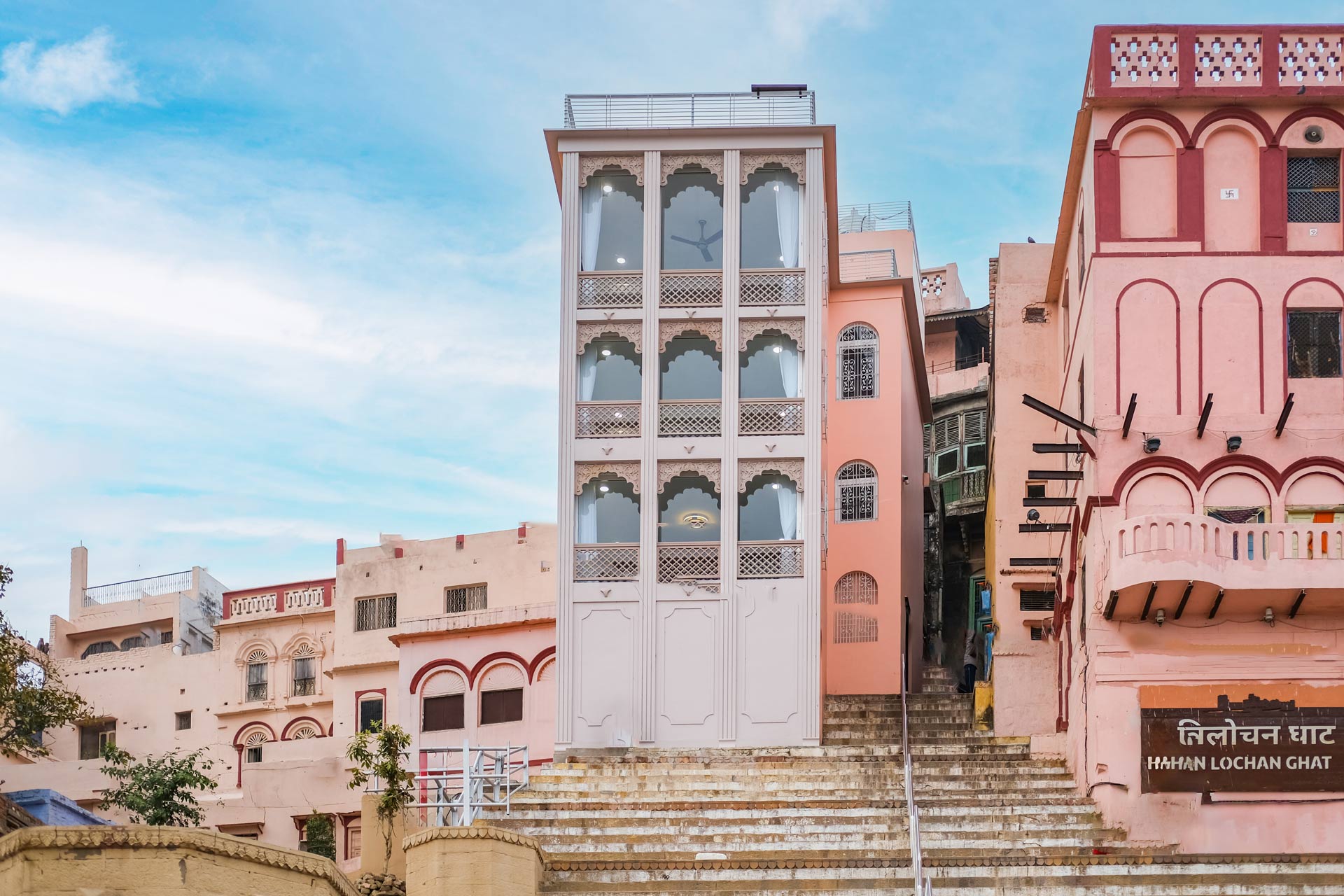
Sunrise Apartment
Sunrise Apartment suits a smaller group after something quieter and more contained. Its three king-bedded rooms sleep up to 9, and the private balcony is the kind of spot where morning chai turns into an hour you didn’t plan for. It’s rated 5/5 across 24 reviews, with meals available on request if you’d rather not go hunting for breakfast before an early Sarnath start.
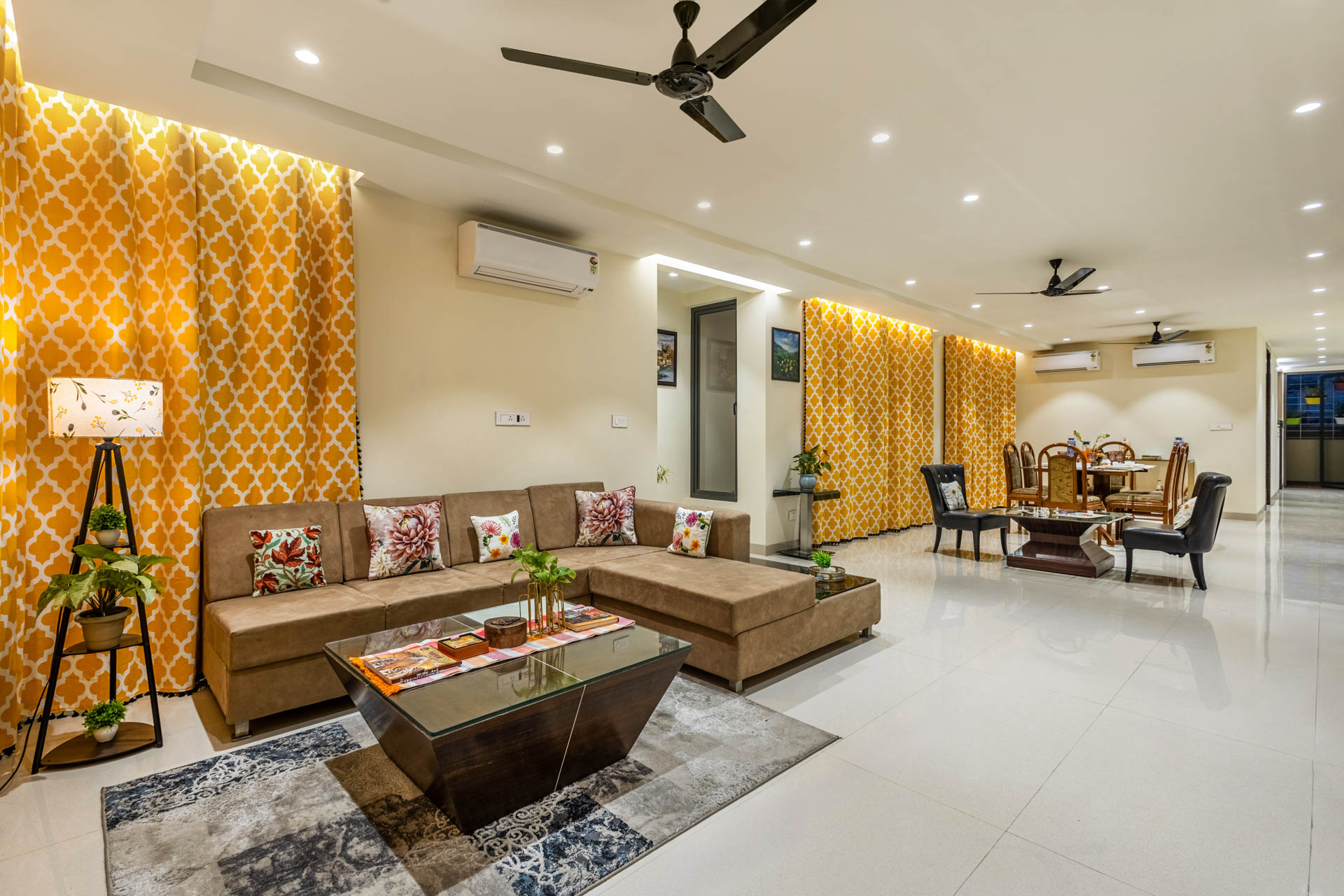
Both properties keep you within a manageable drive of the ghats, Kashi Vishwanath Temple, and Sarnath itself — check current rates and availability before you lock your dates, since pricing shifts with season.
What Does This Mean for India’s Buddhist Circuit and Tourism?
India now holds 45 UNESCO World Heritage Sites, up from 44 before this inscription — still well behind Italy’s 61 and China’s 60, but part of a global top tier (UNESCO, 2026). Sarnath is also Uttar Pradesh’s fourth World Heritage Site, joining the Taj Mahal, Agra Fort, and Fatehpur Sikri.
The timing lines up with a broader surge. Uttar Pradesh’s six major Buddhist-circuit sites — Sarnath, Kushinagar, Shravasti, Kaushambi, Kapilvastu, and Sankisa — drew roughly 61 lakh visitors between January and September 2025 alone (The Statesman, 2025). Varanasi itself logged a record 7.26 crore tourist visits in 2025 (Organiser, 2025).
UNESCO status alone won’t move those numbers overnight. But it does put Sarnath in front of a different kind of traveler — the kind who plans a trip around a World Heritage Site list rather than a regional guidebook. For a city already stretched during peak season, that’s a shift worth watching.
Frequently Asked Questions
No. Bodh Gaya is where the Buddha attained enlightenment; Sarnath is where he delivered his first sermon afterward. UNESCO names both among the four principal Buddhist pilgrimage sites, alongside Kushinagar and Lumbini (UNESCO, 2026).
Yes. Sarnath is only about 10 km from central Varanasi, and most visits take 2-3 hours including the museum (Rome2Rio, 2026). A morning at Sarnath still leaves the afternoon free for the Ghats or Kashi Vishwanath Temple.
Sarnath’s inscription on 25 July 2026 pushed India’s count from 44 to 45, at the 48th session of the World Heritage Committee in Busan (UNESCO, 2026).
The archaeological site is open daily, but the Sarnath Archaeological Museum — home to the Ashoka Lion Capital — is closed every Friday (Sarnath Museum ASI, 2026). Plan around that if the museum matters to your visit.
No advance booking is required for the archaeological site or museum based on current information; tickets are sold at the counter on arrival. Given the fresh UNESCO status, it’s worth checking for updated booking rules before you go.
Key Takeaways
- Sarnath was inscribed as India’s 45th UNESCO World Heritage Site on 25 July 2026, at the 48th World Heritage Committee session in Busan.
- The inscription covers the Dhamek Stupa, Ashoka Pillar base, Mulagandhakuti Vihara, and the separate Chaukhandi Stupa.
- The archaeological site runs roughly 6 AM-6 PM daily; the museum keeps 9:30 AM-5 PM hours and closes on Fridays.
- Entry fees hover around ₹25 (site) and ₹5 (museum) for Indian nationals, though a post-inscription revision is plausible and unconfirmed.
- Sarnath is about 10 km from Varanasi — a 25-45 minute auto, cab, or bus ride via NH31.
- For a base close to the ghats and Sarnath, The Ganga House and Sunrise Apartment are both within a manageable drive of the newly inscribed site.