
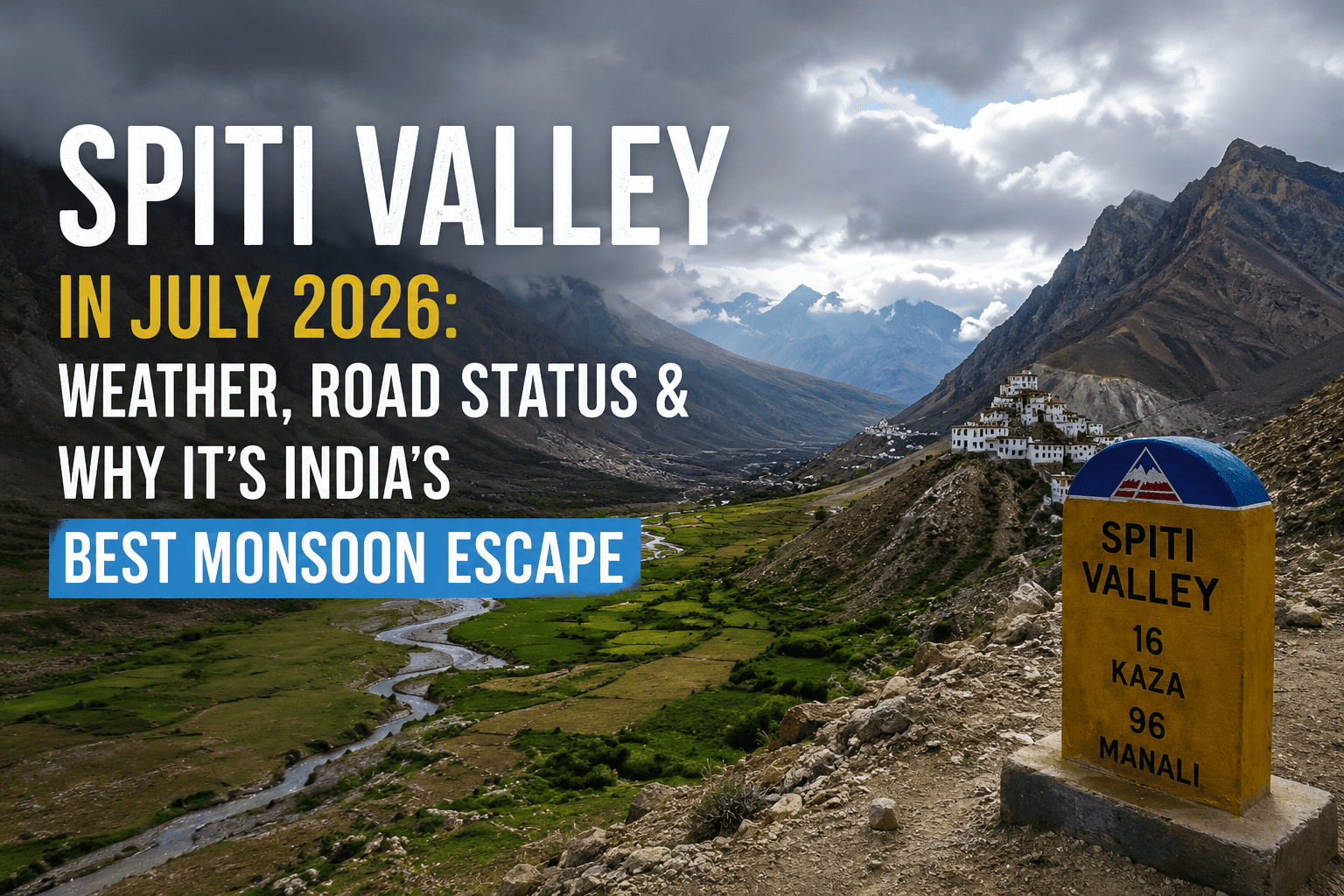
Spiti Valley in July 2026: Weather, Road Status & Why It’s India’s Best Monsoon Escape
Every July, much of India prepares for heavy rainfall. Popular hill stations become wetter, highways face delays, and many outdoor plans depend entirely on the weather. Yet there is one destination where July feels completely different. While monsoon clouds dominate large parts of the country, Spiti Valley in July remains surprisingly dry.
This unusual weather pattern is one of the main reasons why more travellers are choosing Spiti during the rainy season. Located high in Himachal Pradesh, Spiti sits behind massive Himalayan mountain barriers that block most monsoon clouds. The result is a destination that remains accessible, scenic, and remarkably dry even when other mountain regions receive frequent rain.
In this Blog
Is Spiti Valley Worth Visiting in July?

Credits: Nomad bikers via Unsplash
Yes. Spiti Valley is one of the best places to visit in India during July because it lies in a rain-shadow region of the Himalayas. Unlike most hill stations that receive heavy monsoon rainfall, Spiti remains relatively dry, making it ideal for road trips, photography, monastery visits, and high-altitude adventures. July also offers pleasant daytime temperatures, open roads, and access to major attractions such as Kaza, Key Monastery, Langza, Hikkim, and Pin Valley.
Spiti Valley in July 2026: Quick Facts
| Factor | Details |
|---|---|
| Weather | Pleasant and dry |
| Day temperature | 20°C – 25°C |
| Night temperature | 5°C – 10°C |
| Rainfall | Very low |
| Road status | Usually open |
| Best route | Shimla to Kaza |
| Ideal trip duration | 7 – 10 days |
| Good for | Road trips, photography, monasteries |
| Altitude | 3,800 m+ |
| Acclimatisation needed | Yes |
Why Does Spiti Valley Receive So Little Rain?

Credits: Kashish Lamba via Unsplash
Spiti Valley lies behind the Greater Himalayan Range, which blocks moisture-laden monsoon clouds from reaching the region. This creates a rain-shadow effect, resulting in annual rainfall of less than 200 mm. Because of this unique geography, Spiti remains one of the driest inhabited regions in India even during the peak monsoon season.
The term rain-shadow desert sometimes surprises first-time visitors. A desert is defined by low rainfall, not by heat. Spiti’s high altitude keeps temperatures relatively cool throughout the year despite its desert classification. This is precisely what makes Spiti in monsoon 2026 such a compelling travel choice — you get all the drama of a Himalayan landscape without the disruption of continuous rainfall.
Spiti Road Status for July 2026: What Travellers Should Know
One of the most common concerns involves Spiti road status for July 2026. The good news is that July is generally considered one of the most accessible months for visiting the valley. By this period, major snow-clearance operations are usually complete and both primary routes are typically available, although conditions can vary based on weather and ongoing maintenance.
The Shimla side remains the more dependable route because it stays accessible throughout most of the year. The Manali route, while spectacular, depends on seasonal pass openings and weather conditions.
Travellers should always check official road updates a few days before departure, because mountain conditions can change quickly.
Manali vs Shimla Route in Monsoon: Which Is Safer?
| Factor | Shimla Route | Manali Route |
|---|---|---|
| Typical July Status | Usually Open | Usually Open |
| Road Quality | Better Overall | Rougher Sections |
| Acclimatisation | Better (Gradual) | Faster Altitude Gain |
| Landslide Risk | Moderate | Moderate to Higher |
| Suitable Vehicle | Hatchback, Sedan, SUV | SUV Preferred |
| First-Time Visitors | Recommended | Better for Experienced Drivers |
| Reliability in July | Higher | Weather Dependent |
The Shimla route allows gradual altitude gain, helping visitors acclimatise more comfortably. The Manali route offers dramatic scenery but includes rougher sections, water crossings, and higher passes. Many experienced travellers recommend entering through Shimla and exiting through Manali when conditions permit, completing a rewarding circuit route.
Kaza Weather in July: What Conditions Can Visitors Expect?
Understanding Kaza weather in July helps travellers pack appropriately.
Daytime temperatures in Kaza generally remain pleasant, often ranging between 20°C and 25°C. Evenings and early mornings become much cooler, with temperatures commonly dropping between 5°C and 10°C. Higher-altitude areas such as Kunzum Pass, Komic, and Hikkim can feel significantly colder.
The strong sunlight surprises many visitors. Despite the cool air, ultraviolet exposure at high altitude remains intense. Sunglasses, sunscreen, and layered clothing are essential.
Unlike many Indian destinations in July, visitors in the Spiti core region rarely need to worry about continuous rainfall once they arrive.
Places to Visit in Spiti Valley in July
Kaza — The Heart of Spiti

Credit: Rohit Dey via Unsplash
Sitting at an altitude of around 3,800 metres, Kaza is the administrative headquarters and beating heart of the Spiti Valley. Almost every traveller passes through here, and most end up staying longer than planned. The town has a quiet but lived-in energy — monks, locals, and travellers share the same narrow lanes without any of it feeling touristy or overcrowded.
The Kaza market is worth a morning of your time. You’ll find shops selling local woollens, Tibetan artefacts, dried apricots, and basic supplies. The town also has ATMs, medical facilities, and a handful of cafes serving surprisingly good food — a relief when you’re days away from the nearest city. The Sakya Tangyud Monastery sits right within the town and is easy to miss if you’re not looking for it. Far less crowded than Key, it offers a more intimate glimpse into everyday monastic life.
July advantage: The surrounding hills turn their warmest golden-brown in July, set against a deep, cloudless blue sky. The air is dry and the light is exceptional — mornings in particular offer some of the sharpest photography conditions of the year.
Things to do in Kaza: Explore the local bazaar, visit Sakya Tangyud Monastery, use it as a base for day trips to surrounding villages, and experience local hospitality through a homestay or a well-appointed villa.
Key Monastery — Spiti’s Most Iconic Landmark
Key Monastery, known locally as Ki Gompa, is the largest and oldest monastery in Spiti Valley, perched on a rocky hill at about 4,166 metres. From a distance it looks almost impossible — a cluster of whitewashed buildings stacked organically on a jagged hilltop, rising above the Spiti River below. The monastery dates back to the 11th century and has survived wars, earthquakes, and fires across the centuries. Roughly 300 monks live and study here today.
The interior houses thangkas, ancient murals, manuscripts, and ceremonial instruments. Visitors are welcome inside the prayer halls, where butter lamps burn continuously and the smell of incense fills the air. Arriving early in the morning to sit in on prayers is an experience most travellers describe as one of the most memorable moments of their entire trip.
July advantage: The 30–45 minute drive from Kaza follows a paved road with clear views down the Spiti Valley. In July, without any haze or cloud cover, the view from the monastery across the valley is extraordinary — ideal for wide-angle photography and for simply taking in the scale of the landscape.
Things to do at Key Monastery: Attend morning prayers, walk through the prayer halls and study the ancient murals, photograph the monastery at different times of day, and speak with monks who are often open to brief conversations with respectful visitors.
Kibber Village and Chicham Bridge
Kibber sits at approximately 4,270 metres and carries a long-standing reputation as one of the world’s highest motorable villages. The village is small, with stone houses clustered tightly in the traditional Spitian style, and the views of the surrounding mountains from its edge are genuinely spectacular.
A short drive away is the Chicham Bridge — one of the highest motorable suspension bridges in Asia, completed in 2017. It spans a dramatic gorge at roughly 4,500 metres. The crossing itself is an experience: the bridge sways gently underfoot, the gorge drops hundreds of feet below, and the mountains rise sharply on both sides. Before the bridge existed, reaching the village of Chicham on the opposite cliff face required a lengthy detour.
July advantage: The clear skies of July make the Chicham gorge particularly striking. The depth of the gorge is most visible when the light is strong and direct, and the bridge crossing feels even more dramatic against a cloudless backdrop.
Things to do in Kibber: Walk the village lanes and observe the traditional stone architecture, interact with locals who live here year-round in one of India’s most extreme climates, and cross the Chicham Bridge for one of the most dramatic viewpoints in the valley.
Langza — The Fossil Village with the Giant Buddha
Langza sits at around 4,400 metres and is immediately recognisable for the large gilded Buddha statue that stands at the edge of the settlement, gazing out across a wide open valley framed by snow-capped peaks. The contrast between the statue, the bare brown hillsides, and the white mountains behind it is one of the most photographed images in Spiti.
What gives Langza genuine depth is its geological history. Millions of years ago, the entire Spiti region lay beneath the ancient Tethys Sea. As the Himalayas rose and the sea receded, it left behind an extraordinary fossil record. Marine fossils — ammonites, shells, and ancient sea creatures — can be found embedded in the rocks and soil around the village. Local children sometimes collect and display them, and spotting fossils yourself while walking the hillsides is entirely possible.
July advantage: In July, the clear skies and low humidity make the Buddha statue photograph beautifully against sharp mountain silhouettes. Wildflowers appear in small patches around the hillsides during this month, adding unexpected colour to an otherwise stark landscape.
Things to do in Langza: Photograph the Buddha statue against the mountain backdrop, walk the hillsides in search of marine fossils (handle with care and avoid removing significant specimens), and spend time absorbing the stillness of a village where very few vehicles pass and very little changes from one season to the next.
Hikkim — Letter from the Roof of the World
Hikkim, at approximately 4,440 metres, is home to one of the world’s highest functioning post offices. It operates year-round, staffed by a postmaster who has become something of a local legend for his commitment to keeping it running through Spiti’s brutal winters.
Sending a postcard or letter from Hikkim has become a genuine traveller tradition. The postmarks — stamped at nearly 4,500 metres above sea level — arrive weeks later as unexpected and cherished mementos for whoever receives them. The experience of standing in that tiny room, filling in an address at the edge of the known world, is quietly unforgettable.
July advantage: Hikkim sits on an open plateau that offers unobstructed 360-degree views of the surrounding ranges. In July, with no haze or cloud, those views are at their sharpest — making the post office stop as much about the landscape as the stamp.
Things to do in Hikkim: Post a letter or postcard from the world’s highest post office, walk through the village, and take in the wide plateau views that stretch to the distant mountain ranges on every side.
Komic — Silence at the Top of the World
Komic sits at around 4,587 metres and is among the highest villages in the world connected by a motorable road. The village is tiny — just a handful of houses and a monastery — and the silence here feels absolute in a way that is difficult to find anywhere else.
The Tangyud Monastery in Komic is one of the oldest in Spiti, associated with the great Tibetan Buddhist scholar Rinchen Zangpo. It is small and unassuming, but the monks here maintain traditions in genuine isolation, far from the more-visited monasteries lower in the valley. The landscape around Komic is raw and elemental — wide plateaus, deeply eroded hillsides, and open sky in every direction.
July advantage: The road between Langza, Hikkim, and Komic is most reliably passable in July once the winter snow has fully cleared. Combining all three on a single day trip is practical and rewarding, and July’s long daylight hours give you enough time to do it without rushing.
Things to do in Komic: Visit the Tangyud Monastery, speak with monks if they are available, walk to the village edge for panoramic views, and sit with the landscape — Komic is one of the few places in Spiti where the altitude and isolation become something you can actually feel.
Pin Valley — Spiti’s Greener, Wilder Side
Pin Valley branches off the main Spiti route and immediately feels like a different world. Where the main valley is predominantly brown, arid, and wide open, Pin Valley is greener and more sheltered. The Pin River runs through it and the terrain is comparatively lush — with scrub, patches of wildflowers in July, and a more enclosed character.
The valley falls within Pin Valley National Park, a protected area that is home to snow leopards in the higher reaches (sightings are rare but documented), Siberian ibex on the rocky slopes, and bird species including the snow partridge and Himalayan snowcock. Mudh, the last major settlement in the valley, has basic guesthouses for those who want to stay overnight and explore further on foot.
July advantage: July is one of the best months for Pin Valley specifically because the wildflowers are at their peak and the wildlife is more active at lower altitudes than in the colder months. The valley’s relative greenness feels like a visual contrast after days spent in the drier main valley.
Things to do in Pin Valley: Drive to Mudh village and walk into the surrounding landscape, keep an eye out for ibex on the hillsides, explore the riverside trail from Mudh deeper into the valley, and consider staying overnight for an experience of genuine remoteness.
Dhankar — A Monastery on the Edge of Time
Dhankar is one of those places that photographs cannot fully prepare you for. The monastery clings to a narrow ridge of crumbling rock above the confluence of the Spiti and Pin rivers, at around 3,894 metres. Below it, the rivers carve through deep gorges. The surrounding landscape is layered and eroded in shades of brown, grey, and ochre — geological strata exposed across centuries of wind and water.
The monastery dates back over a thousand years and once served as the capital of the Spiti Kingdom — both a spiritual centre and a seat of royal power. The old section is considered structurally fragile and contrasts with a newer building nearby. A 45-minute hike above the monastery leads to Dhankar Lake, a small glacial lake at around 4,100 metres with extraordinary views across the valley below.
July advantage: The hike to Dhankar Lake is most rewarding in July, when the trail is clear of snow, the wildflowers around the lake edge are in bloom, and the clear sky reflects sharply in the still water. The lake is rarely crowded even in peak season, and in July you may have it entirely to yourself.
Things to do in Dhankar: Explore the old monastery and its prayer halls, hike to Dhankar Lake for a rewarding half-day excursion, photograph the monastery against the river confluence below, and spend time understanding why this ridge was chosen as a seat of power — the commanding view across two valleys makes it immediately obvious.
Where to Stay in Spiti Valley: StayVista Properties
Finding the right place to stay in Spiti is not just a matter of comfort — it shapes the entire tone of your trip. Kaza is the natural base for most travellers, and staying in a well-appointed villa here means you return each evening to a proper bed, a warm meal, and a space where you can genuinely rest and recover from the altitude and the driving. That recovery matters more in Spiti than almost anywhere else in India.
StayVista offers curated villa stays in and around Himachal Pradesh that bring a level of warmth, design, and reliability that is difficult to find through generic booking platforms in high-altitude regions. Rather than roughing it in basic guesthouses, a StayVista property gives you the whole space — ideal for groups, families, or couples who want the Spiti experience without compromising on where they sleep and eat.
Here are some StayVista properties worth considering as your base for a Spiti Valley trip in July 2026:
Thanedar Estate — Shimla
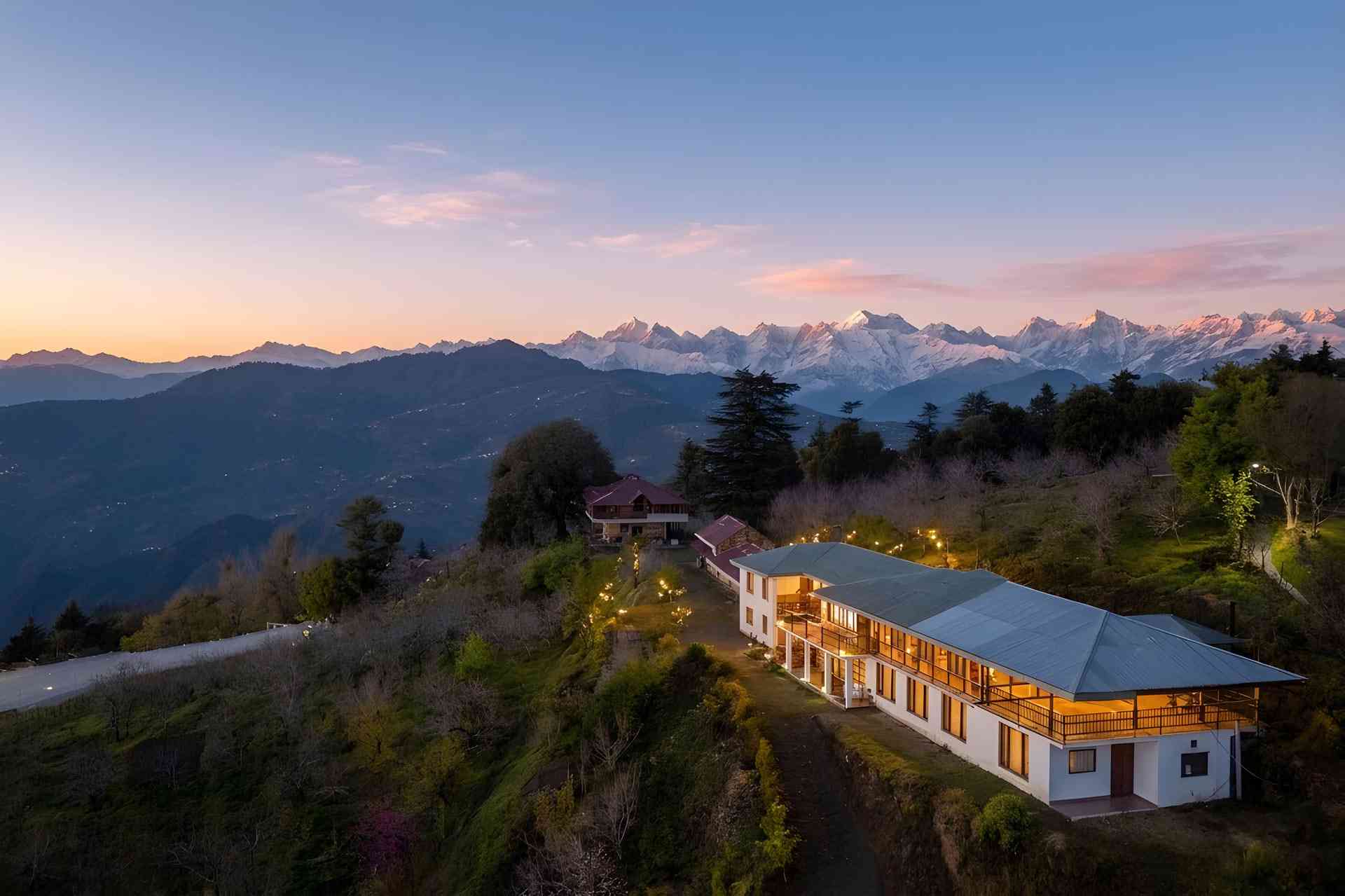
Perched amidst apple orchards and cedar-covered hills, Thanedar Estate offers a peaceful Himalayan retreat away from Shimla’s busier corners. The villa’s expansive views, crisp mountain air, and charming heritage character make it an ideal place to slow down before or after an adventurous Spiti journey. Whether you’re enjoying a quiet morning overlooking the valleys or unwinding by the fireplace, the estate delivers a quintessential mountain escape.
Best for: Families, nature lovers, and travellers seeking a serene stop near Shimla.
Rosemary Cottage Villa — Manali
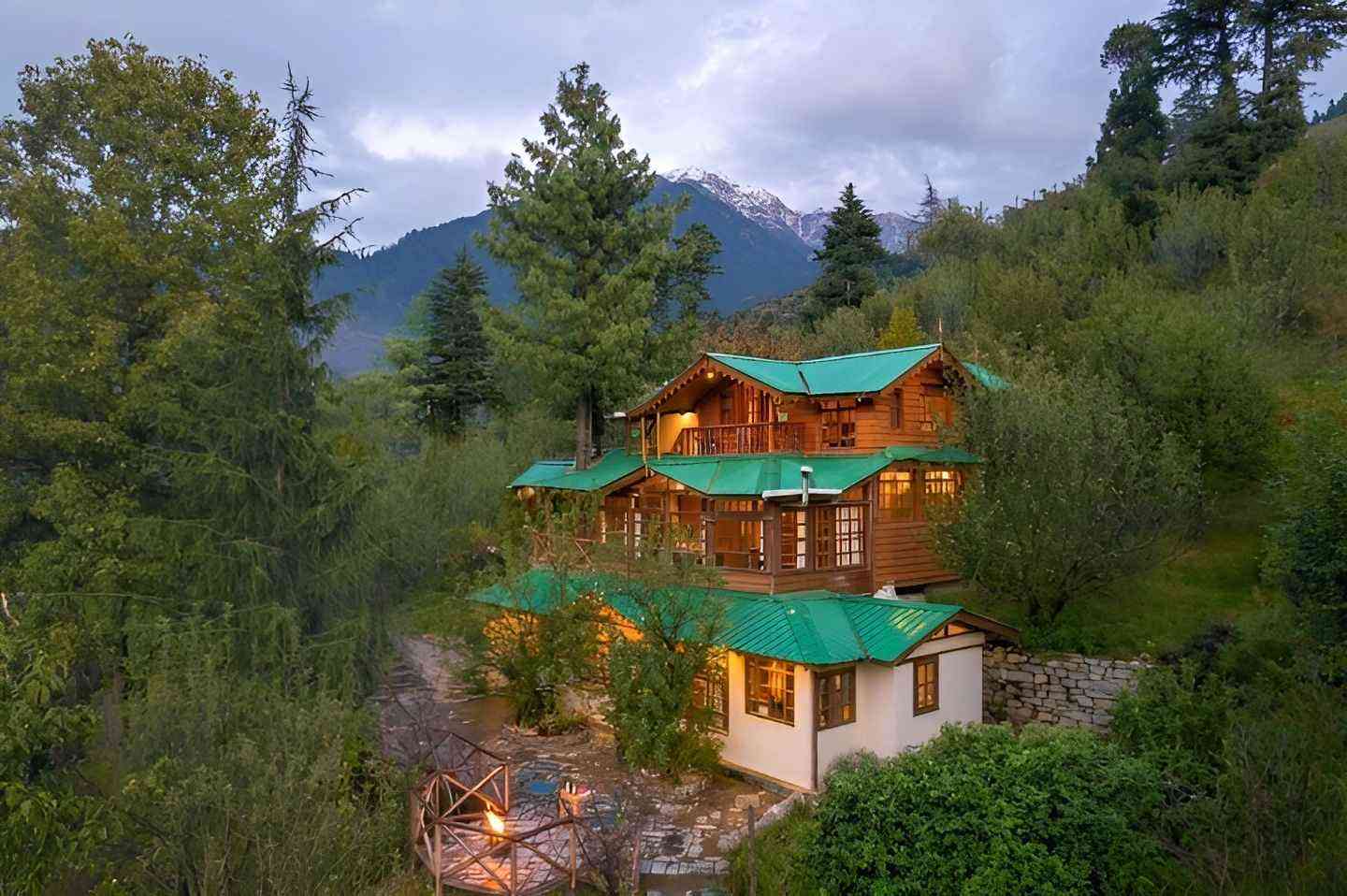
Nestled in the lush landscapes of Manali, Rosemary Cottage combines cosy interiors with sweeping views of the surrounding mountains. Its warm wooden accents, inviting living spaces, and tranquil setting create the perfect atmosphere to relax after long days on the road. For travellers heading to or returning from Spiti via Manali, it offers a comfortable pause amid the greenery before the terrain transforms dramatically into the high-altitude desert.
Best for: Couples, families, and small groups looking for a scenic mountain stay in Manali.
Terrasse de Raga Penthouse Villa — Kasauli
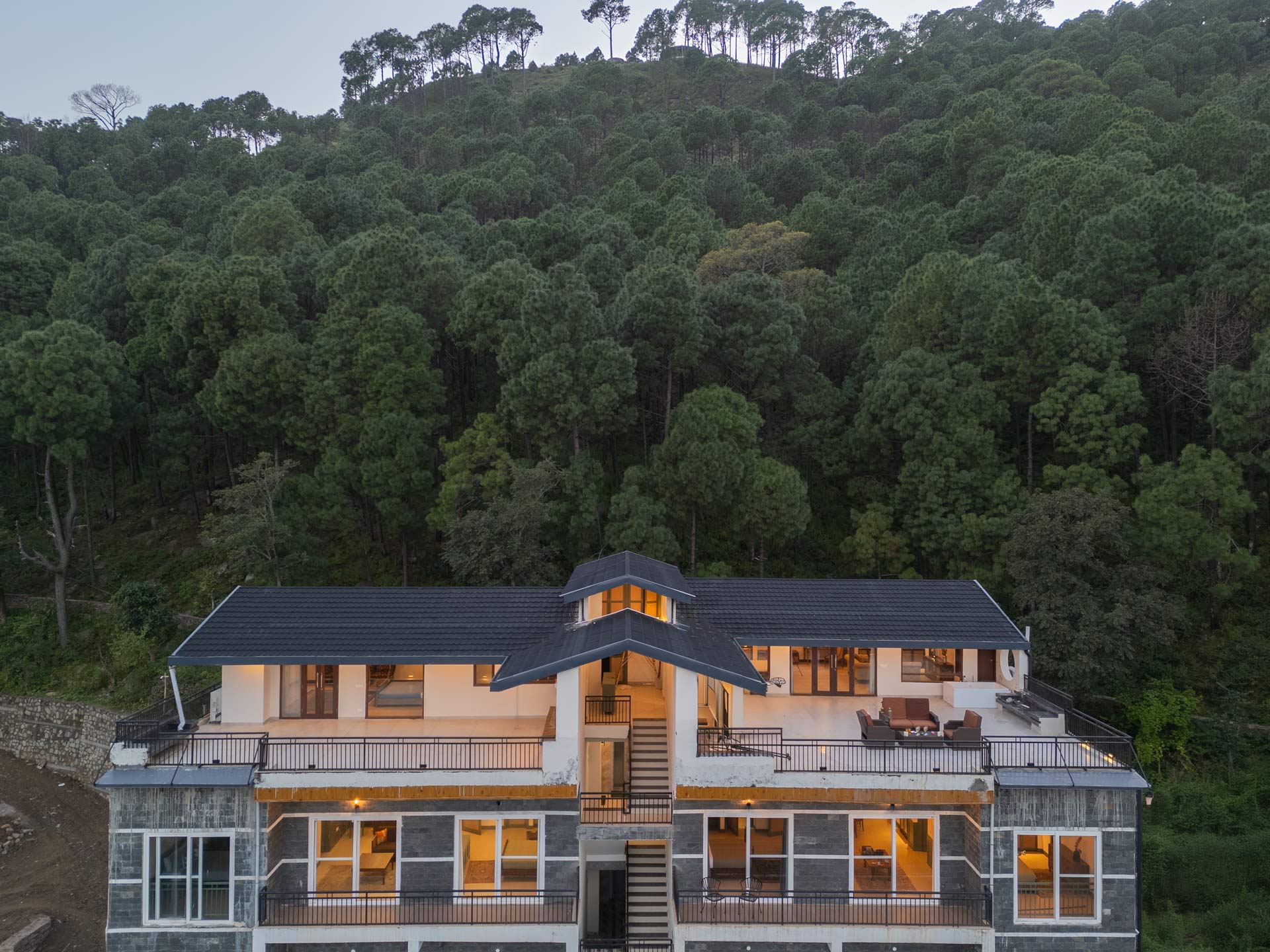
Set high above the hills of Kasauli, Terrasse de Raga Penthouse Villa pairs contemporary comfort with panoramic views of the surrounding valleys. The spacious terraces, stylish interiors, and peaceful atmosphere make it an excellent choice for travellers extending their Himalayan holiday beyond Spiti. After days spent navigating rugged mountain roads, the villa provides a refined and relaxing setting to soak in the slower pace of the hills.
Best for: Couples, friends, and travellers seeking a luxurious mountain getaway near Chandigarh and Shimla.
7-Day Spiti Valley Itinerary from Delhi or Chandigarh
Day 1 — Delhi/Chandigarh to Narkanda
Begin your ascent out of the plains. Narkanda serves as an ideal first night halt, allowing you to ease into the altitude gradually before the journey deepens.
Day 2 — Narkanda to Kalpa
Continue towards Kalpa via the Shimla route, renowned for its reliability and gradual altitude gain. This leg helps your body adjust comfortably to the changing mountain environment and offers early views of the Kinnaur
Day 3 — Kalpa to Kaza
Arrive in Kaza, the main transport hub and cultural centre of Spiti. Settle in, explore the local bazaar, and prepare for the days of village and monastery exploration ahead.
Day 4 — Kaza: Langza, Hikkim, Komic
Explore the unique high-altitude cluster of villages surrounding Kaza. Visit Langza’s giant Buddha statue and hunt for ancient fossils, send a postcard from Hikkim’s famous post office, and take in the isolation of Komic village.
Day 5 — Kaza: Kibber, Chicham Bridge, Key Monastery
Begin with the fortress-like Key Monastery perched on its dramatic hilltop. Move to Kibber for its distinctive architecture and then cross the Chicham Bridge, one of Asia’s highest suspension bridges.
Day 6 — Kaza: Dhankar and Pin Valley
Head to the cliff-side Dhankar Monastery for sweeping historic views, then continue into the quieter, greener Pin Valley for a change of pace and scenery.
Day 7 — Return Journey
Begin your return trip, typically via the reliable Shimla route. If conditions permit and you’re feeling adventurous, consider exiting through Manali to complete the full circuit.
Delhi to Spiti Valley: Which Route Is Better?
Travellers planning a Delhi to Spiti Valley road trip often debate the best approach. The Shimla route remains the preferred entry route for most visitors because it allows gradual altitude gain, reducing the likelihood of altitude-related discomfort. Many experienced travellers choose a circuit route, entering via Shimla and exiting through Manali — combining reliability on the way in with adventure on the way out.
Important Travel Tips for Spiti Valley in July
- Carry warm layers even during summer — nights are cold at this altitude.
- Drink plenty of water throughout the day to reduce altitude-related discomfort.
- Keep one buffer day in your itinerary for weather-related delays on mountain roads.
- Download offline maps before entering remote areas where connectivity is unreliable.
- Fuel up whenever possible, as petrol stations are limited across the valley.
- Carry cash because network connectivity and digital payments may not work in many locations.
- Apply sunscreen regularly — ultraviolet exposure at high altitude is intense even on cloudy days.
Why Spiti in Monsoon 2026 Beats Most Other July Destinations
Most mountain destinations receive substantial rainfall during July. Spiti’s location behind the Himalayas changes this equation completely. Visitors enjoy road trips, photography, monastery visits, and village exploration without planning every activity around rainfall forecasts.
This unique advantage explains why many experienced travellers now consider Spiti the best monsoon destination in India with no rain. While some rain can occur on approach routes, the valley itself remains comparatively dry, and the skies are often strikingly clear — ideal conditions for the kind of landscape photography that Spiti is famous for.
Final Verdict: Should You Visit Spiti Valley in July 2026?
If you’re looking for a Himalayan road trip during India’s monsoon season, Spiti Valley is one of the smartest choices available. Thanks to its rain-shadow geography, the region remains significantly drier than most mountain destinations, allowing travellers to enjoy scenic drives, ancient monasteries, remote villages, and breathtaking landscapes without constant rain disruptions.
For first-time visitors, July offers one of the best combinations of open roads, comfortable temperatures, and accessible attractions. For experienced travellers, it delivers solitude, dramatic skies, and the kind of raw Himalayan beauty that is increasingly difficult to find elsewhere in July.
Spiti Valley in July 2026 is an excellent destination for adventure seekers, photographers, and nature lovers alike.
Frequently Asked Questions
Yes. Spiti is generally considered safe during July. Visitors should monitor road updates and weather conditions before travelling and keep a buffer day in their itinerary for unforeseen delays.
Very little. Spiti lies in a rain-shadow region, meaning rainfall is much lower than in most Indian hill destinations. Annual rainfall in the valley is less than 200 mm.
For most visitors, the Shimla route is considered safer and more reliable because it allows gradual acclimatisation and maintains better overall road quality.
Typically yes, especially by mid-July, though travellers should verify the latest road conditions before departure as mountain situations can change quickly.
The Greater Himalayan Range blocks moisture-laden monsoon clouds before they reach Spiti, creating a rain-shadow desert with very low annual rainfall.
Daytime temperatures generally range between 20°C and 25°C, while nights and early mornings are cooler, typically between 5°C and 10°C.
July is one of the best months for road access, pleasant weather, and sightseeing. Roads are generally open, the valley is accessible, and the skies are often clear.
A 7-day itinerary is suitable for first-time visitors, although 10 days allows a more relaxed experience with fewer rushed drives.
Yes. July is considered one of the best months for first-time visitors because roads are generally open and weather conditions are more predictable than in shoulder months.
Yes, particularly via the Shimla route. However, an SUV offers additional comfort and confidence on the rougher sections and the Manali side of the journey.
A typical 7-day Spiti Valley trip can cost anywhere between ₹15,000 and ₹40,000 per person depending on accommodation choices, transport, and travel style.
Some visitors experience mild symptoms due to the valley’s high altitude of 3,800 metres and above. Proper acclimatisation, adequate hydration, and a gradual ascent via the Shimla route are strongly recommended.
High-altitude locations such as Kunzum Pass, Komic, and Hikkim generally experience the lowest temperatures and can feel significantly colder than Kaza.
Pack layered clothing for temperature variations, a warm jacket for evenings and high passes, sunscreen, sunglasses, offline maps, a first-aid kit, and sufficient cash.
Yes. July falls within the prime travel window for Spiti. Both major routes — from Shimla and Manali — are typically open, making it one of the most accessible months of the year.