
10 Indian Landscapes That Look Like Iceland and New Zealand
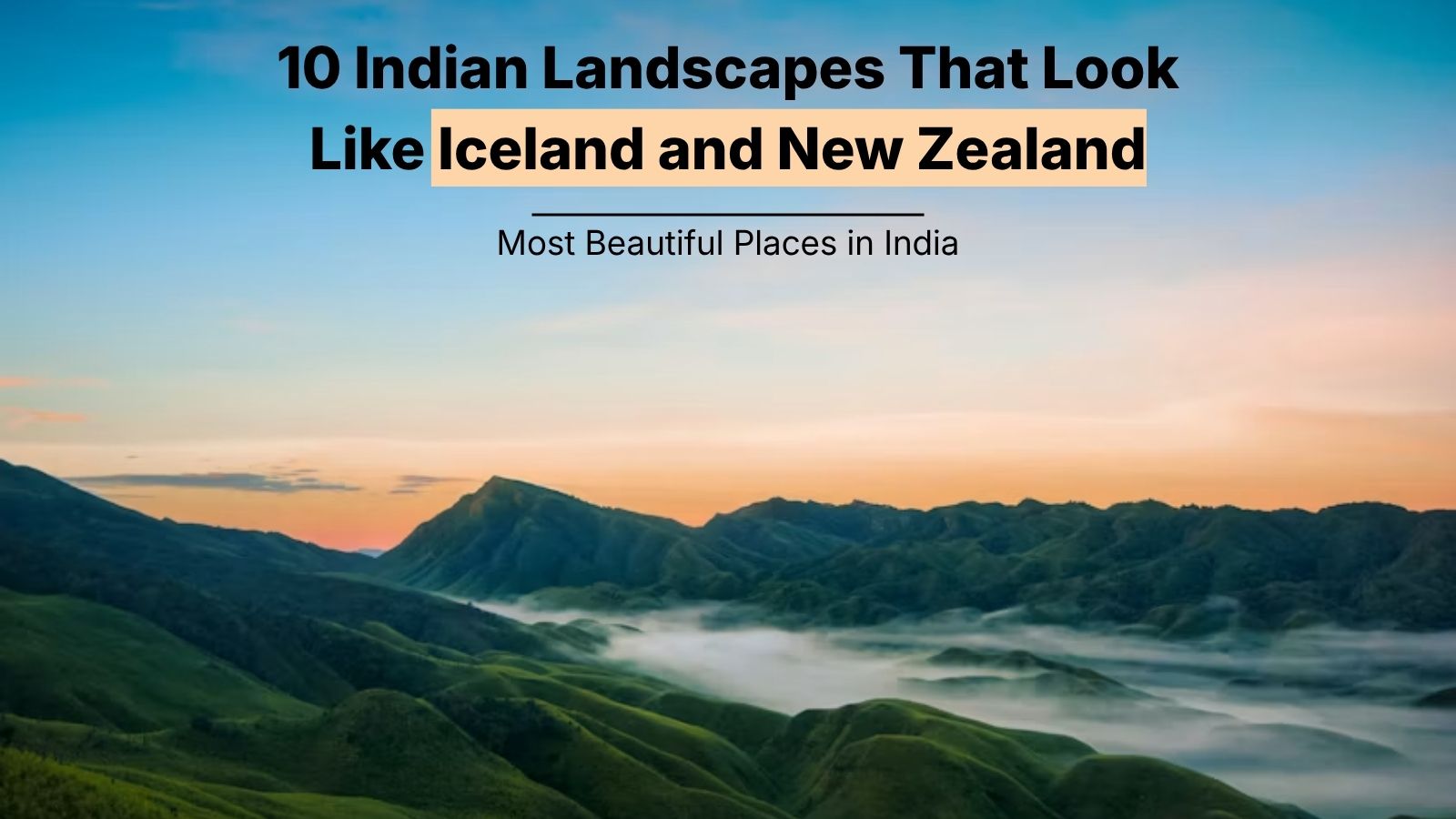
Iceland is known for its glaciers, volcanic plains, and rolling treeless meadows. New Zealand is known for its green mountain valleys, dramatic coastlines, and wildflower fields. Both countries draw Indian tourists in large numbers every year. What most of those tourists do not know before they go is that India has its own versions of nearly every terrain those countries are famous for, in some cases at higher altitudes, greater scale, and with cultural layers that no Nordic island or Pacific archipelago can match. These ten are the most beautiful places in India that draw direct comparisons to Iceland and New Zealand, and each one has a story that no other travel list will give in quite this way.
The 10 most beautiful places in India that look like Iceland and New Zealand include Dzukou Valley in Nagaland, Ziro Valley in Arunachal, Kaas Plateau in Maharashtra, Munnar’s tea gardens in Kerala, Spiti Valley in Himachal Pradesh, Yusmarg in Kashmir, Khajjiar in Himachal Pradesh, Yuksom in Sikkim, Chopta in Uttarakhand, and the Tawang Valley in Arunachal Pradesh. Most are best visited between October and March.
In this Blog
1. Dzukou Valley, Nagaland: Iceland’s Treeless Meadows in Northeast India
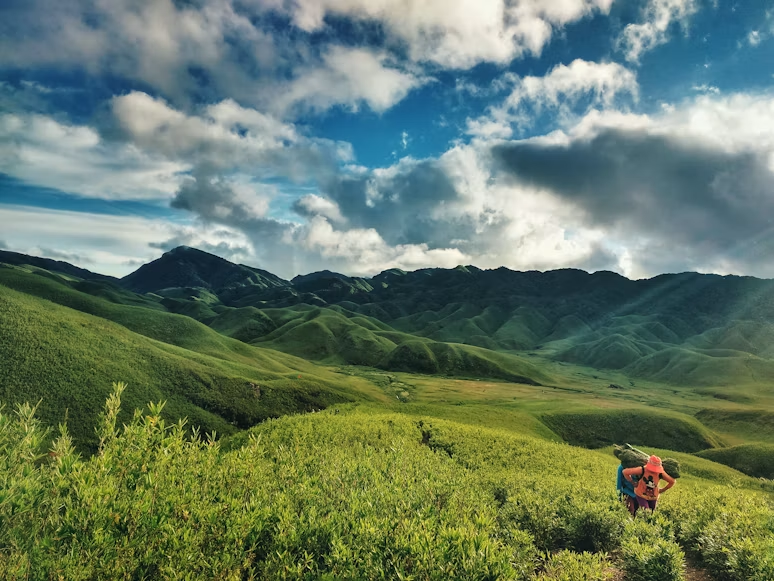
Dzukou Valley in Nagaland is the Indian equivalent of Iceland’s highland interior, and the comparison is one of character rather than just appearance. The valley sits at 2,438 metres above sea level on the Nagaland-Manipur border, accessible only on foot from Viswema village in Nagaland or Jakhama in Manipur. The valley floor is completely treeless, dominated by rolling green and brown meadows cut by two rivers, the Dzukou and the Japfu, which meander through the floor in wide, unhurried curves. In winter, the same meadows are snow-covered. That alternation between summer green and winter white is exactly the character of Iceland’s interior plateau, the Highlands, which few tourists reach.
What sets Dzukou Valley apart from any Icelandic comparison, though, is the Dzukou Lily (Lilium chitrangadae), a flower found nowhere else on earth. It blooms only in the first weeks of July, turning the valley white and pale pink in a bloom that lasts just a few weeks. The valley covers an area of about 27 square kilometres and has no mobile connectivity and no permanent settlement. Camping at the valley rest huts is the only way to spend the night. Things to do in Dzukou Valley include the overnight trek from Viswema (approximately 8 km one way), watching the lily bloom in early July, and exploring the network of bamboo groves and cave systems along the valley walls. An Inner Line Permit is required for Nagaland and is obtainable at Nagaland House offices in Delhi, Kolkata, and Guwahati.
2. Kaas Plateau in Maharashtra: New Zealand’s Wildflower Fields in the Western Ghats
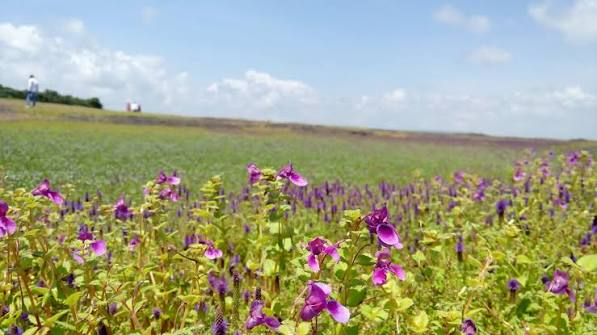
Kaas Plateau in Maharashtra is 25 km west of Satara city in the Sahyadri range and is a UNESCO World Natural Heritage Site, recognised in 2012 as part of the Western Ghats cluster. The plateau sits at approximately 1,200 metres above sea level and is formed from exposed volcanic basalt rock covered in a thin layer of laterite soil. Between August and October, over 850 species of wildflowers bloom across its 1,000 hectares, with 39 of those species found nowhere else on earth. The comparison to New Zealand’s Mackenzie Basin wildflower fields is immediate and obvious to anyone who has seen both.
What most travel blogs do not mention is that the Karvy shrub, one of the plateau’s most distinctive plants, blooms only once every seven years. The carnivorous Drosera indica, which traps insects on sticky leaf hairs, is also here, making the plateau home to one of the few meat-eating plant communities in India. Visitor numbers are capped at 3,000 per day to protect the fragile ecosystem. The Smithia flower, known locally as the Mickey Mouse flower for the shape of its petals, and the blue Cyanotis are among the defining species. Things to do at the Kaas Plateau in Maharashtra include the walking trail across the plateau surface, birdwatching at Kaas Lake to the south, and the drive to Thoseghar Waterfall about 30 km away, which is Maharashtra’s highest waterfall. The best time to visit is September to October.
Where to Stay
3. Ziro Valley in Arunachal: New Zealand’s South Island Valleys in the Eastern Himalayas
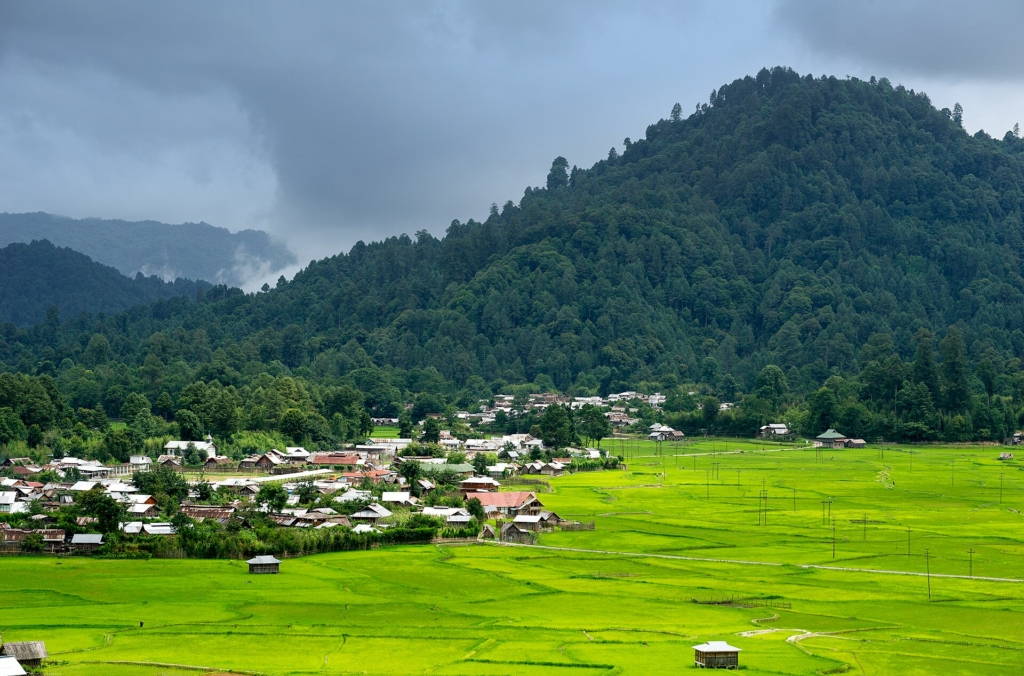
Ziro Valley in Arunachal Pradesh, at about 1,564 metres in the Lower Subansiri district, is a flat highland plateau ringed by pine-forested hills. The comparison to New Zealand’s South Island inland valleys, particularly the Mackenzie Basin and the Ahuriri Valley, is in the openness: a large, flat, green valley floor surrounded on all sides by steep forested ridges, with a clear sky above that feels enormous because of the low surrounding horizon.
The Apatani tribe, who have farmed this valley for at least five centuries according to Tibetan and Ahom historical records, developed a paddy-cum-fish cultivation system that produces food without machines, chemical inputs, or draught animals. The Apatani Cultural Landscape is on UNESCO’s tentative World Heritage list specifically because the tribe is the only one in the region practicing sedentary agriculture while surrounded by communities still using shifting cultivation. The Apatanis build bamboo canals for irrigation that function today exactly as they did centuries ago. Their rice-beer called Apong, processed from rice and millet, and their traditional salt called Tapyo, made from wild forest grass, are cultural products that no other community in India makes. The Ziro Music Festival, held each September, takes place in rice fields with pine forest as the backdrop. Things to do in Ziro Valley include attending the festival, walking between the Apatani villages of Hong, Hari, and Bamin-Michi, and the Talley Valley Wildlife Sanctuary trek. An Inner Line Permit is required for Arunachal Pradesh.
4. Munnar’s Tea Gardens, Kerala: New Zealand’s Rolling Green Hills in South India
Munnar’s tea gardens in Kerala’s Idukki district, at 1,600 metres above sea level, produce the most obvious visual comparison to New Zealand’s pastoral hill country, particularly the green rolling hills of the Waikato and the Manawatu. The tea estate hills around Munnar drop in smooth curves and are uniformly green for most of the year, the same geometry that defines the sheep-farming hill country of New Zealand’s North Island.
What most blogs do not include is why Munnar’s tea gardens look the way they do. Tea bushes are pruned to a flat, consistent height of about 45 to 50 cm specifically to allow hand-picking at the correct leaf level, and they are planted in rows that follow the contour of the hillside to prevent erosion. The uniform height and contour-following rows create the smooth, terraced geometry that photographs so well.
The Eravikulam National Park adjacent to Munnar protects the Nilgiri tahr, a mountain goat species found only in the Western Ghats and the most beautiful place in the southern Himalayas equivalent. The park also has Rajamala, the highest motorable point in the Munnar circuit, from where the Anamudi peak (the highest in South India at 2,695 metres) is visible. Things to do in Munnar include a guided tea factory visit at the Tata Tea Museum, the Mattupetty Dam reservoir boat ride, and the Top Station viewpoint at 1,700 metres.
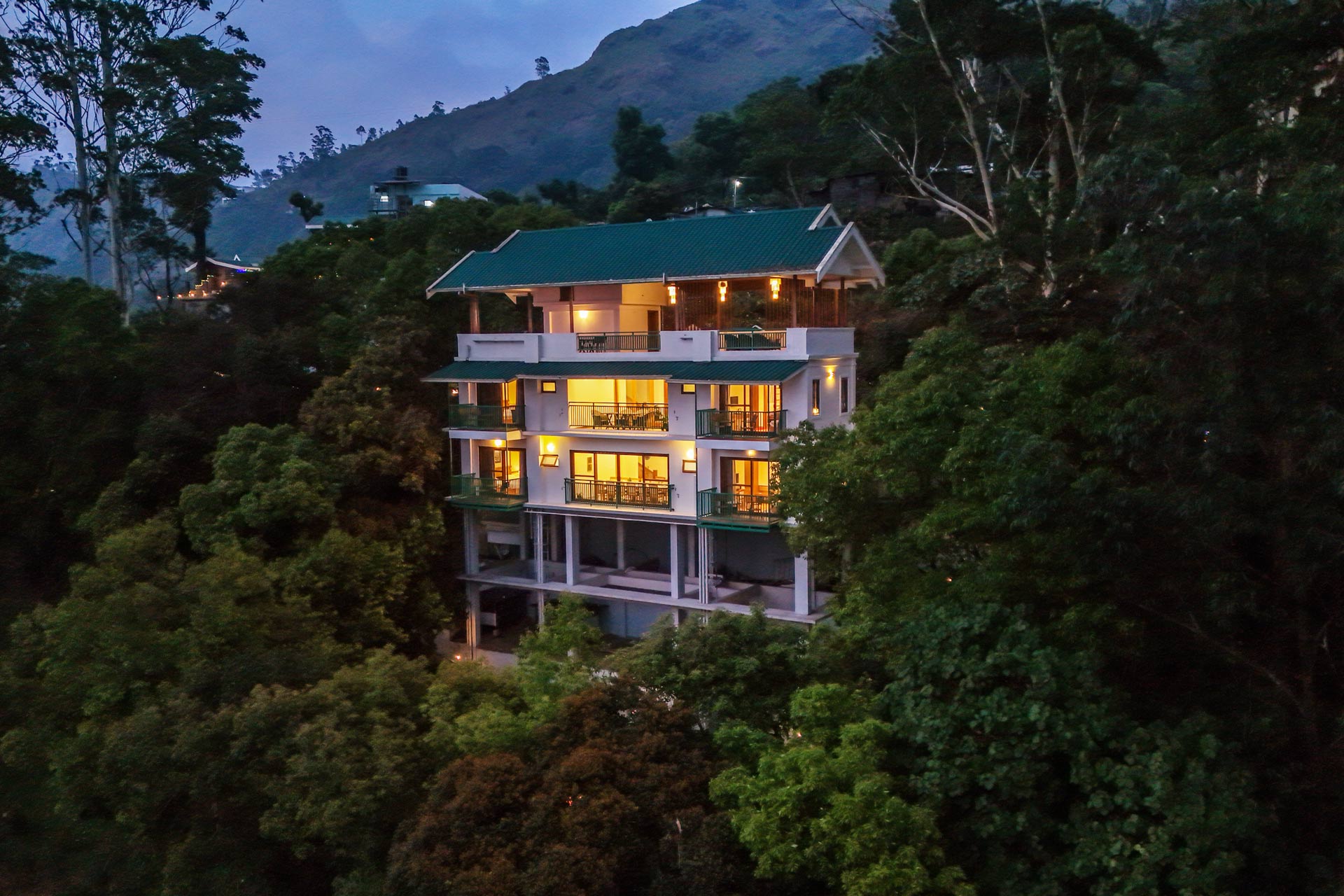
Staying in a villa in Munnar, tucked within the tea estates, allows guests to wake up surrounded by the serene, rolling greenery of the hills.
Where to Stay
5. Khajjiar, Himachal Pradesh: The Switzerland of India
Khajjiar in Himachal Pradesh’s Chamba district, at 1,920 metres, has an official Swiss connection that most people know about but do not understand fully. In 1992, the Swiss Ambassador to India, Rene Frey, declared Khajjiar one of only 160 locations in the world sharing geographical similarities with Switzerland. He took a soil sample from the meadow and left a signboard giving the distance from Khajjiar to Bern (6,194 km). The designation is official: Khajjiar is registered with the Swiss government as a location carrying the Switzerland of India label.
The meadow at Khajjiar is a circular plateau at 1,920 metres, ringed by a forest of deodar and oak that creates an almost perfect natural amphitheatre around the central grassland. A small lake sits in the middle of the meadow, fed by seasonal springs. The Kalatop Wildlife Sanctuary, reachable on foot from Khajjiar through the deodar forest, has Himalayan black bears, barking deer, and over 150 bird species.
Things to do in Khajjiar include the 8.6-km forest trek through Kalatop to Dalhousie, paragliding over the meadow, and a horse ride around the lake in the early morning. The most beautiful place in Himachal Pradesh argument is frequently made for Khajjiar’s meadow in spring, when the surrounding trees are in new leaf and the grass below is still short and green.
6. Yusmarg, Kashmir: Iceland’s Geothermal Meadows Without the Steam
Yusmarg in the Budgam district of Jammu and Kashmir, at 2,400 metres, is a flat alpine meadow ringed by snow peaks that holds its snow cover well into May each year. It is far less visited than Gulmarg and Pahalgam, which makes it the most beautiful place in Kashmir according to many who have seen all three. The meadow is surrounded by forests of fir and pine, and the Doodhganga River, which takes its name from its white, glacially fed water, runs along the eastern edge.
What makes Yusmarg comparable to Iceland’s highland meadows is the combination of flatness and altitude: standing in the centre of the meadow, the surrounding peaks appear very close because of the altitude at which the meadow sits, and the ground is mostly grass and low vegetation with almost no tall trees within the meadow itself. The Sang-e-Safed peak to the northeast, at 4,700 metres, still has permanent snowfields.
Things to do in Yusmarg include horse riding to the Nilnag Lake, 5 km into the forest from the main meadow, a day trek toward the Doodhganga glacial source, and camping overnight on the meadow floor when permits allow.
7. Chopta, Uttarakhand: Iceland’s Plateau Country in the Garhwal Himalayas
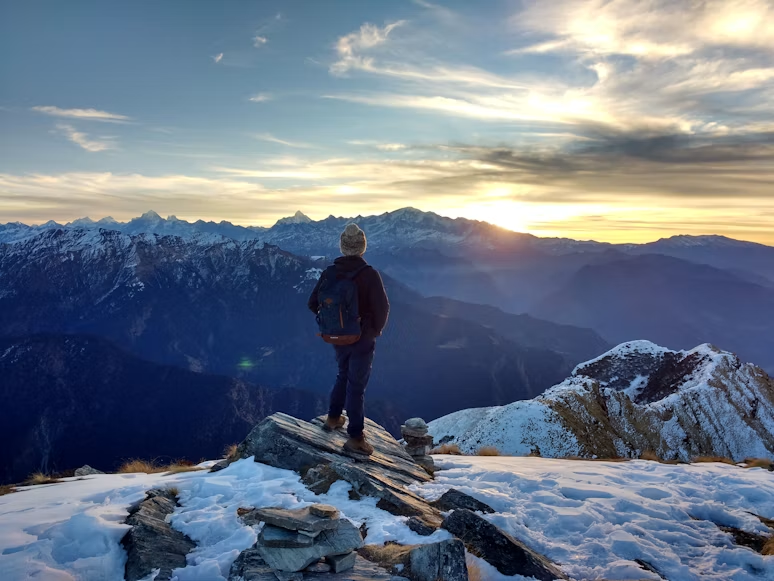
Chopta in the Rudraprayag district of Uttarakhand is the most beautiful place in Uttarakhand for those who want high-altitude meadow country without extreme trekking difficulty. At 2,600 metres inside the Kedarnath Wildlife Sanctuary, its bugyals (high meadows) spread across the ridge above the treeline in a way that is directly comparable to Iceland’s interior highland bugyals, particularly the area around Landmannalaugar. The meadow is treeless above a certain contour, and the surrounding peaks appear in all directions on clear days. Tungnath Temple, the highest Shiva temple in the world at 3,680 metres, is a 4-km walk from the meadow. Things to do in Chopta include the Tungnath trek, the Chandrashila summit at 4,000 metres above it, and the Deoriatal lake, which reflects the Chaukhamba peaks at sunrise.
8. Yuksom, Sikkim: New Zealand’s Fiordland in the Eastern Himalayas
Yuksom in western Sikkim, the most beautiful place in Sikkim according to many long-term visitors, is the first capital of the Sikkim kingdom, crowned in 1642. It is surrounded by dense forests of oak, magnolia, and rhododendron on every side, and the trail toward Goecha La approaches the southern face of Kanchenjunga through valley terrain that resembles New Zealand’s Fiordland: deep forest, a river running along the valley floor, and glaciated peaks appearing above the treeline. A villa in Yuksom means a small forest lodge or heritage guesthouse where meals are served from a kitchen garden and every window faces the forested ridge.
9. Tawang Valley, Arunachal Pradesh: Iceland at 3,048 Metres
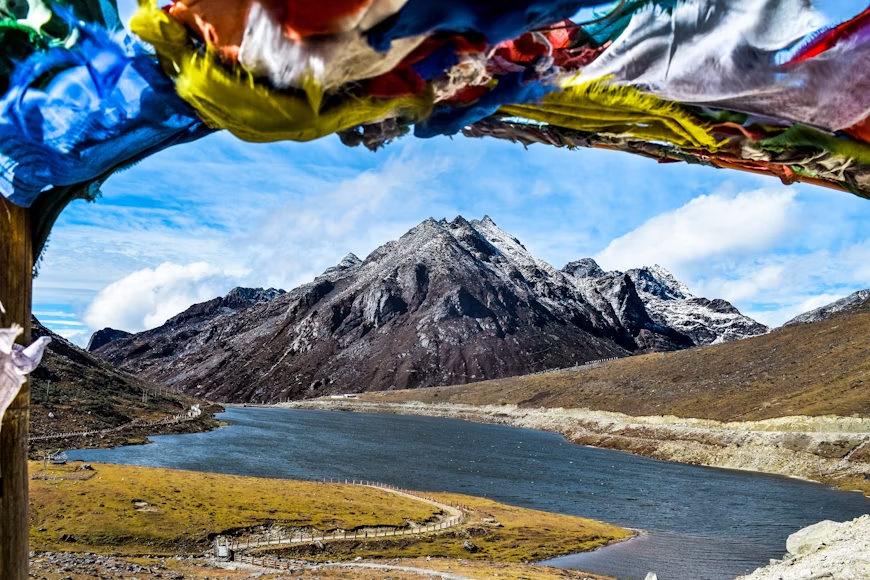
The Tawang Valley in the far west of Arunachal Pradesh, at 3,048 metres, holds the Tawang Monastery, the largest Buddhist monastery in India, and is surrounded by forests of Himalayan blue pine and birch that in October turn gold against a sky that is clear for only a brief post-monsoon window. The Sela Pass at 4,170 metres, crossed to reach Tawang from Guwahati, is a glacial alpine environment with a permanent lake and meadows that in July are carpeted with gentians. The comparison to Iceland is in the quality of the light: at this altitude and latitude, the afternoon sun sits low and turns the terrain amber for several hours, exactly as it does in Reykjavik in October.
10. Spiti Valley, Himachal Pradesh: Iceland’s Volcanic Desert at 3,800 Metres
Spiti Valley in the cold desert of Himachal Pradesh is a rain shadow zone that receives almost no monsoon rain, leaving a terrain of bare grey and brown rock, clear glacial rivers, and sudden bursts of green in the terraced villages. This is the closest visual equivalent in India to Iceland’s volcanic highland interior, particularly the region around Askja and Landmannalaugar, where bare coloured rock, clear water, and a thin strip of green along river banks define the entire scene. The most beautiful place in Himachal Pradesh debate frequently lands on Spiti’s Langza village, at 4,400 metres, from where a giant Buddha statue faces a direct view of the snow-capped Himalayan chain.
India Has Always Been This Beautiful
The ten places in India that look like foreign countries listed here span six states and six completely different terrain types. The deeper point of the comparison is not that these places are substitutes for Iceland or New Zealand. It is that India’s range of terrain, from volcanic flower plateaus to glacial high meadows to tropical rolling hills, is wide enough to contain visual equivalents of almost every famous terrain on earth, while adding something that those places cannot add: the human story of communities who have lived in and shaped these places for centuries. Which is the most beautiful place in India will always depend on the person answering. But any of these ten will make the question harder to answer than it used to be.
FAQs
There is no single answer. Among the most beautiful places in India frequently cited are Dzukou Valley in Nagaland for its rolling treeless meadows and endemic lily, the Kaas Plateau in Maharashtra for its UNESCO-recognised wildflower bloom, and Spiti Valley in Himachal Pradesh for its high-altitude cold desert terrain. The answer depends almost entirely on which type of natural environment the visitor finds most compelling.
The most Iceland-like offbeat places in India are Dzukou Valley in Nagaland (treeless rolling meadows at 2,438 metres), Spiti Valley in Himachal Pradesh (bare volcanic-like terrain at 3,800 metres), and Chopta in Uttarakhand (high bugyals above the treeline). All three require some planning but no extreme trekking experience.
In 1992, Swiss Ambassador René Frey declared Khajjiar one of 160 global locations sharing geographical similarities with Switzerland and officially registered it. He took a soil sample back to Switzerland and left a signboard giving the distance from Khajjiar to Bern as 6,194 km. The circular meadow, surrounding deodar forest, and mountain backdrop make the Switzerland of India comparison immediately apparent to most visitors.
The Kaas Plateau in Maharashtra is a UNESCO World Natural Heritage Site with over 850 wildflower species, 39 of which are found nowhere else on earth. The carnivorous Drosera indica and the Karvy shrub, which blooms only once every seven years, make it ecologically unusual even by global standards. Visitor numbers are capped at 3,000 per day.
The best time to visit Dzukou Valley, Nagaland, is June to early July for the Dzukou Lily bloom (the flowers last only a few weeks), or November to February for snow on the meadows. An Inner Line Permit is required. The trek from Viswema takes approximately four to five hours one way.
Ziro Valley in Arunachal is home to the Apatani tribe, whose paddy-cum-fish cultivation system, which produces food without machines or chemical inputs, is on UNESCO’s tentative World Heritage list. The valley is at 1,564 metres and is one of the few flat highland plateaus in the eastern Himalayas. The Ziro Music Festival in September takes place in the rice fields. An Inner Line Permit is required.
The most beautiful place in Uttarakhand for high-altitude meadows is Chopta, at 2,600 metres, with the Tungnath trek and Chandrashila summit. The most beautiful place in Sikkim is frequently Yuksom, the first capital of the Sikkim kingdom, surrounded by dense forest and with direct trail access toward the Kanchenjunga base.
Things to do in Munnar that most visitors miss include the Eravikulam National Park visit for Nilgiri tahr sightings, the Top Station viewpoint at 1,700 metres with a view toward Tamil Nadu’s hills, the Mattupetty Dam reservoir, and the Kundala Lake boat ride. Munnar’s tea gardens are best understood through a guided factory tour at the Tata Tea Museum, where the full production process from leaf to cup is shown in a single walk-through.
Written by Ruben Saha