
13 Indo-China Border Villages Now Open for Tourists in June 2026 — From Mana to Lachung, and Why 7 Need Just Aadhaar
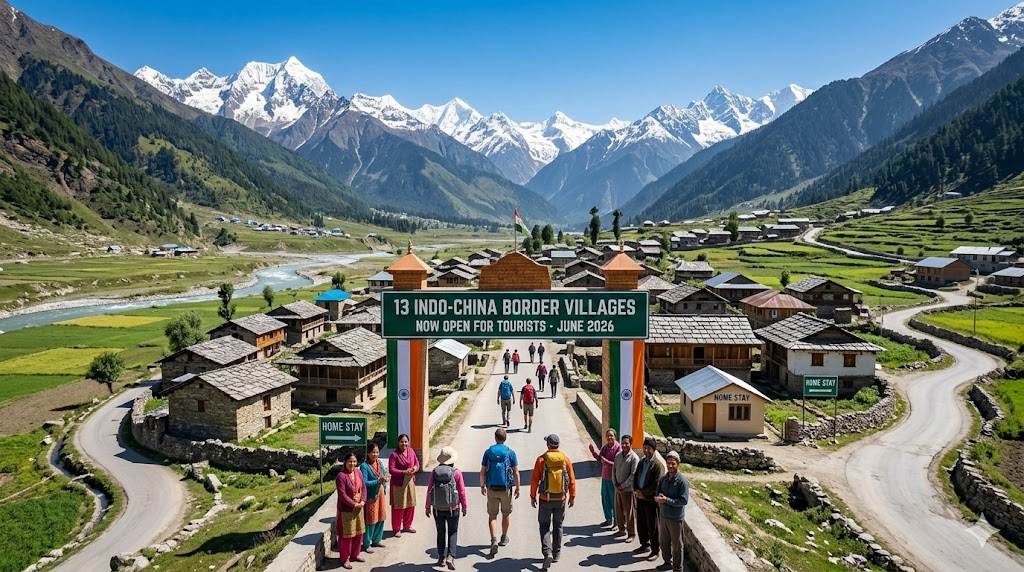
Thirteen Indo-China border villages across Uttarakhand (Mana, Niti, Gunji, Malari), Himachal Pradesh (Chitkul, Shipki La, Lepcha-La, Gue, Khana, Dumti, Sangla) and Sikkim (Lachen, Lachung) are open for Indian tourists in June 2026 under the Vibrant Village Programme. Himachal’s June 2025 policy now allows Aadhaar-only access at seven of these villages — no Inner Line Permit required. June is the peak window: 10–28°C across the cluster, all roads open after Shipki La’s annual 10 June reopening, and the last clear month before monsoon shuts North Sikkim and Niti Valley from July through September. 14 min read · Last updated 28 May 2026. (Source: Himachal Tourism, 8 June 2025 announcement.)
In this Blog
India Just Opened Its Border Villages. Here’s the Full List.
For seventy years, the villages along India’s northern frontier were closed to ordinary travellers. You needed an Inner Line Permit, an ITBP No Objection certificate, and sometimes a recommendation from a sitting MP. In June 2025, Himachal Pradesh quietly changed that. Stand at the Shipki La pass today, the literal end of the road into Tibet, and the only document you carry is your Aadhaar card.
The shift didn’t happen alone. The Government of India launched the Vibrant Village Programme in 2023 with a ₹4,800 crore outlay to develop 663 border villages — many in regions civilians had never been allowed to see. Uttarakhand has since announced 10 model tourist-hub villages along the Indo-Tibet line. Sikkim’s twin-village circuit of Lachen and Lachung now hosts more domestic visitors than at any point in the state’s history.
This is the complete list. Thirteen villages, three states, three different permit regimes, and one travel window — June 2026 — that’s better than any month before or after it this year. We’ve spent the last six weeks pulling state notifications, calling our hosts in Kinnaur and Chamoli and North Sikkim, and stitching the picture together. Here is what’s actually open, what you need to carry, and how to plan the trip.
Which Indo-China Border Villages Are Open for Tourism in June 2026?
Thirteen Indo-China border villages are open for Indian tourists in June 2026: four in Uttarakhand (Mana, Niti, Gunji, Malari), seven in Himachal Pradesh (Chitkul, Shipki La, Lepcha-La, Gue, Khana, Dumti, Sangla) and two in Sikkim (Lachen, Lachung). Himachal’s June 2025 Regulated Border Tourism policy allows Aadhaar-only entry at all seven Himachal sites; Uttarakhand and Sikkim still require Inner Line Permits ([Source: Outlook Traveller, June 2025]).
| Village | State | Permit (June 2026) | Best Window | June Temp |
|---|---|---|---|---|
| Mana | Uttarakhand | None for village; ILP for Mana Pass | Apr–Oct | 15–25°C |
| Niti | Uttarakhand | Inner Line Permit (SDM Joshimath) | Mar–Jun, Sep–Oct | 10–22°C |
| Gunji | Uttarakhand | Inner Line Permit (Dharchula) | May–Jun, Sep–Oct | 10–18°C |
| Malari | Uttarakhand | Border permit (Joshimath) | Apr–Jun, Sep–Oct | 15–25°C |
| Chitkul | Himachal Pradesh | Aadhaar only | May–Jun, Sep–Nov | 12–25°C |
| Shipki La | Himachal Pradesh | Aadhaar only | Late May–Oct (opens 10 Jun) | 10–22°C |
| Lepcha-La | Himachal Pradesh | Aadhaar only | Jun–Sep | 10–20°C |
| Gue Monastery | Himachal Pradesh | Aadhaar only | May–Oct | 12–22°C |
| Khana | Himachal Pradesh | Aadhaar only | Jun–Sep | 10–18°C |
| Dumti | Himachal Pradesh | Aadhaar only | Jun–Sep | 10–18°C |
| Sangla | Himachal Pradesh | Aadhaar only | May–Oct | 12–25°C |
| Lachen | Sikkim | Inner Line Permit (Gangtok) | Mar–Jun, Sep–Nov | 10–20°C |
| Lachung | Sikkim | Inner Line Permit (Gangtok) | Mar–Jun, Sep–Nov | 10–28°C |
Sources: Himachal Pradesh Tourism (June 2025 policy), Uttarakhand Tourism Department, Sikkim Tourism Department, StayVista travel desk. Updated 28 May 2026.
What this means in practice: a Himachal border trip — Shimla to Sangla to Chitkul to Shipki La — needs zero paperwork beyond the Aadhaar card already in your wallet. A Uttarakhand border trip still needs you to stop at the SDM office in Joshimath (for Niti, Malari) or the KMVN office in Dharchula (for Gunji). North Sikkim still needs a registered tour operator to file your Inner Line Permit out of Gangtok. The Aadhaar shortcut hasn’t reached every state — yet.
What Is the Vibrant Village Programme and Why Did It Open These Villages?
The Vibrant Village Programme is a Government of India scheme launched in 2023 with a ₹4,800 crore allocation to develop 663 border villages across Ladakh, Himachal Pradesh, Uttarakhand, Sikkim, and Arunachal Pradesh (Source: PIB, 2023). Tourism is one of its core pillars, alongside road infrastructure, telecom, education, and renewable energy. The premise is simple: bring civilian footfall to villages that have emptied out over the past three decades because of poor connectivity and the looming presence of the LAC.
The programme has reshaped Indian border tourism faster than any single policy in living memory. Here’s the timeline:
- 2023 — Vibrant Villages Programme launched. Ladakh, HP, UK, Sikkim, and Arunachal were identified as priority states.
- 2024 — Gunji (Uttarakhand) wins the Ministry of Tourism’s Best Tourism Village award under the Vibrant Village category, alongside Jakhol, Supi, and Harshil (Source: Garhwal Post, September 2024).
- 8 June 2025 — Himachal Pradesh launches Regulated Border Tourism, allowing domestic Indian tourists to visit seven border villages with Aadhaar-only verification.
- 10 June 2025 — Shipki La pass opens to domestic tourists for the first time since 1962.
- 2026 — Uttarakhand announces 10 model tourist-hub villages: Mana, Niti, Gunji, Garbyang, Napalchu, Nabhi, Rakkang, Kuti, Jadung, and Bagori (Source: Indian Masterminds).
On our team’s last visit to Gunji in May 2025, the road past Kuti was being metalled, and the homestay registry was 12 households long. When we checked in again earlier this month, that registry had grown to 31. The Vibrant Villages money isn’t theoretical. You can see it in fresh tarmac, in fibre-optic poles, and in the new ITBP signboards now offering directions to tourists instead of warning them away.
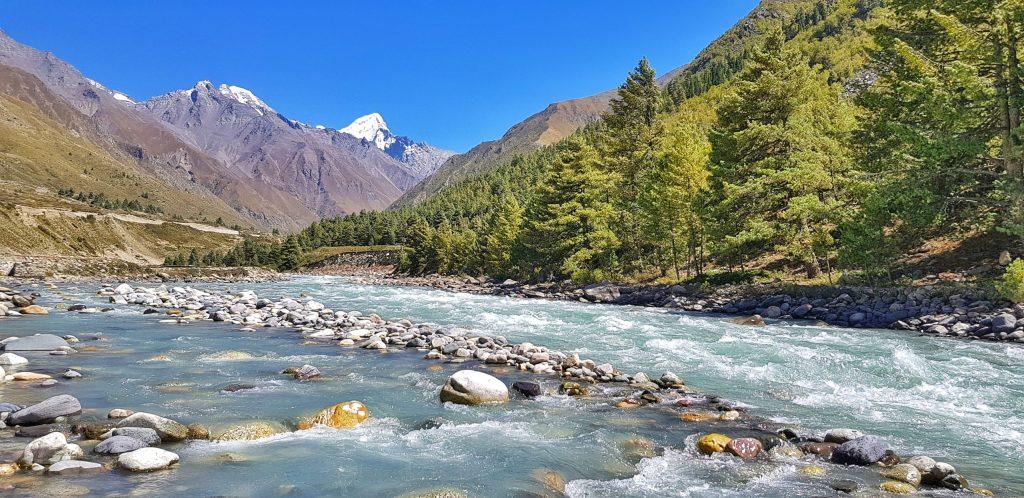
Uttarakhand: 4 Border Villages Now Open (Mana, Niti, Gunji, Malari)
All four Uttarakhand villages sit in the Garhwal and Kumaon Himalayas above 3,000 metres. Mana and Niti are reachable from Joshimath via Chamoli district; Malari is in the same valley as Niti; Gunji is a separate cluster in Pithoragarh district, accessed via Dharchula. None of these need a permit for the village itself if you stop short of the actual pass — but the moment you head higher (Mana Pass, Niti Pass, the Adi Kailash trail), an Inner Line Permit is mandatory. StayVista homestays in Uttarakhand across Joshimath, Auli and Munsiyari are the natural bases for these trips.
1. Mana, Uttarakhand — The Last Village on the Badrinath Road
Mana sits 5 km past Badrinath at an altitude of 3,200 metres, where the Saraswati river emerges from a glacier above the village before vanishing underground into the Alaknanda. The official “Last Indian Village” board was rebranded by the Border Roads Organisation in 2022 to read “First Indian Village” — a small Vibrant Villages touch that says everything about how the state now wants you to read the place. Vasudhara Falls, the 122-metre cascade where Pandavas are said to have stopped on their way to Swargarohini, is a 6 km trek from the village.
| Altitude | 3,200 m (10,500 ft) |
|---|---|
| Entry fee | Free for the village; ₹150 per vehicle parking near Mana boards |
| Timings | Open 6:00 am – 6:00 pm (Apr–Oct); closed Nov–Mar due to snow and Badrinath shutdown |
| Best time to visit | Late May to October; June is ideal — warm afternoons, occasional rain showers, peak Saraswati flow |
| How to reach | Fly to Jolly Grant (Dehradun), 9-hour drive to Joshimath, then 47 km via Badrinath. Nearest railhead: Rishikesh (290 km). Shared taxis from Badrinath to Mana: ₹50 per seat. |
| Time required | 2–3 hours for the village; full day if adding Vasudhara Falls |
| Ideal for | Badrinath pilgrims, photographers, soft-trek beginners, mythology buffs |
| Pro tip | Stop at the “Bharat ki Antim Chai Dukaan” tea shop — owner Chander Singh has photos with three Prime Ministers and pours the best masala chai on the road. Carry ₹20 in cash; UPI works erratically. |
| Permit | No permit for Mana village. ILP from SDM Joshimath required if continuing to Mana Pass. |
| Where to stay | StayVista doesn’t host directly in Mana. We’d suggest two nights at our Auli or Joshimath homestays as base; combine with the Badrinath Yatra 2026 route for a four-day Garhwal loop. |
2. Niti, Uttarakhand — The Forgotten Sister Valley
Niti is what Mana was twenty years ago — quiet, sparse, almost completely free of tour buses. The village sits at 3,600 metres in the Niti Valley, a parallel valley to Mana’s, that historically served as a trade route between Garhwal and Tibet. Most of the original inhabitants are Bhotiya migrants who descend to Joshimath each winter. The road from Joshimath via Tapovan, Reni and Jelam is rough in parts but a high-clearance SUV will manage it. Niti is also the gateway to the Alkapuri Glacier trek, one of the lesser-known sources of the Alaknanda.
| Altitude | 3,600 m (11,800 ft) |
|---|---|
| Entry fee | Free; ILP costs ₹100 per person at SDM Joshimath |
| Timings | Daylight hours only; village population thins after October |
| Best time to visit | Mid-May to mid-June, then mid-September to mid-October. June 2026 is the sweet spot — wildflowers in bloom, no monsoon yet. |
| How to reach | Joshimath to Niti is 86 km via Tapovan and Malari; allow 5 hours by road. Nearest airport Jolly Grant (Dehradun); nearest railhead Rishikesh. |
| Time required | Day trip from Joshimath, or one overnight at a homestay in nearby Bampa village |
| Ideal for | Offbeat travellers, history enthusiasts, trekkers heading to Alkapuri Glacier or Niti Pass base |
| Pro tip | Carry full cash. The last functional ATM is at Joshimath — Niti has no banking, no reliable mobile signal beyond Jio, and homestay payments are cash-only. |
| Permit | Inner Line Permit mandatory. Apply at SDM office, Joshimath with Aadhaar + 2 photos. Same-day issuance. |
| Where to stay | No StayVista property in Niti itself. Most travellers base at our Joshimath area homestays and treat Niti as a long day trip. |
3. Gunji, Uttarakhand — Best Tourism Village 2024 and Adi Kailash Base
Gunji is the village that put Vibrant Villages on the national map. In September 2024, the Ministry of Tourism named it one of India’s Best Tourism Villages under the Vibrant Village category, alongside Jakhol, Supi and Harshil. The village sits at 3,500 metres in the Vyas Valley of Pithoragarh district, on the historic Kailash Mansarovar Yatra route. From Gunji, Adi Kailash darshan and Om Parvat are now both possible as 2-day add-ons thanks to the metalled road past Kuti completed in 2024. Whether Mana or Gunji is the “real” last village of India depends on which border road you’re counting.
| Altitude | 3,500 m (11,500 ft) |
|---|---|
| Entry fee | Free; ILP costs ₹150 per person at Dharchula |
| Timings | Accessible May to October; ITBP checkpost operating 6:00 am – 6:00 pm |
| Best time to visit | May to June is peak (Adi Kailash season); September–October for clearer Om Parvat views |
| How to reach | From Dharchula, drive 72 km to Gunji via Tawaghat, Pangu and Budhi. Pithoragarh airport (Naini Saini) is the nearest at 192 km; from Delhi, the road journey via Tanakpur–Pithoragarh–Dharchula takes 18–20 hours. |
| Time required | Minimum 3 nights (Dharchula + Gunji + Adi Kailash side trip) |
| Ideal for | Adi Kailash pilgrims, Om Parvat seekers, trekkers, ITBP-history enthusiasts |
| Pro tip | Acclimatise at Dharchula (914 m) for one night before driving to Gunji — the altitude jump is steep and AMS is common on day-one ascents. Carry Diamox if your doctor permits. |
| Permit | Inner Line Permit mandatory. Issued at SDM Dharchula with Aadhaar, medical fitness certificate (for Adi Kailash) and 2 photos. |
| Where to stay | Government-registered homestays in Gunji and Kuti now total 31 households (up from 12 in May 2025). StayVista doesn’t yet host here. Most travellers book through KMVN (Kumaon Mandal Vikas Nigam) or local Shauka-community homestays. |
4. Malari, Uttarakhand — The Stone Village of the Niti Valley
Malari is the largest settlement in the Niti Valley, sitting at 3,000 metres along the Dhauli Ganga, 60 km from Joshimath on the way to Niti village proper. The Bhotiya stone-and-timber architecture here is intact — the village has been a recognised heritage cluster since 2019. Malari also acted as a strategic supply base during the 1962 conflict, and its trekking corridors lead to Bagini and Dronagiri glaciers. It’s the easiest of the four Uttarakhand border villages to reach, which makes it the right starting point for first-time border-region travellers.
| Altitude | 3,000 m (9,800 ft) |
|---|---|
| Entry fee | Free; border permit ₹100 at Joshimath |
| Timings | Open April to October; some homestays operate year-round at lower elevation |
| Best time to visit | April through June, then September–October. June 2026 is excellent — wildflowers, manageable temperatures, dry roads. |
| How to reach | Joshimath to Malari is 62 km via Tapovan and Jelam, around 3.5 hours by SUV. Nearest airport: Jolly Grant (Dehradun); nearest railhead: Rishikesh. |
| Time required | 1 night minimum; 2 nights ideal to add a Dronagiri base-camp walk |
| Ideal for | Heritage architecture buffs, soft trekkers, weekenders extending a Badrinath trip |
| Pro tip | The stone houses lock from the inside with hand-carved deodar latches — ask homestay hosts to show you the original 200-year-old doors. Most of the original Bhotiya families return in summer. |
| Permit | Border permit from Joshimath SDM. Aadhaar + 1 photo sufficient. Same-day issuance. |
| Where to stay | StayVista doesn’t yet host in Malari. We’d suggest our Uttarakhand homestays in Auli or Joshimath as base, with a 2-day Malari side trip. |
Himachal Pradesh: 7 Border Villages Now Open With Just Aadhaar
On 8 June 2025, Himachal Pradesh launched the policy that quietly reshaped Indian border tourism. The state’s Regulated Border Tourism framework allows domestic Indian tourists to visit seven previously restricted border villages with Aadhaar verification only — no Inner Line Permit, no ITBP No-Objection Certificate, no military clearance (Source: Outlook Traveller, June 2025). Stop at the registration desk, scan your Aadhaar, drive on. For most travellers, this is the single most significant Indian travel-policy change of the decade. Our hosts in the Sangla–Chitkul corridor confirm that the verification adds only 15–20 minutes to the drive.
One detail that matters: the Aadhaar-only rule applies to domestic Indian tourists. Foreign nationals still need a Protected Area Permit (PAP) for Kinnaur and Spiti, and the rule does not yet extend to the highest passes (Lepcha-La, Khana, Dumti) during peak ITBP exercises — which the Border Roads Organisation announces locally. We’ve added the live caveat under each village.
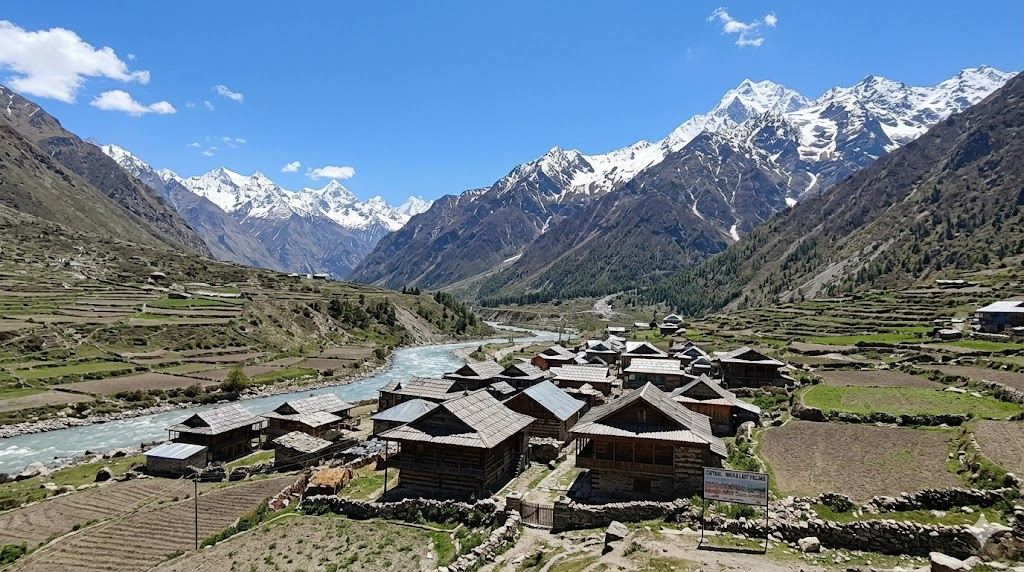
5. Chitkul, Himachal Pradesh — The Last Village on the Indo-Tibetan Road
Chitkul is the last inhabited village on the old Hindustan-Tibet trade route, sitting at 3,450 metres along the Baspa river in Kinnaur. The village has roughly 80 wooden houses, one school, one ITBP post, and a CTR sign that simply reads “End of road.” The Kinnaur Kailash range rises behind it; the river is glacier-fed and ice-cold even in June. Most tourists drive in from Sangla and stay one night. Since the June 2025 policy, the queue at the Chitkul registration desk has tripled — arrive before 11 am to beat it.
| Altitude | 3,450 m (11,300 ft) |
|---|---|
| Entry fee | Free; ₹200 per vehicle parking |
| Timings | Open year-round, but road from Sangla often shut Dec–Feb due to snow |
| Best time to visit | Mid-May to mid-June, then September to early November. June 2026 offers warmest river temperatures and the last clear skies before monsoon-edge rain. |
| How to reach | Shimla to Chitkul is 250 km via NH-5 and Karcham-Sangla road; 9–10 hours by car. Nearest airport: Shimla (Jubbarhatti) at 245 km. Nearest railhead: Kalka (282 km). |
| Time required | 1 night at minimum; 2 nights ideal to combine with Sangla and Kalpa |
| Ideal for | First-time border-region travellers, photographers, river-camping enthusiasts, road-trippers |
| Pro tip | Eat at Hindustan ka Aakhri Dhaba — the masala maggi at ₹80 has cult status, and the owner Negi-ji has run the place since 1994. Carry warm layers even in June; evenings drop to 7°C. |
| Permit | Aadhaar only. Stop at the Chitkul registration desk, scan Aadhaar, sign the visitor register. No fee. |
| Where to stay | StayVista hosts homestays across Himachal Pradesh, with Sangla-corridor options the natural base for a Chitkul day trip. Several Chitkul village families also run direct homestays through HPTDC’s registry. |
6. Shipki La Pass, Himachal Pradesh — The First Pass Open to Civilians Since 1962
Shipki La sits at 3,930 metres on the Hindustan-Tibet road, the pass through which the Sutlej river enters India from the Tibetan plateau. Closed to civilians since the 1962 Sino-Indian war, it reopened to domestic tourists on 10 June 2025 — and reopens each year on or around the same date as the snow clears (Source: Indian Express, June 2025). The Himachal Pradesh government has announced an identical 10 June opening for the 2026 season. The road from Khab to the pass is metalled the entire way. You can drive a regular sedan.
| Altitude | 3,930 m (12,890 ft) |
|---|---|
| Entry fee | Free; ₹200 vehicle entry at Khab checkpost |
| Timings | 10 June 2026 onwards through approximately end of October; 7:00 am – 4:00 pm daily (no overnight stay) |
| Best time to visit | Mid-June to mid-September — clearest skies, dry road, fewer ITBP exercise closures |
| How to reach | Reckong Peo (district HQ) is 60 km from Shipki La via Pooh and Khab. From Reckong Peo: 2.5 hours by SUV. Most travellers combine Shipki La with a Spiti trip via Tabo and Nako. |
| Time required | Half-day from Reckong Peo or Pooh |
| Ideal for | History buffs, frontier-curious travellers, photographers chasing high-altitude landscapes |
| Pro tip | Carry a printed Aadhaar copy plus the original. Mobile networks fail beyond Khab and the Aadhaar e-verification app doesn’t always sync — the printed copy clears you through faster. |
| Permit | Aadhaar only. Registration at Khab; vehicle and head count logged. |
| Where to stay | No overnight stay at the pass itself. Base in Reckong Peo, Pooh or Nako. StayVista Himachal homestays in the Kinnaur corridor or HPTDC’s Reckong Peo property are the closest options. |
7. Lepcha-La, Himachal Pradesh — High-Altitude Pass Now Aadhaar-Open
Lepcha-La is a high-altitude pass on the Spiti-Kinnaur sector, opened to Indian civilians under the June 2025 policy. Sitting at roughly 4,200 metres, the pass connects the Pin valley to the upper Lingti basin. Access depends on snow conditions and ITBP exercise schedules — local advisories at Kaza and Tabo update weekly through summer.
| Altitude | ~4,200 m (13,800 ft) |
|---|---|
| Best time to visit | Mid-June to early September only — earlier and the snow blocks the trail; later and monsoon-edge rain destabilises the slopes. |
| How to reach | From Kaza, drive to Pin Valley (Mud or Sangnam village base); the pass is then a guided trek. Inquire at Kaza ADM office for current ITBP schedule. |
| Permit | Aadhaar only for Indians; foreign nationals need Protected Area Permit |
| Pro tip | This is the least-developed of the Himachal seven — go with a registered guide from Kaza. Solo treks are technically permitted but actively discouraged by the BRO. |
8. Gue Monastery, Himachal Pradesh — Home to a 500-Year-Old Mummified Lama
Gue village sits at 3,000 metres in the Tabo–Sumdo corridor of Spiti, 3 km off the main road to Kaza. Its monastery houses the mummified body of Lama Sangha Tenzin — naturally preserved, dated to around 1500 CE — exposed to viewing in 1975 after an earthquake unearthed it. Gue is the easiest of the Himachal seven to add to a regular Spiti road trip, sitting just 35 km from Sumdo and 9 km from the Tabo–Kaza highway.
| Altitude | 3,000 m (9,840 ft) |
|---|---|
| Entry fee | Monastery donation suggested ₹50; no compulsory fee |
| Timings | Monastery: 8:00 am – 5:00 pm daily, year-round (road accessible May–October) |
| Best time to visit | May to October — June offers clearest mountain views before the monsoon clouds roll in. |
| How to reach | From Tabo, drive 35 km to Sumdo and turn off the highway 3 km to Gue. Manali to Gue: 14 hours via Atal Tunnel. |
| Permit | Aadhaar only; PAP for foreign nationals |
| Pro tip | Photography is permitted inside the mummy chamber but flash is prohibited. The afternoon light through the chamber window is best for natural photographs. |
9, 10, 11. Khana, Dumti, Sangla — The Kinnaur Triad
Khana and Dumti are smaller settlements in the inner Kinnaur–Spiti border corridor. Both are accessible only in summer (June–September), and both opened to Aadhaar-only domestic tourism in June 2025. Sangla, the largest of the three at 2,680 metres, sits in the Baspa valley and is the natural overnight base for anyone driving to Chitkul. Sangla has been on the tourist circuit for two decades — what changed in 2025 is that the upper valley sections previously gated by ITBP checkposts now require only Aadhaar.
| Sangla altitude | 2,680 m (8,790 ft) |
|---|---|
| Best time to visit Sangla | May to October; apple orchards in bloom April–May, harvest August–September |
| How to reach Sangla | Shimla to Sangla: 220 km, 8–9 hours via Karcham. Sangla to Chitkul: 26 km onward. |
| Khana and Dumti | Both are guided-access only; Aadhaar verification at Sangla or Pooh; ITBP advises pre-registration 24 hours ahead |
| Where to stay | Sangla has the largest homestay inventory of any Himachal border village. StayVista Himachal homestays in the broader Kinnaur–Sangla belt are the natural base for any 5–7 day border circuit. |
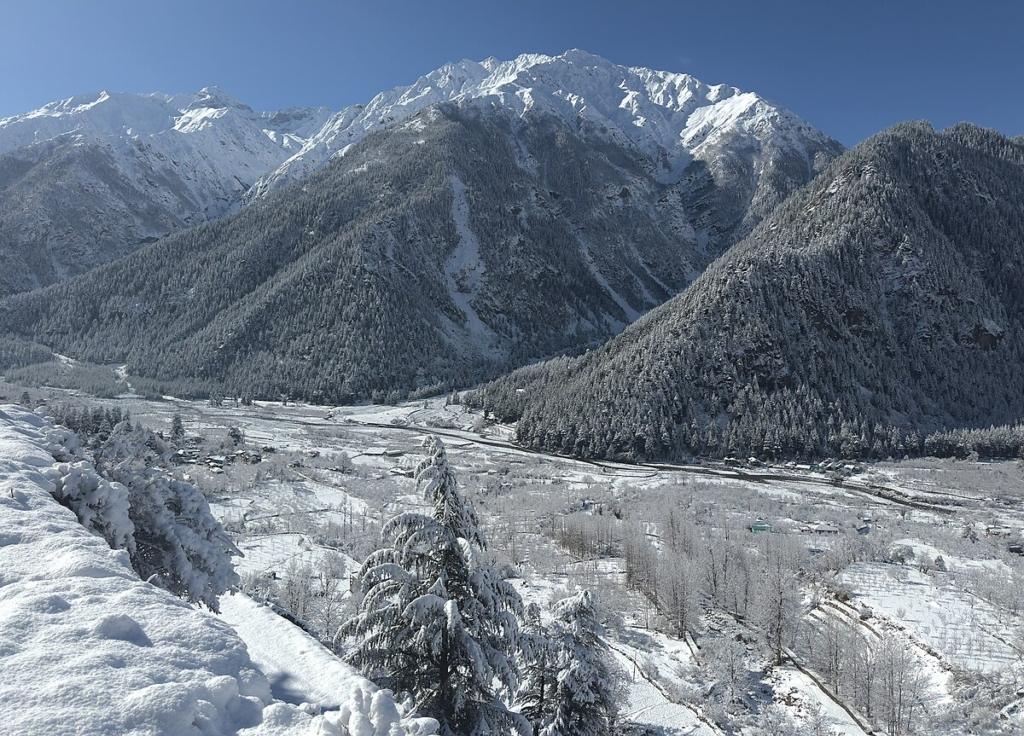
Sikkim: Lachen and Lachung, the Twin Gateway Villages
Lachen and Lachung are the only two North Sikkim villages on this list, but they account for almost every Sikkim border-tourism itinerary in the country. Lachen, at 2,750 metres, is the gateway to Gurudongmar Lake — a sacred glacial lake at 5,430 metres, one of the highest in the world. Lachung, at 2,600 metres, opens the Yumthang Valley and the Zero Point road. Both villages still require an Inner Line Permit, which most travellers obtain through a registered Gangtok tour operator. The North Sikkim Aadhaar-only experiment that worked in Himachal hasn’t yet been adopted here.
12. Lachen, Sikkim — The Gateway to Gurudongmar
| Altitude | 2,750 m (9,020 ft) |
|---|---|
| Entry fee | Free for village; Gurudongmar Lake protected area fee ₹200 per Indian |
| Timings | Village accessible year-round; Gurudongmar Lake road open March–November (closed Dec–Feb) |
| Best time to visit | April–June and September–November. June offers warmest pre-monsoon access; October has clearest visibility for the lake. |
| How to reach | Gangtok to Lachen is 125 km, 6–7 hours by SUV (Lachen-Lachung permit-only roads). Nearest airport: Pakyong (PYG) or Bagdogra (IXB). Nearest railhead: New Jalpaiguri (NJP). |
| Time required | 2 nights minimum; Day 1 Lachen, Day 2 Gurudongmar early start (4:00 am departure) |
| Ideal for | Pilgrims, photographers, high-altitude lake enthusiasts |
| Pro tip | Gurudongmar Lake clears by 9:30 am — start the drive from Lachen by 4:30 am or you’ll find clouds blocking the view. Hot tea at the army canteen at Thangu is the right halfway stop. |
| Permit | Inner Line Permit (Protected Area Permit) issued via registered Sikkim tour operators in Gangtok. 24-hour processing. Aadhaar + 2 photos. |
| Where to stay | Lachen has government-registered homestays through Sikkim Tourism. StayVista doesn’t host directly in Lachen — our nearest Sikkim homestays are in Gangtok and Pelling, used as pre-permit bases. |
13. Lachung, Sikkim — Yumthang Valley and the Zero Point Road
| Altitude | 2,600 m (8,530 ft) |
|---|---|
| Entry fee | Free for village; Yumthang & Zero Point combined fee ₹250 per Indian |
| Timings | Village year-round; Yumthang Valley March–November; Zero Point April–November weather permitting |
| Best time to visit | March–May for rhododendron bloom (Yumthang’s Valley of Flowers); June for warmest day temperatures; October for clearest skies. |
| How to reach | Gangtok to Lachung: 117 km, 6 hours by SUV. Most itineraries combine Lachen + Lachung in a 4-day North Sikkim loop. |
| Time required | 2 nights — Day 1 Lachung arrival, Day 2 Yumthang + Zero Point |
| Ideal for | Honeymooners, families, rhododendron-bloom photographers, casual high-altitude travellers |
| Pro tip | Zero Point sits at 15,300 feet. If anyone in your group is altitude-sensitive, skip Zero Point and spend the saved hours at Yumthang’s hot springs instead — equally beautiful, half the AMS risk. |
| Permit | ILP via Gangtok tour operator; same permit covers Lachen + Lachung |
| Where to stay | Lachung has the highest homestay density in North Sikkim. Most travellers also pre-book a Gangtok base via StayVista Sikkim homestays for the permit-collection day. |
Aadhaar vs Inner Line Permit: Which Villages Need What in 2026
Of the 13 villages open in June 2026, seven need only an Aadhaar card, five need an Inner Line Permit, and one needs a state-issued border permit (Source: state tourism notifications, May 2026). The cheap and quick option, in every case, is Himachal — but Himachal is also the only state where the new rule applies. Here’s the comparison most travellers ask for first.
| Document | Where it works | Where to get it | Cost | Processing time |
|---|---|---|---|---|
| Aadhaar card | All 7 Himachal villages (Chitkul, Shipki La, Lepcha-La, Gue, Khana, Dumti, Sangla) | Already in your wallet | Free | 15–20 min at the village registration desk |
| ILP (Uttarakhand) | Niti, Gunji, Mana Pass | SDM Joshimath (Niti, Malari, Mana Pass) or SDM Dharchula (Gunji) | ₹100–150 | Same day (walk-in by noon) |
| ILP (Sikkim) | Lachen, Lachung, Gurudongmar, Yumthang, Zero Point | Via registered Gangtok tour operator | ₹200–400 (operator-bundled) | 24 hours |
| Border permit | Malari (also serves as Niti-corridor permit) | Joshimath SDM | ₹100 | Same day |
Documents required for each border village, June 2026.
How to Get an Inner Line Permit for Niti and Gunji (Step by Step)
- Reach Joshimath (for Niti/Malari/Mana Pass) or Dharchula (for Gunji) by lunchtime.
- Carry: Aadhaar original + 2 photocopies, 2 passport photos, ₹100–150 cash.
- For Adi Kailash extension from Gunji: add a medical fitness certificate (any registered MBBS doctor) and a passport-size photo.
- Submit at the SDM office (Joshimath SDM operates 10 am–4 pm Monday–Saturday; Dharchula similar).
- Collect the permit by 4 pm same day. Carry it on your dashboard for ITBP checkposts.
- The permit is valid for a fixed dated trip — keep your dates tight.
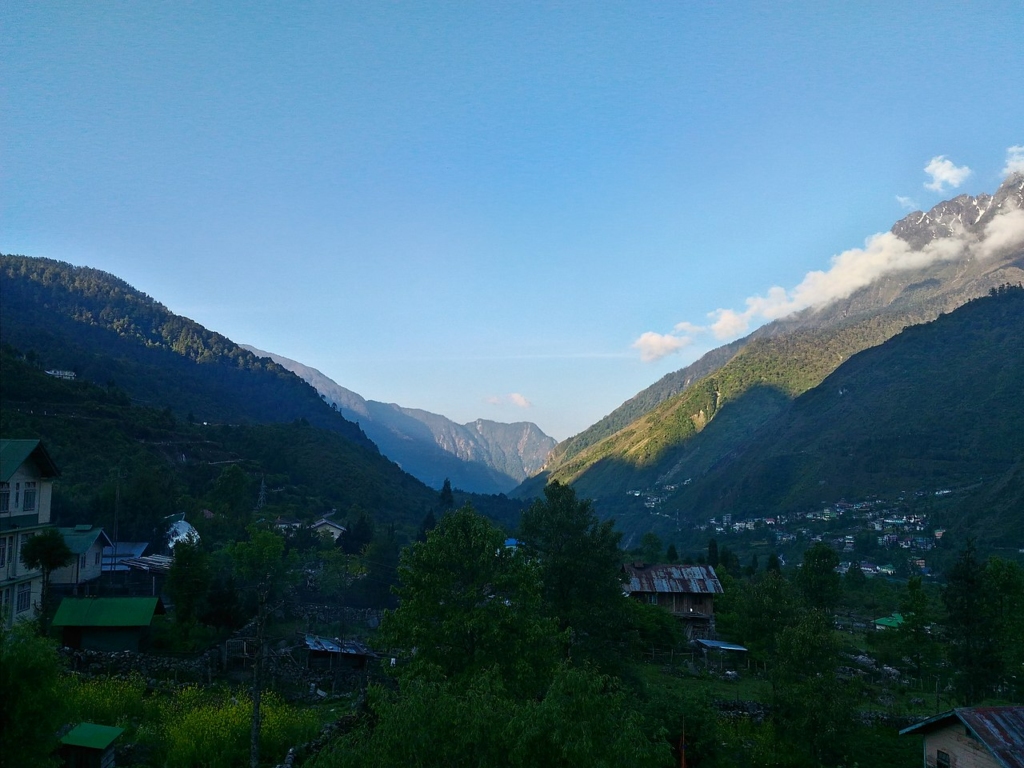
Which Is the Real “Last Village of India”? Settling the Mana-vs-Chitkul-vs-Gunji Question
Mana, Chitkul, Niti, and Gunji all market themselves as the “Last Village of India.” Travel blogs name a different one every week. The truth is simpler: each is the last village on a different road approaching a different point on the Indo-Tibet line, and all four claims are geographically correct.
- Mana — last inhabited village on the Badrinath-to-Mana-Pass route (Garhwal Himalayas, Chamoli district).
- Niti — the last village on the parallel Niti Pass route (also Garhwal, Chamoli district, separate valley).
- Chitkul — last village on the Hindustan-Tibet Road via the Baspa/Sutlej valley (Kinnaur, Himachal Pradesh).
- Gunji — last major settlement on the Kailash Mansarovar Yatra route (Kumaon, Pithoragarh district).
The Border Roads Organisation now uses a more honest signage convention: it has replaced “Last Village” boards with “First Village” boards. The point is identical. Each of these four villages is the first inhabited Indian settlement you reach when crossing the LAC inward — a small framing change that has done more for the dignity of these places than any tourism campaign in the previous twenty years.
If you’re optimising for one “real” last village this June, here’s the StayVista travel-desk take: Mana for the easiest access and the Badrinath combination, Chitkul for the most cinematic single drive, Gunji for the deepest Himalayan immersion, and Niti for the genuine off-grid quiet. None of them is wrong.
Three Itineraries for Indo-China Border Villages in June 2026
The honest planning truth: it’s hard to combine all three states in a single trip without flying. Most travellers pick one state, do it well, and save the other two for autumn or next summer. Below are the three circuit itineraries our hosts and travel desk have tested. Each is built around June 2026 conditions.
Option 1: Uttarakhand Border Circuit (7–10 days)
Route: Rishikesh → Joshimath → Mana → Niti → Malari → Pithoragarh → Dharchula → Gunji → Adi Kailash → return
- Day 1–2: Rishikesh / Haridwar base, acclimatise. Pick up ILP papers in advance if planning online.
- Day 3: Drive Haridwar → Joshimath (9 hrs). Apply for Niti and Malari ILP at SDM office same evening.
- Day 4: Joshimath → Badrinath → Mana (half day) → back to Joshimath.
- Day 5: Joshimath → Malari (overnight) via Tapovan.
- Day 6: Malari → Niti village → return to Joshimath.
- Day 7–8: Joshimath → Pithoragarh → Dharchula (long drive day, plan an overnight at Pithoragarh).
- Day 9–10: Dharchula → Gunji → Adi Kailash darshan → return to Dharchula → exit via Tanakpur.
Base stays: Auli, Joshimath area, Munsiyari. The drive between the Mana cluster and the Gunji cluster is genuinely long — budget two travel-only days.
Option 2: Himachal Aadhaar-Only Circuit (5–7 days)
Route: Shimla → Narkanda → Sangla → Chitkul → Kalpa → Pooh → Shipki La → Nako → Tabo → Gue → Kaza
- Day 1: Delhi/Chandigarh → Shimla (drive or train to Kalka + drive).
- Day 2: Shimla → Sangla via Karcham (8 hrs). Overnight Sangla.
- Day 3: Sangla → Chitkul day trip → back to Sangla or push to Kalpa.
- Day 4: Kalpa → Pooh → Shipki La (Aadhaar registration at Khab) → return to Pooh or push to Nako.
- Day 5: Nako → Tabo (overnight at the monastery’s guesthouse if booking permits).
- Day 6: Tabo → Sumdo → Gue Monastery (half day) → Kaza (overnight).
- Day 7: Kaza → Manali via Atal Tunnel (long drive day), or extend to Pin Valley / Lepcha-La with a guide.
Base stays: StayVista homestays in Manali in the Kinnaur belt; HPTDC properties at Reckong Peo, Tabo, and Kaza for the higher-altitude legs where private homestays thin out. This is the cheapest of the three circuits because no permits cost money.
Option 3: North Sikkim Twin-Village Loop (5–6 days)
Route: Bagdogra → Gangtok → Lachen → Gurudongmar → Lachung → Yumthang → Gangtok
- Day 1: Fly into Bagdogra → drive to Gangtok (4 hrs). Submit ILP via the tour operator the same evening.
- Day 2: Gangtok rest day; collect ILP; light sightseeing (Rumtek, MG Marg).
- Day 3: Gangtok → Lachen (6–7 hrs by shared SUV).
- Day 4: Lachen → Gurudongmar Lake (4 am start, back by noon) → drive to Lachung evening.
- Day 5: Lachung → Yumthang Valley + Zero Point → back to Lachung overnight, or push to Gangtok.
- Day 6: Lachung/Gangtok → Bagdogra flight out.
Base stays: StayVista Sikkim homestays in Gangtok for permit days; government-registered Lachen/Lachung village homestays for the North Sikkim segment.

Where to Stay: StayVista Homestays Near India’s Border Villages
StayVista doesn’t host directly inside any of the 13 border villages on this list — the homestay inventory in places like Gunji, Niti, or Chitkul is run by local government-registered families, and we’ve kept that ecosystem honest. What we do host is the base layer: the homestays one drive day away, in Joshimath/Auli, in the Kinnaur–Sangla corridor, in Gangtok, and in Pelling. Those are the stays you book for the rest of your itinerary — the acclimatisation nights, the post-trip recovery nights, the family base while one or two travellers do the high-altitude run.
- Uttarakhand — Across Mussoorie, Auli, Ranikhet, and Nainital. Best for Mana/Niti circuit bases.
- Himachal Pradesh — Across Shimla, Chail, Kasauli, and the Kinnaur belt. Best for the Aadhaar-only circuit.
- Sikkim — StayVista homestays in Sikkim in Gangtok and Pelling. Best as the permit-collection and recovery base.
For the actual village stays, we’d point you to: KMVN (Kumaon Mandal Vikas Nigam) bookings for Gunji and Dharchula; HPTDC’s Reckong Peo and Sarahan rest-houses for the Shipki La leg; and Sikkim Tourism’s North Sikkim homestay registry for Lachen and Lachung. Book the Sikkim leg through a registered tour operator — it bundles the permit with the stay and saves a day.
Frequently Asked Questions
Thirteen villages: four in Uttarakhand (Mana, Niti, Gunji, Malari), seven in Himachal Pradesh (Chitkul, Shipki La, Lepcha-La, Gue, Khana, Dumti, Sangla) and two in Sikkim (Lachen, Lachung). Seven of these — all the Himachal villages — now allow Aadhaar-only entry under the June 2025 Regulated Border Tourism policy. The remaining six still require Inner Line Permits.
Yes. Since 8 June 2025, Chitkul has allowed Aadhaar-only entry for Indian tourists under Himachal Pradesh’s Regulated Border Tourism policy (Source: Outlook Traveller). Stop at the Chitkul registration desk on entry, scan your Aadhaar, and sign the visitor register. No Inner Line Permit, no fee. Foreign nationals still need a Protected Area Permit.
No permit is needed for Mana village itself, which sits 5 km past Badrinath. You only need an Inner Line Permit if you continue beyond the village to Mana Pass — that ILP is issued same-day at the SDM Joshimath office for ₹100, with Aadhaar and two photographs. Mana village is open April through October.
The peak windows are March–June and September–November. June 2026 offers the warmest day temperatures (10–28°C in Lachung) and full road access to Gurudongmar Lake. October–November give the clearest mountain visibility. Avoid July–September — monsoon landslides regularly block the Gangtok–Lachen road, and Zero Point access closes intermittently.
Shipki La opens to domestic Indian tourists on 10 June each year, weather and snow-clearing permitting (Source: Indian Express). The pass first opened to civilians on 10 June 2025 after being closed since the 1962 war. It typically stays open through the end of October. Daily access is 7:00 am–4:00 pm; no overnight stay at the pass itself.
For Niti, apply at the SDM Joshimath office with Aadhaar original, two photocopies, two passport photos and ₹100. Same-day issuance. For Gunji, apply at SDM Dharchula with the same documents plus a medical fitness certificate if extending to Adi Kailash. Carry the permit on your dashboard for ITBP checkpost verification.
Yes. Gunji is the official Adi Kailash base under the Vibrant Villages Programme. The metalled road past Kuti completed in 2024 makes a 2-day darshan extension from Gunji practical in June 2026. You’ll need the Dharchula ILP plus a medical fitness certificate. Book through KMVN or Pithoragarh-based registered operators; private vehicle access is restricted on the final stretch.
All four village claims are geographically correct — Mana, Niti, Chitkul and Gunji are each the last inhabited Indian settlement on a different border road. Mana is last on the Badrinath–Mana Pass route, Niti on the Niti Pass route, Chitkul on the Hindustan-Tibet Road, and Gunji on the Kailash Mansarovar Yatra route. The Border Roads Organisation has begun replacing “Last Village” signs with “First Village” boards.
One More Window Before the Monsoon
Six things to take away from this guide:
- Thirteen Indo-China border villages are open to Indian tourists in June 2026 — the largest single-month opening in modern Indian travel.
- Seven of those (all in Himachal) need only an Aadhaar card. No ILP, no NOC, no military clearance.
- Shipki La pass opens 10 June 2026 — make that your fixed planning anchor for any Himachal circuit.
- The Uttarakhand four (Mana, Niti, Gunji, Malari) still need ILPs, but the process is genuinely same-day at Joshimath or Dharchula.
- Lachen and Lachung continue to need permits via registered Gangtok operators — the Himachal Aadhaar model hasn’t reached Sikkim yet.
- June is the peak window. From July to mid-September, monsoon rain shuts North Sikkim’s road and destabilises the Niti and Gunji approaches.
India’s borderlands are the rarest thing in domestic travel — destinations where the road literally ends. June 2026 is the most accessible window this kind of journey has ever had. If you’ve been waiting for the policy logjam to clear, it has. Browse StayVista homestays across the Himalayan border states when you’re ready to book your base.