
20 Places to Visit Near Pune in August Within 100 km (Monsoon 2026)
Within a 100 km drive of Pune sit three very different monsoon worlds: cloud-wrapped Sahyadri forts, ghats that out-rain Cherrapunji, and lakes that are now brimming after two months of rain. Tamhini Ghat has recorded roughly 5,269 mm of rain so far this season — enough to overtake Cherrapunji’s seasonal tally — and the IMD has only just eased the ghat alert level from red to orange (PuneNow, 2026). Most “within 100 km” lists throw places at you in random order and never say how far they actually are or what’s even open right now. This guide fixes that. We’ve sorted 20 spots by distance band, given each one timings, fees and a how-to-reach, flagged exactly what the 2026 monsoon safety rules restrict, and built in the two long weekends August 2026 actually gives you — so you can plan a day trip or a weekend without guesswork.
The best monsoon getaways near Pune within 100 km fall into three bands — under 50 km (Sinhagad, Mulshi, Kamshet), 50–75 km (Lonavala, Lohagad, Pawna Lake, Tamhini Ghat), and 75–100 km (Panchgani, Varandha Ghat, Andharban). By August, most reservoirs and waterfalls in the belt are at or near peak flow, and you get two ready-made long weekends to build a trip around: Independence Day (Sat 15 Aug, extendable to Fri 14–Sun 16) and Raksha Bandhan (Fri 28 Aug, extendable to a Fri–Sun break). Note: Pune district’s monsoon safety order banning risky activity at waterfalls and dams runs through 31 August — so for the rest of this month, stick to viewpoints.
Monsoon Safety First (2026) — the order is still in force, with less than a month left: Pune district reissues a prohibitory order every monsoon, valid until 31 August. Entering fast-flowing water, sitting under waterfalls and edge selfies are banned at Bhushi Dam, Tiger Point, Lion’s Point, Lohagad, Visapur, Tikona, Karla and Bhaja, and Pawana Dam. The forts and caves stay walkable — it’s the water activity that’s restricted, and with dams now closer to full capacity than they were in June, the currents are stronger, not weaker. We’ve followed this on every trip, and after the 2024 Lonavala waterfall tragedy, it’s a rule worth respecting — right up until it lifts on 1 September. Full details in the safety section below.
In this Blog
Which Places Near Pune Are Best to Visit in August?
The short answer: pick by distance band, then slot in one of August’s two long weekends. Of our 20 picks, 3 sit within 50 km of Pune, 13 fall in the 50–75 km belt (the classic Lonavala–Maval cluster), and 4 stretch to 75–100 km. Maharashtra has more than 390 forts — the most of any Indian state, almost all of them strung across these Sahyadri hills (Maratha Military Landscapes, UNESCO, 2025), which is why so many monsoon spots near Pune are old hill forts.
Here’s how they cluster geographically: the forts and caves bunch around Lonavala and Maval to the north-west; the dramatic waterfall ghats (Tamhini, Varandha) lie to the west; and the breezy hill towns (Panchgani, Wai) sit to the south-west. The Western Ghats as a whole catch over 2,500 mm of rain a year (NITI Aayog ICED), and by August that rain has done its work — reservoirs are fuller, waterfalls are stronger, and the hills are at their greenest.
Our 20 picks by distance band from Pune — Under 50 km: 3 | 50–75 km: 13 | 75–100 km: 4. Source: StayVista, 2026 (our curated shortlist within ~100 km of Pune)
If you only want a deeper read on the most popular base, our guide to things to do in Lonavala goes spot by spot.
What August Looks Like in the Sahyadris
August sits at the wet, green peak of the season, but it isn’t uniform rainfall from the 1st to the 31st — plan around a few patterns:
- Dams and lakes are at or near their fullest. After two months of rain, reservoirs like Pawna, Mulshi and Bhushi typically reach or approach full capacity in August, which is exactly why the overflow spots look their most dramatic — and why the water-safety restrictions matter more now than they did in June.
- Waterfalls are at peak flow. Tamhini Ghat’s roadside falls, Kune Falls and the Andharban trail are usually at their most powerful this month, before flow tapers off through September.
- Expect short breaks between spells. The Sahyadris rarely get 31 straight days of rain — most Augusts bring a mix of multi-day heavy spells and a few drier, misty stretches that are actually easier for driving and photography. Check the IMD forecast a day or two out rather than assuming it’ll rain non-stop.
- It’s still firmly inside the safety-order window. Unlike a September trip, an August one still falls under the restrictions listed below — factor that into what you plan to actually do at each stop, not just where you go.
Long Weekends in August 2026 Near Pune
August 2026 hands you two ready-made long weekends — worth building a trip around instead of fighting for a random Saturday slot.
Independence Day weekend (Fri 14 – Sun 16 August): Independence Day falls on Saturday, 15 August. Taking a single day of leave on Friday the 14th turns it into a three-day weekend — enough time for a proper Lonavala–Maval loop or a night at a Pawna Lake villa without rushing back. Expect this to be one of the busiest weekends on the belt, so book stays early and start drives before 8 AM to beat the traffic into Lonavala and Khandala.
Raksha Bandhan weekend (Fri 28 – Sun 30 August): Raksha Bandhan falls on Friday, 28 August, making it another natural three-day window right at the tail end of the safety-order period. It’s a good one for a family trip — pair a gentle stop like Sinhagad, Lavasa or the Karla–Bhaja caves with a villa stay so siblings can actually spend the day together rather than just the festival morning.
If you’d rather skip the crowds: any regular weekday in August — outside these two windows — gets you the same green Sahyadris with a fraction of the traffic, especially at Lonavala, Bhushi Dam and Tamhini Ghat.
What’s Open and What’s Banned at Pune’s Monsoon Spots in 2026?
Every monsoon, the Pune District Collector issues a prohibitory order under Section 163 of the BNSS, 2023, valid through 31 August (Punekar News, 2025). As of August, that means you still have a few weeks left under these rules before they’re expected to lift on 1 September. It doesn’t shut the destinations — it bans the dangerous behaviour. That means no entering deep or fast-moving water, no sitting under waterfalls, no selfies on slippery edges, no gatherings of five or more right beside the water, and no alcohol at these spots. Violations invite penal action.
The named spots include Tiger Point, Lion’s Point, Bhushi Dam, Pawana Dam, Lohagad, Visapur, Tikona, Ekvira Temple, and Karla and Bhaja caves (The Tribune, 2025). The order followed a family drowning at a Lonavala waterfall, so this is genuine safety, not bureaucracy — and it matters more in August than it did in June, since dams are fuller and currents are stronger.
The order is reissued every monsoon — the 2025 version was signed on 11 June by the district collector — so the 2026 order should be in force on near-identical lines through the end of this month. Restrictions and named spots can shift slightly year to year, so check the current order before you travel.
A few practical habits we always pack: check the IMD forecast the night before, never trek a fort solo in heavy rain, wear proper grip shoes (monsoon rock is brutally slippery), start early and head down before the afternoon cloudbursts, and carry rain gear, a dry bag and a power bank.
Monsoon Spots Within 50 km of Pune (Easy Day Trips)
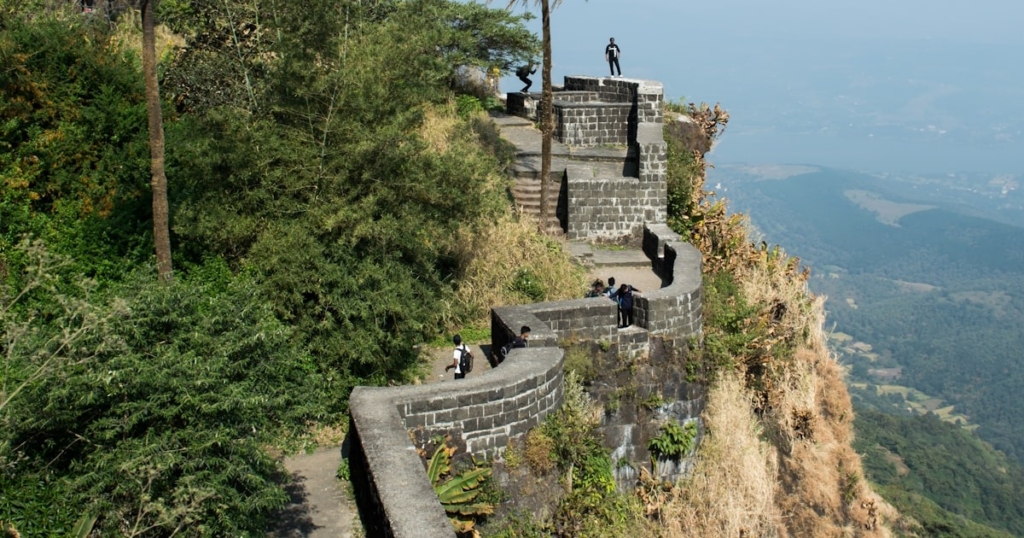
These three are close enough to leave after breakfast and be home for dinner — ideal when the forecast is shaky and you want a short leash.
1. Sinhagad Fort (~35 km)
A misty fort climb that ends with hot kanda bhaji and pithla-bhakri at the summit stalls — the most rewarding short trek near Pune in the rains.
Entry fee: no fort entry fee. Private vehicles are restricted on the ghat road — park at the base (around ₹10 for a two-wheeler, ₹20 for a car) and take the PMPML electric bus up (about ₹100 round trip, ₹50 for children); the e-bus service is occasionally paused, so confirm it’s running.
Timings: about 5 AM–6 PM daily. Best time: July–September, early morning. How to reach: ~1–1.5 hr drive south-west; no close railhead, so drive or cab to the Atkarwadi base.
Time required: 3–4 hours. Ideal for: trekkers, groups, fit families. Pro tip: weekday mornings are far quieter, and grippy shoes matter more than you’d think.
Monsoon 2026: open — it’s outside the Lonavala–Maval order, though ghat-road vehicle access can be capped on peak weekends.

2. Mulshi Lake & Dam (~40 km)
A foggy reservoir ringed by hills, with roadside waterfalls switching on along the way. Entry fee: free. Timings: daytime only; don’t linger after dark.
Best time: July–September, when the lake is full.
How to reach: ~1.5–2 hr drive west via Paud; no rail, so self-drive or cab.
Time required: 2–3 hours, often paired with Tamhini Ghat. Ideal for:
couples, families, photographers.
Pro tip: carry your own food — stalls are sparse — and never wade into the dam backwaters when they’re in spate.
Monsoon 2026: open, with the general district water-safety rule in force (view-only near the dam).

3. Kamshet (~47 km)
Green valleys and quiet lakes that make a lovely scenic-drive stop — just know the headline activity takes a monsoon break.
Entry fee: no area fee; paragliding runs about ₹2,999–3,500 per person. Timings: activities roughly 8 AM–6 PM in season.
Best time: October–May for flying; in monsoon, treat it as a drive-and-lakes outing. How to reach: ~1–1.5 hr; Kamshet station sits on the Pune–Lonavala local line.
Time required: half a day. Ideal for: couples and groups.
Pro tip: paragliding is suspended in the rains for safety, so don’t plan a trip around it between June and September.
Monsoon 2026: accessible; flying paused, lakes under the general water advisory.

Monsoon Getaways 50–75 km From Pune (the Classic Belt)
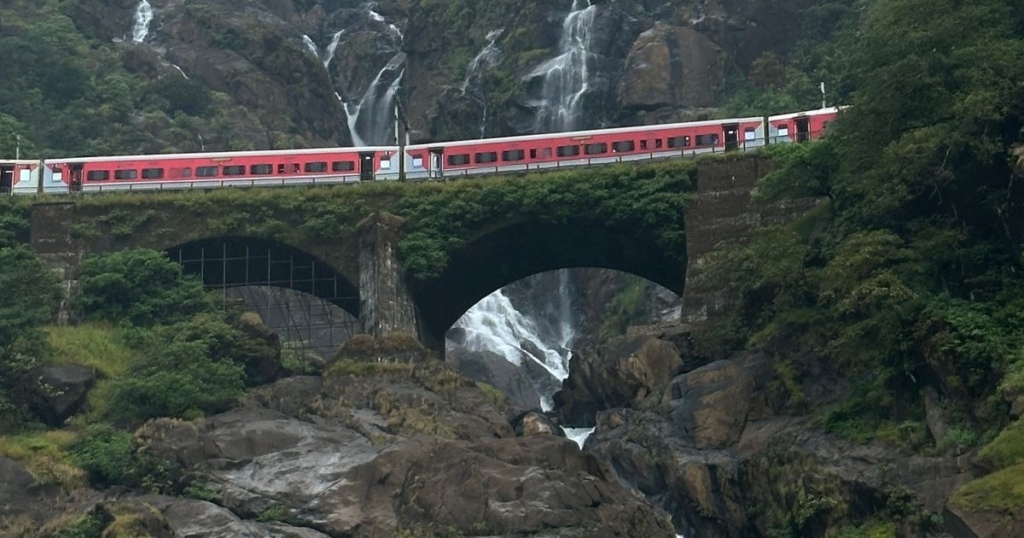
This is the heart of the list — the Lonavala–Maval cluster, where forts, caves, lakes and waterfalls sit within a short drive of each other. You can string several into one route (see the itinerary section).
4. Lohagad Fort (~52 km)
The friendliest monsoon fort near Pune, famous for its “Vinchu Kata” (scorpion’s tail) spur disappearing into cloud.
Entry fee: free.
Timings: ~6 AM–6 PM. Best time: July–August. How to reach: ~1.5 hr; Malavli station, then ~5 km to the base village and a short trek.
Time required: 3–4 hours. Ideal for: trekkers and confident families.
Pro tip: start by 7–8 AM and stay off the narrow spur edge in wind.
Monsoon 2026: named in the order — the trail stays walkable, but edge and water spots are restricted and crowds get managed on weekends. It’s also part of the Maratha forts UNESCO listing inscribed in July 2025.

5. Tamhini Ghat (~55 km)
The single best monsoon drive near Pune — dozens of roadside waterfalls down a green corridor.
Entry fee: free.
Timings: daylight only. Best time: July–September. How to reach: ~2 hr west via Mulshi; self-drive strongly preferred.
Time required: half to full day. Ideal for: couples, road-trippers, photographers.
Pro tip: never stop on blind curves — fog cuts visibility to metres — and treat Devkund waterfall as a separate, restriction-prone trip.
Monsoon 2026: open, but the no-standing-under-waterfalls rule applies and roadside checks are common.

6. Pawna Lake (~55 km)
A wide lake ringed by forts and mist — gorgeous to look at, and the base for StayVista’s villa cluster.
Entry fee: free to view; camping packages from about ₹999–1,500 per person.
Timings: daylight for viewing. Best time: lakeside camping is best post-monsoon (October–March). How to reach: ~1.5–2 hr via Kamshet/Malavli.
Time required: half a day, or overnight at a villa. Ideal for: groups, couples, families.
Pro tip: don’t pitch at the water’s edge in monsoon — levels rise fast and the dam is named in the safety order.
Monsoon 2026: view-only at the dam; the lake itself is stunning from a hillside stay.

7. Visapur Fort (~55 km)
Lohagad’s bigger, tougher twin, with a famous reverse waterfall on a green plateau.
Entry fee: free.
Timings: open trek; start early.
Best time: July–August for the experienced.
How to reach: ~1.5 hr; Malavli station, Bhaja base, then a steeper ~2 km climb.
Time required: 4–5 hours. Ideal for: experienced trekkers only.
Pro tip: the rock-cut route turns into a waterfall in heavy rain and has seen accidents — go in a group and skip the main ascent during a downpour.
Monsoon 2026: named in the order and treated as higher-risk; access is often discouraged or controlled.
8. Bhaja Caves (~55 km)
A 2nd-century-BCE Buddhist cave complex beside a seasonal waterfall — history and green hills in one stop.
Entry fee: ₹25 for Indian visitors, ₹300 for foreign nationals; children under 15 free (ASI monument).
Timings: ~9 AM–5:30 PM.
Best time: monsoon, for the waterfall.
How to reach: ~1.5 hr; Malavli station ~3 km away.
Time required: 1.5–2 hours. Ideal for: history lovers, families, couples.
Pro tip: the stone steps and waterfall area get slick — the caves stay open even when the waterfall is roped off.
Monsoon 2026: the waterfall is restricted (no sitting under it); the ASI caves remain a view-only monument.
9. Karla Caves (~59 km)
Home to India’s largest rock-cut chaitya hall, shared with the busy Ekvira Devi temple.
Entry fee: ₹25 for Indian visitors, ₹300 for foreign nationals; children under 15 free (ASI monument); the temple is free.
Timings: ~9 AM–5:30 PM.
Best time: pleasant and green through the season.
How to reach: ~1.5 hr; Malavli/Lonavala, then a short climb.
Time required: 1.5–2 hours. Ideal for: heritage seekers and families.
Pro tip: pair it with Bhaja and expect temple-day crowds on the steps.
Monsoon 2026: named in the order for crowd and water restrictions; the caves and temple stay accessible.
10. Tikona Fort (~60 km)
A compact, near-conical fort with sweeping Pawna Lake views.
Entry fee: free; ~₹20 parking.
Timings: ~6 AM–6 PM.
Best time: dramatic in monsoon cloud.
How to reach: ~2 hr via Kamshet, then a ~2 km trek from Tikona Peth.
Time required: 3–4 hours. Ideal for: trekkers and fit groups.
Pro tip: the final near-vertical steps are genuinely dangerous when wet — use the chains and skip them in active rain.
Monsoon 2026: named in the order; summit access can be restricted on heavy-rain days.
11. Lavasa (~60 km)
A planned lakeside hill town with a low-effort promenade — easy for families who’d rather stroll than trek.
Entry fee: no gate fee; paid parking only.
Timings: attractions roughly 10 AM–6 PM.
Best time: September–March; monsoon is scenic but watch the roads.
How to reach: ~1.5 hr via Paud–Pirangut–Mulshi; no public transport, so cab or self-drive.
Time required: half to full day. Ideal for: couples and families.
Pro tip: the Mulshi approach is landslide-prone in heavy rain — carry offline maps and avoid driving it during red or orange alerts.
Monsoon 2026: open with caution; check road conditions before you set off.

12. Lonavala (~65 km)
The classic Sahyadri base town — chikki, valley viewpoints and the easiest jumping-off point for everything above.
Entry fee: free.
Timings: viewpoints in daylight.
Best time: June–September is peak green; go midweek.
How to reach: ~1.5–2 hr on the Expressway; Lonavala station is on the main Mumbai–Pune line.
Time required: a full day or a weekend base.
Ideal for: couples, families, groups.
Pro tip: plan around the accessible spots, since several flagship viewpoints are restricted in the rains.
Monsoon 2026: the town is open; Tiger, Lion’s and Rajmachi Points are view-only under the order.

13. Bhushi Dam (~66 km)
The iconic stepped overflow everyone photographs — best admired, not climbed into, this year.
Entry fee: free; small seasonal parking charge.
Timings: ~9 AM–5 PM; often closed by 3 PM on busy weekends.
Best time: July–September, early on a weekday.
How to reach: ~2 hr; Lonavala station ~6 km, then an auto.
Time required: 1–2 hours. Ideal for: families and groups, with caution.
Pro tip: never sit under the cascade — sudden upstream releases happen, and this is exactly where the safety order bites.
Monsoon 2026: access is closed during heavy rainfall and risky activity is banned; treat it as a viewpoint and check the current order on the day.
14. Kune Falls (~67 km)
A three-tiered waterfall plunging around 200 m — on e of India’s tallest.
Entry fee: free to view; a small approach/parking fee may apply.
Timings: ~6 AM–6 PM.
Best time: June–September at full flow.
How to reach: Khandala station is the closest, ~1.3 km.
Time required: 45 minutes to 1.5 hours.
Ideal for: couples and families.
Pro tip: the designated viewpoint is the safe, best-angle spot — don’t try to climb to the base in monsoon.
Monsoon 2026: view-only recommended; waterfall-approach activity falls under the safety order.
15. Khandala (~70 km)
Lonavala’s quieter sibling, all misty valleys and big drops like Duke’s Nose.
Entry fee: free. Timings: N/A (town).
Best time: visually peak in monsoon; go early.
How to reach: ~1.5–2 hr on the Expressway; Lonavala station nearby.
Time required: half to full day. Ideal for: couples and families.
Pro tip: cloud can drop visibility to zero at viewpoints by late morning, so arrive at dawn.
Monsoon 2026: town open; nearby viewpoints are view-only under the order.

16. Rajmachi (~70 km + trek)
A forest-and-waterfall trek to twin forts, with the seasonal Kataldhar falls as the reward.
Entry fee: a nominal village fee (around ₹5) plus a small vehicle charge (about ₹100 for a car); guided treks run ₹1,000–1,500.
Timings: daylight trek.
Best time: July–August, slippery but spectacular.
How to reach: Lonavala, then ~15–16 km to Udhewadi base by trek or hired jeep.
Time required: half to full day.
Ideal for: trekkers and fit families.
Pro tip: hire a local jeep in heavy rain and never attempt it solo — network is poor.
Monsoon 2026: Rajmachi Point is under the order; the trek is doable with a guide, but jeep access can be limited in spate.

Monsoon Drives 75–100 km From Pune (For a Slower Weekend)
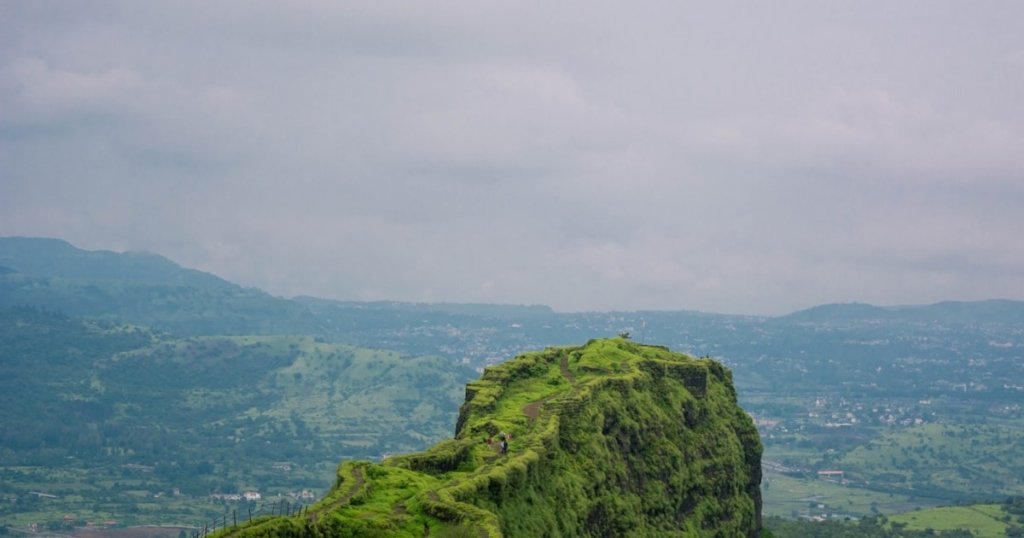
These four ask for a little more road time, which usually means fewer crowds.
17. Korigad Fort (~75 km)
One of the easiest Sahyadri forts, with plateau-top lakes and twin cannons — a great monsoon starter.
Entry fee: free to enter; guided treks ₹1,000–1,500.
Timings: daylight.
Best time: June–September for greenery; September–November for the safest trails.
How to reach: ~20 km south of Lonavala to the Peth Shahapur base.
Time required: 2–3 hours total (a gentle ~45-minute climb).
Ideal for: beginner trekkers and families with older kids.
Pro tip: the fort wall has unguarded edges — keep clear of them in mist.
Monsoon 2026: not named in the Lonavala order, but treat it as any monsoon trek — go with a group and skip heavy-rain days.
18. Andharban (~80 km + trek)
A “dark forest” descent trek through ravines, streams and waterfalls — proper adventure, not a casual outing.
Entry fee: ₹50 per person forest entry (pass mandatory).
Timings: forest entry 6–11:30 AM, exit by 4:30 PM.
Best time: August is the signature month — when it’s open.
How to reach: starts at Pimpri village near Tamhini, ~2.5–3 hr away; it’s an 11 km one-way trail needing vehicle logistics.
Time required: 5–6 hours. Ideal for: fit trekkers, not casual families.
Pro tip: carry 3+ litres of water, leech protection and rain gear.
Monsoon 2026: the Forest Department frequently closes the route in peak July–August (it shut entirely for a stretch in 2025 before reopening with caps). Entry is by mandatory online booking with a daily visitor cap and QR-coded passes — walk-ins are turned away — so book ahead via the official site and confirm it’s open before you travel.

19. Varandha Ghat (~90 km)
A lesser-crowded ghat with 270-degree valley views and roadside waterfalls.
Entry fee: free.
Timings: daylight driving only — no lighting, no network.
Best time: August, conditions permitting.
How to reach: ~2.5–3 hr via Katraj Ghat and Bhor; a ~10 km ghat stretch.
Time required: half a day.
Ideal for: couples, self-drive groups, photographers.
Pro tip: fuel up and download offline maps — there’s no signal for most of the ghat.
Monsoon 2026: the ghat sees an annual monsoon heavy-vehicle ban (roughly late June to end-September) for landslide safety, and all vehicles — including cars — are barred during IMD red and orange alerts, so confirm the road is open before you go.
20. Panchgani (~100 km)
A breezy plateau town with the famous Table Land and cloud racing across the valleys.
Entry fee: Table Land free; activities and parking charged separately.
Timings: Table Land ~6 AM–6 PM.
Best time: September–May is officially calmest; monsoon is lush and dramatic.
How to reach: ~2.5–3 hr; ~20 km from Mahabaleshwar.
Time required: half a day, or a weekend paired with Mahabaleshwar.
Ideal for: families, couples, groups.
Pro tip: drive up to the plateau and pack windproof rain gear — it gets foggy and gusty.
Monsoon 2026: generally accessible, since it sits in Satara district outside the Lonavala order; mind the slippery edges.

Just Beyond 100 km — Worth the Extra Hour
A little over the line, but too good to leave out if you’ve got a full August weekend:
- Mahabaleshwar (~120 km): strawberry farms, Venna Lake and dozens of cloud-soaked viewpoints in one of India’s wettest hill stations.
- Malshej Ghat (~100–120 km): thundering waterfalls, fog-filled valleys and, if you’re lucky, monsoon flamingos.
- Bhimashankar (~100–110 km): a Jyotirlinga temple inside a wildlife sanctuary that shelters the Indian giant squirrel.
- Kolad (~110 km): the closest white-water rafting to Pune, on the dam-released Kundalika rapids.
Rainfall this monsoon season: Tamhini/Lonavala has logged roughly 5,269 mm so far, ahead of Cherrapunji’s seasonal tally, per IMD figures reported by PuneNow (2026).
How Do You Plan a Monsoon Weekend From Pune?
The smartest move is to cluster nearby spots rather than zig-zag, and to build around August’s two long weekends rather than guessing at a random Saturday. Among self-drive road-trippers, 71% of 2025 trips were under two days, up from 66% in 2023 (Zoomcar Travel Trends 2025, via Autocar Professional) — so short, tight loops are exactly how most people travel near Pune now. Here’s how we’d build it.
One-day loop: Malavli → Bhaja Caves → Karla Caves → Lohagad base → Pawna Lake viewpoint. Everything sits inside the 50–75 km belt, so you’re never driving more than 30 minutes between stops.
Independence Day weekend (14–16 August): base at a Pawna Lake or Lonavala villa on Friday night, spend Saturday on the Tamhini Ghat–Mulshi waterfall corridor at peak flow, and keep Sunday morning for an easy fort like Lohagad or Korigad before heading back.
Raksha Bandhan weekend (28–30 August): a gentler family loop works better here — Sinhagad or Lavasa on day one, Karla and Bhaja caves on day two, with the actual festival morning kept free at your stay. For a fuller stay-led plan, see our 2-day monsoon weekend itineraries from Pune.
Couples → Lavasa, Mulshi and a Pawna villa; families → Karla and Bhaja caves, Sinhagad, Panchgani; trekkers → Lohagad, Korigad, Andharban. One crowd-avoidance rule we live by, learned the hard way on a July Saturday at Bhushi Dam: arrive before 9 AM and head back down before the afternoon cloudbursts. By 11, the Lonavala viewpoints are bumper-to-bumper — and on the two August long weekends, expect that an hour earlier.
Where to Stay Near Pune for a Monsoon Weekend
Pawna Lake is the sweet spot — close to the forts and waterfalls, but quiet enough to watch the rain roll over the water from a private pool. A few StayVista homes we’d genuinely recommend as a base:
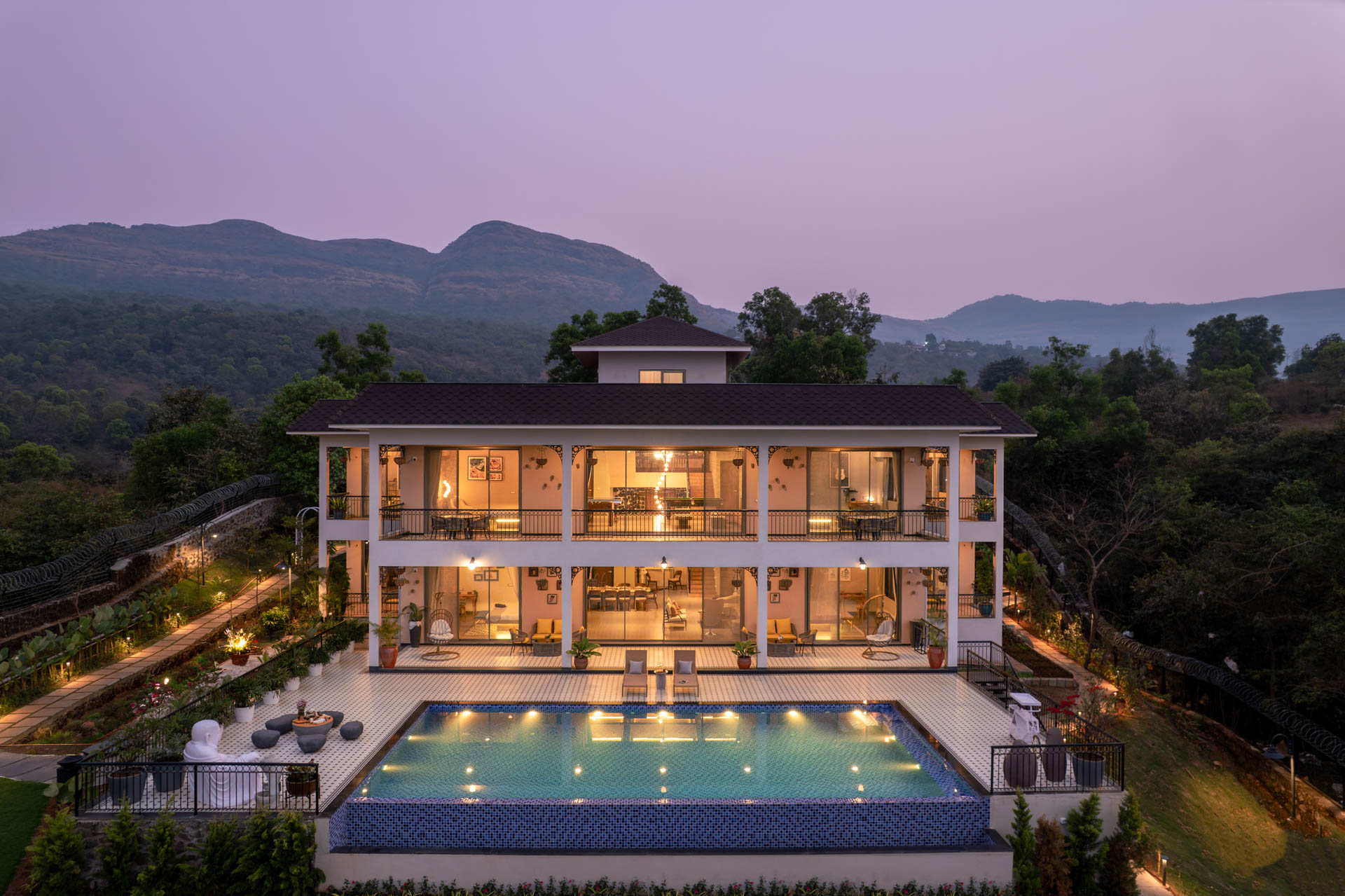
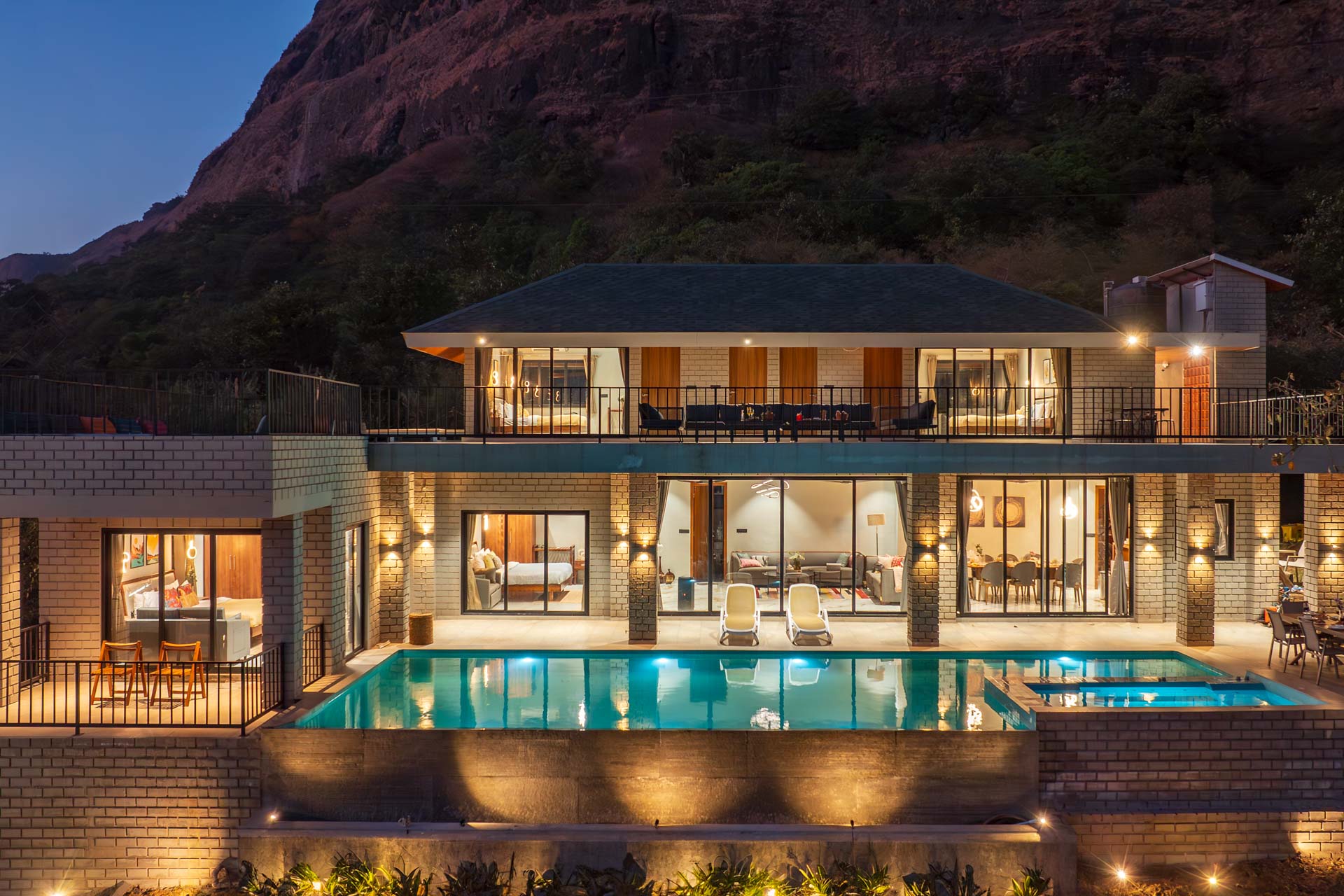


For more options across the belt, browse StayVista’s Lonavala villas.
Frequently Asked Questions
Sort them by distance. Within 50 km, Sinhagad, Mulshi and Kamshet make easy day trips; the 50–75 km belt holds Lonavala, Lohagad, Pawna Lake and Tamhini Ghat; and 75–100 km brings Panchgani and Varandha Ghat. By August, reservoirs and waterfalls across the belt are usually at their fullest, and the two long weekends this month (14–16 and 28–30 August) make it easy to plan a proper trip rather than a rushed day out.
Yes, with care. Pune district bans risky water activity — entering fast water, sitting under waterfalls, edge selfies — at Bhushi Dam, Tiger Point and similar spots through 31 August (The Tribune, 2025). The town and viewpoints stay open; treat the dam as a viewpoint and access closes during heavy rain.
The Lonavala–Maval loop. Drive to Malavli, see Bhaja and Karla caves, take in Lohagad’s base and finish at a Pawna Lake viewpoint — all inside the 50–75 km band with short hops between stops. With 71% of self-drive trips now under two days (Zoomcar, 2025), it’s the most efficient near-Pune route.
Tamhini Ghat is about 55 km west of Pune, a roughly two-hour drive via Mulshi, with no rail access — so self-drive or cab. It’s arguably the wettest near-Pune spot: in June 2025 it recorded around 2,515 mm of rain, more than Cherrapunji over the same period (The Bridge Chronicle, 2025).
Stick to low-effort, accessible places: the Karla and Bhaja ASI caves, the gentle Sinhagad summit, lakeside Lavasa and the Panchgani plateau all work well. Avoid steep, slippery forts like Tikona and Visapur with young children. Maharashtra drew about 189 million domestic visitors in 2024 (Ministry of Tourism), and family travellers are a big share of that.
Pack grip trekking shoes, a rain jacket or poncho, a dry bag for electronics, a power bank, basic first aid, drinking water and offline maps for low-network ghats. For treks like Andharban, add leech protection. Always check the IMD forecast the night before — heavy-rain alerts can close ghats and trails at short notice.
Yes — August is typically one of the wettest months in the Sahyadri belt, though expect a mix of heavy spells and shorter, misty breaks rather than constant rain. Pune district’s safety order banning risky water activity — entering fast water, sitting under waterfalls, edge selfies — at Bhushi Dam, Tiger Point and similar spots stays in force through 31 August (The Tribune, 2025). The towns and viewpoints stay open; treat dams as viewpoints and check the forecast before you set off.
Both work well if you book ahead and start early. Independence Day (Sat 15 August, extendable to a Fri–Sun break) suits a fuller Lonavala–Maval loop, while Raksha Bandhan (Fri 28 August) suits a gentler family trip with the festival morning kept free. Both fall on long weekends this year, so expect heavier traffic and higher demand for villas and hotels — book at least a couple of weeks out.
The Lonavala–Maval loop. Drive to Malavli, see Bhaja and Karla caves, take in Lohagad’s base and finish at a Pawna Lake viewpoint — all inside the 50–75 km band with short hops between stops. With 71% of self-drive trips now under two days (Zoomcar, 2025), it’s the most efficient near-Pune route.
Conclusion
The best moThe best monsoon getaways near Pune aren’t a random scatter — they cluster neatly within 100 km, and picking by distance band makes planning painless.
- Under 50 km: Sinhagad, Mulshi and Kamshet for quick day trips.
- 50–75 km: the Lonavala–Maval belt — forts, caves, Pawna Lake and Tamhini Ghat, all near peak flow this month.
- 75–100 km: Panchgani, Korigad, Andharban and Varandha for a slower weekend.
- Safety first: risky water activity is banned until 31 August, so plan around viewpoints while the order is still in force.
August gives you the greenest, fullest version of this belt — plus two long weekends (14–16 and 28–30 August) to actually use it before the season starts winding down in September. Pick a band, build a tight loop, and base yourself somewhere with a view — our Pawna lake-view villas put you within reach of almost everything on this list. Prefer a longer trip? Our guide to more rainy-season escapes around Pune covers spots further afield.