
Agumbe Rainforest Trek 2026: Inside the ‘Cherrapunji of the South’ (Complete Guide)

Quick Overview:
The agumbe rainforest trek is a 2-3 day Western Ghats experience in Shimoga district, Karnataka — India’s wettest non-Himalayan rainforest with 7,640 mm of average annual rainfall. The best time to attempt the agumbe rainforest trek is October to February, when trails are dry, leeches are minimal, and waterfalls still flow. Reach Agumbe via Mangalore (95 km), Udupi (55 km), or Bangalore (380 km) by road, then base yourself in a homestay near the village.
In this Blog
Quick Info Table
| Detail | Information |
|---|---|
| Best time to visit | October to February (post-monsoon, dry & cool) |
| How to reach | NH-66 via Mangalore / NH-75 via Bangalore |
| Nearest airport | Mangalore International Airport (97 km, ~2.5 hr) |
| Nearest railway station | Udupi (55 km) or Shimoga (90 km) |
| Ideal duration | 2–3 days |
| Trek difficulty | Easy to Moderate (most trails) |
| Altitude | 643 m above sea level (Agumbe Ghat) |
| Permit | Required for forest-zone trails (Karnataka Forest Department) |
| Annual rainfall | ~7,640 mm (India’s 2nd wettest region) |
| Budget estimate | ₹4,500 – ₹9,000 per person for 2 days |
Why Is Agumbe Called the ‘Cherrapunji of the South’?

Agumbe, a small village in Thirthahalli taluk of Shivamogga district, Karnataka, receives the second-highest rainfall in India after Mawsynram and Cherrapunji in Meghalaya. With an average annual rainfall of around 7,640 mm — and recorded extremes touching 11,000 mm in heavy monsoon years — this 643-metre plateau on the crest of the Western Ghats earns its title honestly. The agumbe rainforest trek experience is shaped by this rain: dense canopy, perennial streams, dozens of waterfalls within a 20 km radius, and a low-elevation tropical rainforest ecosystem that is genuinely rare in peninsular India.
The Agumbe Rainforest Research Station (ARRS), founded in 2005 by herpetologist Romulus Whitaker, made this region globally famous as the centre of King Cobra research. Add to that the cultural pull of Malgudi Days — R. K. Narayan’s fictional town brought to life on TV here in the 1980s — and Agumbe sits at the intersection of biodiversity, cinema heritage, and serious trekking.
Agumbe in Shivamogga district, Karnataka, receives approximately 7,640 mm of annual rainfall — the second-highest in India, making its tropical rainforest one of the most biodiverse ecosystems south of the Himalayas.
What Makes the Agumbe Rainforest Trek Special?

The agumbe rainforest trek is not a single trail. It is a cluster of short-to-moderate routes scattered around Agumbe village — each one walking you into a distinct slice of low-elevation evergreen forest. Unlike high-altitude Himalayan treks where you chase peaks, here you chase canopy. You walk under 30-metre-tall Dipterocarpus trees, cross black-rock streams, and stop at waterfalls that drop into virtually untouched pools.
Three things set the agumbe rainforest trek apart from other Western Ghats treks like Kudremukh, Mullayanagiri, or Tadiandamol:
- Biodiversity density. Over 100 species of butterflies, 24 species of amphibians (several endemic), king cobras, Malabar pit vipers, lion-tailed macaques, and the rare Travancore flying squirrel call this forest home.
- Easy gradient, big payoff. Most trails sit at 4–8 km round trip with mild elevation, making them friendly for first-time trekkers and families with older children.
- Year-round greenery. Even in February, the forest stays green and the streams keep running — unlike drier Karnataka treks that brown out by March.
Best Time for the Agumbe Rainforest Trek (Month-by-Month Guide)
The best time to do the agumbe rainforest trek is between mid-October and late February. Here’s how each season plays out:
| Season | Months | What to Expect | Recommended? |
|---|---|---|---|
| Post-monsoon | Oct – Nov | Trails wet but walkable, waterfalls at peak, leech population dropping | ★★★★★ Best |
| Winter | Dec – Feb | Crisp 14–24 °C, dry trails, clear sunset views, minimal leeches | ★★★★★ Best |
| Pre-monsoon (Summer) | Mar – May | 28–34 °C, drier forest, lower waterfall flow, easier walking | ★★★ Decent |
| Monsoon | Jun – Sep | Extreme rain, road closures, leeches everywhere, most trails closed by Forest Dept | ★ Avoid (except for rain enthusiasts) |
Pro tip: If you want the rainforest to feel like a rainforest — dripping moss, fog rolling through the canopy, every leaf glistening — visit in late October or early November. Trails reopen after monsoon, waterfalls are at full volume, and the leech load is much lower than peak monsoon.
October to February is the best time to plan an Agumbe rainforest trek, with daytime temperatures between 14 °C and 24 °C, dry trails, and waterfalls still running from the receding monsoon.
Should You Trek Agumbe in Monsoon?
Honest answer — only if you’re a seasoned trekker comfortable with leeches, slippery laterite, and the Karnataka Forest Department often shutting trails after heavy rain. Monsoon (June–September) sees several Agumbe trails officially closed, and the famous Agumbe Ghat road has been known to land-slide. But if you’re chasing the Cherrapunji of the South experience in its truest form, the village itself in early September is unforgettable. Just stay near the road and skip the deep forest routes.
How to Reach Agumbe for the Trek

Reaching Agumbe is straightforward by road. The agumbe rainforest trek base is well connected to all three coastal Karnataka cities (Udupi, Mangalore, Karkala) and to Bangalore via NH-75.
From Bangalore (380 km, ~7–8 hours)
- Route: Bangalore → Hassan → Sakleshpur → Shimoga → Thirthahalli → Agumbe via NH-75 and NH-169
- Mode: Overnight bus from KSRTC Majestic to Thirthahalli (₹600–₹900), then local jeep/cab to Agumbe (22 km)
- Self-drive: Smooth tarmac till Thirthahalli, last 22 km is forested ghat road
- Pro tip: Leave Bangalore by 9 PM, reach Agumbe by 5 AM — saves a daytime travel day
From Mangalore (95 km, ~2.5 hours)
- Route: Mangalore → Udupi → Hebri → Agumbe via NH-66 and Agumbe Ghat
- Mode: Direct buses from Mangalore Central Bus Stand (₹150–₹250), or taxi (₹2,500–₹3,500)
- Pro tip: This is the most scenic approach — you climb the famous Agumbe Ghat with 14 hairpin bends and forest on both sides
From Udupi (55 km, ~1.5 hours)
- Route: Udupi → Hebri → Someshwara WLS gate → Agumbe via NH-169A
- Mode: Local KSRTC buses (₹80–₹120), shared taxis from Hebri
- Nearest railway station — recommended if you’re coming from Mumbai or Goa via Konkan Railway
From Shimoga (90 km, ~2.5 hours)
- Route: Shimoga → Thirthahalli → Agumbe
- Mode: Hourly KSRTC buses till Thirthahalli, then local connection
- Best for: Travellers from northern Karnataka or those combining Agumbe with Jog Falls
Agumbe is 95 km from Mangalore via NH-66 and the Agumbe Ghat road, 55 km from Udupi railway station, and 380 km from Bangalore via Shimoga, making coastal Karnataka the quickest entry point.
Best Trekking Trails for the Agumbe Rainforest Trek


Below are the most popular routes that make up the broader agumbe rainforest trek circuit. We’ve covered all 7 mandatory details for each so you can plan without guesswork.
1. Kundadri Hill Trek
A short, easy climb to a 1,894-foot granite hill capped by a 17th-century Jain temple. Best for sunrise and one of the most rewarding short walks in the region.
- Entry fee: Free
- Timings: Open 24×7 (best 5 AM – 6 PM for safety)
- Distance & time: ~1 km motorable + 200 m walk; allow 1.5 hours
- Difficulty: Easy
- Best time: Sunrise (5:30 AM in winter) or sunset
- Ideal for: Families, beginners, photographers
- How to reach: 20 km from Agumbe via Thirthahalli–Hebri Road
- Pro tip: You can drive almost to the top, but the last stretch is steep — walk if your sedan has low clearance.
2. Onake Abbi Falls Trek
A 6 km return forest trek to a U-shaped waterfall that looks like an inverted onake (Kannada for “pestle”). Hands-down the most photogenic stop on any agumbe rainforest trek itinerary.
- Entry fee: ₹50 per person (Karnataka Forest Department)
- Timings: 6:00 AM – 4:00 PM (last entry 1 PM)
- Distance & time: 6 km round trip, 4–5 hours
- Difficulty: Moderate
- Best time: November to January
- Ideal for: Fit trekkers, photographers
- How to reach: Trail starts 4 km from Agumbe village; local guide mandatory (₹500–₹800)
- Pro tip: Don’t attempt without a guide — the trail forks multiple times and the viewpoint cliff is unfenced.
3. Barkana Falls Viewpoint Trek
Barkana is India’s 10th-highest waterfall at 259 metres (850 feet). The viewpoint trek gives you a long-range view of the cascade from across the valley.
- Entry fee: ₹50 (Forest Department entry)
- Timings: 7:00 AM – 4:30 PM
- Distance & time: 7 km round trip, 4–5 hours
- Difficulty: Moderate
- Best time: Mid-October to early January (Barkana dries up by March)
- Ideal for: Waterfall enthusiasts, intermediate trekkers
- How to reach: Trailhead at Agumbe Ghat, mandatory guide
- Pro tip: Carry binoculars — the falls are about 1 km away from the viewpoint, but the framing is spectacular.
4. Jogigundi Falls Trek
The shortest waterfall trail on the standard agumbe rainforest trek list — perfect for evening walks. The falls disappear into a cave-like rock formation.
- Entry fee: Free
- Timings: Daylight hours only
- Distance & time: 3 km round trip, 1.5 hours
- Difficulty: Easy
- Best time: October to January
- Ideal for: Families with kids 10+, casual walkers
- How to reach: 3 km from Agumbe village; ask locals for the Jogigundi trailhead
- Pro tip: Combine with the Agumbe Sunset Point on the same evening — they’re 4 km apart.
5. Koodlu Theertha Falls Trek
A 126-metre waterfall in Hebri taluk that drops into a pool ideal for a careful dip. The trek itself winds through betel-nut plantations into evergreen forest.
- Entry fee: ₹50
- Timings: 8:00 AM – 5:00 PM
- Distance & time: 4 km round trip, 2.5 hours
- Difficulty: Easy to Moderate
- Best time: December to February
- Ideal for: Couples, small groups
- How to reach: 30 km from Agumbe via Hebri
- Pro tip: Wear shoes with grip — the last 200 m is slippery laterite even in dry months.
6. Narasimha Parvatha Trek
The toughest route on this list — a 16 km round-trip climb to a 826-metre peak overlooking the Arabian Sea. The longest single-day option for the agumbe rainforest trek experience.
- Entry fee: ₹250 (advance booking with Forest Dept)
- Timings: Start by 6:30 AM, return by 4:30 PM
- Distance & time: 16 km round trip, 8–10 hours
- Difficulty: Moderately Strenuous
- Best time: Late November to mid-February
- Ideal for: Experienced trekkers, fitness enthusiasts
- How to reach: Trailhead at Kigga, 12 km from Agumbe
- Pro tip: Book guides through Karnataka Forest Department’s eco-tourism portal at least 3 days in advance — walk-ins are rarely permitted.
7. Kodachadri Trek (Nearby, Often Combined)
Not technically Agumbe, but the 1,343-metre Kodachadri peak is just 50 km away and most travellers club it with their Agumbe rainforest trek itinerary. Listed as a protected biodiversity hotspot.
- Entry fee: ₹250 + ₹2,500 mandatory jeep (one way from Nittur)
- Timings: 7:00 AM – 3:30 PM
- Distance & time: 8 km round trip from jeep drop-off
- Difficulty: Moderate
- Best time: December to February
- Ideal for: Trekkers wanting a peak experience
- How to reach: 50 km from Agumbe via Hosanagara
- Pro tip: Stay overnight at the Bhattara Mane (a 100-year-old home offering trekkers food and a roof) — book by calling ahead, no online booking.
8. Agumbe Sunset Point Walk
Strictly a viewpoint, not a trek — but every agumbe rainforest trek itinerary should end here on day 1. From this Western Ghats edge, you watch the sun drop into the Arabian Sea (visible on clear days).
- Entry fee: Free
- Timings: Always open (best 5:30 PM – 6:45 PM)
- Distance & time: 500 m walk from road
- Difficulty: Easy
- Best time: November to February (cloud-free skies)
- Ideal for: Everyone
- How to reach: 4 km from Agumbe village, signposted
- Pro tip: Get there 45 minutes early in season — it gets crowded on weekends.
Wildlife & Biodiversity You’ll See on the Trek


The Agumbe rainforest sits inside the Someshwara Wildlife Sanctuary and overlaps with the Kudremukh National Park ecosystem. Expect to encounter (or at least hear) the following on any agumbe rainforest trek route:
- King Cobra — Agumbe is the king cobra capital of India; the Agumbe Rainforest Research Station has been radio-tracking them since 2008.
- Malabar Pied Hornbill, Great Hornbill — large flocks around fruiting fig trees
- Lion-tailed Macaque — endemic and endangered, often seen along forest edges
- Travancore Flying Squirrel — nocturnal, occasionally spotted on dusk treks
- Malabar Pit Viper — beautiful but venomous; never touch any snake
- Endemic frogs — including the Malabar gliding frog and the recently described purple frog
The Agumbe rainforest is home to over 100 butterfly species, 24 amphibian species, and India’s densest king cobra population — making it one of the world’s most studied tropical evergreen ecosystems.
Wildlife etiquette on the trek:
- Always go with a registered Forest Department guide
- Maintain 5 metres distance from any wildlife
- Don’t play music or use Bluetooth speakers
- No flash photography on reptiles or birds
- Pack out every wrapper — there are no bins in the forest
Permits, Guides & Forest Department Rules
This is the part many bloggers skip, and travellers learn the hard way. As of June 2026, the following rules apply to most trails on the agumbe rainforest trek circuit:
| Trail | Permit Required? | Guide Mandatory? | Booking Channel |
|---|---|---|---|
| Kundadri Hill | No | No | Walk-in |
| Onake Abbi Falls | Yes | Yes | Karnataka Eco-Tourism portal |
| Barkana Falls | Yes | Yes | Karnataka Eco-Tourism portal |
| Jogigundi Falls | No | Optional | Walk-in |
| Koodlu Theertha | Yes | No | At entry gate |
| Narasimha Parvatha | Yes | Yes | Advance booking only |
| Kodachadri | Yes | Yes (in jeep) | Forest Dept Nittur gate |
- Guide fees: ₹500–₹1,500 per group (negotiable for smaller groups)
- Booking site: aranya.gov.in or jungle-lodges.com
- ID proof: Carry Aadhaar or passport — required at all forest check posts
- Best to book: 2–3 days in advance for weekend treks; same-day OK on weekdays in season
What to Pack for the Agumbe Rainforest Trek

A practical, season-tested packing list for the agumbe rainforest trek. Pack light — most trails are day hikes, so you don’t need expedition gear.
Clothing:
- Quick-dry full-sleeve t-shirt (mandatory, even in winter, for leech protection)
- Convertible trekking pants
- One fleece (Dec–Jan mornings touch 14 °C)
- Light raincoat (yes, even in February — micro-showers happen)
Footwear:
- Trekking shoes with deep tread (laterite gets slick)
- Cotton socks + an extra pair
- Leech socks — non-negotiable in October and November
Essentials:
- Headlamp (some trails finish in fading light)
- 2-litre water bottle + electrolytes
- Hat and sunscreen (canopy gaps are intense)
- Salt or Odomos for leeches
- Power bank (no charging points on trail)
- Light backpack (30 L)
- ID proof copy + originals
Optional but useful:
- Binoculars for bird watching
- Camera with weather-sealing
- Trekking poles for the steeper trails (Narasimha Parvatha, Kodachadri)
- Trash bag — pack out everything
Suggested Itineraries
2-Day Weekend Itinerary
Day 1 (Saturday):
- 6:00 AM – Arrive Agumbe from Mangalore/Udupi
- 7:00 AM – Breakfast at homestay (Akki rotti, neer dosa)
- 8:30 AM – Begin Onake Abbi Falls trek (6 km, 4–5 hrs)
- 2:00 PM – Lunch back at base
- 4:00 PM – Drive to Kundadri Hill (20 km)
- 5:45 PM – Sunset at Kundadri summit
- 7:30 PM – Return to homestay, dinner
Day 2 (Sunday):
- 5:30 AM – Drive to Agumbe Sunset Point (sunrise view today)
- 7:00 AM – Breakfast
- 8:30 AM – Jogigundi Falls walk (3 km, 1.5 hrs)
- 10:30 AM – Drive to Barkana Falls viewpoint trek (4 hrs)
- 2:30 PM – Lunch, head back via Hebri
- 4:30 PM – Return to Mangalore/Udupi
3-Day Deep-Forest Itinerary
Day 1: Arrive + Onake Abbi Falls + Sunset Point
Day 2: Narasimha Parvatha summit trek (full day)
Day 3: Koodlu Theertha Falls trek + drive back
4-Day Western Ghats Combo (Recommended)
Day 1: Agumbe village + Sunset Point + ARRS visit
Day 2: Onake Abbi Falls trek + Jogigundi
Day 3: Drive to Kodachadri + summit climb + Bhattara Mane stay
Day 4: Back to Agumbe via Hosanagara, then onward to Udupi
Agumbe village has limited accommodation, most travellers stay either inside the village in a Malnad-style homestay or 30–55 km away in Udupi, Hebri, or Karkala. After multiple recces in the region, here’s what we recommend for your agumbe rainforest trek base:
Inside Agumbe village — Choose a heritage Malnad homestay if you want to wake up surrounded by forest and not drive in. These are typically 4–6 room properties run by local families.
In Karkala / Hebri (35–55 km away) — A good middle-ground if you want plumbing comfort and easy access to multiple trailheads.
StayVista in the Western Ghats
StayVista in the Western Ghats — While Agumbe village itself is best experienced through traditional Malnad homestays, StayVista’s nearest curated properties make excellent extension bases:
Chikmagalur side (closest):
- Misty Barn – Oodsey in Mudigere (~95 km) — a vintage coffee-plantation retreat
- Cedar @ Strelitzia in Kuduvalli, Chikmagalur (~135 km) — wooden architecture with a private jacuzzi
Coorg side:
- StayVista at Kailaasa Villa in Somwarpet, North Kodagu (~225 km) — 2-bedroom villa with private pool
- StayVista at Green Pastures in Somwarpet (~235 km) — bonfire-ready, valley-view stays
Many travellers do the Agumbe rainforest trek over 2–3 days, then drive south to extend with a 2-night Coorg or Chikmagalur stay.
Villas to Stay in Chikmagalur closest to Agumbe
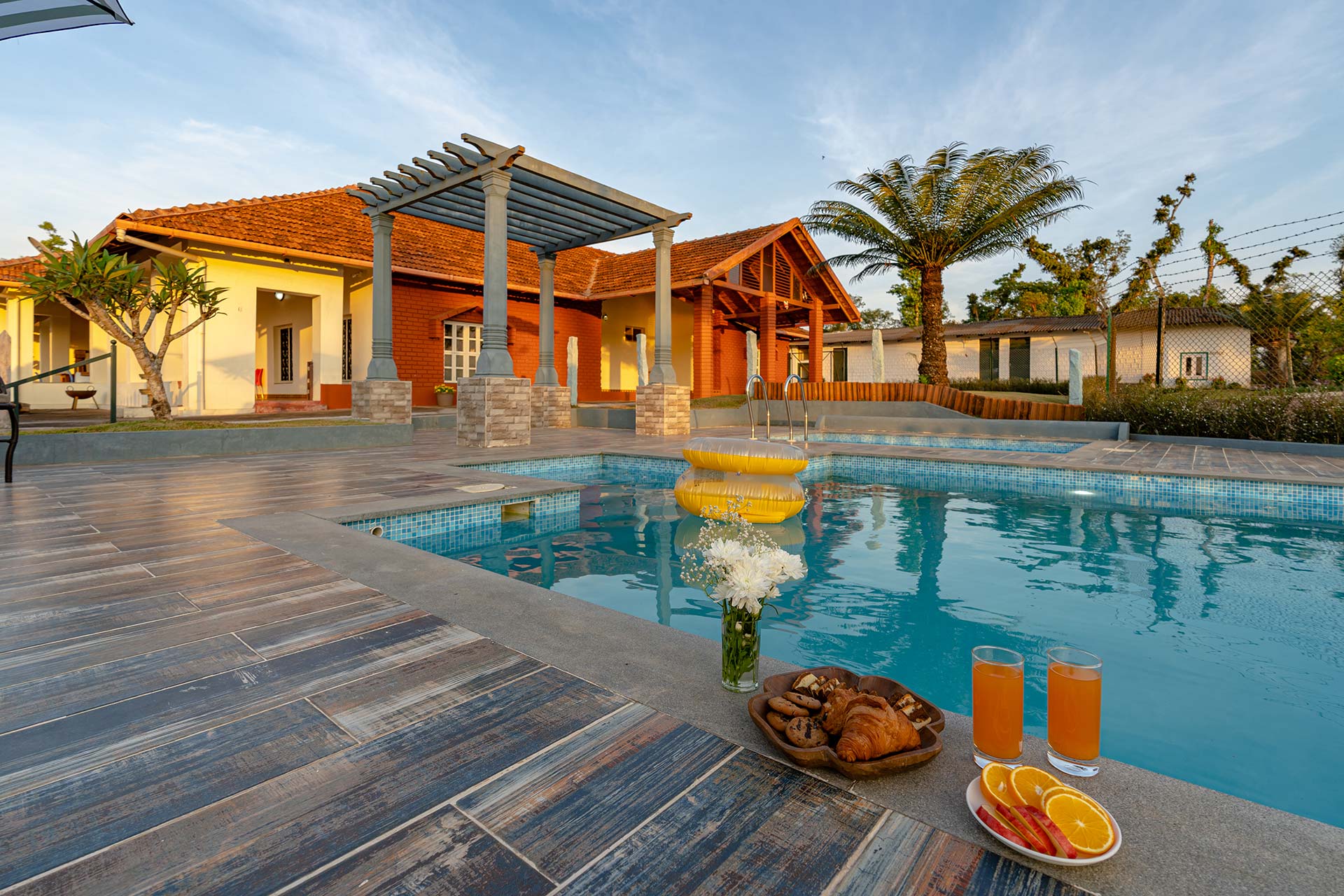

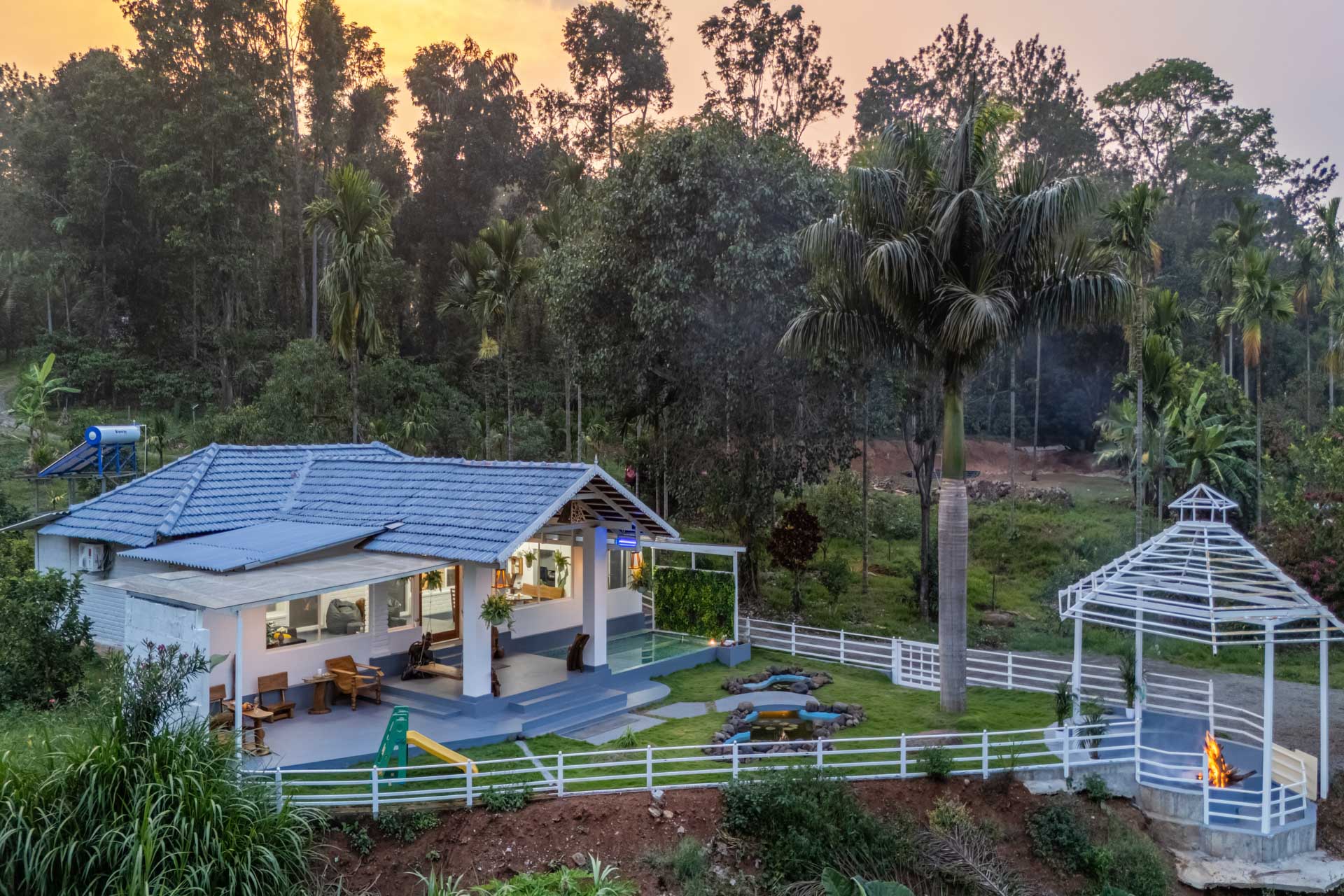
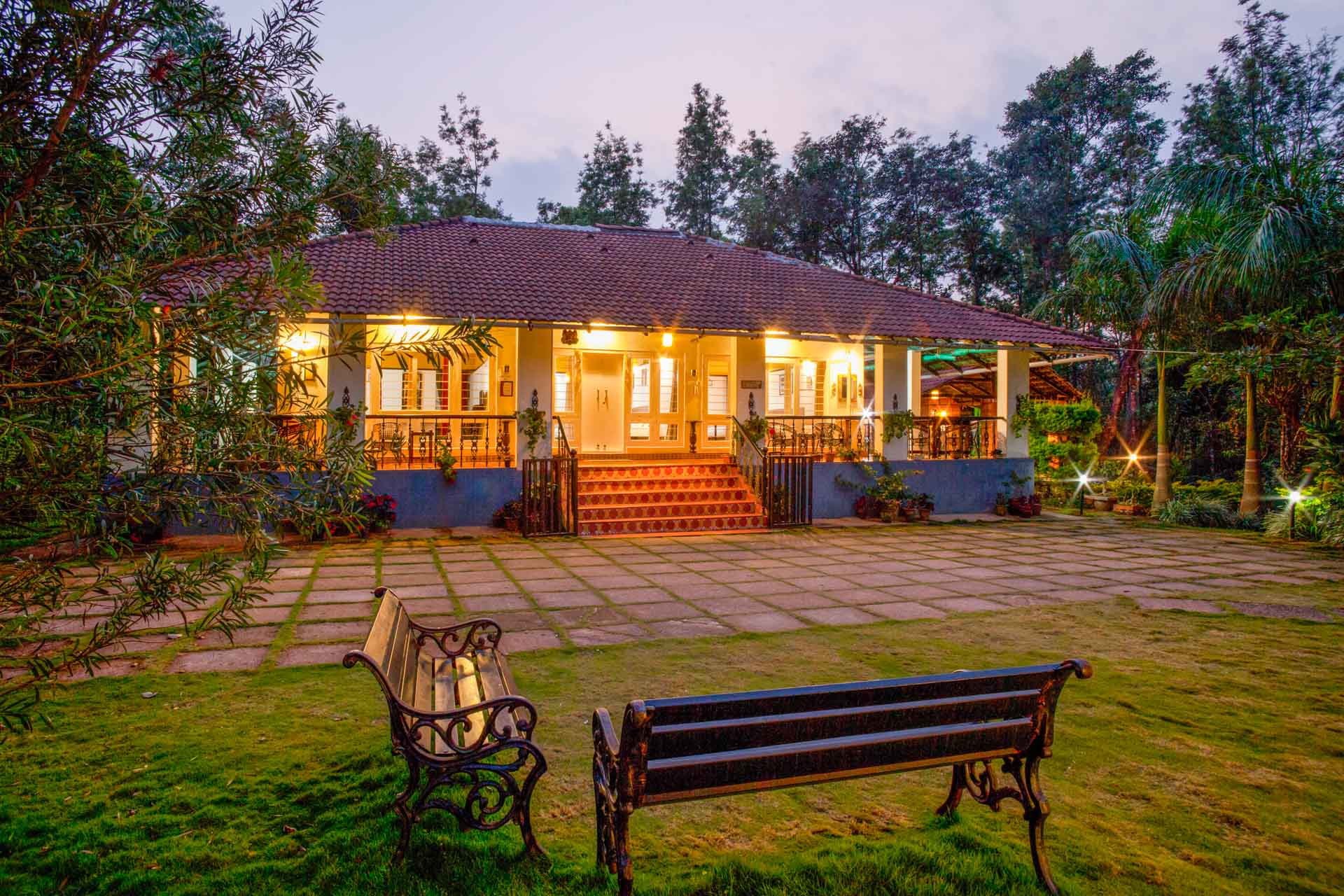
Villas to Stay in Coorg closest to Agumbe
Food & Local Experiences You Shouldn’t Miss
The agumbe rainforest trek is incomplete without sampling traditional Malnad cuisine — heavy on coconut, jackfruit, and locally foraged greens.
- Kadubu (steamed rice dumplings) with coconut chutney
- Halasinakai palya (raw jackfruit stir-fry)
- Patrode (steamed colocasia leaves with rice batter)
- Mosaru kodubale (rice flour ring snack with curd)
- Filter coffee from local arabica plantations
Other things to do in Agumbe village:
- Visit Doddamane — the heritage home used as the Malgudi Days set; entry typically free with a small donation
- Agumbe Rainforest Research Station (ARRS) — book a guided tour in advance via their official site; not always open to walk-ins
- Sirimane Falls — easy half-day add-on, 50 km away near Sringeri
Map & Distances (Quick Reference)
| From → To | Distance | Drive Time |
|---|---|---|
| Mangalore Airport → Agumbe | 97 km | 2.5 hr |
| Udupi Railway Station → Agumbe | 55 km | 1.5 hr |
| Shimoga → Agumbe | 90 km | 2.5 hr |
| Bangalore → Agumbe | 380 km | 7–8 hr |
| Agumbe → Onake Abbi trailhead | 4 km | 15 min |
| Agumbe → Kundadri Hill | 20 km | 40 min |
| Agumbe → Kodachadri base | 50 km | 1.5 hr |
| Agumbe → Coorg (Madikeri) | 245 km | 6 hr |
| Agumbe → Chikmagalur | 130 km | 3.5 hr |
Final Word: Is the Agumbe Rainforest Trek Worth It in 2026?

Yes — and the case is stronger than ever in 2026. With the Karnataka Forest Department tightening permit caps to protect the ecosystem, the agumbe rainforest trek is becoming a quieter, more managed experience. Trail traffic is regulated, guides are better trained than five years ago, and the introduction of online booking via the Karnataka Eco-Tourism portal in 2024 has cut down on chaotic walk-ins.
The trek rewards travellers who slow down. This isn’t a peak-bagger’s playground; it’s a forest-walker’s pilgrimage. Plan your agumbe rainforest trek between October and February, base yourself in a Malnad homestay or extend the trip with a StayVista villa in nearby Coorg or Chikmagalur, and you’ll come home with the kind of monsoon-fresh memories that make the Western Ghats famous.
FAQs — Agumbe Rainforest Trek
Yes. Most popular trails — Kundadri Hill, Jogigundi Falls, and Agumbe Sunset Point — are easy walks of under 3 km that beginners and even families with older children can do comfortably. Onake Abbi and Barkana are moderate trails; only Narasimha Parvatha demands genuine fitne
You need a Karnataka Forest Department permit for trails inside Someshwara Wildlife Sanctuary — including Onake Abbi, Barkana, and Narasimha Parvatha. Permits cost ₹50–₹250 per person and are best booked online via aranya.gov.in 2–3 days in advance, especially on weekends.
A minimum of 2 days and 1 night is required to cover the village, sunset point, and one major trek. Three days is ideal if you want to do Onake Abbi, Kundadri, and either Barkana or Kodachadri without rushing.
October to February is the best time, with daytime temperatures between 14 °C and 24 °C, dry trails, and most waterfalls still flowing. Avoid June to September unless you’re an experienced monsoon trekker, as several trails close due to landslides and extreme rainfall.
The village is safe, but forest areas are not meant for night-time entry. Snakes, including king cobras and pit vipers, are active after dusk. Stay within your homestay premises after 7 PM unless you’re on an organised wildlife night-walk with a licensed guide.
Sightings are rare even for researchers at the Agumbe Rainforest Research Station. Casual trekkers almost never spot one. Don’t plan your trip expecting a king cobra sighting — instead, enjoy the broader biodiversity and treat any reptile encounter as a bonus.
There is one ATM in Agumbe village which is often non-functional — carry sufficient cash from Udupi or Thirthahalli. Mobile networks (Jio and BSNL) work in the village but drop in forest zones. Inform family of your plans before entering trails.
Take an overnight KSRTC bus from Majestic to Thirthahalli (10 hours, ₹600–₹900), then a local bus or shared taxi for the final 22 km to Agumbe village. Trains to Shimoga or Udupi are alternatives, followed by bus or cab to Agumbe.