
Amarnath Yatra 2026: Dates, Registration, Route & Complete Travel Guide (Updated)

The Amarnath Yatra is one of the most revered pilgrimages in Hinduism – an annual journey to a high Himalayan cave where a naturally forming ice shivling (lingam) is worshipped as Lord Shiva. Every year, lakhs of devotees make the trek through Jammu and Kashmir’s mountains during the short summer window. If you’re planning to go this year, we’ve pulled together every practical detail you’ll need, from registration to which route suits your fitness.
Travel Advisory (Updated)
As the 2026 Amarnath Yatra is underway, Jammu & Kashmir is experiencing active monsoon conditions, with intermittent heavy rainfall, flash flood alerts and the possibility of landslides along parts of the pilgrimage routes. Weather-related disruptions can lead to temporary halts in the Yatra, road closures or changes in convoy timings. Pilgrims are advised to monitor the latest advisories issued by the Shri Amarnath Ji Shrine Board (SASB) and local authorities, travel only on their allotted registration date, and keep buffer time in their itinerary. Carry adequate rain gear, warm clothing and essential medicines, and be prepared for delays if weather conditions deteriorat
In this Blog
Amarnath Yatra 2026 at a Glance
| Yatra dates | 3 July – 28 August 2026 (57 days) |
| Pratham Puja | 29 June 2026 (Jyeshtha Purnima) |
| Registration fee | ₹150 per pilgrim |
| Cave shrine elevation | 3,888 m (12,756 ft) |
| Two routes | Baltal (~14 km) or Pahalgam (~46–48 km) |
| Nearest airport | Srinagar International Airport (SXR) — ~62 km to Baltal, ~90 km to Pahalgam |
| Nearest railway station | Jammu Tawi (~254–315 km); Udhampur & Banihal are closer |
| Ideal duration | 2–3 days (Baltal) to 4–5 days (Pahalgam) |
| Age limits | 13 to 70 years; no pregnant women beyond 6 weeks |
The Amarnath Yatra 2026 runs for 57 days, from 3 July to 28 August 2026 (ending on Raksha Bandhan). Registration opened on 15 April 2026 — pilgrims can register online at jksasb.nic.in or offline at 554 designated bank branches for ₹150 per person, along with a Compulsory Health Certificate. Two routes lead to the 3,888 m cave shrine: the shorter Baltal route (14 km) and the gentler traditional Pahalgam route (~46–48 km)
When Is the Amarnath Yatra 2026? Dates & Duration
The Amarnath Yatra 2026 begins on 3 July 2026 and concludes on 28 August 2026, spanning 57 days in total. The Shri Amarnathji Shrine Board (SASB) confirmed these dates, and the yatra traditionally ends on Raksha Bandhan, when the Chhari Mubarak (the holy mace) reaches the cave.
A quick note on a common error: several travel sites list the 2026 yatra as 62 days. That’s wrong. The official duration is 57 days. The ceremonial Pratham Puja (first worship) takes place earlier, on 29 June 2026, marking the formal start of the season.
Within this window, the first two to three weeks of July are usually the sweet spot. Trails are clearer, crowds are slightly thinner before the peak rush, and the ice lingam tends to be at its fullest early in the season before warm weather shrinks it. August often brings heavier, less predictable rain.
When does the Amarnath Yatra 2026 start and end? The yatra runs from 3 July to 28 August 2026 — a 57-day window confirmed by the Shri Amarnathji Shrine Board, concluding on Raksha Bandhan with the arrival of the Chhari Mubarak at the holy cave.
Amarnath Yatra 2026 Registration: Step-by-Step
Advance registration for the Amarnath Yatra 2026 opened on 15 April 2026, with a fee of ₹150 per pilgrim. Registration is mandatory — no one is allowed onto either route without a valid yatra permit and an RFID card (ANI, 2026).
How to register online
- Go to the official SASB portal at jksasb.nic.in or download the SASB mobile app.
- Create an account and fill in the registration form with your personal details.
- Upload a valid photo ID (Aadhaar), a passport-size photograph, and your Compulsory Health Certificate (CHC).
- Select your route (Baltal or Pahalgam) and your preferred yatra date.
- Pay the ₹150 fee online and download your Yatra Permit.
How to register offline
If you’d rather register in person, you can do so at one of 554 designated bank branches across India. The confirmed banks for 2026 are J&K Bank, Punjab National Bank (PNB), State Bank of India (SBI), and YES Bank. The government wires named only the four above – confirm locally before you travel.
The Compulsory Health Certificate (CHC)
Because the trek crosses high altitude, every pilgrim must carry a Compulsory Health Certificate. For 2026, the CHC must be issued on or after 8 April 2026, carry the applicant’s photograph, and be signed by an authorised doctor. The SASB publishes state-wise lists of authorised doctors and institutions on its portal.
Quick facts — Registration documents
- Fee: ₹150 per pilgrim
- Documents: Compulsory Health Certificate + photo ID (Aadhaar) + 4 passport photos
- CHC validity: issued on or after 8 April 2026
- Age limit: 13 to 70 years; pregnant women beyond 6 weeks not permitted
- RFID card: mandatory; worn around the neck throughout the yatra
The RFID card deserves special mention. For 2026, no registered yatri can begin the journey without one. You collect it from designated centres in Jammu or Srinagar after biometric verification, and access gates at Domail (Baltal) and Chandanwari (Pahalgam) won’t let you through without it. Helicopter passengers are counted separately from the daily trekking quota.
How do I register for the Amarnath Yatra 2026? Register online at jksasb.nic.in or the SASB app, or offline at 554 designated branches of J&K Bank, PNB, SBI, and YES Bank. The fee is ₹150 per pilgrim, and you must upload a Compulsory Health Certificate issued on or after 8 April 2026.
Baltal vs Pahalgam: Which Amarnath Yatra Route Should You Take?
The Amarnath cave can be reached by two routes. The Baltal route is the shortest at about 14 km one-way but very steep, while the traditional Pahalgam route is longer at roughly 46–48 km with a gentler gradient spread over several days. Your choice should come down to fitness, time, and how you want to experience the yatra.
Baltal vs Pahalgam: distance & trek days Distance (km, one-way) 14 — Baltal ~47 — Pahalgam Typical trek duration (days) 1–2 — Baltal 3–5 — Pahalgam Source: Shri Amarnathji Shrine Board, 2026
Pahalgam route (traditional)
This is the classic pilgrimage path, gentler underfoot and richer in scenery. It starts at Pahalgam (2,130 m) in Anantnag district and climbs through Chandanwari, Pissu Top, Sheshnag, and the Mahagunas Pass — the highest point at 4,276 m — before descending to Panchtarni and on to the cave.
Pahalgam route — practical details
- Distance: ~46–48 km one-way (~36 km of actual trek)
- Time required: 3–5 days
- Difficulty: Moderate — gradual climb, longer but less punishing
- Key stops: Pahalgam → Chandanwari → Pissu Top → Sheshnag → Mahagunas Pass (4,276 m) → Panchtarni → Sangam → Cave
- Ideal for: First-timers, families, and those who want the full traditional experience
- Pro tip: A minibus covers the first 16 km from Pahalgam to Chandanwari, so save your energy for the climb beyond.
Baltal route (shorter, steeper)
If you’re fit and short on time, Baltal is the express option. The trail is only about 14 km one-way, and many strong trekkers complete the cave darshan and return in a single long day. The trade-off is a relentlessly steep gradient with little gentle terrain to ease into.
Baltal route — practical details
- Distance: ~14 km one-way
- Time required: 1–2 days (single-day return possible for the fit)
- Difficulty: Strenuous — steep throughout
- Key stops: Baltal → Domail → Barari → Sangam → Cave
- Ideal for: Fit, time-pressed pilgrims and solo trekkers
- Pro tip: Start before dawn to reach the cave and return before afternoon weather rolls in.
| Factor | Baltal Route | Pahalgam Route |
| Distance (one-way) | ~14 km | ~46–48 km |
| Duration | 1–2 days | 3–5 days |
| Difficulty | Strenuous, steep | Moderate, gradual |
| Scenery | Quick, dramatic | Longer, more varied |
| Best for | Fit, time-pressed | Families, first-timers |
| From Srinagar | ~100 km | ~90 km |
Which route is better, Baltal or Pahalgam? Baltal is the shorter route at ~14 km one-way but steep, suiting fit pilgrims short on time. The Pahalgam route is longer at ~46–48 km over 3–5 days with a gentler climb, making it better for families and first-timers.
The elevation you’ll climb
Both routes top out at the 3,888 m cave, but the Pahalgam path crosses the 4,276 m Mahagunas Pass on the way — higher than the shrine itself. Here’s how the traditional route rises and falls.
Pahalgam route elevation profile (metres) Pahalgam 2,130 Chandanwari 2,896 Sheshnag 3,576 Mahagunas 4,276 Panchtarni 3,657 Cave 3,888 Source: Shri Amarnathji Shrine Board / route survey data, 2026
Pahalgam route elevation profile (metres) — Source: Shri Amarnathji Shrine Board, 2026
| Stop | Elevation |
| Pahalgam (start) | 2,130 m |
| Chandanwari | 2,896 m |
| Sheshnag | 3,576 m |
| Mahagunas Pass (highest point) | 4,276 m |
| Panchtarni | 3,657 m |
| Holy Cave | 3,888 m |
Amarnath Helicopter Booking 2026: Fares & How It Works
For pilgrims who want to skip most of the trek, helicopter services fly between the base camps and Panchtarni, cutting hours of walking down to minutes. From Panchtarni, the final ~6 km to the cave is still on foot, pony, or palki — no helicopter lands at the cave itself.
| Sector | Approx. one-way fare | Flight time |
| Baltal (Neelgrath) ↔ Panchtarni | ~₹3,250 | 8–10 min |
| Pahalgam ↔ Panchtarni | ~₹4,900 | ~20 min |
Important: The fares above are widely reported by operators but we could not confirm them on an official SASB notice. The Shrine Board sets helicopter rates each season, so please verify the exact 2026 fares on jksasb.nic.in before booking.
To book, create an account on the SASB portal, choose your sector and date, upload your ID, pay online, and download the e-ticket. Slots sell out fast in peak July, so book early.
How much does the Amarnath helicopter booking cost in 2026? Reported one-way fares are around ₹3,250 for Baltal–Panchtarni and ₹4,900 for Pahalgam–Panchtarni, with flights of 8–20 minutes. Confirm the official 2026 rates on jksasb.nic.in, as the Shrine Board revises fares each season.
How to Reach the Amarnath Yatra Base Camps
The cave shrine sits about 141 km from Srinagar, and most pilgrims route through Srinagar or Jammu. The nearest airport is Srinagar International Airport (SXR) — roughly 62 km from Baltal and 90 km from Pahalgam — making it the fastest way in.
Getting there
- By air: Fly to Srinagar International Airport (SXR), then drive ~2.5–3 hrs to Pahalgam (~90 km) or to Baltal (~100 km).
- By train: Jammu Tawi is the major railhead (~254–315 km); Udhampur and Banihal are closer with fewer services. If you’re routing via the new rail link, our Vande Bharat Jammu to Srinagar guide covers timings and booking.
- By road from Jammu: ~315 km to Pahalgam and ~400 km to Baltal, roughly 8–9 hours.
- Pro tip: Arrive in Srinagar or Jammu a day early to rest and acclimatise before the climb.
Best Time to Go, Weather & What to Pack
The entire 57-day window is open, but the first two to three weeks of July generally offer the best conditions — clearer trails and a fuller ice lingam before warm weather sets in. Daytime temperatures hover around 5–20 °C, while nights at altitude drop near freezing, and sudden rain or even snow is always possible.
Packing checklist
- Layered warm clothing and a waterproof jacket or poncho
- Trekking shoes with strong grip, plus woollen cap and gloves
- Torch and power bank, waterproof bag for documents
- Personal first-aid kit and any prescribed medication
- Reusable water bottle, high-energy snacks (nuts, energy bars)
- A sturdy walking stick
Altitude & health
The cave sits above 3,800 m, so altitude sickness is a real risk. Acclimatise for a day before you start, drink 3–4 litres of water daily, eat regularly, and take frequent breaks. Watch for headache, nausea, or breathlessness – early signs of Acute Mountain Sickness – and descend if symptoms worsen. Carry your CHC at all times.
Suggested Amarnath Yatra Itineraries
How long you’ll need depends entirely on your route. Here are two realistic plans – and if you want to extend the trip into a proper holiday, our 5-day Kashmir itinerary pairs well with either.
2-day Baltal itinerary (faster)
- Day 1: Arrive Srinagar, drive ~100 km to Baltal, rest and acclimatise overnight.
- Day 2: Pre-dawn start, trek (or take the helicopter to Panchtarni), complete cave darshan, return to Baltal by evening.
4-day Pahalgam itinerary (traditional)
- Day 1: Arrive Srinagar, drive ~90 km to Pahalgam, overnight stay.
- Day 2: Pahalgam → Chandanwari → Sheshnag (overnight camp).
- Day 3: Sheshnag → Mahagunas Pass → Panchtarni → Cave darshan → back to Panchtarni.
- Day 4: Descend to Pahalgam and return to Srinagar.
Where to Stay Near the Amarnath Base Camps
Because the base camps themselves offer only basic tented accommodation, most pilgrims base out of Srinagar (central for both routes), Pahalgam, or Sonmarg (the gateway town near Baltal). A comfortable stay before and after the trek makes a real difference when you’re acclimatising or recovering.
Where to stay with StayVista
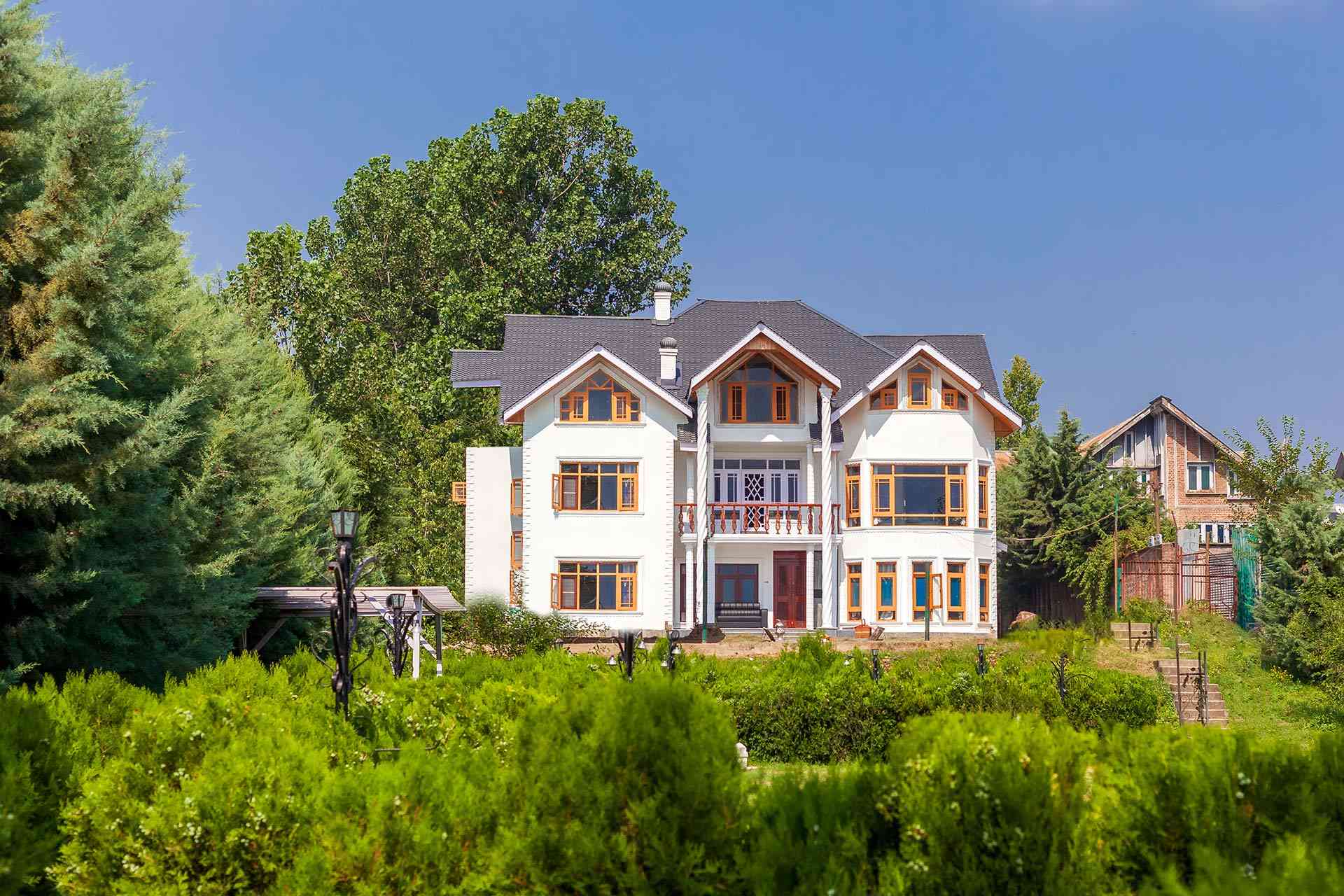
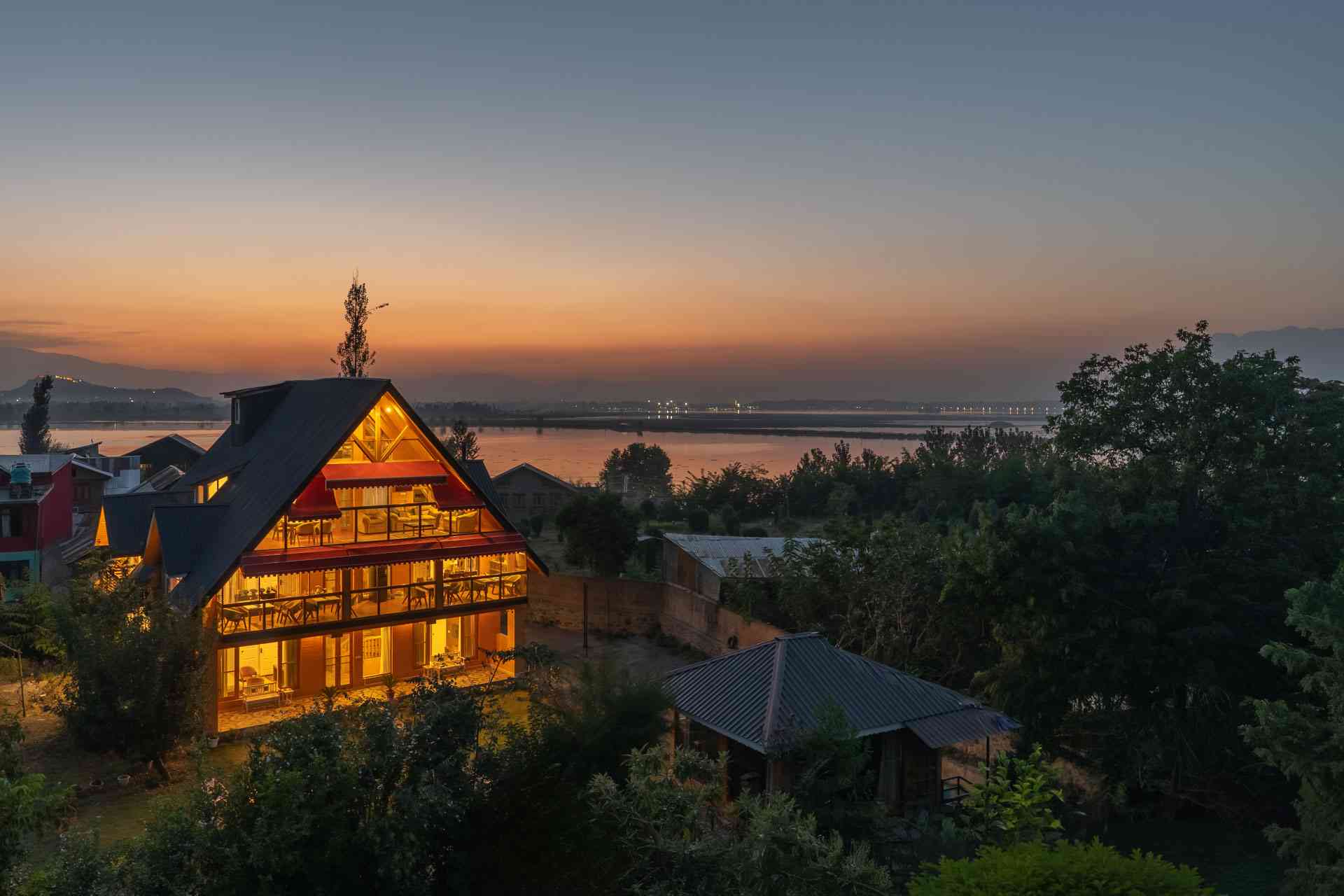
Srinagar makes the most sense as your hub since it’s central to both routes. We’d point you to Buhayra Lakefront, a 4-bedroom villa on the banks of Dal Lake, or Emaarat Chalet, a secluded retreat with views of the Zabarwan range – both give you a private, well-heated base to adjust to the altitude and rest sore legs afterwards. You’ll find more options across our Srinagar villas, or closer to the trailheads in Pahalgam and Sonmarg.
Amarnath Yatra 2026 Estimated Cost Breakdown
Beyond travel and stay, the yatra-specific costs are modest. Here’s a rough per-person picture, excluding flights and accommodation.
| Item | Approx. cost (per person) |
| Registration / yatra permit | ₹150 |
| Helicopter (one-way, optional) | ~₹3,250–4,900 |
| Pony / palki (optional) | Varies by sector |
| Compulsory Health Certificate | Doctor’s consultation fee |
Frequently Asked Questions
The Amarnath Yatra 2026 is 57 days long, running from 3 July to 28 August 2026. Despite some blogs claiming 62 days, the Shri Amarnathji Shrine Board has confirmed the official duration as 57 days, ending on Raksha Bandhan.
The registration fee is ₹150 per pilgrim for the 2026 yatra. You can pay it online at jksasb.nic.in or offline at 554 designated branches of J&K Bank, PNB, SBI, and YES Bank. NRIs reportedly pay a higher fee.
The Amarnath cave shrine sits at 3,888 metres (12,756 feet) above sea level in Jammu and Kashmir. The cave itself is around 40 metres tall and houses the naturally forming ice shivling worshipped as Lord Shiva.
You need a Compulsory Health Certificate (issued on or after 8 April 2026), a valid government photo ID such as Aadhaar, and four passport-size photographs. Every registered pilgrim also receives a mandatory RFID card before starting the trek.
Pilgrims must be between 13 and 70 years old to register, and pregnant women beyond six weeks are not permitted. Older travelers who qualify should choose the gentler Pahalgam route or use the helicopter service, and must carry a valid health certificate.
The Baltal route is shorter at about 14 km one-way but steep, while the Pahalgam route is roughly 46–48 km over 3–5 days with a gentler gradient. Fit pilgrims short on time prefer Baltal; families often choose Pahalgam.
Planning Your Amarnath Yatra 2026
The Amarnath Yatra 2026 is a once-in-a-lifetime journey for many, and a little planning goes a long way. Lock in your registration early, get your health certificate sorted before 8 April’s cut-off matters, pick the route that matches your fitness, and pack for fast-changing mountain weather. Whether you take the quick climb from Baltal or the slower traditional path from Pahalgam, the darshan at the end is the same reward.
When you’re ready to plan where to rest before and after the trek, a comfortable base in Srinagar or near the trailhead makes the whole experience easier. Explore StayVista’s stays across Kashmir to build your trip around the yatra, and read up on the best things to do in Srinagar for your rest days. Safe travels, and Har Har Mahadev.