

Bonalu 2026 in Hyderabad and Telangana: Dates (July 19–Aug 9), Rituals & Where to Experience It
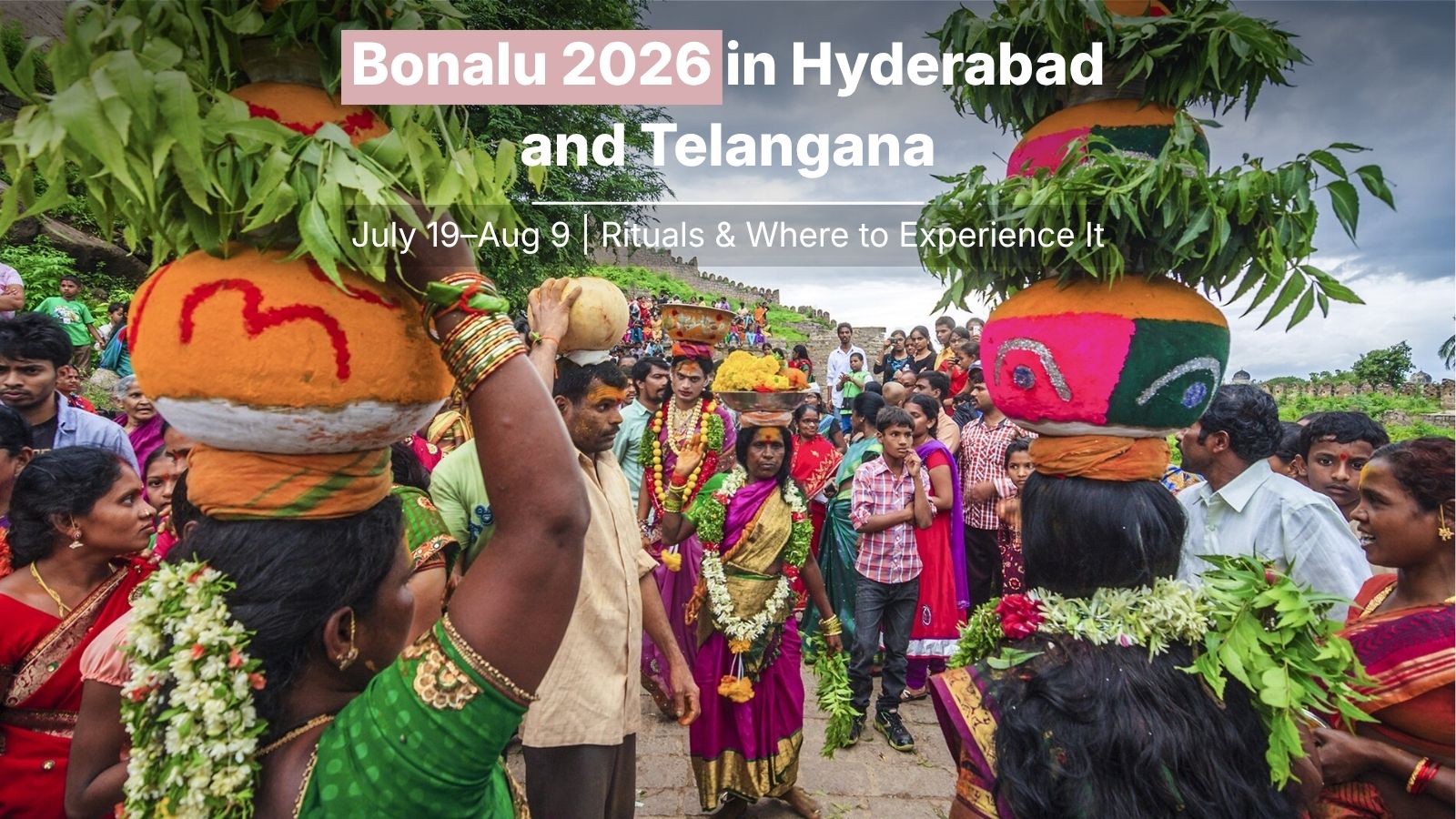
Bonalu 2026 in Hyderabad spans four Sundays — July 19, July 26, August 2, and August 9 — during the Hindu month of Ashadha Masam. Bonalu in Telangana is the state’s most widely observed folk festival, honouring Goddess Mahankali across approximately 48 temples in Hyderabad and Secunderabad, with celebrations extending across towns and districts throughout the state. August 10, 2026 is a gazetted public holiday in Telangana to mark its conclusion.

In this Blog
What Is Bonalu and Why Does It Matter in Hyderabad?
Bonalu — pronounced boh-nah-loo — is Telangana’s most distinctive folk festival, and Hyderabad is its spiritual and cultural epicentre. The name derives from the Sanskrit word Bhojanam (food), which became Bonam in Telugu and eventually Bonalu in its plural form. At its simplest, Bonalu is a food offering made to the Mother Goddess: a pot of cooked rice, jaggery, curd, and turmeric carried by women on their heads to the temple.
Bonalu in Telangana is not confined to Hyderabad alone. Across the state — from Warangal and Nizamabad to Karimnagar and Khammam — Shakti temples observe their own Bonalu season during Ashadha Masam, each with local customs layered onto the shared ritual framework. But Hyderabad remains the festival’s heart. It is a citywide expression of devotion, a procession of colour and sound through the oldest streets of the twin cities, and for many families in the Old City, it is the year’s most anticipated occasion. The Telangana government formally declared Bonalu a state festival in 2014, recognising what residents of Lal Darwaza and Secunderabad already knew: this festival belongs to Telangana’s identity as deeply as the Telugu language itself.
Bonalu 2026 Dates: The Four Sundays in Ashadha Masam
The festival follows the lunar Hindu calendar and is observed on the Sundays that fall within Ashadha Masam (the Ashadha month). In 2026, those dates are:
| Sunday | Location / Temple | Significance |
|---|---|---|
| July 19 | Sri Jagadamba Mahankali Temple, Golconda Fort | Opening celebrations; Rottela Jathara procession |
| July 26 | Ujjaini Mahankali Temple, Secunderabad | Major Secunderabad celebrations |
| August 2 | Sri Mahankali Temple, Lal Darwaza, Old City | The primary / main Bonalu of the season |
| August 9 | Neighbourhood temples across Hyderabad | Final Sunday; special poojas for Goddess Yellamma |
| August 10 | City-wide | Gazetted public holiday in Telangana |
The main Bonalu at Lal Darwaza on August 2 is the centrepiece of the festival season. The Rangam oracle ritual takes place on August 3 — the morning after — at Ujjaini Mahankali Temple in Secunderabad.
Note: Some sources list a preliminary celebration at Jagadambika Temple, Golconda Fort, on July 3 as the soft start of the Ashadha Jatara season. The four Sundays above represent the core Bonalu festival period.
The History Behind Bonalu Festival: From a 19th-Century Plague to a State Festival
Bonalu’s origins trace back to the early 19th century when a cholera and plague epidemic swept through the twin cities of Hyderabad and Secunderabad. According to widely documented accounts, soldiers of the Hyderabad regiment stationed in Secunderabad prayed to Goddess Mahakali for protection. When the epidemic subsided, they made an offering of cooked rice — a bonam — as an act of thanksgiving and installed an idol of the Goddess in what became the Ujjaini Mahankali Temple in Secunderabad’s Regimental Bazaar area.
That act of gratitude became an annual tradition, spreading from Secunderabad to Hyderabad’s Old City, Golconda, Balkampet, and eventually to nearly every neighbourhood in the twin cities. The phrase “Regimental Bazaar twin cities” still appears in descriptions of the festival’s origin, a reminder of the military connection that first elevated this folk offering to a communal institution.
Across the centuries, Bonalu evolved from a neighbourhood ritual into a Telangana-wide celebration. In Hyderabad and Secunderabad alone, approximately 48 temples formally participate. Beyond the twin cities, Bonalu in Telangana encompasses Shakti temple observances across every district — making it, by reach and participation, the state’s single most widely celebrated folk festival. Its mythological roots, which frame Ashadha Masam as the season the Goddess returns to her parental home, give the festival a cosmic rationale that resonates across all its regional variations.
Key Rituals of Bonalu Festival: What Happens and Who Participates
Bonalu’s rituals are specific, tactile, and visually striking. Here is what they involve:
The Bonam Offering
The central act of Bonalu is preparing and carrying a Bonam — a brass or earthen pot filled with cooked rice, jaggery, curd, and neem leaves, decorated with turmeric and vermilion, and topped with a lit lamp. Women balance these pots on their heads and walk in procession to the temple. This is not a simple gesture; it requires physical balance, concentration, and is understood as a form of personal devotion.
What goes into a Bonam:
- Cooked rice (the primary offering)
- Jaggery (sweetness as an offering)
- Curd or yoghurt
- Neem leaves
- Turmeric paste
- Lit oil lamp placed on the pot’s mouth
Who Participates
Bonalu participation is structured around gender and family role:
- Married women typically observe the ritual at their parents’ house — a custom that mirrors the belief that the Goddess herself returns to her parental home during Ashadha Masam.
- Teenage girls often participate wearing the Half-Saree (Langa-Voni), marking the festival as a significant coming-of-age occasion.
- Older women lead the processions and mentor younger participants.
- Men participate in the processions and in the Pothuraju ritual
Offering Materials: Bangles, Sarees, and Thottelu
Beyond the Bonam, devotees bring Bongal bangles and sarees as votive offerings to the Goddess. Paper structures called Thottelu — decorative arches or frames constructed from bamboo and paper — are carried in procession and presented at the temple. These papier-mâché and craft elements are made by local artisans in the weeks before the festival and are considered auspicious gifts to the deity.
Where to Experience Bonalu 2026 in Hyderabad: Temples & Neighbourhoods
Bonalu is spread across approximately 48 temples in Hyderabad and Secunderabad, but some locations offer a more immersive experience than others.
Top Temples and Areas to Visit
1. Sri Jagadamba Mahankali Temple — Golconda Fort
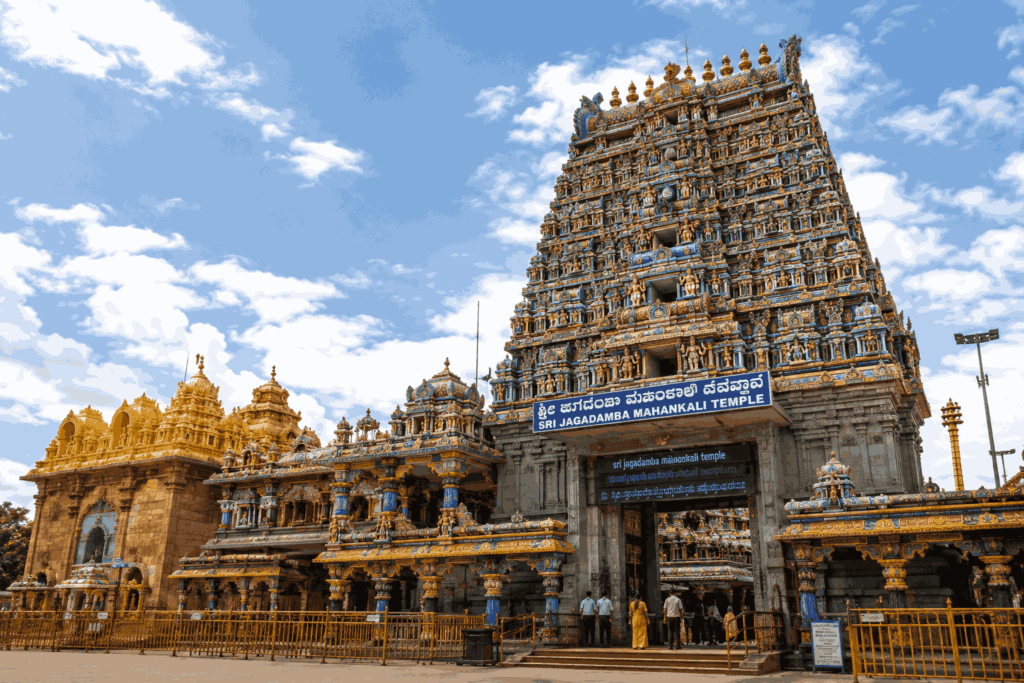
The festival traditionally opens here on the first Sunday of Ashadha. The Golconda Fort backdrop gives the processions a dramatic, historic quality. The Rottela Jathara (a procession from Langar Houz to the fort) kicks off the season.
2. Ujjaini Mahankali Temple — Secunderabad

Located in the Regimental Bazaar area — the festival’s historical birthplace. July 26 sees the largest Secunderabad celebrations here, and the Rangam oracle ritual takes place on August 3 at this temple.
3. Sri Mahankali Temple — Lal Darwaza, Old City

This is where the primary Bonalu of the 2026 season takes place on August 2. Lal Darwaza in Hyderabad’s Charminar-area Old City is the most concentrated festival zone, with streets packed from dawn to dusk.
4. Akkanna Madanna Temple — Haribowli

One of the well-regarded neighbourhood temples in the Old City area, it draws devoted local crowds.
5. Balkampet Yellamma Temple

Located in the Balkampet area of Hyderabad, this temple dedicated to Goddess Yellamma sees special observances on the first and fourth Sundays of the festival.
6. Pochamma and Katta Maisamma Temple — Chilkalguda
Active on the third Sunday, this temple near Chilkalguda draws significant crowds from surrounding neighbourhoods.
What to See Beyond the Temple: Rangam, Pothuraju & Processions
Rangam — The Oracle Ritual
The Rangam is one of the most distinctive elements of Bonalu and is unique to this festival. It takes place the morning after the main Lal Darwaza Bonalu — on August 3, 2026 — at the Ujjaini Mahankali Temple in Secunderabad. A woman devotee enters a trance state, understood as the Goddess speaking through her, and delivers prophecies for the coming year. Thousands gather to witness this ritual, which is simultaneously deeply religious and culturally theatrical.
Pothuraju — The Divine Protector
In every Bonalu procession, a man ritually embodying Pothuraju — the divine male protector of the Mother Goddess — leads the way. He is marked with sacred red and yellow paint, carries a whip, and clears the procession path. The Pothuraju figure is as recognisable a symbol of Bonalu as the Bonam pot itself.
Processions and Music
The processions — called Jatharas — feature percussion-heavy folk music (dappu drums, nagara), dancers, and the Bonam-carrying women walking in formation. The sensory experience is significant: the sound of drums, the smell of camphor and turmeric, and the sight of hundreds of decorated pots catching the afternoon light make for an unusually immersive cultural encounter.
The Significance of Bonalu: Spiritual, Cultural & Ecological Meaning
Bonalu is not a single-note festival. Its significance is layered across several dimensions that together explain why it has endured — and grown — for over two centuries.
Thanksgiving and community resilience
At its historical core, Bonalu is a festival of gratitude. Communities in Hyderabad and Secunderabad offered cooked food to the Mother Goddess after surviving cholera and plague epidemics. That act of collective thanksgiving — acknowledging the Goddess as the force that stood between life and disease — is still the emotional foundation of every Bonam carried to the temple today.
Shakti worship in its most immediate form
Bonalu is a direct expression of the Shakti tradition — the veneration of divine feminine energy as the supreme protective force. Unlike temple-bound Shakti worship, Bonalu brings that energy into the streets, into family kitchens, and into the hands (and heads) of ordinary women. The Goddess is not distant here; she is met in procession.
Ecological and Ayurvedic wisdom
The ritual materials of Bonalu are not arbitrary. Neem leaves tied around the Bonam pot have established antimicrobial properties; turmeric is a natural antiseptic; earthen pots are ecologically neutral. The festival falls at the height of the monsoon — a season associated in traditional Indian medicine with heightened disease risk. The emphasis on purification, both spiritual and physical, is embedded in the ritual’s material logic.
Intangible cultural heritage
Bonalu preserves folk traditions — the dappu drum compositions, the Pothuraju embodiment practice, the Rangam prophecy ceremony — that are unique to Telangana and not replicated elsewhere in India. These are living traditions, transmitted through participation rather than text, and Bonalu is their primary annual vehicle.
Monsoon gratitude
Celebrated during Ashadha and Shravan, the heart of the South Asian monsoon, Bonalu also functions as an agricultural thanksgiving — an offering to the Goddess for the rains that sustain crops and communities across Telangana.
Deities Worshipped During Bonalu Festival
Bonalu’s devotional universe is centred on the Mother Goddess in her various Telangana forms. The following deities receive offerings and prayers across the festival’s four Sundays.
Goddess Mahankali — The Primary Deity
Mahankali is the supreme presiding deity of Bonalu. She is the Telangana form of Goddess Kali — fierce, protective, and understood as the guardian of the city and its people. Mahankali is not worshipped as a remote cosmic force but as a present, local deity who lives in the neighbourhood temple and requires regular propitiation. Her iconography typically shows a dark complexion, multiple arms, and an expression of fierce compassion — the mother who destroys what threatens her children.
Two temple-specific forms of Mahankali receive special veneration during Bonalu:
- Ujjaini Mahankali (Secunderabad) — the historical and ritual centrepiece of the festival, believed to have originated from Ujjain’s Mahakali tradition. She receives the grand Rangam prophecy ritual and the July 26 major Bonalu.
- Golconda Mahankali — the ancient goddess of Golconda Fort whose blessings open the festival season on July 19.
Goddess Durga — The Invincible Mother
Mahankali is understood as the supreme form of Goddess Durga — the Invincible Mother Goddess who destroys evil and protects the righteous. Many of the mantras chanted during Bonalu draw from the Durga tradition, and the festival’s underlying theology of feminine power conquering disease and adversity is fundamentally Durgaic.
Ellamma and Pochamma — The Village Goddesses
At neighbourhood shrines across Hyderabad and across smaller Telangana towns, Bonalu is also observed for Ellamma and Pochamma — localised village goddess forms of the Mother Goddess who are worshipped as protectors of specific communities, castes, and localities. These deities represent the grassroots layer of Bonalu worship, where the festival’s reach extends far beyond the famous Hyderabad temples.
Pothuraju — The Divine Protector
Pothuraju occupies a unique position in Bonalu’s sacred hierarchy — he is the divine male attendant of the Mother Goddess, understood variously as her brother, her guardian, or her fierce lieutenant. During processions, a devotee ritually embodies Pothuraju — painted in sacred red and yellow, wielding a long whip — and runs through the crowd driving away negative forces. His presence is considered essential to the Goddess’s protection of the procession.
Lord Shiva — The Consort
As the consort of Parvati/Kali, Lord Shiva represents the masculine cosmic energy that balances the Goddess’s fierce protective power. Some Bonalu observances, particularly at Shaiva-Shakta temples, acknowledge Shiva alongside the Mother Goddess as part of the cosmic unity underlying the festival’s theology.
Spiritual Benefits of Observing Bonalu
The spiritual benefits attributed to sincere Bonalu participation are drawn from Shakti tradition and the accumulated belief of Telangana communities across generations. These are the blessings devotees seek and the outcomes traditionally associated with offering Bonam to the Mother Goddess.
- Divine protection from disease and misfortune. The Goddess Mahankali is invoked specifically as a protector against epidemics, illness, and calamity — the same grace that, in tradition, ended Hyderabad’s 19th-century plague. Devotees who offer Bonam sincerely are understood to come under her protective shield for the coming year.
- Fulfilment of vows (Manasika). Many devotees approach Bonalu with a specific prayer or vow made to the Mother Goddess — for a child’s health, a family member’s recovery, or a significant life transition. The festival is a moment to fulfil those vows and make new ones.
- Removal of negative energy and evil eye. The neem purification rituals woven through Bonalu — neem leaves tied to the Bonam, worn in the hair, distributed as prasad — are understood as a protective cleansing of the evil eye (drishti) and negative energies affecting the household.
- Blessings for family health and children’s wellbeing. Mothers participating in Bonalu frequently do so on behalf of their children — seeking the Mother Goddess’s blessing for their health, education, and futures. The act of carrying the Bonam on one’s head is itself understood as an embodied prayer.
- Community merit through shared devotion. Bonalu is structurally communal — processions are collective, offerings are shared, prasad is distributed. The spiritual merit of participation is understood to accrue not just to the individual but to the family and neighbourhood as a whole.
- Monsoon and agricultural blessings. For farming communities in Telangana, Bonalu prayers also seek the Goddess’s blessing for adequate monsoon rains and a good harvest — a continuity with the festival’s deep agricultural roots.
- Liberation from ancestral karma. Sincere offering during Bonalu is believed by some devotees to address pitru dosha — ancestral karmic debts — through the Goddess’s grace, bringing relief and forward movement to the family line.
- Spiritual fearlessness. Bonalu is dedicated to the fiercest form of the Mother Goddess — and devotion to the fierce divine is, in Shakti tradition, a path to fearlessness. The Goddess who destroys what is harmful also grants her devotees the courage to face what is difficult.
Bonalu in Telangana: How the Festival Is Celebrated Beyond Hyderabad
While Hyderabad and Secunderabad host Bonalu’s most famous celebrations, the festival is a state-wide phenomenon. Bonalu in Telangana extends across all 33 districts, with local Shakti temples observing the Ashadha Masam festival in ways that reflect the distinct character of each region. Understanding the broader Telangana picture helps explain why this is not just a city festival — it is a state institution.
Warangal
Warangal, one of Telangana’s most historically significant cities and home to the ancient Kakatiya dynasty, has its own deeply rooted Bonalu tradition. The Bhadrakali Temple in Warangal — one of the oldest Shakti temples in Telangana — sees significant Bonalu observances, with devotees arriving from across the Warangal urban district. The festival here carries the additional weight of the Kakatiya period’s goddess-worship heritage, which predates the Hyderabad celebrations by several centuries.
Nizamabad
In Nizamabad, Bonalu is observed at local Mahankali and Pochamma temples across the city and surrounding towns. The northern Telangana style of Bonalu tends to be more intimate than the large urban processions of Hyderabad — smaller processions, tightly knit neighbourhood participation, and a stronger emphasis on family-level vow fulfilment rituals.
Karimnagar and Khammam
Across Karimnagar and Khammam districts, Bonalu coincides with the monsoon’s peak and carries strong agricultural meaning. Village-level celebrations at Ellamma and Yellamma shrines are common, where farming communities offer Bonam in gratitude for rains and in prayer for a good harvest.
What Stays Consistent Across Telangana
Despite regional variations, certain elements of Bonalu are consistent across the entire state:
- The festival always falls during Ashadha Masam (July–August)
- The core offering is always the Bonam — cooked rice in a decorated pot
- Women are the primary ritual participants in every location
- Pothuraju leads processions across all regions
- Neem leaves and turmeric are universal purification symbols
- The Goddess worshipped is always a form of Shakti — Mahankali, Ellamma, Pochamma, or a local village goddess equivalent
Bonalu as Telangana’s Cultural Identity Marker
When Telangana became a separate state in 2014, Bonalu’s elevation to official state festival status was not incidental. The festival — deeply rooted in the Telugu-speaking Telangana region’s history, untouched by the more Sanskritised festivals of coastal Andhra Pradesh — represented something the new state could call distinctly its own. Bonalu in Telangana is, in this sense, both a religious festival and a statement of regional cultural identity. Attending it, wherever in the state you encounter it, is an encounter with something that belongs specifically to this land.
Where to Stay in Hyderabad During Bonalu 2026
Hyderabad during Bonalu sees heavy bookings, particularly in and around the Old City and Secunderabad. Booking accommodation 3–4 weeks in advance is advisable for the August 2 weekend specifically.
Recommended properties :
Aaranya Villa Hyderabad — A 3-bedroom villa situated approximately 25 minutes’ walk from Maisamma Temple, set in a nature-adjacent location with easy car access to the Old City and Golconda.
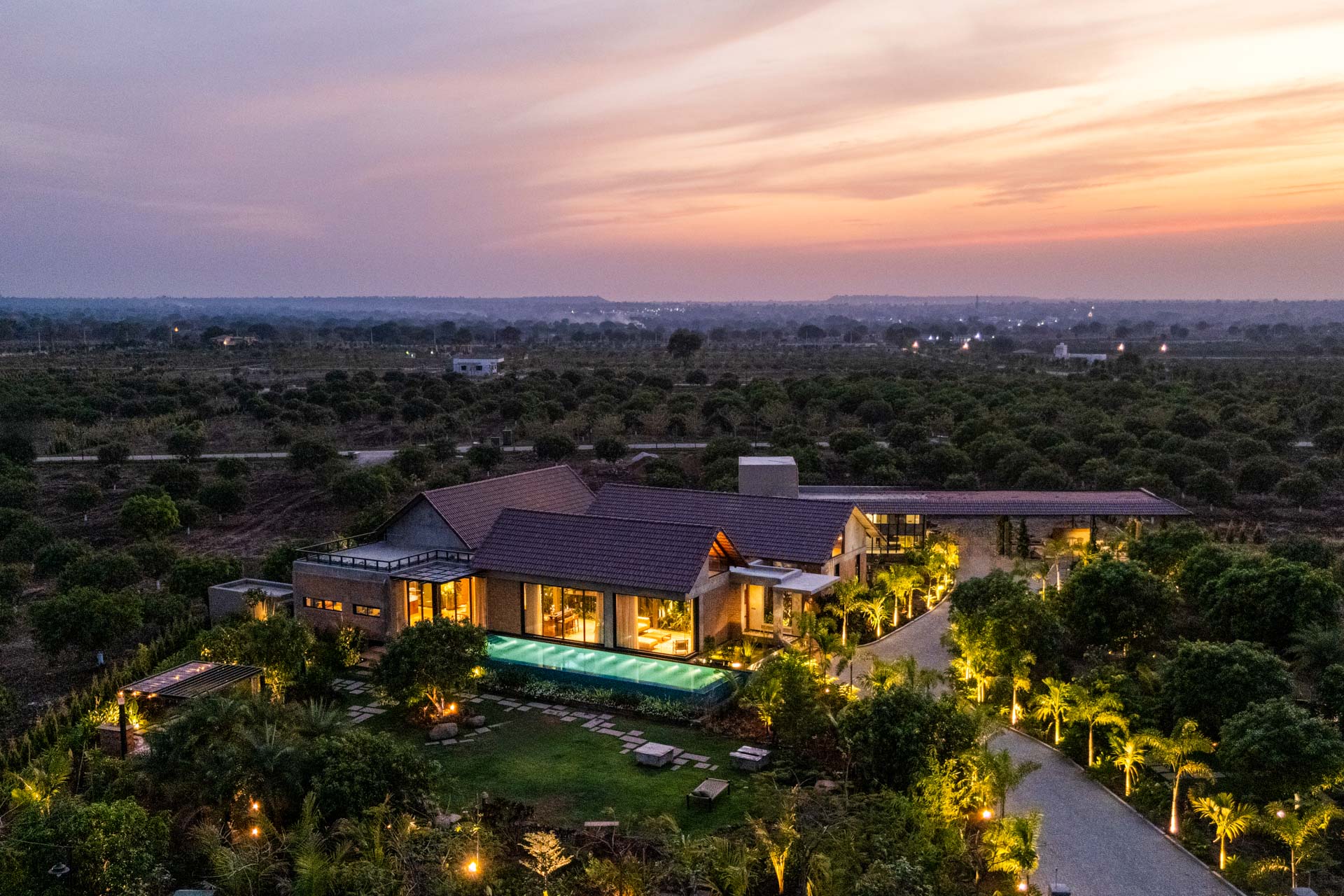
Zen Grove Hyderabad — A 3-bedroom villa set amidst expansive greenery near Shankarpalli, offering a tranquil countryside escape with easy road connectivity to Hyderabad’s major attractions, including Golconda Fort and the city’s vibrant Bonalu celebrations.
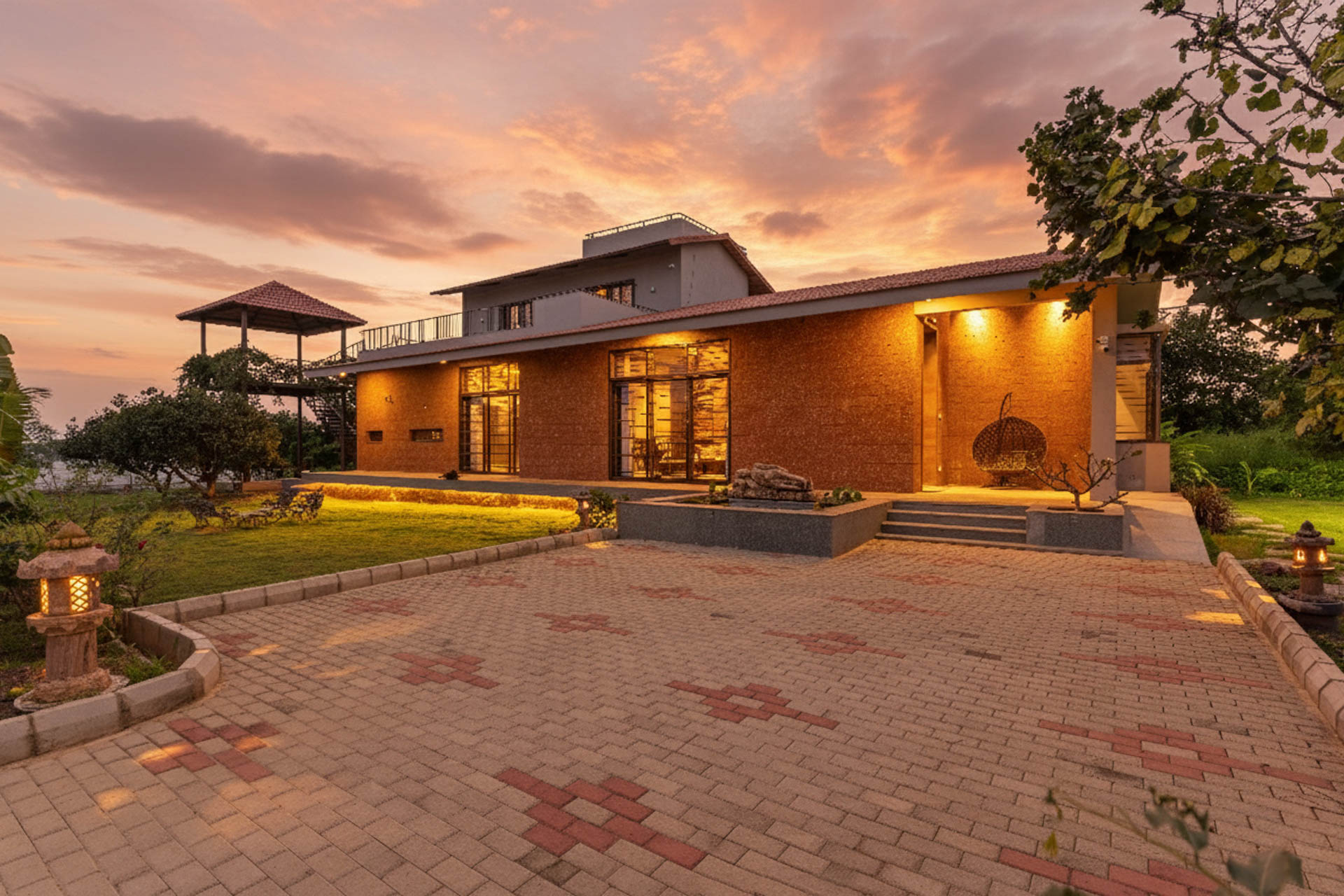
Evaarah Hyderabad — A 3-bedroom lakeside retreat surrounded by rolling hills and open landscapes, providing a peaceful nature-filled getaway within driving distance of Hyderabad’s historic landmarks and the annual Bonalu festivities in Secunderabad and the Old City.

Book Early: August 2–3 (the main Bonalu weekend and Rangam day) is the peak accommodation period. Stay Vista properties in Hyderabad can be browsed and booked at stayvista.com.
Practical Tips for Visiting Bonalu 2026
Bonalu draws lakhs of devotees across its four Sundays. A few practical notes for first-time visitors:
- Arrive early. Temple queues at Lal Darwaza on August 2 can stretch for hours by late morning. Arriving by 6–7 AM offers a calmer, more manageable experience.
- Wear comfortable footwear. Streets around Old City temples require walking significant distances; some areas involve cobblestone or uneven terrain.
- Dress modestly. The festival is a religious occasion. Women in traditional attire are warmly received; shorts or sleeveless clothing are generally out of place.
- July–August weather. Hyderabad in Ashadha Masam is humid and occasionally rainy — the monsoon is active. Light cotton clothing and a compact umbrella are practical choices.
- Transport. Auto-rickshaws and cabs reach the Old City periphery, but the last 500 metres to major temples on festival days are often pedestrian-only zones. The Hyderabad Metro connects several points near Secunderabad and Charminar.
- Photography. Bonalu processions are generally open to photography; inside temple sanctums, check for signage or ask before photographing.
FAQs: People Also Ask About Bonalu in Telangana & Hyderabad 2026
Bonalu is celebrated across all of Telangana during Ashadha Masam. While Hyderabad and Secunderabad host the largest and most prominent celebrations, the festival is observed at Shakti temples in Warangal, Nizamabad, Karimnagar, Khammam, and across all 33 districts of the state.
Bonalu is exclusive to Telangana and its Telugu-speaking communities. Its rituals — the Bonam pot offering, the Rangam oracle, the Pothuraju procession — are not replicated elsewhere in India. The Telangana government declared it a state festival in 2014, recognising it as a defining marker of regional identity.
Bonalu 2026 in Hyderabad falls on four Sundays: July 19, July 26, August 2, and August 9. The Telangana government has declared August 10, 2026 a public holiday to mark the conclusion of the festival.
The main Bonalu of 2026 is on August 2 at Sri Mahankali Temple in Lal Darwaza, Old City Hyderabad. This is the central celebration of the four-Sunday festival cycle.
The first Sunday of Ashadha Masam in 2026 falls on July 19, when celebrations begin at Sri Jagadamba Mahankali Temple atop Golconda Fort.
The primary offering is a Bonam — a decorated brass or earthen pot filled with cooked rice, jaggery, curd, and neem leaves, topped with a lit lamp. Women carry these pots balanced on their heads to the temple.
Rangam is a prophecy ritual that takes place the morning after the main Bonalu celebration. A woman devotee enters a trance state at Ujjaini Mahankali Temple in Secunderabad and delivers predictions for the coming year on behalf of the Goddess. In 2026, Rangam falls on August 3.
Approximately 48 temples across Hyderabad and Secunderabad observe Bonalu. The most prominent are Sri Jagadamba Mahankali Temple at Golconda Fort, Ujjaini Mahankali Temple in Secunderabad, Sri Mahankali Temple at Lal Darwaza, Akkanna Madanna Temple in Haribowli, and Balkampet Yellamma Temple.
Bonalu is primarily observed by women, who carry the Bonam offering. Married women traditionally observe the festival at their parental home. Teenage girls often participate in the Half-Saree. Men take part through the Pothuraju procession role and accompanying the family.
Yes. August 10, 2026 (Monday) is a gazetted public holiday in Telangana, declared by the state government to mark the conclusion of Bonalu 2026.
Bonalu is believed to have originated in the early 19th century when Hyderabad Regimental soldiers prayed to Goddess Mahakali during a plague epidemic in the twin cities. When the disease subsided, they made a food offering (bonam) in thanksgiving and established the Ujjaini Mahankali Temple in Secunderabad’s Regimental Bazaar area.
The Old City — particularly the Lal Darwaza and Charminar area — offers the most concentrated festival atmosphere during the main Bonalu on August 2. Secunderabad’s Ujjaini Mahankali Temple is the best location for the July 26 celebrations and the August 3 Rangam ritual.
Conclusion
Bonalu 2026 runs from July 19 to August 9 in Hyderabad, anchored by four Sundays of offerings, processions, and prayers across dozens of temples in the twin cities. It is a festival that does not require any prior knowledge of Telugu culture to feel — the sound of dappu drums, the sight of women in silk sarees balancing lamp-lit pots, and the accumulated devotion of two centuries are all self-explanatory. Whether you are a resident of Hyderabad who has watched Bonalu from a distance, or a traveller choosing July-August 2026 deliberately for this, the Lal Darwaza main Bonalu on August 2 is the single day that best captures what the festival is.
Plan your stay early, and where possible, be at Golconda on July 19 for the opening — the fort at dawn, the drummers beginning, and the first Bonam on its way up the hill, is as good an introduction to this festival as any.