
Darjeeling in Monsoon 2026: Is It Worth Visiting in the Rainy Season? (Weather, Pros & What to Do)
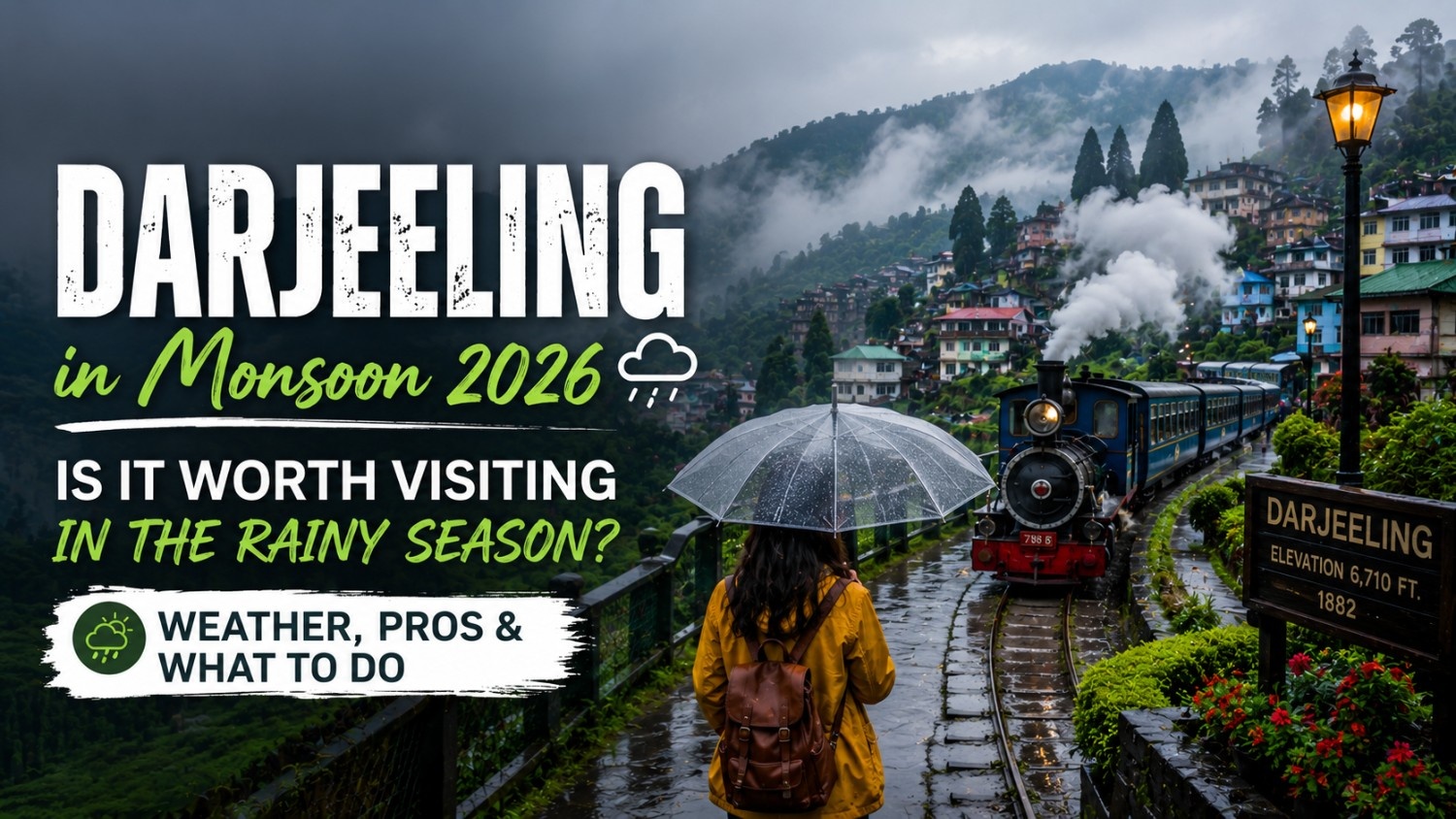
Darjeeling in monsoon is one of those trips people either swear by or steer clear of — and in 2026, it’s worth knowing exactly why before you book. From mid-June to September, the Queen of Hills trades sunny Kanchenjunga views for swirling clouds, gushing waterfalls, and tea gardens at their greenest. Here’s everything you need to plan it right.
In this Blog
Darjeeling in Monsoon Weather 2026: What Actually Happens Up There
If you’re researching Darjeeling in the monsoon season, here’s the short version: expect daytime temperatures between 15°C and 22°C, frequent rainfall (sometimes for hours, sometimes in quick bursts), and humidity around 80-90%. June and July bring the heaviest showers, while September often opens up clearer windows between spells of rain.
Quick Fact: Darjeeling receives most of its annual rainfall between June and September, with average monthly precipitation often crossing 500-700mm during peak monsoon.
Darjeeling Monsoon 2026 – Quick Weather Snapshot
| Aspect | Details |
| Monsoon months | Mid-June to September |
| Average temperature | 15°C – 22°C |
| Rainfall intensity | Heavy in June-July, moderate in Aug-Sept |
| Humidity | 80-90% |
| Kanchenjunga visibility | Low to moderate, best at early dawn |
| Crowd levels | Low — ideal for budget travellers |
The fog rolling through the pine forests, the toy train chugging past mist-soaked slopes, and tea gardens glistening after rain — this is Darjeeling in monsoon at its most photogenic. Just be ready to carry a raincoat everywhere, even on a seemingly clear morning.
Is Darjeeling in Monsoon Worth Visiting? The Honest Pros and Cons
Short answer: yes, Darjeeling in monsoon is worth visiting — but it suits a certain kind of traveller. If your priority is a guaranteed sunrise view of Kanchenjunga, this isn’t your season. If you want lush landscapes, quiet cafés, and a slower pace, it absolutely is.
Why Monsoon Could Be Your Best Darjeeling Trip Yet (Pros)
- Greenery at its peak — tea estates turn a deep, almost glowing emerald
- Fewer tourists — shorter queues at attractions and a calmer Mall Road
- Lower hotel and villa rates compared to peak season (October-December)
- Waterfalls and streams around Tinchuley, Lamahatta, and Mirik are in full flow
- Atmospheric photography — mist, clouds, and moody light are a photographer’s dream
- Cosy indoor experiences — fireside evenings, tea-tasting sessions, and bookshop browsing feel just right
The Trade-Offs You Should Know About (Cons)
- Landslide-prone stretches, particularly along NH10 near Rohini and Tindharia
- Limited mountain visibility — Kanchenjunga and Tiger Hill sunrise views are hit-or-miss
- Toy train services may face temporary suspensions during heavy rain
- Leeches on certain forest trails after rainfall
- Sudden weather shifts — plans may need last-minute flexibility
In short, Darjeeling in monsoon rewards travellers who value tranquillity and greenery over guaranteed mountain views.
Best Month to Visit Darjeeling (And Where Monsoon Fits In)
The best month for a Darjeeling trip really depends on what you’re after. October to December is widely considered the best weather to visit Darjeeling for clear Himalayan views, while March to May offers blooming rhododendrons and pleasant daytime warmth.
But if you’re flexible about visibility, September is often called the unofficial sweet spot for Darjeeling in monsoon season — the rain starts tapering, the air is washed clean, and the hills look freshly painted.
If clear Himalayan views top your list, plan for October-December; if you’re chasing mist, waterfalls, and quiet trails, July-September delivers a completely different but equally memorable Darjeeling.

Darjeeling 10-Point Sightseeing: Top Places to Visit in Monsoon Season
When it comes to Darjeeling tourist places, monsoon doesn’t shut the door — it just shifts the experience indoors and into the greenery. Here’s a practical Darjeeling 10-point sightseeing list tailored for the rainy season.
- Ghoom Monastery — widely regarded as the best monastery in Darjeeling, especially atmospheric in misty weather
- Batasia Loop — a scenic spiral railway track with war memorial gardens, beautiful even under light drizzle
- Padmaja Naidu Himalayan Zoological Park — home to red pandas and snow leopards, mostly covered walkways
- Himalayan Mountaineering Institute & Museum — perfect indoor activity on a rainy afternoon
- Japanese Peace Pagoda — serene and surprisingly stunning in fog
- Happy Valley Tea Estate — see tea-plucking and processing up close; the monsoon is when bushes are at their fullest
- Tiger Hill — sunrise views are unpredictable, but the drive through clouds is an experience in itself
- Mall Road & Chowrasta — for café-hopping, shopping, and people-watching under umbrellas
- Lloyd Botanical Garden — orchids and ferns thrive in monsoon humidity
- Bhutia Busty Monastery — another contender among best monastery in Darjeeling picks, with sweeping (cloud-permitting) valley views
Best Monastery in Darjeeling to Visit During Monsoon
Both Ghoom Monastery and Bhutia Busty Monastery remain accessible and serene during the rains. The chant of monks against falling rain, prayer flags swaying in the mist, and the smell of incense mixing with wet pine — this is Darjeeling sightseeing that doesn’t need sunshine to feel magical.
Best Offbeat Places in Darjeeling for the Rainy Season
For travellers seeking the best offbeat places in Darjeeling, the monsoon is arguably the best season. Crowds vanish almost entirely from these spots:
- Lamahatta — a community-run eco-park with pine forests and a small lake
- Tinchuley — known for orange orchards and homestays with valley views
- Takdah — quiet cantonment town with orchid nurseries
- Mirik — Sumendu Lake looks especially serene under grey skies
- Sittong — the “Orange Village,” with terraced farms turning vivid green
These beautiful places in Darjeeling are often missed by first-time visitors but offer some of the most authentic Himalayan village experiences — and they’re a short drive from the main town.
Things to Do in Darjeeling in Monsoon — Activities Beyond Sightseeing
Beyond the usual attractions in Darjeeling, the monsoon opens up a different kind of itinerary. Here are some of the best things to do in Darjeeling when the skies open up:
- Tea-tasting sessions at heritage tea estates like Glenburn or Makaibari
- Short nature walks between rain spells through pine and cardamom forests
- Visit local museums and monasteries that stay open regardless of the weather
- Café hopping along Mall Road and Nehru Road — Darjeeling has a thriving café culture
- Photography walks to capture fog rolling over the tea gardens
- Cooking or momo-making classes offered by some homestays and villas
- Cosy evenings with a book, hot tea, and the sound of rain on a tin roof
These activities in Darjeeling prove that a rainy day doesn’t mean a wasted day — it just means a quieter, more immersive one.
Darjeeling How to Go — Reaching the Hills During Monsoon
Wondering how to go to Darjeeling during the rainy season? Here’s the practical breakdown:
- By Air: Fly into Bagdogra Airport (IXB), about 70-90 km from Darjeeling, then take a shared cab or pre-booked taxi (2.5-3.5 hours depending on road conditions)
- By Rail: Nearest major station is New Jalpaiguri (NJP), well-connected to major Indian cities
- By Road: NH10 connects Siliguri to Darjeeling, but this stretch can face landslide-related delays during heavy rain — always check road advisories before departure
- Toy Train (DHR): The UNESCO-listed Darjeeling Himalayan Railway may have limited or suspended services during very heavy rainfall — confirm schedules a day in advance
Tip: Build in an extra buffer day when planning Darjeeling in monsoon, especially if you’re arriving via NH10.
What to Eat and Buy in Darjeeling — Famous Food & Souvenirs
What is the famous food of Darjeeling? Monsoon is the perfect excuse to indulge in warm, comforting local fare:
- Momos (steamed or fried) — available at nearly every street corner
- Thukpa — a hearty noodle soup, ideal for rainy evenings
- Churpee — local yak cheese snack
- Sael Roti — a traditional Nepali rice doughnut
- Darjeeling Tea, of course — best enjoyed fresh at the source
What is famous in Darjeeling to buy? Top picks include:
- Darjeeling tea (look for GI-tagged authentic estates)
- Hand-knitted woollens and Tibetan shawls
- Thangka paintings and Buddhist curios
- Handicrafts from local cooperatives near Lebong and Mall Road
Is There Any Danger in Darjeeling During Monsoon? Safety Tips
Is there any danger in Darjeeling during the rainy months? The honest answer is — there are manageable risks, not deal-breakers. Key precautions:
- Avoid travelling on NH10 during or immediately after continuous heavy rain
- Wear proper trekking shoes with grip; pathways get slippery
- Apply leech repellent if heading into forested offbeat areas like Sittong or Tinchuley
- Check local weather and road condition updates daily — the district administration often issues advisories during landslide-prone weeks
- Keep buffer time in your itinerary for unexpected delays
Is Darjeeling accessible during the monsoon? Yes — the town itself remains open and operational throughout the season. It’s specific connecting roads, not Darjeeling itself, that occasionally face disruptions.
Where to Stay in Darjeeling During Monsoon
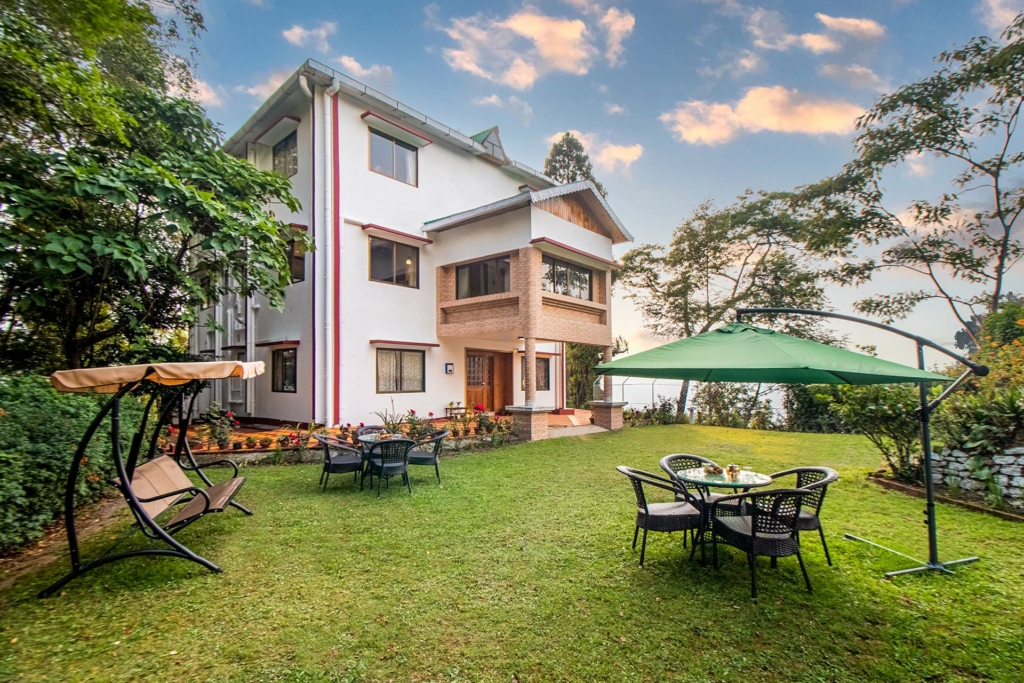
For monsoon trips, a private villa stay often beats a standard hotel — think floor-to-ceiling windows for watching the rain roll over the hills, a working fireplace, and a kitchen for slow mornings with Darjeeling tea. StayVista’s curated villas around Darjeeling and the surrounding hills offer exactly this kind of cosy, weather-proof base, letting you enjoy the season’s quiet charm without compromising on comfort.
Arya Treetops and Tea Trails
FAQs: Darjeeling in Monsoon 2026
Yes, it’s okay — July is peak monsoon, so expect heavy rain and limited mountain views, but also lush scenery, low crowds, and budget-friendly rates. Just plan flexible itineraries.
Generally yes. The town stays open year-round, though certain stretches of NH10 may face temporary landslide-related closures during heavy rainfall.
Momos, thukpa, churpee (yak cheese), sael roti, and of course, world-renowned Darjeeling tea are local must-tries.
Authentic Darjeeling tea, hand-knitted woollens, Tibetan handicrafts, and thangka paintings are the most popular souvenirs.
Ghoom Monastery, Batasia Loop, a tea estate tour, and a walk along Mall Road are must-dos regardless of season.
No major danger, but monsoon brings landslide risks on certain roads and slippery trekking trails — checking local advisories before travel is recommended.
October to December typically offers the clearest skies and best visibility of Kanchenjunga.
Explore Darjeeling in Monsoon
So, is Darjeeling in monsoon worth it in 2026? If you’re chasing postcard-perfect mountain views, perhaps wait for autumn — but if you want a quieter, greener, more soulful version of the Queen of Hills, this might just be the season that surprises you most. Pack your raincoat, book a cosy villa, and let the mist do the rest.
Next Read: