

Delhi in One Day: The Realistic Route Through Old and New Delhi
Delhi doesn’t reward rushing. It’s a city built in layers — Mughal capital, colonial imperial seat, and modern metropolis — all stacked within a 25-kilometre radius, and most first-time visitors try to see all of it in a single frantic day with a checklist that was never realistic to begin with. Ask any travel forum for a “one day in Delhi” plan and you’ll get a list of nine monuments spread across the city with no mention of the fact that Delhi’s traffic can turn a 12-kilometre drive into a 50-minute ordeal, or that half these sites keep completely different hours from the other half.
You don’t need to see the Red Fort and Humayun’s Tomb and Qutub Minar and Akshardham and Chandni Chowk and Connaught Place to say you’ve “done” Delhi. You need a route that respects the city’s geography, its opening hours, and the basic physics of getting from one side of it to the other. This itinerary is built around one honest idea: pick one half of Delhi’s story for the morning, the other half for the afternoon, and let the evening breathe. Here’s how to actually do it — with real timings, real travel gaps, and no monument left half-seen because you were racing the clock.
In this Blog
Why Old Delhi and New Delhi Need Separate Halves of Your Day
It helps to understand what you’re actually navigating before you plan around it. Old Delhi — Shahjahanabad, as it was called when Shah Jahan built it in the 1600s — is a dense, walkable, almost medieval tangle of lanes north of the modern city centre. Everything here is close together, chaotic, and best explored on foot or by cycle-rickshaw. New Delhi, by contrast, is the wide-avenued capital the British built in the early twentieth century, later expanded southward with monuments spanning centuries of Delhi’s earlier dynasties — the Delhi Sultanate’s Qutub Minar, the Mughal-era Humayun’s Tomb, and the twentieth-century India Gate all sit within this more spread-out, car-dependent half of the city.
Trying to zigzag between these two Delhis more than once in a day is where most itineraries fall apart. The smarter move is a single crossing: finish Old Delhi completely, make one deliberate transit south, and finish New Delhi completely. That’s the structure this whole itinerary is built on.
Before You Start: The Rules That Make This Actually Work
Rule 1 — Don’t go on a Monday. The Red Fort is closed Mondays, and the Lotus Temple is closed Mondays too. If your one day in Delhi happens to be a Monday, swap the Red Fort for Purana Qila or the Jantar Mantar, both of which stay open, and skip the Lotus Temple entirely rather than showing up to a closed gate.
Rule 2 — Old Delhi first, always. Old Delhi’s alleys are genuinely difficult to navigate once the afternoon heat and crowds build up, and its best food — the stuffed paranthe, the nihari, the milky lassi — is breakfast and mid-morning food, not evening food. Front-load the chaos while you’re fresh and the lanes are relatively calm; save the wide, walkable boulevards of New Delhi for when your legs are tired and you’d rather be in a car with air conditioning between stops.
Rule 3 — Book what you can online, the night before. The Red Fort, Humayun’s Tomb, and Qutub Minar all have online ticketing through official ASI or government tourism portals. Booking ahead doesn’t just save queue time — on a tight one-day schedule, even a 20-minute ticket line is a meaningful chunk of your day.
Rule 4 — Wear shoes you can walk ten kilometres in. Between the fort complexes, the tomb gardens, and Old Delhi’s lanes, this is a walking day dressed up as a sightseeing day. Comfortable, closed shoes matter more than anything else you pack.
Morning (7:00 AM – 11:30 AM): Old Delhi, on Foot
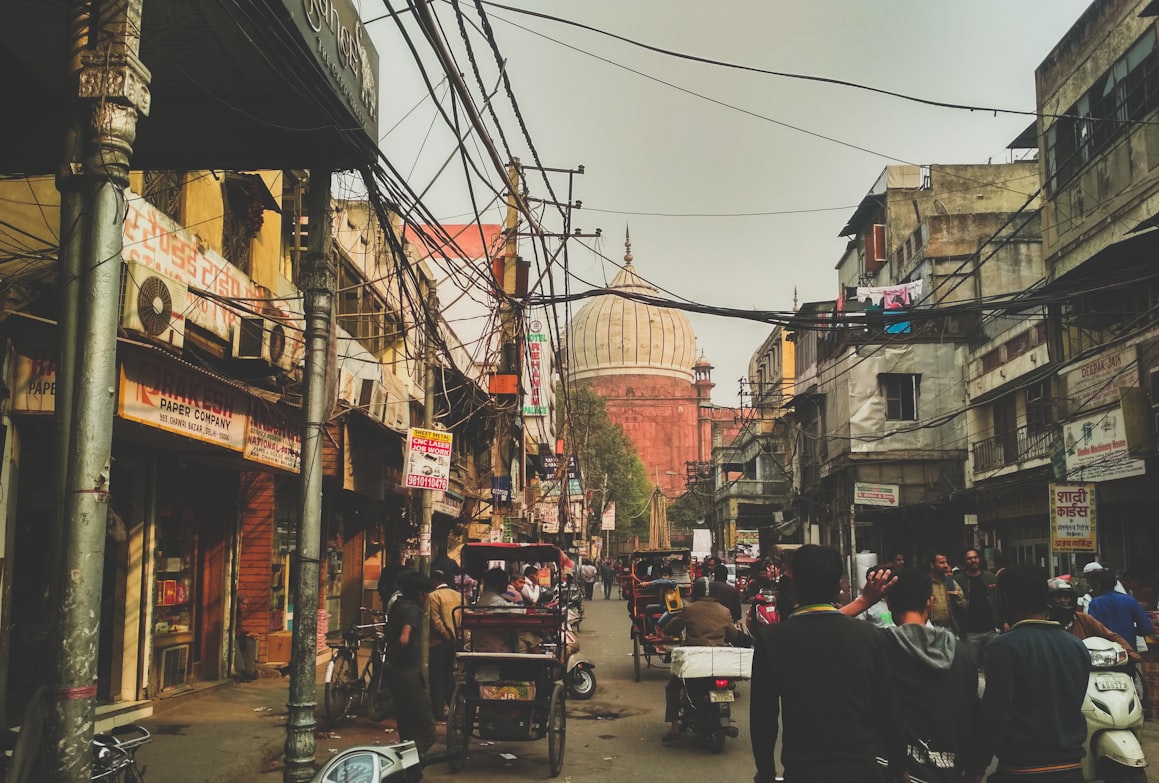
7:00 AM — Breakfast in Chandni Chowk. Skip the hotel breakfast entirely. Head straight to the lanes around Chandni Chowk for stuffed paranthe — potato, paneer, or the sweeter rabri-topped versions — or a plate of slow-cooked nihari if you want something heartier before a long walking day. Going this early, before 8 AM, means you’ll actually be able to walk through the lane rather than shuffling shoulder-to-shoulder with the crowd that builds up by mid-morning. If you’d rather sit down properly, the older, no-frills eateries tucked into the side lanes tend to serve better food than the more visible storefronts on the main road.
8:00 AM — Jama Masjid. India’s largest mosque is a five-minute walk from Chandni Chowk’s main lane. Entry to the courtyard is free, though there’s typically a small camera fee, and modest clothing is expected — full-length robes are available to borrow at the entrance if you need them. If the southern minaret is open for climbing, it’s worth the narrow, dark staircase for the view over Old Delhi’s rooftops, water tanks, and washing lines stretching toward the Red Fort’s domes in the distance.
9:15 AM — Red Fort. Walk or take a quick cycle-rickshaw or auto-rickshaw to Lal Qila. It typically opens around 9:30 AM and closes by 4:30 PM, and stays shut on Mondays. Entry is priced modestly for Indian nationals and considerably more for foreign visitors, and it’s worth booking online in advance to skip what can be a genuinely long queue, especially on weekends. Give yourself a full 90 minutes here rather than the 20-minute version most tour groups do — walk through the Lahori Gate, the vaulted Chatta Chowk market corridor, the Diwan-i-Aam where emperors held public audience, and the marble pavilions of the Diwan-i-Khas, whose inscription famously claims “if there is paradise on earth, it is this, it is this.” The complex is large enough that rushing it defeats the purpose of coming at all.
11:00 AM — Raj Ghat. A short cab or auto ride away, Raj Ghat — the black marble platform marking Mahatma Gandhi’s cremation site — is a quiet, green, contemplative stop after the density of the Red Fort and Chandni Chowk. Fifteen to twenty minutes is enough here unless you want to sit in the surrounding gardens a while longer.
Midday (12:00 PM – 1:30 PM): The Crossing
This is the part every rushed Delhi itinerary gets wrong: the drive between Old Delhi and the New Delhi/South Delhi monument belt isn’t instant, no matter what a map’s straight-line distance suggests. Budget 30–45 minutes in traffic for this transit, more if you’re crossing during a weekday rush hour window. Rather than treating this as dead time, use it as your lunch window.
Two reasonable ways to handle it: eat in Old Delhi before you leave — Karim’s, tucked near Jama Masjid, has been serving Mughlai kebabs and curries for over a century and makes a satisfying, unhurried lunch stop — or push through to New Delhi first and eat near Connaught Place or India Gate, which lets you transition into “New Delhi mode,” with a proper sit-down restaurant, air conditioning, and a chair that isn’t a plastic stool. Either choice works; what matters is building the 45–60 minutes for lunch into your schedule rather than trying to eat standing up between monuments.
Afternoon (1:30 PM – 5:00 PM): New Delhi’s Imperial and Medieval Core
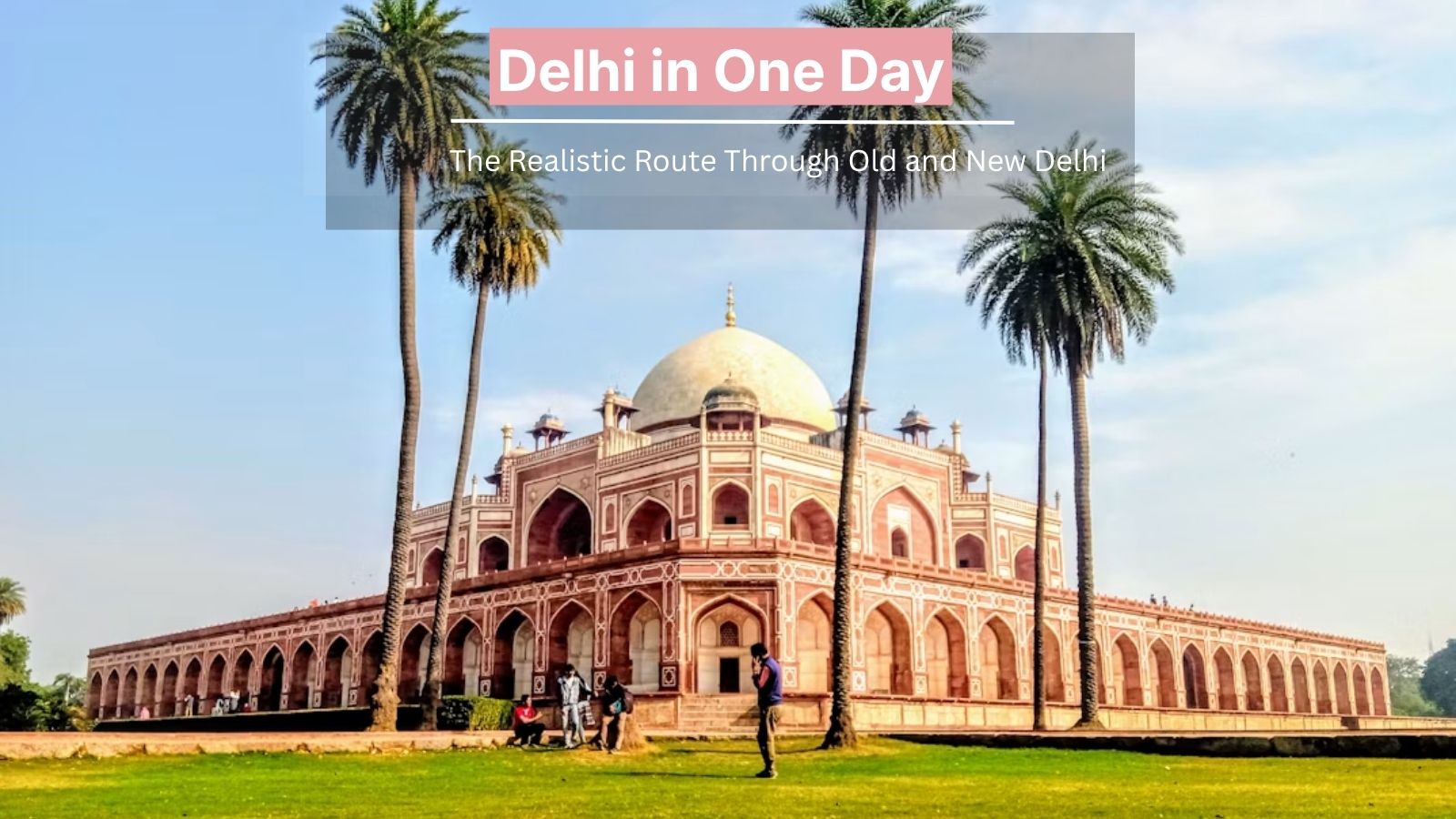
1:30 PM — Humayun’s Tomb. Often described as a dry run for the Taj Mahal — and built by the same Mughal dynasty roughly 75 years earlier — this UNESCO World Heritage Site is open roughly sunrise to sunset, generally 6 AM to 6 PM, with a modest entry fee for Indian visitors. Give it a genuine 60–90 minutes. The charbagh garden layout, with its geometric water channels, is worth a slow walk rather than a straight line to the tomb and back, and the surrounding complex includes several smaller, quieter tombs that most rushed visitors walk straight past.
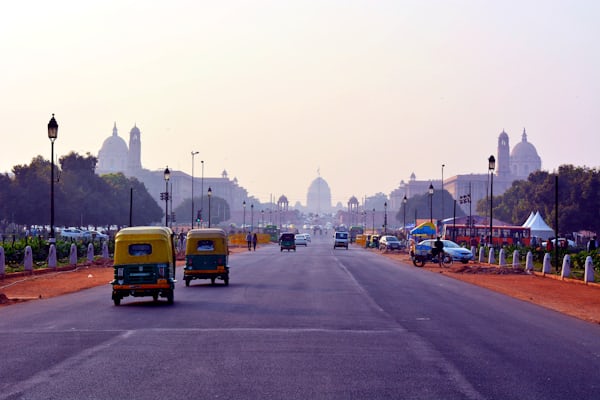
3:00 PM — India Gate and Kartavya Path. A drive-by is genuinely enough here if you’re working with limited time. The ceremonial avenue, the 42-metre war memorial arch commemorating Indian soldiers of the First World War, and the distant view down toward Rashtrapati Bhavan make sense as a 20–30 minute stop rather than a full excursion — particularly in daytime heat, when this open, shadeless stretch is at its least comfortable. If you have the time and inclination, walking a short stretch of the recently redeveloped Kartavya Path gives a better sense of scale than photographing it from a moving car.
3:45 PM — Qutub Minar. The world’s tallest brick minaret, begun in 1192 by Qutab-ud-din Aibak and completed by his successor, is open roughly 7 AM to 5 PM with last entry around 4:30 PM — which makes this your natural last major monument stop of the day; arrive later and you risk being turned away at the gate. Spend a full hour here rather than the ten minutes most people give it for a tower photo. The surrounding complex includes the Iron Pillar — a 1,600-year-old column that has famously resisted rusting — along with the ruins of the Quwwat-ul-Islam mosque and a scattering of carved sandstone screens and smaller tombs that reward slow, unhurried wandering.
Evening (5:30 PM Onward): Slow Down
5:30 PM — Lotus Temple or Hauz Khas Village. If you still have energy for one more sight, the Lotus Temple’s petal-shaped architecture is at its most striking in the golden hour light before sunset. It typically closes somewhere between 5:30 PM and 7 PM depending on the season, and is closed on Mondays, so check the current seasonal timing before you commit the drive. If you’d rather sit down than stand in another entry queue, Hauz Khas Village — built around a medieval reservoir and a cluster of 14th-century ruins — has rooftop cafés that were practically designed for the exact moment in a long sightseeing day when you want a drink, a view, and nowhere else to be.
7:30 PM onward — Dinner. Connaught Place offers classic Delhi dining across every price point, from old-school Punjabi institutions to newer rooftop restaurants. Khan Market is the quieter, more upscale option if you’d rather end the day at a slower pace. Or loop back to Old Delhi’s Chandni Chowk if breakfast wasn’t enough and you want to close the day exactly where you opened it, with kebabs, kulfi, or a final round of street food under the lit-up facade of the Red Fort.
Quick Reference: Timings, Fees, and Time Needed
| Monument | Typical Hours | Closed | Time Needed |
|---|---|---|---|
| Jama Masjid | Early morning–evening (namaz breaks) | — | 45 min |
| Red Fort | ~9:30 AM–4:30 PM | Mondays | 90 min |
| Raj Ghat | Sunrise–sunset | — | 20 min |
| Humayun’s Tomb | ~6 AM–6 PM | — | 60–90 min |
| India Gate / Kartavya Path | Open access, best at any time | — | 20–30 min |
| Qutub Minar | ~7 AM–5 PM (last entry 4:30 PM) | — | 60 min |
| Lotus Temple | ~9 AM–5:30/7 PM (seasonal) | Mondays | 45 min |
Timings, fees, and closures at Delhi’s monuments are revised periodically by the ASI and local tourism authorities — it’s worth double-checking current hours and online booking availability a day or two before your visit rather than relying on any single source, including this one.
Getting Around: Metro, Auto, or Private Cab?
The Delhi Metro is genuinely useful for parts of this route — Chandni Chowk and Lal Qila stations on the network put you within walking distance of the morning’s Old Delhi stops — but it’s a poor fit for a single-day itinerary that also needs to cover Humayun’s Tomb, India Gate, and Qutub Minar, none of which sit directly on convenient metro lines relative to each other. For most visitors doing this route in one day, a pre-booked cab for the full day is the more practical choice: it removes the need to negotiate autos between every stop, waits for you at each monument, and absorbs the unpredictability of Delhi traffic without adding stress to an already packed schedule. If budget is a bigger constraint than time, a mix of metro for the Old Delhi morning and app-based cabs for the New Delhi afternoon strikes a reasonable balance.
Who This Itinerary Suits — and Who Should Adjust It
This exact route assumes reasonably fit travelers comfortable with a full day of walking, heat, and crowds, fitting in five to six major stops. A few adjustments worth considering depending on who’s actually doing the trip:
- Traveling with young children or older relatives: Cut the afternoon down to just Humayun’s Tomb or just Qutub Minar, not both, and add a longer, unhurried lunch break in air conditioning between the two halves of the day.
- Traveling in peak summer (April–June): Push the Old Delhi morning even earlier — 6:30 AM rather than 7 AM — and treat the early afternoon (1–3 PM) as a rest window rather than a monument-hopping one, resuming with Qutub Minar and the Lotus Temple once the heat eases toward evening.
- Traveling specifically for food: Old Delhi could easily absorb an entire day on its own. If food is the priority, consider shrinking the New Delhi afternoon to just one monument and using the reclaimed time for a proper Old Delhi food walk through Paranthe Wali Gali, Chandni Chowk’s sweet shops, and the kebab stalls near Jama Masjid.
- First-time visitors who may return to Delhi later: This itinerary deliberately leaves out Akshardham Temple and the National Museum, both of which deserve a half-day each on their own rather than being squeezed in. Treat this route as the highlight reel for a single day, not the complete Delhi experience.
Where to Stay: Extending the Day Into a Proper Break
One day in Delhi is enough for the highlight reel, but the city also makes a strong case for staying an extra night or two rather than treating it purely as a transit stop. Whether you want to recover from the day’s walking without leaving the NCR, or turn Delhi into the launchpad for a proper weekend in the hills, here are three StayVista villas worth building the second half of the trip around.
Auric Acres, NCR

For travelers who’d rather not get back in a car after a full day of monument-hopping, this farmhouse-style villa on the edges of the capital is close enough to reach within the hour. It’s built for exactly the kind of unwinding a day like this calls for: private lawns, a pool to recover in, and enough space to spread out after being on your feet since 7 AM. It also works well as a base the night before this itinerary, if you’d rather start the Old Delhi morning already rested instead of driving in from deep within the city.
The Mansion, Kasauli

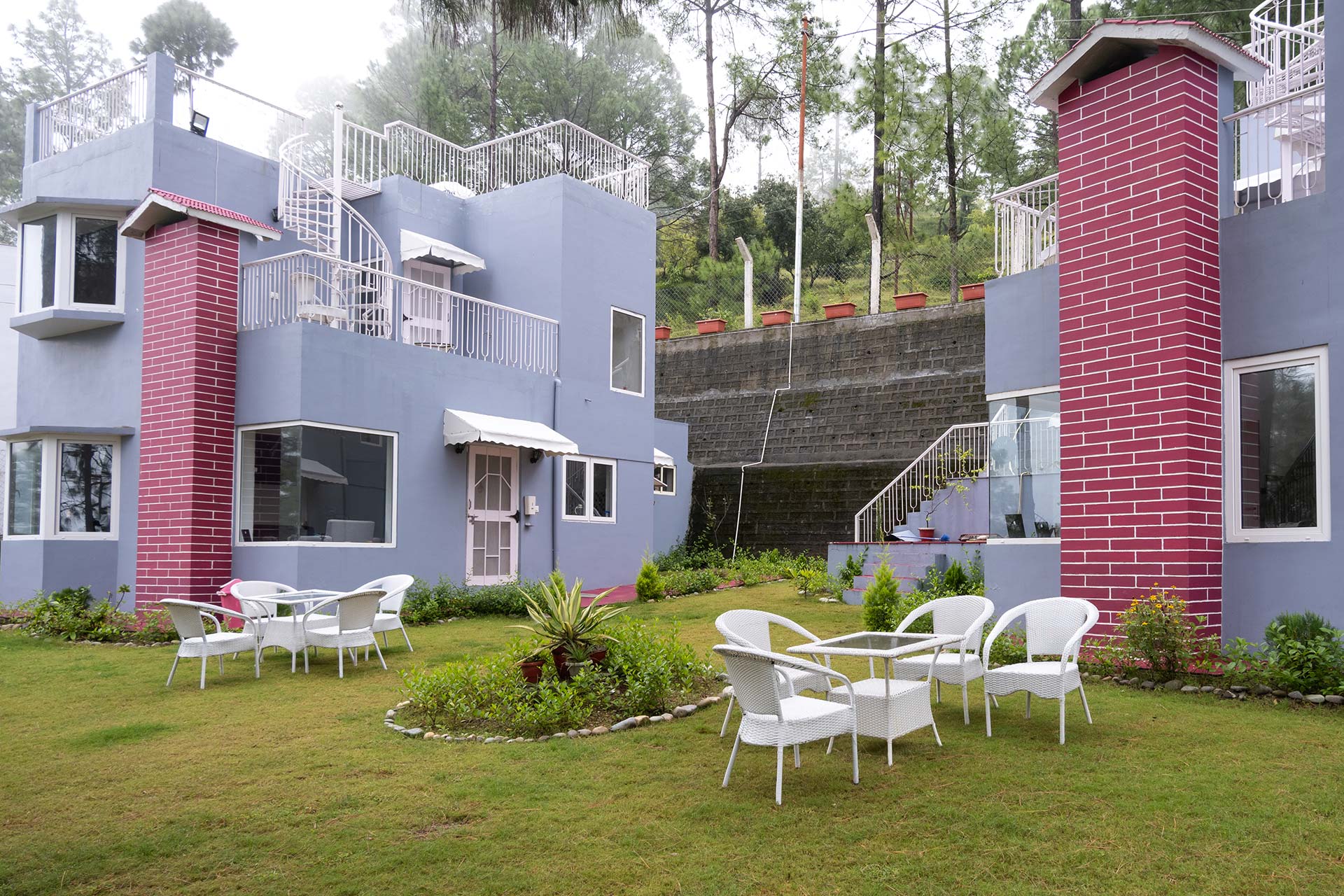
If the plan is to turn this Delhi day into a full weekend, Kasauli is a comfortable five-to-six-hour drive into the Himalayan foothills, and this particular villa is one of StayVista’s more distinctive properties — a five-acre, castle-like estate with gabled roofs, a stone-clad facade, and cone-shaped canopies that feel more European hill-station than Indian plains. After the density and heat of a Delhi sightseeing day, the elevation, the cooler air, and the sheer quiet of Kasauli’s pine forests make for a genuine contrast rather than just a change of scenery.
Pines & Spruce, Lansdowne
About 250 km from Delhi, this cottage retreat sits in pine valleys close enough to Jim Corbett National Park (roughly 25 km away) to combine with a short jungle safari if you want to extend the trip further. It’s a quieter, more secluded option than Kasauli, with a wood-fired fireplace and streams nearby — a good fit for travelers who found Delhi’s crowds a little overwhelming and want the opposite experience for the rest of the trip.
Swapping a city hotel room for a private villa on the second leg of the trip tends to make the “recovering from Delhi” part of the journey feel like part of the holiday itself, rather than an afterthought squeezed in before a flight home.
Frequently Asked Questions
It’s enough to see a well-chosen handful of them properly rather than everything superficially. This itinerary covers five core sights across Old and New Delhi with realistic time allowances; trying to add more usually means shortchanging what’s already on the list.
October to March offers the most comfortable walking conditions, with cooler mornings and gentler afternoon sun. Summer months (April–June) are workable but demand an earlier start and a midday rest break, while the monsoon season can bring sudden, heavy showers that are worth building slack into your schedule for.
Partially. The Delhi Metro covers the Old Delhi morning well, but the New Delhi afternoon stops are spread out enough that a cab or auto-rickshaw for that half of the day makes far more practical sense than metro transfers.
Not essential, but worth considering at the Red Fort and Qutub Minar specifically, where the historical layering is dense enough that a guide adds real context beyond what a plaque or audio guide covers. Guides are typically available at or near the entrance of both sites.