
Why Mumbai Empties Into the Konkan for Ganpati: 10 Villages, the Booking Crush and When to Travel in 2026
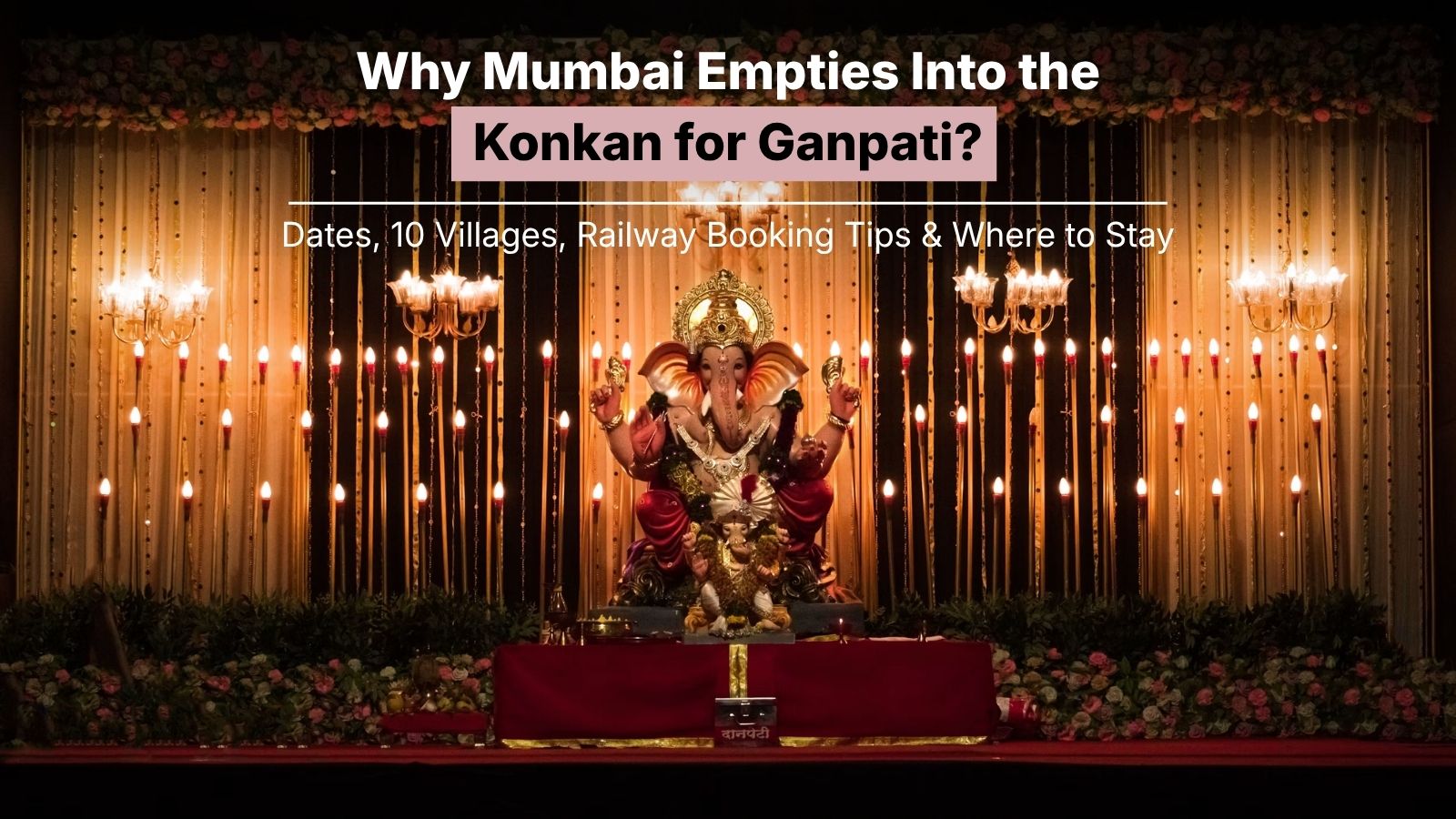
Ganesh Chaturthi in Konkan falls on Monday, 14 September 2026, with the final visarjan on Anant Chaturdashi, Friday, 25 September 2026. Most Mumbai families travel out between 11 and 13 September, which is why Central Railway is running 246 Ganpati special services and Konkan Railway 254 between 11 and 27 September. If you want a calmer journey, leave on Wednesday 9 or Thursday 10 September and return on a weekday after your family’s own visarjan day.
Every September, Mumbai does something no other Indian city quite does: it empties itself southwards. Lifts in Dadar buildings go quiet, Andheri offices run on skeleton staff, and by the second week of the month the platforms at CSMT and Lokmanya Tilak Terminus are stacked with steel trunks, sacks of rice flour and cardboard boxes tied with sutli. This is the annual reverse migration for Ganapati Chaturthi 2026 — hundreds of thousands of chakarmani (Konkanis who work in the city) heading back to villages in Raigad, Ratnagiri and Sindhudurg for the celebration of Ganesh Chaturthi at the family home.
It is worth being precise about what makes this different from the Mumbai version of the festival. In the city, Ganeshotsav is largely public — Lalbaugcha Raja, Keshavji Naik Chawl, the mandal pandal at the end of your lane. In the Konkan, it is overwhelmingly domestic. The idol comes to your house, the ganapati pooja is performed by your own family, and the aarti is sung by cousins you last saw at a wedding. For lakhs of Maharashtrian families, Ganpati is not a festival you attend. It is a house you return to.
This guide covers the 2026 dates, ten village clusters worth understanding, why the booking crush starts in July, and — the bit most articles skip — which days are actually least stressful to travel on. We put it together at StayVista because a lot of our Konkan and Alibaug guests are people whose ancestral village has no spare room left in September.
In this Blog
Quick Info on Ganesh Chaturthi
| Ganesh Chaturthi 2026 | Monday, 14 September 2026 |
| Anant Chaturdashi (final visarjan) | Friday, 25 September 2026 |
| Peak outbound window from Mumbai | 11–13 September 2026 |
| Calmest outbound days | 9–10 September 2026 |
| Peak return window | 25–27 September 2026 |
| Districts covered | Raigad, Ratnagiri, Sindhudurg (Maharashtra) |
| Special trains announced | 246 (Central Railway) + 254 (Konkan Railway) |
| Main rail corridor | Panvel → Roha → Mangaon → Khed → Chiplun → Ratnagiri → Kankavli → Kudal → Sawantwadi Road |
| Main road corridor | NH-66 (Mumbai–Goa highway) |
| Nearest airports | Navi Mumbai (NMIA) for Raigad; Sindhudurg/Chipi (SDW) for Sindhudurg — no Mumbai flights |
| September weather | 23–31°C, tail-end monsoon, high humidity, rough sea |
| Ideal trip length | 4–11 days, depending on your household’s visarjan day |
Why does Mumbai empty into the Konkan for Ganpati?

Because for a large share of Mumbai’s Marathi-speaking population, the Konkan is home, and the family Ganpati sits there — not in the city flat.
Mumbai’s growth from the 19th century onward drew steady migration from the coastal strip south of it: Agri and Koli families from Raigad, Chitpavan and Bhandari families from Ratnagiri, Kunbi and Malvani families from Sindhudurg. Work moved to the city. The ghar — the ancestral house, the family deity, the gaothan land — stayed in the village. Ganeshotsav is the one time of year the whole extended family is expected to be physically present in it.
Three things sustain the migration:
The idol belongs to the house, not the person. Many Konkan families invite Ganpati in the same room, on the same chaurang, for four or five generations. The murti is often collected from the same idol-maker every year — frequently from Pen in Raigad, which supplies a large share of Maharashtra’s Ganesh idols. You cannot move that tradition to a 2BHK in Mulund.
The village runs on collective participation. Aartis rotate house to house, so on any given evening in a Konkan village you will be walking to four or five neighbours’ homes. There are dhol-tasha groups, lezim dancing, bhajan competitions between wadis, and shared meals. If half the families skip the year, the whole thing thins out.
Gauri makes it a longer stay. Three days after Chaturthi, many households welcome Jyeshtha Gauri — the goddesses received as Ganpati’s family — with a separate set of rituals, sarees and sweets. Families that observe Gauri usually stay at least five to seven days, which is why return travel is spread across almost two weeks rather than concentrated on one day.
Ganesh Chaturthi, Vinayaka Chaturthi, Pillayar Chaturthi: one festival, many names
The festival Ganesh Chaturthi is observed across India under different regional names, which matters if you are travelling with family from outside Maharashtra or searching for rituals online.
| Region | Common name | Note |
|---|---|---|
| Maharashtra, Goa | Ganesh Chaturthi / Ganeshotsav / Ganpati | 1.5 to 11 days; household + public mandals |
| Karnataka | Gauri-Ganesha Habba | Gauri worship precedes Ganesha |
| Andhra Pradesh, Telangana | Vinayaka Chavithi | Vinayaka puja with 21 leaf varieties (patri) |
| Tamil Nadu | Pillayar Chaturthi / Vinayagar Chaturthi | Clay idols, kozhukattai offered |
| Kerala | Vinayaka Chaturthi | Lower-key, temple-centred |
| North India | Ganesh Chaturthi | Often a single-day ganesh puja at home |
So ganesh chaturthi vinayaka chaturthi are two names for the same tithi — Bhadrapada Shukla Chaturthi. The rituals diverge in detail: a vinayaka puja in Vijayawada uses 21 kinds of leaves, while a Konkan ganapati pooja centres on the makhar, red hibiscus, durva grass and steamed modak. The date is shared. The grammar of the celebration is local.
Ganesh Chaturthi in Konkan 2026: the dates that decide your journey
| Event | 2026 date | Why it matters for travel |
|---|---|---|
| Ganesh Chaturthi / Sthapana | Mon, 14 September | Most families want to be in the village by 12–13 September |
| 1.5-day visarjan | Tue, 15 September | First small return wave — mostly Raigad day-trippers |
| 3-day visarjan | Wed, 16 September | Short-stay families head back |
| Gauri Avahan to Visarjan | approx. 17–19 September | Second arrival wave; some relatives come only for Gauri |
| 5-day visarjan | Fri, 18 September | Big midweek return wave into Mumbai |
| 7-day visarjan | Sun, 20 September | Weekend return crush on NH-66 |
| Anant Chaturdashi | Fri, 25 September | Final visarjan; heaviest return pressure 25–27 September |
Note: Visarjan day is a household decision, not a regional one. Two houses on the same village lane will immerse on different days. Puja muhurat and Gauri timings vary by panchang — confirm with your family priest before you book anything.
The 10 Konkan village clusters Mumbai travels to for Ganesh Chaturthi

These are representative destination clusters, not the only villages that celebrate — the Konkan has thousands. We have grouped them by district and last-mile station because that is how you actually plan the journey.
Can you fly to the Konkan for Ganpati? Not from Mumbai. This surprises people, so it is worth stating plainly. Sindhudurg Airport at Chipi (code SDW, near Parule) is the only functioning commercial airport in the region, and as of August 2026 Fly91 operates it to Pune, Bengaluru and Hyderabad only — roughly three flights a day. The much-discussed Navi Mumbai–Sindhudurg route missed its 15 August 2026 target and is not on the published schedule. Ratnagiri Airport is still awaiting scheduled services under the regional connectivity scheme after its runway extension. So airports matter only for relatives flying in from Pune, Bengaluru, Hyderabad or Goa. Mumbaikars go by train, bus or road — there is no third option.
September weather in Ganesh Chaturthi in Konkan: you are travelling in the tail end of the southwest monsoon. Expect 23–31°C, humidity of 80–90%, and genuine rain in the first half of September that thins out by the last week. The sea is rough everywhere on this coast — swimming, boating and Tarkarli’s scuba are generally suspended until the water settles in late October. Rivers and waterfalls are at full flow, which is the compensation. Carry a raincoat rather than an umbrella, and expect fog and occasional landslide advisories on the ghat sections.
Distances below are approximate road distances from Mumbai; add three to five hours to any drive on 11–13 September.
| Cluster | District | Nearest railway station | Onward road distance | Best for |
|---|---|---|---|---|
| Alibaug–Pen | Raigad | Pen | ~28 km | Short trips, first-timers |
| Murud–Roha | Raigad | Roha | ~60 km | Coastal villages, forts |
| Shrivardhan–Harihareshwar | Raigad | Mangaon | ~55 km | Temple + beach combination |
| Mahad–Poladpur | Raigad | Mangaon / Veer | ~25–45 km | Ghat-side villages |
| Khed–Dapoli | Ratnagiri | Khed | ~40 km | Beaches, elder-friendly stays |
| Chiplun–Guhagar | Ratnagiri | Chiplun | ~45 km | Large family gatherings |
| Ratnagiri–Ganpatipule | Ratnagiri | Ratnagiri | ~35 km | Temple pilgrims, photographers |
| Rajapur–Lanja | Ratnagiri | Rajapur Road | ~12–30 km | Quiet household festivals |
| Kankavli–Kudal | Sindhudurg | Kankavli / Kudal | 0–5 km | Easiest rail access to south Konkan |
| Malvan–Sawantwadi–Vengurla | Sindhudurg | Kudal / Sawantwadi Road | ~30–35 km | Malvani food, longest journeys |
1. Alibaug–Pen (Raigad)
The closest Konkan crossing from Mumbai, and the only cluster you can reach by sea: the Mumbai–Mandwa catamaran takes about an hour from Bhaucha Dhakka or the Gateway, versus three to five hours by road via NH-66. Pen is the region’s idol-making town, so the roads here fill with murti trucks in the first week of September. Villages around Poynad, Chaul and Kihim run household Ganpatis with Agri-Koli aartis. Pro tip: book the ferry for a morning slot on 11–12 September; afternoon sailings sell out first, and rough monsoon seas can suspend service without notice.
How to reach: Rail — Pen, on Central Railway’s Diva–Roha line; about 28 km and 45 minutes onward to Alibaug. Road — NH-66 via the Atal Setu sea link and Panvel, roughly 110 km, 2.5–3 hours in normal traffic. Sea — Mumbai–Mandwa catamaran, about an hour, plus 20 km by road. Air — Navi Mumbai International (NMIA) is about 55 km away, the closest airport to any cluster on this list.
September weather: 24–31°C with frequent heavy showers. The sea off Kihim, Nagaon and Alibaug is rough and not swimmable — plan around the festival, not the beach.
2. Murud–Roha (Raigad)
Murud-Janjira sits about 60 km by road from Roha station, the last broad-gauge halt before Konkan Railway proper begins. The appeal here is village Ganpatis within walking distance of the sea, with visarjan processions that end on open beach rather than a river ghat. The Agardanda–Dighi ferry cuts a long detour if you are continuing to Shrivardhan. Local food: Koli-style fish thali outside festival days; strictly vegetarian inside most homes during Ganpati. Pro tip: Roha to Murud shared taxis dry up after 8 pm — arrange a pickup in advance.
How to reach: Rail — Roha, the last Central Railway station before the Konkan Railway line proper; about 60 km and 1.5–2 hours onward to Murud. Road — NH-66 to Pen, then the coastal route via Alibaug, Revdanda and Kashid, roughly 165 km and 4–5 hours. The coastal stretch is slower but far better looking. Air — NMIA, about 105 km.
September weather: The wettest of the Raigad clusters. The Kashid–Murud coast road waterlogs in heavy spells, and the sea near Janjira is too rough for the fort’s boat crossing on some days.
3. Shrivardhan–Harihareshwar (Raigad)
About 55 km from Mangaon station, this belt combines an important Shiva temple at Harihareshwar with Peshwa-ancestral villages around Shrivardhan. Families here often perform the ganapati pooja at home in the morning and walk to the temple the same day. Ideal for: travellers who want a religious and coastal trip in one. Pro tip: the Bagmandla–Bankot ferry is the shortcut south to Dapoli; check the tide-dependent timings the day before rather than assuming last year’s schedule holds.
How to reach: Rail — Mangaon on the Konkan Railway, about 55 km and 1.5 hours onward; Diwan Khavati is closer for some villages. Road — NH-66 to Mangaon, then west via Mhasala, roughly 200 km and about 5 hours. From the Murud side, the Agardanda–Dighi ferry saves a long inland detour. Air — NMIA, about 140 km.
September weather: Heavy rain well into mid-September. The rock shelf around Harihareshwar temple, which you walk to reach the sea-facing shrine, turns slippery and is partly cut off at high tide.
4. Mahad–Poladpur (Raigad)
The gateway to the deeper Konkan, and the point where NH-66 traffic historically jammed. The Kashedi twin tunnels have taken the worst of the old ghat climb out of the drive, but the stretch still slows badly on peak days. Villages inland of Mahad hold some of the most traditional household festivals in Raigad, with canopy-style decoration above the idol and hand-beaten dhol. Pro tip: if you are driving south on 12 September, clear Mahad before 10 am.
How to reach: Rail — Veer or Mangaon on the Konkan Railway, 25–45 km depending on the village. Road — NH-66 via Kolad and Mangaon; Mahad is roughly 165 km from Mumbai and Poladpur about 190 km, 4–5 hours. Air — NMIA, about 110 km.
September weather: This is ghat country, so expect fog on the Kashedi and Varandha stretches and occasional landslide advisories. The Savitri river at Mahad runs high through the month.
5. Khed–Dapoli (Ratnagiri)
Khed station is roughly 40 km from Dapoli, which makes this one of the more comfortable clusters for elderly travellers — decent road, reachable in under 90 minutes. Dapoli’s surrounding villages (Murud-Dapoli, Karde, Ladghar, Harnai) combine coconut-and-jackfruit village life with beaches, and Harnai’s evening fish auction is worth seeing on a non-fasting day. Local food: ukadiche modak, alu wadi, sol kadhi. Pro tip: this is the cluster where non-family visitors are most easily accommodated, because Dapoli has a genuine homestay economy.
How to reach: Rail — Khed on the Konkan Railway, about 40 km and 90 minutes onward to Dapoli on a decent road. Road — NH-66 via Mahad and Khed, roughly 230 km and 5.5–6.5 hours. Air — Ratnagiri Airport is about 110 km but has no scheduled flights yet; NMIA is about 180 km.
September weather: Rain eases noticeably in the second half of the month. The monsoon fishing ban is over by then, so Harnai’s evening auction is fully active — but the water is still too rough for boat rides off Karde and Ladghar.
6. Chiplun–Guhagar (Ratnagiri)
Chiplun is a major Konkan Railway junction and the practical drop point for a wide arc of villages, with Guhagar about 45 km west on the coast. Because the station handles so many specials, Chiplun is where you see the migration at its clearest — entire extended families reuniting on the platform at 3 am. Guhagar’s Vyadeshwar temple anchors the area. Pro tip: pre-book a Chiplun-to-village taxi in the last week of August; by early September, local drivers are fully committed to families who booked months earlier.
How to reach: Rail — Chiplun, one of the Konkan Railway’s busiest halts and the drop point for a wide arc of villages; Guhagar is about 45 km and 1.5 hours further west. Road — NH-66, roughly 270 km to Chiplun and 310 km to Guhagar, 6–7 hours. Air — Ratnagiri Airport, about 90 km, not yet operating scheduled services.
September weather: One of the wettest belts in Ratnagiri district. The upside of travelling in rain: Sawatsada falls just outside Chiplun and Marleshwar further inland are at full flow all month.
7. Ratnagiri–Ganpatipule (Ratnagiri)
Ratnagiri city is the district’s transport hub, with Ganpatipule roughly 35 km north along the coast. The Swayambhu Ganpati temple at Ganpatipule draws serious crowds during Ganeshotsav, so this cluster mixes household festivals in surrounding villages with genuine pilgrim traffic. Time required: allow a full morning for the temple if you go during the ten days. Pro tip: visit Ganpatipule on 16–19 September rather than 14–15, and go before 8 am; the difference in queue length is significant.
How to reach: Rail — Ratnagiri on the Konkan Railway; Ganpatipule is about 35 km and an hour onward via Hatkhamba and Nivali. Road — NH-66, roughly 330 km to Ratnagiri and 350 km to Ganpatipule, 7–8 hours. Air — Ratnagiri Airport is only about 25 km from the city, but scheduled regional flights are still pending. Do not build a travel plan around it.
September weather: Rain thins by mid-month while humidity stays high. Ganpatipule’s beach sits right beside the temple and looks inviting, but the surf is dangerous in September — this is a temple trip, not a swim.
8. Rajapur–Lanja (Ratnagiri)
Rajapur Road station is about 12 km from Rajapur town, with Lanja on NH-66 to the north. This is the quietest cluster on the list — small villages, almost no tourism infrastructure, festivals that are entirely domestic. That is precisely why you should not turn up here without an invitation. Ideal for: people with family in the area. Pro tip: the Dhootpapeshwar temple is worth a detour if you have a car and a free afternoon, as is the Rajapur Ganga — a cluster of springs that surfaces only in certain years, so check locally before driving out to it.
How to reach: Rail — Rajapur Road on the Konkan Railway, about 12 km from Rajapur town; Vilavade serves some villages better. Road — NH-66, Lanja roughly 360 km and Rajapur about 390 km from Mumbai, 8–9 hours. Air — Sindhudurg/Chipi about 120 km, Ratnagiri about 65 km and not yet operational.
September weather: Steady rain through the first fortnight. Roads to the smaller wadis off NH-66 are unsurfaced in places and turn to mud — a hatchback will struggle where a higher vehicle will not.
9. Kankavli–Kudal (Sindhudurg)
Both stations sit inside their towns, which makes this the easiest last mile in southern Konkan — no long transfer at 2 am with luggage and a toddler. Kankavli and Kudal serve dense clusters of Malvani-speaking villages inland. Rice-belt villages here decorate with matoli: a canopy hung above the idol carrying local fruit, vegetables and forest produce. Pro tip: these are among the most contested seats on the specials; if you missed the booking window, MSRTC’s Ganeshotsav buses to Kankavli are a more realistic fallback than a waitlisted rail ticket.
How to reach: Rail — Kankavli and Kudal, both stations sitting inside their towns; this is the shortest last mile on the list. Road — NH-66, Kankavli roughly 435 km and Kudal about 490 km from Mumbai, 9–11 hours. Air — Sindhudurg/Chipi (SDW) is about 35 km from Kudal and 65 km from Kankavli, useful only for relatives flying in from Pune, Bengaluru or Hyderabad.
September weather: Sindhudurg is the heaviest-rain district of the three. Napne and Savdav falls near Kankavli are at peak flow, and low-lying village roads can flood briefly after a hard spell.
10. Malvan–Sawantwadi–Vengurla (Sindhudurg)
The longest journey and, for many, the best food. Malvan is about 30 km from Kudal, Vengurla around 35 km from Sawantwadi Road, and Sawantwadi Road station itself sits roughly 6 km outside the town. Sindhudurg fort, Tarkarli’s water and the region’s Malvani kitchens make this a cluster people extend their stay for. Household festivals here often run all the way to Anant Chaturdashi. Pro tip: if you are returning to Mumbai from here on 25–26 September, take a night train rather than driving 500-plus km on the worst traffic day of the month.
How to reach: Rail — Kudal for Malvan (about 30 km), Sawantwadi Road for Sawantwadi (about 6 km) and Vengurla (about 35 km); Sindhudurg station at Oros also serves Malvan. Road — NH-66, Malvan and Sawantwadi both roughly 510 km and Vengurla about 530 km from Mumbai, 10–12 hours. Air — Chipi (SDW) is closest here: about 20 km from Vengurla, 35 km from Malvan, 45 km from Sawantwadi. Manohar International at Mopa in Goa, about 35 km from Sawantwadi, is often the better-connected choice for anyone flying.
September weather: The Amboli ghat above Sawantwadi is among the wettest places in India, with dense fog and landslide advisories through the month. Tarkarli’s scuba and snorkelling operators stay shut until the sea settles, usually late October.
A note on visiting villages you have no family in: many of these are private residential communities, not attractions. Household Ganpati is not a spectacle with an entry queue. Go where you are invited, ask before photographing an idol or an aarti, remove footwear, and do not carry non-vegetarian food or alcohol into a house during the festival. If you want the atmosphere without intruding, base yourself in Dapoli, Ganpatipule, Malvan or Alibaug, where hospitality is an actual industry.
What happens inside a Konkan home during Ganpati
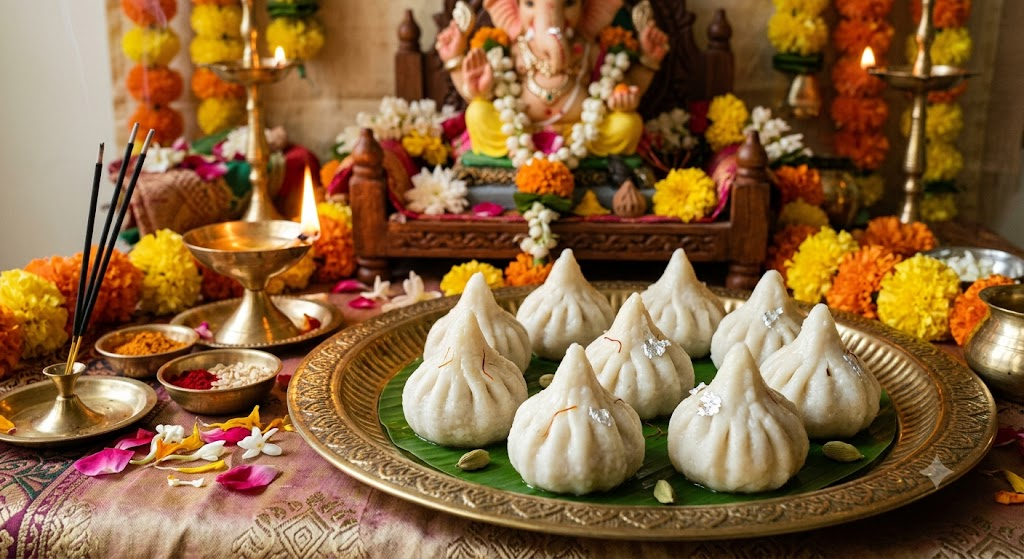
The house gets scrubbed for a week beforehand — cow-dung-and-red-earth floors in older homes, whitewashed walls, brass polished. On Chaturthi morning the murti is brought home in a procession from the idol-maker’s workshop, carried by the youngest men of the family, with the household following on foot.
Then the makhar — the decorated throne. This is where Konkan diverges most from the city, and where simple Ganpati decoration is the tradition rather than a compromise:
- Banana stems (kelichi khambe) tied at either side of the idol
- A matoli canopy in Sindhudurg and Goa, hung with turmeric, cucumber, coconut, wild fruit and forest creepers — often 20 to 30 different items, all locally gathered
- Marigold and red hibiscus strung by hand the same morning
- Durva grass in bunches of 21
- Oil lamps rather than electric strings, at least for the aarti
The daily ganesh puja runs morning and evening, with the whole lane converging for the evening aarti and prasad. Food is vegetarian for the duration in most households: ukadiche modak steamed in rice flour on day one, patoli wrapped in turmeric leaves, alu wadi, sol kadhi, and rice from the family’s own fields. Between aartis there is very little organised activity, which is rather the point — the festival is mostly cousins on a verandah.
Visarjan happens wherever the village’s water is: a river at Chiplun, a creek near Roha, a pond inland, the open sea at Malvan. The chant is the same everywhere. Ganpati Bappa Morya, pudhchya varshi lavkar ya.
Railway booking tips and tricks for Mumbaikars
Konkan Railway in Ganeshotsav week is the hardest ticket in Maharashtra. Here is the train list first, then the things regular chakarmani travellers do that first-timers don’t.
Ganpati special trains 2026: the Mumbai and Pune list

First, a clarification that trips up a lot of readers. The headline numbers — 254 services from Konkan Railway, 246 in coordination with Central Railway — count individual trips, not individual trains. A daily special running 11 to 27 September is one train number but roughly 16 trips. The table below is the set of train numbers most relevant if you are starting from Mumbai or Pune.
Central Railway services (via Konkan Railway)
| Train no. | Route | Frequency | Running dates (2026) |
|---|---|---|---|
| 01103 / 01104 | Mumbai CSMT ↔ Sawantwadi Road | Daily | 11–27 September |
| 01151 / 01152 | Mumbai CSMT ↔ Sawantwadi Road | Daily | 11–27 September |
| 01153 / 01154 | Mumbai CSMT ↔ Ratnagiri | Daily | 11–27 September |
| 01171 / 01172 | Lokmanya Tilak (T) ↔ Sawantwadi Road | Daily | 11–27 September |
| 01167 / 01168 | Lokmanya Tilak (T) ↔ Ratnagiri | 5 days a week | 12–27 September |
| 01129 / 01130 | Lokmanya Tilak (T) ↔ Sawantwadi Road | Weekly (Tue) | 15, 22 September |
| 01131 / 01132 | Lokmanya Tilak (T) ↔ Sawantwadi Road | Weekly (Thu, Sun) | 17, 20, 24, 27 September |
| 01165 / 01166 | Lokmanya Tilak (T) ↔ Madgaon Jn. | Weekly (Tue) | 15, 22 September |
| 01185 / 01186 | Lokmanya Tilak (T) ↔ Madgaon Jn. | Weekly (Wed) | 16, 23 September |
| 01155 / 01156 | Diva Jn. ↔ Khed | Daily (except 22 Sept) | 11–27 September |
| 01133 / 01134 | Diva Jn. ↔ Chiplun | Daily (except 23, 24 Sept) | 11–27 September |
| 01445 / 01446 | Pune Jn. ↔ Ratnagiri | Weekly (Tue) | 15, 22 September |
| 01447 / 01448 | Pune Jn. ↔ Ratnagiri | Weekly (Sat) | 12, 19, 26 September |
Western Railway services
| Train no. | Route | Note |
|---|---|---|
| 09019 / 09020 | Mumbai Central ↔ Sawantwadi Road | Booking opened 9 August 2026 |
| 09013 / 09014 | Mumbai Central ↔ Thokur | Runs the full Konkan corridor |
| 09035 / 09036 | Bandra Terminus ↔ Ratnagiri | Useful for western-suburb travellers |
| 09114 / 09113 | Vadodara Jn. ↔ Ratnagiri | Gujarat origin; can be boarded en route |
| 09110 / 09109 | Vishwamitri ↔ Ratnagiri | Gujarat origin |
| 09124 / 09123 | Vishwamitri ↔ Ratnagiri | Gujarat origin |
| 09022 / 09021 | Udhna Jn. ↔ Ratnagiri | Gujarat origin |
| 09030 / 09029 | Valsad ↔ Ratnagiri | Gujarat origin |
One timing worth knowing: train 01103 leaves Mumbai CSMT at 3.30 pm and reaches Sawantwadi Road at 4 am the next morning. The return, 01104, departs Sawantwadi Road at 4.35 am and reaches CSMT at 4.40 pm. Both run daily through the festival window — which makes 01103/01104 the most useful pair on the list for a Sindhudurg village, provided you can organise a 4 am pickup.
Train numbers, halts and timings change. Confirm on Konkan Railway, Central Railway or NTES before you travel.
Twelve booking tips
1. Know that there are two booking clocks, not one. Regular Konkan Railway trains open 60 days before the journey date at 8 am. Ganpati specials are announced separately and open on dates the railways publish only days in advance. Most people who miss out were watching the wrong clock — they waited for the 60-day window on a train that was never going to have one.
2. Set up IRCTC before the window, not during it. Save every traveller in your Master List with name, age, gender, ID number and berth preference, and keep a payment method saved. On opening morning you have seconds, not minutes. Typing a grandmother’s Aadhaar number at 8:00:40 am is how families end up on waitlist 60.
3. Board at Panvel instead of CSMT. Nearly every Konkan special halts at Panvel. If you live in Navi Mumbai, Thane, Dombivli or the eastern suburbs, Panvel saves 60 to 90 minutes of pre-dawn city travel, and the segment sometimes shows availability when the CSMT-origin leg does not. You can change your boarding point once through IRCTC, up to 24 hours before departure.
4. Look past CSMT for origins. Lokmanya Tilak Terminus services are usually less contested than CSMT ones, and the Diva Junction specials — 01155/01156 to Khed and 01133/01134 to Chiplun — are the most overlooked trains on the list, because most people don’t think of Diva as a departure terminal. Central Railway also runs unreserved specials on this corridor; if you can travel light, an unreserved coach two to three hours early beats a waitlist.
5. Book longer than you travel. Quotas are segment-wise, so if Mumbai to Chiplun shows full, Mumbai to Ratnagiri or Kudal may not. Getting off before your ticketed destination is perfectly allowed. Boarding later than your ticketed boarding point without formally changing it is not — the TTE can reallocate your berth.
6. Opt in to Vikalp. The Alternate Train Accommodation Scheme costs nothing and gives a waitlisted booking a shot at a confirmed berth on a different train on the same route. There is no reason to leave the box unchecked.
7. Learn the waitlist maths. GNWL (general waitlist) moves. PQWL and RLWL on a festival special usually do not. RAC is a genuine shared side-lower berth and worth accepting; WL 40 on a Ganpati special is a plan, not a ticket. Have a bus booked alongside it.
8. Treat Tatkal as a real plan B. Tatkal opens at 10 am for AC classes and 11 am for sleeper, one day before the train departs its originating station. For specials it is often less of a scramble than the main opening day.
9. Watch the chart, then watch the counter. Final charts prepare roughly four hours before departure and last-minute cancellations release berths. Check IRCTC availability at that point, and if you are already at the station, ask at the current booking counter — station staff can allot released berths that the app is slow to show.
10. Book the return leg in the same sitting. The return crush from 25 to 27 September is worse than the outbound, because it compresses into a Friday-to-Sunday window. Booking the return three weeks later, once you know your household’s visarjan day, is how people end up driving 500 km in festival traffic.
11. Run a parallel MSRTC booking. Reserve a bus on msrtcors.com alongside your rail attempt and cancel whichever you don’t need. Bus cancellation charges are trivial next to missing sthapana at home.
12. Track the train, and tell your taxi driver. Specials run late in festival season, and a 3 am arrival at Kudal becoming 6 am matters enormously when a driver is waiting. Use NTES or the RailOne app and send the driver a live update the night before.
When to travel from Mumbai to Konkan in 2026
Best outbound dates
| Date | Day | Expected pressure | Verdict |
|---|---|---|---|
| Wed, 9 Sept | Wednesday | Low | Best option if you have the leave |
| Thu, 10 Sept | Thursday | Low–moderate | The smart traveller’s choice |
| Fri, 11 Sept | Friday | High | Workable if you leave before 5 am |
| Sat, 12 Sept | Saturday | Very high | Likely the worst road day of the month |
| Sun, 13 Sept | Sunday | High | Fine for Raigad, risky for Sindhudurg |
| Mon, 14 Sept | Monday | Moderate | Only if your sthapana muhurat is late |
Direct answer: the best time to leave Mumbai for Ganesh Chaturthi in Konkan 2026 is before 6 am on Wednesday 9 or Thursday 10 September. You spend one extra day of leave and avoid the 11–13 September crush entirely.
Best return dates
Do not default to 25 September. Your household’s visarjan day decides your return, and returns are staggered across 15, 16, 18, 20 and 25 September for exactly that reason. A midweek return on 22 or 23 September is dramatically easier than 26 or 27. Whatever you choose, book the return leg at the same time as the onward one — the return crush is worse than the outbound because it is squeezed into a Friday-to-Sunday window.
Train, bus or car?
| Mode | Best for | Advantage | Limitation |
|---|---|---|---|
| Ganpati special train | Ratnagiri, Sindhudurg | Direct Konkan access, overnight travel | Booking pressure; odd arrival hours |
| Regular Konkan Railway train | Advance planners | Reliable, reserved classes | Sells out 60 days ahead |
| MSRTC / private bus | Budget travellers, small groups | Reaches taluka towns trains skip | 12–14 hours; little luggage flexibility |
| Own or hired car | Families with elders, heavy luggage | Door to door, stop when you want | NH-66 traffic; 10–14 hours on peak days |
| Shared taxi | Last mile from the station | Often the only village option | Vanishes late at night |
Road reality check: Mumbai to Ratnagiri is roughly 330 km and Mumbai to Malvan roughly 500 km on NH-66. On a normal day, budget 7 and 10 hours respectively. On 12 September, add three to five hours and plan for queues at Panvel, Karnala, Indapur and the Mahad–Poladpur stretch.
What to carry
Pack for a village, not a hotel. Rice flour and jaggery if your family asks for it, puja essentials that are hard to source locally, a power bank (rural outages are common in September rain), mosquito repellent, a torch, a raincoat rather than an umbrella, chappals you can leave outside, medicines with a printed prescription for elderly travellers, and cash — many villages still have patchy UPI coverage and one ATM per taluka.
If you are carrying an idol, tell your transport provider in advance. Rules and space differ between operators, and a murti is not a bag you can wedge under a seat.
Where to stay if the family house is full
This is the practical problem nobody plans for: the ancestral home sleeps twelve, and eighteen people arrive. Most families solve it by putting the older generation in the house and the younger ones nearby.
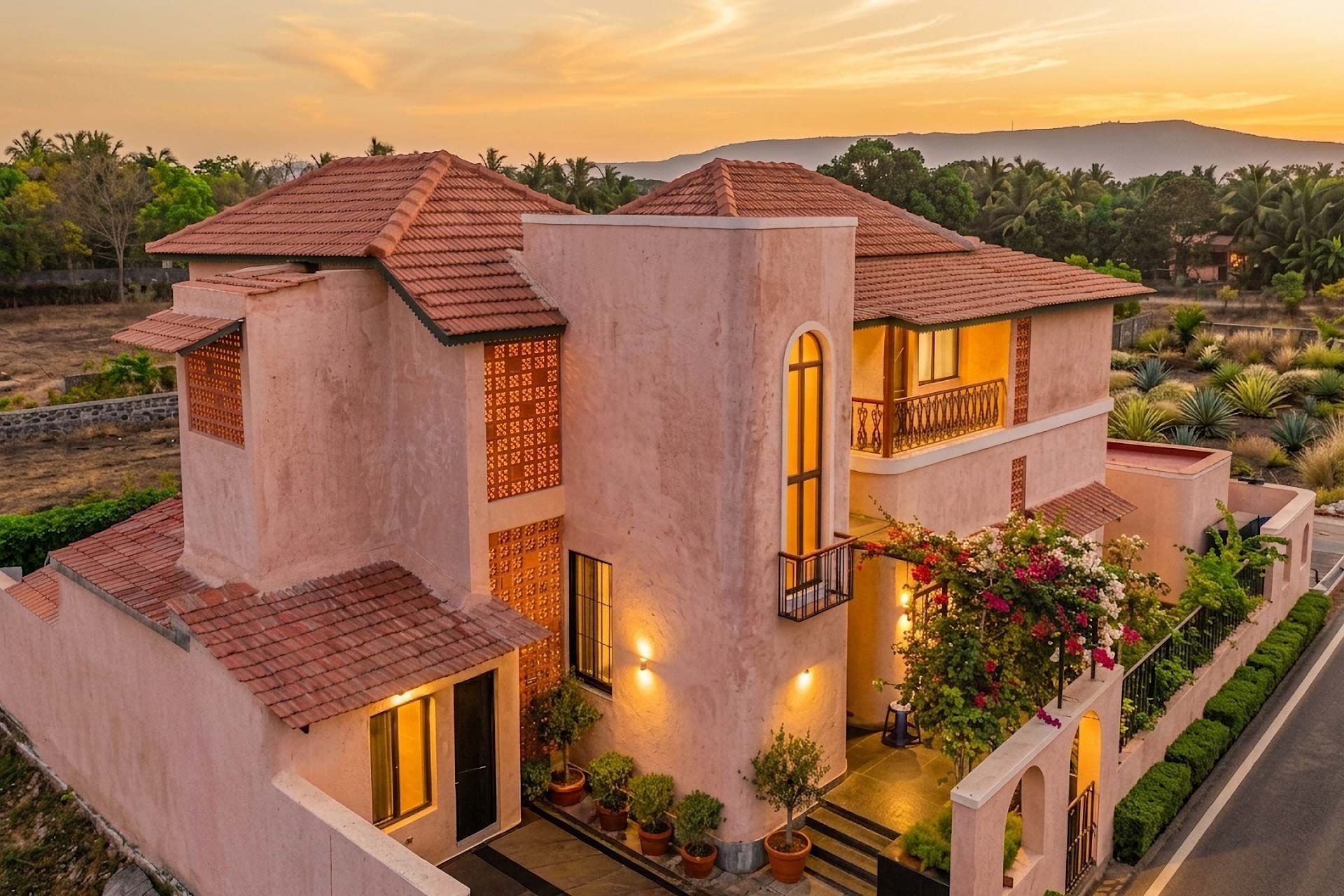
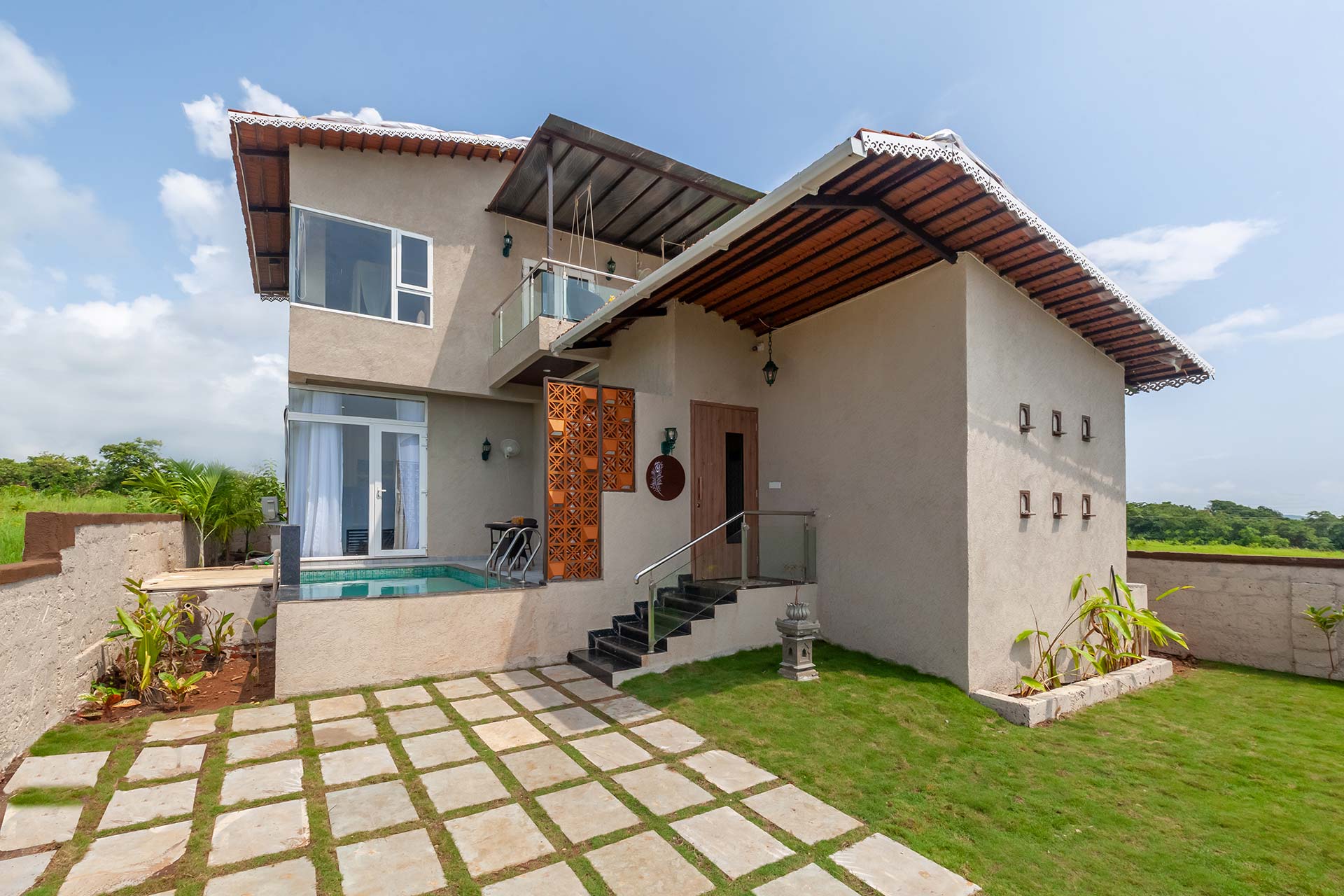
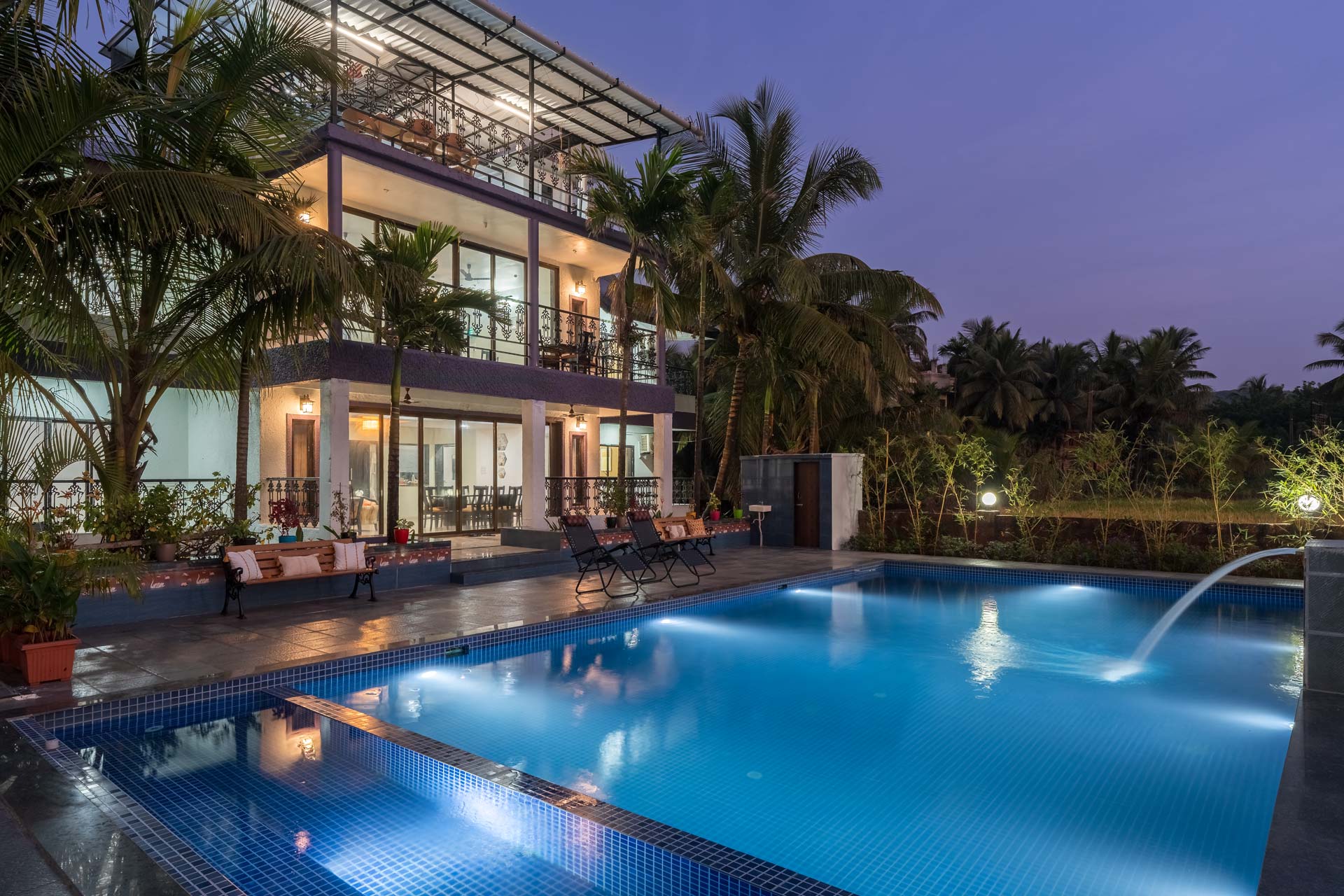
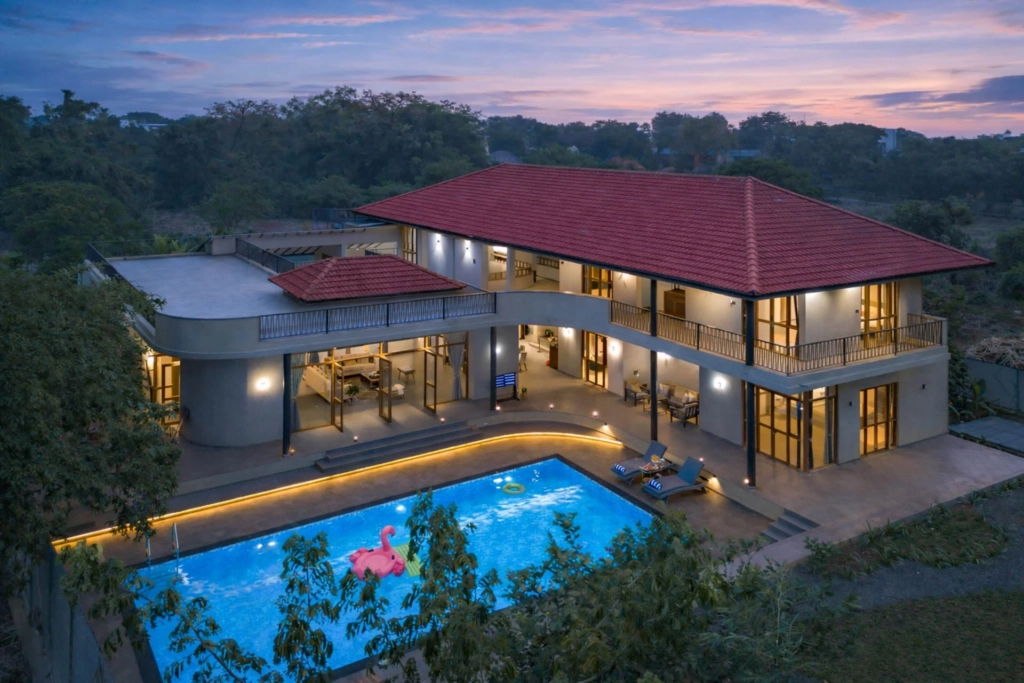
For travellers who need a proper base — parents in tow, a work call on Tuesday, or simply a room with reliable power and hot water — the coastal towns are where the options are. StayVista’s Alibaug villas work for families splitting time between the city and a Raigad village, and our Dapoli, Ratnagiri and Malvan properties put you within an hour of most Ratnagiri and Sindhudurg clusters, with kitchens you can actually cook festival food in.

FAQs
Because most of Mumbai’s Marathi-speaking families migrated from Raigad, Ratnagiri and Sindhudurg, and the family Ganpati is invited in the ancestral village house rather than the city flat. Ganeshotsav is the one festival where the whole extended family is expected to be present in that house.
Ganesh Chaturthi 2026 falls on Monday, 14 September, with the final visarjan on Anant Chaturdashi, Friday, 25 September. Intermediate household visarjans fall on 15, 16, 18 and 20 September.
Wednesday 9 and Thursday 10 September 2026 are the calmest outbound days. Saturday 12 September is likely the busiest on both NH-66 and the Konkan Railway corridor.
Ganpati specials for 2026 opened for booking in the first week of August, and regular Konkan Railway trains open 60 days ahead. For 2027, plan to book in the first week of July and set an alert for the special-train announcement in June.
Central Railway announced 246 Ganpati special services and Konkan Railway 254, operating between 11 and 27 September 2026 toward Ratnagiri, Sawantwadi Road, Madgaon and Mangaluru.
Household Ganpati is a private religious occasion, not a public event, so go only where you are invited. If you want the atmosphere without intruding, base yourself in Dapoli, Ganpatipule, Malvan or Alibaug, where homestays and villas are set up for visitors, and attend public temple celebrations instead.
Yes — all three are names for the same festival on Bhadrapada Shukla Chaturthi. It is called Ganesh Chaturthi in Maharashtra, Vinayaka Chavithi in Andhra Pradesh and Telangana, and Pillayar Chaturthi in Tamil Nadu, with different regional rituals and offerings.
The daily specials are 01103/01104 and 01151/01152 (CSMT–Sawantwadi Road), 01153/01154 (CSMT–Ratnagiri) and 01171/01172 (LTT–Sawantwadi Road), plus Diva Junction services 01155/01156 to Khed and 01133/01134 to Chiplun. Western Railway adds 09019/09020 from Mumbai Central and 09035/09036 from Bandra Terminus. Most run between 11 and 27 September 2026.
No. Sindhudurg Airport at Chipi is the region’s only functioning commercial airport, and as of August 2026 it is served by Fly91 to Pune, Bengaluru and Hyderabad only — there is no Mumbai route. Ratnagiri Airport is still awaiting scheduled services. Mumbaikars travel by train, bus or road.
September falls at the tail end of the southwest monsoon. Expect 23–31°C, humidity around 80–90%, real rain in the first half of the month tapering by the last week, and a rough sea that keeps swimming and water sports shut until roughly late October.
Households usually go vegetarian for the festival. Standard dishes include ukadiche modak (steamed rice-flour dumplings with coconut and jaggery), patoli steamed in turmeric leaves, alu wadi, sol kadhi and local rice.
Before you go
Mumbai is where the work is. But for a fortnight every September, several lakh people quietly agree that home is measured differently — by a village road, an ancestral house and the sound of a dhol coming up the lane.
Check live train availability rather than trusting an August announcement, confirm your last-mile taxi by name and number, and leave earlier than you think you need to — especially on 11, 12 and 13 September 2026.