
Guide to The Most Famous Festivals of India
Last Updated: October, 2026
India celebrates close to 50 nationally recognised festivals and hundreds of regional ones. This guide covers 18 of the most famous, in calendar order, with 2026-2027 dates. The next three festivals from today (October 16, 2026) are Diwali on November 8, 2026, Chhath Puja on November 13-16, 2026, and the Pushkar Camel Fair on November 17-24, 2026. Looking further out, Holi 2027 falls on March 22, Pongal 2027 on January 14, and Onam 2027 on September 12. Each festival section below includes the date, the ritual essence, where in India it is at its most intense, and a StayVista villa pick near the main celebration city.
India is home to dozens of festivals that are a melange of celebrations, commemorations and vibrant colours. The country’s rich diversity and cultures seep through these varied festivals. The yearly calendar is punctuated with festivities almost every month, each being momentous in its own way. However, the latter half of the year certainly is the most vibrant, with every month witnessing a grand celebration. Every festival has a varied significance and an even richer history. And each is brought in with the same gusto and enthusiasm as the last, if not more.
From adorning entryways with elaborate rangolis during Diwali to painting each other in colours during Holi to embellishing the house with lights during Christmas, festivals taste like joy. India is known for its lavish and grand revelry, along with the intrigue that follows these festivals. Each celebration is known for a moral or has a purpose according to myths and legends. Whilst some believe them, others don’t and simply partake in the fetes. Although these legends also draw in crowds from all over the world, to witness the hullabaloo.
Reminiscent of the past and encouraging togetherness, take a look at some of the most famous festivals of India.
In this Blog
Quick Info.
| Festival | 2026-2027 date | State / Region | Key celebration city |
|---|---|---|---|
| Chhath Puja | Nov 13-16, 2026 | Bihar, Jharkhand, eastern UP | Patna, Varanasi |
| Diwali / Deepavali | Nov 8, 2026 (Sun) | Pan-India | Ayodhya, Varanasi, Jaipur |
| Pushkar Camel Fair | Nov 17-24, 2026 | Rajasthan | Pushkar |
| Hornbill Festival | Dec 1-10 (annual) | Nagaland | Kisama, Kohima |
| Christmas | Dec 25, 2026 | Pan-India, strongest in Goa, Kerala, Northeast | Goa, Shillong |
| Lohri | Jan 13, 2027 | Punjab, Haryana | Amritsar, Chandigarh |
| Pongal / Makar Sankranti | Jan 14-17, 2027 | Tamil Nadu, Pan-India for Sankranti | Madurai, Trichy, Ahmedabad (Uttarayan kite fest) |
| Mahashivratri | Feb 15, 2027 (approx) | Pan-India | Varanasi, Haridwar, Ujjain |
| Lathmar Holi | Mar 16, 2027 | Uttar Pradesh | Barsana |
| Holi | Mar 22, 2027 | Pan-India | Vrindavan, Mathura, Jaipur |
| Eid-ul-Fitr | Mar 20, 2027 (approx, moon dependent) | Pan-India | Delhi (Jama Masjid), Hyderabad, Lucknow |
| Baisakhi | Apr 14, 2027 | Punjab | Amritsar |
| Rann Utsav | Nov 2026 to Feb 2027 (season) | Gujarat | Dhordo, Kutch |
| Raksha Bandhan | Aug 2027 | Pan-India | Pan-India |
| Janmashtami | Aug 24-25, 2027 | Pan-India, strongest in UP | Mathura, Vrindavan, Dwarka |
| Ganesh Chaturthi | Sep 4, 2027 | Maharashtra, Pan-India | Mumbai, Pune |
| Onam | Sep 12, 2027 | Kerala | Thrissur, Kochi, Alappuzha |
| Navratri / Durga Puja / Dussehra | Sep 30 – Oct 10, 2027 (approx) | Pan-India | Kolkata (Durga Puja), Ahmedabad (Garba), Mysuru (Dussehra) |
Navratri
When – During the Hindu month of Ashwin, which generally coincides with the month of September or October according to the Gregorian calendar.
Navratri is a 9-day long festival devoted to all 9 forms of Goddess Durga. Literally meaning Nav Ratri, which translates to 9 nights, the festival is celebrated lavishly throughout the country. Though it takes different forms, that vary from region to region, the moral remains the same – the defeat of demons.
During these 9 days and nights, societies, grounds and cities are dotted with pandals and tents and people step out in traditional Chaniya-Cholis – a traditional, vibrant lehenga with intricate work, and a blouse. Raas-Garba dances take over, that is an extremely energetic dance form. People fast for these 9 days as well. All in all the atmosphere is exhilarating and joyful.

Durga Puja
When – The festival takes place during the Ashwin month of the Hindu calendar which coincides with
Durga Puja is a 10-day long festival, that marks the victory of Goddess Durga over Mahisasur. It is elebrated with great excitement and fervour in the northeastern states of India, such as Bengal, Assam and other eastern states of India, and equally throughout the country. The states boast huge pandals and tents featuring the idol of Goddess Durga. The feast is accompanied by dramas, cultural dances and more. The festival itself coincides with Navratri, which is also a 9-day long festival celebrating Goddess Durga’s victory.

Onam
When – In the month of Chingam of the Malayalam calendar, which coincides with August/September of the Gregorian calendar
One of the other important festivals in India, Onam marks the return of King Mahabali. The festivities include people putting their foot forward, with festival-goers wearing traditional attires. The houses are decorated with vibrant flowers that leave a fragrant aroma behind. An elaborate feast called Onasadya is prepared, which includes a range of 13 lip-smacking delicacies. The celebrations include several events like Vallamkali which is a snake boat race, Kathkali Dance and Pulikali procession wherein people paint themselves as tigers and hunters.

Pongal
When – 14th January
A festival thanking nature for a successful season of harvest, Pongal is a 4-day long festival. Majorly celebrated in the south of India, the festival witnesses people adorned in their traditional, colourful attires, generally sarees and kurtas. The revelry is punctuated with energetic dances, cattle races, delectable sweets and mouth-watering food. Houses receive makeovers and are adorned with Kolam designs, that include colourful designs made with rice, flowers and powdered colours.

Ganesh Chaturthi
When – The 4th day of the first fortnight in the month of Bhadrapada of the Hindu lunisolar calendar, which corresponds with August/September of the Gregorian calendar
The birth of Lord Ganesha is celebrated with ample revelry during this almost 10-day affair. Lord Ganesha is known as the Lord of wealth, sciences and knowledge. Homes welcome small, big and medium-sized Ganpati murtis, as the surrounding environment is embellished with themed decorations, each unique in its own way. Cities all over India, but especially Maharashtra witness scattered pockets of Pandals and tents, all specially set-up to bring in this festival with fervour and excitement. There are dhols, music and aartis every morning. Although spanning over 10 days, each home and residence and pandals keep the idols for varying spans, from 1.5 days to 10 days. The respective last days are called Visarjan – wherein the idols are immersed in water bodies.

Raksha Bandhan
When – The full moon day of the Shravana month of the Hindu calendar, which corresponds to August of the Gregorian calendar.
Strengthening the bond of a brother and sister, Raksha Bandhan or Rakhi, as it is most often called, is a widely celebrated festival in India. The sister essentially ties a sacred thread or Rakhi around the brother’s hand, while performing aarti, exchanging sweet and applying tilak. Earlier, simple rakhis were tied, but now there are a range of themed, colourful rakhis to suit every mood.

Eid-ul-Fitr
When – On the 1st day of the month of Shawwal, the 10th month of the Islamic calender.
One of the most important festivals in the Muslim community and otherwise, Eid-ul-Fitr is a day-long festival that involves large gatherings of families after prayers. The day is a culmination of the holy month of fasting called Ramadan. People dress up in fine, new clothes, and the day is filled with delectable food, paying visits to friends and exchanging sweets. The mosques are decorated, and markets are abuzz with kebabs, biryanis and more!
Diwali
When – The darkest night of the Karthik month according to the Hindu lunisolar calendar, which corresponds with the months of October/November according to the gregorian calendar.
Famously known as the festival of lights, Diwali is one of the most famous festivals in India. The festivities and celebrations during this time are absolutely stunning. Each home around the country is ornamented with bright and colourful lanterns, beautiful diyas and intricately designed rangolis. The skies are adorned in the hues of colourful fireworks, whilst every home welcomes guests from far and wide. Every kind of sweet imaginable is bought in, as everyone paces themselves to welcome this exciting 5-day festival.
Echoing a rich history, Diwali is the celebration of good over evil. It marks the day when Lord Ram returned to Ayodhya after 14 years of exile, along with his wife Sita and Lord Laxman. It is a festival that commemorates good over evil. The lighting of diyas signifies the welcome of good, and is an auspicious day.

Christmas
When – 25th December
Celebrating the birth of Jesus, Christmas falls on 25th December of every year. Christmas means getting together with your families, close or extended, or both, and spending quality time together. The festivities observed during this time include bringing in towering christmas trees, hanging ornaments, and adorning the entire home with twinkling lights. Gifts are exchanged, as laughs become harmonious and the stocking are filled with trinkets and souvenirs of a gala time!

Holi
When – Phalgun month of Hindu calendar, which corresponds with March according to the Gregorian calendar
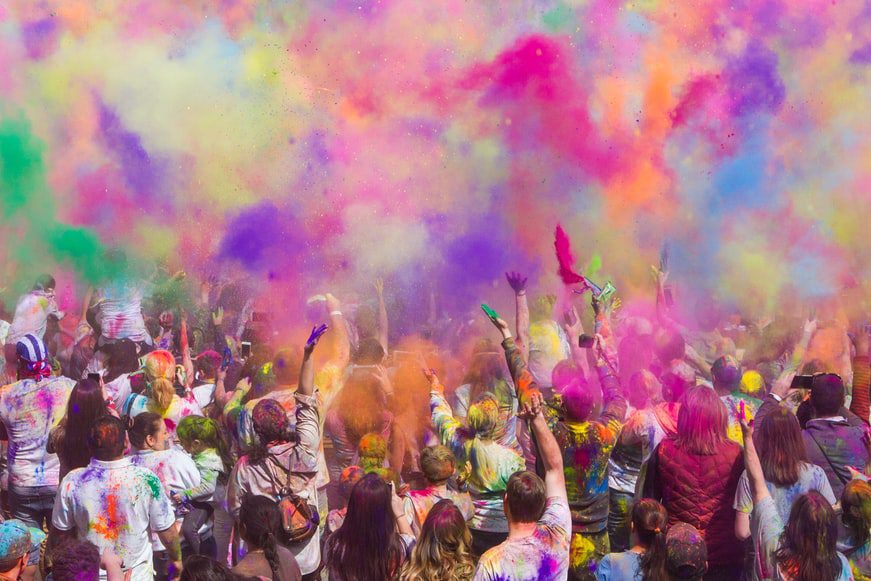
Just like Diwali is the festival of lights, Holi is the festival of colours. Not only celebrated with fervour and excitement in India but also it is celebrated all over the world with ample enthusiasm. The streets, bylanes and nooks the country are splattered in the vibrant hues of powder colours, each face is cloaked in a different tint. Water balloons and water guns, or more popular known as Pichkaris are taken out from the storage, and Holika bonfires are lit up. The festival itself symbolises the triumph of good over evil, signifying the victory of Prince Prahlad over Holika.
One of the most popular festivals, there are several songs on this festival, including Rang Barse and Balam Pichkari. Vrindavan witnesses grand Holi celebrations. Moreover, in the modern-day, a myriad of Holi parties are organized in the metropolitan cities, with large turnouts.
Where to Stay
FAQs
Diwali is the single most widely celebrated festival across India, cutting across religion and region. Durga Puja in Bengal and Ganesh Chaturthi in Maharashtra are the two biggest regional festivals.
Sunday, November 8, 2026. The five-day Diwali window runs November 6 (Dhanteras) through November 10 (Bhai Dooj).
Monday, March 22, 2027. Lathmar Holi at Barsana is approximately March 16, 2027. Holika Dahan is March 21.
Diwali for the cultural depth, Holi for the shared colour-play experience, Pushkar Camel Fair for the Rajasthan desert atmosphere, Hornbill Festival for the Northeast tribal cultures, Rann Utsav for the white desert nights.
Kolkata is the undisputed capital. Visit Kumartuli for idol-making workshops in the week before, then do a pandal-hopping circuit from Shobhabazar Rajbari to Bagbazar to Mohammad Ali Park on Saptami, Ashtami, and Navami.
Delhi has strong Diwali cultural depth (Lajpat Nagar lights, Chandni Chowk sweets, Akshardham), but November air quality in Delhi is at its worst due to stubble burning plus Diwali fireworks residue. Jaipur, Udaipur, Varanasi, or Ayodhya give you the Diwali atmosphere without the smog.
Navratri in Gujarat (Garba and Dandiya Raas) is India’s longest continuous dance festival, 9 nights of community dance in every village, town, and city of Gujarat.