
IRCTC’s New VANDARSHAN Packages Cover 6 Maharashtra Wildlife Destinations: Routes, Parks and What’s Actually Included
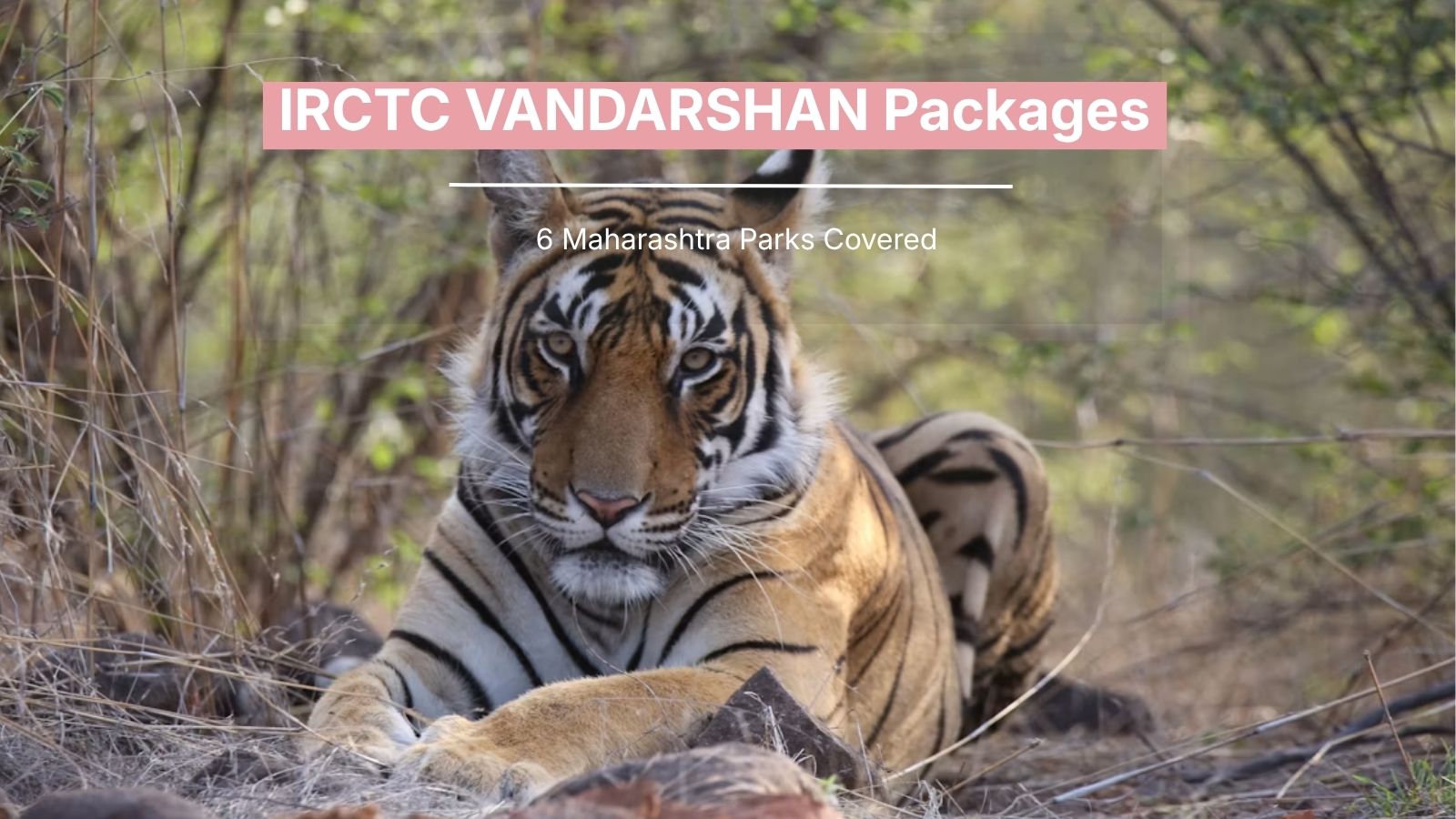
Book a Tadoba safari today and you’re juggling three separate transactions: a train ticket that may never confirm, a permit portal that opens 120 days out and sells out in minutes, and a lodge that wants payment before either is settled. IRCTC says VANDARSHAN collapses all three into one booking. The promise is real — but the six destinations aren’t quite what the headlines suggest, and the advertised train doesn’t stop where you’d expect.
TL;DR: IRCTC’s VANDARSHAN, launched 29 July 2026 with the Maharashtra Forest Department, bundles rail travel, permits, stays and transfers across six parks. It covers four of Maharashtra’s six tiger reserves — Melghat and Sahyadri are excluded (Wikipedia/NTCA). Core zones reopen 1 October.
For travellers who’ve watched the Maharashtra forest portal crash on booking day, the appeal is obvious.
In this Blog
What Exactly Is VANDARSHAN?
VANDARSHAN is an integrated rail-and-safari product launched on 29 July 2026 — International Tiger Day — after IRCTC Tourism and the Maharashtra Forest Department signed a memorandum of understanding in Nagpur (Free Press Journal, 2026). One booking covers train, permit, hotel and transfers.
The MoU was signed by Gaurav Jha, Group General Manager of IRCTC West Zone, and M. Srinivasa Reddy, Principal Chief Conservator of Forests (Wildlife). Maharashtra Forest Minister Ganesh Naik and Additional Chief Secretary Milind Mhaiskar attended.
Commercial bookings opened around 4 August 2026 (TBO Academy, 2026). The structure is four nights and five days, with five curated itineraries aimed at families, photographers, birdwatchers and first-time safari travellers.
The MoU signed on International Tiger Day 2026 between IRCTC Tourism and the Maharashtra Forest Department created India’s first state-level rail-to-safari booking integration, covering six protected areas under a single transaction that includes assured safari permits — historically the hardest component for independent travellers to secure.
What makes the permit guarantee interesting isn’t convenience. It’s allocation. Forest departments hold quotas that individual travellers compete for; a bulk institutional allocation to IRCTC changes who gets access, not just how easily.
Which Six Parks Are Covered — and Which Two Are Missing?
Here’s the correction that matters. Maharashtra has exactly six notified tiger reserves — Melghat, Tadoba-Andhari, Pench, Sahyadri, Nawegaon-Nagzira and Bor (Wikipedia/NTCA). VANDARSHAN covers six destinations, but only four are tiger reserves. The other two are wildlife sanctuaries.
The six VANDARSHAN destinations are Tadoba-Andhari Tiger Reserve, Pench Tiger Reserve, Bor Tiger Reserve, Navegaon-Nagzira Tiger Reserve, Umred-Karhandla Wildlife Sanctuary and Tipeshwar Wildlife Sanctuary. Melghat and Sahyadri — the state’s largest and its only Western Ghats reserve — aren’t included.
That omission isn’t arbitrary. Melghat sits in Amravati district and Sahyadri straddles the Western Ghats, hundreds of kilometres from the Vidarbha rail corridor the packages are built around. VANDARSHAN is a Vidarbha product wearing a Maharashtra label.
Tadoba anchors the set. It held 97 tigers in the 2022 Tiger Estimation Report, among the highest counts of any Indian reserve, and draws over 100,000 visitors annually (Maharashtra Tourism). Pench Maharashtra spans 741 sq km with 41-plus tigers. Bor, at 138 sq km of core, is India’s smallest tiger reserve — it had just four tigers when notified in 2014 (Down To Earth).
Don’t dismiss the two sanctuaries. Tipeshwar packs roughly 20 tigers into 148.63 sq km near Pandharkawada, a density that rivals anywhere in India, and Umred-Karhandla’s 189 sq km connects to Tadoba via forest corridors along the Wainganga.
Here’s the whole set at a glance, with the rail access each one actually has:
| Destination | Status | Area | Nearest train halt | Road transfer | Tigers |
|---|---|---|---|---|---|
| Navegaon-Nagzira | Tiger reserve | 1,895 sq km | Gondia (terminus) | 45–81 km | Not published |
| Tadoba-Andhari | Tiger reserve | 1,728 sq km | Nagpur | ~140 km | 97 (2022) |
| Bor | Tiger reserve | 816 sq km | Wardha / Nagpur | Not published | ~15–20 |
| Pench (Maharashtra) | Tiger reserve | 741 sq km | Nagpur | ~90–110 km | 41+ (2022) |
| Umred-Karhandla | Wildlife sanctuary | 189 sq km | Nagpur | ~60 km | 4 adults, 9 cubs (2014) |
| Tipeshwar | Wildlife sanctuary | 149 sq km | None on this route | — | ~20 |
| Tiger reserve | 2,768 sq km | Not covered | — | — | |
| Tiger reserve | 1,166 sq km | Not covered | — | — |
Read that table sideways and a pattern appears: the two biggest reserves on the list are the two furthest from a station. Navegaon-Nagzira is the best-connected park in the package and the least famous.
How Does the Vidarbha Express Actually Reach These Parks?
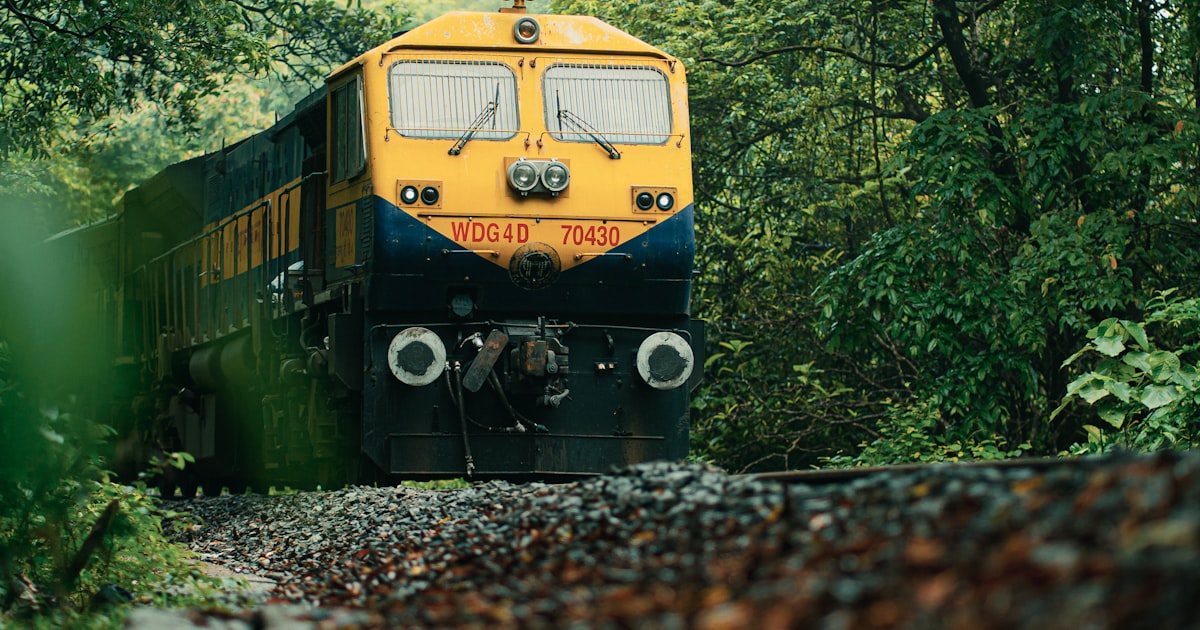
This is where the marketing and the timetable diverge. Tours depart Mumbai CSMT on the Vidarbha Express, which runs to Gondia via Nagpur — 967 km in about 16 hours, departing 19:05 and arriving 11:15 (Wikipedia). It does not stop at Chandrapur, Tadoba’s own railhead.
Our finding: We cross-referenced the Vidarbha Express 12105 halt list against each destination’s nearest railhead. Four of the six parks sit within 90 km of a scheduled halt. Tadoba needs a 140 km road transfer from Nagpur, and Tipeshwar has no scheduled halt within practical reach at all.
The train’s halts include Nagpur, Wardha and the Gondia terminus. Gondia is the surprise winner — Nagzira lies about 45 km away and Navegaon roughly 81 km, both served directly by the train’s endpoint.
Tadoba is the awkward one. The drive from Nagpur runs 140 km via NH-930, roughly two and a half hours, and stretches to 190 km if your permit lands at the Zari gate rather than Kolara. Chandrapur station sits 45 km from the park — but it’s on the Wardha–Ballarshah line, not the Gondia route.
Tipeshwar is harder still. Its nearest railheads are Adilabad, about 44 km away and across the border in Telangana, and Yavatmal at roughly 51 km. Neither is a Vidarbha Express halt.
IRCTC has said additional boarding stations will follow. Until they do, treat the “one train, six parks” framing as aspirational: the rail leg gets you to Vidarbha, and road transfers do the rest.
What’s Actually Included in the Price — and What Isn’t
The published inclusions are consistent across sources: confirmed train travel, accommodation, local transfers and assured safari permits (Free Press Journal, 2026). IRCTC hasn’t published per-package pricing, which makes the permit component the only piece you can independently value.
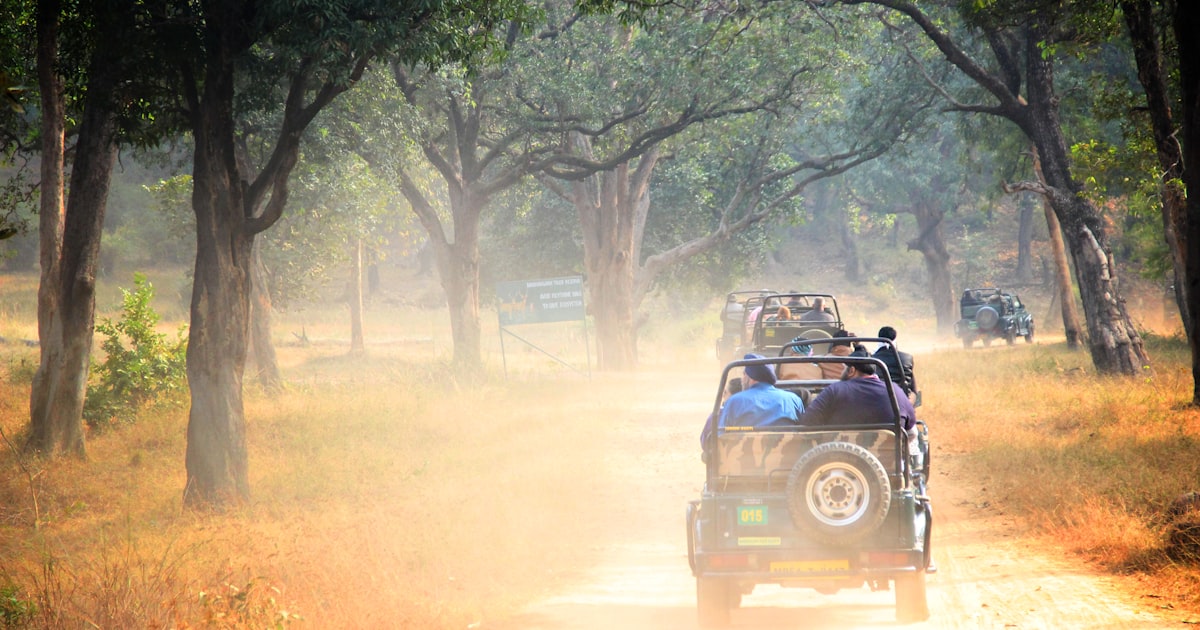
And that component isn’t trivial. A core-zone half-day permit at Tadoba runs roughly ₹5,800–₹6,800 per jeep on weekdays and ₹8,800–₹12,800 on weekends, combining entry fees of ₹1,800–₹2,800, a ₹700 guide fee and a gypsy charge from ₹3,300 (WildTrails, 2026).
Split six ways, a weekday jeep costs each traveller under ₹1,000 per drive. The real currency here isn’t money — it’s certainty. Permits open 120 days ahead and the popular core gates clear almost immediately.
A core-zone half-day safari permit at Tadoba-Andhari Tiger Reserve costs between ₹5,800 and ₹6,800 per jeep on weekdays and up to ₹12,800 on weekends, with bookings opening 120 days in advance. Because gypsy hire accounts for roughly 57% of that cost, the guaranteed-permit component of a bundled package carries measurable financial value beyond convenience.
What IRCTC hasn’t specified publicly: hotel category, how many safaris each itinerary includes, whether drives are core or buffer zone, and cancellation terms. Ask before you pay — a buffer-zone drive is a materially different product from a core-zone one.
Where Should You Stay Near These Parks?
A VANDARSHAN package assigns you a hotel. Book independently and you keep control of where you sleep — which matters when safaris start before sunrise. StayVista’s villas in this region cluster around Pench and Nagpur, with four properties sleeping 10 to 15 guests apiece and nightly rates from ₹24,416 (StayVista).
The case for a villa over a lodge is arithmetic. A safari gypsy seats six. A villa sleeping 12 to 15 puts two full jeeps under one roof, on one schedule, with one kitchen — no lobby rendezvous at 5:30 am, no split breakfast timings.
Villas near Pench Tiger Reserve
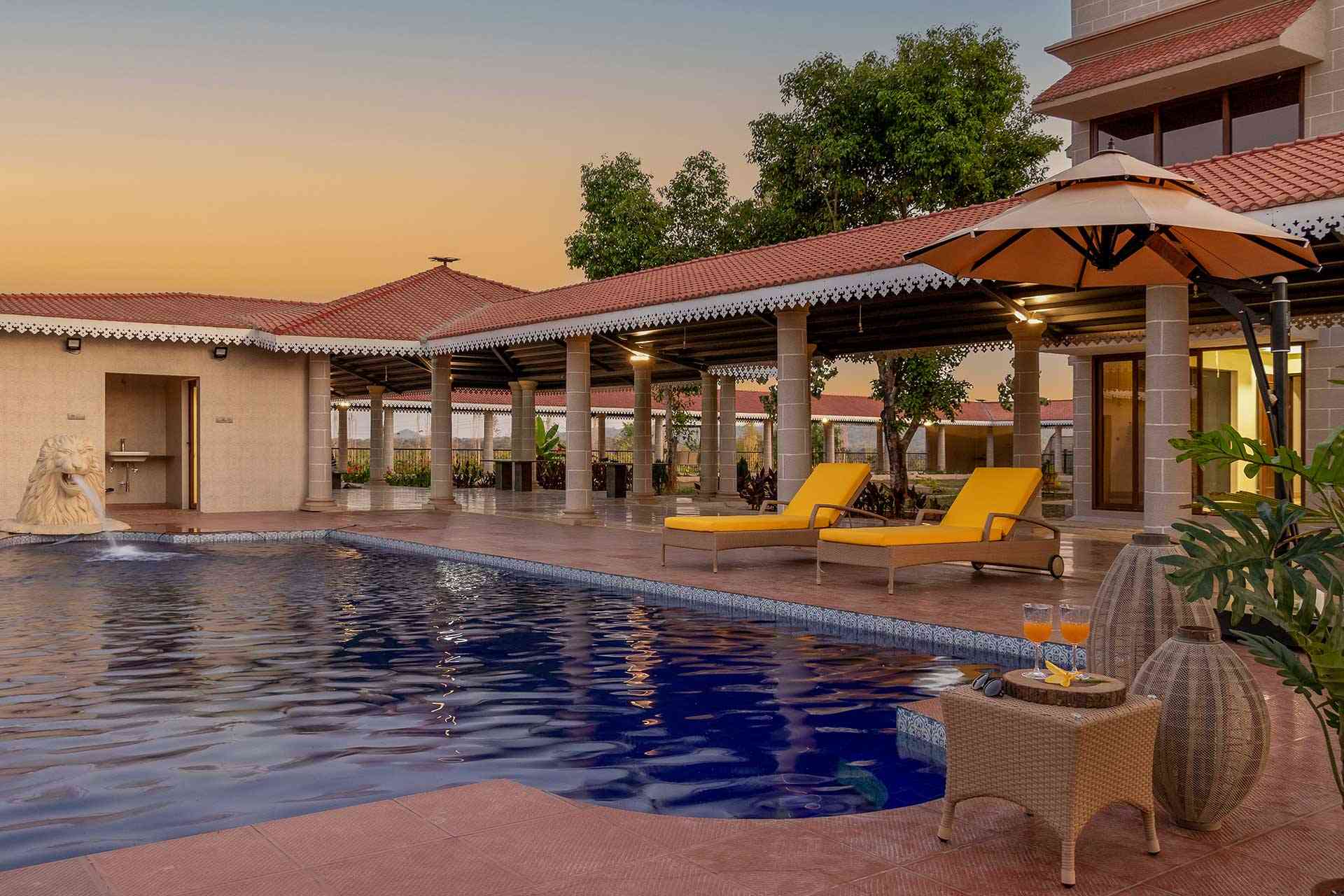
Vannraj Farm Villa is the pick for a two-jeep group: five bedrooms, up to 15 guests, forest views, a plunge pool and bonfire evenings, rated 5/5 across with 15 reviews.
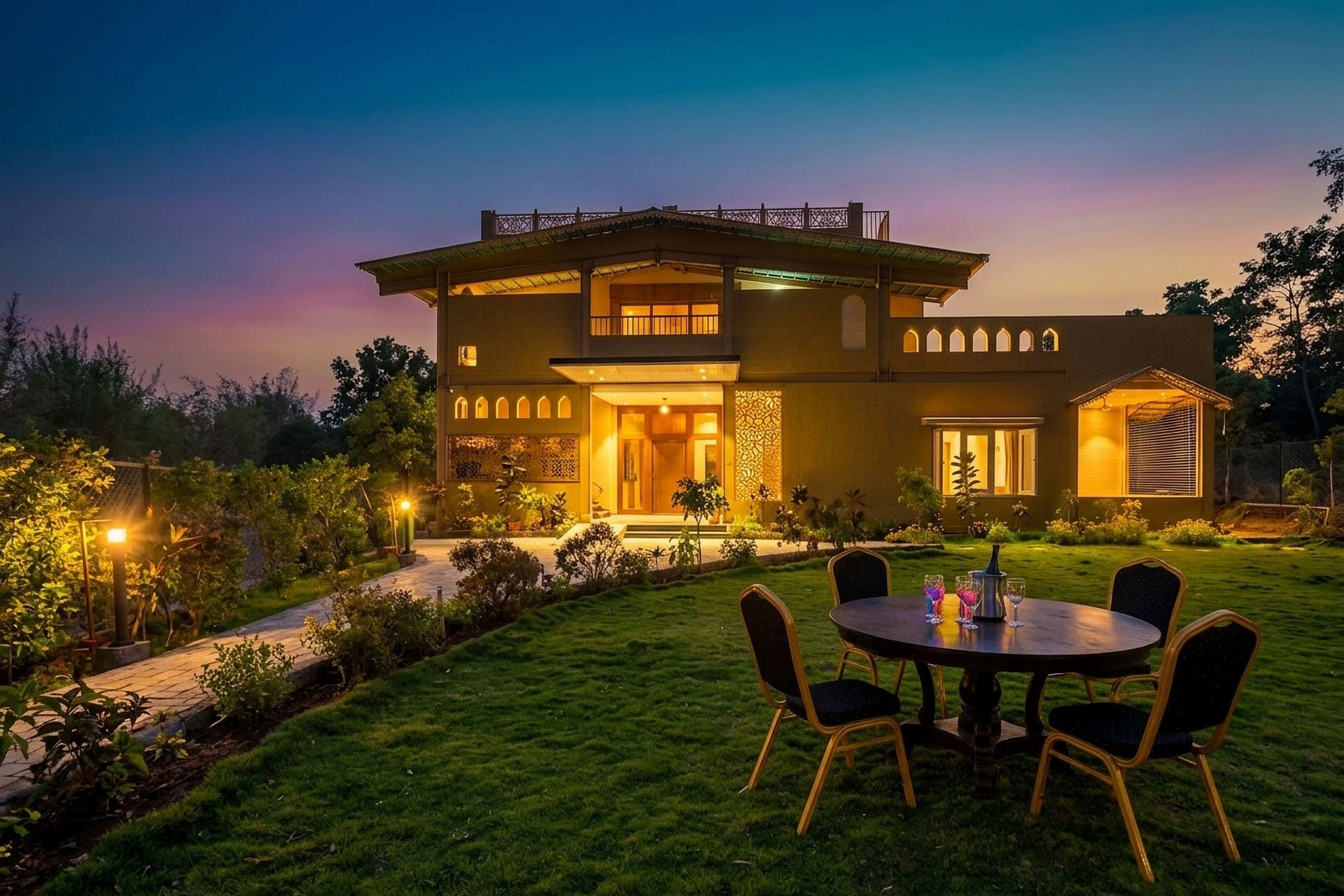
Suman Vatika suits a single-jeep family — three bedrooms, up to 10 guests, private pool, EV charging, and StayVista’s best-rated Pench property with 86 reviews. Its bedrooms are named for the flowering trees planted outside their windows.
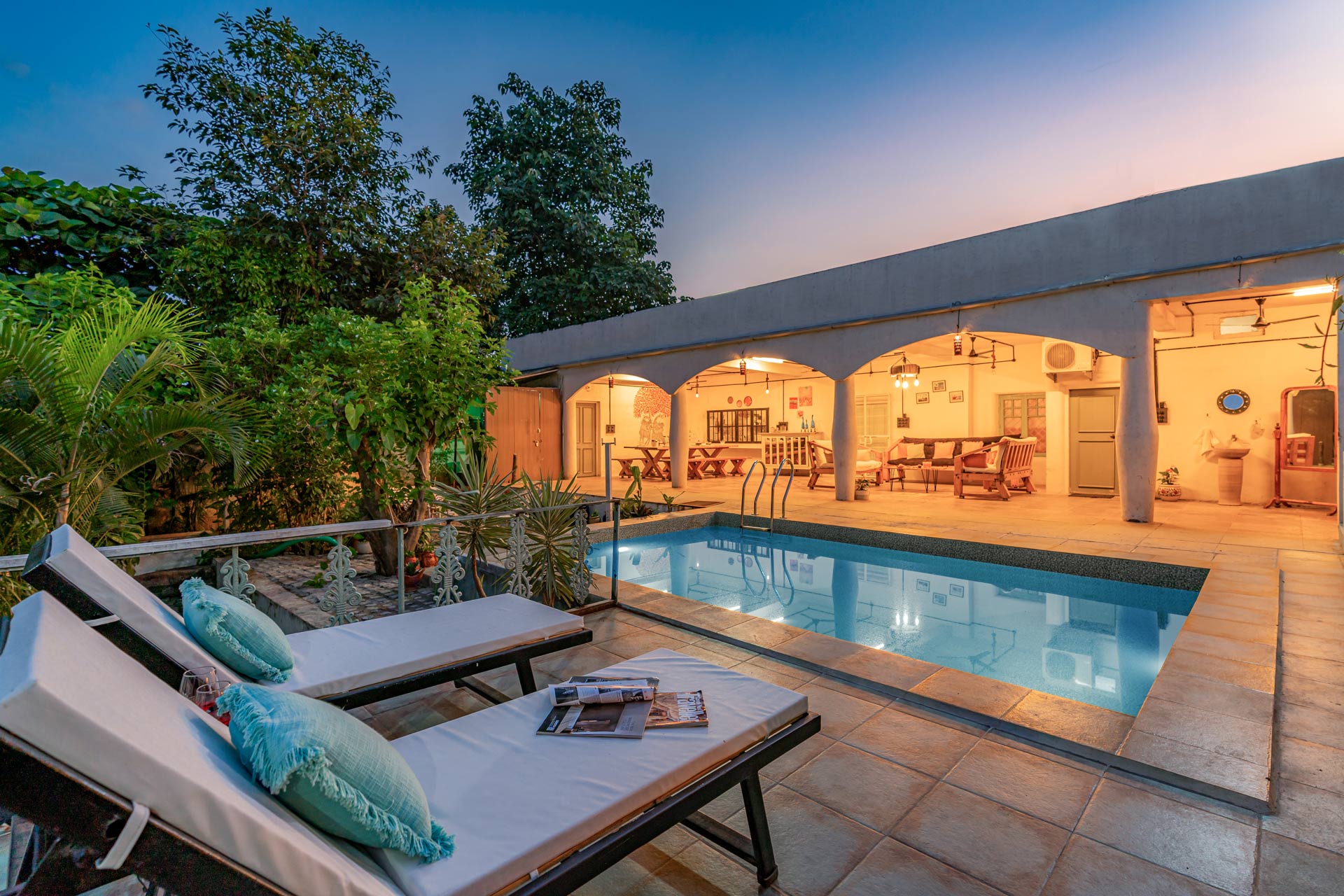
Asmita Farms is the top-end option: four bedrooms, up to 12 guests, private pool, wheelchair access and pet-friendly.
A villa at the railhead
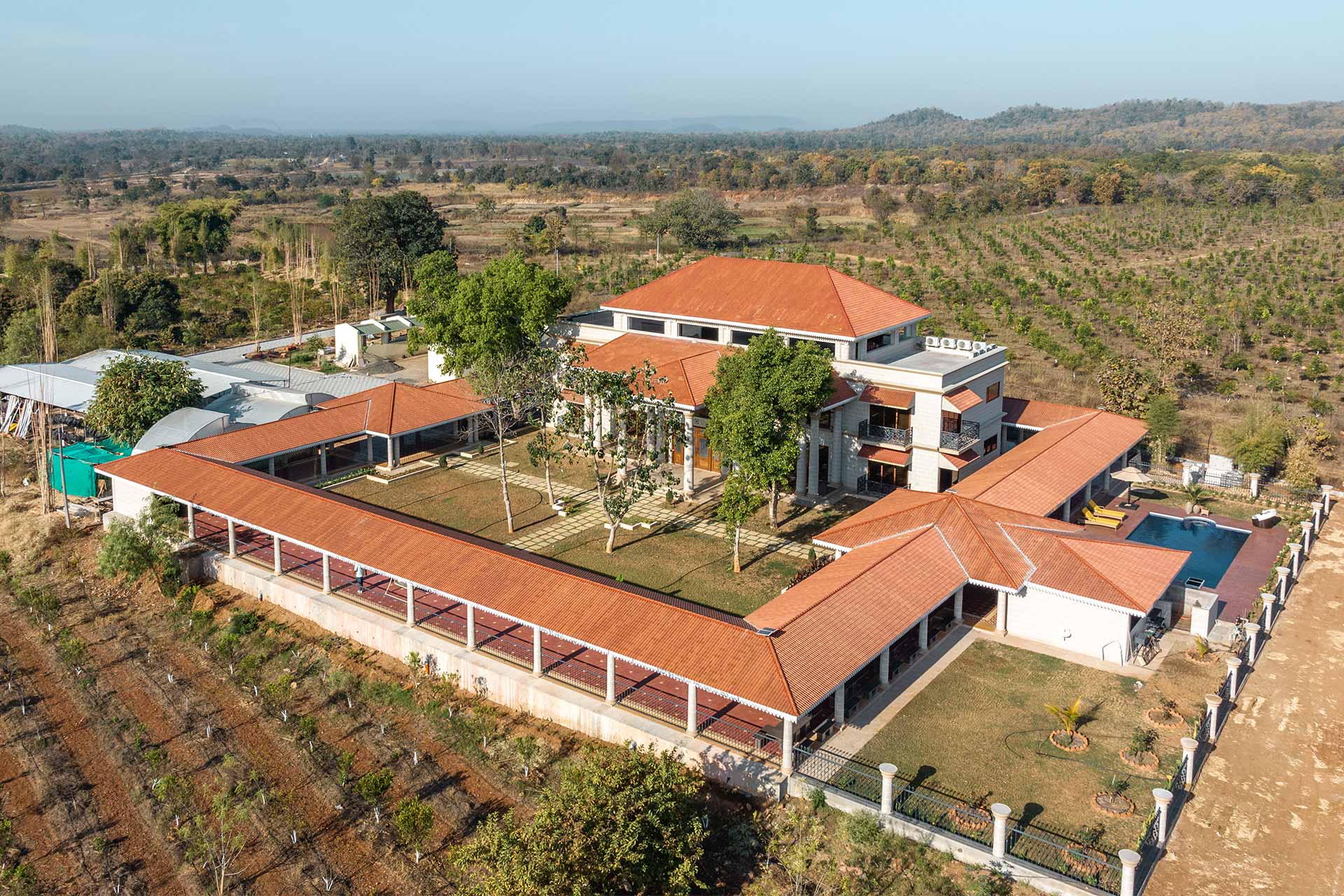
Orange Theory sits in Nagpur’s orange orchards — four rooms, up to 15 guests, private pool, meals and bonfire. Its real advantage is position. Nagpur is the Vidarbha Express halt that serves Umred-Karhandla at 60 km, Pench at roughly 90 km and Tadoba at 140 km.
StayVista’s Pench and Nagpur villas accommodate 10 to 15 guests each, with Vannraj Farm Villa and Orange Theory both sleeping up to 15. Because a safari gypsy seats six, a single 15-guest villa consolidates two full jeep parties under one booking — a structural advantage over paired hotel rooms when drives depart before dawn.
One honest note: there’s no StayVista inventory at Tadoba, Navegaon-Nagzira, Tipeshwar or Bor. For a Pench-anchored trip, or a Nagpur base with day drives to Umred-Karhandla, the villas work well. A Tadoba-first itinerary means staying near the gate instead.
When Can You Actually Go?
Not immediately. Tadoba’s core zones close to visitors from 30 June to 30 September each year, and safaris across Vidarbha reopen on 1 October after the monsoon break (Nagpur Today). Packages launched in early August, mid-closure.

So the first genuinely bookable core-zone window is 1 October 2026. The closure protects breeding season and lets the forest department repair tracks that monsoon rain turns to slurry — it isn’t a scheduling quirk to be argued around.
Which months are best? October and November give you green forest and comfortable temperatures but thicker cover, so sightings take patience. March through June strips the canopy and pushes animals to waterholes — brutal heat, far better odds.
The evidence supports the summer bet. Tadoba’s May 2026 Buddha Purnima waterhole census, conducted from machans over 24 hours, recorded 42 tigers and more than 5,700 wildlife sightings (ThePrint, 2026). That’s what water scarcity does to visibility.
Maharashtra’s tiger population grew from 103 animals in 2006 to 444 in the 2022 All India Tiger Estimation, against a national total of 3,682 (NTCA, 2022). The sixth estimation cycle ran in January 2026 and its figures are still with the NTCA and Wildlife Institute of India for verification.
Does One-Click Booking Change Wildlife Tourism?
Bundling shifts who reaches these parks. Maharashtra’s six tiger reserves cover 9,113 sq km, about 3% of the state (Wikipedia/NTCA), and access to them has long favoured travellers who understood permit portals and booked four months out.
Removing that friction widens the funnel — which is the stated aim and also the risk. More visitors at four parks while Melghat and Sahyadri stay off the rail map concentrates pressure where it’s already highest. Tadoba’s 100,000-plus annual visitors don’t spread themselves evenly across twelve gates.
The counterweight is that IRCTC and the Forest Department framed the partnership around conservation awareness and local livelihoods, not just volume. Whether that holds depends on quota discipline the packages haven’t yet made public.
There’s a quieter upside in the routing problem. Because Gondia sits at the end of the line, Navegaon-Nagzira gets rail access that Tadoba can’t match — and it receives a fraction of Tadoba’s visitors. If the itineraries lean into that geography rather than fighting it, VANDARSHAN could redistribute pressure instead of concentrating it.
Does bundling create demand or just redirect it? Probably both, and the split matters. Travellers who’d have driven from Mumbai now arrive by train, which is a straightforward emissions win. Travellers who’d never have attempted the paperwork are net-new footfall in reserves already running near capacity in peak season.
Worth watching: whether additional boarding stations materialise, and whether a Chandrapur-served itinerary appears. That single timetable change would do more for Tadoba access than any amount of bundling.
Frequently Asked Questions
VANDARSHAN is an integrated wildlife tourism product launched 29 July 2026 by IRCTC Tourism with the Maharashtra Forest Department. It bundles train travel, hotels, local transfers and assured safari permits across six protected areas into one booking, structured as four-night, five-day trips from Mumbai CSMT.
No. It covers four — Tadoba-Andhari, Pench, Bor and Navegaon-Nagzira — plus two wildlife sanctuaries, Umred-Karhandla and Tipeshwar. Melghat (2,768 sq km) and Sahyadri (1,166 sq km) are excluded, as both sit far from the Vidarbha rail corridor the packages are built around (NTCA).
The Vidarbha Express from Mumbai CSMT, which covers 967 km to Gondia via Nagpur in about 16 hours, departing 19:05 (Wikipedia). It doesn’t halt at Chandrapur, so Tadoba requires a 140 km road transfer from Nagpur. IRCTC has said more boarding stations will be added.
Core zones close 30 June and reopen 1 October each year for the monsoon, covering Tadoba, Pench, Bor, Navegaon-Nagzira and Umred-Karhandla (Nagpur Today). The practical season runs October to June, with March–June offering the strongest sightings.
Yes. StayVista lists Vannraj Farm Villa (15 guests, ₹25,587/night), Suman Vatika (10 guests, ₹24,416/night) and Asmita Farms (12 guests, ₹86,224/night) near Pench, plus Orange Theory in Nagpur for 15 guests (StayVista). A 15-guest villa houses two full safari jeeps.
A core-zone half-day permit runs about ₹5,800–₹6,800 per jeep on weekdays and ₹8,800–₹12,800 on weekends, comprising entry fees of ₹1,800–₹2,800, a ₹700 guide fee and gypsy hire from ₹3,300 (WildTrails, 2026). A jeep seats six.
The Short Version
VANDARSHAN solves a genuine problem. Just book it with clear eyes about what it is.
- It covers four tiger reserves and two sanctuaries, not six tiger reserves. Melghat and Sahyadri are out.
- The Vidarbha Express reaches Nagpur, Wardha and Gondia — not Chandrapur, so Tadoba means a 140 km drive.
- Gondia is the strongest rail-to-park link: Nagzira sits 45 km from the terminus.
- The assured permit is the real value. Core-zone jeeps cost ₹5,800–₹12,800 and sell out fast.
- A 15-guest villa fits two safari jeeps. For Pench or a Nagpur base, that beats paired hotel rooms on a pre-dawn schedule.
- The first bookable core-zone window is 1 October 2026. Nothing runs in core zones before that.
Before booking, ask IRCTC four questions: how many safaris are included, whether they’re core or buffer zone, which gate, and which hotel. Those answers determine what you actually get.