
Monsoon Trips Under ₹30K in 2026: Where to Go Based on Your Start City

The rain beat the calendar this year. The southwest monsoon reached Mumbai and the rest of Maharashtra on 23 June 2026 and covered the whole country roughly nine days ahead of its usual 8 July date. So the greenery is already here — the waterfalls are running, the ghats are wrapped in cloud, and off-season room rates have dropped.
But here’s the catch most listicles skip: 2026 is forecast to be a below-normal monsoon. The question isn’t just “where’s pretty in the rain” – it’s “where can I go from my city, this month, without blowing past ₹30,000?” That’s exactly what this guide answers, sorted by where you start.
A 2-night, 3-day monsoon trip by road or train costs about ₹6,000–₹23,200 per person in 2026 – comfortably under ₹30K. The monsoon reached Mumbai on 23 June and covered India ~9 days early, though the IMD forecasts a below-normal season at 90% of the Long Period Average. Best value depends on your start city: Mumbai/Pune → the Sahyadris and Konkan; Bangalore → Coorg and Chikmagalur; Delhi → the lower Himalayan foothills.
In this Blog
Can you really do a monsoon trip under ₹30,000 in 2026?
Yes — and with room to spare. A 2-night, 3-day trip by train or bus from a metro runs between ₹6,000 and ₹23,200 per person, drawn from current 2026 fare and stay data. That spread is the whole story: travel light and two people can share one ₹30K budget, or spend toward the top end and one person still gets a genuinely comfortable trip.
The number depends almost entirely on how you travel. Trains and Volvo buses keep the bill low; flights eat into it fast. Here’s where the money actually goes on a comfortable-end trip.
Total ≈ ₹23,200 — and the ₹30K ceiling still leaves room for a flight or a room upgradeSource: assembled from Wego, Zingbus and TopIndianHolidays 2026 fare/stay data. Per-person planning ranges. Per-person budget for a 2N/3D road or train trip, 2026. Figures are planning ranges — verify live before booking.
Here’s the same model as a line-item range, from the budget end to the comfortable end:
| Line item | Budget end | Comfortable end |
| Return transport (sleeper train / AC bus) | ₹800 | ₹4,200 |
| Stay (2 nights) | ₹2,400 | ₹9,000 |
| Food (3 days) | ₹1,200 | ₹3,500 |
| Local transport (autos / shared cabs) | ₹600 | ₹2,500 |
| Activities & entry fees | ₹500 | ₹2,500 |
| Rain buffer / contingency | ₹500 | ₹1,500 |
| Total per person | ~₹6,000 | ~₹23,200 |
Our take: No competitor publishes a real line-item monsoon budget — they give one vague “₹9,500 total” figure. We’ve itemised it so you can see exactly which lever to pull. The biggest one? Skip the flight. A return Volvo or sleeper fare is often a tenth of an airfare, and it’s what keeps the whole trip under ₹30K with room for a private room instead of a dorm bunk.
What does that extra ₹7,000 of headroom up to ₹30K buy you? Either a short monsoon-fare flight (₹4,000–8,000 on many routes) to reach somewhere farther, or a private room or cottage upgrade so you’re not sharing. Pick one, not both, and you’ll stay on budget.
For where to actually sleep on this budget, jump to our verified StayVista monsoon stays below.
Is 2026 a good monsoon to travel – and is it safe?
2026 is a below-normal monsoon. The IMD’s updated forecast puts the season at 90% of the Long Period Average – the first below-normal call in three years – with a 60% chance of deficient rainfall. The WMO’s regional outlook agrees, expecting below-average rain across much of South Asia from June to September.
Is that bad news for a trip? Not really. A lighter monsoon means fewer total washouts and, on some routes, lower landslide risk – while the off-season discounts stay just as steep. The trick is to pick the belts that stay reliably green even in a patchy year: the Western Ghats, the Konkan coast, and the lower Himalayan foothills. The rain arrived fast this year, as the timeline shows.
Monsoon 2026: it arrived early
Now the safety part, because monsoon travel in India isn’t all misty selfies. Stick to a few rules and you’ll be fine.
- Check the IMD and local advisories the night before and the morning of any hill drive. Red and orange alerts mean postpone, not push through.
- Treat hill roads with respect. Landslides and rockfall spike in heavy spells. Travel by day, keep the itinerary flexible, and build in a buffer day.
- Stay away from swollen rivers and waterfall edges. Flash floods kill people every monsoon at exactly the spots that look most photogenic. Don’t wade into a river in spate for a photo.
- Buy travel insurance. On a sub-₹30K trip, ₹300–500 of cover against a washed-out booking is the smartest line item you’ll add.
Is it worth the caution? Absolutely — the hills are never greener or cheaper than right now. Just travel smart.
Monsoon trips under ₹30K from Mumbai & Pune
If you start in Mumbai or Pune, you’ve got the best monsoon cards in the country. The Sahyadris and the Konkan coast turn electric green within a week of the first rain, and most of it sits within a 2–3 hour train or drive. A weekend here barely dents ₹30K. These four are the picks.
Lonavala & Khandala
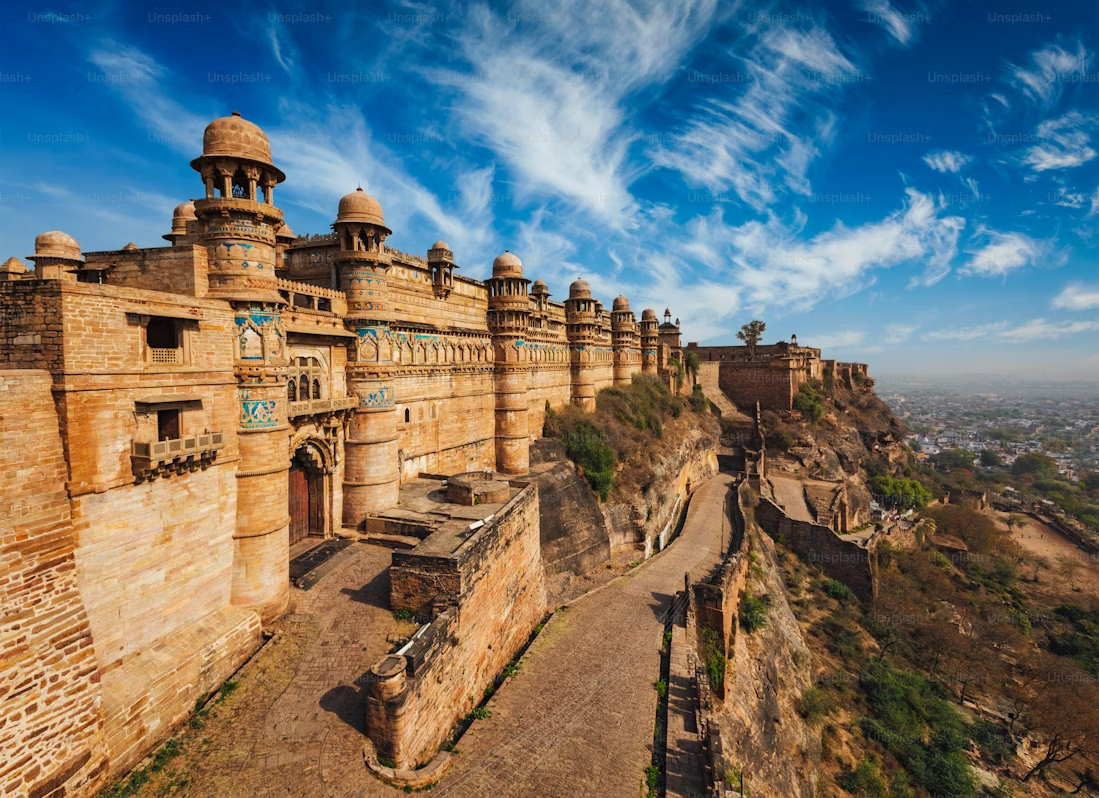
The default Mumbai-Pune monsoon run, and for good reason. Bhushi Dam overflows into a natural staircase of water, Kune Falls drops in three tiers, and Tiger’s Leap gives you the classic cloud-in-the-valley view. – Entry: Free; parking around ₹50 for two-wheelers, ₹100 for cars. Note: local authorities crowd-control or shut Bhushi Dam access on heavy-rain days and usually clear people from the water by about 5 pm — check the local advisory before you go. – Best time: July–August for full waterfalls. – How to reach: ~83 km from Mumbai, ~65 km from Pune; ~2 hours by road. Lonavala station sits on the Mumbai–Pune line. – Time required: 1–2 days. Ideal for: couples, friends, families. – Pro tip: Hit Bhushi Dam before 8 am on a weekday — by noon on a Saturday it’s shoulder to shoulder.

Karjat
Quieter than Lonavala, greener up close, and even closer to Mumbai. Think river pools, the Kondana Caves trek, and waterfalls you can have nearly to yourself. – Entry: Free for natural spots; Kondana Caves trek free. – Best time: July–September. How to reach: ~62 km from Mumbai, ~1.5–2 hours; Karjat station on the Central line. – Time required: 1–2 days. Ideal for: couples, small groups, first-time trekkers. – Pro tip: River currents rise fast after upstream rain — never picnic in a riverbed when the sky’s grey upstream.
Mahabaleshwar & Panchgani
Strawberry country at its mistiest. Venna Lake, Lingmala Falls in full roar, and Panchgani’s Table Land plateau floating above the clouds. – Entry: Most viewpoints free; Lingmala Falls around ₹20–25 per person; Table Land free. – Best time: Monsoon for greenery; many viewpoints fog over, so go for the atmosphere, not the panoramas. – How to reach: ~120 km from Pune (~3 hours), ~260 km from Mumbai (~5–6 hours). – Time required: 2 days. Ideal for: couples, families. – Pro tip: Carry a windcheater, not an umbrella — the wind on Table Land turns umbrellas inside out.

Bhandardara
For the offbeat crowd. Arthur Lake, the Umbrella Falls below Wilson Dam, and (in late monsoon) the fireflies fade but the green stays. There’s no StayVista property right here, so base yourself in Igatpuri or Nashik nearby. – Entry: Free. Best time: July–September. How to reach: ~165 km from both Mumbai and Pune (~4 hours). – Time required: 1–2 days. Ideal for: nature lovers, photographers. – Pro tip: Umbrella Falls only “switches on” when Wilson Dam overflows — go after a heavy spell.
For a fuller list of where to sleep here, see our guide to monsoon-ready villas in the Western Ghats and our roundup of places to visit near Mumbai in the monsoon.
Your ₹30K from Mumbai: Mumbai → Karjat, 2N/3D. Return train ~₹300, two nights split across a budget cottage like Aqua & Sage, local autos ~₹800, food ~₹1,500, treks free. Per person, with a couple sharing the stay, you’re looking at well under ₹12,000 each — leaving budget for a Mahabaleshwar add-on.
Monsoon trips under ₹30K from Bangalore
Bangalore sits at the doorstep of the southern Western Ghats, where monsoon means coffee estates wrapped in mist and waterfalls at full tilt. The catch is distance — most of these are a 5–6 hour drive, so an overnight bus is your budget’s best friend. Coorg and Chikmagalur are the headline acts.
Coorg (Madikeri)
India’s coffee capital, and arguably its prettiest in the rain. Abbey Falls thunders, Raja’s Seat frames a cloud-filled valley at dusk, and the whole district smells of wet earth and coffee blossom. – Entry: Abbey Falls around ₹15–20 (plus a small parking fee); Raja’s Seat ₹20 (toy train extra). – Best time: July–September. How to reach: ~250–265 km from Bangalore (~5–6 hours); nearest railhead Mysuru, then road. – Time required: 2–3 days. Ideal for: couples, families, slow travellers. – Pro tip: Dubare Elephant Camp interactions often pause when the Kaveri runs high — check before you drive out.
Chikmagalur
Coorg’s quieter cousin, all coffee hills and waterfalls. Mullayanagiri (Karnataka’s highest peak) disappears into cloud, and Hebbe Falls drops through plantation country. – Entry: Most spots free; the jeep to Hebbe Falls is roughly ₹500–700 per person shared (or ~₹3,200 for a private jeep), paid at the forest checkpoint. – Best time: July–September. How to reach: ~245 km from Bangalore (~5 hours). – Time required: 2 days. Ideal for: couples, friends, coffee lovers. – Pro tip: Mullayanagiri’s road gets slick and foggy — don’t attempt the final stretch after dark.
For the route itself, our Bangalore-to-Coorg monsoon road trip via Chikmagalur maps the drive, and our things to do in Coorg guide covers the stops in detail.
Wayanad
Kerala’s green heart, just over the Karnataka border. Pookode Lake, the Edakkal Caves, and Soochipara Falls — though some trails close in peak rain. – Entry: Pookode Lake ₹40 adult / ₹30 child (boating extra); Edakkal Caves ₹50 (closed Mondays). – Best time: July–September. How to reach: ~280 km from Bangalore (~6 hours). – Time required: 2–3 days. Ideal for: couples, families, pet parents (Mountain Rain is pet-friendly). – Pro tip: Leeches are real on monsoon trails here — carry salt or anti-leech socks.
Ooty & Coonoor
The Nilgiris in cloud. Ooty itself gets busy, so base yourself in quieter Coonoor for the tea gardens and Sim’s Park. – Entry: Sim’s Park, Coonoor ₹75 adult / ₹40 child; Government Botanical Garden, Ooty ₹50 adult / ₹30 child. – Best time: Monsoon is lush but wet; carry layers. How to reach: ~270 km from Bangalore (~6–7 hours); the Nilgiri Mountain Railway runs to Coonoor (weather permitting). – Time required: 2 days. Ideal for: couples, families. – Pro tip: The toy train is the experience here — book ahead, and check it’s running after heavy rain.

Your ₹30K from Bangalore: Bangalore → Coorg, 2N/3D. Return Volvo ~₹2,000, two nights in a Coorg homestay or split cottage, local cab day ~₹2,000, food ~₹1,800. Per person sharing, that’s roughly ₹10,000–14,000 — flights not required.
Monsoon trips under ₹30K from Delhi & NCR
Here’s the honest bit: the Himalayan monsoon needs more care than the Ghats. A below-normal year lowers the odds of disaster, but landslides and road closures are still real in the higher hills. So from Delhi, lean toward the lower, gentler foothills — and keep your plans flexible. This is also the one origin city where StayVista doesn’t yet have a monsoon guide, so consider this your starting map.
Mussoorie
The Queen of the Hills, draped in cloud. Kempty Falls runs full, Camel’s Back Road is a quiet misty walk, and Gun Hill gives you the valley when it clears. – Entry: Most spots free; Gun Hill ropeway around ₹220 round trip. – Best time: July–September, but watch the forecast. How to reach: ~290 km from Delhi (~6–7 hours); nearest railhead Dehradun, then ~1.5 hours by road. – Time required: 2–3 days. Ideal for: couples, families. – Pro tip: The Dehradun–Mussoorie road is landslide-prone in heavy rain — travel by daylight and check road status.
Kasauli
A small Himachal cantonment town at a gentler altitude, which makes it a safer monsoon bet than the high hills. Pine forests, the Gilbert Trail, and Sunset Point. – Entry: Free for trails and viewpoints. – Best time: July–September. How to reach: ~290 km from Delhi (~6 hours). – Time required: 2 days. Ideal for: couples, quiet weekends, first-timers. – Pro tip: Kasauli is a cantonment — many areas close to vehicles, so it’s a walking town. Pack good rain shoes.
Rishikesh
Spiritual, green, and dramatic on the monsoon Ganga — but with a serious caveat. River rafting is usually suspended during the monsoon for safety, so come for the Ganga Aarti and the calm, not the rapids. – Entry: Ganga Aarti at Triveni Ghat / Parmarth Niketan free. – Best time: The aarti is year-round; monsoon adds atmosphere. How to reach: ~240 km from Delhi (~5–6 hours). – Time required: 2 days. Ideal for: couples, solo travellers, the spiritually inclined. – Pro tip: Stay on higher ground, not at a riverbank camp — the Ganga rises fast and unpredictably in spate.

Lansdowne
A sleepy Garhwali hill town that almost nobody crowds. Tip-in-Top viewpoint, Bhulla Lake, and pine-forest quiet — though the access roads are landslide-sensitive, so check before you go. – Entry: Free. Best time: July–September, weather permitting. How to reach: ~250 km from Delhi (~6–7 hours). – Time required: 2 days. Ideal for: couples, anyone craving silence. – Pro tip: Phone signal is patchy — download offline maps before you leave the plains.
For the destinations themselves, our Mussoorie tourist places and places to visit in Kasauli guides go deeper.
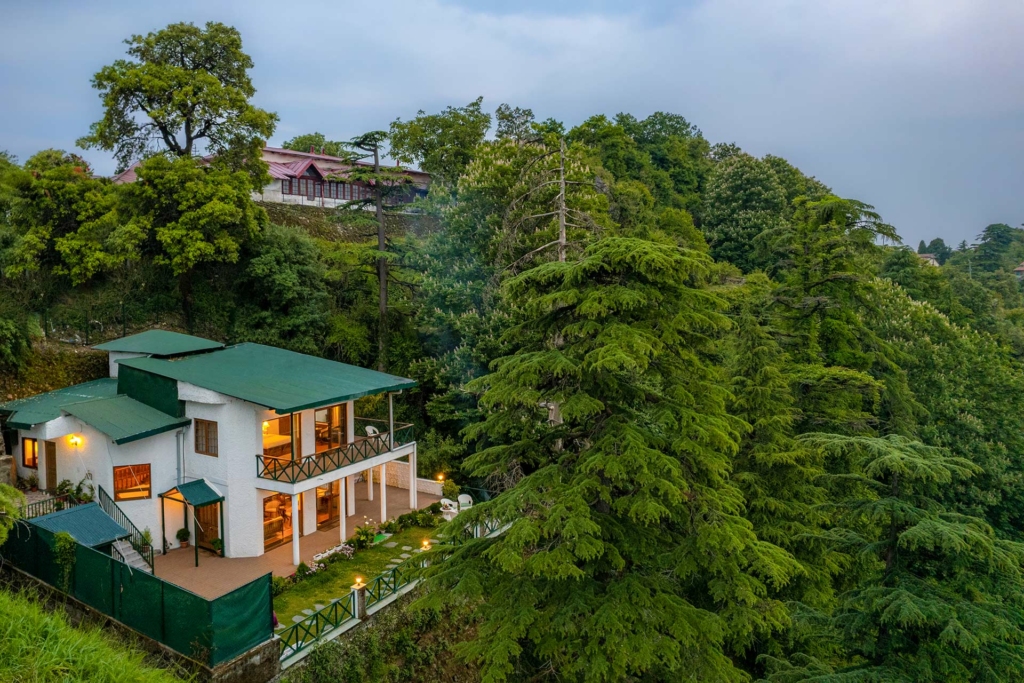
Your ₹30K from Delhi: Delhi → Mussoorie, 2N/3D. Return AC bus/train to Dehradun ~₹2,000, taxi up ~₹1,500 shared, two nights in a split cottage like Mellow Cottage, food ~₹1,800. Per person sharing, ~₹12,000–16,000 — with insurance built in.
Other metros: quick monsoon picks from Hyderabad, Chennai & Kolkata
Starting somewhere else? The same logic applies — head to your nearest reliably-green cluster. (Note: StayVista’s named villa inventory is thinnest in these belts, so check stay options carefully.)
- From Hyderabad → Araku Valley and Maredumilli. Lush Eastern Ghats, coffee plantations, and the scenic Kirandul train route. ~5–6 hours by road or rail.
- From Chennai → Wayanad or Coorg (see the Bangalore section above), or closer, the Yelagiri and Yercaud hills for a quick weekend.
- From Kolkata → North Bengal — Kalimpong, the Dooars, and the Sikkim foothills turn spectacularly green, though landslide caution applies in the higher reaches.
How to plan your under-₹30K monsoon trip
The single biggest money-saver is the booking window — and right now is the sweet spot. Monsoon is off-season, so stay rates fall sharply: reported discounts run 30–50% on flights and up to 50–65% on rooms in destinations like Kerala versus peak winter. The flip side? Weekend villas and cottages still fill up 3–4 weeks ahead.
A few more planning rules that keep you under budget and out of trouble:
- Match the trip length to the distance. 1–2 nights for the Sahyadris and lower hills; 2–3 for Coorg, Wayanad or the Himalayan foothills.
- Book refundable. In a patchy monsoon, a free-cancellation rate is worth a few hundred rupees of peace of mind.
- Pack for wet, not cold. A windcheater, quick-dry clothes, waterproof shoes, a dry bag for your phone, and basic meds. Umbrellas lose to Ghats wind.
Where to stay: budget StayVista rooms, residences & cottages for the monsoon
Where you sleep is where the budget breaks or holds. The cheapest StayVista option is to book a single room rather than a whole house — and the most useful thing to know is where that’s possible. StayVista’s per-room inventory (single rooms and Vista Residences) sits in the origin cities, not the hills. So here’s how to use both.
The cheapest play — book a single room (origin-city base or stopover). Great if you want a fixed, low per-room rate or a night in the city before heading out: – Comfort Room @ Vista Residences at GK-1, New Delhi — a single room, ideal as a Delhi base. – Comfort Room @ StayVista Residences near Cyber City Hub, Gurgaon. – Apartment @ StayVista Residences at Baner–Balewadi, Pune. – Starting from Bangalore? Check the Vista Residences collection for current single-room rates in the city before your drive to Coorg.
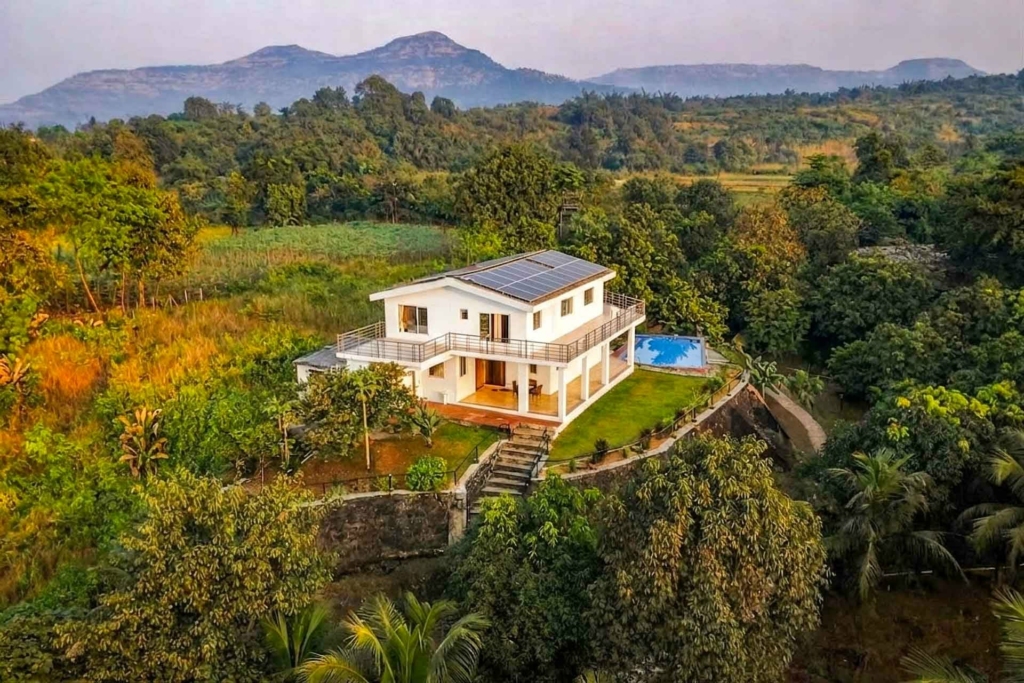
At the destination — split a budget cottage. There are no per-room listings in the hills, so the budget move is a small whole cottage shared across a couple or group: – Mumbai/Pune → Pura Vida in Lonavala (3 BHK, the lowest-priced of the cluster) or Aqua & Sage in Karjat. – Bangalore → Ivory Hill – Madikeri in Coorg, or pet-friendly Mountain Rain in Wayanad. – Delhi → Mellow Cottage in Mussoorie.
What our hosts tell us: the cottages with covered decks and fireplaces — and a heated pool, like Status Villa in Panchgani — are the ones that actually deliver in the rain. An open-air infinity pool is gorgeous in a brochure and useless in a downpour. Book for shelter and a view, not just the pool photo.
One honest note: a single Vista Residences room (from ~₹8,400) can be your entire stay cost in the city, while a ₹12,000–18,000 cottage in the hills, split across four to six people, lands everyone well under ₹30K for the whole trip. That’s the math that makes the budget work.
Frequently Asked Questions
Yes. A 2-night, 3-day trip by train or bus from a metro costs roughly ₹6,000–₹23,200 per person, based on 2026 fare and stay data. Travel by road, share the stay, and two people can split a single ₹30K budget comfortably.
From Mumbai and Pune, head to the Sahyadris and Konkan — Lonavala, Karjat, Mahabaleshwar. From Bangalore, the southern Western Ghats: Coorg, Chikmagalur, Wayanad. From Delhi, the lower Himalayan foothills — Mussoorie, Kasauli, Lansdowne — which are gentler and safer than the high hills in the rain.
It’s a below-normal monsoon — the IMD forecasts 90% of the Long Period Average, the first below-normal call in three years. That’s actually fine for travel: fewer total washouts, lower landslide risk on some routes, and the same steep off-season discounts.
It can be, with care. Check IMD and local advisories, travel hill roads by daylight, avoid swollen rivers and waterfall edges, and keep your plans flexible. Lower foothills like Kasauli and Lansdowne carry less landslide risk than the higher Himalayan hills. Buy travel insurance.
Skip flights and take a sleeper train or Volvo bus — fares are often a tenth of an airfare, around ₹300–2,000 each way. Then split a cottage across a group. Monsoon is off-season, so stays are 30–65% cheaper than peak winter.
Three to four weeks ahead for weekends. Even though monsoon is off-season, the good budget cottages and rooms in popular spots like Lonavala and Coorg fill up fast for Friday-to-Sunday stays. Mid-week trips are both cheaper and easier to book last-minute.
A single Vista Residences room in the city starts around ₹8,400 a night. In the hills, whole cottages run ₹12,000–18,000 a night — so split across a couple or group, each person comes in well under ₹30K for the entire trip, including travel and food.
The bottom line
The rain’s already here, and 2026’s lighter monsoon makes it one of the better, calmer years to travel cheap. Your move is simple:
- Pick by your start city. Mumbai/Pune → the Sahyadris and Konkan. Bangalore → Coorg and Chikmagalur. Delhi → the lower foothills.
- Travel by road or rail, split the stay, and ₹30K covers a couple — or one comfortable solo trip.
- Travel safe. Check advisories, skip the swollen rivers, and insure the trip.
Ready to lock in where you’ll sleep? Browse StayVista’s monsoon stays in your nearest cluster, book a room or split a cottage, and let the rain do the rest.