
Mumbai-Pune Expressway Missing Link Opens May 2026:
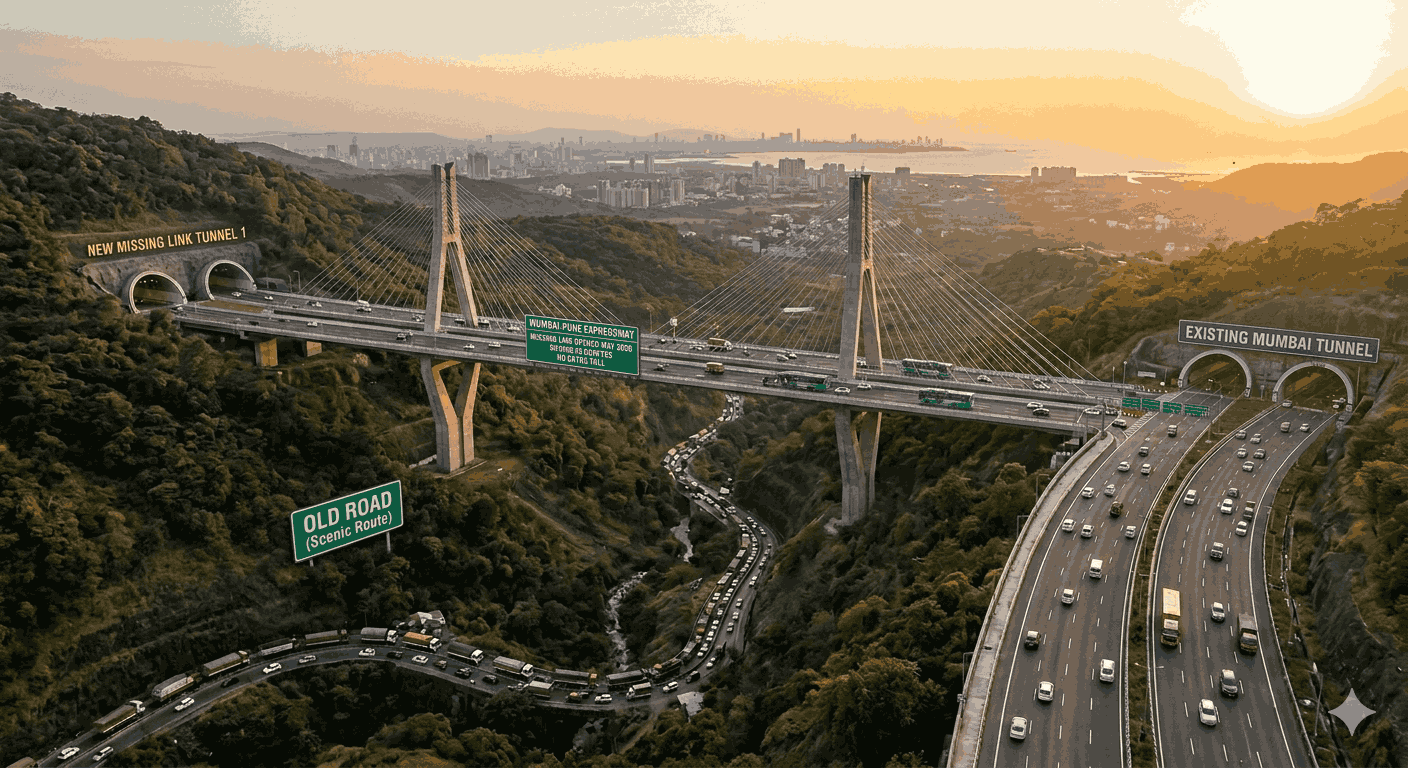
The Mumbai-Pune Expressway Missing Link is a 13.3 km, 8-lane access-controlled corridor by MSRDC connecting Khopoli to Kusgaon, bypassing the Khandala ghat. With 99% construction complete, it is targeted to partially open on May 1, 2026 (Maharashtra Day). Once operational, the route cuts travel distance by approximately 5.7 km and reduces Mumbai-Pune travel time by 25 to 30 minutes.
In this Blog
What Is the Mumbai-Pune Expressway Missing Link and Why Does It Matter?
For anyone who has sat in a standstill queue at the Adoshi tunnel on a Sunday evening, the answer is visceral. The Missing Link matters enormously.
The current Mumbai-Pune Expressway runs 94 km end to end, but its most vulnerable section — the 19 km stretch from Khopoli exit to Sinhgad Institute — passes through the Bor Ghat (Khandala ghat). Here, traffic from the six-lane expressway and the four-lane NH-48 funnels together, creating a chronic bottleneck that has caused accidents, multi-hour delays, and at least one catastrophic 32-hour standstill in February 2026 when a gas tanker overturned near the Adoshi tunnel.
The Missing Link is the permanent fix. By constructing an entirely new alignment through tunnels, viaducts, and a cable-stayed bridge, MSRDC completes the ‘missing’ section of the expressway that was always part of the original vision but never built. The highway carries approximately 75,000 vehicles daily. Any disruption on the ghat cascades across both cities — and the Missing Link eliminates that single point of failure.
Route, Distance, and Engineering: Inside the 13.3 km Missing Link
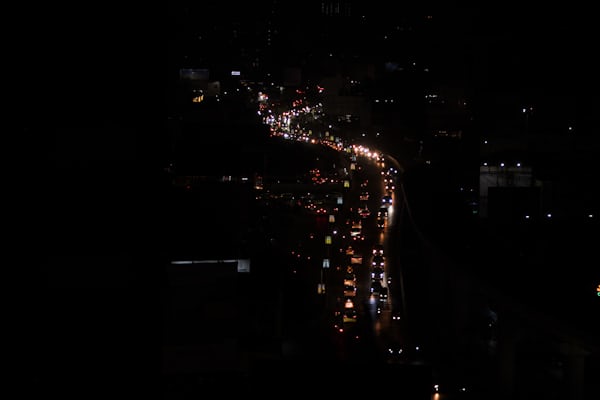
The Missing Link is not a road extension — it is a complete bypass corridor built through technically demanding terrain in the Western Ghats.
Route Alignment: Khopoli Exit → Twin Tunnels → Tiger Valley Cable-Stayed Bridge → Kusgaon (near Lonavala)
Key infrastructure components:
- Twin Tunnel 1: 1.75 km, fully bored and fitted
- Twin Tunnel 2: 8.9 km — one of Asia’s widest road tunnels; electrical and mechanical testing underway
- Viaduct 1: Approximately 840 metres
- Tiger Valley Bridge: 640–650 m cable-stayed bridge, ~100 m above the valley floor; one of Asia’s tallest road bridges
- Capacity Augmentation: Khalapur Toll Plaza to Khopoli Exit (6.5 km) widened from 6 to 8 lanes
Total project cost: approximately ₹6,695 crore. Civil work was split between Navayuga Engineering Co. Ltd. (tunnels, Package I) and Afcons Infrastructure Ltd. (viaducts and capacity augmentation, Package II). Once open, the new route permits speeds up to 120 kmph, enabled by the near-straight tunnel alignment and reduced elevation changes.
Mumbai-Pune Expressway Missing Link Opening Date: May 1, 2026
MSRDC has confirmed May 1, 2026 (Maharashtra Day) — as the targeted inauguration date for a partial opening. As of early April 2026, 99% of civil work is complete and load testing on the cable-stayed bridge is underway. Safety certifications are expected to be secured before the public opening.
Project timeline at a glance:
| Milestone | Date |
| Cabinet approval | June 13, 2017 |
| EPC contracts awarded (Navayuga + Afcons) | August 30, 2018 |
| Original completion deadline | March 2024 |
| 1st revision | January 2025 |
| 2nd revision | March 2025 |
| 3rd revision | August 2025 |
| Current targeted opening | May 1, 2026 |
| Completion % (early April 2026) | 99% |
How Much Travel Time Does the Missing Link Save Between Mumbai and Pune?
The new alignment saves approximately 25 to 30 minutes compared to the current ghat section. Here is the full comparison:
| Parameter | Current (via Ghat) | After Missing Link |
| Khopoli to Kusgaon distance | ~19 km | ~13.3 km |
| Distance saved | — | ~5.7–6 km |
| Time saving | — | 25–30 minutes |
| Max permitted speed | 60–80 kmph (ghat) | Up to 120 kmph |
| Monsoon disruption risk | High (landslides, rockfall) | Low (tunnels + viaducts) |
| Heavy vehicle interaction | Severe (shared ghat) | Reduced (phased access) |
Highway traffic police estimate approximately 70% of expressway vehicles — primarily cars and passenger vans — will shift to the new alignment on Day 1, relieving the existing ghat as well.
Phased Rollout and Vehicle Rules: Who Can Use the Tunnels?
The Missing Link introduces a phased access plan and permanent safety restrictions that all drivers should know before using the route.
| Phase | Timeline | Vehicles Permitted |
| Phase 1 | Month 1–3 from opening | Light motor vehicles (cars, passenger vans) |
| Phase 2 | Month 4–6 | Buses and heavy passenger vehicles added |
| Permanent restriction | Ongoing indefinitely | Hazardous cargo (petrol, diesel, LPG, CNG) — old ghat only |
| Allowed tankers | Ongoing | Water, milk, steel and other non-hazardous cargo |
Tunnel Safety Rules No smoking inside tunnels. Maintain minimum 50 m following distance. Keep headlights on throughout. High-tech ventilation and fire-fighting systems are installed in both tunnel bores. Emergency SOS call points at regular intervals. Do not stop or park inside tunnels under any circumstance.
New Route Map: Mumbai to Pune via the Missing Link in 2026
From Mumbai (heading to Pune): Eastern Express Highway / Bandra-Worli Sea Link → Thane → Kalamboli → Expressway → Khalapur Toll → Khopoli Exit → Missing Link (tunnels + Tiger Valley Bridge) → Kusgaon → Pune
From Navi Mumbai via Atal Setu: The Mumbai Trans Harbour Link brings Navi Mumbai residents onto the expressway at Kalamboli — very close to the Khalapur stretch where the Missing Link begins. This cohort benefits disproportionately from the new alignment.
Important note: The Missing Link replaces the ghat section of the expressway, not the entire route. Toll structures, entry/exit points, and travel patterns elsewhere on the highway remain unchanged.
Why Was the Khandala-Lonavala Ghat Stretch So Dangerous?
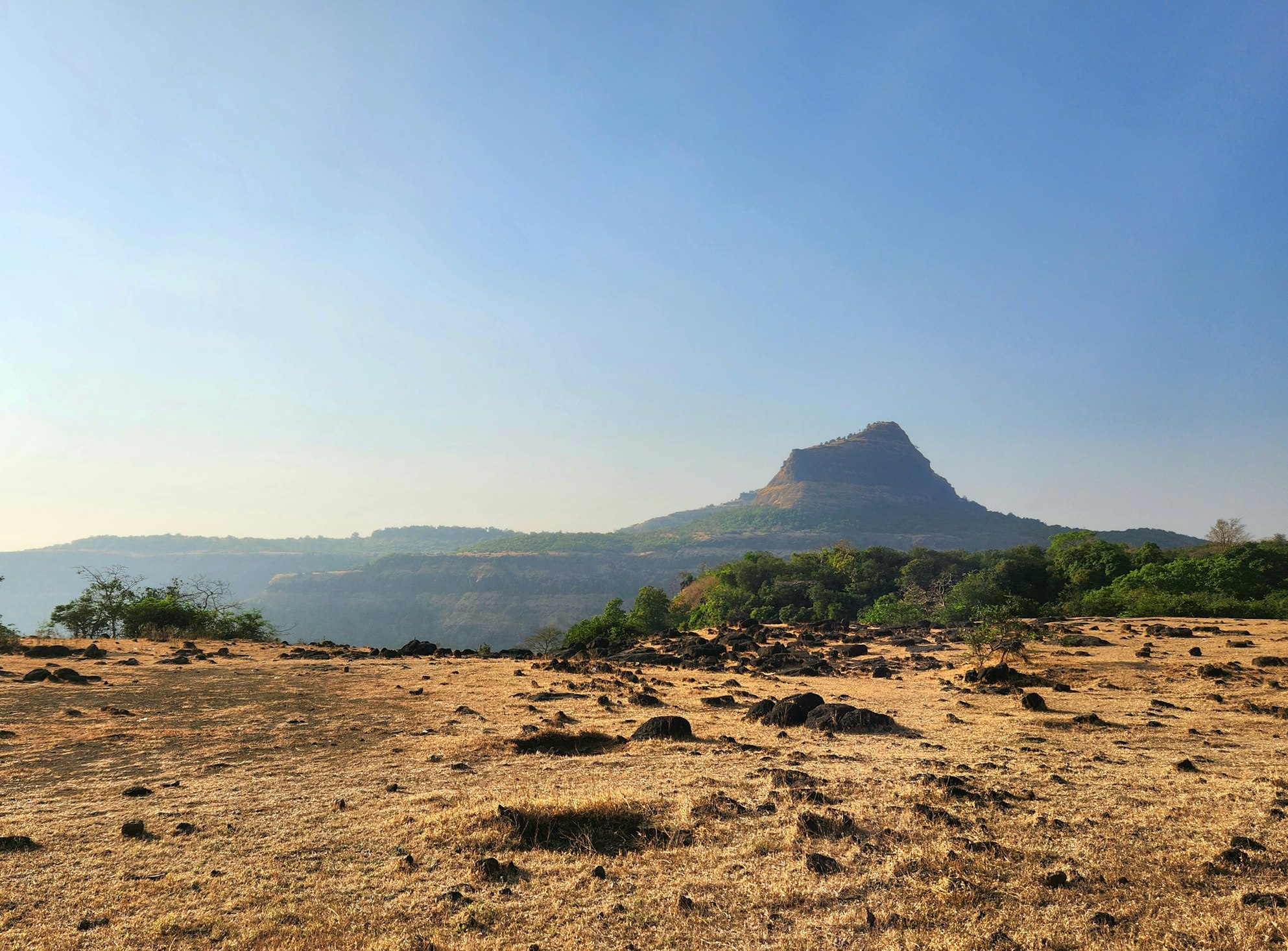
The section from the Adoshi Tunnel to the Khandala exit is technically six lanes, but it carries the combined traffic of the six-lane expressway and four-lane NH-48 — effectively a ten-lane load on six lanes, through hairpin bends at steep gradients.
During the monsoon season, one Mumbai-bound lane is often closed due to landslide risk, further worsening flow. Overturned tankers have triggered standstills lasting many hours. The speed differential is a secondary hazard: drivers frustrated by the bottleneck speed on the rest of the expressway, elevating the accident rate on one of India’s busiest intercity corridors.
MSRDC has explicitly stated its goal of converting the Mumbai-Pune Expressway into a zero-fatality corridor — and the Missing Link is the single largest intervention toward that objective.
Best Time to Drive Mumbai to Pune via the New Expressway in 2026
The Missing Link changes the timing calculus in important ways, particularly for monsoon and weekend travel.
Year-Round Best Times
- Weekday mornings before 8:00 AM
- Post-lunch windows on weekdays (1:00–3:00 PM)
- Avoid Friday evenings (5–10 PM) and Sunday evenings (4–9 PM)
Monsoon (June–September)
Even with the Missing Link open, the remaining ghat section used by heavy and hazardous vehicles may still see closures during heavy rainfall. Check MSRDC traffic advisories before heading out. The Missing Link tunnels are unaffected by rain or landslides by design.
Lonavala Weekend Getaway Guide 2026: Maharashtra’s Most Accessible Hill Station
Lonavala sits almost exactly where the new expressway alignment resurfaces near Kusgaon, making it a natural destination for anyone driving between Mumbai and Pune. At 624 metres above sea level in the Sahyadri range, it is Maharashtra’s most visited hill station — and the combination of ancient Buddhist caves, Maratha forts, misty viewpoints, adventure activities, and easy road access from two metros makes it uniquely accessible.
How to Reach Lonavala from Mumbai and Pune in 2026
| From | Distance | Drive Time (post-Missing Link) | Train Time |
| Mumbai (central) | ~83 km | 1.5–2 hrs (normal traffic) | ~2–2.5 hrs (Central Railway) |
| Navi Mumbai / Atal Setu | ~75 km | ~1.5 hrs | ~1.5–2 hrs |
| Pune (central) | ~65 km | 1–1.5 hrs | ~1 hr |
Top Places to Visit in Lonavala in 2026
Viewpoints and Natural Attractions
Tiger’s Leap (Tiger Point): A cliff formation offering 650-metre drops into the valley, named for its shape. Best visited at sunrise or during the monsoon when clouds form below the cliff edge. Photography-grade views all year.
Lion’s Point: A 180-degree panoramic viewpoint between Aamby Valley and Bhushi Dam. Practical for families, with food stalls nearby. Sunrise and sunset views are reliably spectacular.
Duke’s Nose (Nagphani): Named after the Duke of Wellington, this distinctive cliff doubles as an adventure destination — rappelling, zip-lining, and trekking routes all originate here.
Bhushi Dam and Lake: The quintessential monsoon Lonavala experience. Water flows across stepping stones on the dam top from July to September, drawing enormous weekend crowds.
Lonavala Lake: A quieter spot fed by the Indrayani River, best in and just after the monsoon. Good for birdwatching and quiet walks.
Pawna Lake: Technically near Lonavala rather than in it, Pawna is the premier camping and villa destination near the expressway. Its calm surface, surrounding hills, and dark skies at night make it ideal for couples and small groups.
Historical and Archaeological Sites
Karla Caves: Among India’s finest ancient Buddhist rock-cut monuments, dating to approximately the 2nd century BC. The great chaitya prayer hall at Karla is considered one of the most important examples of early Buddhist architecture in the country.
Bhaja Caves: Fourteen stupas carved into the rock face, some with inscriptions by resident monks. Quieter than Karla and deeply atmospheric.
Lohagad Fort: Beginner-friendly, 5 km trek. Four historic gates — Ganesh, Narayan, Hanuman, and Maha Darwaza. Panoramic views of Pawna Lake and the Visapur ridge from the top.
Rajmachi Fort: Twin fortress site (Shrivardhan and Manaranjan) deep in Sahyadri forests. The trek from Lonavala is 13–16 km. Best attempted during or just after the monsoon. More challenging but significantly more rewarding than Lohagad.
Adventure Activities Near Lonavala
- Trekking: Lohagad (beginner), Rajmachi (moderate-difficult), Korigad (moderate), Duke’s Nose, Visapur Fort
- Camping: Pawna Lake overnight camps, Rajmachi forest camps, Tungarli Dam area
- Rappelling and zip-lining: Duke’s Nose, Della Adventure Park
- Paragliding: Kamshet (~25 km from Lonavala) — one of Maharashtra’s best paragliding sites
- ATV rides, swoop swings, paintball, indoor theatre: Della Adventure Park (entry ₹2,600–₹6,500, 11 AM–9 PM)
Food and Shopping in Lonavala
Chikki — the brittle made from jaggery and nuts — is Lonavala’s most iconic product. Maganlal & Sons is one of the oldest names in the trade. Cooper’s fudge is a second institution worth seeking out.
For meals: Manashakti is well-regarded for vegetarian Maharashtrian thalis. Rudra is known for chole bhaturas. Rama Krishna for butter chicken. The roadside chai-and-bhajiya combination during the monsoon remains the best value in the entire hill station.
Lonavala for Couples: Romantic Stays and Experiences
Lonavala has a long-standing reputation as a romantic weekend escape from Mumbai and Pune, and the options — particularly for private villa stays — have expanded considerably in recent years.
Pawna Lake remains the default recommendation for couples seeking privacy and scenery. Villa stays on its banks offer lakeside access, bonfires, and stargazing that hotel rooms cannot replicate.
Best Romantic Experiences
- Sunrise at Tiger’s Leap (arrive by 5:30 AM in monsoon for cloud-below-cliff views)
- Late-afternoon drive to Lion’s Point followed by valley-view dinner
- Overnight lakeside villa or camping stay at Pawna Lake
- Dawn trek to Lohagad Fort (fewest crowds on weekday mornings)
- Poolside evenings with bonfires at a private StayVista villa in Khandala
Lonavala in Monsoon 2026: What to Expect
The monsoon season (June–September) is, counterintuitively, the most popular time to visit Lonavala. The Western Ghats transform dramatically: waterfalls appear on every ridge, Bhushi Dam overflow creates the stepping-stone experience Mumbaikars and Puneites have been making for decades, and the entire landscape shifts to a shade of green that is genuinely difficult to describe.
What will change after the Missing Link opens: the tunnel alignment means the expressway ghat section is no longer a single point of failure during heavy rain or rockfall. Drivers heading to Lonavala for a monsoon weekend will benefit from a more reliable and predictable route.
Practical Monsoon Tips
- Lonavala is most crowded on monsoon weekends. Arrive Friday evening or leave by Saturday afternoon
- Bhushi Dam areas can be extremely crowded and occasionally dangerous in heavy rain — exercise standard caution
- Carry waterproof footwear and a rain jacket regardless of the forecast
- Rajmachi and Duke’s Nose treks are hazardous in active heavy rain — check local conditions first
- Check MSRDC traffic advisory before departure even with the Missing Link open (ghat section still carries heavy vehicles)
2-Day Lonavala Itinerary: Mumbai or Pune Weekend Escape
This itinerary is designed for a Friday evening departure from Mumbai or Pune, with a Sunday afternoon return. It covers the essential mix of viewpoints, history, adventure, and downtime without overscheduling.
Day 1 (Friday Evening – Saturday)
| Time | Activity | Notes |
| Friday 7–8 PM | Depart Mumbai / Pune, check in to villa | Friday traffic: depart before 5 PM or after 8 PM |
| Saturday 5:30 AM | Tiger’s Leap sunrise | Arrive early; clouds below cliff at dawn in monsoon |
| 7:30 AM | Breakfast at villa | Most StayVista villas offer catered breakfast on request |
| 9:00 AM | Karla Caves and Bhaja Caves | Allow 2–3 hours; bring water |
| 12:00 PM | Lunch in Lonavala town | Try Rudra or a local thali restaurant |
| 2:00 PM | Bhushi Dam / Lonavala Lake | Monsoon: stepping-stone experience at Bhushi |
| 4:00 PM | Chikki and fudge shopping | Maganlal & Sons for chikki, Cooper’s for fudge |
| 6:00 PM | Return to villa; pool time | Sunset from villa terrace if valley-view |
| 8:00 PM | BBQ or bonfire at villa | Pre-arrange with StayVista caretaker |
Day 2 (Sunday)
| Time | Activity | Notes |
| 7:00 AM | Lohagad Fort trek (beginner-friendly) | 5 km, 2–3 hours; good for families and first-timers |
| 10:30 AM | Post-trek breakfast and rest | Retreat to villa or nearby cafe |
| 12:00 PM | Pawna Lake drive / photography | 30-min drive from Lonavala; stunning reflections |
| 1:30 PM | Lunch and check-out | Check-out typically 11 AM; request late check-out if needed |
| 3:00 PM | Depart for Mumbai / Pune | Via new Missing Link expressway from May 2026 |
Budget Breakdown: Mumbai to Lonavala Weekend Trip in 2026
Costs vary significantly by travel style. The table below covers three tiers: budget, mid-range, and premium for two people over a weekend (2 nights).
| Category | Budget (₹) | Mid-Range (₹) | Premium (₹) |
| Fuel (Mumbai roundtrip, ~170 km) | 600–800 | 600–800 | 600–800 |
| Expressway toll (roundtrip) | ~380 | ~380 | ~380 |
| Accommodation (2 nights, 2 people) | 2,000–4,000 | 6,000–12,000 | 15,000–40,000+ |
| Meals (2 days) | 1,200–2,000 | 3,000–5,000 | 6,000–10,000 |
| Sightseeing / entry fees | 400–600 | 800–1,500 | 2,000–6,000 |
| Shopping (chikki, fudge) | 300–500 | 500–1,000 | 1,000–2,000 |
| Adventure activities (optional) | — | 1,500–3,000 | 3,000–8,000+ |
| Estimated Total (2 people) | ₹5,000–8,000 | ₹12,000–23,000 | ₹28,000–67,000+ |
| Budget Tip StayVista villas in Lonavala start from approximately ₹999 per person per night and offer far better value than comparable hotel rooms in the area, with private pools, kitchens, and caretaker service included. Midweek stays (Monday–Wednesday) can be 20–40% cheaper than weekend rates. |
Where to Stay Near Lonavala: StayVista Villas for Every Traveller
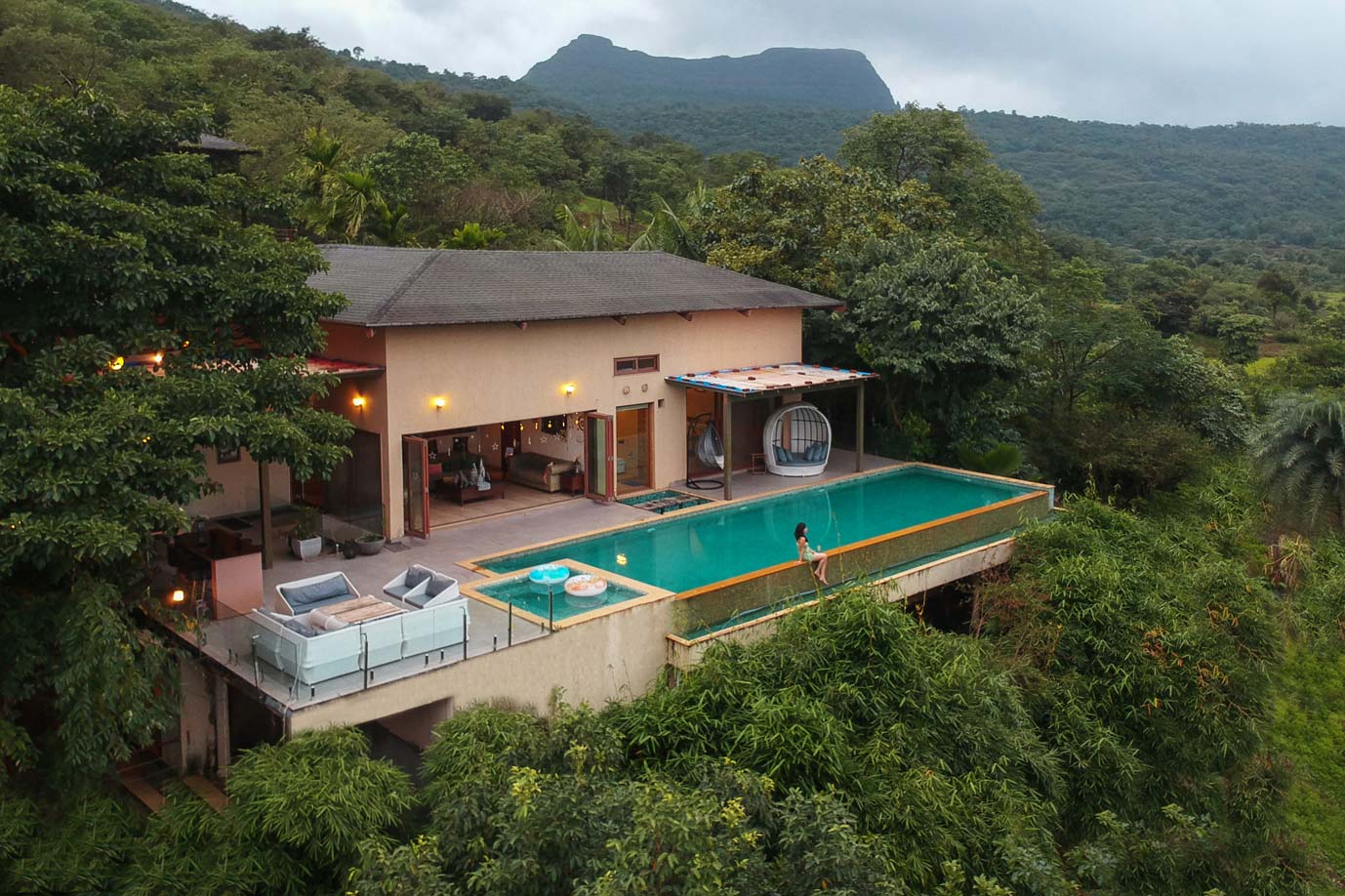
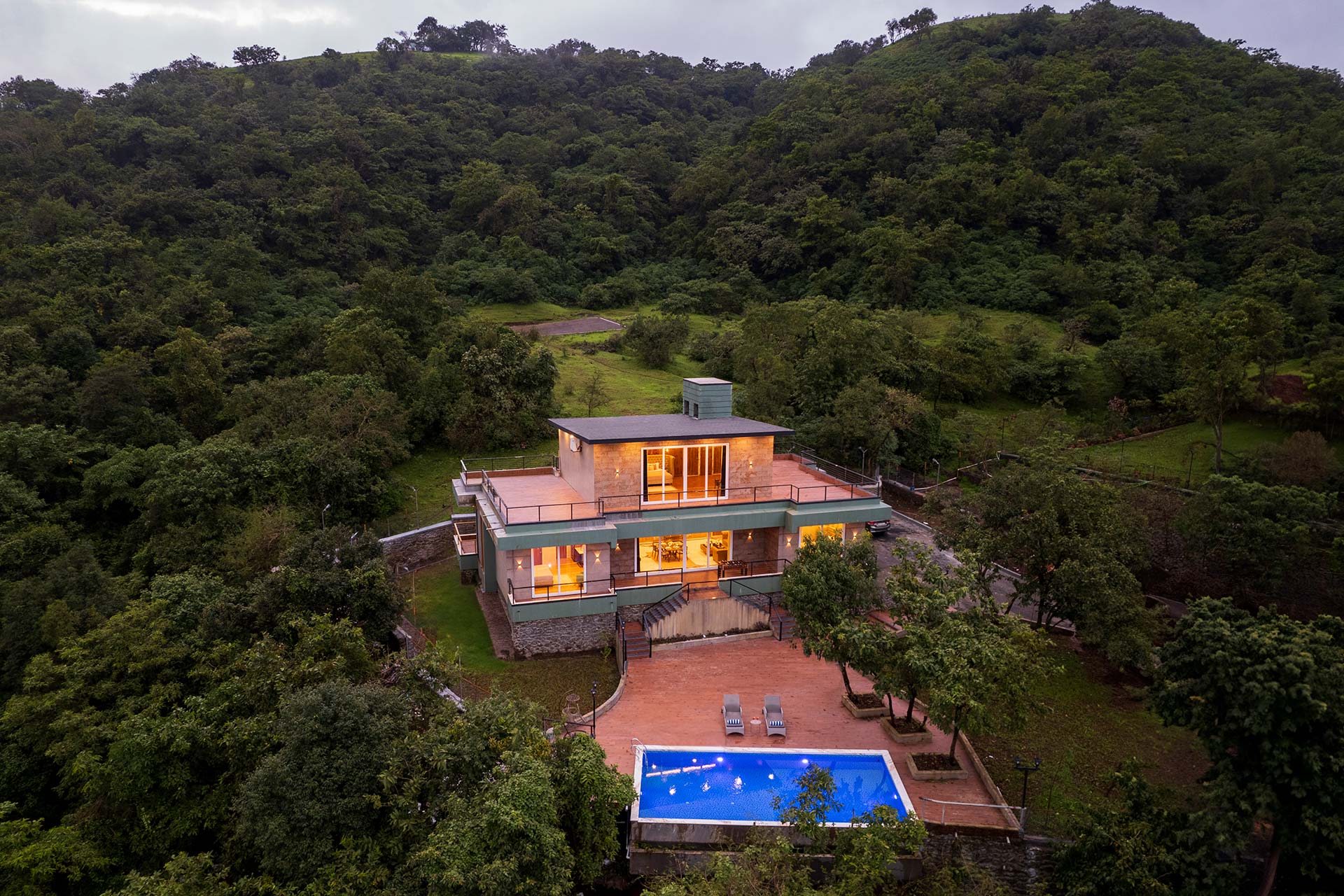
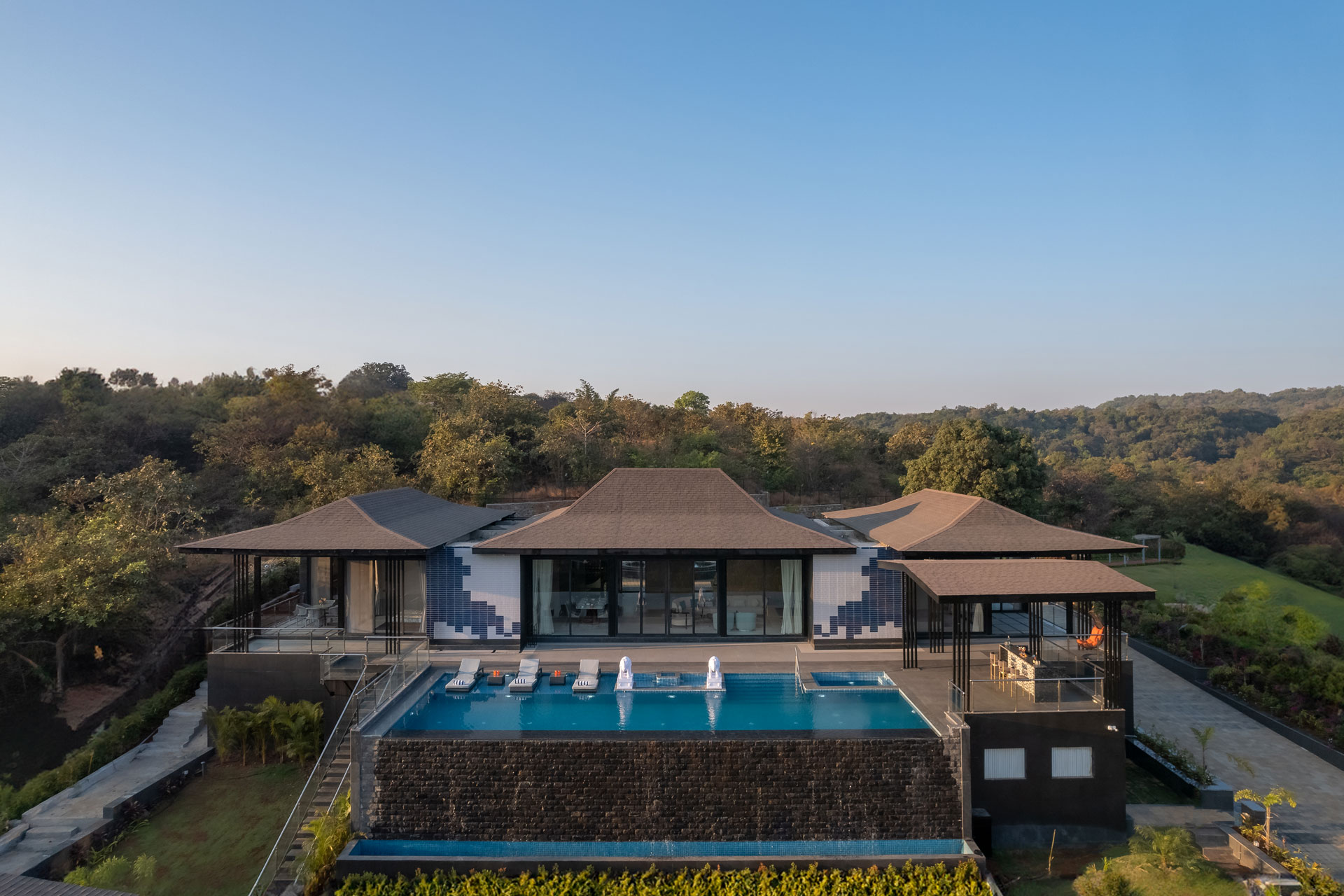
Lonavala has the highest concentration of StayVista pool villas in Maharashtra. Whether you are a couple seeking a quiet retreat with valley views, a family looking for a private pool and wide lawns, or a group of friends planning a long weekend, StayVista’s curated collection near Lonavala, Khandala, and Pawna Lake covers all of it.
Private villas consistently outperform hotels in the Lonavala area for weekend stays. The combination of a private pool, kitchen, caretaker, and outdoor space — within the same price band as a mid-range resort room — makes them the practical choice for most getaway types.
Quick Summary: Mumbai-Pune Expressway Missing Link 2026 — Everything You Need to Know
For readers who want the essential facts at a glance:
- What: 13.3 km, 8-lane bypass corridor connecting Khopoli to Kusgaon, bypassing the Khandala ghat
- Who: Built by MSRDC (Maharashtra State Road Development Corporation)
- When: Targeted May 1, 2026 (Maharashtra Day) — 99% complete as of early April 2026
- Cost: Approximately ₹6,695 crore
- Time saved: 25–30 minutes on the Mumbai-Pune journey
- Distance saved: ~5.7–6 km (route reduces from 19 km to 13.3 km on the ghat section)
- Speed: Up to 120 kmph permitted on the new alignment
- Phase 1: Light motor vehicles only; hazardous cargo banned from tunnels permanently
- Key structure: Tiger Valley cable-stayed bridge — ~100 m above the valley, one of Asia’s tallest road bridges
- Nearest getaway: Lonavala exits right at Kusgaon, where the Missing Link terminates
FAQs: Mumbai-Pune Expressway Missing Link 2026
The Missing Link is a 13.3 km, 8-lane access-controlled highway built by MSRDC to bypass the Khandala ghat section of the Mumbai-Pune Expressway. It connects Khopoli to Kusgaon through twin tunnels, viaducts, and a cable-stayed bridge, reducing distance by approximately 6 km.
MSRDC has targeted May 1, 2026 — Maharashtra Day — for a partial opening. As of early April 2026, 99% of civil work is complete and load testing is underway. Only light motor vehicles will be permitted initially.
The Missing Link saves approximately 25 to 30 minutes on the Mumbai-Pune journey. It replaces a 19 km winding ghat route with a 13.3 km straight tunnel corridor, and allows speeds up to 120 kmph versus the current ~60–80 kmph on the ghat.
No. Vehicles carrying hazardous cargo — petrol, diesel, LPG, CNG — are permanently banned from the tunnels per Indian Road Congress safety guidelines. These vehicles will continue using the existing ghat section. Non-hazardous tankers (water, milk, steel) will be permitted.
The Tiger Valley Bridge is a 640–650 metre cable-stayed bridge standing approximately 100 metres above the Khandala Valley floor. It is one of Asia’s tallest road bridges and forms the signature structure of the Missing Link project.
Lonavala is approximately 83 km from Mumbai and 65 km from Pune via the expressway. Expected drive time from Mumbai is 1.5 to 2 hours; from Pune, 1 to 1.5 hours, depending on traffic.
Monsoon (June–September) is the most scenic season, with waterfalls and greenery at their peak. Winter (October–February) offers cool, clear weather ideal for trekking. Weekdays are significantly less crowded than weekends year-round.
Yes. Pawna Lake is one of the best romantic destinations near Mumbai and Pune. StayVista operates multiple private lake-view villas here, including Mawi Infinitty Villa and Terra Nova, offering lakeside access, private pools, bonfires, and stargazing.
Lonavala offers trekking at Lohagad, Rajmachi, and Korigad; overnight camping at Pawna Lake and Rajmachi; rappelling and zip-lining at Duke’s Nose; ATV rides and 50+ extreme sports at Della Adventure Park; and paragliding at Kamshet approximately 25 km away.
Yes. The tunnel and elevated viaduct alignment bypasses the landslide and rock-fall zones responsible for the worst monsoon disruptions. MSRDC expects significantly fewer weather-related closures on the new alignment compared to the current ghat stretch.