
Mumbai’s 12 Biggest Ganesh Pandals in 2026: Darshan Timings, Queue Realities and Which Ones to Skip
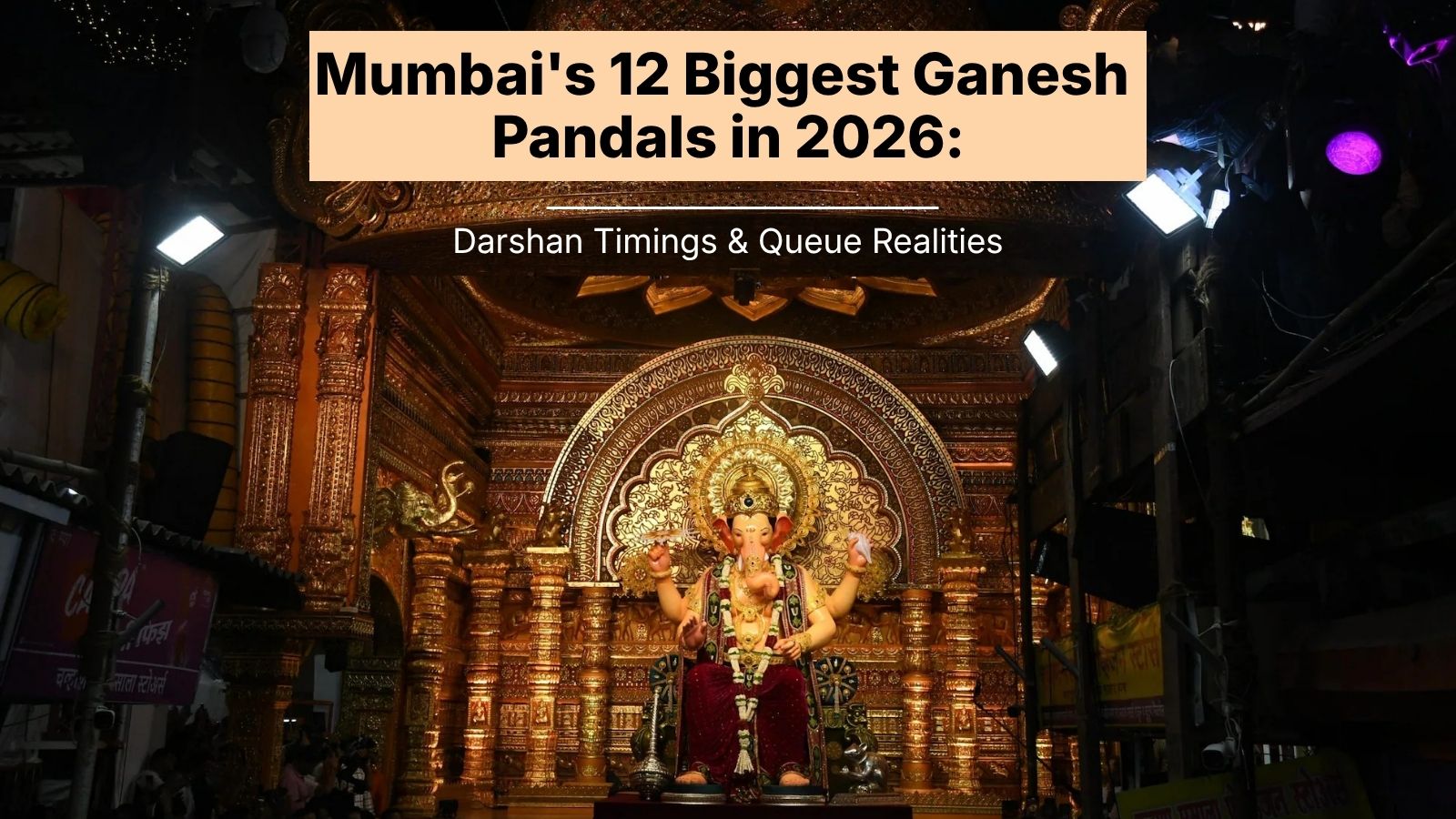
Ganeshotsav 2026 runs from Monday, 14 September to Anant Chaturdashi on Friday, 25 September. Lalbaugcha Raja’s wish-fulfilling queue runs 12–18 hours on peak days, while equally spectacular pandals like Girgaoncha Raja take under an hour. Visit Tuesday–Thursday, 15–17 September, before 8 AM for the shortest waits.
Mumbai installs more than 12,000 registered sarvajanik Ganpati mandals every Ganeshotsav . Nobody can see them all. What you can do is see the twelve that matter — and know, before you join a line, whether the wait ahead is forty minutes or eighteen hours.
That gap is the whole game. Our team has pandal-hopped these lanes across several festivals, and the difference between a magical morning and a wasted day usually comes down to three choices: which day, which hour, and which queue. This guide gives you all three for every big pandal, plus the ones we’d honestly skip. If you’re planning a stay around the festival — whether in the city or a quiet escape once the crowds peak — StayVista’s villas near Mumbai sit within a two-hour drive.
In this Blog
Quick Info: Ganeshotsav 2026 in Mumbai
| Field | Detail |
| Ganesh Chaturthi 2026 | Monday, 14 September 2026 |
| Sthapana muhurat | Madhyahna, 11:02 AM – 1:31 PM |
| Gauri Visarjan | Saturday, 19 September 2026 |
| Anant Chaturdashi (main visarjan) | Friday, 25 September 2026 |
| Registered mandals in Mumbai | 12,000+ |
| Entry fee at pandals | Free at all twelve listed here |
| Best darshan window | 5:00–8:00 AM, Tuesday 15 – Thursday 17 September |
| Worst days | 14 Sept (day 1), 19–20 Sept (Gauri weekend), 25 Sept (visarjan) |
| Best transport | Local trains + Metro Line 3 (Aqua); avoid driving south of Dadar |
| Ideal pandal-hopping duration | 1 full day for South Mumbai; 2 days citywide |
Which Are the Biggest Ganesh Pandals in Mumbai in 2026?
Mumbai’s twelve biggest Ganesh pandals in 2026 are Lalbaugcha Raja, Mumbaicha Raja (Ganesh Galli), GSB Seva Mandal at King’s Circle, Andhericha Raja, Khetwadicha Ganraj, Mumbaicha Maharaja (Khetwadi 11th Lane), Girgaoncha Raja, Chinchpoklicha Chintamani, Tejukayacha Raja, Fortcha Icchapurti Raja, Parelcha Raja and Sahyadri Krida Mandal in Chembur. All twelve are free to enter.
Here’s the full comparison before we walk through each one:
| # | Pandal | Locality | Est. | Known for | Nearest station | Typical peak wait |
| 1 | Lalbaugcha Raja | Lalbaug | 1934 | Navsacha (wish-fulfilling) Ganpati | Lower Parel (W) / Chinchpokli (C) | 12–18 hrs (navsachi) |
| 2 | Mumbaicha Raja | Ganesh Galli, Lalbaug | 1928 | Grand themed sets, 99th year | Lower Parel (W) / Currey Road (C) | 2–4 hrs |
| 3 | GSB Seva Mandal | King’s Circle | 1954 | India’s richest Ganpati | King’s Circle (H) / Matunga (C) | 1–3 hrs |
| 4 | Andhericha Raja | Azad Nagar, Andheri (W) | 1966 | Suburbs’ navsacha Raja; stays till 29 Sept | Andheri (W) / Metro 1 Azad Nagar | 1–3 hrs |
| 5 | Khetwadicha Ganraj | Khetwadi 12th Lane | 1959 | 35–40 ft idols, real gold jewellery | Charni Road (W) / Metro 3 Girgaon | 1–2 hrs |
| 6 | Mumbaicha Maharaja | Khetwadi 11th Lane | 1962 | Tallest-idol record rival | Charni Road (W) / Metro 3 Girgaon | ~1 hr |
| 7 | Girgaoncha Raja | Nikadwari Lane, Girgaon | 1928 | 22-ft natural clay idol | Charni Road (W) / Metro 3 Girgaon | ~1 hr |
| 8 | Chinchpoklicha Chintamani | Chinchpokli | 1920 | Mumbai’s biggest aagman procession | Chinchpokli (C) | 2–3 hrs |
| 9 | Tejukayacha Raja | Lalbaug | late 1960s | 22-ft eco papier-mâché idol | Currey Road (C) / Lower Parel (W) | 1–2 hrs |
| 10 | Fortcha Icchapurti Raja | Mint Road, Fort | 1947 | Wish-fulfilling; 42-idol collection | CSMT (C/H) / Metro 3 CSMT | ~2 hrs |
| 11 | Parelcha Raja | Nare Park, Parel | 1947 | ~30 ft idol, worker-mandal heritage | Parel (C) / Prabhadevi (W) | 1–2 hrs |
| 12 | Sahyadri Krida Mandal | Tilak Nagar, Chembur | – | Giant palace replica sets | Tilak Nagar (H) | 1–2 hrs |
(W) Western line, (C) Central line, (H) Harbour line. Waits are reported peak-day figures and estimates — see the queue section for sources.
Why trust waiting-time numbers at all? Because the pattern repeats every year: the two Lalbaug giants absorb the crush, and everything else moves ten times faster. That’s the single most useful fact in this guide.
The Lalbaug–Parel Belt: Five Giants Within One Walk
The heart of Ganeshotsav is a roughly 2-km corridor from Chinchpokli station to Lower Parel. Five of the twelve biggest pandals sit inside it, which is convenient for you and catastrophic for traffic. Come by train. Seriously.
1. Lalbaugcha Raja
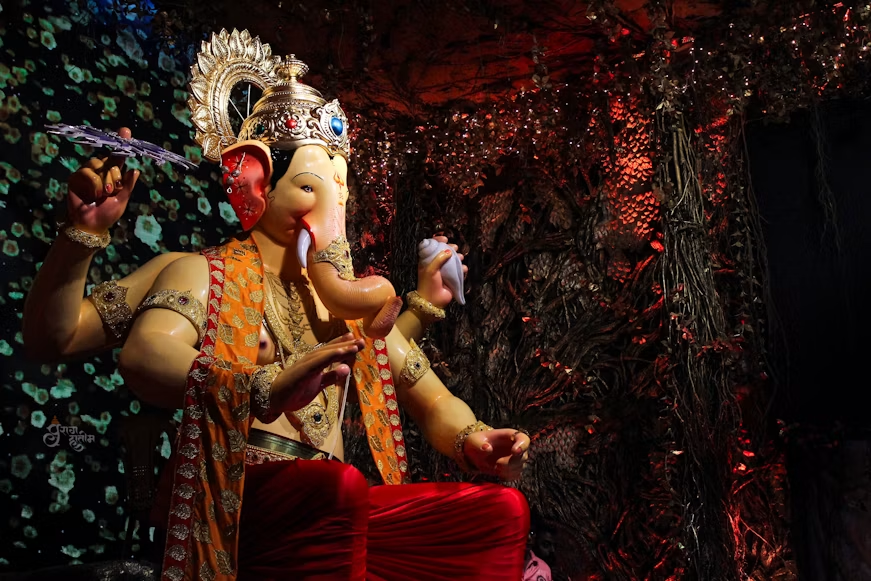
Lalbaugcha Raja, established in 1934, is Mumbai’s most visited Ganpati, drawing an estimated 1.5 million devotees a day; treat as a popular estimate). The idol’s navsacha reputation – that wishes made here are granted – powers a queue unlike anything else in the country.
- Entry fee: Free. The mandal has publicly warned against fake “VIP pass” messages – no official paid skip-the-line exists.
- Timings: Darshan runs nearly round the clock during the festival, pausing for aartis.
- Queue reality: Two separate lines. Navsachi (touch the idol’s feet): 12–18 hours reported on peak days. Mukh darshan (view from a distance): 3–5 hours, moving constantly.
- Best time: 4:00–7:00 AM, Tuesday–Thursday of week one.
- How to reach: Lower Parel (Western) or Chinchpokli/Currey Road (Central), then a 10–15 minute walk with the crowd – you can’t miss it.
- Time required: Half a day, minimum, including the queue.
- Ideal for: Devotees with a vow to fulfil; first-timers who want the iconic experience once.
- Pro tip: Mukh darshan gives you a clear, elevated view of the same idol. Unless you have a mannat, take it – and watch the official live darshan for the aarti you’ll otherwise queue past.
2. Mumbaicha Raja (Ganesh Galli)
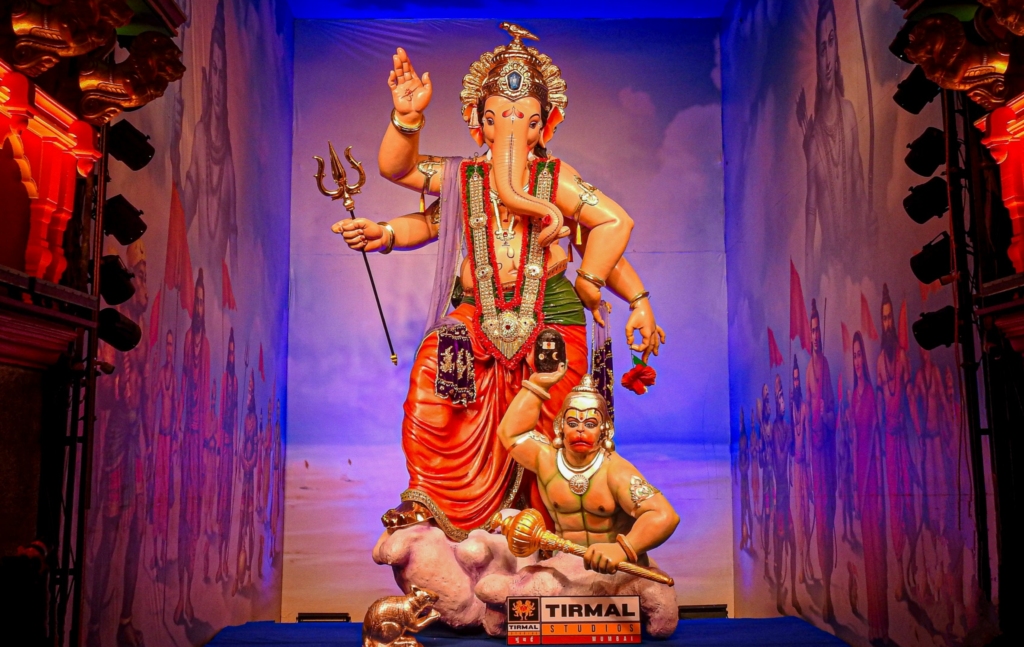
Two lanes from Lalbaugcha Raja stands its older neighbour. The Lalbaugcha Sarvajanik Ganeshotsav Mandal, Ganesh Galli – Mumbaicha Raja – was founded in 1928 and enters its 99th year in 2026 with a “Vaishnavanchi Wari” theme honouring Maharashtra’s saint tradition.
- Entry fee: Free.
- Timings: Approximately 6:00 AM–midnight.
- Queue reality: Over 2 lakh devotees on peak days, but the line moves – expect 2–4 hours on weekends, under an hour early on weekdays.
- Best time: Weekday mornings; evenings for the lit-up themed set.
- How to reach: Same stations as Lalbaugcha Raja; Ganesh Galli is a 5-minute walk from the Raja’s pandal.
- Time required: 1–2 hours on a weekday.
- Ideal for: Families; anyone who wants Lalbaug’s scale without Lalbaug’s queue.
- Pro tip: The themed replica set here is often the best in the city – 2026’s Wari theme is built for photography. Shoot after sunset when the lighting rig comes on.
3. Tejukayacha Raja
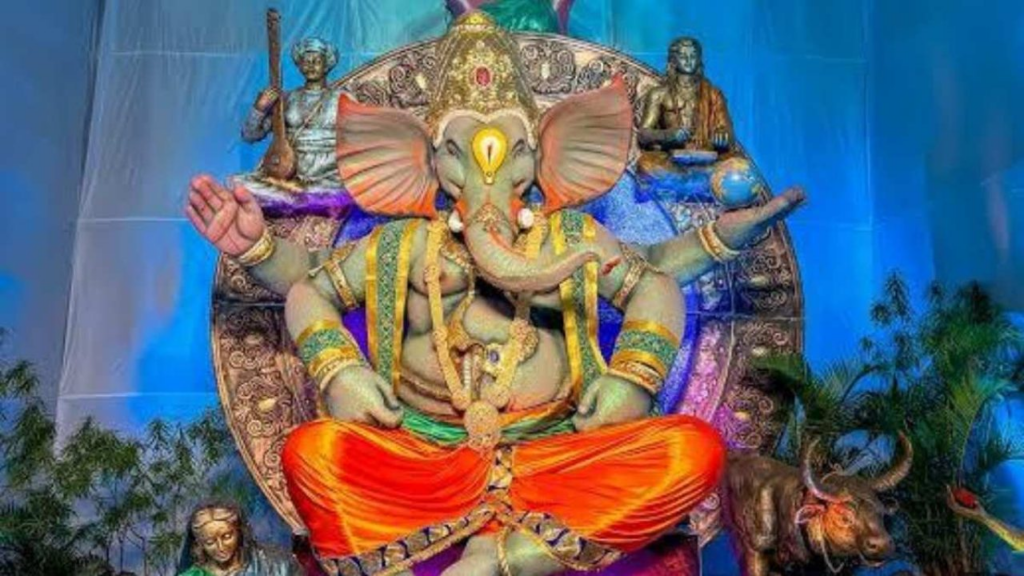
Tejukaya Sarvajanik Ganeshotsav Mandal fields a 22-foot idol built from papier-mâché, coconut husk and natural paints – one of the tallest eco-friendly idols in India. It proves a giant idol doesn’t need plaster of Paris.
- Entry fee: Free. Reports of a ₹20–40 fast-darshan line
- Timings: Approximately 6:00 AM–midnight.
- Queue reality: 1–2 hours on peak evenings; brisk otherwise.
- Best time: Late morning, after the Lalbaugcha Raja crowd has swallowed the lane traffic.
- How to reach: Currey Road (Central) is closest; it sits opposite the Lalbaugcha Raja precinct.
- Time required: 45 minutes–1 hour.
- Ideal for: Eco-conscious visitors; anyone pandal-hopping the belt anyway.
- Pro tip: Ask volunteers about the idol’s paper construction – the mandal is proud of it and the backstory is better than any signboard.
4. Chinchpoklicha Chintamani
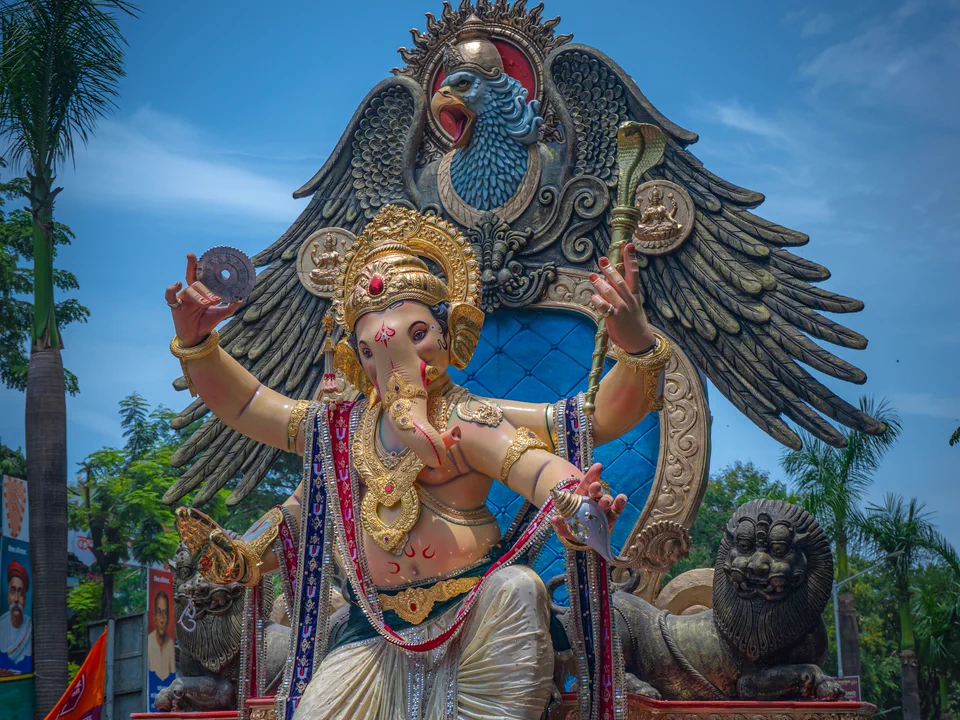
Chinchpokli Sarvajanik Utsav Mandal, established 1920, celebrates its 107th year in 2026. Its aagman sohala — the idol’s arrival procession, held this year on 29 August 2026 – is arguably Mumbai’s biggest pre-festival spectacle, drawing crowds in lakhs.
- Entry fee: Free.
- Timings: Approximately 6:00 AM–midnight.
- Queue reality: 2–3 hours on peak days; the lane outside is the real bottleneck.
- Best time: Weekday mornings, days 2–4.
- How to reach: Chinchpokli (Central line) – the pandal is minutes from the station exit.
- Time required: About 1 hour once inside the lane.
- Ideal for: Photographers; devotees who love the raw, local energy of the mill-district mandals.
- Pro tip: If you missed the 2026 aagman, diarise next year’s — following the idol through Lalbaug at midnight is an experience no darshan queue matches.
5. Parelcha Raja (Nare Park)
Parel Sarvajanik Utsav Mandal at Nare Park, formed in 1947, fields one of the city’s tallest idols — around 30 feet in recent years. Don’t confuse it with the separate “Parel Cha Maharaja” mandal nearby; the two are different organisations.
- Entry fee: Free.
- Timings: Approximately 6:00 AM–midnight.
- Queue reality: 1–2 hours; rarely worse.
- Best time: Pair it with an early Lalbaug morning — it’s one stop up the line.
- How to reach: Parel (Central) or Prabhadevi (Western), 10–15 minutes on foot.
- Time required: 45 minutes.
- Ideal for: Anyone wanting a giant idol without a giant queue.
- Pro tip: Nare Park’s ground layout means you can actually stand still and look – a luxury the Lalbaug lanes never allow.
The Girgaon–Khetwadi Circuit
Here’s what most 2026 pandal guides haven’t caught up with: the Aqua Line’s Girgaon and Grant Road stations now put four heritage pandals within a 15-minute walk of a metro exit. The old logic — brave Charni Road station or crawl down JSS Road by cab — is obsolete. During Ganeshotsav 2025, MMRC extended Aqua Line services to midnight; watch for the 2026 notification around 10–13 September.
6. Khetwadicha Ganraj (12th Lane)
The 12th Khetwadi Sarvajanik Ganeshotsav Mandal, established 1959, installed India’s then-tallest idol — 40 feet — back in 2000, and its Ganraj still wears real gold and diamond jewellery. Recent idols have run 35–40 feet.
- Entry fee: Free.
- Timings: Approximately 6:00 AM–11:00 PM.
- Queue reality: 1–2 hours at peak; often a walk-through on weekday mornings.
- Best time: Morning, before the lane fills; the idol needs daylight to take in at full height.
- How to reach: Charni Road or Grant Road (Western); Metro 3 Girgaon station, ~13-minute walk.
- Time required: 30–45 minutes.
- Ideal for: First-time visitors — this is the biggest wow-per-minute-queued ratio in Mumbai.
- Pro tip: Khetwadi’s numbered lanes each host a mandal. Walk lanes 1 through 12 and you’ll pass a dozen distinct idols in half an hour.
7. Mumbaicha Maharaja (Khetwadi 11th Lane)
One lane over, the Khetwadi 11th Galli mandal (est. 1962) fields Ganraj’s eternal rival. Its 38-foot idol was once reported as Maharashtra’s tallest; the two lanes have traded tallest-idol claims since 2000, and we won’t adjudicate.
- Entry fee: Free.
- Timings: Approximately 6:00 AM–11:00 PM.
- Queue reality: Usually under an hour.
- Best time: Immediately after the 12th Lane darshan – they’re 200 metres apart.
- How to reach: As above; the lanes connect.
- Time required: 20–30 minutes.
- Ideal for: Completing the Khetwadi sweep.
- Pro tip: Compare the two giants back to back and pick your own champion. Everyone in the lane has an opinion; it’s half the fun.
8. Girgaoncha Raja
Girgaoncha Raja (Nikadwari Lane Sarvajanik Ganeshotsav Mandal, est. 1928) builds a ~22-foot idol entirely from shadu clay, grass and bamboo – recognised by the World Records Book of India as the largest eco-friendly natural-clay Ganesha. In 2025, 86 Girgaon mandals even coordinated a joint Ashtavinayak Wari theme.
- Entry fee: Free.
- Timings: Approximately 6:00 AM–11:00 PM.
- Queue reality: Under an hour, most days.
- Best time: Anant Chaturdashi afternoon, if you want to follow its short walk to Girgaon Chowpatty for immersion.
- How to reach: Charni Road (Western), 5–10 minutes; Metro 3 Girgaon station is the closest metro in all of pandal Mumbai.
- Time required: 30–45 minutes.
- Ideal for: Eco-minded visitors; families with kids who won’t last a Lalbaug queue.
- Pro tip: The clay idol dissolves naturally in the sea. If the plaster-of-Paris debate matters to you, this pandal is the argument made visible.
Bonus, 200 metres away — Keshavji Naik Chawl (est. 1893): Mumbai’s very first sarvajanik Ganeshotsav, started under Lokmanya Tilak’s movement — Tilak himself addressed devotees here in 1901. The idol is two feet tall, the same design every year, with lantern light and bhajans instead of loudspeakers. No queue. Zero. Go.
King’s Circle, Fort and Chembur: The Specialists
9. GSB Seva Mandal
The GSB Seva Mandal Ganeshotsav at King’s Circle is India’s richest Ganpati: in 2025 the idol wore 69 kg of gold and 336 kg of silver under a record ₹474.46-crore insurance cover. For 2026, insurance bids reportedly touched ₹508 crore
- The detail every guide buries: GSB’s 2026 celebration runs only 14–18 September (gsbsevamandal.org). This Ganpati leaves on day five. Plan it early in your week or miss it entirely.
- Entry fee: Free; paid sevas bookable through the mandal.
- Timings: Early morning to late night with scheduled sevas.
- Queue reality: 1–3 hours; the elevated walkway keeps the line moving.
- How to reach: King’s Circle (Harbour line) is adjacent; Matunga (Central) is a 10-minute walk.
- Time required: 1–1.5 hours.
- Ideal for: Anyone who wants maximum splendour with a managed, orderly darshan — this is the best-run queue in Mumbai.
- Pro tip: The idol is pure shadu clay every year, gold notwithstanding. Mornings of 15–17 September are the sweet spot before the “last chance” rush on the 18th.
10. Fortcha Icchapurti Raja
Sarvajanik Fort Cha Icchapurti Ganesh, established in 1947 on Mint Road near the GPO, is South Mumbai’s wish-fulfilling Ganpati and houses a collection of 42 Ganesha idols from India and abroad.
- Entry fee: Free.
- Timings: Approximately 7:00 AM–10:00 PM.
- Queue reality: Around 2 hours on weekdays (Mumbai Live’s reported figure) — lunchtime brings the office crowd.
- Best time: Post-8 PM, when Fort empties out.
- How to reach: CSMT (Central/Harbour) or Metro 3 CSMT, 10 minutes on foot; Churchgate is a 20-minute walk.
- Time required: 45 minutes–1 hour.
- Ideal for: Combining darshan with a heritage walk — Ballard Estate at festival time is gorgeous.
- Pro tip: The 42-idol collection deserves as much time as the main murti. Most visitors walk straight past it.
11. Sahyadri Krida Mandal, Chembur
Tilak Nagar’s Sahyadri Krida Mandal is the eastern suburbs’ blockbuster, famous for full-scale replica sets – past years have recreated Mysore Palace, Shaniwar Wada and the Red Fort.
- Entry fee: Free.
- Timings: Approximately 6:00 AM–midnight.
- Queue reality: 1–2 hours on weekends; light on weekdays.
- Best time: After dark — the sets are built for their lighting.
- How to reach: Tilak Nagar (Harbour line); the pandal is minutes from the station. Chembur Monorail also works.
- Time required: About 1 hour.
- Ideal for: Central-suburbs residents and set-design lovers; Anil Kapoor grew up in this mandal’s catchment, and Bollywood still drops by.
- Pro tip: This is the only top-tier pandal on the Harbour line’s eastern arm — pair it with GSB (also Harbour line) for a one-line, two-giant evening.
12. Andhericha Raja — the Suburb King That Outlasts Them All
Azad Nagar Sarvajanik Utsav Samiti — Andhericha Raja — was founded in 1966 by mill and factory workers who migrated from Lalbaug-Parel, and enters its 61st year in 2026 (FPJ). The idol is modest; the replica sets are massive; the celebrity footfall is unmatched in the western suburbs.
- The scheduling secret: Andhericha Raja does not immerse on Anant Chaturdashi. By tradition, its visarjan happens on the following Sankashti Chaturthi — in 2026 that computes to Tuesday, 29 September mandal’s 2026 confirmation]. You can have a big-league darshan four days after every other giant has gone into the sea.
- Entry fee: Free; runs on the mandal site.
- Timings: Approximately 6:00 AM–midnight. [VERIFY: 2026 schedule]
- Queue reality: 1–3 hours at peak; far gentler than Lalbaug.
- How to reach: Andheri (Western line), then auto to Veera Desai Road; Metro Line 1 Azad Nagar station is the closest metro.
- Time required: 1–1.5 hours.
- Ideal for: Western-suburbs families; anyone whose festival week got away from them.
- Pro tip: Visit on 26–28 September. The pandal is fully dressed, the giants downtown are gone, and the queue is a fraction of festival-week length.
A note on Siddhivinayak: Mumbai’s most famous Ganesha shrine is a permanent temple, not a pandal. It opens ~5:30 AM–9:50 PM with aartis through the day, and Metro Line 3’s Siddhivinayak station now delivers you practically to the door. Expect multi-hour lines on Tuesdays and through Ganeshotsav.
How Long Are the Queues, Really?
Honest answer: From zero to eighteen hours, at pandals that are two kilometres apart. The reported peak-day waits below combine mandal statements, news coverage and traveller reports — treat them as planning ranges, not promises.
<figure> <svg viewBox=”0 0 560 400″ style=”max-width: 100%; height: auto; font-family: Inter, system-ui, sans-serif” role=”img” aria-label=”Horizontal bar chart of reported peak-day darshan waits at Mumbai Ganesh pandals in hours: Lalbaugcha Raja navsachi queue 12 to 18 hours, Lalbaugcha Raja mukh darshan 3 to 5 hours, Mumbaicha Raja 2 to 4 hours, Chinchpoklicha Chintamani 2 to 3 hours, GSB Seva Mandal and Andhericha Raja 1 to 3 hours, Fortcha Raja about 2 hours, Khetwadi and Girgaon pandals about 1 hour, Keshavji Naik Chawl no queue.”> <title>Reported peak-day darshan waits, Mumbai Ganesh pandals</title> <desc>Horizontal bar chart. Lalbaugcha Raja navsachi 12–18 hours; Lalbaugcha Raja mukh darshan 3–5 hours; Mumbaicha Raja 2–4 hours; Chinchpoklicha Chintamani 2–3 hours; GSB Seva Mandal 1–3 hours; Andhericha Raja 1–3 hours; Fortcha Icchapurti Raja about 2 hours; Khetwadi and Girgaon circuit about 1 hour; Keshavji Naik Chawl zero. Sources: Yatri Railways 2025, Mumbai Live, mandal statements.</desc> <text x=”20″ y=”28″ font-size=”15″ font-weight=”700″ fill=”var(–chart-text, #1f2937)”>Reported peak-day darshan waits (hours)</text> <g font-size=”12″ fill=”var(–chart-text, #1f2937)”> <text x=”20″ y=”66″>Lalbaugcha Raja (navsachi)</text> <rect x=”20″ y=”72″ width=”480″ height=”16″ rx=”4″ fill=”#e11d48″/> <text x=”506″ y=”85″ font-size=”11″>12–18</text> <text x=”20″ y=”108″>Lalbaugcha Raja (mukh darshan)</text> <rect x=”20″ y=”114″ width=”133″ height=”16″ rx=”4″ fill=”#f97316″/> <text x=”159″ y=”127″ font-size=”11″>3–5</text> <text x=”20″ y=”150″>Mumbaicha Raja (Ganesh Galli)</text> <rect x=”20″ y=”156″ width=”107″ height=”16″ rx=”4″ fill=”#f97316″/> <text x=”133″ y=”169″ font-size=”11″>2–4</text> <text x=”20″ y=”192″>Chinchpoklicha Chintamani</text> <rect x=”20″ y=”198″ width=”80″ height=”16″ rx=”4″ fill=”#eab308″/> <text x=”106″ y=”211″ font-size=”11″>2–3</text> <text x=”20″ y=”234″>GSB Seva Mandal / Andhericha Raja</text> <rect x=”20″ y=”240″ width=”80″ height=”16″ rx=”4″ fill=”#eab308″/> <text x=”106″ y=”253″ font-size=”11″>1–3</text> <text x=”20″ y=”276″>Fortcha Icchapurti Raja</text> <rect x=”20″ y=”282″ width=”53″ height=”16″ rx=”4″ fill=”#84cc16″/> <text x=”79″ y=”295″ font-size=”11″>~2</text> <text x=”20″ y=”318″>Khetwadi / Girgaon circuit</text> <rect x=”20″ y=”324″ width=”27″ height=”16″ rx=”4″ fill=”#22c55e”/> <text x=”53″ y=”337″ font-size=”11″>~1</text> <text x=”20″ y=”360″>Keshavji Naik Chawl</text> <rect x=”20″ y=”366″ width=”4″ height=”16″ rx=”2″ fill=”#22c55e”/> <text x=”30″ y=”379″ font-size=”11″>0</text> </g> </svg> <figcaption>Reported peak-day waits. Sources: Yatri Railways (2025), Mumbai Live, mandal statements. Weekday pre-8 AM waits run far shorter.</figcaption> </figure>
Three rules cut every one of these numbers dramatically:
- Go before 8 AM. Queues at 6 AM are routinely a quarter of their 6 PM length.
- Go Tuesday to Thursday, 15–17 September. Day one is chaos; Gauri weekend (19–20 September) is worse; the final days are “last chance” surges.
- Never drive south of Dadar during festival week. In 2025, Mumbai Police deployed over 19,000 personnel and 10,000 CCTV cameras with AI crowd analytics for immersion days – road closures are extensive and non-negotiable.
Which Ganesh Pandals Should You Skip in 2026?
No pandal on this list is bad. But specific pandal-day-queue combinations are genuinely poor uses of your festival. Here’s our honest skip list:
Skip the Lalbaugcha Raja navsachi line — unless you carry a vow. A 12–18 hour queue for a 10-second charan sparsh is an act of devotion, not tourism. The mukh darshan line shows you the same Raja in a tenth of the time. And ignore anyone selling “VIP access” on WhatsApp; the mandal itself has flagged those messages as fraud.
Skip GSB after 18 September. It’s simply over — the mandal’s 2026 utsav ends on day five. Plenty of 2026 itineraries online still slot it into the second week. They’re wrong.
Skip the Lalbaug belt entirely on 19–20 September. Gauri Visarjan falls on Saturday the 19th, colliding with the weekend crowd. Two surges stack on the same lanes. Use those days for Chembur, Fort or Andheri instead.
Skip Andhericha Raja during festival week. Counterintuitive, but it’s open until around 29 September when everything else is gone — spend your scarce festival-week hours downtown and save Andheri for the quiet epilogue.
Skip driving. Everywhere. The trains built this festival and the trains still serve it best.
What should you do instead on a crowded day? Walk the Khetwadi lanes, or stand in the lantern light at Keshavji Naik Chawl, where the festival began in 1893 and where there’s never a queue at all.
Pandal-Hopping Routes: One Day, Two Days, or the Smart Late Visit
The one-day South Mumbai classic (a Tuesday or Wednesday): Start 5:30 AM at Lalbaugcha Raja (mukh darshan) → walk to Mumbaicha Raja, Ganesh Galli → Tejukayacha Raja → train from Currey Road to Chinchpokli for Chintamani → lunch in Lalbaug (the vada pav here needs no introduction) → Harbour line to King’s Circle for GSB → evening Metro 3 from CSMT to Girgaon for the Khetwadi lanes and Girgaoncha Raja, lit up after dark. Ten pandals, one day, zero cars.
The weekend two-day plan: Day one as above, minus the evening leg. Day two: Fortcha Raja at opening, heritage walk through Ballard Estate, then Tilak Nagar’s Sahyadri Krida Mandal after sunset, when the replica set lighting peaks.
The post-visarjan epilogue (26–29 September): Andhericha Raja, unhurried, after the city exhales. Our favourite darshan of the whole calendar.
Getting between zones: Lalbaug to King’s Circle is ~4 km (Harbour line or 15 minutes by cab off-peak); Girgaon to Lalbaug ~5 km; Fort to Girgaon is two Metro 3 stops. Keep journeys on rails and each hop stays under 20 minutes.
Where to Stay During Ganeshotsav 2026
Planning around the festival? Mumbai hotels near the big pandals fill fast and price accordingly in festival week. A different approach: many families do their city darshan early in the week, then retreat to a villa within two hours of Mumbai for the Gauri weekend — returning (if at all) only for Anant Chaturdashi. StayVista’s villas in Karjat — like The Den, with its L-shaped pool and Sahyadri views — sit barely 90 minutes from the city. Toward the coast, Hamptons Charm and the six-bedroom Casa Palmera anchor our Alibaug collection, while big joint-family groups head to the seven-bedroom Emerald Acres in Lonavala. Several homes host their own Ganpati sthapana — ask our team when booking. For the full long-weekend playbook, see our guide to Ganeshotsav 2026 homes near Mumbai and Pune.
What’s Different About Ganeshotsav 2026?
Four changes shape this year’s festival, and the first one you’ll feel at every barricade.
Ganeshotsav is now a state festival. Maharashtra formally declared it one in July 2025, with government support for pandal infrastructure and security. Expect bigger, better-organised installations — and heavier footfall.
BMC went digital. A single-window online system now handles mandal permissions and police NOCs, open 14 August–13 September 2026, with mandatory crowd-safety training for mandal volunteers.
The PoP rules are still in court. As of 1 September 2026, plaster-of-Paris idols may be made and sold, but idols up to 6 feet must be immersed in artificial ponds, not the sea, under Bombay High Court orders; a fresh verdict is pending. BMC ran 288 artificial ponds in 2025, up from 204, and about 40% of Mumbai’s nearly 2 lakh immersed idols used them. Rules may shift before 14 September — check before immersing a home idol.
Metro Line 3 is the new festival artery. Girgaon, Grant Road, Kalbadevi, CSMT and Siddhivinayak stations all serve major darshan zones, and 2025’s late-night extension set the precedent for this year. If a 2026 midnight-service notification lands, the evening Khetwadi–Girgaon circuit becomes the easiest it has ever been.
And if you’re staying for the finale: Girgaon Chowpatty drew roughly 20 lakh people across Anant Chaturdashi 2025, with peaks of 4 lakh at a time, managed for the first time by AI-driven crowd analytics. Watch the processions from Marine Drive’s northern arc rather than the sand — you’ll see more and breathe easier.
FAQs: Mumbai Ganesh Pandals 2026
Which is the most famous Ganpati pandal in Mumbai?
Lalbaugcha Raja, established in 1934 in Lalbaug, is Mumbai’s most famous Ganesh pandal, drawing an estimated 1.5 million visitors daily during Ganeshotsav. Its wish-fulfilling (navsacha) reputation produces the longest darshan queues in India — 12 to 18 hours on peak days.
What are the Ganesh Chaturthi 2026 dates in Mumbai?
Ganesh Chaturthi falls on Monday, 14 September 2026, with the sthapana muhurat from 11:02 AM to 1:31 PM. The festival ends with Anant Chaturdashi visarjan on Friday, 25 September 2026. Gauri Visarjan falls on Saturday, 19 September.
How many hours does Lalbaugcha Raja darshan take?
The navsachi (wish-fulfilling) queue runs 12–18 hours on peak days, while the mukh darshan (viewing) line takes 3–5 hours. Early weekday mornings — 4 to 7 AM, days 2–4 of the festival — cut both dramatically.
Is there a VIP pass for Lalbaugcha Raja?
No. The mandal has publicly warned that “VIP pass” offers circulating on WhatsApp and social media are fake. Darshan is free through the official navsachi and mukh darshan queues only. Don’t pay anyone claiming otherwise.
Which is the richest Ganpati in Mumbai?
GSB Seva Mandal at King’s Circle is India’s richest Ganpati. In 2025 its clay idol wore 69 kg of gold and 336 kg of silver under a record ₹474.46-crore insurance cover. Note: its 2026 utsav runs only 14–18 September.
Which Mumbai pandal has the tallest Ganesh idol?
The Khetwadi lanes hold the records. The 12th Lane’s Khetwadicha Ganraj raised a 40-foot idol in 2000 – then India’s tallest — and the 11th Lane’s Mumbaicha Maharaja has fielded idols up to 38–42 feet. Recent years run 35–40 feet.
Can I visit a big pandal after Anant Chaturdashi?
Yes — Andhericha Raja immerses its idol not on Anant Chaturdashi but on the following Sankashti Chaturthi, around 29 September 2026. That gives you roughly four extra days of darshan with far shorter queues after every other major pandal has concluded.
Are Mumbai’s Ganesh pandals free to enter?
Yes. All twelve major pandals in this guide offer free darshan, and none sells an official skip-the-line ticket. Budget instead for transport, prasad and donations (entirely optional). Some mandals, like GSB Seva Mandal, offer bookable paid sevas and poojas through their official websites.
The Bottom Line
Ganeshotsav rewards planning the way Mumbai rewards local trains: use the system and the city opens up.
- Dates: 14–25 September 2026; GSB ends 18 September; Andheri runs to ~29 September.
- Golden window: Tuesday 15 – Thursday 17 September, before 8 AM.
- Queue maths: Lalbaugcha Raja mukh darshan over navsachi unless you carry a vow; ten other giants average an hour or two.
- Transport: Local trains + Metro Line 3. Leave the car at home.
- Skip list: GSB after the 18th, Lalbaug on Gauri weekend, festival-week Andheri, and every “VIP pass” DM.
However you shape your darshan week, may Bappa make the queues short and the modaks plentiful. And if your plan ends with a quiet pool two hours from the noise, StayVista’s villas near Mumbai will keep the festive spirit going at your own volume. Ganpati Bappa Morya!