
10 Places To Visit in Diwali in India | Know Where to Celebrate the Festival of Lights
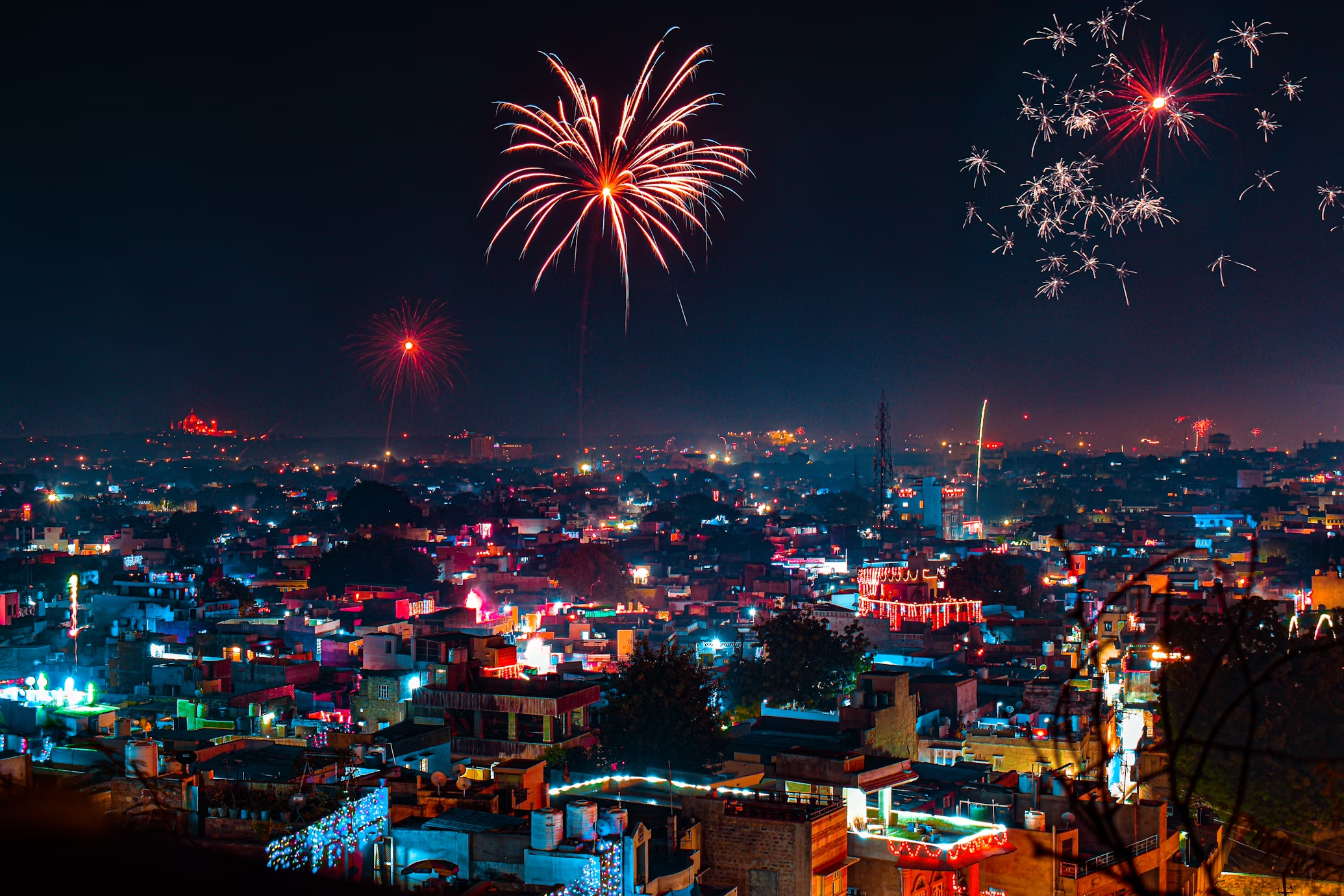
Diwali 2026 falls on Sunday, 8 November 2026, with the five-day festival running from Dhanteras on 6 November to Bhai Dooj on 10 November. The best places to visit in Diwali in India are Ayodhya (2.8 million diyas at Deepotsav on 7 November), Varanasi (Ganga Aarti and Dev Deepawali on 24 November), Jaipur (India’s most elaborately lit bazaars), Amritsar (Bandi Chhor Divas at the Golden Temple) and Goa (Narkasur effigy competitions before dawn). Because 8 November is a Sunday, most travellers get a natural 6–10 November break — book stays and trains by mid-September, because Diwali is India’s single busiest domestic travel week.
In this Blog
Quick Info
| Diwali 2026 date | Sunday, 8 November 2026 (Kartik Amavasya) |
| Full festival window | Friday 6 Nov (Dhanteras) to Tuesday 10 Nov (Bhai Dooj) |
| Best time to travel | 5–11 November 2026; extend to 24 November for Dev Deepawali and Pushkar Fair |
| Weather across India | North 12–28 °C, hills 4–18 °C, coast and south 22–33 °C |
| Ideal trip duration | 3–4 days for one city, 6–7 days for a two-city circuit |
| Budget range | ₹8,000–₹15,000 per person for 3 days (domestic, mid-range); ₹25,000+ per person for palace-city stays |
| Book by | Trains: 15 September (60-day ARP opens). Flights and villas: mid-September for the best rates |
| Busiest single day | 8 November — avoid intercity road travel between 4 PM and midnight |
We plan Diwali stays for guests across 100+ Indian destinations every year, and the pattern is always the same: the itineraries that work are the ones locked in six to eight weeks out. This guide is built around that reality — real dates, real fees, real travel times, and honest notes on where Diwali is genuinely worth travelling for versus where it is just a long weekend. If you want a private home for the festival rather than a hotel corridor, StayVista’s villas and homestays cover most of the destinations below.
Diwali 2026 Dates: What Falls on Which Day
Diwali 2026 is a five-day festival, and knowing which day carries which ritual decides where you should be.
| Day | Date (2026) | Festival | Where it matters most |
|---|---|---|---|
| Day 1 | Friday, 6 November | Dhanteras | Jaipur, Mumbai, Ahmedabad — gold and utensil markets |
| Day 2 | Saturday, 7 November | Choti Diwali / Naraka Chaturdashi | Ayodhya Deepotsav, Goa (Narkasur burning before dawn on 8 Nov) |
| Day 3 | Sunday, 8 November | Diwali / Lakshmi Puja | Everywhere. Also Kali Puja in Kolkata |
| Day 4 | Monday, 9 November | Govardhan Puja / Bestu Varas | Mathura–Vrindavan, Gujarat (Gujarati New Year) |
| Day 5 | Tuesday, 10 November | Bhai Dooj | Family celebrations nationwide |
| +16 days | Tuesday, 24 November | Dev Deepawali / Kartik Purnima | Varanasi ghats; Pushkar Camel Fair peaks |
Lakshmi Puja muhurat for 8 November 2026 is roughly 5:54 PM to 7:50 PM in New Delhi and around 6:27 PM to 8:27 PM further east and south — the window shifts with local sunset, so check your city before you plan the evening.
Because 8 November 2026 is a Sunday and a gazetted central holiday, banks, the NSE and the BSE are closed. Most private offices take 9 November as well, which turns 6–10 November into a five-day window. That is why this is the hardest travel week of the year to book late.
Best Places to Visit in Diwali in India: Quick Comparison
| Destination | State | Why go for Diwali | Nights | From (nearest metro) |
|---|---|---|---|---|
| Ayodhya | Uttar Pradesh | 2.8 million diyas, Deepotsav world record | 2 | Lucknow, 135 km |
| Varanasi | Uttar Pradesh | Ganga Aarti + Dev Deepawali | 3 | Direct flights |
| Mathura–Vrindavan | Uttar Pradesh | Govardhan Puja and Annakut | 2 | Delhi, 180 km |
| Amritsar | Punjab | Bandi Chhor Divas at the Golden Temple | 2 | Delhi, 450 km |
| New Delhi | Delhi | Diwali bazaars, monument illumination | 2 | Local |
| Jaipur | Rajasthan | India’s most elaborately lit bazaars | 3 | Delhi, 280 km |
| Udaipur | Rajasthan | Fireworks over Lake Pichola | 3 | Ahmedabad, 260 km |
| Jodhpur | Rajasthan | Mehrangarh above a lit blue city | 2 | Jaipur, 335 km |
| Jaisalmer | Rajasthan | Diwali inside a living fort + dunes | 3 | Jodhpur, 285 km |
| Pushkar | Rajasthan | Diwali, then the Camel Fair | 2 | Ajmer, 14 km |
| Goa | Goa | Narkasur effigies, then the beach | 4 | Direct flights |
| Mumbai | Maharashtra | Diwali Pahat concerts, Marine Drive | 2 | Local |
| Lonavala | Maharashtra | Private-villa Diwali near Mumbai | 2 | Mumbai, 83 km |
| Nashik | Maharashtra | Vineyard Diwali, harvest season | 2 | Mumbai, 165 km |
| Kutch | Gujarat | Gujarati New Year, white desert | 3 | Ahmedabad, 330 km |
| Madurai | Tamil Nadu | Deepavali temple rituals at dawn | 2 | Direct flights |
| Mysore | Karnataka | Palace illumination, post-Dasara glow | 2 | Bangalore, 145 km |
| Ooty | Tamil Nadu | Cool-weather Diwali break | 3 | Coimbatore, 88 km |
| Coorg | Karnataka | Coffee-estate quiet, harvest season | 3 | Bangalore, 265 km |
| Pondicherry | Puducherry | French Quarter, oil-bath tradition | 2 | Chennai, 160 km |
| Kolkata | West Bengal | Kali Puja on the same night | 3 | Direct flights |
| Darjeeling | West Bengal | Kanchenjunga clarity in November | 3 | Bagdogra, 70 km |
| Nainital | Uttarakhand | Diyas reflected on Naini Lake | 2 | Delhi, 300 km |
| Shimla | Himachal Pradesh | Ridge and Mall Road lit up | 3 | Chandigarh, 113 km |
| Rishikesh | Uttarakhand | Ganga Aarti at Parmarth Niketan | 2 | Dehradun, 45 km |
Where to Celebrate Diwali in North India
North India is where Diwali is at its most theatrical — and where the weather in early November is at its best, with daytime highs of 25–28 °C and cool evenings.
1. Ayodhya, Uttar Pradesh — The Deepotsav World Record

Ayodhya hosts Deepotsav on 7 November 2026, one day before Diwali, when volunteers light diyas across 56 ghats of the Saryu River — the 2026 target is 2.8 million lamps, an attempt to break the city’s own Guinness World Record. Around 30,000 volunteers handle over 3.3 million diyas, 75,000 litres of oil and 5.5 million cotton wicks. The mythological logic is simple: this is the town Lord Rama returned to, and Diwali is that homecoming.
- Entry fee: Free entry to Ram ki Paidi and the Saryu ghats. Ram Mandir darshan is free; special aarti passes are free but must be registered in advance.
- Timings: Deepotsav viewing runs roughly 3:00 PM–9:00 PM on 7 November; the lamp-lighting moment is at dusk, around 5:45 PM.
- Best time to visit: 6–8 November 2026. Arrive on 6 November so you are inside the cordon on 7 November.
- How to reach: Maharishi Valmiki International Airport, Ayodhya Dham (AYJ) is 8 km away. Ayodhya Dham Junction is 2 km from Ram ki Paidi. By road it is 135 km from Lucknow (2.5 hours via NH-27) and 636 km from Delhi.
- Time required: 2 days.
- Ideal for: Families, multi-generation groups, devotees, photographers.
- Pro tip: Vehicle access around Ram ki Paidi closes from early afternoon on Deepotsav day — plan to walk 2–3 km. Free e-passes for the main viewing galleries open a few weeks ahead on the district administration portal. [VERIFY: 2026 Deepotsav e-pass portal and opening date via UP Tourism]
Heads up on stays: StayVista does not currently have inventory in Ayodhya. The closest options are our villas in Varanasi (200 km) — a workable base if you are combining both cities.
2. Varanasi, Uttar Pradesh — Two Festivals of Light, Sixteen Days Apart
Varanasi is the only city in India where you can attend Diwali and then a second, arguably grander festival of lights: Dev Deepawali on 24 November 2026, when every step of all 84 ghats is lined with lamps on Kartik Purnima. On Diwali night itself, the Dashashwamedh Ghat aarti draws a crowd that fills the steps two hours before it starts.
- Entry fee: Ghats and the Ganga Aarti are free from the steps. Shared boats for the aarti cost roughly ₹300–₹800 per person on normal nights and rise sharply for Dev Deepawali.
- Timings: Ganga Aarti at Dashashwamedh Ghat is around 6:15–7:15 PM in November (it shifts with sunset). Kashi Vishwanath Temple opens at 3:00 AM for Mangala Aarti.
- Best time to visit: 7–9 November for Diwali, or 22–25 November for Dev Deepawali. November mornings sit at 16–18 °C.
- How to reach: Lal Bahadur Shastri International Airport (VNS) is 26 km from the ghats. Varanasi Junction (Cantt) and Banaras (BSBS) stations both have direct trains from Delhi, Mumbai and Kolkata. Delhi–Varanasi Vande Bharat takes about 8 hours.
- Time required: 3 days.
- Ideal for: Couples, solo travellers, photographers, anyone travelling for the ritual rather than the party.
- Pro tip: Book a Dev Deepawali boat four weeks out, not four days. And take the 5:30 AM boat on the morning after Diwali — the ghats are empty, the light is gold, and you get the shot everyone else missed.
3. Mathura & Vrindavan, Uttar Pradesh — Govardhan Puja and the Annakut

Mathura and Vrindavan peak on the day after Diwali: Govardhan Puja on 9 November 2026, when temples build the Annakut — a mountain of cooked food offered to Krishna, echoing the lifting of Govardhan Hill. Banke Bihari Temple in Vrindavan is the centre of it, and the crowd density genuinely rivals a major festival day.
- Entry fee: Free at Banke Bihari Temple, Prem Mandir and ISKCON Vrindavan. Govardhan Hill parikrama is free.
- Timings: Banke Bihari’s winter darshan runs 8:45 AM–1:00 PM and 4:30–8:30 PM. Prem Mandir’s light show starts around 7:00 PM.
- Best time to visit: 8–10 November 2026. Govardhan Puja crowds are heaviest between 6:00 and 10:00 AM.
- How to reach: Delhi IGI is 160 km away; Agra airport is 60 km. Mathura Junction has frequent trains. By road, Delhi to Mathura is 180 km, about 3 hours via the Yamuna Expressway.
- Time required: 2 days.
- Ideal for: Families, devotees, first-time visitors to the Braj region.
- Pro tip: Park at Vrindavan’s Vidyapeeth or Chhatikara lot and take an e-rickshaw in — private cars cannot get within 2 km of Banke Bihari during festival days. Our villas in Mathura put you between both towns.
4. Amritsar, Punjab — Bandi Chhor Divas at the Golden Temple
Amritsar runs a double celebration: the Sikh festival of Bandi Chhor Divas falls on the same night as Diwali, marking Guru Hargobind Ji’s release from Gwalior Fort. Harmandir Sahib is outlined in thousands of lights, and the fireworks over the Amrit Sarovar reflect off the water in a way no photograph quite conveys.
- Entry fee: Free. The langar (community kitchen) serves free meals around the clock, and head coverings and shoe storage at the entrance are free too.
- Timings: Harmandir Sahib is open 24 hours. On Bandi Chhor Divas, the illumination begins after the evening Rehras Sahib kirtan and the fireworks follow, roughly 8:00–10:00 PM.
- Best time to visit: 7–9 November 2026. November days are 25 °C, nights around 12 °C.
- How to reach: Sri Guru Ram Dass Jee International Airport (ATQ) is 11 km from the temple. Amritsar Junction is 2 km away. Delhi to Amritsar is 450 km, 6.5–7 hours via NH-44; the Vande Bharat does it in about 5.5 hours.
- Time required: 2 days, or 3 if you add Wagah border and Jallianwala Bagh.
- Ideal for: Families, groups of friends, first-time Punjab visitors.
- Pro tip: Enter via the Ghanta Ghar (clock tower) entrance before 6:00 PM on Diwali night — after that the queue backs up past the Heritage Street. Book villas in Amritsar within 3 km of the temple so you can walk back at midnight instead of hunting a cab.
5. New Delhi — Diwali Bazaars and Monument Lights
Delhi’s Diwali is a shopping festival first and a spectacle second. Chandni Chowk’s lanes — Kinari Bazaar for decorations, Dariba Kalan for silver, Sadar Bazaar for lights — are the real attraction, and Akshardham, Lotus Temple and Humayun’s Tomb take on a different character lit at night. The honest caveat: Delhi’s air quality is at its annual worst in the week after Diwali, with AQI regularly crossing 300.
- Entry fee: Chandni Chowk bazaars are free. Akshardham is free (exhibitions ₹170 onwards). Humayun’s Tomb is ₹40 for Indians. Lotus Temple is free.
- Timings: Chandni Chowk shops run roughly 11:00 AM–8:00 PM, closed Sundays. Akshardham 9:30 AM–6:30 PM, closed Mondays. Lotus Temple 9:00 AM–5:30 PM, closed Mondays.
- Best time to visit: 4–7 November for shopping — before Diwali, not after, when the AQI spikes.
- How to reach: Indira Gandhi International Airport (DEL). New Delhi, Hazrat Nizamuddin and Anand Vihar stations. Chandni Chowk and Lal Quila are both on the Delhi Metro.
- Time required: 2 days.
- Ideal for: Shoppers, families with older children, anyone using Delhi as a hub before heading to Jaipur or Amritsar.
- Pro tip: Do Chandni Chowk between 10:00 and 11:30 AM — the lanes are genuinely walkable then and impassable by 2:00 PM. Carry an N95 for 9–12 November. Check live readings on the CPCB National AQI dashboard before you plan outdoor evenings, and consider basing yourself at a farmstay in the Sohna or Damdama belt, where AQI typically runs 60–90 points lower than central Delhi.
Where to Celebrate Diwali in Rajasthan
Rajasthan is the strongest single-state Diwali circuit in India — five cities, all within a day’s drive of each other, all lit differently. Early November highs sit at 28–30 °C with nights near 14 °C, which is the most comfortable weather the state gets all year.
6. Jaipur, Rajasthan — India’s Most Elaborately Lit Bazaars

Jaipur, Rajasthan is the one destination where the city itself competes for Diwali. The Jaipur Municipal Corporation runs an annual best-decorated-market contest, and Johari Bazaar, Tripolia Bazaar, Bapu Bazaar and Chaura Rasta spend weeks building light installations across their facades. The Walled City’s pink sandstone under that much light is the single most photographed Diwali scene in India.
- Entry fee: Bazaars are free. Amer Fort is ₹100 for Indians and ₹500 for foreign nationals; City Palace is ₹200 onwards for Indians. Hawa Mahal is ₹50 for Indians.
- Timings: Market illumination runs 6:00 PM–midnight from about 5–9 November. Amer Fort 8:00 AM–5:30 PM; Nahargarh Fort 10:00 AM–5:30 PM.
- Best time to visit: 6–9 November 2026, with 8 November evening reserved for the Walled City walk.
- How to reach: Jaipur International Airport (JAI) is 13 km from the Walled City. Jaipur Junction is central. Delhi to Jaipur is 280 km, 4.5–5 hours via NH-48 and the Delhi–Jaipur Expressway.
- Time required: 3 days.
- Ideal for: Families, large groups, couples, photographers.
- Pro tip: Park at Ramniwas Bagh and do the Walled City on foot — Tripolia and Johari close to cars on Diwali night. For the wide shot of the whole lit city, drive to Nahargarh Fort at 6:30 PM. Book villas in Jaipur on the Amer or Delhi Road side; the Walled City itself has almost no parking during the festival.
7. Udaipur, Rajasthan — Fireworks Reflected on Lake Pichola
Udaipur’s advantage is geometry: the fireworks happen above a lake, so you see them twice. The City Palace complex, Jag Mandir and the ghats along Lake Pichola all light up, and the reflection off still November water is the reason Udaipur outranks flashier cities on most Diwali lists.
- Entry fee: City Palace is around ₹300 for Indian adults; Lake Pichola boat rides run roughly ₹400–₹700 per person; the Dharohar folk dance show at Bagore ki Haveli is about ₹150.
- Timings: City Palace 9:30 AM–5:30 PM. Boat rides from Rameshwar Ghat run through sunset, with the last boat around 6:00 PM. Dharohar show at 7:00 PM daily.
- Best time to visit: 7–9 November 2026. Nights drop to 14 °C — carry a light jacket for the boat.
- How to reach: Maharana Pratap Airport (UDR) is 22 km out. Udaipur City station has direct trains from Delhi and Jaipur. By road: Jaipur 395 km (6.5 hours), Ahmedabad 260 km (4.5 hours), Jodhpur 250 km (4.5 hours).
- Time required: 3 days.
- Ideal for: Couples, honeymooners, small family groups.
- Pro tip: Skip the paid vantage points. Ambrai Ghat and Gangaur Ghat on the Hanuman Ghat side are free, face the palace, and are where the reflection shot actually works. Get there by 7:15 PM on 8 November. Villas in Udaipur on the Fateh Sagar side stay cheaper than lakefront hotels during festival week.
8. Jodhpur, Rajasthan — Mehrangarh Above a Lit Blue City
Jodhpur, Rajasthan gives you the best elevated Diwali view in the state. Stand on Mehrangarh Fort’s ramparts at dusk on 8 November and the entire blue city below flickers with diyas and rooftop fireworks — a 360-degree view that no ground-level city can match.
- Entry fee: Mehrangarh Fort is around ₹100–₹200 for Indians including the audio guide; Jaswant Thada is about ₹30 for Indians.
- Timings: Mehrangarh 9:00 AM–5:00 PM (last entry 4:30 PM). Sardar Market and the Clock Tower bazaar run until about 9:00 PM.
- Best time to visit: 7–9 November 2026. Reach the fort by 4:00 PM to be up before the light goes.
- How to reach: Jodhpur Airport (JDH) is 5 km from the city centre — the closest airport-to-old-city hop in Rajasthan. Jodhpur Junction is central. Jaipur is 335 km (5.5 hours via NH-58), Udaipur 250 km, Jaisalmer 285 km.
- Time required: 2 days.
- Ideal for: Couples, photographers, groups doing a Rajasthan circuit.
- Pro tip: The fort closes at 5:00 PM, so for the after-dark view book a table at one of the Chandra Bhawan or Toorji ka Jhalra rooftop restaurants instead — same sightline, no closing time.
9. Jaisalmer, Rajasthan — Diwali Inside a Living Fort

Jaisalmer, Rajasthan is the only place in India where you can watch Diwali from inside an inhabited 12th-century fort. Sonar Quila still houses around 3,000 residents, so the diyas in the windows are real households, not a tourist installation. Pair it with a night at the Sam Sand Dunes, 42 km west, where there is no light pollution at all.
- Entry fee: Jaisalmer Fort is free to enter; the Fort Palace Museum is about ₹50 for Indians. Patwon ki Haveli is around ₹100. Desert camps typically charge ₹1,500–₹4,000 per person including dinner and a cultural show.
- Timings: Fort lanes are open all day and stay lively until 10:00 PM. Museum 9:00 AM–6:00 PM. Sunset at the dunes is around 5:45 PM in November.
- Best time to visit: 6–9 November 2026. November nights in the Thar drop to 10–12 °C, so pack accordingly.
- How to reach: Jaisalmer Airport (JSA) operates seasonally from around October to March. Jaisalmer railway station is served by the Delhi–Jaisalmer Express. Jodhpur is 285 km (4.5 hours via NH-125), Bikaner 330 km.
- Time required: 3 days including a dune night.
- Ideal for: Couples, groups of friends, travellers wanting Diwali without crowds.
- Pro tip: Do Diwali night inside the fort and the following night at the dunes — the dune camps run their own diya-lighting and folk music sessions, and it is far quieter. Book villas in Jaisalmer early; inventory here is genuinely limited.
10. Pushkar, Rajasthan — Diwali First, Then the Camel Fair
Pushkar, Rajasthan gives you two reasons to travel in one month. Diwali on 8 November brings diyas across the 52 ghats of Pushkar Lake, and the Pushkar Camel Fair follows from 17 to 24 November 2026, peaking on Kartik Purnima on 24 November with the holy dip. Brahma Temple here is one of very few Brahma temples anywhere in India.
- Entry fee: Brahma Temple and the lake ghats are free. Camel Fair grounds are free to enter; camel and horse rides typically run ₹200–₹500.
- Timings: Brahma Temple is open roughly 5:30 AM–1:30 PM and 3:00–9:00 PM. Ghat aarti is at sunset, around 5:50 PM in November.
- Best time to visit: 7–9 November for Diwali, or 20–24 November for the fair’s peak days. Doing both means two trips or a two-week stay.
- How to reach: Kishangarh Airport (KQH) is 55 km away; Jaipur International is 145 km. Ajmer Junction is 14 km from Pushkar. Jaipur to Pushkar is 145 km, about 3 hours via NH-48.
- Time required: 2 days for Diwali, 3 for the fair.
- Ideal for: Solo travellers, couples, photographers, backpackers.
- Pro tip: Leather items — belts, wallets, bags — are not allowed at the ghats. Room rates in Pushkar roughly triple during fair week, so if you want both festivals, book your Pushkar stay for both windows in one go, in September.
Where to Celebrate Diwali in West India
11. Goa — Narkasur Effigies Before Dawn, Then the Beach

Goa’s Diwali is unlike anywhere else in India. On the night of 7 November 2026, village clubs across Goa parade enormous papier-mâché effigies of the demon Narkasura, complete with inter-village competitions for the most elaborate build. A child dressed as Krishna performs a mock battle, and the effigies are burned in the pre-dawn hours of 8 November — usually around 4:00–5:30 AM. Then everyone goes home, takes a ritual oil bath, and the day turns into a beach holiday.
- Entry fee: Free. Narkasur competitions happen on public grounds in Panaji, Mapusa, Ponda, Margao and dozens of villages.
- Timings: Effigies go on display from about 8:00 PM on 7 November; the burning is in the early hours of 8 November, typically 4:00–5:30 AM.
- Best time to visit: 6–10 November 2026. This is the start of Goa’s peak season — 24–32 °C, no rain.
- How to reach: Manohar International Airport at Mopa (GOX) and Dabolim (GOI) both serve Goa. Madgaon and Thivim are the main railway stations. Mumbai to Goa is 590 km by road (10–11 hours) or a 1-hour flight.
- Time required: 4 days.
- Ideal for: Groups of friends, families, couples who want festival plus holiday.
- Pro tip: Panaji’s Narkasur competition near the Mala grounds and Mapusa’s are the two biggest — pick one, don’t try both. Diwali is the first big weekend of Goa’s season, so villas in Goa with private pools go 8–10 weeks ahead at these dates.
12. Mumbai, Maharashtra — Diwali Pahat and Marine Drive
Mumbai’s distinctive Diwali tradition is Diwali Pahat — early-morning classical and Marathi music concerts on Diwali dawn, held at Shivaji Park, Ravindra Natya Mandir, and across housing societies in Dadar and Girgaon. Most are free. Add Marine Drive’s Queen’s Necklace lit against the skyline and the lantern markets at Lalbaug and Dadar.
- Entry fee: Most Diwali Pahat concerts are free; ticketed venues run ₹200–₹1,000. Marine Drive and the markets are free.
- Timings: Diwali Pahat concerts start around 5:30–6:00 AM on 8 November. Lalbaug and Dadar lantern markets run until midnight from about 1 November.
- Best time to visit: 6–9 November 2026. Mumbai sits at 24–33 °C — pleasant by local standards.
- How to reach: Chhatrapati Shivaji Maharaj International Airport (BOM) and the new Navi Mumbai International Airport. CSMT, Dadar and Bandra Terminus for trains.
- Time required: 2 days.
- Ideal for: Families, culture-first travellers, anyone with relatives in the city.
- Pro tip: Book the Dadar lantern market for 3 November and get it done — by 6 November the same kandils cost 40% more. Central Mumbai fireworks are loudest 8:00–11:00 PM on 8 November; if you have pets or young children, villas in the Shahapur or Vasai belt are a much calmer base.
13. Lonavala, Maharashtra — The Private-Villa Diwali Near Mumbai and Pune

Lonavala is the single most popular Diwali long-weekend destination for Mumbai and Pune households, for one practical reason: it is close enough to drive to on 6 November and back on 10 November, and a private villa lets a large family celebrate Lakshmi Puja, cook, and set off crackers on its own terms. Post-monsoon November means the valleys are still green and the waterfalls have just about stopped.
- Entry fee: Bhushi Dam free; Karla Caves ₹25 for Indians; Rajmachi and Lohagad Fort trails free; Tiger’s Leap free.
- Timings: Karla Caves 8:00 AM–6:00 PM. Bhushi Dam and Tiger’s Leap are best 7:00–10:00 AM before the crowd.
- Best time to visit: 6–10 November 2026. Daytime 22–28 °C, nights 16 °C.
- How to reach: Mumbai is 83 km (1.5–2 hours via the Mumbai–Pune Expressway); Pune is 65 km (1.5 hours). Lonavala railway station is on the Mumbai–Pune line with frequent locals and expresses.
- Time required: 2–3 days.
- Ideal for: Large families, multi-family groups, corporate offsites, pet parents.
- Pro tip: The Expressway is brutal on 8 November evening and 10 November afternoon. Drive out before 7:00 AM. StayVista has close to 200 villas in Lonavala, which is the largest concentration anywhere in our portfolio — but Diwali is the one week they actually sell out.
14. Nashik, Maharashtra — Vineyard Diwali in Harvest Country
Nashik, Maharashtra pairs Diwali with something no other Indian destination can: India’s wine capital in the middle of its post-monsoon season, with Sula, York and Soma all running tastings. Add Trimbakeshwar — one of the twelve Jyotirlingas — 28 km away, and Panchavati’s ghats on the Godavari lit with diyas.
- Entry fee: Sula Vineyards tours and tastings start around ₹500 per person; Trimbakeshwar Temple is free; Pandavleni Caves is ₹25 for Indians.
- Timings: Sula tasting room 11:00 AM–10:00 PM (tours hourly). Trimbakeshwar 5:30 AM–9:00 PM. Ramkund at Panchavati is best at the 6:30 PM aarti.
- Best time to visit: 6–9 November 2026. Nights drop to 14 °C, which is why locals call this Nashik’s best month.
- How to reach: Mumbai is 165 km (3.5 hours via NH-160 and the Kasara ghat); Pune is 210 km. Nashik Road station is 8 km from the city. Ozar Airport (ISK) has limited flights.
- Time required: 2 days.
- Ideal for: Couples, groups of friends, food-and-wine travellers.
- Pro tip: Book Sula tastings online for a 4:00 PM slot — you finish in daylight and still make the Panchavati aarti. Our villas in Nashik cluster around Gangapur Road and the vineyard belt, which puts you 15 minutes from tastings.
15. Kutch, Gujarat — Gujarati New Year in the White Desert
Gujarat celebrates Diwali and then rolls straight into Bestu Varas, the Gujarati New Year, on 9 November 2026 — the day businesses perform Chopda Pujan and open new account books. In Kutch, this coincides with the start of the Rann Utsav season, when the Great Rann’s salt flats turn white and dry enough to walk on.
- Entry fee: Rann of Kutch requires a permit for the White Rann at Dhordo, around ₹100 per person plus vehicle charges; Rann Utsav tent city packages are separate. Kalo Dungar and Mandvi Beach are free.
- Timings: White Rann viewing is best at sunset, roughly 5:30–7:00 PM, and again on full-moon nights. Permits are issued at the Bhirandiyara checkpoint during daylight hours.
- Best time to visit: 7–10 November 2026 to catch Diwali, Bestu Varas and the start of the Rann season together.
- How to reach: Bhuj Airport (BHJ) is the closest, 80 km from Dhordo. Bhuj railway station connects to Ahmedabad and Mumbai. Ahmedabad to Bhuj is 330 km, about 6 hours via NH-27.
- Time required: 3 days.
- Ideal for: Families, photographers, couples, culture travellers.
- Pro tip: The Rann Utsav tent city usually opens in early-to-mid November — confirm the 2026 opening date before you commit, because a Diwali trip a week too early means a closed tent city. Villas in Kutch near Bhuj are the flexible alternative.
Where to Celebrate Diwali in South India
South India calls it Deepavali, celebrates it primarily on Naraka Chaturdashi rather than Amavasya, and centres it on a pre-dawn oil bath followed by temple visits and new clothes. Fireworks happen at dawn, not at night — which genuinely changes how you plan your day.
16. Madurai, Tamil Nadu — Deepavali at Dawn in a Temple City

Madurai, Tamil Nadu observes Deepavali the South Indian way: the Ganga Snanam oil bath before sunrise on 7–8 November, new clothes, sweets, and crackers at first light. The Meenakshi Amman Temple, a 14-acre complex at the heart of the old city, runs special abhishekams, and the streets around it are lit from the temple’s four gopurams outward.
- Entry fee: Meenakshi Amman Temple is free; the Art Museum inside is around ₹50; special darshan is roughly ₹100. Thirumalai Nayakkar Mahal is ₹50 for Indians.
- Timings: Meenakshi Amman Temple is open 5:00 AM–12:30 PM and 4:00–9:30 PM. The Deepavali crackers start around 4:30–6:00 AM. Night aarti at 9:00 PM.
- Best time to visit: 6–8 November 2026. Madurai in November is 24–31 °C with occasional northeast monsoon showers.
- How to reach: Madurai Airport (IXM) is 12 km from the temple, with direct flights from Chennai, Bangalore, Mumbai and Dubai. Madurai Junction is 1.5 km from the temple. Chennai is 460 km (7.5 hours via NH-38).
- Time required: 2 days.
- Ideal for: Families, culture and heritage travellers, temple-architecture enthusiasts.
- Pro tip: Be at the temple’s east gopuram by 5:15 AM on Deepavali morning — the sequence of oil-bath, temple, crackers happens in a two-hour window and then the city goes quiet by 9:00 AM.
Heads up on stays: StayVista does not currently have inventory in Madurai. The nearest options are our homestays in Ooty and cottages in Kodaikanal, both a 4–5 hour drive away — practical as a second leg, not as a Madurai base.
17. Mysore, Karnataka — Palace Illumination Six Weeks After Dasara
Mysore, Karnataka lights the Mysore Palace with roughly 100,000 bulbs on Sundays, public holidays and through festival periods — and 8 November 2026 is both. The city is still glowing from its Dasara illumination infrastructure, which makes Mysore the easiest place in South India to see a genuinely spectacular lit monument on Diwali night.
- Entry fee: Mysore Palace is around ₹120 for Indian adults; Chamundi Hills is free (temple special darshan approximately ₹100); Brindavan Gardens is roughly ₹25 plus ₹75 for the musical fountain.
- Timings: Mysore Palace 10:00 AM–5:30 PM; illumination 7:00–8:00 PM on Sundays and holidays. Brindavan Gardens 6:30–8:30 PM for the fountain show.
- Best time to visit: 7–9 November 2026. November is 19–29 °C, Mysore’s most comfortable stretch.
- How to reach: Mysore Airport (MYQ) has limited flights; Bangalore’s Kempegowda International (BLR) is 175 km. Mysore Junction is central, with the Vande Bharat from Bangalore in 2 hours. Bangalore to Mysore is 145 km, about 3 hours on the Bengaluru–Mysuru Expressway.
- Time required: 2 days.
- Ideal for: Families, first-time South India visitors, weekenders from Bangalore.
- Pro tip: Watch the palace illumination from the road outside the north gate rather than paying for inside access — the whole facade is visible and free. Our villas in Mysore sit mostly on the Bangalore Road and HD Kote side.
18. Ooty, Tamil Nadu — A Cool-Weather Diwali in the Nilgiris

Ooty (Udhagamandalam), Tamil Nadu is the South’s answer to a Diwali long weekend: 2,240 metres up, 10–20 °C in November, and quiet, because Ooty’s peak season is April–June. You get the Nilgiri Mountain Railway, tea estates in harvest, and the Botanical Gardens without the summer crush.
- Entry fee: Government Botanical Gardens is around ₹30 for adults; Ooty Lake boating is roughly ₹120–₹400; Doddabetta Peak is about ₹10; Nilgiri Mountain Railway first class is approximately ₹550.
- Timings: Botanical Gardens 7:00 AM–6:30 PM. Ooty Lake 9:00 AM–6:00 PM. The Mettupalayam–Ooty toy train departs at 7:10 AM and takes about 5 hours.
- Best time to visit: 6–10 November 2026. Expect morning mist and 10 °C nights.
- How to reach: Coimbatore International Airport (CJB) is 88 km (2.5 hours up the 36 hairpin bends). Mettupalayam is the railhead for the Nilgiri Mountain Railway, a UNESCO World Heritage site. Bangalore is 270 km, Chennai 555 km.
- Time required: 3 days.
- Ideal for: Families with young children, couples, anyone who wants Diwali quiet rather than Diwali loud.
- Pro tip: Book the Nilgiri Mountain Railway the moment the 60-day booking window opens — around 8 September for the second week of November. It sells out faster than any flight on this list. StayVista’s homestays in Ooty mostly sit on the Coonoor and Fernhill side, away from the Charing Cross traffic.
19. Coorg, Karnataka — Coffee Harvest and a Quiet Festival
Coorg (Kodagu), Karnataka is a deliberate anti-Diwali choice: coffee estates in the middle of harvest, mist in the mornings, and almost no fireworks. Kodavas traditionally observe Kaveri Sankramana and Puthari as their major festivals rather than Diwali, which is exactly why Coorg is peaceful in the second week of November.
- Entry fee: Abbey Falls is around ₹30; Raja’s Seat is roughly ₹20; Dubare Elephant Camp is approximately ₹1,000 including interaction; Namdroling Monastery is free.
- Timings: Abbey Falls 9:00 AM–5:30 PM. Dubare Elephant Camp interaction 9:00–11:00 AM only. Raja’s Seat is best at the 5:45 PM sunset.
- Best time to visit: 6–10 November 2026. Post-monsoon, 15–27 °C, waterfalls still running.
- How to reach: Mangalore Airport (IXE) is 135 km; Bangalore is 265 km (5.5–6 hours via Mysore). Mysore Junction is the nearest railhead at 120 km. There is no railway station in Coorg itself.
- Time required: 3 days.
- Ideal for: Couples, families with elderly members, pet parents, anyone avoiding crackers.
- Pro tip: Time the drive from Bangalore to leave by 5:30 AM — the Mysore road backs up badly during festival weekends. StayVista’s homestays in Coorg are largely working coffee estates, and November means you can watch the harvest from the veranda.
20. Pondicherry — French Quarter Deepavali
Pondicherry (Puducherry) celebrates Deepavali with the Tamil oil-bath tradition and pre-dawn crackers, but the setting is the White Town’s mustard-yellow colonial streets and the Promenade. It is a two-hour drive from Chennai, which makes it the most practical Diwali short break in the south.
- Entry fee: Promenade Beach, White Town and the Sri Aurobindo Ashram are free (ashram requires silence and modest dress). Auroville Visitor Centre is free; the Matrimandir viewing point needs a free pass booked a day ahead.
- Timings: Sri Aurobindo Ashram 8:00 AM–12:00 PM and 2:00–6:00 PM. Promenade Beach is closed to vehicles 6:00 PM–7:30 AM. Auroville Visitor Centre 9:00 AM–5:30 PM.
- Best time to visit: 7–9 November 2026. Note that the northeast monsoon is active — expect afternoon showers and 24–31 °C.
- How to reach: Chennai International Airport (MAA) is 160 km (3 hours via the ECR or NH-32). Puducherry railway station has limited connections; Villupuram Junction, 38 km away, is the main railhead.
- Time required: 2 days.
- Ideal for: Couples, solo travellers, groups of friends.
- Pro tip: Book the Matrimandir viewing pass online 24 hours ahead — walk-ins are turned away. Our villas in Pondicherry are mostly restored heritage homes in and around White Town.
Where to Celebrate Diwali in East India and the Himalayas
21. Kolkata, West Bengal — Kali Puja on the Same Night

Kolkata, West Bengal is the one major Indian city where Diwali is the secondary festival. On the same night — 8 November 2026 — Bengal observes Kali Puja, with elaborate pandals, all-night pujas, and neighbourhood illumination that rivals Durga Puja. Kalighat Temple and Dakshineswar Kali Temple are the two centres, and the Kumartuli idol-makers’ lanes are worth a morning on their own.
- Entry fee: Kalighat and Dakshineswar temples are free; special darshan queues at Dakshineswar are around ₹100. Pandals are free. Victoria Memorial grounds are ₹20 for Indians.
- Timings: Kali Puja rituals run from about 11:00 PM on 8 November through to dawn. Dakshineswar 6:00 AM–12:30 PM and 3:00–8:30 PM. Kumartuli workshops are best 8:00–11:00 AM.
- Best time to visit: 7–10 November 2026. Kolkata in November is 20–30 °C and dry — its best month.
- How to reach: Netaji Subhas Chandra Bose International Airport (CCU) is 17 km from central Kolkata. Howrah and Sealdah are the main stations. The Metro runs to Kalighat and Dakshineswar.
- Time required: 3 days.
- Ideal for: Culture travellers, photographers, food-first travellers, families.
- Pro tip: Do the big pandals after 10:00 PM on 8 November when the rituals actually begin — going at 7:00 PM means queueing for an empty pandal. Chetla Agrani and Barisha Club are usually the standouts. StayVista has limited villas in Kolkata, so book early.
22. Darjeeling, West Bengal — Kanchenjunga at Its Clearest
Darjeeling, West Bengal is not a Diwali destination in the ritual sense — it is a November destination, and that overlaps neatly. Post-monsoon skies in the second week of November give the clearest Kanchenjunga views of the year, and the Diwali long weekend is the one time most people can actually get there.
- Entry fee: Tiger Hill sunrise viewing is around ₹50–₹300 depending on the viewing tier; Padmaja Naidu Himalayan Zoological Park is roughly ₹100; Darjeeling Himalayan Railway joy ride is about ₹1,600.
- Timings: Tiger Hill entry from 4:00 AM for a 5:45 AM sunrise. Zoo and Himalayan Mountaineering Institute 8:30 AM–4:30 PM, closed Thursdays. Toy train joy rides run 8:00 AM–4:00 PM.
- Best time to visit: 6–10 November 2026. Days 12–18 °C, nights 5–8 °C.
- How to reach: Bagdogra Airport (IXB) is 70 km (3 hours up the hill road). New Jalpaiguri (NJP) is the railhead, 73 km. Shared jeeps from Siliguri run all day.
- Time required: 3 days.
- Ideal for: Couples, photographers, families with older children.
- Pro tip: Leave for Tiger Hill by 4:15 AM — the road bottlenecks with 200+ vehicles by 5:00 AM. Book homestays in Darjeeling on the Jalapahar or Lebong side for actual mountain views rather than Chowrasta noise.
23. Nainital, Uttarakhand — Diyas Reflected on Naini Lake

Nainital, Uttarakhand is Delhi’s closest lake-and-hills Diwali option at 300 km. The Mall Road strip along Naini Lake is lit end to end, and because the lake sits in a bowl, the diyas and lights reflect off the water from every angle. Naina Devi Temple at the lake’s north end holds a special Diwali aarti.
- Entry fee: Naina Devi Temple is free; Naini Lake boating is around ₹210–₹400 per boat; Snow View Point ropeway is roughly ₹300 return; Nainital Zoo is about ₹100.
- Timings: Ropeway 8:00 AM–5:00 PM. Boating 8:00 AM–6:00 PM. Naina Devi Temple 6:00 AM–8:00 PM, with the Diwali evening aarti around 6:30 PM.
- Best time to visit: 6–9 November 2026. Days 15–20 °C, nights 5–8 °C.
- How to reach: Pantnagar Airport (PGH) is 70 km; Delhi IGI is 300 km. Kathgodam is the railhead at 34 km, with the Shatabdi from Delhi. Delhi to Nainital is 300 km, 7 hours via NH-9 and Rudrapur.
- Time required: 2 days.
- Ideal for: Families, couples, groups driving from Delhi or NCR.
- Pro tip: Skip the Mall Road weekend traffic entirely by basing yourself in Bhimtal or Mukteshwar, 20–50 km out, and driving into Nainital for one evening. Our homestays in Nainital and Bhimtal cover both.
24. Shimla, Himachal Pradesh — The Ridge and Mall Road Lit Up
Shimla, Himachal Pradesh puts Diwali lights along the Ridge and Mall Road with Christ Church at the centre, and the amphitheatre shape of the town means you can see most of the illumination from a single vantage point. The Kalka–Shimla toy train, a UNESCO World Heritage line, is the best way to arrive.
- Entry fee: The Ridge, Mall Road and Christ Church are free. Jakhoo Temple is free (ropeway around ₹500 return). Kufri Fun World is roughly ₹800.
- Timings: Mall Road is pedestrian-only and lively until about 10:00 PM. Jakhoo Temple 5:00 AM–9:00 PM. The Kalka–Shimla toy train’s morning service takes 5–6 hours.
- Best time to visit: 6–10 November 2026. Days 12–18 °C, nights 4–7 °C. Snowfall is unlikely this early.
- How to reach: Shimla Airport (SLV) at Jubbarhatti is 22 km with limited flights; Chandigarh (IXC) is 113 km. Kalka is the toy train railhead. Delhi to Shimla is 350 km, 7–8 hours via NH-5 through Chandigarh and Solan.
- Time required: 3 days.
- Ideal for: Families, couples, groups from Delhi and Chandigarh.
- Pro tip: The Kalka–Shimla toy train’s 60-day booking window for the second week of November opens around 8 September — set a reminder. If Shimla itself feels too busy, Kasauli is 77 km closer to Delhi and has the largest concentration of StayVista homestays in Himachal.
25. Rishikesh, Uttarakhand — Ganga Aarti on Diwali Night
Rishikesh, Uttarakhand gives you a Ganga Aarti Diwali without Varanasi’s crowds. The Triveni Ghat aarti and the Parmarth Niketan aarti at Ram Jhula both run every evening, and on Diwali night thousands of floating diyas go down the river. At 45 km from Dehradun, it is also the most accessible riverside Diwali in the country.
- Entry fee: Triveni Ghat and Parmarth Niketan aartis are free. Beatles Ashram (Chaurasi Kutia) is around ₹150 for Indians. Rafting season restarts in late September, roughly ₹600–₹2,000 per person.
- Timings: Parmarth Niketan Ganga Aarti at approximately 5:45 PM in November; Triveni Ghat aarti at about 6:00 PM. Beatles Ashram 10:00 AM–4:00 PM. Lakshman Jhula and Ram Jhula are open all day.
- Best time to visit: 6–9 November 2026. Days 22–28 °C, nights 12 °C. Post-monsoon water is clear and green.
- How to reach: Jolly Grant Airport, Dehradun (DED) is 35 km. Rishikesh and Haridwar stations both work; Haridwar is 25 km away with far better train connectivity. Delhi to Rishikesh is 240 km, 5–6 hours via the Delhi–Dehradun Expressway.
- Time required: 2 days.
- Ideal for: Couples, solo travellers, wellness travellers, families avoiding crackers.
- Pro tip: Sit on the Parmarth Niketan steps by 5:15 PM — the aarti fills up 30 minutes ahead on festival nights. Alcohol and non-vegetarian food are not sold within Rishikesh municipal limits. Our homestays in Rishikesh are mostly on the Tapovan and Neelkanth road side.
Diwali 2026 Distances and Routes: Building a Circuit
Because 6–10 November is a five-day window, a two-city circuit is realistic. These are the pairings that actually work on driving time:
| Circuit | Total distance | Driving time | Best split |
|---|---|---|---|
| Delhi → Jaipur → Pushkar | 425 km | 7.5 hours | 1 night Delhi, 2 Jaipur, 1 Pushkar |
| Delhi → Mathura → Ayodhya | 640 km | 11 hours | 1 night Mathura, 2 Ayodhya |
| Ayodhya → Varanasi | 200 km | 4 hours | 2 nights each |
| Jaipur → Jodhpur → Udaipur | 585 km | 10 hours | 2-2-2 nights |
| Jodhpur → Jaisalmer | 285 km | 4.5 hours | 2 nights each |
| Mumbai → Lonavala → Nashik | 250 km | 5 hours | 2 nights Lonavala, 1 Nashik |
| Bangalore → Mysore → Coorg | 410 km | 8.5 hours | 1 night Mysore, 2 Coorg |
| Chennai → Pondicherry → Madurai | 620 km | 10.5 hours | 2 nights Pondicherry, 2 Madurai |
| Bagdogra → Darjeeling → Kalimpong | 120 km | 4.5 hours | 3 nights Darjeeling, 1 Kalimpong |
One hard rule: do not schedule intercity driving on the evening of 8 November. Highway approaches to every major city in this list jam between 4:00 PM and midnight on Diwali night, and fireworks along the roadside make night driving genuinely unpleasant. Travel on 6, 7 or 9 November instead.\
Diwali Trip Itineraries
2-Day Diwali Itinerary (Weekend Only)
Best for: Lonavala, Nainital, Mysore, Pondicherry, Mumbai, New Delhi.
- Day 1 (7 Nov): Travel out in the morning. Afternoon at leisure. Evening: local market or lakefront walk. Rangoli and diya setup at your stay.
- Day 2 (8 Nov): Morning sightseeing. Afternoon rest. Lakshmi Puja in the evening muhurat. Dinner and fireworks at your stay. Return on the morning of 9 November.
4-Day Diwali Itinerary (The Standard Break)
Best for: Jaipur, Udaipur, Varanasi, Amritsar, Goa, Shimla, Ooty, Coorg.
- Day 1 (6 Nov, Dhanteras): Arrive by afternoon. Evening: Dhanteras market walk — Johari Bazaar in Jaipur, Hathi Pol in Udaipur, Vishwanath Gali in Varanasi.
- Day 2 (7 Nov, Choti Diwali): Full-day sightseeing — forts, ghats or beaches. Evening: the local Choti Diwali event. This is Deepotsav day in Ayodhya and Narkasur night in Goa.
- Day 3 (8 Nov, Diwali): Slow morning. Lakshmi Puja at your stay in the evening muhurat, then the main illumination walk after 8:00 PM.
- Day 4 (9 Nov): Sunrise activity — a boat ride, a fort at dawn, a hill viewpoint. Depart afternoon.
6-Day Diwali Circuit
Best for: Rajasthan (Jaipur–Jodhpur–Udaipur) or Uttar Pradesh (Mathura–Ayodhya–Varanasi).
- Days 1–2: City one — arrive on 5 or 6 November, Dhanteras markets, main monuments.
- Days 3–4: Drive to city two on the morning of 7 November. Choti Diwali and Diwali here — pick the city with the best illumination for 8 November.
- Days 5–6: Drive to city three on 9 November. Bhai Dooj, one final sightseeing morning, depart 11 November.
Extended: Diwali Plus Dev Deepawali
If you can take two weeks, the strongest itinerary in India is Diwali in Ayodhya and Varanasi on 7–9 November, a week somewhere quiet, and back in Varanasi for Dev Deepawali on 24 November — with Pushkar Camel Fair (17–24 November) as an alternative second half.
Where to Stay for Diwali 2026
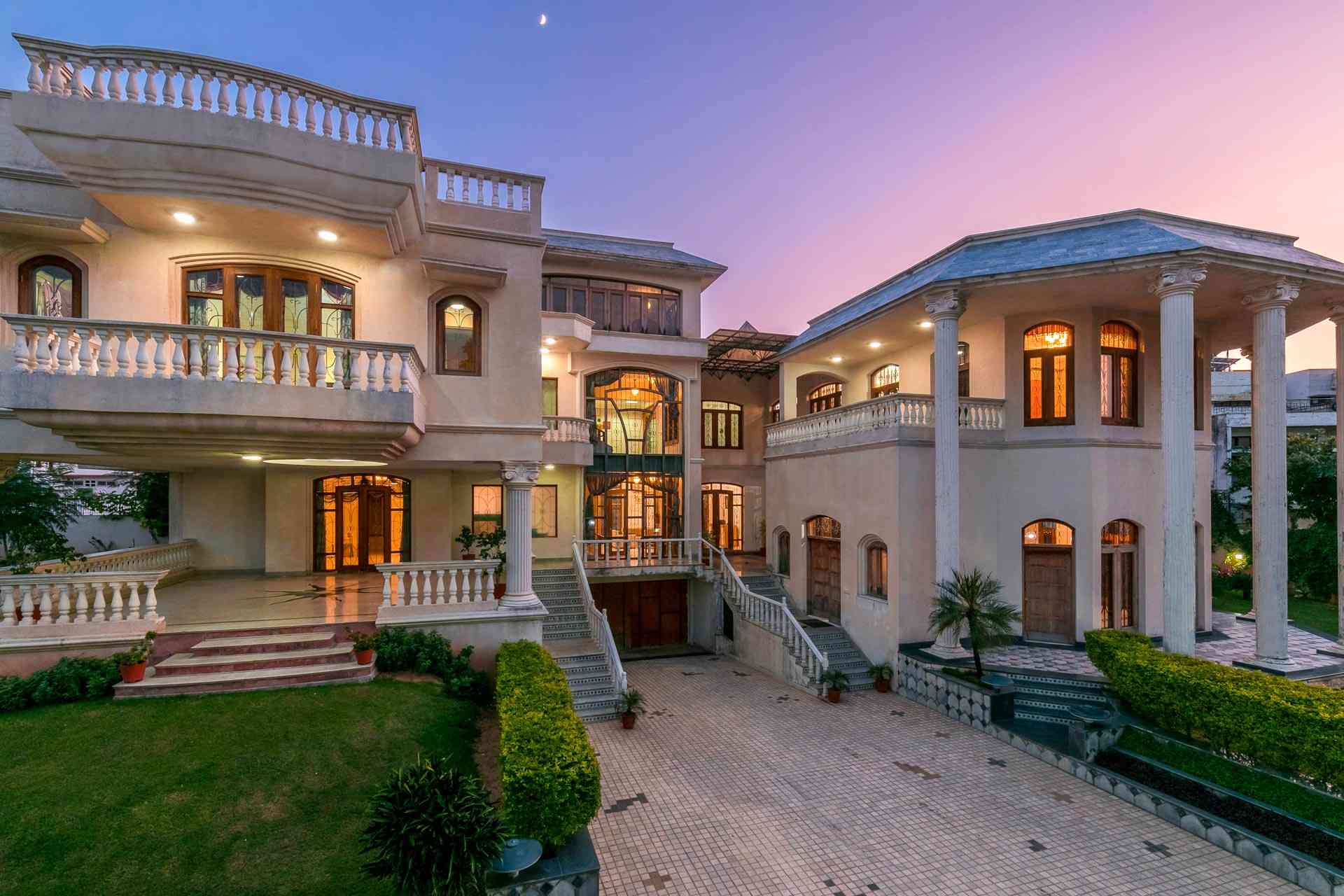
Hotels near festival venues fill first and price hardest. A private villa or homestay solves three specific Diwali problems: you can perform Lakshmi Puja properly, you can cook and eat on your own schedule, and a large family can stay together instead of splitting across floors. Rates below are base per-night starting rates — Diwali dates price higher, and inventory in these cities is genuinely thin in the second week of November.
The Ganga House, Varanasi — from ₹44,000 per night. A large riverside home built for extended families, which is the right shape for a Dev Deepawali or Diwali trip where you want everyone under one roof and a short walk to the ghats.
Krishnalaya Mansion, Jaipur — from ₹32,000 per night. A big Jaipur mansion with enough outdoor space for a rangoli and a diya setup, and close enough to the Walled City to walk into the lit bazaars in the evening. Smaller sub-units are available if your group is 6–8 people rather than 15.
Casa Artesa, Amritsar — from ₹20,000 per night. Useful for Bandi Chhor Divas because you can go to the Golden Temple late at night and come back without arranging transport around a fully booked hotel district.
Udaikot, Udaipur — from ₹10,000 per night. The most affordable way to do a Udaipur Diwali, and a good base for a couple or a family of four who want the lake city without lakefront hotel pricing.
The Foothills, Pushkar — from ₹5,000 per night. Individually bookable rooms and units, which makes it one of the few Pushkar options that still works if you decide to combine Diwali with the Camel Fair week.
Diwali Travel Tips: Booking Windows, Fireworks Rules and Air Quality
Book trains on 15 September. IRCTC’s Advance Reservation Period is 60 days, so 8 November tickets open on 9 September and the popular routes — Delhi–Varanasi, Delhi–Amritsar, Mumbai–Goa, Kalka–Shimla, the Nilgiri Mountain Railway — clear within hours. Set a reminder and book at 8:00 AM on the IRCTC portal.
Fireworks rules vary by state. India’s Supreme Court permits only certified green crackers, and Delhi-NCR has operated under time-window restrictions in recent years — typically a short morning window and a two-hour evening window on Diwali night. Rules change year to year, and several states impose their own limits.
Plan around air quality, not just weather. Delhi’s AQI regularly crosses 300 in the week after Diwali, and Kanpur, Lucknow, Patna and Amritsar all spike too. If anyone in your group has asthma or you are travelling with an infant, either travel before 8 November or pick a coastal or hill destination — Goa, Coorg, Ooty, Darjeeling and coastal Karnataka stay in the “moderate” band throughout.
Expect surge pricing on 6 and 7 November. Flight fares on Diwali-eve routes typically run 60–90% above a normal November weekday. Flying out on 5 November or back on 11 November usually saves more than any other single decision.
Carry cash. Small temple towns — Ayodhya, Pushkar, Mathura, Madurai — see UPI outages during festival load. ₹5,000 in small notes covers parking, e-rickshaws, prasad and diyas.
Check temple dress codes. The Golden Temple requires a head covering (free at the entrance). Sri Aurobindo Ashram requires silence and covered shoulders. Leather items are barred at Pushkar’s ghats. Most South Indian temples require removing footwear well before the entrance.
Frequently Asked Questions
Diwali 2026 falls on Sunday, 8 November 2026, on Kartik Amavasya. The five-day festival runs from Dhanteras on Friday 6 November through Choti Diwali on 7 November, Diwali and Lakshmi Puja on 8 November, Govardhan Puja on 9 November, and Bhai Dooj on 10 November. Since 8 November is a Sunday and a gazetted central holiday, most travellers get a natural five-day break.
Ayodhya, Uttar Pradesh is the single most spectacular option, with 2.8 million diyas lit across 56 Saryu ghats at Deepotsav on 7 November 2026. If you want equally strong celebrations with more to do, Jaipur has India’s most elaborately lit bazaars, Varanasi has the Ganga Aarti and Dev Deepawali, and Amritsar’s Golden Temple hosts Bandi Chhor Divas on the same night as Diwali.
Coorg in Karnataka, Ooty in Tamil Nadu, Darjeeling in West Bengal and Rishikesh in Uttarakhand all stay quiet through Diwali. Coorg is the quietest of the four — Kodavas traditionally observe Kaveri Sankramana and Puthari rather than Diwali. All four keep AQI in the moderate band while Delhi and much of the Indo-Gangetic plain crosses 300.
Yes for weather, no for crowds and cost. Early November gives you the year’s best conditions across most of India — 25–30 °C in the north, dry and clear in the hills, and the start of Goa’s season. But it is India’s busiest domestic travel week: flights run 60–90% above normal, trains sell out at the 60-day mark, and accommodation in festival cities books eight weeks ahead.
Two days work for a single nearby destination like Lonavala, Nainital or Mysore. Four days is the standard for a proper festival city such as Jaipur, Varanasi, Amritsar or Goa. Six days lets you do a two- or three-city circuit — Jaipur–Jodhpur–Udaipur, or Mathura–Ayodhya–Varanasi.
Diwali is celebrated on Kartik Amavasya — 8 November 2026 — as a household festival of Lakshmi Puja. Dev Deepawali falls 15 days later on Kartik Purnima — 24 November 2026 — and is specific to Varanasi, when all 84 ghats along the Ganga are lined with lamps. Dev Deepawali is the larger visual spectacle of the two.
Book train tickets on 9 September 2026, when the 60-day reservation window opens for 8 November. Book flights and accommodation by mid-September — six to eight weeks out. Villas in Goa, Lonavala, Jaipur and Udaipur typically sell out for Diwali dates by early October.
Only with a two-week gap. Diwali is on 8 November 2026 and the Pushkar Camel Fair runs from 17 to 24 November 2026, peaking on Kartik Purnima on 24 November. Pushkar is 145 km from Jaipur, so the practical options are two separate trips or one long stay — room rates in Pushkar roughly triple during fair week.
Planning Your Diwali 2026 Trip
The 25 places above split into two kinds of trip. If you want Diwali as a spectacle, go to Ayodhya, Varanasi, Jaipur, Amritsar or Goa and accept the crowds — these are the destinations where the festival is the reason to travel. If you want the long weekend without the noise, Coorg, Ooty, Darjeeling, Lonavala and Rishikesh give you the same five days off in a much quieter setting.
Either way, the timeline is the part that decides whether the trip happens: trains on 9 September, flights and stays by mid-September. Browse StayVista’s villas and homestays across all these destinations and lock in your Diwali 2026 dates before the second week of October, when festival-week inventory starts closing out.