

Sakleshpur in Monsoon 2026: The Underrated Western Ghats Escape (How to Reach From Bangalore)
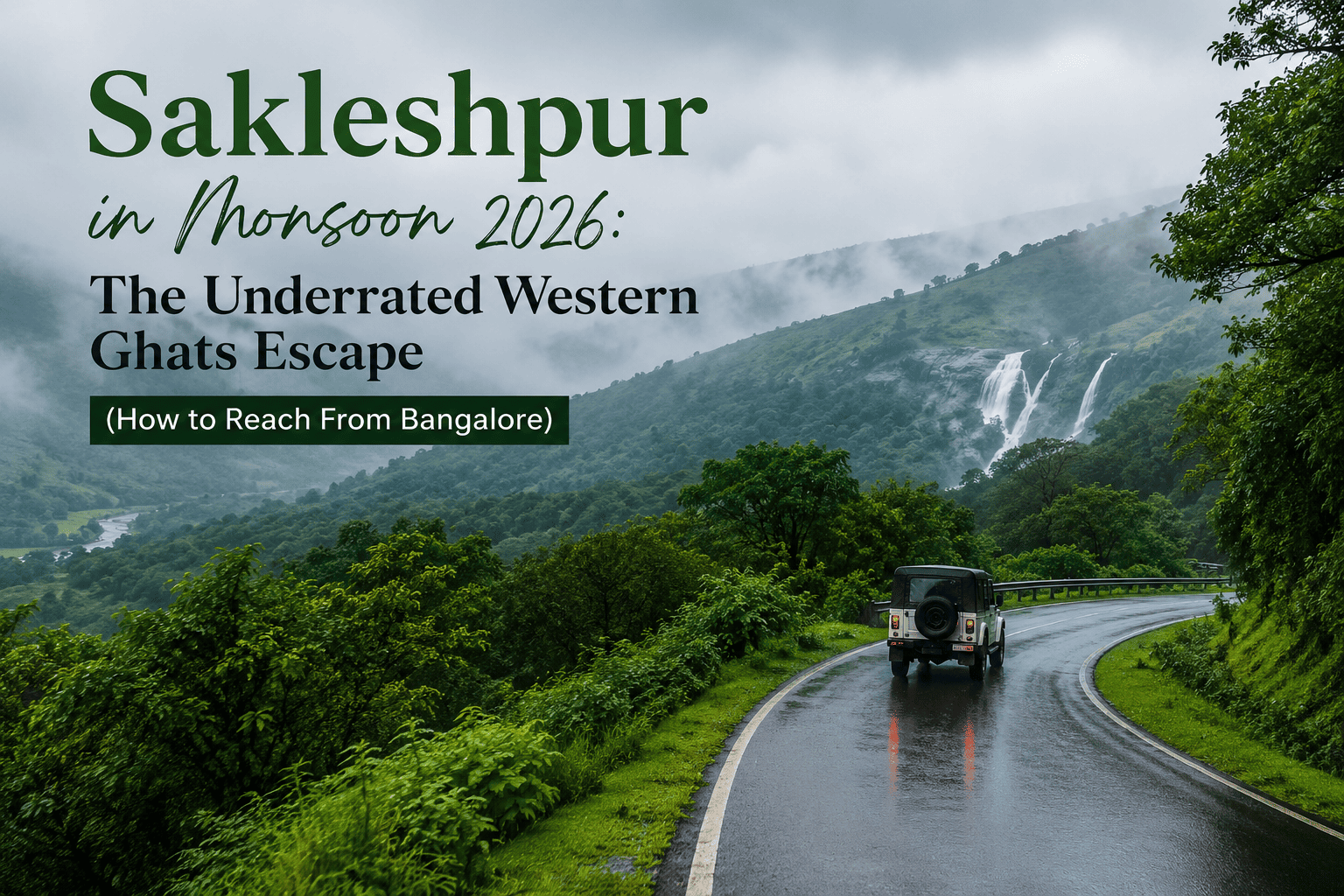
Sakleshpur, in the Hassan district of Karnataka, sits about 220 km from Bangalore (a 4–5 hour drive via NH75) and is one of the Western Ghats’ most rewarding monsoon destinations. Between June and September the region’s seasonal waterfalls, railway viewpoints, coffee estates and trekking trails come alive, yet it stays far less crowded than Coorg or Chikmagalur. You can reach it by self-drive car, the scenic Bangalore–Mangalore railway line, or bus, and two days is enough to cover the main sights.
When people in Karnataka think about monsoon holidays, destinations like Coorg and Chikmagalur usually receive most of the attention. Yet tucked into the Western Ghats is a hill town that surprises first-time visitors with its greenery, coffee estates, railway bridges, waterfalls and mountain views. That place is Sakleshpur — and during the rains it is at its most cinematic.
Unlike many famous hill stations that become crowded during the rainy season, Sakleshpur still keeps a slower pace. The roads wind through coffee plantations, clouds drift across the hills, and waterfalls appear in spots that stay dry for much of the year. For anyone looking beyond the usual tourist circuit, Sakleshpur in monsoon feels refreshingly different. It’s also close enough to Bengaluru to work as a genuine two-day break, which is exactly why our guests often book a last-minute villa or homestay in Sakleshpur when the forecast turns wet.
In this Blog
Sakleshpur Quick Info
| Best time to visit | June–September for waterfalls & mist; October–February for clear-sky trekking |
| How to reach from Bangalore | Self-drive / cab via NH75 (~220 km), train, or KSRTC bus |
| Nearest airport | Mangaluru International Airport (~135 km); Kempegowda International Airport, Bengaluru (~240 km) |
| Nearest railway station | Sakleshpur Railway Station (in town); Hassan Junction (~40 km) |
| Ideal duration | 2 days / 1 night (weekend) |
| Budget range | ₹3,000–₹7,000 per person for a weekend (excl. premium stays) |
Why Sakleshpur in Monsoon Is Worth Visiting?

Credits: Ben Abraham via Unsplash
The arrival of monsoon completely changes the appearance of Sakleshpur. Seasonal waterfalls begin flowing, forests turn a deeper green, and the hills stay wrapped in drifting cloud for much of the day. The temperature usually hovers in a comfortable 18–25°C range through the rains, which makes long plantation walks and short treks pleasant rather than exhausting.
What makes Sakleshpur particularly interesting is that it packs several different experiences into one compact destination. Within a 50 km radius you can see waterfalls, panoramic viewpoints, railway heritage, working coffee plantations and trekking trails — without long transfers between them. It also feels less commercial than Karnataka’s more famous hill stations, so you get the Western Ghats at a slower pace.
Citation capsule: Sakleshpur receives heavy southwest-monsoon rainfall between June and September, which is precisely when its seasonal waterfalls — including Magajahalli and Manjehalli — flow at full volume, making the monsoon the single best window to visit.
Bangalore to Sakleshpur Distance and Travel Information
One reason Sakleshpur keeps gaining popularity is its accessibility. The Bangalore to Sakleshpur distance is approximately 220 kilometres via NH75, and most visitors complete the drive in around four to five hours, depending on traffic out of the city and rain conditions on the ghats.
The route runs through Nelamangala, Kunigal, Channarayapatna and Hassan before climbing into the hills. It’s comfortable, well-maintained highway for most of the way. During monsoon the drive itself becomes part of the experience, with green hills and roadside streams appearing along the route — though you should expect slower going on the final ghat sections when visibility drops.
| Mode | Approx. distance / time | Notes |
| Car (self-drive / cab) | ~220 km · 4–5 hrs | Most flexible for sightseeing; via NH75 |
| Train | ~5–6 hrs | Scenic Bengaluru – Mangaluru line; book early in peak monsoon |
| Bus (KSRTC / private) | ~5–6 hrs | Budget-friendly; regular departures from Bengaluru |
How to Reach Sakleshpur From Bangalore
Many people planning a first visit ask how to reach Sakleshpur. There are three practical options:
- By car: The most convenient choice. Self-drive cars and rental vehicles give you the flexibility to reach attractions that are spread across the region and often poorly served by public transport.
- By train: Sakleshpur lies on one of South India’s most scenic railway routes. The journey passes forests, tunnels and mountain sections that many passengers remember long after the trip — a worthwhile experience in itself during the rains.
- By bus: Regular KSRTC and private buses connect Bengaluru with Sakleshpur, making the town accessible for budget-conscious travellers.
The ease of Bangalore–Sakleshpur connectivity is a big part of why the destination keeps winning over weekend travellers.
Places to Visit in Sakleshpur (With Timings, Fees & How to Reach)
Here are seven attractions that capture the best of Sakleshpur in monsoon, each with the practical details you need to plan around the weather. Distances below are measured from Sakleshpur town centre.
1. Manjarabad Fort
One of the most distinctive places to visit near Sakleshpur in monsoon, Manjarabad Fort is famous for its star-shaped design — visible only from above. Built during the reign of Tipu Sultan in 1792, the fort was positioned to monitor the trade routes that once passed through the Western Ghats, and it still houses an underground arsenal and water cisterns. During the rains, cloud frequently rolls across the ramparts, creating dramatic, fast-changing views; on clear breaks you get panoramas over the surrounding hills.
- Entry fee: Free entry (ASI-protected monument)
- Timings: ~6:00 AM – 6:00 PM
- Best time to visit: Early morning for mist, or late afternoon for softer light
- How to reach: ~6 km from Sakleshpur on NH75 toward Bangalore; a short, steep flight of steps leads up from the highway parking
- Time required: 1–1.5 hours
- Ideal for: History lovers, photographers, families
- Pro tip: The star shape only reads properly in photos taken from the highest bastion — climb to the top corner and shoot downward. Steps get slippery in rain, so wear grippy shoes.
2. Bisle View Point (Bisle Ghat)
Bisle View Point is often considered one of Karnataka’s finest mountain viewpoints. Unlike viewpoints that face a single valley, Bisle opens up wide views across several ranges of the Western Ghats — including the Kumara Parvatha, Pushpagiri and Doddabetta ranges on a clear day. It sits within the Bisle Reserve Forest, an important ecological corridor connecting forest regions across Karnataka, so you’re as likely to hear the forest as photograph it.
- Entry fee: Free (forest checkpost may apply a nominal vehicle/permit charge)
- Timings: Daylight hours; avoid after dark
- Best time to visit: Monsoon for moving cloud; mid-morning once mist lifts slightly
- How to reach: ~45–48 km from Sakleshpur via the Bisle Ghat road toward Kukke Subramanya; drive only — no public transport to the viewpoint
- Time required: Half a day including the drive
- Ideal for: Photographers, couples, nature lovers
- Pro tip: Cloud cover can completely whiteout the view; wait 15–20 minutes for a gap rather than leaving immediately. Carry your own water and snacks — there are no reliable shops near the point.
3. Jenukal Gudda (Honey Rock Hill)
Jenukal Gudda, also called Honey Rock Hill, is among the highest peaks in the region. The name comes from the wild honeybee colonies that historically occupied its rocky faces. During monsoon the trail turns especially scenic as cloud streams across the slopes, and the summit rewards you with sweeping views over surrounding hills and valleys. It’s a moderate trek best done with a local guide, as trails can be faint in poor visibility.
- Entry fee: Free; guide/forest charges may apply
- Timings: Start early; complete the descent before late afternoon
- Best time to visit: Post-monsoon (October–February) is safest for trekking; monsoon is greener but slippery
- How to reach: ~30–35 km from Sakleshpur; drive to the base near Bisle and trek up
- Time required: 4–6 hours round trip
- Ideal for: Trekkers, adventure seekers, fit groups
- Pro tip: Leeches are common on monsoon trails here — carry salt or anti-leech spray and tuck trousers into socks. Hire a local guide; the route is easy to lose in fog.
4. Magajahalli Waterfalls
Magajahalli Waterfalls becomes one of Sakleshpur’s most attractive sights during the rains. Unlike permanent falls that run year-round, Magajahalli swells dramatically after rainfall, which is exactly why so many travellers time their visit to the monsoon. A short trek through plantation and forest leads to the base, and the final stretch can be muddy. Its relative accessibility makes it a favourite for families as well as photographers.
- Entry fee: Nominal local/parking charge may apply
- Timings: Daylight hours; best before noon
- Best time to visit: July–September at peak flow
- How to reach: ~20 km from Sakleshpur; drive to the trail point, then a 20–30 minute walk
- Time required: 2–3 hours including the walk
- Ideal for: Families, photographers, first-time visitors
- Pro tip: Don’t enter the water during heavy flow — rocks are slippery and currents strengthen fast after upstream rain. Mornings are quieter for clean photos.
5. Agani Gudda Peak
Agani Gudda (Aagani Peak) is steadily gaining attention among adventure enthusiasts. The route combines forest sections, open grasslands and ridge views, and in monsoon the surrounding greenery is at its most striking. Because it’s still off the mainstream radar, it tends to stay refreshingly uncrowded compared with better-known trekking peaks in the Ghats.
- Entry fee: Free; local guide charges may apply
- Timings: Daytime trek; start by mid-morning at the latest
- Best time to visit: Late monsoon and post-monsoon for the greenest grasslands with firmer footing
- How to reach: Within ~25–30 km of Sakleshpur; drive to the base village and trek
- Time required: 3–5 hours round trip
- Ideal for: Trekkers, nature photographers, small groups
- Pro tip: Carry layers — ridge-top wind plus rain can feel cold quickly. A dry-bag for your phone and camera is worth it on this trail.
6. Hemavathi Reservoir (Gorur Dam)
The Hemavathi Reservoir, formed by the Gorur Dam across the Hemavathi River, adds a different dimension to a Sakleshpur trip. While waterfalls and viewpoints dominate most itineraries, the reservoir offers wide open-water views framed by rolling hills. During the monsoon months, rising water levels make the scenery especially attractive, and the calm setting suits travellers who want a slower, scenic stop on the drive between Hassan and Sakleshpur.
- Entry fee: Free; photography near dam structures may be restricted
- Timings: Daylight hours
- Best time to visit: Late monsoon when the reservoir is full
- How to reach: Near Gorur, ~45–55 km from Sakleshpur via Hassan
- Time required: 1–2 hours
- Ideal for: Couples, families, scenic-drive lovers
- Pro tip: Combine it with your Hassan leg rather than a separate trip. Avoid restricted/security zones around the dam wall and stick to the public viewing areas.
7. Sakleshpur Railway Bridge Viewpoints (Green Route)
One feature that sets Sakleshpur apart from many hill destinations is its railway heritage. The line through the region — part of the historic Hassan–Mangaluru route — includes a remarkable run of bridges, tunnels and stone-arch structures threading through dense forest. The stretch is popularly called the “Green Route,” and in monsoon the combination of cloud, mist and greenery makes for some of the most atmospheric railway scenery in South India.
- Entry fee: Free to view from public/road points
- Timings: Daylight only for safety
- Best time to visit: Monsoon, for mist and full waterfalls beside the tracks
- How to reach: Various viewpoints around Donigal and along the Sakleshpur–Subramanya line; ask your homestay for the current safe access points
- Time required: 2–4 hours
- Ideal for: Photographers, railway enthusiasts, nature walkers
- Important note: Walking on live railway tracks/tunnels is dangerous and has been officially restricted — do not trek on the active line. Enjoy the bridges from designated viewpoints and road crossings instead.
How the Attractions Connect: Distances & Route Planning
Sakleshpur’s sights fall roughly into two clusters, which makes route planning simple:
- Town & highway cluster (short hops): Manjarabad Fort (~6 km) and the in-town railway viewpoints sit close to the centre — easy to pair on a half day.
- Bisle Ghat cluster (half-day drive): Bisle View Point (~45–48 km), Jenukal Gudda (~30–35 km) and Agani Gudda lie along or near the Subramanya road, so combine them in one direction on a single day.
- Hassan / Gorur side: Hemavathi Reservoir (~45–55 km) and Magajahalli Waterfalls (~20 km) work well on the day you arrive from or depart toward Bangalore.
Because monsoon roads slow you down, we suggest picking one cluster per day rather than zig-zagging across the region.
Suggested Sakleshpur Monsoon Itinerary

Credits: Mohamed Meqat Mani via Unsplash
Because monsoon roads are slow and the weather can change by the hour, the plans below are built around realistic timings, one attraction cluster per day, and built-in buffer for rain. Adjust start times based on how early you leave Bangalore, and always confirm trail conditions with your homestay host the night before.
A standard Sakleshpur monsoon trip needs two days and one night — day one covers the town-and-highway sights (Manjarabad Fort, Magajahalli Waterfalls, railway viewpoints), while day two is best kept for the Bisle Ghat cluster and a short trek.
1-Day Itinerary (if you’re short on time)
A single day works only if you start from Bangalore very early or are already staying nearby. Keep it to the compact town-and-highway cluster and skip the long Bisle drive.
| Time | Plan |
| 5:30–6:00 AM | Depart Bangalore via NH75 (carry breakfast/coffee for the road) |
| 10:30 AM | Reach Manjarabad Fort; climb up for the star-shaped layout and valley views |
| 12:00 PM | Drive to Magajahalli Waterfalls; short trek to the base |
| 1:30 PM | Lunch on a coffee estate or at a local Malnad eatery |
| 3:00 PM | Railway-bridge viewpoints near Donigal for misty monsoon photos |
| 4:30 PM | Quick plantation walk or coffee tasting |
| 5:30 PM | Begin the drive back, or check in if staying the night |
Tip: A day trip means roughly 9–10 hours on the road for ~4 hours of sightseeing. We strongly recommend at least one overnight stay to make the journey worthwhile.
2-Day / Weekend Itinerary (recommended)
This is the sweet spot for most travellers — enough time to cover both clusters without rushing through the rain.
Day 1 — Town & waterfalls
- 6:00 AM: Leave Bangalore via NH75.
- 10:30 AM: Stop at Manjarabad Fort en route into Sakleshpur.
- 12:30 PM: Check in to your homestay or villa; freshen up over a welcome coffee.
- 1:30 PM: Home-cooked Malnad lunch at your stay.
- 3:00 PM: Guided coffee-plantation walk to learn how the beans are grown and processed.
- 4:30 PM: Drive out to Magajahalli Waterfalls at peak flow.
- 7:00 PM: Unwind on a covered balcony as the rain rolls across the hills; dinner at the stay.
Day 2 — Bisle Ghat & trek
- 6:30 AM: Early start with a packed breakfast toward the Bisle Ghat cluster.
- 8:00 AM: Bisle View Point; wait out the cloud for a clear gap over the ranges.
- 9:30 AM: Short trek up Agani Gudda or Jenukal Gudda (weather and trail conditions permitting; hire a local guide).
- 1:00 PM: Late lunch back near town.
- 3:00 PM: Stop at Hemavathi Reservoir near Gorur on the way out if time allows.
- 3:30 PM: Begin the drive back to Bangalore.
3-Day / Extended Itinerary (for a slower trip)
If you can spare a third day, slow the pace right down and add the experiences most weekenders miss.
- Day 1: As above — Manjarabad Fort, check-in, plantation walk and Magajahalli Waterfalls.
- Day 2: The full Bisle Ghat cluster — Bisle View Point, a guided trek up Jenukal Gudda, and unhurried photography along the way; evening at leisure.
- Day 3: A relaxed morning of birdwatching or a village visit, then a half-day trip toward Hassan for the Hoysala temples at Belur and Halebidu (around 35–55 km from Sakleshpur) before driving home.
This extra day turns a fast weekend into a proper Western Ghats slow-travel break — and is the version we most often recommend to families and couples who want to actually relax rather than tick boxes.
Where to Stay in Sakleshpur: Homestays & Villas
Accommodation plays a big role in the Sakleshpur experience. A homestay in Sakleshpur for a family trip lets you enjoy local hospitality while staying close to nature, and many properties sit right inside working coffee plantations. Families tend to love the open spaces, home-cooked Malnad meals, and the chance for children to see plantation life up close.
1.Cicada, Chikmagalur

Perched atop a scenic hill in the heart of Chikmagalur’s lush coffee country, Cicada by StayVista is a contemporary farmhouse that seamlessly blends rustic charm with modern luxury. Surrounded by verdant coffee estates and rolling green landscapes, the villa offers a tranquil escape where mornings begin with the aroma of fresh coffee and panoramic views of the Western Ghats. With its spacious high-ceilinged living spaces, beautifully manicured lawns, cosy fireplaces, birdwatching opportunities, and serene outdoor seating areas, Cicada is designed for travellers seeking both comfort and connection with nature. Whether you’re planning a peaceful family retreat, a getaway with friends, or simply a break from city life, this elegant hilltop villa promises an unforgettable Chikmagalur experience.
A private villa in Sakleshpur is increasingly popular with groups and couples who want more privacy. Many of our villas overlook plantations, hill slopes or valleys, so during monsoon you can watch the rain roll across the hills from a covered balcony or outdoor seating area — far more personal than a standard hotel room.
2.Mandimane, Chikmagalur

Tucked away amidst the misty hills and coffee plantations of Chikmagalur, Villa Mandimane by StayVista is a secluded retreat that captures the region’s timeless charm. Surrounded by sweeping mountain vistas and lush greenery, the villa offers an atmosphere of complete tranquillity, making it ideal for slow mornings, meaningful conversations, and memorable getaways with loved ones. Thoughtfully designed with earthy interiors, elegant living spaces, a private pool, manicured lawns, and inviting outdoor sit-outs, the villa blends contemporary comfort with the beauty of its natural surroundings. Whether you’re seeking a peaceful family holiday or a refreshing escape with friends, Villa Mandimane promises an immersive experience in the heart of Karnataka’s coffee country.
Planning a monsoon escape?
Browse handpicked villas and homestays in Sakleshpur with plantation views, private decks and rain-friendly indoor spaces — ideal for a slow Western Ghats weekend. Prefer somewhere nearby? Compare options in Coorg and Chikmagalur too.
3.Bean and Brick, Chikmagalur

Bean & Brick Villa by StayVista is a charming retreat where contemporary comfort meets the timeless beauty of the Western Ghats. Surrounded by lush greenery and serene landscapes, the villa offers spacious interiors, thoughtfully designed bedrooms, a sprawling garden, and cosy outdoor spaces perfect for slow mornings and starlit evenings. Gather around a bonfire, enjoy unhurried conversations in the open air, or simply soak in the peaceful ambience that defines life in the hills. Ideal for families and groups of friends, Bean & Brick Villa provides a refreshing escape from the bustle of city life, inviting guests to experience Chikmagalur at its most tranquil and authentic.
Sakleshpur vs Chikmagalur vs Coorg in Monsoon
The comparison between Sakleshpur, Chikmagalur and Coorg in monsoon is an increasingly common one for Karnataka travellers. Here’s how they stack up:
| Factor | Sakleshpur | Chikmagalur | Coorg |
| Distance from Bangalore | ~220 km | ~245 km | ~265 km |
| Crowd levels (monsoon) | Low | Medium | High |
| Best for | Quiet plantation stays, railway scenery | Coffee, peaks (Mullayanagiri) | Family tourism, infrastructure |
| Tourism infrastructure | Developing | Moderate | Well-established |
Coorg is known for established tourism, coffee estates and family holidays. Chikmagalur draws visitors interested in mountain peaks and coffee country. Sakleshpur blends elements of both while usually seeing smaller crowds — and that relative lack of commercialisation remains its biggest draw.
Things to Do in Sakleshpur Beyond Sightseeing

Credits: Chirag K via Unsplash
While natural attractions dominate most itineraries, there’s plenty more to do at a relaxed pace. Things to do in Sakleshpur include plantation walks, birdwatching, photography, short treks, village visits and railway photography. Coffee-plantation experiences are especially rewarding, letting you see how one of Karnataka’s major crops is grown, processed and roasted. The mix of gentle outdoor activity and quiet surroundings makes Sakleshpur suitable for very different kinds of travellers — from solo photographers to multi-generation family groups.
Why Sakleshpur Is Perfect for a Monsoon Road Trip From Bangalore in 2026
Road trips remain one of the best ways to experience the Western Ghats. The Bengaluru–Sakleshpur route passes through scenery that becomes particularly attractive during the rains, and unlike destinations that eat up most of your weekend in transit, Sakleshpur lets you actually spend time at the destination. That balance of short travel time and big payoff has made it a preferred choice for 2026 weekend breaks.
Conclusion: Why Sakleshpur in Monsoon Deserves More Attention
Sakleshpur in monsoon combines almost everything travellers want from a rainy-season holiday: waterfalls, viewpoints, coffee estates, trekking trails and comfortable weather — while staying less crowded than its better-known neighbours. From Manjarabad Fort and Bisle View Point to Magajahalli Waterfalls and plantation stays, the region delivers a lot of variety within a compact area.
For anyone searching for an underrated Western Ghats escape, its accessibility, natural beauty and relaxed atmosphere make Sakleshpur a strong contender for the best monsoon weekend getaway from Bangalore in 2026. When you’re ready, book a villa or homestay in Sakleshpur and let the rain do the rest.
The Bangalore to Sakleshpur distance is approximately 220 kilometres via NH75, and the drive usually takes around four to five hours depending on traffic and monsoon road conditions.
You can reach Sakleshpur by car, train or bus. Driving via NH75 is the most flexible option for sightseeing, while the Bengaluru–Mangaluru train route offers one of South India’s most scenic journeys.
Yes. Sakleshpur in monsoon offers full-flow waterfalls, misty viewpoints, lush coffee estates and dramatic railway scenery, which makes June to September one of the best times to visit Karnataka’s Western Ghats.
A two-day trip is enough to cover the main attractions and enjoy the slow plantation atmosphere. Day one suits the town and waterfall sights, and day two works well for the Bisle Ghat viewpoints and a short trek.
The monsoon months between June and September are most popular because waterfalls and greenery are at their peak. For clear-sky trekking with firmer trails, October to February is a comfortable alternative.
Yes. A homestay in Sakleshpur for family holidays provides comfortable accommodation, home-cooked meals and easy access to nature-based experiences like plantation walks and accessible waterfalls.
It depends on your preference. Sakleshpur is quieter and less commercial with standout railway scenery, while Coorg has more established tourism infrastructure and dining options. For a peaceful monsoon weekend, many travellers prefer Sakleshpur.
Top things to do in Sakleshpur include visiting Manjarabad Fort, Bisle View Point and Magajahalli Waterfalls, photographing the railway bridges, trekking Jenukal Gudda or Agani Gudda, and taking a guided coffee-plantation walk.