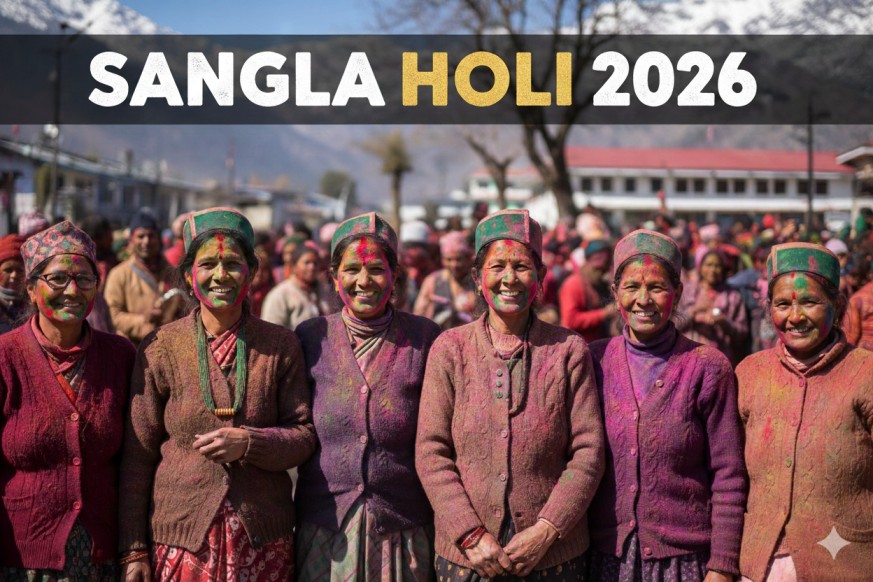
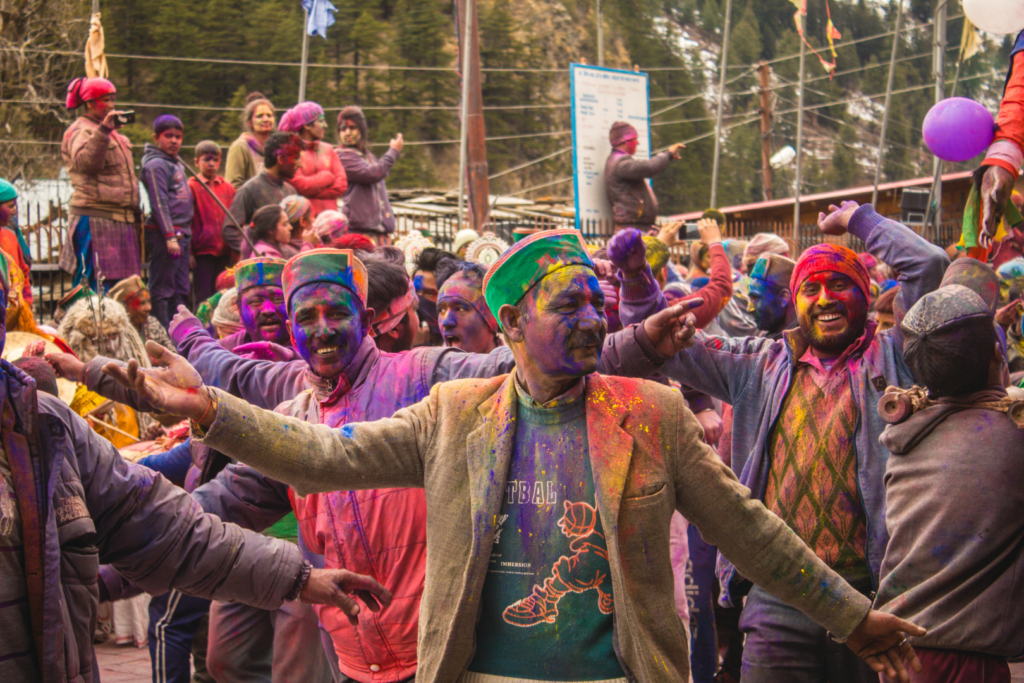
Sangla Holi 2026 is a traditional Himalayan Holi celebrated in Sangla Valley, Himachal Pradesh, where masked dancers, deity processions, and ritual bonfires replace loud colour parties. If you are planning to attend Sangla Holi in 2026, this guide explains the dates, rituals, itinerary, costs, and travel planning details you need to know before visiting Kinnaur.
Sangla Holi 2026 will take place approximately from March 1–4, 2026 in Sangla, Kinnaur district, during the traditional Faguli Sangla festival.
In this Blog
What is Sangla Ki Holi?
Before planning Sangla Holi 2026, understand what makes it different.
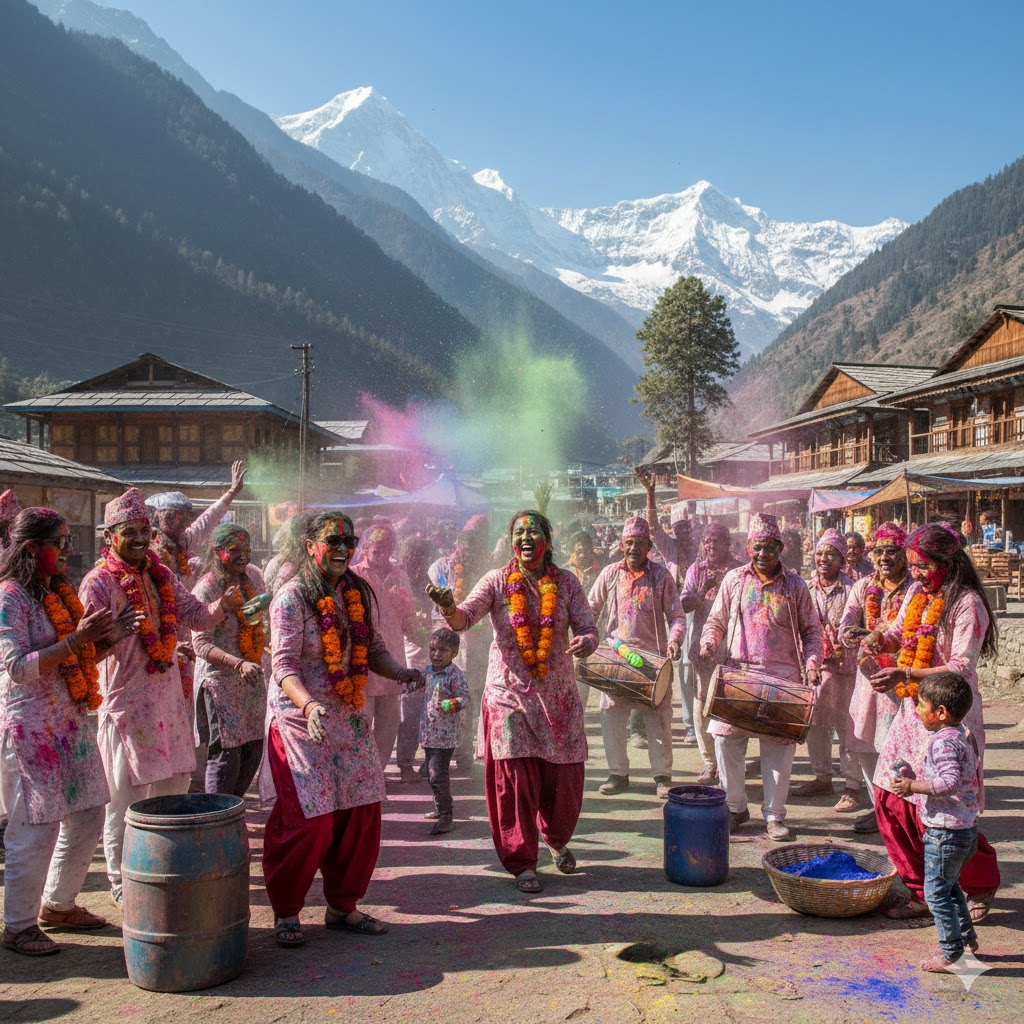
Sangla Ki Holi, also known as Faguli Sangla, is a tribal spring festival in the Kinnaur Valley, where Holi blends with ancient rituals honoring Himalayan deities. Unlike mainstream Holi celebrations, Kinnaur Holi 2026 is not centered around colour throwing but around purification ceremonies and symbolic dances.
Sangla Festival in March 2026 is a ritual Holi celebration in Himachal Pradesh where villagers worship local deities, perform masked Phagli dances and celebrate the arrival of spring.
Why Travellers Choose Sangla Holi 2026 Over Pushkar or Mathura
Search behaviour shows users compare destinations before booking.
Here’s why Sangla Holi 2026 stands out:
Feature
Urban Holi
Sangla Ki Holi
Crowd Size
Thousands
Entire village
Music
DJs
Folk drums
Colours
Chemical
Natural herbal
Participation
Spectator
Community inclusion
Setting
Cities
Baspa Valley Himalayas
Travellers attend Sangla Holi 2026 for:
Authentic tribal culture
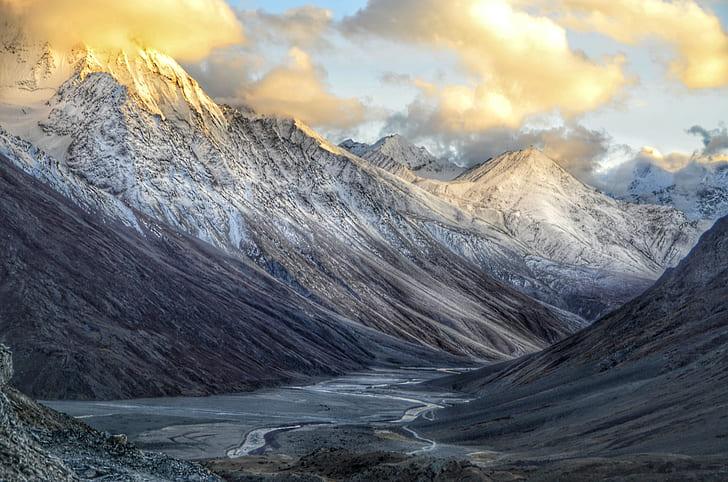
Snow-capped Himalayan backdrop
Smaller, safer gatherings
Cultural immersion instead of chaos
While most travellers know Holi celebrations like Mathura or Pushkar, the diversity of the festival across regions is much wider. From royal processions in Rajasthan to tribal rituals in the Himalayas, the experience varies drastically across the country.
Read the complete guide to Holi celebrations across India
What are the Sangla Holi dates in 2026 and Itinerary? – Festival Timeline
Understanding the full schedule is essential for planning Kinnaur Holi 2026.
Date
Celebration
March 1
Temple rituals begin
March 2
Deity processions
March 3
Holika Dahan bonfire
March 4
Main Holi celebration
The main celebration day of Sangla Holi will be March 4, but travellers should arrive by March 2 to fully experience Faguli Sangla rituals.
Cultural Meaning Behind Faguli Sangla
While mainland India celebrates Holi as the victory of Prahlad over Holika, Sangla Ki Holi carries additional agricultural and tribal symbolism.
The festival marks:
End of winter isolation in Kinnaur
Blessing of crops before the sowing season
Removal of negative spirits from the valley
Reaffirmation of village unity
When you attend Sangla ki Holi, you are witnessing a living Himalayan tradition — not a curated tourist event.
What Actually Happens During Kinnaur Holi 2026
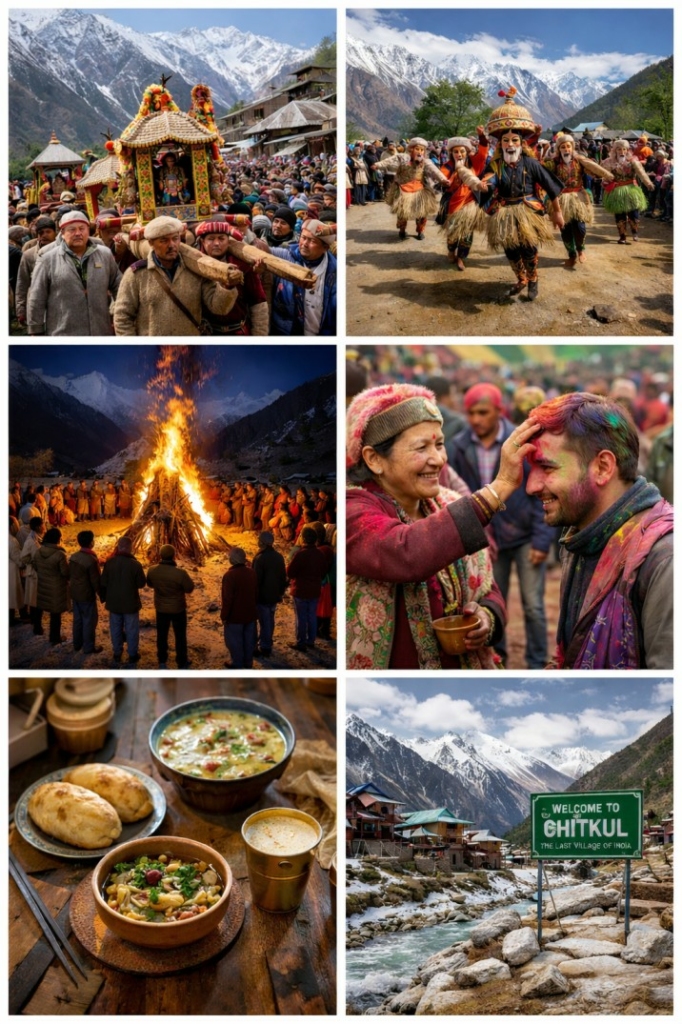
1. Phagli Mask Dance
Men wear carved wooden demon masks and perform ritual dances symbolising good defeating evil.
2. Deity Processions
Local gods are carried through the village in decorated palanquins.
3. Holika Dahan in Sangla
Bonfire ritual performed in open grounds near the Baspa Valley.
4. Natural Colour Ceremony
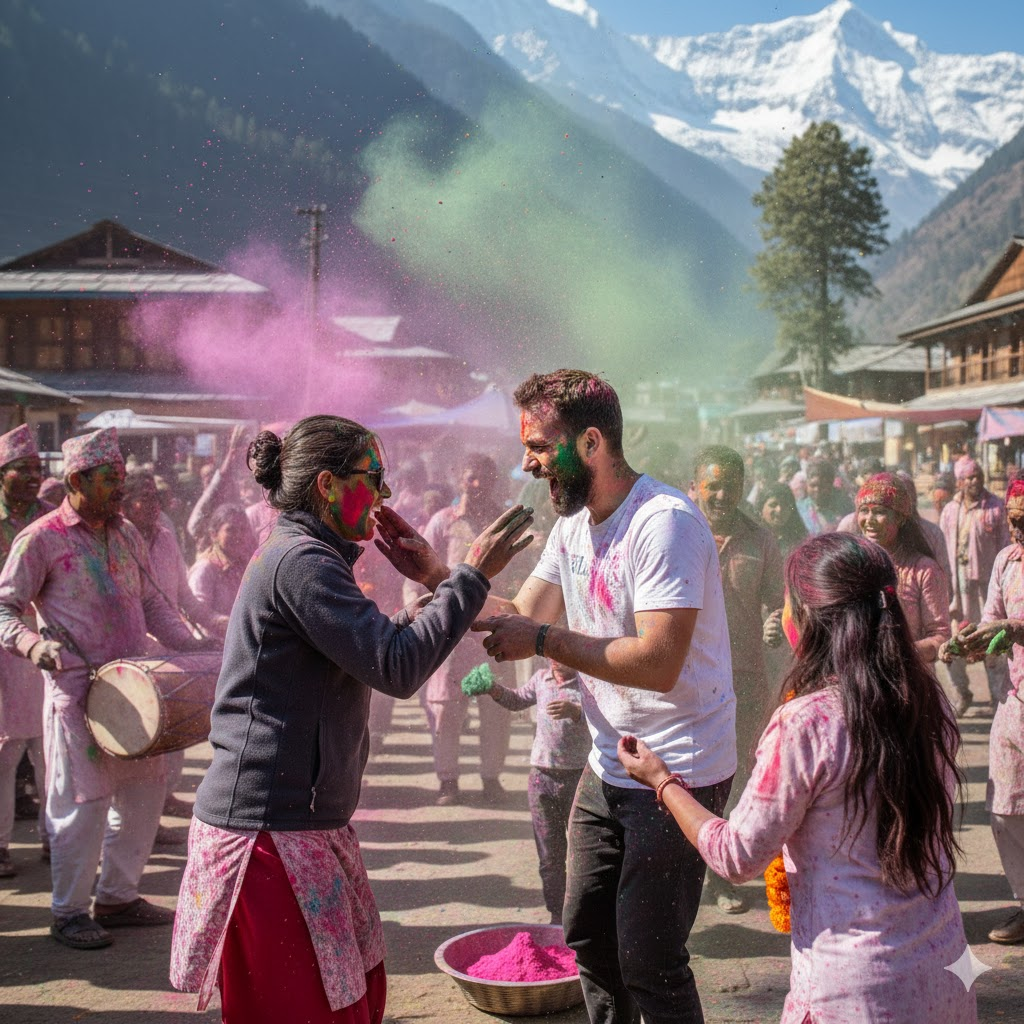
Colours are applied respectfully — often, elders bless visitors first.
Unlike city Holi events, Sangla Holi in Spiti focuses on ritual dances, deity worship and community feasts rather than aggressive colour throwing.
Who Should Attend Sangla Holi 2026
Ideal for:
Cultural travellers
Mountain lovers
Offbeat festival seekers
Photographers
Not ideal for:
Party seekers
Luxury-only travellers
Those uncomfortable with cold weather
This is not an easy-access festival.
To attend Sangla Holi 2026, you must:
Travel via Shimla and NH5
Adjust to altitude (~8,900 ft)
Prepare for 0°C nights
Book early due to limited stays
But in exchange, you experience one of the most authentic versions of Sangla Ki Holi in India.
How to Reach Sangla for Sangla Holi 2026 (Routes, Permits & Travel Strategy)
Planning transport properly is the difference between enjoying Sangla ki Holi and getting exhausted before it even begins.
Sangla is located inside the Kinnaur tribal belt of Himachal Pradesh at an altitude of ~8,900 ft. There is no direct train or airport access, so every traveller must complete the last stretch by road.
The most practical route to attend Kinnaur Holi in March is Delhi → Shimla → Sangla via the Hindustan-Tibet Highway (NH5).
Sangla altitude: 8,900 ft. Most travellers ignore this and feel sick on festival day.
Correct Strategy
Stay one night in Shimla before going to Sangla.
Benefits:
Reduces headaches
Improves sleep
Prevents fatigue
Helps enjoy rituals
Spending one night in Shimla before attending Sangla Holi 2026 significantly reduces altitude sickness risk.
Weather Conditions During Sangla Holi in 2026
Time
Temperature
Day
2°C – 7°C
Night
-5°C – 0°C
Snow
Patchy possible
You will experience winter mornings and spring afternoons during Faguli Sangla.
Best Time to Book Travel to Sangla in Spiti
Accommodation in Sangla is limited.
Booking Window
Ideal: 30–45 days before the festival
Late bookings: very difficult
Travellers should book transport and stays at least one month before Sangla Holi due to limited village capacity.
Practical Travel Itinerary for Sangla ki Holi
To comfortably attend Sangla Ki Holi:
Reach Shimla first
Rest one night
Drive the next morning
Reach 2 days before Holi
Keep a buffer day after the festival
This approach maximizes the enjoyment of Sangla Holi 2026 rather than just rushing through it.
What Actually Happens During Sangla Holi 2026 — Day-Wise Festival Experience
The celebration of Sangla Holi unfolds over multiple days — preparation rituals, deity processions, masked dances, bonfire ceremonies and finally the colour celebration during .
Most travellers expect one Holi day. In reality, the festival builds slowly — and that gradual buildup is the experience.
Day 1 — Arrival & Village Preparation Rituals
You’ll notice something unusual immediately: There are no decorations, banners or event stages.
Because it is not organized for visitors — it happens for the gods.
What You See
Villagers gathering at temples
Elders discussing ritual order
Traditional woollen attire is worn all day
Drums occasionally sound in the distance
What It Means
This day is about inviting local deities into the village before Kinnaur Holi begins.
Travellers often think nothing is happening — but culturally, everything has already started.
Day 2 — Deity Processions & Ramayana Performances
This is when the Sangla festival in March 2026 becomes visually surreal.
Suddenly, the entire village begins moving together.
Ramayana Procession Sangla
Men carry decorated palanquins representing village gods. People follow them across narrow lanes and open grounds.
You don’t stand outside the procession. You walk with it.
Nati & Phagli Dance (Masked Ritual Dance)
Performers wear:
carved wooden masks
colourful robes
grass skirts
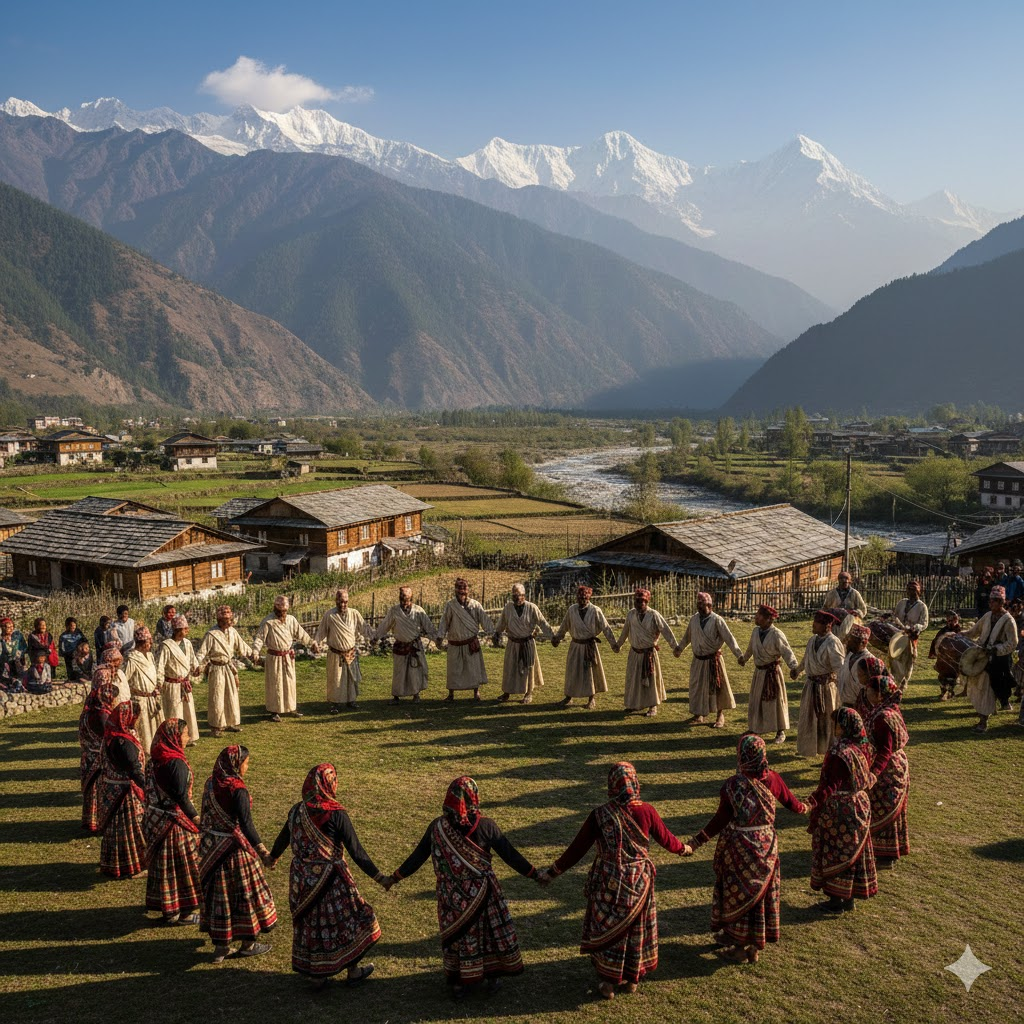
They dance in circles for hours to drum rhythms.
The Phagli dance during symbolises the defeat of evil spirits and protection of the valley’s crops.
The dance gradually becomes faster, and the crowd’s energy changes from calm observation to collective participation.
Day 3 — Baspa Valley Bonfire (Holika Dahan Night)
This night feels very different from the city version of Holika Dahan.
There is no shouting, no countdown.
A large bonfire is lit in the open ground near the valley.
Baspa River Bonfire Holika Dahan
Villagers circle the fire slowly while drums echo against mountains.
People throw symbolic offerings — not just wood, but intentions for the coming agricultural season.
Holika Dahan during Sangla Holi 2026 is a purification ritual where the entire community participates rather than a spectator event.
This is the most spiritual night of the festival.
Day 4 — Main Day of Sangla Holi 2026 (Colours & Community Feast)
Morning feels quiet — almost like nothing will happen.
Then, gradually, colours appear.
Natural Gulaal Kinnaur Tradition
Colours are herbal and applied gently.
No one throws colour on you randomly. Usually, an elder applies the first colour to your forehead — a sign you’re accepted as a guest.
Community Meal — Siddu & Chhang Feast
After colours, the celebration shifts to food.
Typical festival dishes:
Siddu (steamed wheat bread)
Thukpa soup
Chhang (local drink)
The food sharing ritual during Kinnaur Holi 2026 is as important as the colour ceremony because the festival celebrates community bonding.
You won’t feel like you attended a festival. You’ll feel like you were hosted.
Is It Safe to Participate in?
Yes — and this is why many travellers prefer it.
Reasons:
Community-controlled environment
No aggressive colour throwing
Respectful interaction
Families present everywhere
Sangla Holi 2026 is considered one of the safest Holi celebrations in India due to strong local participation and absence of intoxicated crowds.
What Travellers Usually Feel (Expectation vs Reality)
Expectation
Reality at
Colour chaos
Calm rituals
Loud celebration
Slow immersion
Quick festival
Multi-day experience
Watching event
Becoming part of it
By the end, most visitors don’t describe it as Holi — they describe it as belonging to a village for a few days.
Why the Experience Feels Different
Because the festival is not performed for tourists.
You adapt to it — it doesn’t adapt to you.
That’s the exact reason Sangla Holi stays memorable long after louder celebrations fade.
Cost, Packages & Booking Strategy for Sangla Holi in 2026
The average budget to attend Sangla Holi 2026 ranges between ₹18,000–₹30,000 per person depending on whether you choose a package or DIY trip.
Many travellers overestimate the cost because the location feels remote — but group travel actually makes Kinnaur Holi 2026 affordable.
Group trips are the most common way to attend because:
Accommodation is limited
Roads are complex
Festival timings are unpredictable
Typical Package Inclusions
Volvo (Delhi–Shimla)
Tempo traveller to Sangla
4–5 nights stay
Breakfast & dinner
Local coordinator
Permit assistance
Festival participation support
Average Cost
Start City
Cost
Delhi
₹18,000 – ₹28,000
Mumbai
₹22,000 – ₹35,000
Packages are safer than DIY travel for Sangla festival March 2026 due to difficult mountain roads and limited accommodation.
DIY Budget Breakdown for Holi in Spiti
Some travellers prefer independent planning.
Estimated Cost (Per Person)
Expense
Approx Cost
Flight Mumbai–Delhi
₹4,000–₹6,000
Volvo Delhi–Shimla
₹1,000
Taxi Shimla–Sangla
₹3,000
Homestay (4 nights)
₹8,000–₹12,000
Food
₹3,000–₹5,000
Misc & Permit
₹500
Total
₹22,000–₹30,000
DIY does not save much money — it mainly adds flexibility.
Package vs DIY — What Should You Choose?
Factor
Package
DIY
Safety
High
Medium
Flexibility
Medium
High
Effort
Low
High
Cost
Predictable
Variable
Local guidance
Yes
No
First-time visitors attending Sangla Holi in 2026 should choose a group package.
Accommodation fills quickly because Sangla is a small village.
Types of Stay
Type
Experience
Homestay
Cultural immersion
Camps
Budget travellers
Guesthouses
Balanced comfort
Homestays are preferred during Kinnaur Holi 2026 because:
families host rituals
Food is authentic
participation becomes natural
Is Sangla Holi Worth the Cost?
To answer honestly, compare it with other Holi destinations.
Destination
Experience Type
Mathura
Religious celebration
Pushkar
Party atmosphere
Barsana
Traditional rituals
Sangla
Community immersion
You don’t pay for events — you pay for access to a living culture.
Not sure if this is the right Holi for you? Different regions celebrate the festival in completely different ways — from devotional temple rituals to party atmospheres.
Because the journey is long and remote, experienced travellers often:
rest properly before entering Kinnaur
recover comfortably after the festival
Avoid overnight return travel immediately
This significantly improves the overall experience rather than rushing through it.
After Sangla Holi in 2026 — Best Places to Visit Nearby (Chitkul, Kalpa & Rakchham)
Most travellers extend their trip 2–3 days after Sangla Holi to explore Chitkul, Rakchham and Kalpa in Kinnaur Valley because roads become clearer and crowds reduce.
After the festival, the valley becomes quiet again — and this is actually when Kinnaur looks its most beautiful.
Chitkul — The Last Village of India
Distance: 22 km from Sangla Time: 45–60 minutes
This is the most searched extension after Kinnaur Holi.
Why Visit After the Festival
Snow starts melting
Roads reopen
Fewer tourists
Clear mountain views
Things to Do in Chitkul After Sangla Ki Holi
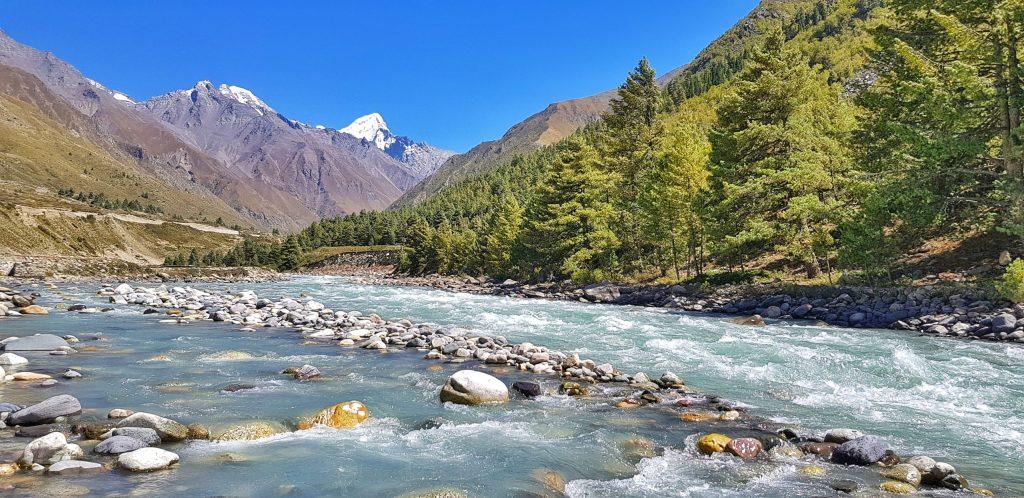
Walk along the Baspa River
Visit Mathi Mata Temple
Eat at the last dhaba of India
Explore wooden houses & orchards
Chitkul is usually accessible during Sangla festival in March 2026, with patchy snow but open roads in most years.
Rakchham — The Quiet Meadow Between Mountains
Distance: 12 km from Sangla
Most travellers skip this — but many regret it later.
Rakchham offers:
wide alpine meadows
cedar forests
peaceful recovery after festival crowds
This is the best place to relax after the intense community experience of Faguli Sangla.
Kalpa — Kinner Kailash Mountain Views
Distance: 39 km Time: 1.5–2 hours
Kalpa feels completely different from Sangla.
Where Sangla is lively during Sangla Holi, Kalpa is silent and panoramic.
What to Do in Kalpa
Sunrise view of Kinner Kailash
Rogi viewpoint walk
Narayan Nagini Temple
Monastery visit
Apple orchard strolls
Kalpa is best visited the day after Sangla Holi 2026 when skies are clearer and festival crowds have dispersed.
Suggested 3-Day Post-Festival Itinerary
Day
Plan
Day 1
Sangla → Chitkul → Rakchham stay
Day 2
Rakchham → Kalpa exploration
Day 3
Kalpa → Shimla return
This route helps travellers gradually transition from high-energy Sangla Ki Holi to peaceful mountain travel.
Will You See Snow During Sangla ki Holi in 2026?
One of the most common questions.
You will likely see leftover snow around Sangla and Chitkul during Kinnaur Holi in 2026, but heavy snowfall blocking roads is uncommon.
Typical Early March Conditions
Cold mornings
Sunny afternoons
Patchy snow on slopes
Clear mountain views
This timing is actually ideal — winter scenery without extreme weather.
Weather After the Festival
Place
Day Temp
Night Temp
Sangla
2–7°C
-5°C
Chitkul
0–5°C
-8°C
Kalpa
3–10°C
-2°C
Pack winter clothing even after Spiti Holi ends.
Safety Guide for Sangla Holi 2026 (Travel + Festival)
Holi in Sangla is considered one of the safest Holi celebrations in India due to strong community participation and absence of chaotic crowds.
However, the travel requires planning.
Road Safety for Kinnaur Holi
The biggest risk is not the festival — it’s the mountain highway.
NH5 / Hindustan–Tibet Highway Risks:
Narrow cliffside sections
Occasional falling rocks
Long drive hours
No night-driving safety
Safety Strategy
Travel only during daylight
Avoid self-driving unless experienced
Keep one buffer day
Check local road updates before departure
Self-driving to Sangla festival in March 2026 is not recommended for first-time Himalayan travellers due to narrow mountain roads.
Festival Etiquette During Sangla Ki Holi
This is a living cultural ceremony — not a tourist event.
Do:
Accept colour respectfully
Dress modestly
Ask before photographing elders
Follow local crowd movement
Don’t:
Force colour on anyone
Interrupt ritual dances
Enter temple spaces without permission
Treat it like a party festival
Respect is the currency that allows you to fully experience Faguli Sangla.
Packing List for Sangla Holi 2026
Early March temperatures during Holi festival in Sangla range between -5°C and 7°C — proper winter layering is essential.
Essential Clothing
Thermal inner layers
Down jacket
Wool cap
Gloves
Warm socks
Waterproof shoes
Personal Care
Sunscreen (high altitude UV)
Lip balm
Moisturizer
Sunglasses
Basic medicines
Optional
Organic colour
Power bank
Cash (ATMs limited)
Is Sangla Holi Safe for Solo Travellers?
Yes — but with structure.
Why It’s Safe
Small village
Strong community presence
Families everywhere
No intoxicated mass crowds
Extra Tip
Solo travellers should:
Join small group transfers
Avoid late-night walks outside the village core
Inform the host about the travel schedule
Frequently Asked Questions for Holi in Spiti 2026
When is Sangla Holi 2026?
Holi in Sangla will be celebrated approximately between March 1 and 4, 2026, during the traditional Faguli Sangla festival.
How cold is Kinnaur during Holi in 2026?
Daytime: 2°C–7°C Night: -5°C to -8°C Cold but manageable with proper layering.
Is there snowfall during Sangla Ki Holi?
Light snow patches may remain in higher areas like Chitkul, but heavy snowfall blocking the festival is rare in early March.
How many days are required for planning a trip to Sangla Holi in 2026?
Minimum 6 days, including travel. Ideal 8 days, including post-festival exploration.
Is Sangla Holi better than Pushkar Holi?
It depends on preference. Pushkar offers a party atmosphere; Sangla Holi 2026 offers cultural immersion and community participation.
What is the altitude of Sangla?
Approximately 8,900 ft above sea level.
Should You Attend Sangla ki Holi in 2026?
Go if you want:
A slower, meaningful Holi
Himalayan scenery
Authentic tribal rituals
Smaller gatherings
Cultural immersion
Skip if you want:
Loud parties
Large crowds
Easy-access transport
Luxury infrastructure inside the village
What You Take Back From Faguli Sangla
You won’t return with drenched clothes.
You’ll return with:
Stories of masked dances
Memory of mountain drums
Taste of Siddu & Chhang
And the feeling of having belonged somewhere — briefly.
That’s what makes Sangla ki Holi worth the effort.
If you’re curious about the dramatic stick-play tradition in Uttar Pradesh, read our detailed guide on Lathmar Holi in Barsana.
They may say that I talk too much, but hey, that’s the extrovert life (think Hermione trying to explain Hogwarts History to fellow witches and wizards). When I’m not chatting travel dreams into existence, I’m brewing up blog adventures for StayVista. With chai in one hand and wanderlust in my heart; travelling and shaping vacation concepts into great itineraries is something that thrills me. Writing a perfectly planned getaway for someone? It’s like sharing a delicious box of Bertie Bott’s Every-Flavour Beans – you never know what reaction you’ll get (but hopefully, mostly happy surprises!). So, buckle up fellow explorers, and grab your broomsticks – because we’re off to explore somewhere incredible with every post!