
Sao Joao 2026: Goa’s Monsoon Well-Jumping Festival – Date, Traditions & Where to Stay

Sao Joao is Goa’s exuberant monsoon feast honouring the birth of St. John the Baptist, and it is the only celebration in the world that marks the occasion by leaping into water-filled wells. In 2026, Sao Joao falls on Wednesday, 24 June 2026 — the same date every year. Revellers wear flower-and-fruit crowns called kopels, drink cashew feni, and gather for decorated boat parades (sangodd). The village of Siolim in North Goa’s Bardez hosts the most famous celebration. For travellers, North Goa villages like Siolim, Assagao, and Anjuna make the best base.
In this Blog
What Is Sao Joao?
Sao Joao (pronounced sao-zhuum, Portuguese for “St. John”) is Goa’s joyful Catholic feast celebrating the birth of St. John the Baptist, the prophet who baptised Jesus. According to Goa Tourism, it is the most spirited of the monsoon festivals — a day when entire villages spill into the streets, wells, and rivers in a riot of flowers, music, and feni.
The festival’s most striking custom is well-jumping. According to the Gospel of Luke (1:44), the infant John “leapt for joy” in his mother Elizabeth’s womb when she met the pregnant Mary. Goans re-enact that leap of joy quite literally — by jumping into water-filled wells. As the São João Festival entry on Wikipedia notes, Goa is the only place in the world where the feast is marked this way.
Worth quoting: Sao Joao is the only celebration of St. John the Baptist in the world that is marked by leaping into wells — a literal re-enactment of the Gospel account of John “leaping for joy” in the womb.
The timing is no accident. June 24 lands at the onset of the southwest monsoon, when Goa’s wells, ponds, and rivers brim with fresh rainwater — making the leap both possible and symbolic of renewal.
When Is Sao Joao 2026? Exact Date and Timing
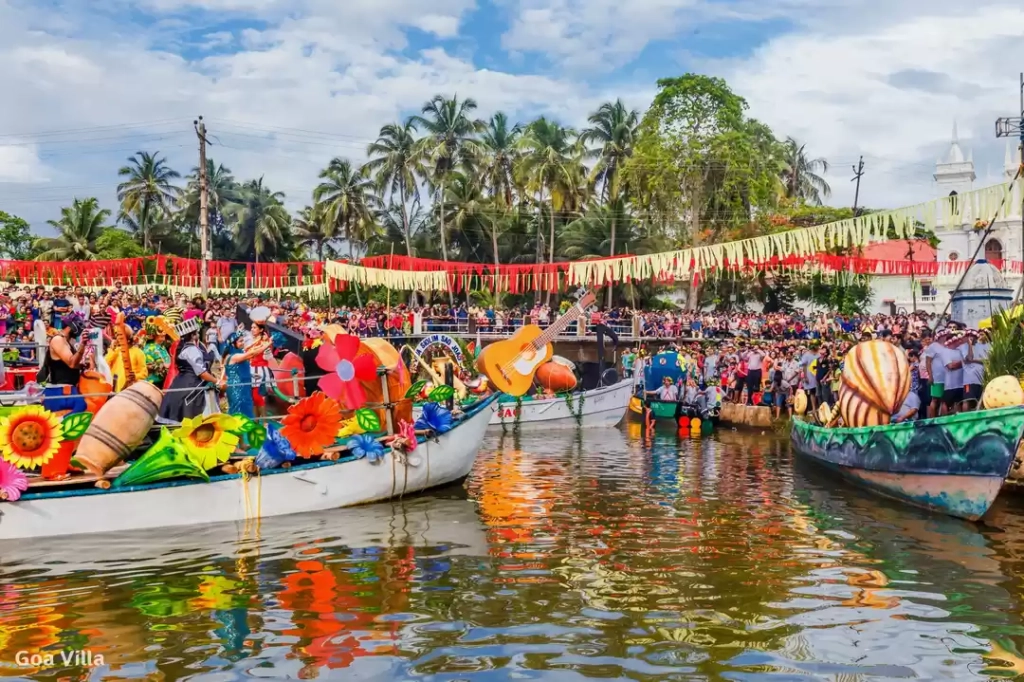
Sao Joao 2026 falls on Wednesday, 24 June 2026. Unlike many Indian festivals that follow a lunar calendar, Sao Joao is fixed: the Catholic Church celebrates the Nativity of St. John the Baptist on June 24 every year, a feast recorded as far back as 506 AD.
Celebrations typically run across the full day. Mornings begin with Mass at the village church; by late morning and afternoon, the well-jumping, house-to-house visits, and feni-fuelled merriment take over. In Siolim, the headline boat parade on the river unfolds through the afternoon.
| Detail | Information |
| Sao Joao 2026 date | Wednesday, 24 June 2026 (fixed annually) |
| What it celebrates | The Nativity (birth) of St. John the Baptist |
| Religion | Roman Catholic (Goan-Portuguese tradition) |
| Signature ritual | Jumping into water-filled wells and ponds |
| Most famous celebration | Siolim boat parade (sangodd), Bardez, North Goa |
| Other key villages | Baga, Anjuna, Calangute, Candolim, Assagao |
| Season | Southwest monsoon (lush, rainy, green) |
| Nearest airports | Manohar/Mopa (GOX), Dabolim (GOI) |
| Nearest railhead | Thivim |
| Ideal trip duration | 3–4 days |
Because the date is fixed, you can plan a 2026 monsoon trip around it well in advance — a rare luxury with Indian festival travel.
The Story Behind the Leap: Why This Festival Matters
Sao Joao sits at the crossroads of faith, fertility, and the monsoon — three threads that explain why Goans celebrate it with such abandon.
The religious root. The feast honours St. John the Baptist, cousin and forerunner of Jesus. The well-jumping symbolises both John’s joyful leap in the womb and the act of baptism itself — immersion in water as spiritual cleansing.
The monsoon root. June 24 coincides with the season’s first heavy rains. For an agrarian society, full wells meant survival, and Sao Joao became a thanksgiving for the life-giving monsoon. Jumping into a brimming well is, in part, a celebration of water’s return.
The fertility and family roots. Sao Joao is closely tied to marriage and newlyweds. As Goa Tourism describes, a new son-in-law is traditionally invited to his bride’s family home, where he jumps into the nearest well and is rewarded with sweets, fruits, and feni. Families with a new baby – or a recent wedding – bring offerings called dhali to the celebrations.
Worth quoting: Sao Joao binds three Goan loves into a single day – devotion to a saint, gratitude for the monsoon, and the celebration of new marriages and new life.
Sao Joao Traditions and Rituals Explained
Sao Joao is a sensory festival – colour, sound, taste, and water all at once. Here are the customs that define it.
1. Well-Jumping
The signature ritual. Young men (and increasingly anyone game for it) leap into water-filled wells and ponds across Goan villages, shouting “Viva São João!” Wells are cleaned and filled ahead of the feast. Goa Tourism cautions that “jumping into wells is not for everyone” – depths vary, and it should only be done where locals organise it safely.
2. The Kopel (Flower-and-Fruit Crown)
Revellers wear kopels – vibrant crowns woven from seasonal flowers, leaves, and fruit, traditionally including the sanjuachi vaal, the “creeper of São João.” Making the kopel is a community activity in itself, and the most elaborate crowns are a point of village pride.
3. The Sangodd (Boat Parade)
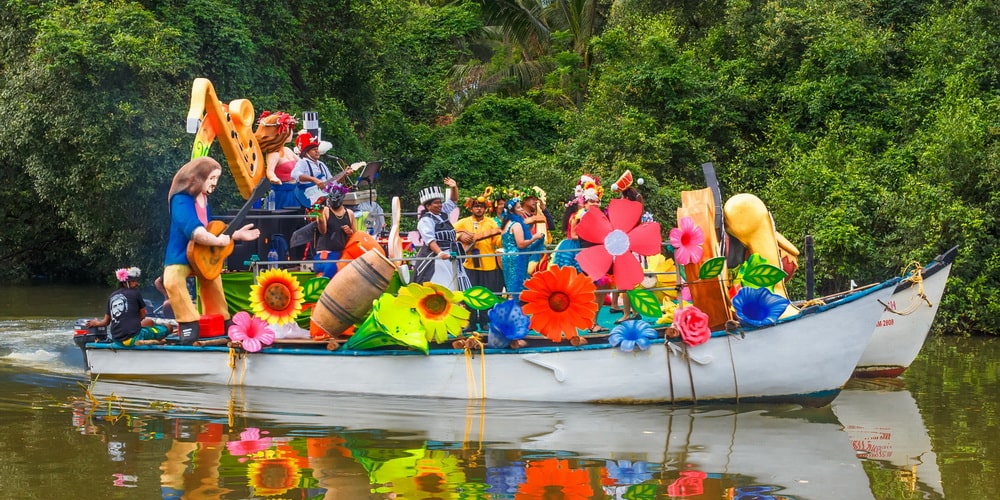
A sangodd is a decorated floating platform – often two boats tied together with bamboo to signify the union of body and soul, carrying an altar to St. John. According to Goa Tourism, villages float these down the river in a competitive, festive parade. Siolim’s is the most famous; Baga also stages a traditional sangodd.
4. Feni and Festive Food
Feni — Goa’s GI-tagged spirit distilled from cashew apples (in season during the monsoon) or coconut sap — flows freely. It is offered to well-jumpers, gifted between homes, and toasted throughout the day, alongside Goan sweets and seasonal fruit.
5. Music, Dancing, and House Visits
Traditional instruments — the ghumot (earthen drum), mhadalem, and kansallem (cymbals) — set the rhythm. Groups move house to house singing, dancing, and collecting gifts, turning whole villages into one rolling celebration.
6. Gifts to Newlyweds and New Parents
Families with a wedding or birth in the past year are honoured. The new son-in-law’s well-jump is a beloved set-piece, and dhali (baskets of fruit and seasonal produce) are exchanged as blessings for fertility and good fortune.
Where Is Sao Joao Celebrated? Best Villages in 2026
Sao Joao is strongest in the Catholic heartlands of North Goa, particularly the Bardez taluka. These are the villages to aim for.
Siolim – The Epicentre
Goa Tourism calls Siolim the epicentre of Sao Joao. The village’s boat parade on the river opposite St. Anthony’s Church is the festival’s flagship event – a competitive, beautifully decorated flotilla with kopel-making, music, and offerings from newlyweds and new parents. The organised Siolim parade is decades old, revived and grown by local teams from the early 1990s into the large event it is today. If you see only one Sao Joao celebration, make it Siolim.
Baga
Baga stages a traditional sangodd with an altar to St. John, as described by Goa Tourism — a more classic boat-festival format set against one of North Goa’s busiest beach villages.
Anjuna, Calangute, Candolim, and Assagao
These North Goa villages all celebrate Sao Joao with well-jumping, kopels, and street festivities. Assagao, quieter and heritage-rich, and Anjuna, with its lively expat-and-local mix, are particularly atmospheric.
Goa Weather in Late June: What to Expect
Sao Joao is a monsoon festival, and that shapes the entire trip. Expect warm, humid days around 29–30°C and nights of 24–26°C, with frequent heavy bursts of rain and high humidity, according to Holiday-Weather averages for June.
This is Goa at its greenest: paddy fields glow emerald, waterfalls like Dudhsagar run full, and beaches are quiet and dramatic. Rain typically comes in intense bursts rather than all-day drizzle, so celebrations carry on regardless. Pack accordingly:
• Waterproof jacket or poncho, and a quick-dry change of clothes
• Waterproof sandals or shoes you don’t mind soaking
• A dry bag for your phone, camera, and documents
• Mosquito repellent and light, breathable layers
• A spare set of clothes for the well-jumping itself
How to Reach Sao Joao Celebrations in North Goa
North Goa is well connected, and Siolim sits conveniently close to all three arrival points.
| Arrival point | Approx. distance to Siolim | Notes |
| Manohar/Mopa Airport (GOX) | ~25 km | Best airport for North Goa |
| Dabolim Airport (GOI) | ~2.5 hr drive | South Goa; longer transfer |
| Thivim Railway Station | ~18–20 km | Nearest railhead to Bardez |
Getting around in the monsoon: pre-booked taxis and app cabs are the safest option, as roads turn slippery and two-wheelers are risky in heavy rain. Build buffer time into transfers — a sudden downpour can slow everything down.
Where to Stay for Sao Joao 2026
For the best Sao Joao experience, base yourself in North Goa’s Bardez villages, ideally within easy reach of Siolim. A private villa is a smart monsoon choice: you get a sheltered, comfortable base to dry off and regroup between celebrations, plus space for a group to gather.
• Siolim – Closest to the famous boat parade; quiet, riverside, heritage-rich. The top pick for festival-first travellers.
• Assagao – Leafy, upscale, and atmospheric; an easy drive to Siolim and Anjuna.
• Anjuna – Lively and central to North Goa’s action, with strong local celebrations.
• Candolim & Calangute – More amenities and dining, slightly further from Siolim.
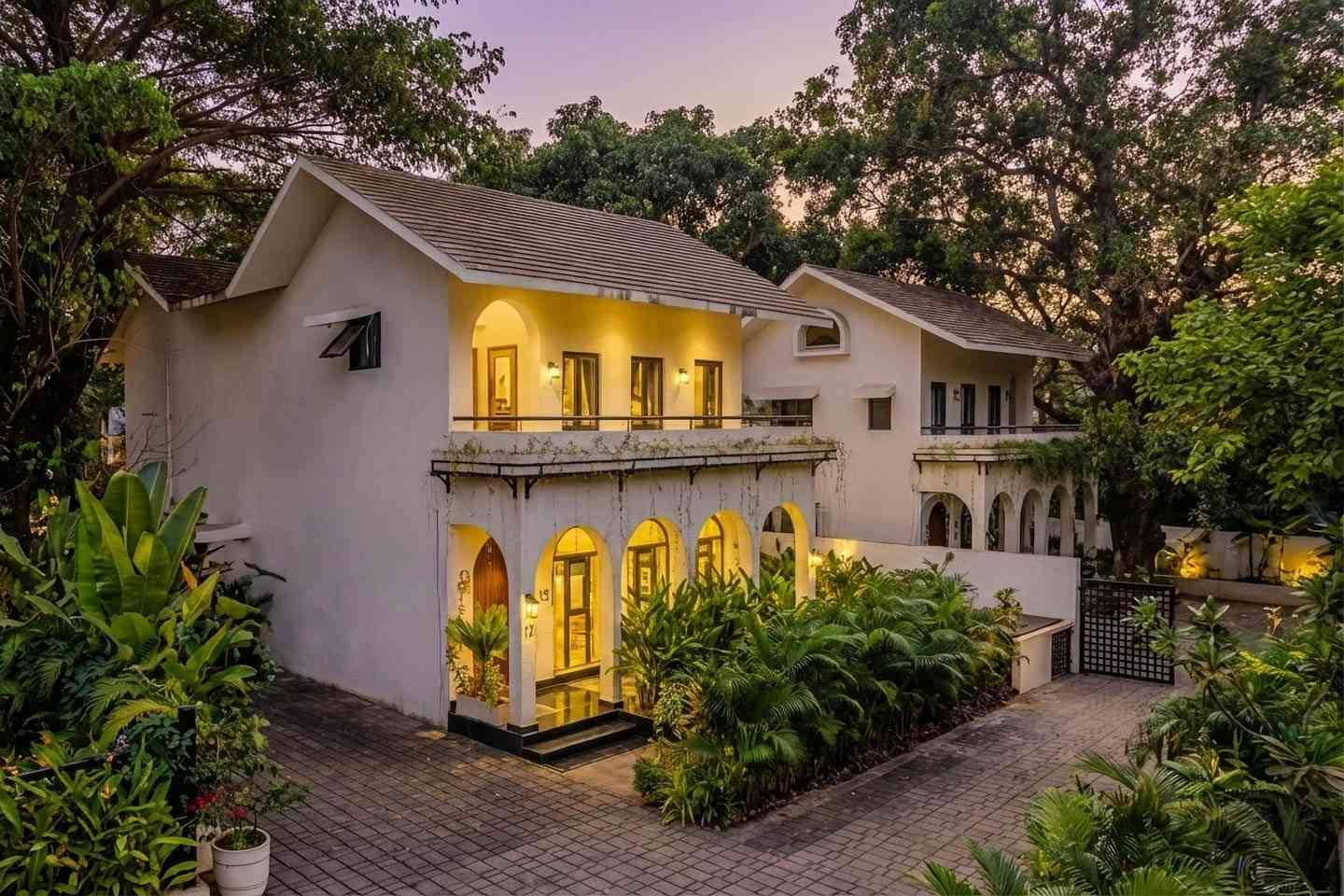
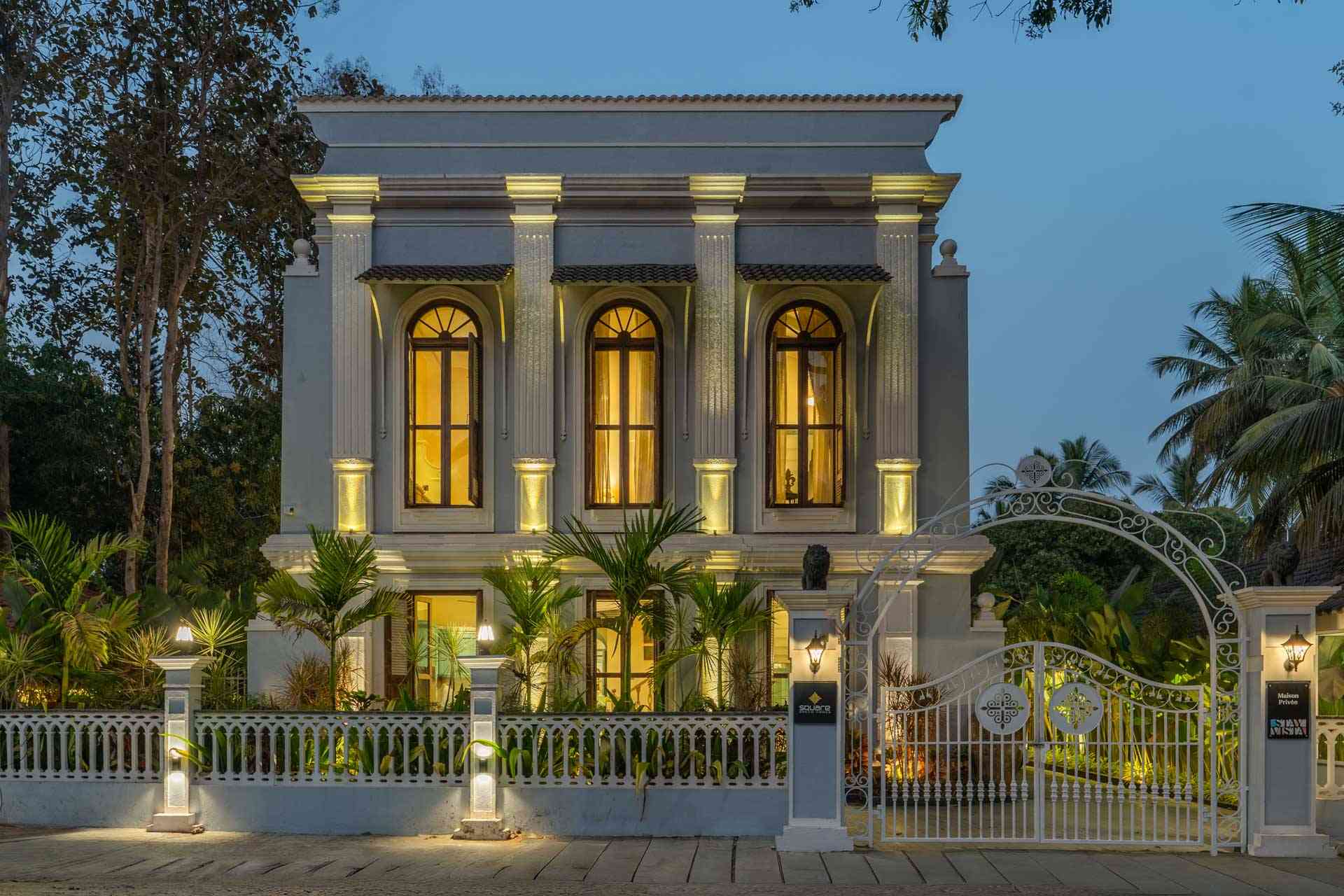

A StayVista villa in Siolim or Assagao puts you within a short drive of the sangodd while keeping you out of the monsoon crowds when you want downtime. Book early — Sao Joao weekend is a known draw, and the best North Goa villas fill fast.
How to Participate Respectfully
Sao Joao is, at heart, a religious feast – not only a party. A little awareness goes a long way.
• Attend respectfully. If you visit the church Mass or a procession, dress modestly and stay quiet during prayers.
• Ask before photographing people, especially during religious moments.
• Never jump into an unfamiliar well. Follow locals, jump only where celebrations are organised, and never after drinking. Goa Tourism is explicit that well-jumping “is not for everyone.”
• Drink feni responsibly and arrange a sober driver or cab.
• Engage, don’t just spectate. Wear a kopel, learn a few words, and let locals welcome you in — that’s the spirit of the day.
Frequently Asked Questions
Sao Joao 2026 falls on Wednesday, 24 June 2026. The festival is celebrated on June 24 every year, marking the Nativity of St. John the Baptist.
The well-jumping symbolises St. John “leaping for joy” in his mother’s womb (Luke 1:44) and the act of baptism. Goa is the only place in the world that marks the feast of St. John the Baptist by jumping into wells.
Siolim in North Goa’s Bardez taluka hosts the most famous celebration — a decorated boat parade (sangodd) on the river. Baga, Anjuna, Calangute, Candolim, and Assagao also celebrate with great fervour.
A sangodd is a decorated floating platform — often two boats tied together with bamboo, carrying an altar to St. John – paraded down the river with music and offerings during Sao Joao.
Yes, but only with experienced locals and at organised celebrations. Goa Tourism warns that jumping into wells “is not for everyone,” as depths vary. Never jump into an unknown well or after drinking.
A kopel is a crown of seasonal flowers, leaves, and fruit — traditionally including the sanjuachi vaal creeper — worn by revellers during Sao Joao.
It is the monsoon: warm (around 29–30°C), humid, with frequent heavy bursts of rain and lush green scenery. Pack waterproofs and a dry bag.
Book at least 4–6 weeks ahead. Sao Joao is a popular monsoon draw in North Goa, and the best villas near Siolim and Assagao fill quickly.
Experience Sao Joao
Sao Joao is Goa at its most uninhibited – a monsoon-soaked, feni-fuelled celebration of faith, family, and the return of the rains. With the 2026 feast falling on Wednesday, 24 June, and the famous Siolim boat parade as your anchor, it is one of India’s most joyful — and most photogenic — festivals to plan a trip around. Base yourself in a North Goa villa, wear your kopel proudly, and when a local invites you to leap, shout “Viva São João!” and jump.