
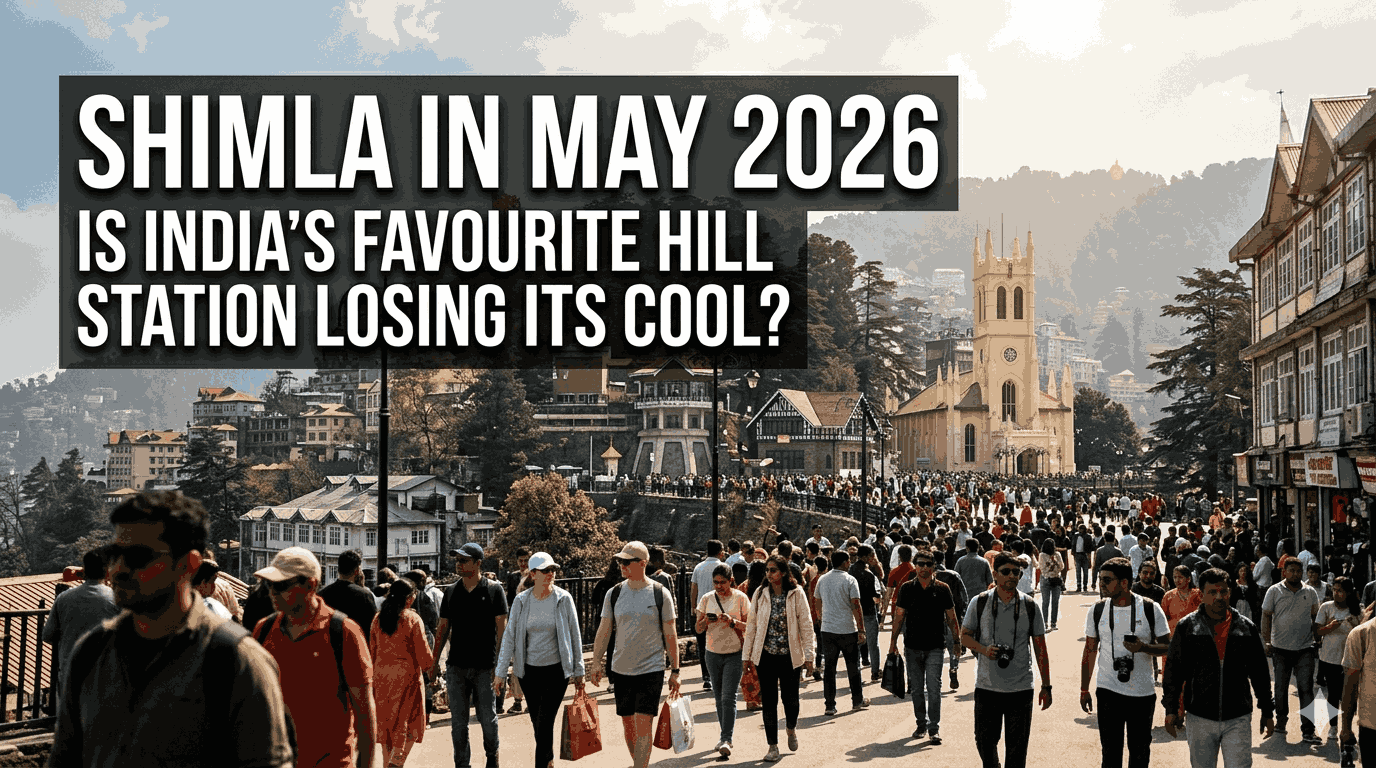
Shimla in May 2026: Is India’s Favourite Hill Station Losing Its Cool?
On March 9, 2026, Shimla’s Met Centre recorded a daytime high of 23.6°C — the kind of reading the town usually sees in mid-May, not early March. Across Himachal Pradesh, station temperatures ran 8–12°C above normal on March 6, triggering the state’s first severe heatwave warning in five years (Down to Earth, 2026). It was the warmest early-March stretch Himachal has seen in 11 years (Down to Earth, 2026).
If you’re reading this in April planning a summer escape, that March reading matters. Our team at StayVista has been tracking Shimla’s weather patterns for seven seasons, and we’ve never sent our hosts a spring advisory in early March before. So here’s the honest answer to what May 2026 will feel like in Shimla — and how to plan around it without overpaying or arriving to an unpleasant surprise.
Shimla peaked at 23.6°C in early March 2026 — roughly 7.8°C above its historical March norm, per IMD via ETV Bharat. IMD’s April–June 2026 outlook forecasts above-normal heatwave days across much of India. Expect Shimla May daytime highs of 26–29°C (vs the 23–25.5°C long-term mean), nights of 13–16°C, and occasional pre-monsoon showers. Shimla remains significantly cooler than Delhi (40–45°C) and Mumbai (33–35°C), but plan for higher-altitude stays in Mashobra, Kufri, Narkanda, or Fagu if you want genuine sweater-weather evenings. Book 4+ weeks out — weekend May tariffs are running 30–50% above March rates.
In this Blog
Quick Info: Shimla in May 2026
| Detail | What to know |
| Expected daytime temperature | 26–29°C (above long-term norm of 23–25.5°C) |
| Expected night temperature | 13–16°C |
| Rainfall | 60–80mm, pre-monsoon showers late May |
| Best time of day to explore | 6am–10am, then after 5pm |
| Ideal trip length | 3–4 days for Shimla + one higher-altitude stop |
| Nearest airport | Chandigarh (CHI), 117km / 4 hrs |
| Nearest rail | Kalka (KLK), 96km / UNESCO toy train to Shimla |
| Peak crowd window | May 10–25 weekends, avoid if possible |
What will Shimla feel like in May 2026?
Based on IMD’s April–June 2026 outlook and Shimla’s long-term May climatology, expect daytime highs of 26–29°C and nightly lows of 13–16°C — around 2–4°C warmer than the 1991–2021 May normal of 23–25.5°C (Climate-Data.org, 2024). Pre-monsoon showers are likely in the final week of May. The IMD has flagged above-normal heatwave days for India through June (Down to Earth, 2026).
For context, this isn’t the Shimla your parents wrote postcards from in 1995. Early afternoons on Mall Road, if you stand in direct sun wearing jeans, will feel closer to a mild Delhi April than the chill escape the brochure promised. Mornings and evenings? Still magical. A light fleece at 7am, sunglasses by 11am, a wind-shell by 6pm — that’s your wardrobe rhythm.
The warming isn’t coming out of nowhere. IMD station records show March 2017 already hit 25.6°C on March 28, and March 2018 and 2019 both peaked at 24.2°C. What makes 2026 different is the timing — 23.6°C arrived a full three weeks earlier in the month than in 2017.
Travellers often ask us whether a spring reading predicts summer. It doesn’t perfectly — monsoon winds and snowpack residue still cool May in ways March doesn’t — but when early-March runs this hot in a winter that already saw a rainfall deficit, the May baseline shifts up. Expect warmer, not cooler.
The March 2026 heat: what the data actually shows
March 2026 was Himachal Pradesh’s warmest early-March in 11 years (Down to Earth, 2026). Station maximums ran 8–12°C above normal on March 6, and Shimla itself peaked at 23.6°C — 7.8°C above its March baseline (ETV Bharat, 2026). For a town whose identity rests on being cool, that’s a meaningful jolt.
What’s worth understanding: this isn’t a one-week weather story. Himachal has logged 669 total heatwaves between 1984 and 2023, and the frequency is rising at roughly 0.21 heatwaves per year (Down to Earth, 2024). The 2024 summer hit a 28-day heatwave record for the April–June window — the highest ever for that period.
The heatwave onset date is also creeping earlier. In 2024, Himachal’s first heatwave arrived on May 19. In 2025, April 6. In 2026, March 6. That’s a six-week jump in two years.
Why does early-spring warming matter for May planning? Because Himachal’s winter rainfall has been running deficits for years — 2018 at -71%, 2021 at -70%, 2024 at -42%, and January 2026 at -11% (Down to Earth, 2026). Less winter snow means less snowpack feeding into the spring thaw. Less thaw means drier, sunnier, warmer April and May. It’s a cascade, not a coincidence.
Is Shimla still cooler than Delhi, Mumbai and Bangalore in May?
Yes — decisively. Delhi May afternoons can cross 45°C. Mumbai sits in the 33–35°C range with coastal humidity that makes it feel warmer. Bangalore averages 33–35°C. Shimla at 2,205m altitude stays in the 24–28°C range even in a warm year (Climate-Data.org, 2024). The basic physics still works in Shimla’s favour: roughly 1°C cooler per 165m of elevation gain.
That altitude differential is why Shimla remains the mountain city of choice for plains-dwellers. Even Shimla’s 2024 summer peak of 30.6°C felt modest compared to Una and Bilaspur, both of which crossed 40°C that same week (Down to Earth, 2024). The gap between low-altitude Himachal and mid-altitude Shimla widens every summer.
Why the plains still need the hillsTypical May afternoon temperature (°C)Shimla (2,205m)24–28°CBangalore33–35°CMumbai33–35°CDelhi40–45°CShimla’s 2,205m altitude keeps May highs 15–20°C below Delhi’s
Here’s the practical takeaway. If you’re escaping Delhi’s 44°C in May, even a warm Shimla day feels like relief. But if your benchmark is the 15°C chill your parents remember from a 1998 honeymoon, you’ll need to go higher than Mall Road — which is what the next section is about. If you’re still weighing the broader options, our where to travel in India in May 2026 guide compares Shimla against nine other weather-friendly destinations this summer.
Is Shimla’s climate actually changing? The long-term trend
Himachal Pradesh’s state-averaged annual mean temperature has risen 1.51°C over 1901–2023 (IMD HP Climate Statement 2023, 2024). The maximum temperature trend is steeper at +2.18°C per century, while minimum temperatures have climbed +0.84°C. That’s slower than the Himalayan average but faster than India’s national mean — and the direction is unambiguous.
What makes this a traveller’s story (not just a climate scientist’s) is where the warming shows up. It doesn’t hit midsummer hardest. It hits spring. Shoulder seasons — March, April, late May — are warming faster than the June peak, which means the “cool escape” window is narrowing on both ends.
Combine this with declining winter rainfall, and you get a picture that traveller-facing media rarely explains honestly. Winter 2018 saw a -71% rainfall deficit. 2021 was -70%. 2024 came in at -42%. January 2026 registered -11% (Down to Earth, 2026). Less snow in January means less snowpack in April — and less snowpack means dry, warm slopes by May.
Is this a reason not to visit? Not at all. It’s a reason to pick your altitude carefully and to book earlier in the season.
Where to stay in the Shimla belt for cooler May days
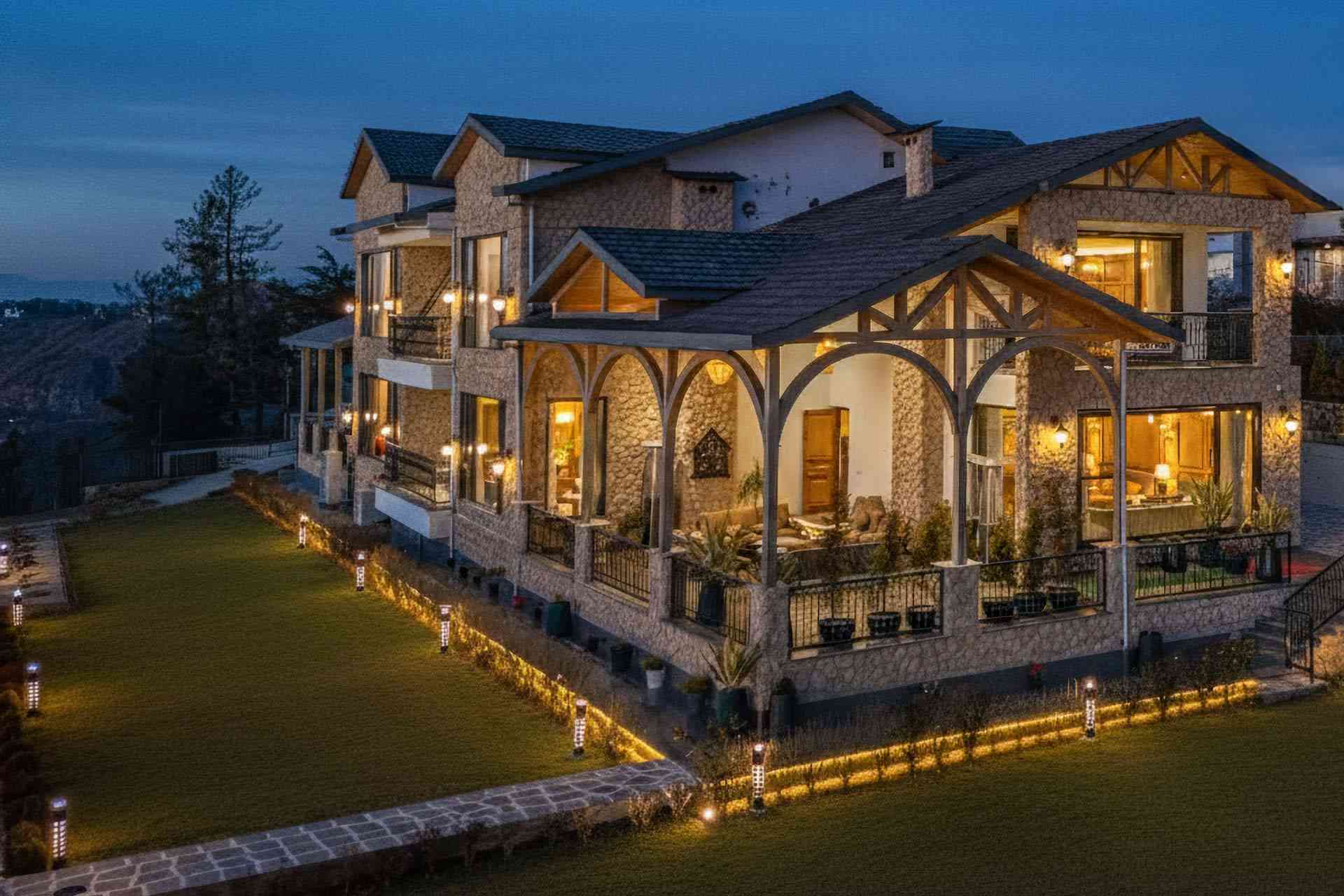
If central Shimla is running 26–28°C, pockets of the greater Shimla belt stay 3–5°C cooler. Mashobra (2,149m, wooded with dense deodar cover), Fagu (2,509m), Kufri (2,720m), Narkanda (2,708m) and Chail (2,226m with thick pine forest) offer the mountain-morning chill the brochure promised. Our hosts across these properties report evening temperatures running closer to 13–15°C even when Shimla’s Mall Road touches 28°C.
The reason is partly altitude, partly tree cover. Dense deodar canopies create micro-climates that trap cooler air at night and shade slopes during the day. Narkanda’s apple country and Kufri’s pine meadows both sit well above the urban heat effect that Mall Road now experiences with 66,000+ summer visitors crowding its lanes.
Go higher, stay cooler: Shimla belt altitude mapElevation (m) vs typical May maximum (°C)18222630°CAltitude →2,100m2,300m2,500m2,700mMall Road (2,205m, 27°C)Mashobra (2,149m, 25°C)Chail (2,226m, 24°C)Fagu (2,509m, 22°C)Narkanda (2,708m, 20°C)Kufri (2,720m, 20°C)
Here’s our altitude-by-altitude guide to choosing where in the Shimla belt to stay this May.
Mashobra (2,149m)

- Entry fee: Free (town, not a ticketed site)
- Timings: Open all day; shops open 9am–8pm
- Best time to visit: Early morning walks through deodar forest (6–9am) and evening sunset viewing (6–7pm)
- How to reach: 13km from Shimla Mall Road, 30-minute drive via the Mashobra Road; shared cabs and taxis available
- Time required: 2 days minimum to appreciate the quiet
- Ideal for: Couples, long-weekend slow travellers, writers and remote workers
- Pro tip: Book a homestay with direct deodar views rather than a conventional hotel — the tree canopy makes a genuine 2–3°C difference at night
Best Escapes:

Kufri (2,720m)

- Entry fee: Kufri Zoo (Himalayan Nature Park) ₹50 adults, ₹25 children; yak rides and horse rides priced separately
- Timings: Zoo open 10am–5pm; closed Mondays
- Best time to visit: Early morning before the 11am tour-bus crowd arrives
- How to reach: 17km from Shimla Mall Road, 45-minute drive; local buses and taxis frequent
- Time required: Half-day; combine with Fagu for a full day
- Ideal for: Families with young children, first-time Shimla visitors, photographers
- Pro tip: Skip horse rides on Kufri’s main tourist slope — go up to Mahasu Peak instead for the view without the crowds
Narkanda (2,708m)

- Entry fee: Free for town; Hatu Peak trek is free entry
- Timings: Accessible year-round; Hatu Peak best 7am–4pm for safety and visibility
- Best time to visit: Late April to mid-May for apple blossom walks (though bloom timing has been shifting earlier)
- How to reach: 65km from Shimla, 2-hour drive via NH-5; regular HRTC buses
- Time required: 1–2 days; overnight lets you see Hatu sunrise
- Ideal for: Photographers, apple-country enthusiasts, couples wanting quieter evenings
- Pro tip: Time your visit for an early-morning Hatu Peak climb — the 3,400m summit occasionally holds snow traces into early May
Chail (2,226m)

- Entry fee: Chail Palace garden free for guests; Chail Wildlife Sanctuary ₹25
- Timings: Sanctuary open 9am–5pm; palace grounds accessible to stay-guests all day
- Best time to visit: Morning cricket ground visit (world’s highest at 2,444m), then afternoon forest walks
- How to reach: 45km from Shimla, 1.5-hour drive via Kufri–Chail road
- Time required: 2 days
- Ideal for: Families, cricket enthusiasts, travellers looking for pine forest over deodar
- Pro tip: The Chail–Kufri road is slow but scenic — budget the extra time instead of cutting through Shimla
Best Escapes:

Fagu (2,509m)

- Entry fee: Free (town with meadow viewpoints)
- Timings: Open all day
- Best time to visit: Misty early mornings (5:30–7am) for the Shivalik range views
- How to reach: 22km from Shimla, 45-minute drive on the Hindustan–Tibet Road
- Time required: 1–2 days; works as a base for Kufri and Narkanda day trips
- Ideal for: Couples, photographers, quiet-seekers; not ideal for young children
- Pro tip: Shoulder dates May 18–25 see the thinnest crowds in Fagu; peak-weekend May 10–17 is best avoided
StayVista recommendation: Our Shimla-belt homestays in Mashobra, Fagu, Chail and Narkanda sit at elevations between 2,149m and 2,708m — higher and cooler than central Shimla properties, with more deodar and pine around them. If genuine evening chill matters to you in May 2026, the Shimla belt’s higher-altitude homestays are the honest answer.
The Hidden Costs of Shimla’s Changing Weather
The warming isn’t just about personal comfort. It’s already reshaping what Shimla looks like, smells like, and feels like. Himachal’s apple industry — worth roughly Rs 5,500 crore annually — is forecasting yield drops of 40–50% in the warmest years (NewsClick, 2022). The 2024 fire season logged 10,136 incidents across the state, a 14x increase over the prior year’s 704, according to the India State of Forest Report 2023 (Business Standard, 2024). Forest fires in Himachal have risen 1,339% overall per SOFR 2023 (Down to Earth, 2024).
For travellers, here’s what this translates to on the ground:
- Apple blossom windows are shifting earlier. The pink-and-white orchard walks many of our guests come for in late April and early May can already be past peak if the preceding winter was mild. If apple bloom is central to your trip, book in the last week of April rather than mid-May this year.
- Forest fire season is longer and smokier. Haze on distant ridges, occasional trail closures, and the scent of burn-off pine are all more common between late April and mid-June. Asthmatic travellers should carry inhalers and avoid peak-fire weekends if alerts are active.
- Water awareness matters. Shimla’s 2018 Day Zero crisis — when the town’s piped water effectively disappeared for 10–15 days — happened on a resident base of roughly 200,000 people. Summer tourist influx adds another 66,000 on any given peak week (Frontiers in Water, 2023; ScienceDirect, 2022). Responsible travel here isn’t optional — it’s the difference between a functioning town and another water crisis.
None of this should scare you off a May trip. It should shape your choices — stay at properties with water-efficient plumbing, don’t run long showers after hill walks, respect your host’s water routines. Our teams work with homestays on grey-water reuse and rainwater harvesting where possible.
When to book and what to pack for Shimla in May 2026
Book now — not next week. May weekend tariffs across Shimla-belt properties are running 30–50% above March rates by our team’s observation, and by mid-May the peak weekends (Mother’s Day weekend, any long weekend) are typically sold out 3 weeks ahead. Pack for the real range: 13°C mornings, 27°C afternoons, occasional rain.
[VERIFY: StayVista internal booking data — May 2025 vs May 2026 lead time and price premium across Shimla cluster properties, for inclusion as a bar chart showing booking-week vs tariff-index]
Himachal saw a record 1.80 crore domestic tourist footfall in 2024, plus 83,000 foreign visitors (HP Tourism, 2024). Shimla alone drew 25 lakh Indian tourists that year. 2026 is tracking to match or exceed — the combination of heatwave anxiety in the plains and Shimla’s continued altitude advantage is pushing booking windows earlier.
Your May 2026 packing list:
- Daytime layer: Cotton shirts, light trousers or jeans, comfortable walking shoes. Expect 26–29°C afternoons in central Shimla.
- Evening layer: Light fleece, merino half-zip, or wool cardigan for 13–16°C evenings. Avoid heavy winter jackets — they’re overkill.
- Rain protection: A packable rain shell for late-May pre-monsoon showers; an umbrella if you plan to walk Mall Road.
- Sun protection: SPF 50+ sunscreen (UV is high at altitude), sunglasses, a wide-brim hat if you burn easily.
- Accessories: Power bank, reusable water bottle, comfortable walking shoes with grip for uneven Mall Road pavers.
- For Kufri/Narkanda/higher altitudes: Add a windproof mid-layer; temperatures here can drop to 8–10°C at dawn.
Suggested itineraries:
- 2-day weekend: Day 1 — arrive Shimla, explore Mall Road and Ridge by evening. Day 2 — early morning Kufri + Mahasu Peak, lunch in Fagu, drive back via sunset at Mashobra.
- 4-day long weekend: Day 1 — Shimla arrival and Mall Road walk. Day 2 — Mashobra and Chail day loop. Day 3 — drive to Narkanda, Hatu Peak climb, overnight. Day 4 — Narkanda to Shimla via Fagu, departure.
StayVista recommendation: Check availability across our Shimla-belt homestays if you’re booking for May 2026 — most of our higher-altitude properties in Mashobra, Fagu, Chail and Narkanda still have shoulder-week dates open, though peak weekends (May 10–17) are selling fast.
Cooler alternatives if Shimla doesn’t work for you in May 2026
If higher-altitude Shimla pockets still feel too warm or too crowded, you’ve got genuine options. Each offers a distinct experience for a traveller who wants guaranteed May coolness or a different mountain character altogether. For a broader shortlist of destinations that stay below 25°C through May, see our guide to the 13 coolest hill stations in India this May — four of the five picks below appear there with full altitude and climate detail.
Kasauli (1,927m)
- Entry fee: Free (cantonment town; some monasteries request ₹10–20 contribution)
- Timings: Cantonment walks best 6am–6pm; avoid military zones after dusk
- Best time to visit: May mornings for pine-forest trails; sunset at Sunset Point
- How to reach: 77km from Chandigarh (2 hrs), 125km from Delhi (4 hrs); no direct rail
- Time required: 2 days
- Ideal for: Weekend couples from Delhi and Chandigarh, quiet-seekers
- Pro tip: May highs here run 22–27°C — warmer than Shimla-belt altitude but with tighter crowds and shorter drive
Dharamshala and McLeodganj (1,457m–2,082m)
- Entry fee: Free; Namgyal Monastery and museum entries range ₹20–100
- Timings: McLeodganj cafés open 8am; temple complex open 5am–8pm
- Best time to visit: Late April–May for clear Dhauladhar views
- How to reach: 250km from Chandigarh (7 hrs); Gaggal airport 15km from Dharamshala
- Time required: 3–4 days to cover both towns and nearby treks
- Ideal for: Culture travellers, Tibetan cuisine enthusiasts, mid-range trekkers
- Pro tip: Stay in McLeodganj proper (higher altitude) rather than Dharamshala town for cooler May nights
Tirthan Valley (1,600m–2,400m)
- Entry fee: Great Himalayan National Park trekking permits ₹50/day (Indian), ₹200 (foreign)
- Timings: Valley accessible year-round; GHNP trek permits required in advance
- Best time to visit: April–June for river-side stays; trout fishing April onwards
- How to reach: 310km from Chandigarh (8 hrs) via Kullu; shared cabs from Aut
- Time required: 4+ days
- Ideal for: River-quiet seekers, trekkers, offbeat travellers
- Pro tip: Tirthan is quieter, colder, and more demanding than Shimla — bring actual hiking shoes, not city sneakers
Gulmarg (2,650m)
- Entry fee: Gondola Phase 1 ₹740, Phase 2 ₹1,090 (adult); meadow access free
- Timings: Gondola 10am–5pm; weather-dependent closures common
- Best time to visit: Early May for residual snow at upper gondola station; mid-May for meadows and trekking
- How to reach: 50km from Srinagar (2 hrs); closest airport Srinagar
- Time required: 2–3 days
- Ideal for: Snow-chasers, skiers (late-season), photographers
- Pro tip: May still sees snow at Apharwat Peak (4,200m via gondola) into the first half of the month — the only genuine “snow in May” option in North India most years
Frequently Asked Questions
Yes, with altitude-aware planning. Shimla May 2026 will see daytime highs of 26–29°C and nights of 13–16°C — warmer than historical norms but still significantly cooler than any plains city. Higher-altitude stays (Mashobra, Kufri, Narkanda, Fagu) run 3–5°C cooler than Mall Road and are the better pick this year per IMD’s April–June 2026 outlook.
IMD has forecast above-normal heatwave days across India for April–June 2026 (Down to Earth, 2026). Shimla’s 2,205m altitude protects against plains-style heatwaves, but 28–30°C afternoons are likely. Himachal’s first heatwave of 2026 arrived on March 6 — the earliest onset in recent years.
Expected range: 13–29°C (min–max). The long-term May normal is 11–25.5°C per Climate-Data.org, and 2026 is forecast to run 2–4°C above baseline. Early mornings and post-7pm evenings still feel cool; midday direct sun will feel warm.
Not in Shimla town itself. Traces of snow may survive at Kufri’s higher slopes (2,720m) in early May and Narkanda’s Hatu Peak (3,400m) occasionally into mid-May. For guaranteed May snow, Gulmarg’s Apharwat Peak (4,200m via gondola) is your best North India option.
Cotton layers for 26–29°C afternoons, light fleece for 13–16°C evenings, sunscreen (SPF 50+), sunglasses, a packable rain shell for late-May showers, comfortable walking shoes, and a power bank. Avoid heavy winter jackets — they’re not needed. For higher altitudes like Narkanda or Kufri, add a windproof mid-layer for dawn walks.
Depends on what you want. Shimla is more accessible from Delhi (overnight train or 6-hour drive), has more colonial heritage, and offers tighter day-trip radius. Manali (2,050m altitude) gives access to Solang and Rohtang adventure — but adds 4+ hours of driving. Choose Shimla for heritage and short drives, Manali for Rohtang passes and adventure. Both are booked heavily in May 2026.