
Silent Valley National Park: Permits, Timings, Fee & Best Time
Silent Valley National Park protects one of the last untouched stretches of tropical evergreen rainforest in India — and it only exists today because a small group of scientists, writers and villagers stopped a hydroelectric dam from flooding it in the early 1980s. That history shapes everything about visiting: entry is permit-only, a guide is mandatory, and numbers are deliberately kept low to protect a forest that came within one government order of disappearing entirely.
This guide covers exactly what you need before you go — the permit process, current fees and timings, the best months to visit, and the real story of how this forest survived.
TL;DR: Silent Valley National Park requires an advance permit and mandatory guide, booked through the Kerala Forest Department (report to the forest office at Mukkali). Entry runs 8 AM–1 PM, with all visitors out by 5 PM. Fees are ₹50 for Indians, ₹100 for foreigners, ₹20 for seniors above 65, plus separate camera and vehicle charges. December to April is the best window for clear trails and easier wildlife sightings.
In this Blog
Quick Info: Silent Valley National Park at a Glance
| Field | Details |
|---|---|
| Location | Mannarkkad taluk, Palakkad district, Kerala — core area of the Nilgiri Biosphere Reserve |
| Established | Declared a National Park in 1984, following the “Save Silent Valley” movement |
| Core area | 89.52 sq km (often cited as ~92 sq km including buffer) |
| Entry timings | 8 AM–1 PM (entry); all visitors must exit by 5 PM; vehicles must leave by 1 PM |
| Entry fee | ₹50 Indians / ₹100 foreigners / ₹20 seniors (65+) |
| Permit | Mandatory, booked in advance via the Kerala Forest Department; report to the forest office at Mukkali |
| Guide | Mandatory, arranged at Mukkali (₹150) |
| Nearest gateway village | Mukkali, via Mannarkkad |
| Nearest railway station | Palakkad Junction (~55–75 km, sources vary) |
| Nearest airport | Coimbatore International (~120 km) |
| Best time to visit | December–April |
| UNESCO status | Within the Nilgiri Biosphere Reserve (UNESCO Man and Biosphere designation, 2000) and a named component of the Western Ghats World Heritage Site (UNESCO, 2012) |
What Is Silent Valley National Park?
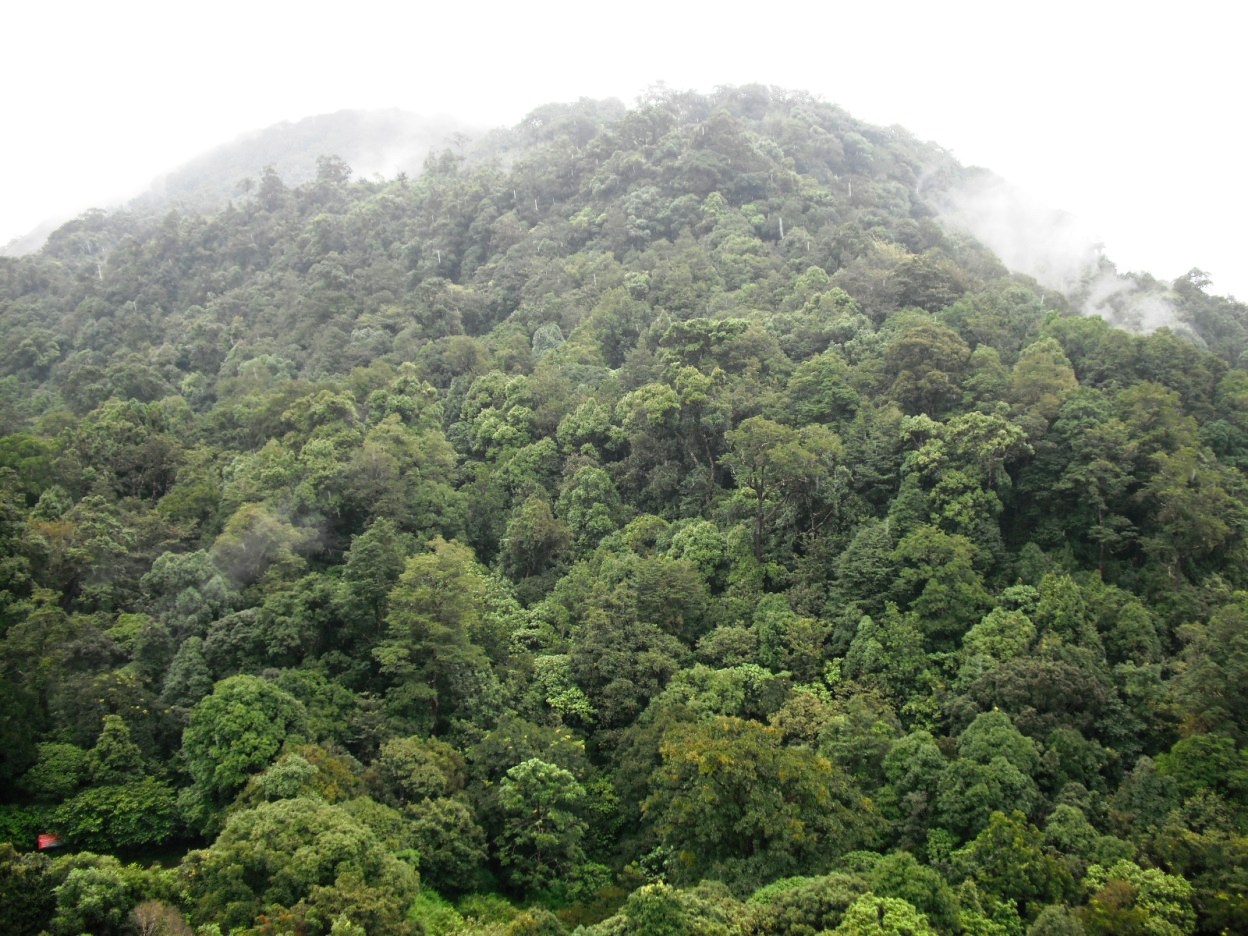
Silent Valley is a core zone of tropical evergreen rainforest spanning roughly 89.5 sq km in the Kundali Hills of Palakkad district — part of the Western Ghats’ Nilgiri sub-cluster, and one of the very few forests in peninsular India that has never been logged (Wikipedia). Its emblem species is the lion-tailed macaque — a shy, black-coated primate with a distinctive silver mane, found almost nowhere else on Earth outside pockets of the Western Ghats (Think Wildlife Foundation). The park sits inside the wider Nilgiri Biosphere Reserve — India’s first biosphere reserve, established nationally in 1986 and granted UNESCO Man and Biosphere Programme recognition in 2000 (UNESCO MAB) — and separately, Silent Valley is named specifically as a component site of the Western Ghats UNESCO World Heritage Site, inscribed in 2012 as part of that property’s Nilgiri sub-cluster (World Heritage Outlook). These are two distinct UNESCO designations, both of which genuinely apply here — a rare double credential for a single forest.
The Kunthipuzha River is the park’s ecological spine, flowing north to south through the valley and feeding numerous forest streams along the way (My Path Port).
The Save Silent Valley Movement: How This Forest Survived
The idea of damming the Kunthipuzha for hydroelectric power actually dates back to 1928, but the plan only became a real threat in February 1973, when India’s Planning Commission approved a roughly ₹25 crore hydroelectric project that would have submerged the valley (Save Silent Valley, Wikipedia). Opposition had already begun locally in 1966, but it was the Kerala Sasthra Sahithya Parishad (KSSP) — a people’s science movement — that turned it into a sustained national campaign from 1973 onward (Conservation India).
The protest reached the wider public consciousness partly through poetry: Malayalam poet Sugathakumari’s “Marathinu Stuthi” (“Ode to a Tree”) became the movement’s unofficial anthem, carried by the intellectual and literary community as much as by scientists (Mongabay). The pressure eventually reached Delhi: in January 1981, Prime Minister Indira Gandhi declared that Silent Valley would be protected. The government still re-examined the science through a commission chaired by Prof. M.G.K. Menon in June 1983, and in November 1983 the hydroelectric project was formally called off. In 1984, Silent Valley was declared a National Park — closing a near-decade fight that’s now taught in Indian environmental studies as one of the country’s founding conservation victories.
Permits and How to Book
Entry to Silent Valley is permit-only, and it’s enforced — there’s no walk-up option. Bookings run through the Kerala Forest Department’s official portal (silentvalley.gov.in), where you register with your name, phone number and email, select a date, time slot, package and number of visitors, then pay online by card or net banking. Confirmation arrives by email with a QR code — print or save it, and carry valid photo ID to the gate (TrekGo).
- Book at least 24–48 hours ahead, though a week or more in advance is recommended during peak season (December–February).
- Report to the forest office at Mukkali, the gateway village — this is where permits are checked and the mandatory guide is assigned, not at the park boundary itself.
- A guide is compulsory for every visit, arranged on-site at Mukkali (roughly ₹150).
- Confirm the exact itinerary in your booking rather than assuming — package inclusions (Sairandhri trek vs. a shorter nature walk) can vary, and older blog posts sometimes describe outdated options.
Timings and Entry Fees
| Item | Cost / Timing |
|---|---|
| Entry — Indian nationals | ₹50 |
| Entry — foreign nationals | ₹100 |
| Entry — senior citizens (65+) | ₹20 |
| Still camera | ₹25 |
| Video camera | ₹200 |
| Vehicle/jeep (up to 5 persons) | ₹1,600 |
| Guide charge | ₹150 |
| Entry window | 8:00 AM – 1:00 PM |
| Vehicle exit deadline | 1:00 PM |
| Visitor exit deadline | 5:00 PM |
(Fee and camera charges per Kerala Tourism’s official Silent Valley page; confirm current rates at booking, since forest department fees are periodically revised.)
Best Time to Visit Silent Valley
December to April is the recommended window — trails are driest, visibility is best, and the Kunthipuzha runs clear rather than swollen. Monsoon (June–September) brings the forest to its greenest, but leech-heavy trails and slippery suspension-bridge crossings make it a harder, less comfortable visit, and permits can be paused during the heaviest weeks — always confirm current monsoon access before planning a rains visit specifically for this park.
Wildlife sightings, including the lion-tailed macaque, tend to improve in the cooler, drier months when animals move to more open glades near water sources.
What to See and Do Inside the Park
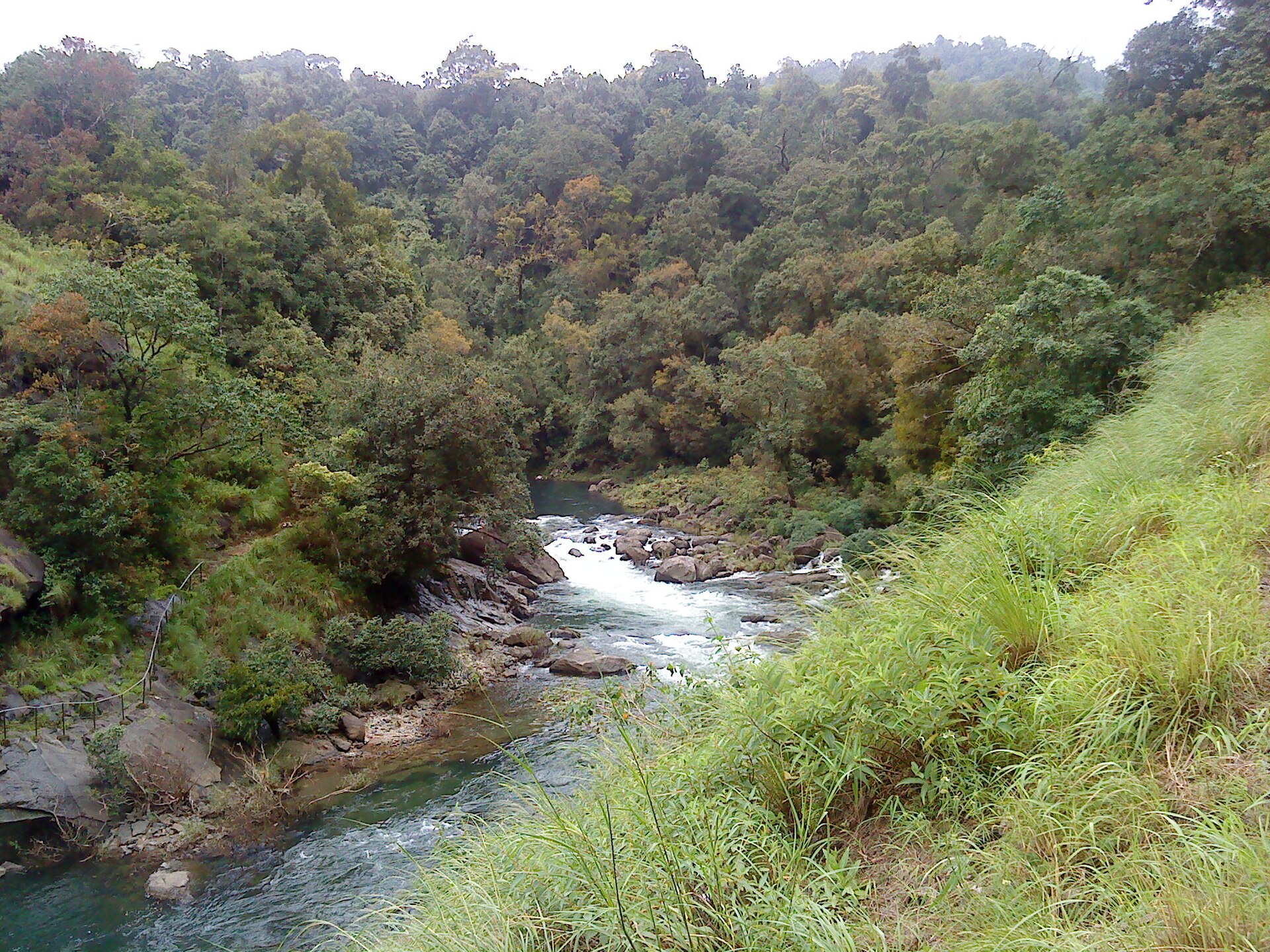
The Sairandhri Trek is the signature visitor experience — a roughly 2 km downhill trail from the forest checkpost to the valley floor, crossing a suspension bridge over the Kunthipuzha River partway down (Kerala Tourism ecotourism gallery). Standing on the bridge with the river running beneath is, by most visitor accounts, the trip’s defining moment.
The Sairandhri Watchtower, at the end of the accessible road, gives a 360-degree view over the valley — described by visitors as an enormous green carpet with the Kunthipuzha’s silver line running through it (My Path Port). Short guided trails near the checkpost also pass glades where lion-tailed macaques are sometimes spotted foraging, alongside the park’s broader wildlife — Nilgiri langur, tiger, elephant and over 200 recorded bird species, though sightings of the larger mammals are rare given the forest’s density and the deliberately restricted visitor numbers.
How to Reach Silent Valley National Park
The practical gateway is Mukkali, reached via Mannarkkad, roughly 12–40 km away depending on the exact route measured (sources vary; treat this as an approximate final stretch rather than a single fixed number) (India.com).
- By train: Palakkad Junction is the nearest major railway station, commonly cited around 55 km away (though some sources put it further, up to 75 km depending on route) — well connected on the Chennai–Coimbatore–Kochi trunk line. Taxis and buses cover the onward distance to Mukkali.
- By air: Coimbatore International Airport, about 120 km away, is the nearest airport.
- By road: Mannarkkad is well connected by KSRTC and private buses from across Kerala; from there, taxis or your own vehicle cover the final stretch to Mukkali, where permits and guides are arranged.
Where to Stay Near Silent Valley
Palakkad district — including the Mannarkkad/Mukkali area right at Silent Valley’s gate — currently has no live StayVista villas; the district’s villa and homestay category pages both return zero listings when checked directly. The nearest verified StayVista base is in Thrissur, roughly 77–90 km from Mannarkkad by road (Silent Valley itself is a further stretch beyond that, via Mukkali) — closer to a 2–2.5 hour drive from Thrissur than a quick day trip, so plan Silent Valley as a full-day outing from this base rather than a short excursion.
Nature’s Nook, Thrissur
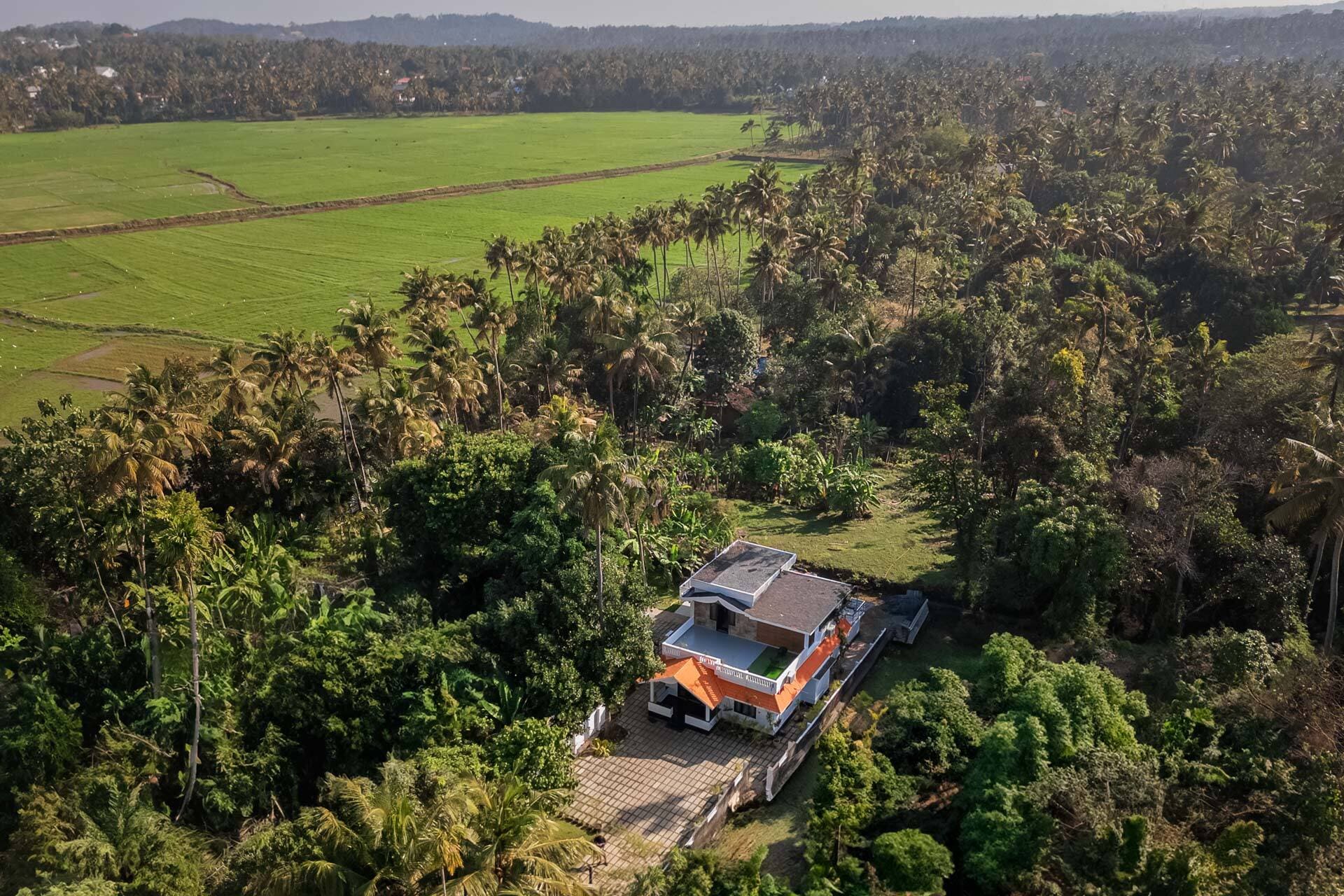
Nature’s Nook is a 3-bedroom estate villa for up to 7 guests, rated 4.5/5 across 33 reviews, with a private pool, lawn and viewing deck on Thrissur’s outskirts. It won’t be a short hop to the park’s gate, but it’s a genuine, verified base for a Palakkad-district itinerary that includes Silent Valley alongside closer sights like Nelliampathy or Malampuzha.
Frequently Asked Questions
Yes — entry is strictly permit-only, with no walk-up option. Book through the Kerala Forest Department’s official portal at least 24–48 hours in advance (a week ahead is safer in peak season), and report to the forest office at Mukkali to collect your permit and mandatory guide.
₹50 for Indian nationals, ₹100 for foreign nationals, and ₹20 for senior citizens above 65. Still cameras cost ₹25 extra, video cameras ₹200, and a vehicle/jeep for up to 5 people costs ₹1,600. Guide charges (mandatory) run about ₹150.
Entry is permitted from 8 AM to 1 PM. Vehicles must leave the park by 1 PM, and all visitors must exit by 5 PM. There is no evening or overnight access inside the core zone for general visitors.
December to April, when trails are dry, visibility is clearest, and wildlife sightings — including the park’s flagship lion-tailed macaque — tend to be easier near water sources. Monsoon (June–September) is greener but harder going, with leeches and a slippery suspension-bridge crossing.
It’s the site of the “Save Silent Valley” movement — a campaign starting in 1966 and intensifying from 1973, led by the Kerala Sasthra Sahithya Parishad, that stopped a planned hydroelectric dam from flooding the forest. Prime Minister Indira Gandhi declared it protected in January 1981, the project was formally cancelled in November 1983, and the area became a National Park in 1984.
It carries two separate UNESCO designations. It sits within the Nilgiri Biosphere Reserve, which received UNESCO Man and Biosphere Programme recognition in 2000, and it’s also individually named as a component site of the Western Ghats UNESCO World Heritage Site, inscribed in 2012.
The lion-tailed macaque — a rare, shy primate with a silver mane found almost nowhere else on Earth — is the park’s emblem species. Sightings aren’t guaranteed, but short guided trails near the entry checkpost pass through glades where the macaques are known to forage.