
Sinhagad Fort in Monsoon 2026: Trek Route, Timings & Pithla-Bhakri

Sinhagad Fort in monsoon transforms into a mist-covered green hilltop just 30 km southwest of Pune, with two main trek routes (Atkarwadi and Kalyan Darwaza) coming alive between June and September. Entry is free, the fort is open 5:00 AM to 6:00 PM daily, and the summit’s pithla-bhakri stalls serve piping-hot Maharashtrian meals for ₹100–₹150 per plate.
In this Blog
Quick Info Table
| Field | Details |
| Location | Sinhagad village, Haveli taluka, Pune district, Maharashtra |
| Best time to visit | July to September (peak monsoon) |
| How to reach from Pune | 30 km via Sinhagad Ghat Road — own vehicle, taxi, or PMPML bus + shared jeep |
| Nearest airport | Pune International Airport (approx. 40 km) |
| Nearest railway station | Pune Junction (approx. 30 km) |
| Entry fee | Free (parking ₹50 for two-wheelers, ₹100 for four-wheelers) |
| Fort timings | 5:00 AM to 6:00 PM (all days of the week) |
| Trek duration | 45 minutes to 2 hours depending on route |
| Ideal duration for visit | Half-day to full-day trip |
| Difficulty level | Easy to moderate |
Sinhagad Fort in Monsoon: Where the Sahyadris Turn Emerald

Built at 1,350 metres above sea level in the Bhuleswar range of the Sahyadris, Sinhagad Fort in monsoon is one of the most rewarding half-day getaways from Pune. Between June and September, the fort’s basalt cliffs get draped in fog, seasonal waterfalls spring up along the trek route, and the surrounding valleys turn a shade of green you rarely see outside the Western Ghats. For anyone hunting for places to visit in maharashtra in monsoon, this Maratha stronghold delivers history, hiking, and hot pithla-bhakri in a single trip.
The fort’s Marathi name means “Lion’s Fort”, a nod to the legendary 1670 night raid when Tanaji Malusare recaptured it from the Mughals. Today, that same climb draws thousands of trekkers, cyclists, and Sunday-morning families every monsoon weekend. Our team at StayVista has walked these routes multiple times through the rains, and we’d rather you plan well — the same rain that makes the fort beautiful also makes the last stretch genuinely slippery.
Why Visit Sinhagad Fort in Monsoon
If you had to pick one hill fort to visit during the rains, Sinhagad Fort in monsoon would top most Pune locals’ lists.
- Waterfalls appear along the trek route. Small seasonal cascades form on the Kalyan Darwaza side and along the tar road, giving the climb natural rest and photo stops.
- Temperature drops to 18–22°C. Compared to a muggy 32°C in Pune city, the summit feels ten degrees cooler.
- Cloud inversions at sunrise. On clear-ish monsoon mornings, the valley below fills with white cloud while the summit stays clear — one of the best monsoon places in maharashtra to watch this happen.
- Pithla-bhakri and kanda bhaji served hot. More than 40 small dhabas at the top plate up Maharashtrian comfort food while the rain is still pounding outside.
- Short and doable. Unlike heavier maharashtra monsoon treks like Harishchandragad or Kalsubai, Sinhagad’s climb is under two hours from any base point.
For weekend travellers scanning monsoon places near pune, this mix of accessibility, food and scenery is genuinely hard to beat.
Best Time to Visit Sinhagad Fort

Monsoon runs from mid-June to late September in the Pune region, but not every week within that window is equal. Here is how we’d time your trip.
- Peak monsoon (mid-July to mid-September): Greenery is at its fullest, waterfalls flow strongest, and mist hangs thick. This is the ideal window for the classic sinhagad fort in monsoon experience.
- Weekdays over weekends: Sundays see 8,000–10,000 visitors and the parking chaos begins by 8:00 AM. Try Tuesday to Thursday for a quieter climb.
- Early morning (5:30–8:00 AM): For sunrise, cloud inversions, and the freshest pithla-bhakri.
- Late afternoon (3:30–6:00 PM): For cooler weather and softer light for photography.
Avoid IMD red-alert days. When rainfall crosses 200 mm in 24 hours, the tar road can flood in low patches and the trek trails become genuinely dangerous.
Pro tip: check the IMD Pune forecast the night before, not just the app-based ones. Rain patterns in the Sahyadris shift hour by hour.
How to Reach Sinhagad Fort

Sinhagad Fort sits roughly 30 km southwest of Pune city, in the village of Sinhagad in Haveli taluka. All routes lead to either Atkarwadi (via Donje) on the eastern side or the Kalyan Darwaza base village on the western side.
By own car or bike (recommended)
- Route: Pune → Sinhagad Road → Khadakwasla Dam → Sinhagad Ghat Road → Base
- Distance: 30 km
- Time: 60–75 minutes
- The final 8 km ghat road is narrow and hairpin-heavy. So, drive slowly in monsoon.
By PMPML bus + shared jeep
- Take a PMPML bus from Swargate (Route 50) to Sinhagad Paytha (base village).
- From the base, shared jeeps run up to the summit for ₹50–₹70 per person, one way.
- Total travel time: 90–100 minutes.
By taxi or auto
- Ola/Uber from central Pune: ₹500–₹700 one way.
- Ask the driver to wait at the base — return cabs are rare in monsoon evenings.
By vehicle to the summit
- Private cars and two-wheelers can drive right to the top via the tar road.
- Parking: ₹50 (bikes), ₹100 (cars).
- The road is usually open year-round unless a landslide closes it — check with locals on heavy-rain days.
For sinhagad fort in monsoon visitors coming from Mumbai, drive down to Pune first (150 km, about 3 hours via the Mumbai–Pune Expressway), then continue to the fort.
Sinhagad Fort Map (Updated)
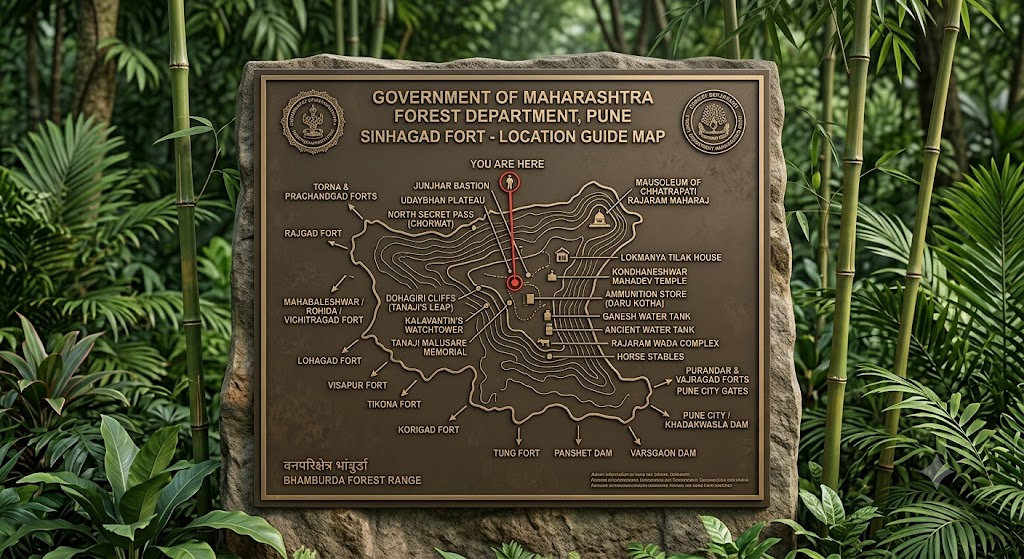
The fort has a roughly triangular layout with two historical entry gates — Kalyan Darwaza (western gate, used by trekkers from Kalyan village) and Pune Darwaza (eastern gate, near the parking lot for visitors driving up). Once you are inside:
- Pune Darwaza → parking area → pithla-bhakri stalls → Kaudi Point (main viewpoint) → Amruteshwar Temple → Rajaram Samadhi → Tanaji Samadhi (Tanaji Kada) → Kalyan Darwaza → Zunjar Buruj
Use Google Maps (“Sinhagad Fort”) for turn-by-turn navigation to the base. Once on the fort, offline signage is minimal — ask stall owners or follow the paved walkways. Distances inside the fort are short: no point is more than about 15 minutes from any other on foot.
Trek Routes to Sinhagad Fort
There are two established trekking routes, plus the drive-up option. Each suits a different fitness level.
Route 1: Atkarwadi/Donje (Standard Route)
- Start point: Atkarwadi village (near Khadakwasla)
- Distance: approx. 2.5 km one way
- Elevation gain: approx. 700 metres
- Time: 60–90 minutes up, 45–60 minutes down
- Difficulty: Easy to moderate
- Best for: First-timers, families with older kids, casual trekkers
The stone-paved path is well-marked and dotted with tea stalls at three points. In monsoon, the second half becomes slippery — grip shoes are non-negotiable. This is the route to pick for a first sinhagad fort in monsoon trek.
Route 2: Kalyan Darwaza Route
- Start point: Kalyan village (opposite side of the hill)
- Distance: approx. 3 km one way
- Elevation gain: approx. 750 metres
- Time: 90–120 minutes up
- Difficulty: Moderate
- Best for: Experienced trekkers who want a quieter route
Fewer people take this route, so the trail feels wilder and the historical entry through Kalyan Darwaza is dramatic. In heavy rain, some rocky sections need genuine care. This route counts among the best monsoon trek in maharashtra options for anyone tired of crowded trails.
Route 3: Drive Up (No Trek)
- Simply drive to the summit parking.
- Best for: senior citizens, families with toddlers, days with red-alert rain warnings.
- The last kilometre is a walk on paved ground to the food stalls.
Trek fees: none. You only pay parking charges if you drive.
Attractions to See on Sinhagad Fort (Open in Monsoon)


Not every structure on the fort is accessible during heavy rain. Here is what is actually open and worth your time during the monsoon months.
Tanaji Malusare Samadhi
- What it is: Memorial to the Maratha warrior who died recapturing the fort in 1670.
- Entry fee: Free.
- Time required: 15 minutes.
- Why visit: The reason the fort is called “Sinha-gad” (Lion’s Fort). A small plaque marks the spot where he fell.
- Monsoon status: Fully open.
Rajaram Chhatrapati Samadhi
- What it is: Memorial of Chhatrapati Rajaram Maharaj, who breathed his last here in 1700.
- Entry fee: Free.
- Time required: 10 minutes.
- Monsoon status: Open, but the surrounding stone platform gets slippery.
Amruteshwar Bhairav Temple
- What it is: Ancient Shiva temple, likely from the Yadava period.
- Entry fee: Free.
- Timings: Sunrise to sunset.
- Time required: 15–20 minutes.
- Monsoon status: Open; small and calm — a good spot to rest before the descent.
Kaudi Point (Ghod Toke)
- What it is: Main viewpoint overlooking Khadakwasla and Panshet reservoirs.
- Entry fee: Free.
- Time required: 20 minutes.
- Monsoon status: Open, but visibility depends on cloud cover. On clear intervals, this is where you’ll get the classic sinhagad fort in monsoon view of the valleys.
Devtake (Divine Water Tank)
- What it is: Ancient rock-cut water reservoir.
- Entry fee: Free.
- Monsoon status: Overflowing and photogenic in July–August.
Kalyan Darwaza (Western Gate)
- What it is: Historical entrance used by Maratha forces.
- Monsoon status: Open; the stone stairs down get very slippery — descend only if you’re sure-footed.
Zunjar Buruj (Bastion)
- What it is: Old defensive bastion with cannon platforms.
- Monsoon status: Open, but the edge is unfenced — do not go close during high winds.
Closed or risky in heavy rain: some smaller caves and outer wall sections near cliffs. Follow local guidance and stall-owner advice on the day.
Speciality Maharashtrian Food: Pithla-Bhakri and More

No sinhagad fort in monsoon trip is complete without a plate of pithla-bhakri at the summit. Over 40 small stalls line the pathway between Pune Darwaza and Kaudi Point, most run by families from villages at the base.
- Pithla-Bhakri (₹100–₹150 per plate): Pithla is a spicy gram-flour and onion curry; bhakri is a flat bread of jowar (sorghum) or bajra (pearl millet), thicker than a roti. Served with raw onion, green chilli and a dollop of white butter. The classic monsoon meal — hot, filling, honest.
- Kanda Bhaji (₹60–₹80): Onion fritters deep-fried in besan. Best paired with cutting chai.
- Zunka Bhakri (₹100): Drier cousin of pithla, made from besan; comes with garlic chutney.
- Tak (Buttermilk, ₹30–₹40 per glass): Spiced with cumin and coriander — cools you down after the trek.
- Solkadhi (₹40–₹50): Pink kokum-and-coconut drink, a great palate cleanser.
- Corn on the cob (₹40–₹60): Roasted on charcoal, rubbed with lemon and masala — a monsoon staple.
- Tea and coffee (₹15–₹25): Every stall serves it, but the stall closest to Kaudi Point is a long-time local favourite.
When do the stalls on Sinhagad Open?
Stalls open around 6:30 AM and shut by 6:30 PM. On busy weekends, popular stalls run out of bhakri by 4:00 PM — reach by 1:00 PM for the freshest food.
How do I pay for the food?
Cash is preferred. A few stalls now accept UPI, but network reliability is patchy on the summit — carry ₹500–₹1,000 in cash.
Photo Spots on Sinhagad in Monsoon

The sinhagad fort in monsoon weather changes every ten minutes — mist rolls in, clears, and rolls in again. That variability is exactly why photographers keep coming back. Our shortlist:
- Kaudi Point at sunrise: Cloud inversions over Khadakwasla Dam, best captured between 6:00–7:30 AM.
- The tar-road switchbacks: Bird’s-eye shots of the road curling up the hill, especially with mist.
- Kalyan Darwaza in fog: The stone gate framed by low cloud is the classic Sahyadri shot.
- Devtake water tank: Reflections when the water is still and the wind drops.
- Tanaji Samadhi with lamps: Best during Tanaji Punyatithi (early March) — not monsoon, but worth noting for return visits.
- The pithla-bhakri stalls: Steam rising from cooking pots against a grey sky is a portrait-photography staple.
- Zunjar Buruj edge: Wide-angle valley shots — stay behind the safety line.
Gear tip: bring a lens cloth and a zip-lock bag for your camera. Fog condenses fast at 1,350 metres.
Trekking Safety Tips for Sinhagad Fort in Monsoon
Monsoon is when Sinhagad looks its best, but also when accidents are most common. Follow these before you set out:
- Wear grippy footwear. Trekking shoes or shoes with deep-tread rubber. Flip-flops and smooth-soled sneakers will slide on wet basalt.
- Start early. Aim to leave Pune by 5:30 AM to reach the base by 6:30 AM. This gives you a buffer before the afternoon downpour.
- Trek in a group. Solo trekking is discouraged during heavy rain. If you must go alone, share live location with a family member.
- Carry water and glucose. At least 1 litre per person for the trek. Small shops exist mid-trail but stock is unreliable in monsoon.
- Stay on the marked path. Shortcuts through the grass hide small drops and loose soil.
- Do not stand near cliff edges. Wind at Zunjar Buruj can suddenly gust to 40–50 kmph.
- Watch for leeches. July–August grass hides leeches; tuck trousers into socks or carry a small pinch of salt.
- Skip the trek during IMD red alerts. Drive up instead — or reschedule.
- Charge your phone. Network coverage exists but is patchy. Keep at least 50 percent battery for emergencies.
- Avoid alcohol before or during the trek. Local police have started checks on weekends.
- Respect timings. Descend before 5:00 PM. The trail becomes dangerously dark after dusk.
For anyone planning other maharashtra monsoon treks in the same season, these rules apply well beyond Sinhagad.
Nearby Worth-Seeing Places and Treks


If you have another day in the area, these spots complement a sinhagad fort in monsoon trip beautifully. All are within 25–60 km of the fort.
Khadakwasla Dam (5 km)
- Entry fee: Free.
- Timings: Open access, 6:00 AM–9:00 PM recommended.
- Time required: 1–1.5 hours.
- Why visit: The reservoir you see from Kaudi Point, up close. Corn stalls line the promenade; sunsets are excellent when the sky clears.
Panshet Dam (25 km)
- Entry fee: Free (some water sports paid).
- Timings: 8:00 AM–6:00 PM.
- Time required: Half day.
- Why visit: Bigger and quieter than Khadakwasla; boating available when water levels are safe.
Rajgad Fort (30 km)
- Entry fee: Free.
- Trek difficulty: Moderate to hard.
- Trek time: 3–4 hours one way.
- Why visit: Chhatrapati Shivaji Maharaj’s capital before Raigad. Longer and steeper than Sinhagad — one of the classic maharashtra monsoon treks for experienced hikers.
Torna Fort (35 km)
- Entry fee: Free.
- Trek difficulty: Hard.
- Trek time: 3–4 hours.
- Why visit: Highest fort in Pune district (1,403 m). Pairs with Rajgad for a two-day trek.
Lohagad Fort (60 km, near Lonavala)
- Entry fee: ₹25 per person.
- Trek difficulty: Easy.
- Trek time: 45–60 minutes.
- Why visit: The iconic “Vinchu Kata” (Scorpion’s Tail) ridge is one of the most photographed monsoon spots in the Sahyadris.
Purandar Fort (45 km)
- Entry fee: Free (ID required — inside a military area).
- Timings: 9:00 AM–5:00 PM.
- Why visit: Birthplace of Chhatrapati Sambhaji Maharaj. Fewer crowds, family-friendly.
Suggested Monsoon Itinerary
Two ready-to-use plans depending on where you are starting from.
Half-Day Plan from Pune (Recommended)
- 5:30 AM — Leave Pune.
- 6:30 AM — Reach Atkarwadi base village, park, start the trek.
- 8:00 AM — Reach the summit; head to Kaudi Point for sunrise views.
- 8:30 AM — Breakfast at a stall (pithla-bhakri or kanda-bhaji).
- 9:15 AM — Walk to Tanaji Samadhi, Rajaram Samadhi and Amruteshwar Temple.
- 10:30 AM — Visit Devtake and Kalyan Darwaza.
- 11:15 AM — Begin the descent.
- 12:30 PM — Reach the base.
- 1:30 PM — Late lunch at Khadakwasla Chowpatty (corn, misal, tea).
- 3:00 PM — Back in Pune.
Weekend Plan from Mumbai
Day 1
- 7:00 AM — Leave Mumbai via the Expressway.
- 10:30 AM — Reach Pune; check in.
- 12:00 PM — Lunch (try Vaishali or SP’s Biryani).
- 4:00 PM — Visit Khadakwasla Dam.
- 6:30 PM — Sinhagad Ghat drive-up at sunset (weather permitting).
- 9:00 PM — Dinner and rest.
Day 2
- 5:30 AM — Start for the Atkarwadi trek.
- 8:00 AM–12:00 PM — Sinhagad Fort exploration and pithla-bhakri.
- 1:00 PM — Return to Pune for a quick lunch.
- 3:00 PM — Drive back to Mumbai.
- 6:30 PM — Reach home.
For a monsoon weekend trip like this, StayVista’s Pune, Lonavala and Panchgani villas make a comfortable base — more on that in the Where to Stay section.
What to Pack When Visiting Sinhagad in Monsoon

A compact packing list based on what travellers actually need for a sinhagad fort in monsoon day trip.
Wear
- Quick-dry T-shirt and trekking pants (avoid jeans — they take hours to dry).
- Trekking shoes with rubber grip.
- Cap or light hat for a small rain shield.
Carry in a small backpack
- Lightweight rain poncho (better than umbrellas in wind).
- Extra pair of socks and a T-shirt (for the drive back).
- Zip-lock bags for phone, wallet and camera.
- 1 litre water bottle.
- Energy bars, dry fruits or ORS sachets.
- Small first-aid kit (bandage, antiseptic, painkiller).
- Torch or headlamp (in case you get stuck past dusk).
- Sunglasses (for the drive on clear stretches).
- Cash: ₹500–₹1,000.
- Trash bag — please carry your litter back.
Optional but useful
- Trekking pole (adds stability on the descent).
- Insect repellent.
- Camera with a rain cover.
What NOT to pack
- Umbrellas that need two hands to hold.
- DSLRs without a rain cover.
- Glass bottles.
- Alcohol.
Where to Stay: StayVista Villas & Homestays Near Sinhagad
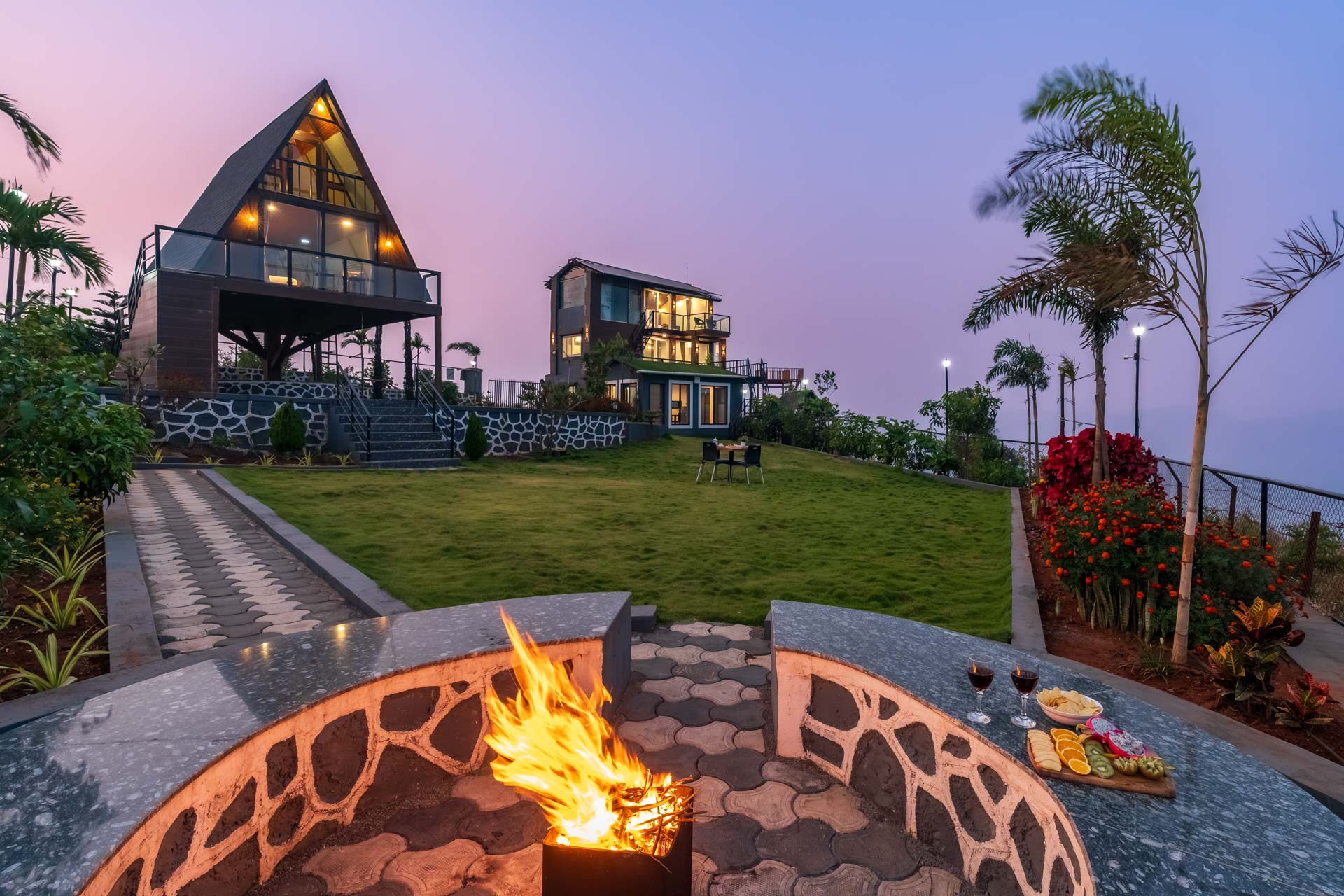
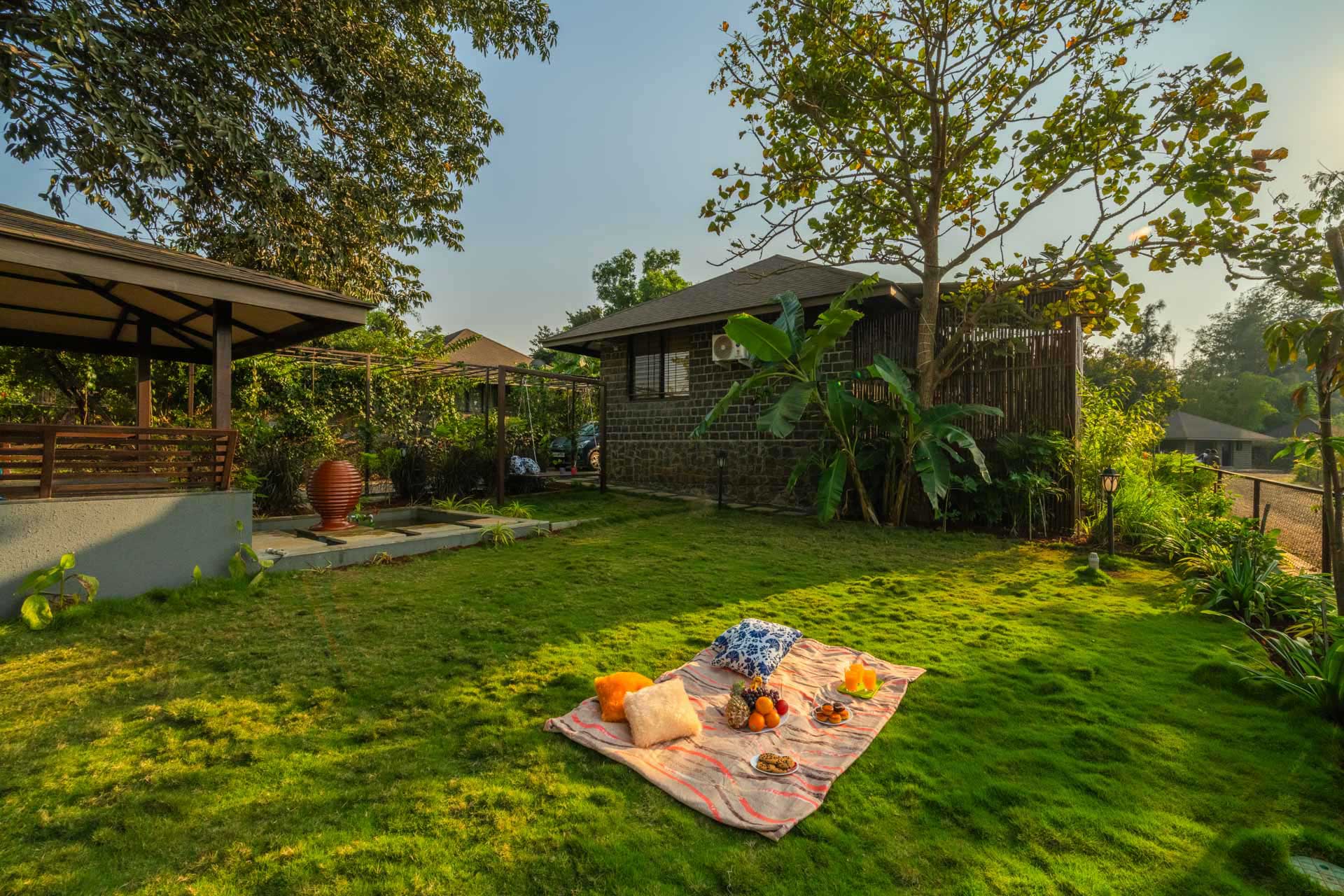
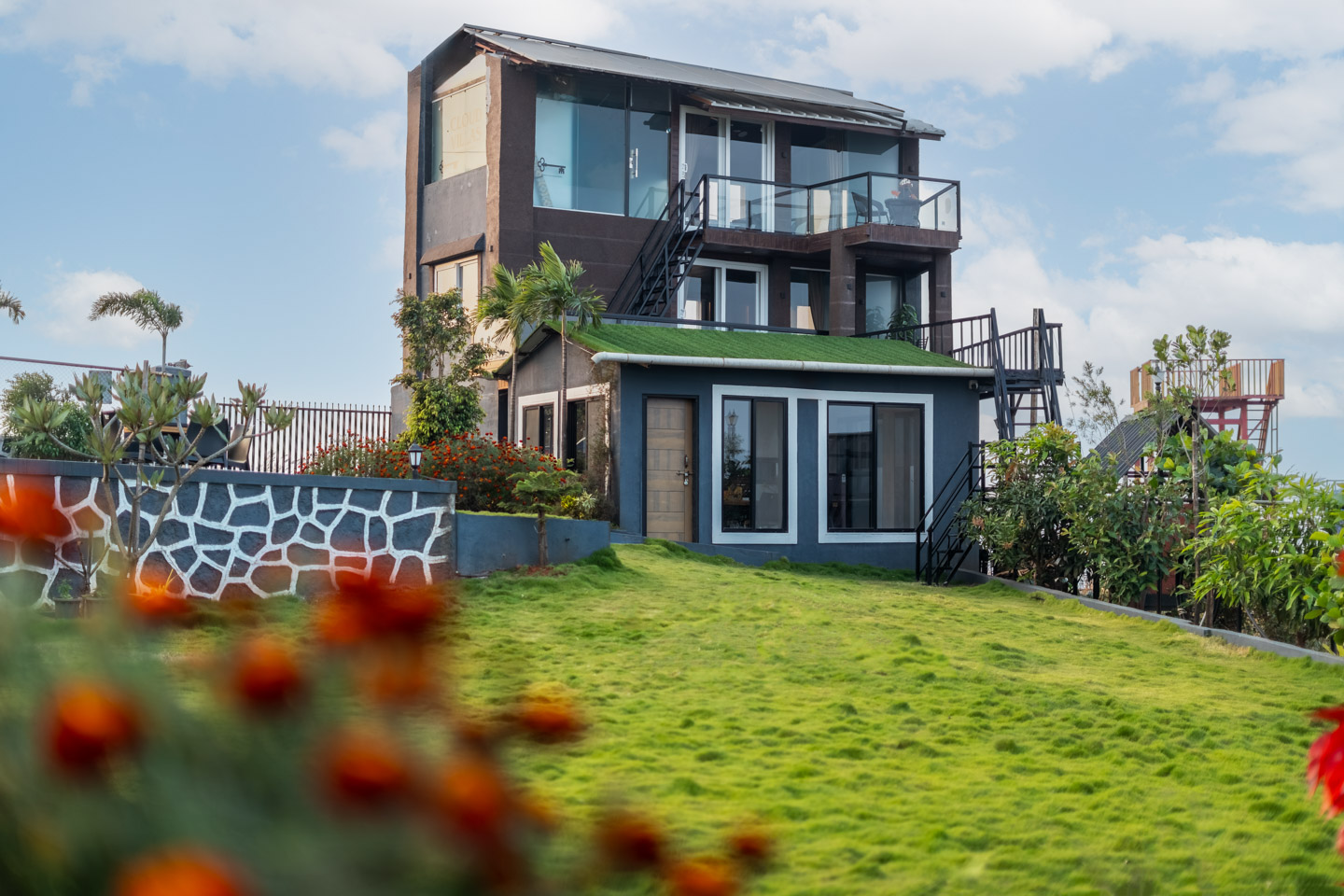
For travellers building a longer monsoon trip around Sinhagad, StayVista has villas within 60–90 minutes of the fort. In Lonavala, look at properties with valley-facing balconies and private pools for a proper rain-and-view stay. Closer to Pune, farmstay-style villas on the outskirts let you reach the fort by 7:00 AM without a long drive. In Panchgani and Mahabaleshwar (about 2.5–3 hours away), StayVista homes come with in-house chefs who plate up proper Maharashtrian thalis after your trek.
Browse and book on stayvista.com — filter by “private pool” or “pet friendly” for monsoon-view stays close to the Sinhagad region.
Final Word

A sinhagad fort in monsoon trip is one of the simplest, cheapest and most memorable weekend plans you can pull off from Pune. Two hours of trekking, a plate of pithla-bhakri at 1,350 metres, and views that shift by the minute — it’s why generations of Punekars keep coming back every July.
For anyone planning a broader monsoon trip through the state, keep Sinhagad on your shortlist of best monsoon places in maharashtra — it is the accessible starting point before you graduate to Rajgad, Torna or Harishchandragad. And when you need a warm, dry place to crash after the rain, a StayVista villa in Pune or Lonavala is a click away.