
Spiti June 2026: Manali vs Shimla-Kinnaur 7-Day Itinerary (Updated)
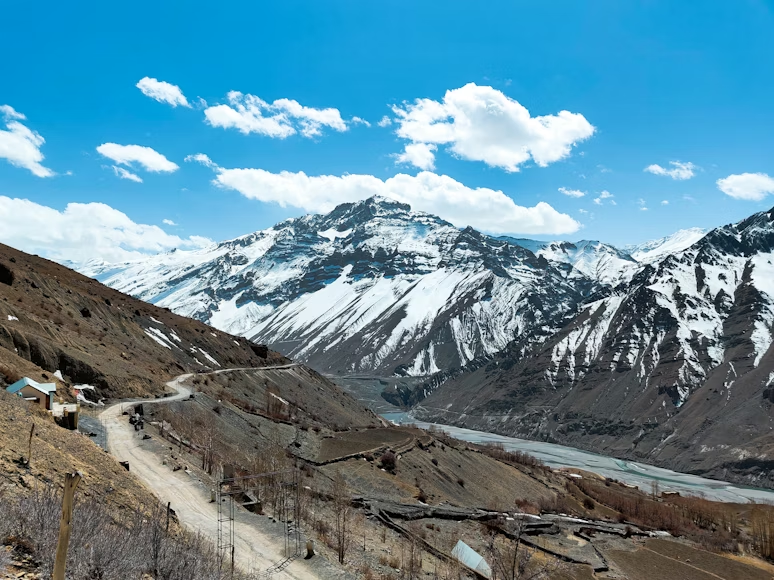
Kunzum Pass and Chandratal Lake have reopened for the 2026 season (late May), which means both routes into Spiti — the longer Shimla–Kinnaur road and the shorter Manali–Kaza highway — are now drivable. For June travelers, the smartest plan is the full circuit: enter via Shimla–Kinnaur (gradual altitude gain, safer acclimatization), exit via Manali–Kaza (faster return, Chandratal Lake en route). This guide covers the 7-day itinerary, permit rules, practical details for every stop, and where to stay before and after the drive.
In this Blog
Quick Info: Spiti Valley in June 2026
| Best time to visit | June to mid-October |
|---|---|
| Total circuit distance | ~720 km (Shimla → Kaza → Manali) |
| Recommended duration | 7 days |
| Nearest airports | Shimla (SLV) at the start, Bhuntar/Kullu (KUU) at the end |
| Nearest railway stations | Shimla and Chandigarh |
| ILP permit required | Only for foreign nationals; Indian citizens travel freely |
| June daytime temperature | 12°C to 20°C (Kaza); 5°C to 12°C (Kunzum Pass) |
| June nighttime temperature | -2°C to 5°C |
| Vehicle type | Any SUV; sedans okay till Kalpa, not recommended beyond |
| Network availability | BSNL and Jio postpaid only beyond Reckong Peo |
Sources: Himachal Tourism, BRO bulletins (May 2026), StayVista travel desk.
Is Spiti Valley Open in June 2026?
Yes — both routes into Spiti Valley are open as of late May 2026. The Border Roads Organisation cleared snow from Kunzum Pass in late May, opening the shorter Manali–Kaza highway and access to Chandratal Lake. The Shimla–Kinnaur road, which stays open through the year, remains the safer choice for travelers who want to acclimatize gradually. June is widely considered the start of the peak season because Chandratal is accessible, all monasteries are reopened, and the high passes are stable.
Before you leave, check the current road conditions on the Himachal Tourism portal and the e-Aagman permit portal for entry to Chandratal. BRO posts daily updates on weather-sensitive sections.
Manali vs Shimla–Kinnaur: Which Route Should You Choose?
The honest answer for most June travelers is “both” — enter via one, exit via the other. But if your time is limited, here is how the two roads compare.
| Factor | Shimla–Kinnaur Route | Manali–Kaza Route |
|---|---|---|
| Distance to Kaza | ~410 km | ~200 km |
| Drive time to Kaza | 3 days (recommended) | 8–10 hours (one push) |
| Altitude gain | Gradual (safer) | Steep (Kunzum Pass at 4,551 m on day one) |
| Open months | Year-round | Late May to October |
| Scenery | Apple orchards, river gorges, ancient temples | Glacial lakes, scree slopes, lunar terrain |
| Acclimatization risk | Low | High — many travelers report AMS |
| Best for | First-time visitors, families, slow travelers | Returning visitors, time-constrained trips |
Route comparison based on StayVista travel desk experience, driving both routes in 2024 and 2025.
Our recommendation: If this is your first trip to Spiti, drive in via Shimla–Kinnaur and out via Manali. The body adapts to altitude over four days of slow climbing, and you finish with Chandratal Lake — a viewpoint that’s worth the entire trip on its own.
How Do You Get Spiti Permits in 2026?
For Indian citizens, no permit is needed to enter Spiti Valley or to travel anywhere in the Kinnaur–Spiti circuit in June 2026. You can move freely across both routes.
Foreign nationals need an Inner Line Permit (ILP) to cross the restricted area between Jangi (in Kinnaur) and Sumdo (entry to Spiti). The permit is issued at:
- Reckong Peo SDM Office (most common; same-day issue, free of cost)
- Kaza SDM Office (for travelers entering from the Manali side)
- Shimla DC Office (advance application possible)
You will need: a passport copy, visa copy, two passport photos, and a filled application form. The permit is valid for 14 days within Kinnaur and Spiti.
Pro tip from our team: Apply at Reckong Peo by 11 AM if you want the permit the same day. Offices close for lunch from 1 to 2 PM, and the queue moves slowly after that.
The Recommended 7-Day Spiti Circuit Itinerary
This itinerary enters via Shimla, follows the Satluj River through Kinnaur, crosses into Spiti at Sumdo, and exits via Kunzum Pass to Manali. Every stop below includes the practical details you need to plan stops, fuel, and food.
Day 1: Shimla to Sarahan (175 km, 6–7 hours)
Pick up your rental in Shimla by 7 AM and drive east along NH-5. The road passes through Narkanda (a good breakfast halt) and then descends to the Satluj River. You will reach Sarahan by late afternoon.
Bhimakali Temple, Sarahan
- Entry fee: Free (mandatory shoe and bag deposit, ₹10)
- Timings: 6:00 AM to 8:00 PM; main sanctum closes 1:00 to 3:00 PM
- Best time to visit: Morning aarti at 7:00 AM, or evening aarti at 6:30 PM
- How to reach: Located in the center of Sarahan village; walkable from any guesthouse
- Time required: 1.5 hours
- Ideal for: Couples, families, history enthusiasts
- Pro tip: Photography is allowed in the outer courtyard but not inside the sanctum. Carry a head covering — it’s required for entry.
Where to overnight: HPTDC’s Hotel Srikhand or a local homestay. Most travelers turn in early.
Day 2: Sarahan to Chitkul via Sangla (95 km, 4–5 hours)
Today is short on distance but long on photo stops. Leave Sarahan after the morning aarti, descend back to NH-5, and turn off toward Sangla Valley at Karcham. The road climbs through apple orchards and pine forests.
Sangla Valley
- Entry fee: Free
- Best time to visit: Late morning, when the Baspa River catches direct sunlight
- How to reach: 18 km diversion from NH-5 at Karcham junction
- Time required: 2 hours for the village walk; 30 minutes for the lunch halt
- Ideal for: Solo travelers, photographers
- Pro tip: The trout fish farm just before the village serves fresh tawa-fried trout. Order ahead by 11 AM if you want lunch ready by 1.
Chitkul (last village before the Tibet border)
- Entry fee: Free
- Timings: Daylight hours only; the Indo-Tibet Border Police checkpoint closes at sunset
- Best time to visit: Golden hour (around 6 PM in June) for the wooden houses against snow peaks
- How to reach: 24 km from Sangla; the road ends at Chitkul, so you turn around here
- Time required: Half a day if you choose to overnight; 2 hours for a quick stop
- Ideal for: Couples, photographers, slow travelers
- Pro tip: There is no fuel station after Karcham. Tank up before the diversion or you’ll be hunting for black-market petrol.

Day 3: Chitkul to Kalpa (60 km, 3 hours)
A relaxed driving day. Backtrack to Karcham, rejoin NH-5, and drive to Reckong Peo. Foreign travelers should stop at the SDM office for the Inner Line Permit (allow 2–3 hours). Kalpa is a 12 km climb above Peo.
Kalpa village
- Altitude: 2,960 metres (per Wikipedia)
- Entry fee: Free
- Timings: All day; viewpoints best at sunrise (5:30 AM in June)
- Best time to visit: Sunrise, when the Kinnaur Kailash range turns gold
- How to reach: Steep 12 km climb from Reckong Peo; shared sumos run hourly until 5 PM
- Time required: One full afternoon and the next sunrise
- Ideal for: Couples, photographers, anyone who wants one slow day
- Pro tip: The Roghi village walk (a 4 km trail from Kalpa) ends at “Suicide Point” — a dramatic cliff edge with no fencing. Stay back from the lip and watch your footing in afternoon wind.
Day 4: Kalpa to Tabo via Nako (180 km, 7–8 hours)
This is the day Kinnaur becomes Spiti. The landscape shifts from pine forests to bare rock. You cross into Spiti district at Sumdo (a checkpoint stop for everyone) and reach Tabo by dusk.
Nako Lake and Monastery
- Entry fee: Free for the monastery; lake is open access
- Timings: Monastery 7:00 AM to 6:00 PM
- Best time to visit: Late morning, after the cold lifts
- How to reach: 1 km diversion from NH-5; sign-posted clearly
- Time required: 1.5 hours
- Ideal for: All travelers
- Pro tip: The thukpa at Reo Purgyil Café near the lake is the best lunch on this stretch.
Tabo Monastery (1,000+ years old, founded 996 CE)
- Entry fee: Free; donations accepted
- Timings: 9:00 AM to 5:00 PM; closed 1:00 to 2:00 PM
- Best time to visit: Early morning or late afternoon
- How to reach: In the center of Tabo village
- Time required: 2 hours
- Ideal for: History enthusiasts, families
- Pro tip: The original mud-walled monastery (not the newer concrete one beside it) is the part listed on UNESCO’s tentative World Heritage list. Photography is not permitted inside the ancient chambers; respect this rule strictly — the murals are over a millennium old.
Day 5: Tabo to Kaza via Dhankar (50 km, 3 hours plus stops)
A short driving day with the route’s most dramatic monastery in the middle.
Dhankar Monastery and Fort
- Entry fee: Free for monastery; ₹10 for the fort viewpoint
- Timings: 8:00 AM to 6:00 PM
- Best time to visit: Mid-morning for clear views of the Spiti-Pin river confluence
- How to reach: 8 km diversion from NH-5; the last 2 km is a steep gravel climb that small cars can manage in dry weather
- Time required: 2.5 hours including the lake trek (optional)
- Ideal for: History buffs, trekkers, photographers
- Pro tip: The Dhankar Lake trek (5 km round trip from the monastery) is the best short hike in Spiti for first-timers. Carry water — there is no source on the trail.
Kaza (the administrative hub)
- Altitude: ~3,800 metres
- How to reach: 35 km from Dhankar on NH-505
- Time required: Overnight halt; 2 nights recommended
- Ideal for: All travelers — Kaza is the base for the high villages
- Pro tip: Refuel here. Kaza has the highest retail petrol pump in the world (until November, when it closes for winter). Top up even if you have half a tank.
Day 6: Kaza Loop — Key, Kibber, Komic, Langza, Hikkim (90 km, full day)
Today is the postcard day. You will not move from Kaza, but you will see five villages that define Spiti.
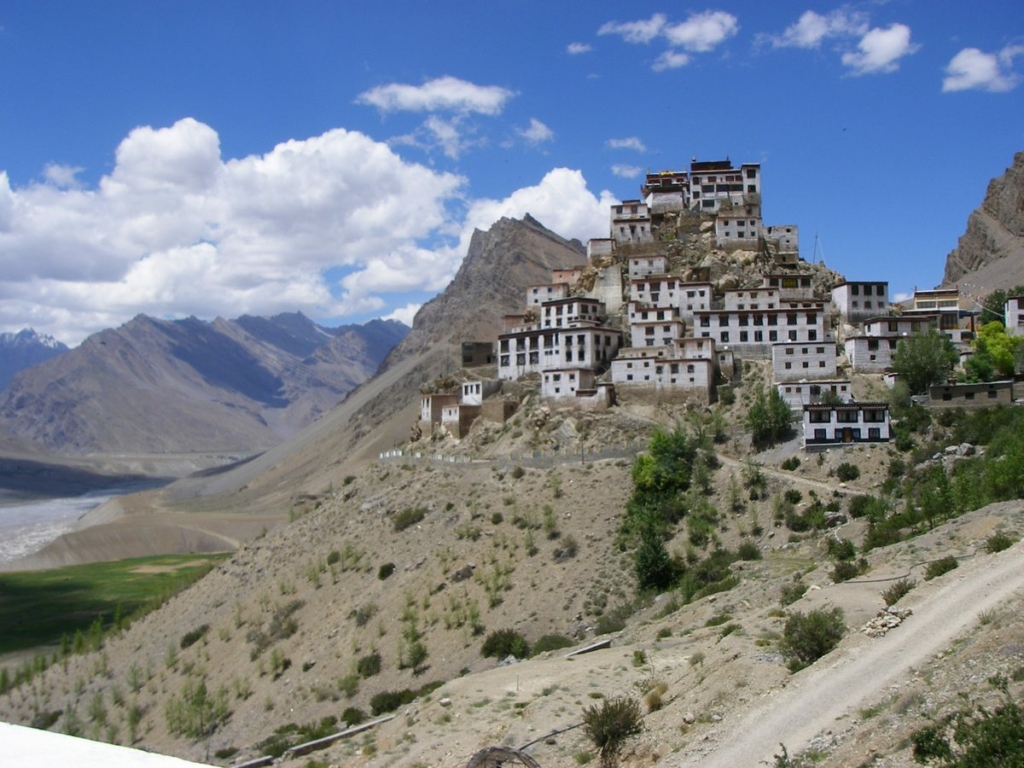
Key Monastery
- Entry fee: Free; donations accepted
- Timings: 6:00 AM to 7:00 PM
- Best time to visit: Sunrise for the iconic terraced view
- How to reach: 12 km north of Kaza
- Time required: 1.5 hours
- Ideal for: All travelers
- Pro tip: For the famous wide-angle shot, drive past the monastery and look back from the road switchback above.
Kibber Village
- Entry fee: Free
- Best time to visit: Late morning
- How to reach: 8 km from Key Monastery on a single-lane paved road
- Time required: 1 hour
- Ideal for: Wildlife enthusiasts (snow leopard sightings in winter; ibex year-round)
- Pro tip: The Kibber Wildlife Sanctuary office can connect you with local spotters if you stay overnight.
Komic, Langza, and Hikkim
- Entry fee: Free
- Best time to visit: Afternoon (12 PM to 4 PM); roads above 4,500 m close after dark in shoulder season
- How to reach: A single loop road connects all three. Komic is 18 km, Langza 14 km, Hikkim 16 km from Kaza
- Time required: 4–5 hours for the loop
- Ideal for: Adventure travelers, photographers, anyone collecting altitude bragging rights
- Pro tip: Hikkim has the world’s highest post office at 14,567 ft. Buy a postcard, write it inside the post office, and post it home — it actually arrives, usually in three weeks.
Day 7: Kaza to Manali via Kunzum Pass and Chandratal (200 km, 9–10 hours)
The longest driving day, but the most rewarding. Leave Kaza by 5:30 AM. The road runs through Losar (last village in Spiti), climbs to Kunzum Pass, drops into Lahaul, and joins the Atal Tunnel approach to Manali.
Kunzum Pass (4,551 metres)
- Entry fee: Free
- Timings: Daylight only; the road closes from October to late May
- Best time to visit: Morning, before clouds gather
- How to reach: NH-505 from Kaza; the road becomes single-lane after Losar
- Time required: 30 minutes for the pass stupa, longer if weather permits photos
- Ideal for: All travelers (acclimatized)
- Pro tip: Walk a complete clockwise circle around the Kunzum Mata temple at the top — it’s tradition for safe passage. Avoid lingering more than 30 minutes at the altitude.
Chandratal Lake (the moon lake)
- Entry fee: ₹150 per person for Indian nationals; ₹500 per person for foreign nationals
- Permit: A free e-permit is mandatory — apply on eaagman.hp.gov.in before you reach the checkpoint
- Timings: Day-trip access only between 6 AM and 6 PM; the lake is a day-visit zone
- Best time to visit: Late morning, when the water turns full turquoise
- How to reach: 14 km diversion from Batal; the road is rough but drivable in any SUV
- Time required: 2.5 hours including the 1 km walk from the parking
- Ideal for: Couples, photographers, all travelers
- Pro tip: Camping at the lake itself is banned. Designated campsites are 2–3 km away at Batal and cost ₹1,200 to ₹2,500 per night per tent. Do not bathe in or touch the lake water — it’s a sacred site. The lake is at 4,300 metres, so move slowly on the walk in.
Reach Manali by 8 PM, drop the rental, and you’re back in green pine forests by dinner.
Essential Tips for Your June 2026 Spiti Trip
- Acclimatize seriously. Do not push from Manali to Kaza in one day if it’s your first trip. AMS hospitalizations are common, and the Kaza district hospital has limited oxygen support.
- Carry cash. ATMs work in Kaza and Reckong Peo, but cards are accepted nowhere else. Carry ₹15,000–₹20,000 per person for the full trip.
- Network is patchy. Only BSNL and Jio postpaid connections work beyond Reckong Peo. Download offline maps before you leave Shimla.
- Fuel discipline. Tank up at Reckong Peo and Kaza. The 175 km stretch between has no working pump.
- Layers, not jackets. June daytime is mild but mornings and Kunzum are sub-zero. Pack thermals, a fleece, and a windproof shell.
- Medication. Carry Diamox (consult a doctor first), painkillers, electrolyte sachets, and any prescription medicine in original packaging.
- Don’t drone. Civilian drones are prohibited in Spiti without prior permission from the SDM — fines start at ₹25,000.
Where to Stay Before and After Your Spiti Trip
There is no StayVista property inside Spiti — accommodation in the valley is limited to local guesthouses, government rest houses, and small homestays (which we recommend booking on arrival, not in advance).
But the start and end of your trip matter. A comfortable Shimla base before you set off, or a Manali property to decompress after seven days of altitude, makes a real difference.
- Before the trip: Travelers often choose a villa in Shimla for one or two pre-trip nights — quiet, gear-friendly, and a soft start before the rough drive.
- After the trip: A property in Manali or Naggar gives you space to rest, sort photos, and ease back into lower altitude before flying or driving home.
Browse all our Himachal Pradesh stays to plan the bookends of your circuit.
FAQs
Yes. Both routes are now open. The Shimla–Kinnaur road is open year-round, and the Manali–Kaza road via Kunzum Pass reopened in late May 2026 along with access to Chandratal Lake. June through mid-October is the peak travel window.
For first-time visitors, Shimla–Kinnaur is safer because the altitude gain is gradual over four days. The Manali route is shorter but rises to 4,551 metres on day one, which causes AMS in many travelers. The ideal trip uses both — enter via Shimla, exit via Manali.
Indian citizens do not need any permit. Foreign nationals need an ILP, issued free of cost at Reckong Peo, Kaza, or Shimla. You will need a passport copy, visa copy, two photos, and a filled form.
Yes, Chandratal reopened with Kunzum Pass in late May 2026. The entry fee is ₹150 per person for Indian nationals and ₹500 for foreign nationals. A free e-permit is required — apply at eaagman.hp.gov.in before you reach the checkpoint. Camping at the lake is not permitted; designated tent sites are 2–3 km away at Batal.
A sedan can reach Kalpa (Kinnaur side) and Kaza if you’re patient. The Kaza to Chandratal stretch and the Kunzum Pass road require ground clearance — a compact SUV is the minimum we recommend.
Daytime is 12°C to 20°C in Kaza. Nights drop to -2°C to 5°C. At Kunzum Pass and Chandratal, daytime is 5°C to 12°C with strong wind chill — pack as if for early winter.
Yes, for children over 8 who are healthy and respond well to slow altitude gain. Skip the Manali entry with young kids — the rapid altitude rise causes headaches and nausea. The Shimla–Kinnaur route, done over four days, is family-friendly.
Only BSNL and Jio postpaid connections work in most of Spiti. Airtel is patchy. Prepaid SIMs do not work beyond Reckong Peo regardless of the network. Download Google Maps offline before you leave Shimla.
For two adults sharing a rental SUV: fuel ₹14,000, stays ₹35,000, food ₹8,000, entry fees and Chandratal permit ₹600–₹800, ILP free (Indian) — around ₹58,000 total, or ₹29,000 per person. Solo travelers using shared sumos can do it for ₹18,000–₹22,000.
Banner Image Credit: Anmol Arora via Unsplash
Written by: Ruben Saha