
Vrindavan Travel Guide 2026: Temples, Holi (Past), Janmashtami & Year-Round Visits
Note: Holi 2026 has passed (March 14). Planning a Vrindavan trip now? Scroll to the year-round guide below — or start planning for Janmashtami 2026 (August 15–16), the biggest celebration Vrindavan sees all year.
[su_box title=”Quick Info” box_color=”#f5a623″ radius=”4″]Best Time to Visit: October–March (cool, festive) | Nearest Airport: Agra (55 km) / Delhi IGI (145 km) | Nearest Station: Mathura Junction (12 km) | Ideal Duration: 1–2 days | From Delhi: ~3 hours by car or train[/su_box]
Vrindavan is one of India’s most spiritually charged towns — a place where every lane smells of marigolds and incense, every ghat hums with bhajans, and temples open before dawn to receive the most devoted visitors. Whether you’re here for Holi, Janmashtami, or simply an ordinary Tuesday in October, the town’s spiritual energy remains constant.
This guide covers everything you need to plan a Vrindavan trip in 2026 — across any month of the year.
In this Blog
TL;DR: What to Know Before You Go
Vrindavan is a temple town 12 km from Mathura in Uttar Pradesh. It’s the legendary birthplace of Lord Krishna’s childhood and is home to over 5,000 temples. The most important ones — Banke Bihari, ISKCON, Prem Mandir, Radha Raman — are open year-round. Holi 2026 has already happened (March 14). The next major festival is Janmashtami on August 15–16, 2026.
Holi 2026 in Vrindavan — What Happened This Year
Vrindavan Holi 2026 unfolded across nearly two weeks in early March, following the traditional temple calendar rather than a single day. The major highlights included:
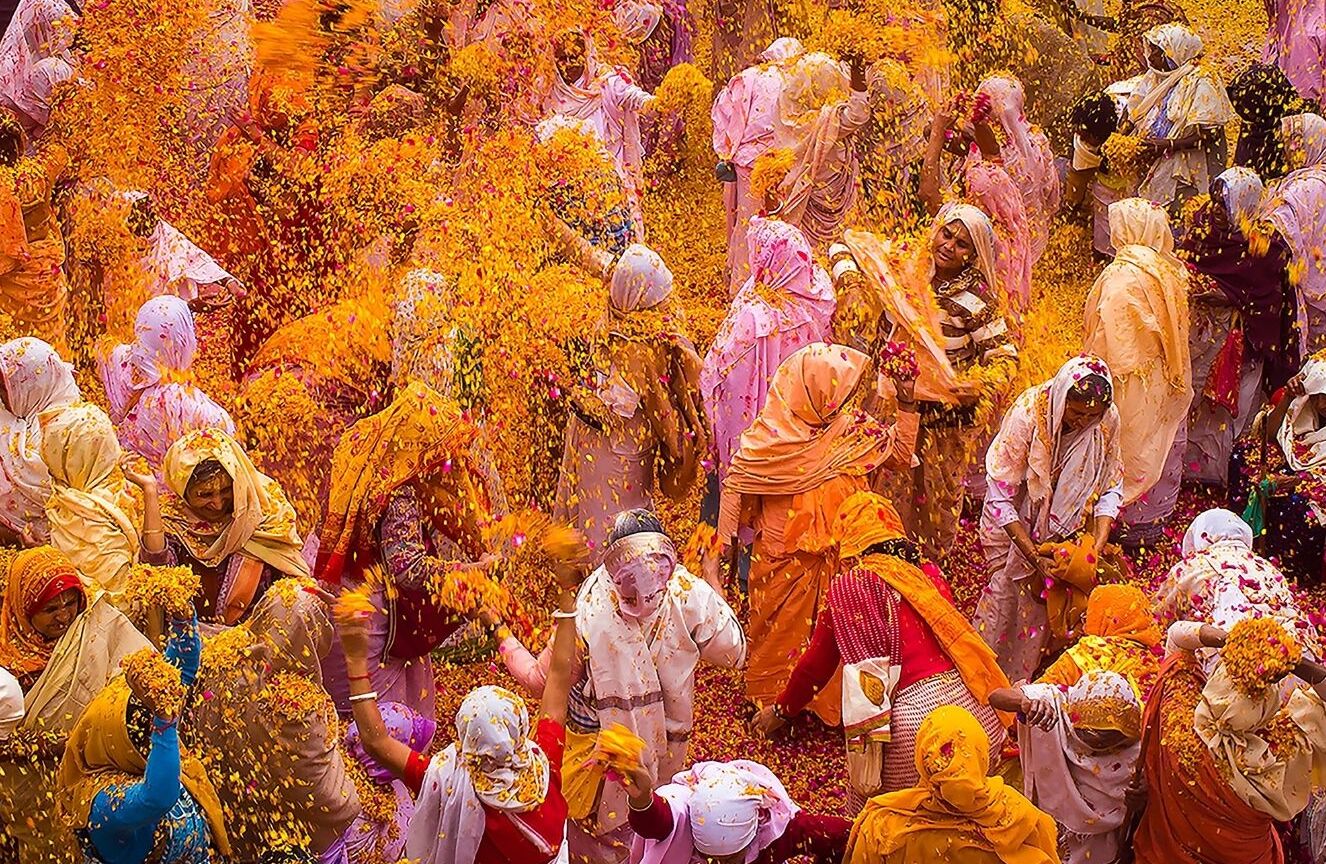
- Phoolon Wali Holi (Flower Holi) at Banke Bihari Temple — petals thrown from the upper floor onto devotees below, creating a memorable sensory experience unique to Vrindavan.
- Widow Holi at Gopinath Temple — an emotionally powerful event where widows from the Vrindavan ashrams play Holi, breaking a decades-old social taboo.
- Lathmar Holi at Nandgaon and Barsana (nearby villages, traditionally the Saturday and Sunday before Holi).
- Holika Dahan on the evening of March 13, followed by the main colour celebrations on March 14.
If you missed Holi 2026, mark your calendar: next Holi falls on March 2–3, 2027. Accommodation in Vrindavan and Mathura books up fast — plan 3–4 months ahead for Holi visits.
Vrindavan in April–August 2026: What to Do After Holi
The months between Holi and Janmashtami are Vrindavan’s quietest — which means smaller crowds, more personal darshan, and a more authentic experience of the town’s daily spiritual rhythm.
Akshaya Tritiya at ISKCON Vrindavan — April 29, 2026
Akshaya Tritiya is one of the most auspicious dates in the Hindu calendar — a day believed to bring inexhaustible good fortune to any puja or ritual performed. At ISKCON Vrindavan (Sri Krishna Balaram Mandir), the day sees elaborate flower decorations, special abhishek (ritual bathing of the deity), and prasad distribution throughout the day.
Entry: Free | Timings: 4:30am–8:30pm (special programs throughout the day) | Best time to arrive: 5am for the morning mangala aarti
Govardhan Meadows in Green — May to July
Govardhan Hill, 22 km from Vrindavan, is one of Braj Mandal’s most sacred sites — the hill Lord Krishna is said to have lifted on his little finger to shelter villagers from Indra’s rains. By June, the surrounding meadows turn lush and green. The 21-km parikrama (circumambulation) path around the hill becomes dramatically scenic — wildflowers, peacocks, and monsoon light.
Distance from Vrindavan: 22 km (45 minutes by auto) | Entry: Free | Best time for parikrama: 5–9am to beat heat | Time required: 5–6 hours for full parikrama on foot, 2 hours by e-rickshaw
Yamuna Ghats in Summer Light
The Yamuna ghats in Vrindavan — particularly Kesi Ghat and Imli Tala — take on a different character from April to August. Fewer pilgrims, calmer waters, and the dramatic golden light of early morning make these months excellent for quiet reflection and photography. Boatmen still operate on the river for short rides (₹50–100 per person). Evening aarti at Kesi Ghat continues year-round.
Best time to visit the ghats: 5:30–7am for morning light, and 6:30–7:30pm for evening aarti | Nearest landmarks: Banke Bihari Temple (10 min walk), ISKCON (20 min walk)
Banke Bihari Temple Darshan — Without the Holi Crowds
During Holi, Banke Bihari Temple sees crowds so dense that darshan can take 2–3 hours. In the April–July window, you can reach the sanctum in 15–20 minutes. The temple has a unique feature: the curtain before the idol is opened and closed repeatedly, creating a rhythmic reveal that devotees find deeply meditative.
Timings: Summer (April–October): 7:45am–12pm and 5:30–9:30pm | Winter (November–March): 8:45am–1pm and 4:30–8:30pm | Entry: Free | No photography inside — leave cameras at the entrance | Best time: 8am when it opens, before heat and crowds build
Janmashtami 2026 in Vrindavan — Complete Planning Guide
Janmashtami — the birthday of Lord Krishna — is the single biggest event in Vrindavan’s annual calendar. If Holi brings colour, Janmashtami brings tears, music, and an atmosphere of collective devotion that’s genuinely unlike anything else in India.
Janmashtami 2026 dates: August 15–16 (midnight of August 15 is the official birth moment, celebrated with the breaking of the fast, abhishek, and a swing ceremony for the idol)
What to Expect at Janmashtami
- ISKCON Vrindavan hosts a large-scale midnight abhishek and theatrical enactment of Krishna’s birth — their celebration is open to all and draws international visitors
- Banke Bihari Temple sees the longest queues but the most devotional energy — expect 3–5 hours of waiting if you arrive after 8pm
- Prem Mandir runs a spectacular light-and-sound show in the lead-up and has a special midnight program
- The Dahi Handi (human pyramid to break a pot of curd, symbolizing Krishna’s childhood pranks) plays out in neighborhoods and open grounds across Mathura and Vrindavan on August 16
Booking Accommodation for Janmashtami 2026
Accommodation within Vrindavan fills up 3–4 months ahead for Janmashtami. Most decent hotels are in Mathura, 12 km away. If you want to stay closer to the action, dharamshalas (pilgrim guesthouses) near Banke Bihari and ISKCON fill first. StayVista properties near Agra and Mathura offer a comfortable base for those prioritizing space and privacy — you can drive in for the main events and return to your stay for the night.
Book by May 2026 for Janmashtami accommodation. Prices double in the week before the festival.
Practical Year-Round Tips for Visiting Vrindavan
Best Visiting Hours
5–7am is the golden window. This is when the main mangala aarti happens at major temples, when the ghats are at their quietest and most photogenic, and when the air is cool enough to walk the town comfortably. Most major temples observe a midday break (12–4pm in summer) — plan your temple circuit in the morning.
What to Wear
Vrindavan is a conservative religious town. Cover shoulders and knees for all temple visits. Many temples require removing footwear outside — carry socks if visiting multiple temples in summer (the stone gets very hot). Avoid synthetic or brightly coloured clothes during major festivals, as they attract colour and are difficult to clean.
How to Reach Vrindavan
From Delhi: 145 km, approximately 3 hours by car on NH19 (Yamuna Expressway). Delhi to Mathura trains take 1.5–2 hours; Mathura Junction to Vrindavan is 12 km (auto: ₹150–200, e-rickshaw: ₹30–50).
Nearest Airport: Agra (55 km, 1.5 hours) — well connected to Delhi, Mumbai, and Bengaluru. Delhi IGI is the more practical option if flying from outside North India.
Within Vrindavan: E-rickshaws are the main local transport. The temple corridor — Banke Bihari, ISKCON, Prem Mandir, Radha Raman — can be covered in a single morning on foot (2–3 km total).
Best Time to Visit Vrindavan by Month
| Month | What’s On | Crowds | Weather |
|---|---|---|---|
| October–November | Diwali, Govardhan Puja, Kartik month (highly auspicious) | Moderate–High | Pleasant (18–30°C) |
| December–February | Quiet pilgrimage season, clear skies | Low–Moderate | Cool (8–22°C) |
| March | Holi (next: March 2–3, 2027) | Very High | Warm (20–35°C) |
| April–May | Akshaya Tritiya (April 29), quieter temples | Low | Hot (30–44°C) |
| June–July | Monsoon begins, Govardhan turns green | Very Low | Humid (28–38°C) |
| August | Janmashtami (Aug 15–16, 2026) | Very High | Warm, humid (28–36°C) |
| September | Post-Janmashtami calm | Low | Warm, clearing (26–34°C) |
Major Temples to Visit in Vrindavan
1. Banke Bihari Temple
The most visited temple in Vrindavan, dedicated to Lord Krishna in the form of Banke Bihari (the “bent in three places” posture of Krishna playing the flute). The deity is believed to be so captivating that the curtain must be repeatedly drawn to prevent devotees from falling into a trance.
Entry: Free | Timings: Summer 7:45am–12pm, 5:30–9:30pm; Winter 8:45am–1pm, 4:30–8:30pm | Photography: Not allowed inside | Ideal for: All visitors | Pro tip: Visit at opening time to experience the first darshan of the day — the energy is calm and intensely devotional.
2. ISKCON Sri Krishna Balaram Mandir
Built in 1975 by ISKCON founder Srila Prabhupada, this white marble temple complex is one of the most orderly and visitor-friendly in Vrindavan. The temple museum, bhog (food offering) schedule, and evening aarti are all well-organized. International visitors find this a good first stop for orientation.
Entry: Free | Timings: 4:30am–12:30pm, 3:30–8:30pm (varies by season) | Photography: Allowed in complex but not in sanctum | Ideal for: International visitors, first-time pilgrims | Pro tip: The Sunday Love Feast (prasad meal open to all, nominal donation) is worth planning around.
3. Prem Mandir
Inaugurated in 2012 by Jagadguru Kripaluji Maharaj, Prem Mandir is Vrindavan’s most visually spectacular temple — white Italian marble with intricate carvings and a light-and-sound show at night. It depicts scenes from Krishna and Radha’s divine love story across its exterior panels.
Entry: Free | Timings: 5:30am–12pm, 4:30–8:30pm | Light show: 7–8pm every evening | Photography: Allowed | Ideal for: All visitors, especially families | Pro tip: Visit twice — morning for the marble in daylight, and evening for the illuminated light show.
4. Radha Raman Temple
One of the oldest and most revered temples in Vrindavan, managed by the Goswami family since the 16th century. The Radha Raman deity is considered self-manifested (swayambhu) — the only one without a Radha idol beside Krishna, as Radha is believed to be present in the tulsi (holy basil) plant placed beside him.
Entry: Free | Timings: Variable (traditional Haveli-style with multiple darshan windows) — check on arrival | Photography: Not allowed inside | Ideal for: Devotees, those interested in Vaishnava history | Pro tip: The sewa (worship service) here has been uninterrupted for 500 years — a remarkable living tradition.
5. Madan Mohan Temple
Vrindavan’s oldest surviving temple (16th century), perched on a hill above Kesi Ghat. The present deity is a replica — the original was moved to Jaipur’s City Palace during Aurangzeb’s reign. The temple offers the best view of the Yamuna river and the Vrindavan skyline.
Entry: Free | Timings: 5am–12pm, 4–9pm | Photography: Allowed | Ideal for: History buffs, photographers | Pro tip: Climb to the rooftop terrace at sunset for Vrindavan’s best panoramic view.
Planning Your Vrindavan Itinerary
One Day in Vrindavan
5:30am — Arrive at Kesi Ghat for sunrise and morning aarti on the Yamuna
7am — Banke Bihari Temple darshan (reaches max crowds by 9am, go early)
8:30am — Breakfast at a ghat-side dhaba (try kachori-sabzi, a Braj breakfast staple)
9:30am — ISKCON Temple darshan and temple garden walk
11am — Prem Mandir (morning light on white marble)
12:30pm — Lunch and midday rest (most temples close 12–4pm in summer)
4pm — Radha Raman Temple and Madan Mohan Temple (hill view)
6:30pm — Evening aarti at Kesi Ghat
7pm — Prem Mandir light show
Two Days: Add Govardhan and Mathura
Day 2 — Drive to Govardhan (22 km) for the parikrama and Manasi Ganga, then continue to Mathura’s Krishna Janmabhoomi and Dwarkadhish Temple. Return to Vrindavan for the evening.
Where to Stay Near Vrindavan
Accommodation options within Vrindavan range from simple dharamshalas to mid-range hotels on the main temple road. For visitors who prefer more space, privacy, and comfort — particularly for family trips or group pilgrimages — StayVista has curated properties near Agra and the Braj region that work well as a base for day visits to Vrindavan and Mathura.
For Janmashtami (August 15–16, 2026), book accommodation by May 2026 at the latest. Festival weekends see 3–4x price surges for hotels within Mathura and Vrindavan.
Frequently Asked Questions
When is the next Holi in Vrindavan?
Holi 2026 has passed (March 14, 2026). The next Vrindavan Holi will be on March 2–3, 2027. Phoolon Wali Holi (Flower Holi) at Banke Bihari typically falls 2 days before the main Holi date.
When is Janmashtami 2026?
Janmashtami 2026 falls on August 15–16. The birth moment of Lord Krishna is celebrated at midnight between August 15 and 16, making August 15–16 the main celebration window. ISKCON and Banke Bihari Temple are the primary venues.
How many hours is Vrindavan from Delhi?
Vrindavan is approximately 145 km from Delhi — about 3 hours by car on the Yamuna Expressway. By train: Delhi to Mathura Junction is 1.5–2 hours on express trains; Mathura to Vrindavan is 12 km (30 minutes by auto).
Is Vrindavan worth visiting outside of festivals?
Yes. The October–March window (outside Holi) is arguably the best time to visit — cool weather, smaller crowds, and the most personal darshan experience. The Kartik month (October–November) is especially auspicious, with evening lamp-lighting on the Yamuna ghats that rivals any festival in atmosphere.
What is Phoolon Wali Holi?
Phoolon Wali Holi (Flower Holi) is a unique Vrindavan tradition held at Banke Bihari Temple, usually 2 days before the main Holi date. Instead of coloured powder, marigold and rose petals are showered on devotees from the temple balcony. It’s considered the most distinctive Holi event in Vrindavan. Next: late February/early March 2027.
What is the entry fee for Banke Bihari Temple?
Entry to Banke Bihari Temple is free. There is no ticket or donation required, though many visitors make voluntary offerings at the temple. Photography inside the sanctum is strictly not allowed.
Can I visit Vrindavan in summer (May–June)?
Yes, but temperatures can reach 44°C. Start all temple visits before 9am, carry water, wear light cotton, and plan rest during the midday hours (12–4pm when most temples are closed anyway). The advantage: very few tourists, personal darshan, and a deeply authentic experience of the town’s daily life.