12 Things to Do in Alibaug in Monsoon: Forts, Beaches & Sea-View Villas
In this Blog
How is Alibaug in Monsoon?
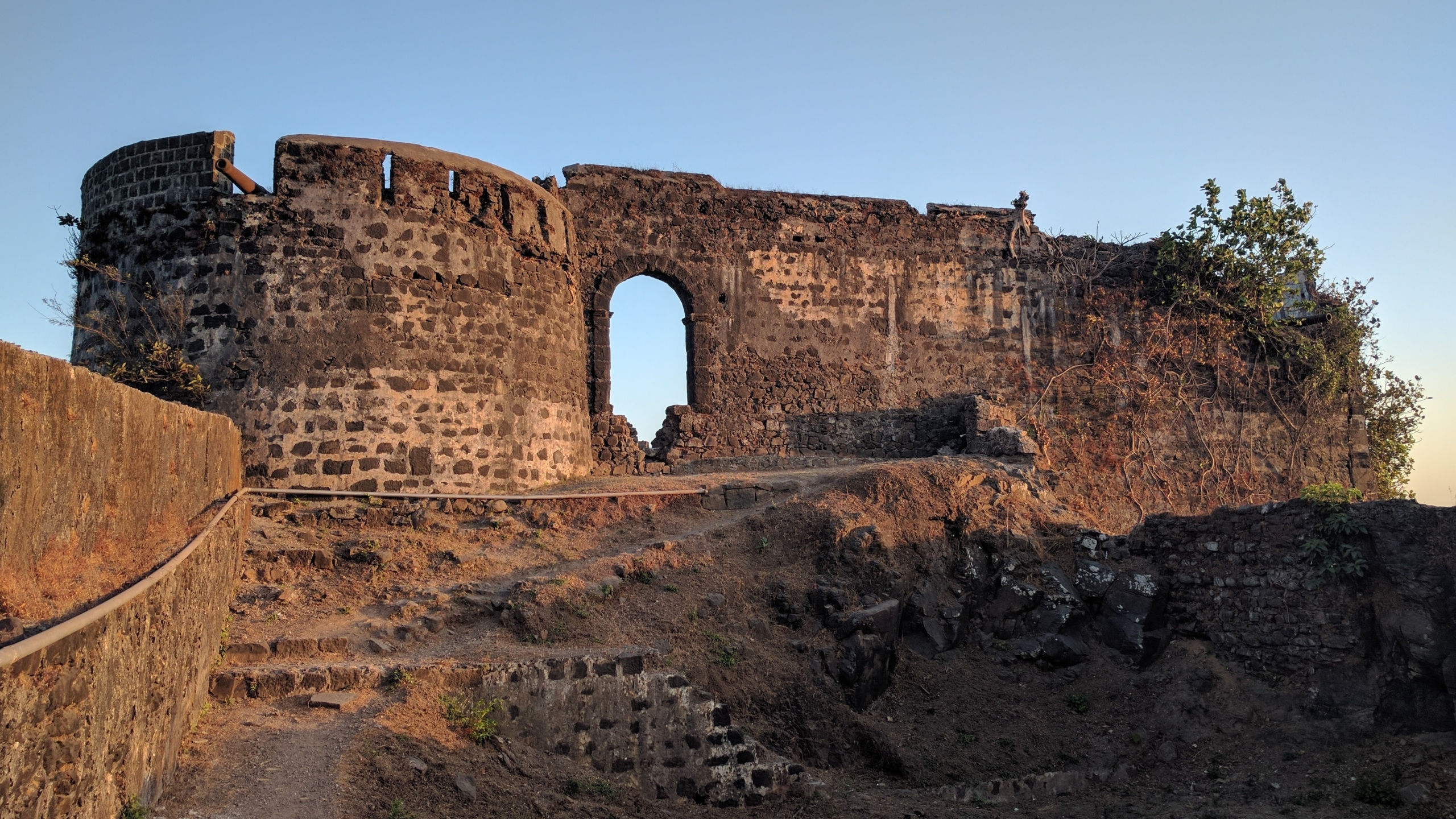
Best months: June to early September (peak rainfall in July). Top forts: Murud-Janjira (the only undefeated sea fort in India), Kolaba (view from shore — skip the low-tide walk in monsoon), Korlai, Sagargad.
Best beaches: Kashid (3 km of white sand), Akshi, Kihim, Varsoli — for walks, photography, and storm-watching, not swimming.
Reach Alibaug: ~95 km / 2.5–3 hours from Mumbai by road via NH66, or 60–75 minutes by M2M RoRo ferry from Bhaucha Dhakka to Mandwa (M2M Ferries).
Avoid in monsoon: Sea bathing, the Kolaba low-tide walk, watersports at Nagaon/Varsoli (closed June–September), unguided treks in heavy rain.
Why to visit Alibaug in Monsoon?
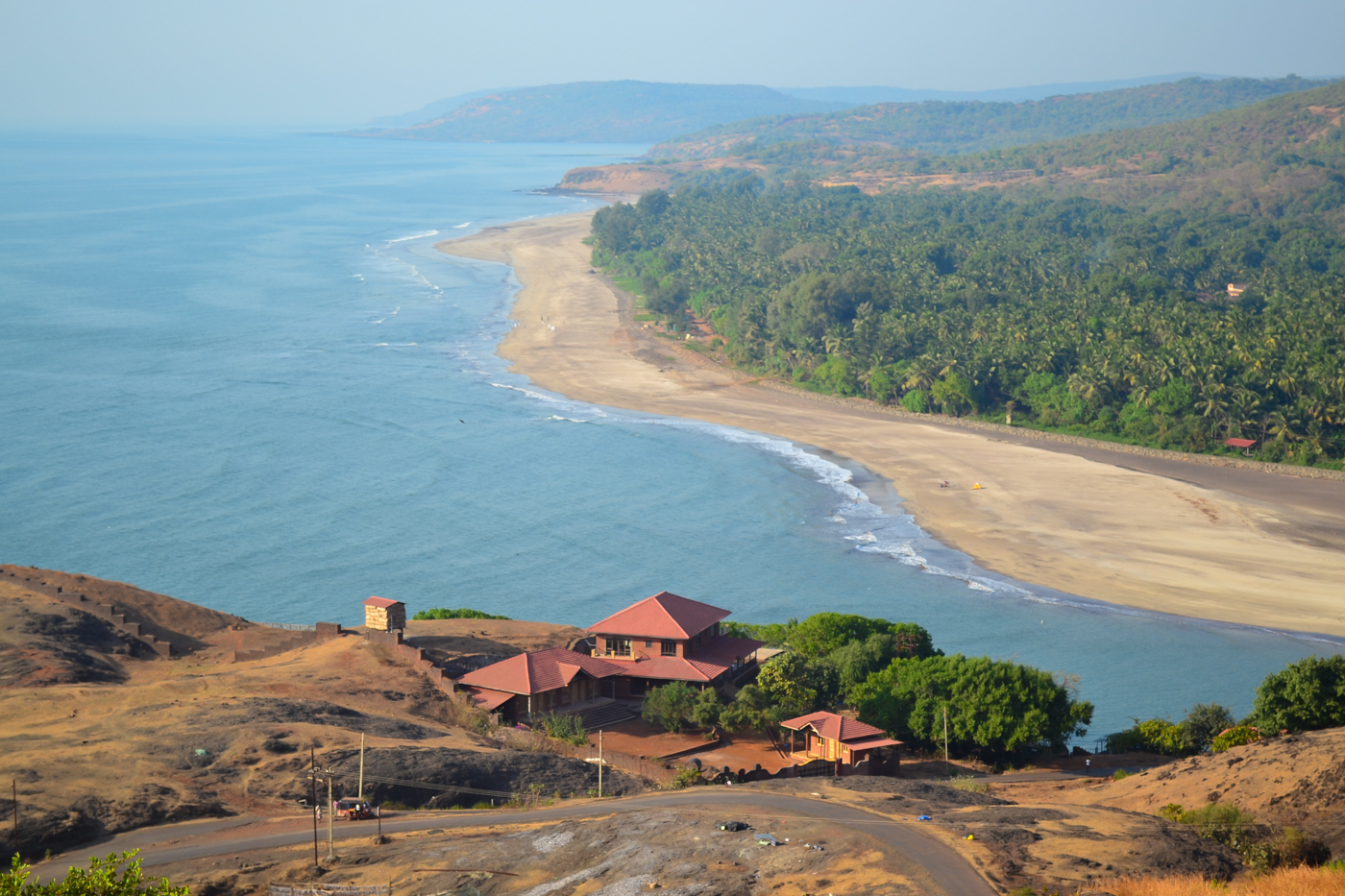
Alibaug, a coastal town in Maharashtra’s Raigad district, transforms between June and September. The Arabian Sea turns slate-grey and dramatic, the Sahyadri foothills behind the coast turn emerald, and centuries-old forts loom out of monsoon mist. According to weather records, July is the wettest month with around 514 mm of rainfall, while September drops to about 351 mm and marks the start of the shoulder season (Weather-and-Climate.com).
This is not the Alibaug of beach parties and jet skis. It is a slower, moodier, more photogenic version and the one a growing share of Indian travellers now prefer. A 2025 Booking.com survey found that 68% of Indian travellers actively seek “less touristy, more local” destinations, and Via.com reported 14% year-on-year booking growth driven by monsoon leisure trips (News9 / Booking.com & Via.com data).
Quick Answer: The best things to do in Alibaug during monsoon are visiting historic forts (Murud-Janjira, Korlai, Sagargad), walking deserted beaches (Kashid, Akshi, Kihim), birdwatching at Phansad Wildlife Sanctuary, eating fresh Konkani seafood, and staying in a private sea-view villa. Skip the Kolaba low-tide walk, sea bathing, and watersports — they are unsafe or closed during June–September.
How to Reach Alibaug in Monsoon
| Mode | Route | Distance / Time | Indicative Cost | Monsoon Status |
| Road from Mumbai | NH66 via Panvel–Pen | ~95–103 km / 2.5–3 hr | Fuel + tolls | Open year-round; expect rain delays |
| Road from Pune | Expressway → Savroli → Pen | ~143 km / 3 hr 15 min | Fuel + tolls | Open year-round |
| M2M RoRo Ferry | Bhaucha Dhakka (Mazgaon) → Mandwa | 60–75 min crossing | Passenger ₹390–460; bike ₹210; car ₹1,020+ | Usually operational; check daily |
| Catamaran (regular) | Gateway of India → Mandwa | ~40 min | ~₹185+ | Typically suspended in monsoon due to rough seas |
Sources: Yatra route data, M2M Ferries official schedule, GatewayPass aggregator.
Pro tip: The Gateway of India catamaran service is almost always pulled off the water during peak monsoon (June–August). The M2M RoRo from Bhaucha Dhakka usually continues because it is a larger vessel, but cancellations do happen on heavy-rain days. Always call the ferry operator the morning of travel.
Alibaug Weather in Monsoon: June, July & August (What to Actually Expect)
Alibaug sits on Maharashtra’s Konkan coast and catches the full force of the Southwest Monsoon as it sweeps in off the Arabian Sea. Between June and August, the town receives the bulk of its annual rainfall — typically 2,500 to 3,500 mm across the full monsoon season — with conditions ranging from light pre-monsoon showers in early June to near-continuous downpours by mid-July. Here is what each month actually looks and feels like, and how to plan around it.
Quick Answer: June in Alibaug is warm and humid with the monsoon arriving around the 7th–10th; July is the wettest month with around 514 mm of rainfall and 25+ rainy days; August stays heavy at roughly 480 mm and 24 rainy days with high humidity and frequent thunderstorms. Daytime temperatures across all three months sit between 24°C and 31°C, and the Arabian Sea remains rough throughout — unsafe for swimming.
| Month | Avg Rainfall | Rainy Days | Avg High | Avg Low | Humidity | Sea Conditions |
| June | ~480 mm | 18–20 | 31°C | 25°C | 80–85% | Choppy, rising swells |
| July | ~514 mm | 25–27 | 28°C | 24°C | 88–92% | Very rough, dangerous |
| August | ~480 mm | 23–25 | 28°C | 24°C | 88–90% | Rough, dangerous |
Sources: Weather-and-Climate.com Alibaug averages; IMD Mumbai Regional Centre; SANDRP-IMD district rainfall reports.
Alibaug in June — The Monsoon Arrives
June is the transition month. The first 7–10 days are typically hot, sticky, and overcast, with daytime highs around 31°C and humidity climbing past 80%. The Southwest Monsoon officially reaches the Konkan coast around June 7th–10th, and from that point on rainfall builds quickly — Alibaug averages roughly 480 mm of rain across the month over 18 to 20 rainy days.
- Mornings are often clear with strong sun before clouds build by 11 AM.
- Afternoons and evenings bring heavy short-burst showers and occasional thunderstorms.
- Sea temperature is warm (~28°C) but waves become unpredictable as offshore winds strengthen.
- The landscape transforms — by the last week of June, the brown pre-monsoon countryside has turned bright green.
Alibaug in July — Peak Monsoon
July is the wettest month of the year in Alibaug. The town receives an average of ~514 mm of rainfall — more than London gets in an entire year — spread across 25 to 27 rainy days. Temperatures actually drop compared to June: highs hover around 28°C, lows around 24°C, and humidity sits at 88–92% almost continuously.
- Multi-day rain spells rather than isolated showers — it can rain steadily for 48–72 hours.
- Frequent thunderstorms, especially in late afternoon and early evening.
- Sea is at its most dangerous — the Indian Coast Guard and local authorities routinely issue advisories against entering the water.
- Ferry services from Gateway of India (catamaran) are usually suspended; the larger M2M RoRo from Bhaucha Dhakka to Mandwa runs most days but cancels on rough-sea mornings.
- Visibility on the road drops sharply during heavy showers; drive with low beams, not high.
Alibaug in August — Still Wet, Slightly More Predictable
August continues at near-July intensity. Rainfall averages around 480 mm across 23 to 25 rainy days, with temperatures and humidity essentially unchanged from July (highs ~28°C, lows ~24°C, humidity 88–90%). The difference is rhythm: by August, the monsoon settles into longer dry windows between rain bursts, and full-day washouts are slightly less common than in July.
- More usable outdoor windows — mid-morning and late-evening dry spells are more reliable.
- Phansad Wildlife Sanctuary is at its richest — the Oriental Dwarf Kingfisher (a monsoon-only visitor) is most active, and the forest is densely green.
- Sagargad’s Dhondana waterfall is at peak flow, though trails are slippery and leech-prone.
- Sea remains rough — undertows are still dangerous; swimming is not safe.
- Festival overlap — Janmashtami and Independence Day fall in August, so weekend villa rates can spike.
Will It Rain Every Day?
In July, effectively yes — Alibaug records measurable rainfall on roughly 25 of 31 days. In June and August, dry windows of 4–8 hours are common, especially in the early morning. Useful planning rule:
- Plan outdoor activities for 7 AM–11 AM when possible.
- Keep afternoons flexible — that’s when heavy bursts hit.
- Always pack a waterproof jacket rather than an umbrella; coastal wind makes umbrellas useless.
Sea & Beach Conditions Across All Three Months
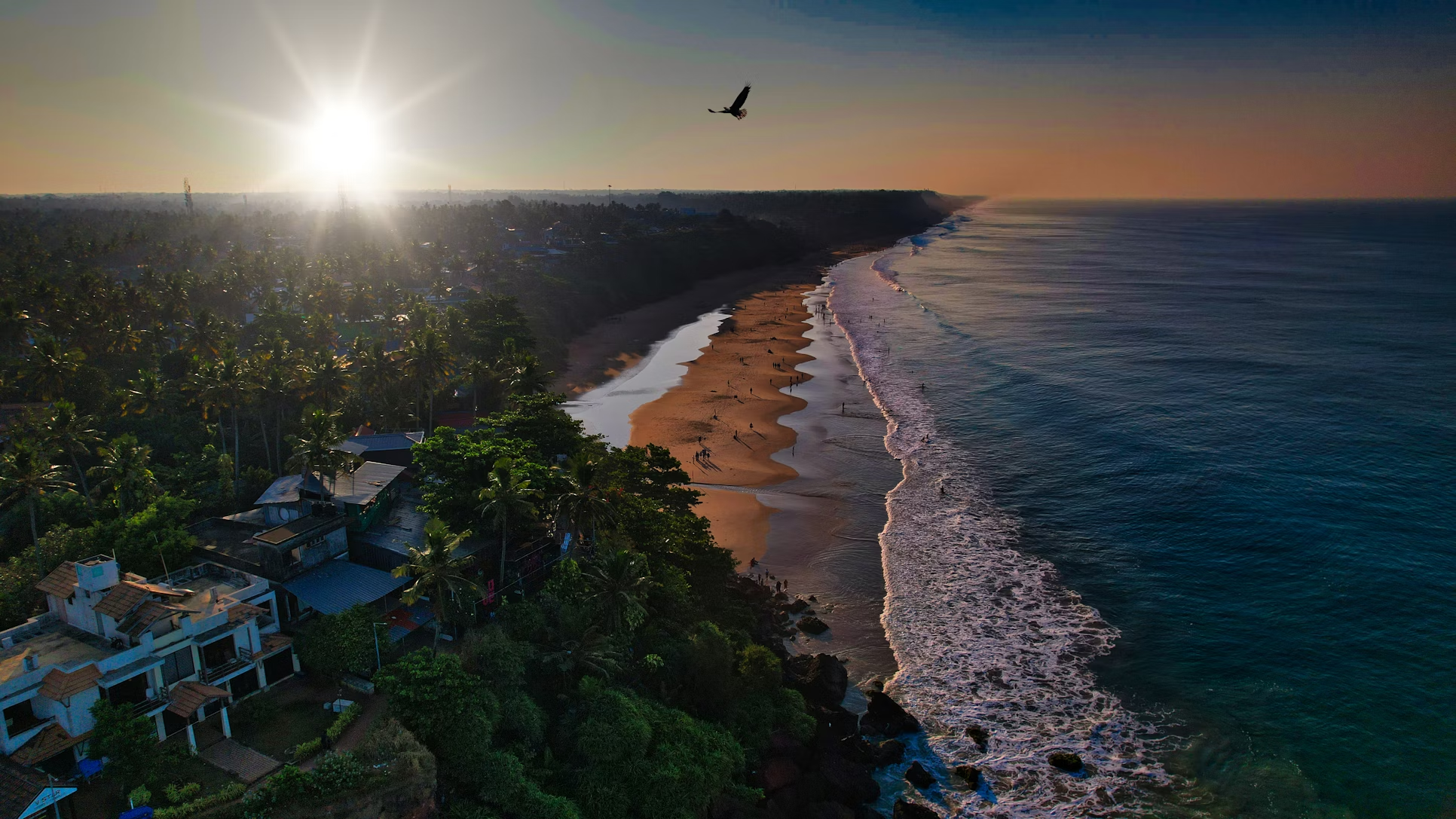
The Arabian Sea is at its most aggressive between June and September. Wave heights routinely exceed 2–3 metres, undertows are strong, and the seabed shifts rapidly. Watersports at Nagaon, Varsoli, and Kashid are officially closed from June through September, and lifeguard cover at most beaches is minimal. Treat the beaches as scenic and photographic destinations only — no swimming, no wading past ankle depth, no rock-pool exploration during high tide.
Cyclone Risk The Konkan coast occasionally sees pre-monsoon (May–early June) or post-monsoon (October) cyclonic systems. During the core monsoon months (June 15–August 31), cyclones are rare but heavy depressions can stall over the coast and cause flooding. Always check the IMD Mumbai bulletin the morning of travel during any extended rain spell.
The 12 Best Things to Do in Alibaug During Monsoon
1. Photograph Kolaba Fort from the Shore (and Skip the Walk)

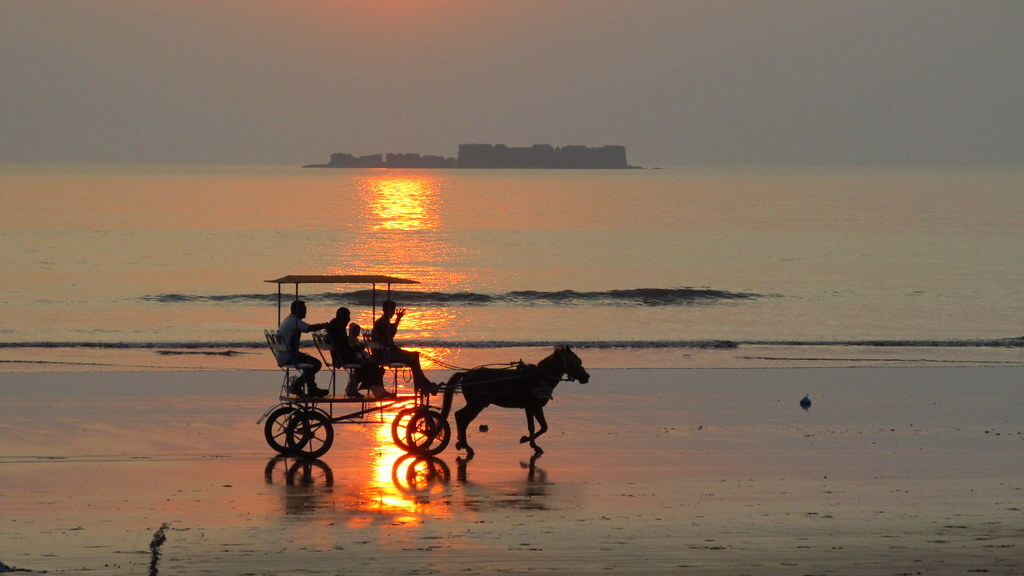
Kolaba Fort sits roughly 1–2 km offshore from Alibaug Beach and is the only sea fort you can usually walk to at low tide. It is roughly 300 years old, completed in 1681 — the last fortification commissioned by Chhatrapati Shivaji Maharaj before his death — reinforced by his son Sambhaji, and famously commanded by Maratha admiral Kanhoji Angre from 1713 (Holidify).
In monsoon, however, the low-tide window narrows and water can remain waist-deep even at the “low” mark, making the crossing dangerous. The fort itself is closed off practically for visitors July–September. The good news: the silhouette of Kolaba against grey skies and rolling waves is the most-photographed monsoon shot of Alibaug. Walk the main Alibaug Beach at dawn for the cleanest frame.
Information Gain: Local boatmen often offer “rough-sea rides” to the fort in monsoon. These are not safety-certified. Decline.
2. Take a Day Trip to Murud-Janjira — India’s Undefeated Sea Fort

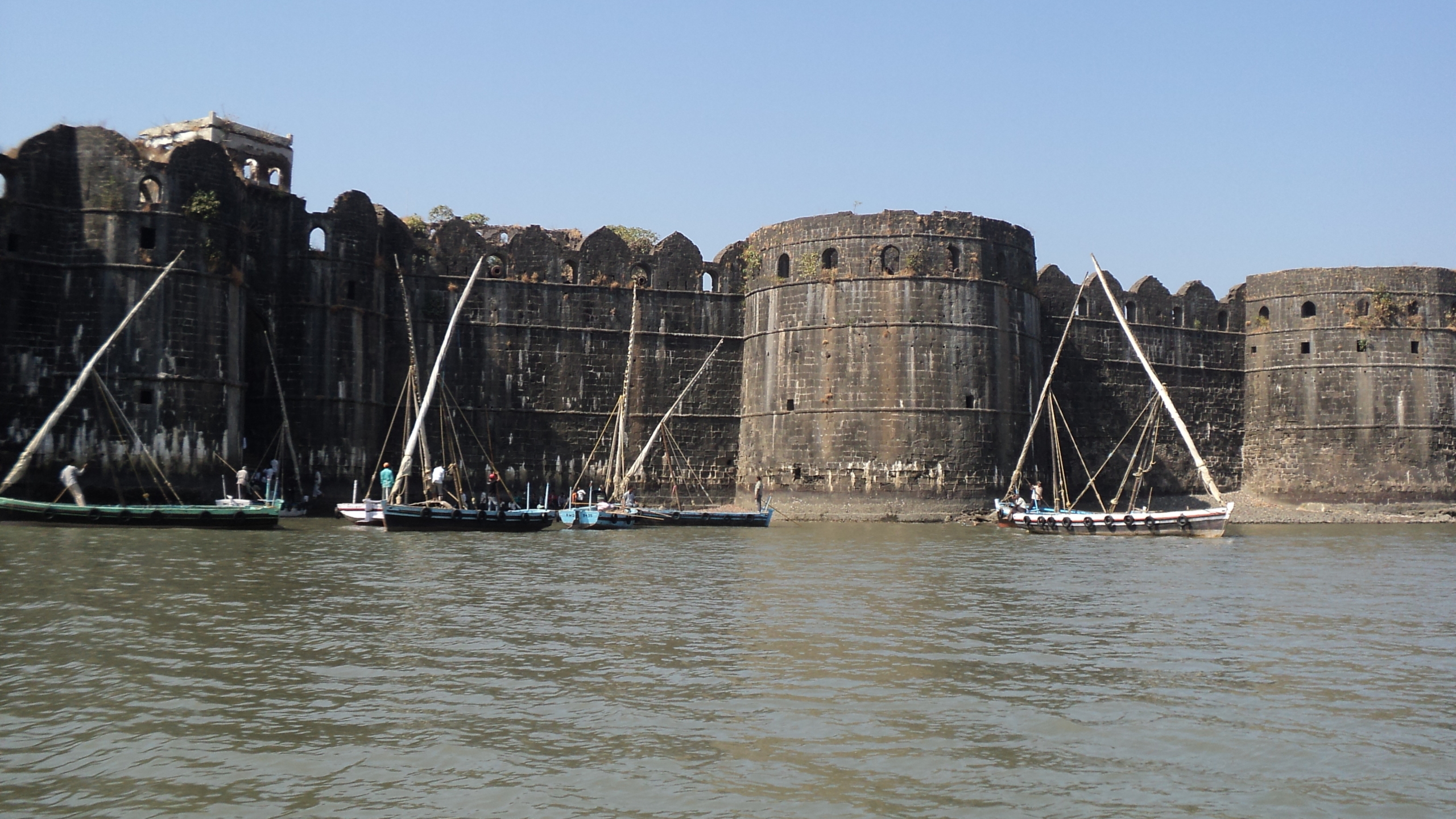
Murud-Janjira, about 50 km south of Alibaug, is the only major sea fort in India that was never conquered. Built by the Siddis — soldiers of Abyssinian (Ethiopian) origin — with construction begun under Malik Ambar and completed around 1567 AD, it withstood sieges by the Marathas, Mughals, Portuguese, and the British (Maharashtra Tourism / MTDC; Wikipedia).
The fort sits on an island and is reached by sailboat from Rajapuri jetty. Inside you’ll find 26 artillery towers, three legendary cannons — Kalaal Baangadi, Chavri, and Landa Kasam — and two 60-foot freshwater ponds. Fort timings are 7 AM–6 PM and there is no entry fee for the fort itself; boat tickets typically run ₹20–₹300 depending on the type (Holidify).
Monsoon caveat: Boats are suspended on heavy-sea days. Call the Rajapuri jetty before driving down. The drive itself, through Revdanda and Kashid, is one of the most beautiful coastal stretches in monsoon Maharashtra.
3. Walk Kashid Beach — 3 Kilometres of White Sand and Casuarinas

Kashid Beach is roughly 30 km from Alibaug and 135 km from Mumbai, a 3-km stretch of fine white sand ringed by casuarina trees and listed on Maharashtra Tourism’s official beach directory (MTDC). It is the visual opposite of Alibaug’s main black-sand beach.
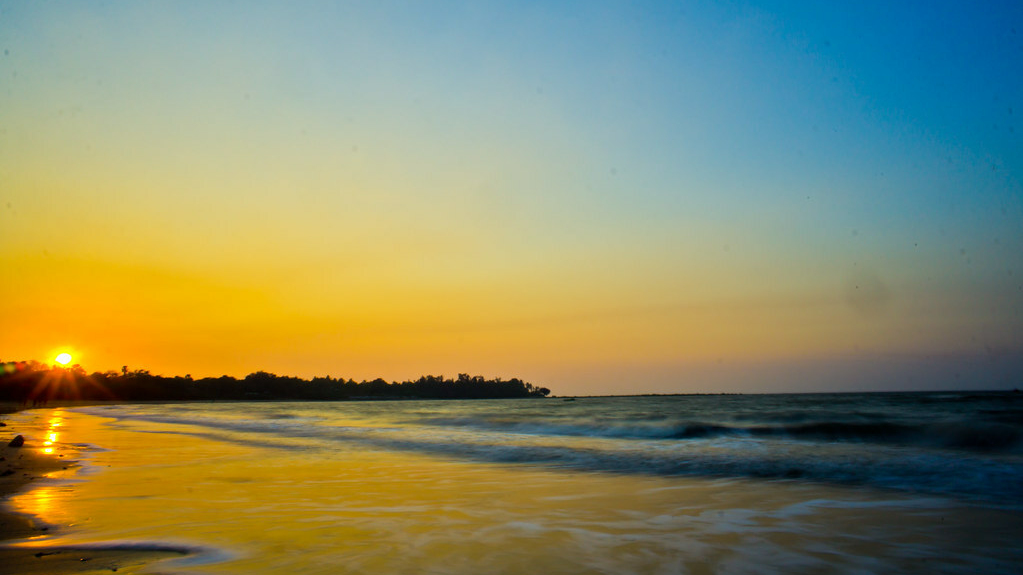
In monsoon, Kashid is dramatic — empty, windswept, and lined with surging surf. Do not swim. The Arabian Sea generates rough swells and powerful undertows between June and September. Walk the length of the beach, sit under the casuarinas during a passing shower, and watch the squall lines roll in.
4. Trek the Sagargad Fort for Monsoon Waterfalls

Sagargad sits at 1,357 feet in Alibag taluka, about 12 km from Alibaug town. The trek starts at Khandale village and takes around 3.5 hours one way at a moderate grade (Indiahikes). The real reward in monsoon: a 100-foot waterfall called Dhondana that only fully flows June–September.
Conditions are slippery and leech-prone. Wear high-grip footwear, carry rain covers, and never trek alone in heavy rain. Outlook Traveller’s monsoon waterfall guide for Maharashtra lists Dhondana and similar Sahyadri falls among the season’s best (Outlook Traveller).
5. Visit Korlai Fort — Where Portuguese Creole Is Still Spoken

Korlai Fort, built in 1521 by the Portuguese with permission from the Ahmednagar sultanate, sits 300 feet above the sea guarding the Revdanda creek. It was recaptured by the Portuguese under Abranches in 1594 (Wikipedia; MTDC).
What makes Korlai unique is not just the ramparts — the village at the base still speaks Korlai Portuguese Creole, one of the last surviving Indo-Portuguese creoles in the world. The fort exterior is accessible year-round; the climb is short and the views over Revdanda beach in monsoon are extraordinary.
6. Birdwatch at Phansad Wildlife Sanctuary
Phansad, in the Murud–Roha talukas of Raigad, is one of the few protected forests in coastal Maharashtra and a flagship monsoon destination for birders. The sanctuary records more than 200 bird species, including the elusive Oriental Dwarf Kingfisher (ODK) which arrives specifically for the monsoon breeding season, plus the Malabar Pied Hornbill and Sri Lankan Frogmouth (Phansad Wildlife official; MTDC).
Timings: 6 AM to 6 PM, daily. Trails get slippery, and leeches are common — wear ankle-length boots, tuck pants into socks, and consider hiring a forest guide at the gate.
7. Eat a Konkani Seafood Thali (and Drink Sol Kadhi)

Alibaug’s culinary identity is Konkani-Malvani: pomfret, bombil, prawns, and mud crabs cooked in coconut-based gravies, served with rice and topped with kokum-cumin sol kadhi. A January 2026 The Week feature documented Alibaug’s culinary reinvention — from beachside thali shacks to higher-end restaurants now serving these dishes with serious technique (The Week).
Try: A traditional fish thali at a no-frills place like Sanman or Hotel Saraswati in Alibaug town, then a sundowner sol kadhi at your villa. Monsoon is also peak season for kokum sherbet — kokum fruit, cumin, coriander, salt — Konkan’s natural electrolyte drink.
8. Walk Akshi, Kihim and Varsoli Beaches — Without the Crowds

Beyond the famous beaches, Alibaug’s lesser-known coastline rewards monsoon walkers. According to the Raigad Zilla Parishad’s official tourism page (zpraigad.gov.in):
• Akshi Beach — a long northern stretch, ideal for sunrise photography even through clouds.
• Kihim Beach — about 12 km north, shaded by casuarinas and known among naturalists for butterflies and migratory birds.
• Varsoli Beach — about 3 km from Alibaug near the naval base, quieter and cleaner than the main beach.
Watersports operators across Nagaon, Varsoli, and Kashid shut down June through September because of sea conditions (Thrillophilia). Treat these beaches as photo, picnic, and walking destinations — not adventure venues.
9. Storm-Watch from a Sea-View Villa Deck

This is the activity Alibaug regulars rate above everything else. A private villa with a covered deck and an unobstructed sea view turns monsoon weather itself into the experience: squall lines visible 10 minutes before they hit, lightning over the Arabian Sea after dark, and the smell of petrichor through the casuarina groves.
India’s vacation rental market — the segment that powers private villa stays — is now estimated at US$2.12 billion in 2024 and projected to reach US$3.22 billion by 2029, a CAGR of 8.72% (Statista). Condé Nast Traveller India lists Alibaug villas prominently in its annual “Top 50 Villas in India” feature (Lohono/CNT India reference).
What to look for in a monsoon villa booking:
• Covered outdoor seating that works in horizontal rain
• A heated/indoor pool (most monsoon villas don’t have one — confirm before booking)
• Backup power (load-shedding is common in heavy storms)
• Access road that does not flood (ask the host directly)
10. Drive the Alibaug–Murud Coastal Road
The 50-km coastal stretch from Alibaug south to Murud, passing Akshi, Nagaon, Revdanda, Korlai, and Kashid, is among the most scenic monsoon drives in Maharashtra. Expect waterfalls along the cuttings, fields of fluorescent green paddy, fishing villages with hand-painted boats pulled up the beach, and frequent low bridges that occasionally close after heavy rain.
Allow a full day for stops. Drive with headlights on, slow into curves — visibility drops without warning — and keep a microfibre cloth handy for the windshield interior, which fogs constantly in humid conditions.
11. Visit Vrindavan Farms or a Working Village
Beyond the forts and beaches, Alibaug’s rural Konkan character shows up most in its paddy fields, coconut and betel-nut plantations, and fishing villages. Several farms now offer day-visit experiences — farm-to-table meals, betel-nut harvesting, traditional Konkan cooking demos.
Booking.com’s 2025 traveller survey, cited above, found 68% of Indian travellers prefer “less touristy, more local” experiences — and a farm day in monsoon Alibaug is exactly that. Ask your villa or homestay host for current bookings; small farms rarely market online.
12. Stay In and Read — Slow Travel as the Point

This is not a filler item. Indian monsoon travel has shifted toward what travel platforms now call “deliberately slow” stays — 3+ nights in one place, fewer attractions per day, more time on the deck. Via.com’s 14% YoY booking-growth data (News9) is concentrated in 3–4-day private villa stays during monsoon weekends, not in day trips.
Bring a book, plan one outing per day, and treat the storms themselves as the entertainment. That is what most monsoon Alibaug repeat-visitors do, and it is why the sea-view villa segment is the fastest-growing accommodation category in the area.
What’s Open vs Closed in Alibaug Monsoon — Quick Reference
| Activity / Attraction | Status June–September | Notes |
| Kolaba Fort (interior walk) | Risky / not recommended | Waist-high water even at “low” tide |
| Kolaba Fort (shore view) | Open | Best monsoon photo subject |
| Murud-Janjira Fort | Open, weather-dependent | Boats suspended on rough-sea days |
| Korlai Fort exterior | Open | Short climb, dramatic views |
| Sagargad Fort trek | Open, slippery | Best for Dhondana waterfall |
| Phansad Wildlife Sanctuary | Open 6 AM–6 PM | Birds active; trails wet |
| Kashid / Akshi / Kihim beaches | Open for walking | No swimming |
| Nagaon / Varsoli watersports | Closed | Resumes October |
| Gateway of India catamaran | Mostly suspended | Rough seas June–August |
| M2M RoRo ferry | Usually operational | Check the day of travel |
| Sea bathing anywhere | Unsafe | Undertows, rough swells |
Where to Stay: Choosing a Sea-View Villa in Monsoon
Alibaug’s accommodation landscape has shifted sharply over the past five years. Hotels and resorts have not grown — but private sea-view villas have. The segment now sits inside a national vacation-rental market that is growing 8.72% per year, and the highest demand months are now June–September, not just December–February.
Checklist before you book:
1. True sea view or “sea-facing”? Confirm with a photo from the villa deck, not a marketing render.
2. Covered outdoor space that works in horizontal rain — pergola, deep verandah, or wraparound balcony.
3. Power backup — load-shedding is common in monsoon.
4. Access road condition — some villas off the Alibaug-Murud belt have unpaved last-km stretches that turn to slush.
5. Cancellation flexibility — ferries cancel, roads flood; pick a host with reasonable monsoon-cancellation terms.
6. Distance from the beach you actually want — a “5 minutes from beach” claim can mean 5 minutes by car or 25 by foot in rain.
Sapphire Shores Beachfront Villa


Other Villas to Stay in Alibaug


Monsoon Safety in Alibaug — Non-Negotiables
• Never swim in the sea. This is the single most-cited cause of monsoon tourist deaths along the Konkan coast. Undertows are invisible.
• Don’t walk to Kolaba Fort at “low tide.” The tidal windows are narrower than apps show, and waist-deep water is normal in July–August.
• Trek with a guide. Sagargad and Phansad both look easy on Google Maps. They aren’t, in heavy rain.
• Carry cash. Card machines and UPI fail intermittently in storms.
• Check ferry status the morning of travel. The M2M RoRo cancels for rough seas occasionally. The Gateway catamaran is suspended for most of monsoon.
• Drive with low beams in fog, not high beams — they bounce light off the rain.
Here’s a copy-paste-ready weather section for the blog. Sourced from IMD-aligned coastal Konkan data and weather-and-climate.com averages for Alibaug.
What to Pack for Alibaug Monsoon
- Waterproof hooded jacket (umbrellas don’t work in coastal wind)
- Quick-dry trousers and shorts
- Two pairs of grippy footwear — one for walking, one for treks
- Microfibre towels and a dry-bag for electronics
- Power bank (load-shedding is common during storms)
- Insect repellent (essential for Phansad and Sagargad)
- Basic first-aid kit including antiseptic for leech bites
- Physical cash (UPI and card terminals fail intermittently in storms)
FAQ — Alibaug Monsoon
Yes — if you reframe the trip. Alibaug in monsoon is for fort photography, empty beach walks, birdwatching, Konkani food, and slow villa stays — not for swimming, watersports, or beach parties. Travellers who plan around monsoon conditions usually rate the experience higher than peak-winter visits because the area is greener, quieter, and visually more dramatic.
Early June (just before peak monsoon onset) and September (the shoulder month) offer the best balance of green landscapes and manageable rain. July is the wettest at around 514 mm; August is similar. If you want maximum drama and don’t mind cancellations, go in July. If you want more outdoor time, go in early June or late September.
It is officially not recommended between July and September. Even at low tide, water remains too deep and the seabed is slippery. View and photograph it from the shore instead.
No. Operators at Nagaon, Varsoli, and Kashid shut their services from June to September because of unsafe sea conditions. Watersports resume in October.
The two reliable options are the road route via NH66 (~95 km, 2.5–3 hours) and the M2M RoRo ferry from Bhaucha Dhakka to Mandwa (60–75 minutes; passenger fare around ₹390–460). The regular Gateway of India catamaran is usually suspended in monsoon.
A waterproof jacket (umbrellas are useless in coastal wind), quick-dry footwear with grip, microfibre towels, a dry-bag for electronics, a power bank, insect repellent for the sanctuary, basic medical kit, and physical cash. Avoid white clothing — coastal soil stains.
The fort is open, but access depends on whether sailboats are operating from Rajapuri jetty. On heavy-sea days, boats are suspended. Call the jetty before driving down from Alibaug.
Historically, monsoon was Alibaug’s low season and villa rates dropped. That has shifted — monsoon weekend rates are now closer to peak-season rates for the top villas, driven by the 14% YoY growth in monsoon travel bookings and the 8.72% CAGR in India’s vacation rental market overall.
Conclusion: Why Monsoon Is the Smartest Time to Visit Alibaug
Alibaug in the monsoon is not the postcard version sold in winter brochures — and that is exactly the point. The crowds thin out, room rates ease (slightly), the forts loom out of grey mist, the Sahyadri foothills go neon-green, and the Arabian Sea turns from a swimming pool into a piece of cinema. For travellers who already know the dry-season version of Alibaug, the monsoon version is a different town entirely.
The trick is matching your itinerary to the season. Murud-Janjira, Korlai, Sagargad, Phansad Wildlife Sanctuary, the Alibaug-Murud coastal drive, Konkani seafood at a roadside thali shack, and long unhurried hours on a covered villa deck — these are the activities the monsoon rewards. Swimming, watersports, the Kolaba low-tide walk, and the Gateway of India catamaran are the ones it punishes. Plan around that single line and the trip works.