Looking for the best places to visit in Andaman? In 2024, the islands welcomed 710,397 domestic tourists – more than double the 323,619 who visited in 2023. Andaman is no longer a niche choice; it’s India’s fastest-growing beach destination, and the tourism department projects another 25% jump in 2025.
But with 836 islands spread across 8,249 sq km, figuring out where to actually go can feel overwhelming. Most guides hand you names without the practical layer – entry fees, ferry timings, scuba costs, how many days you actually need. That’s what this guide fixes.
Here are 20 places worth building an Andaman itinerary around in 2026, grouped by island, with entry fees, timings, how to reach, and tips gathered from travelers and local operators. Whether you’ve got 5 days or 10, this list covers what matters — and what you can skip.
Andaman welcomed 710,397 domestic tourists in 2024 – a 120% jump from 2023. This guide covers 20 must-visit places across Havelock, Neil, Port Blair, and offbeat islands – with entry fees, timings, ferry routes, and insider tips for 2026. Best time: October to May. Ideal duration: 5–7 days. Budget: ₹45,000–67,000 per person (mid-range).
In this Blog
Quick Info: Andaman Travel Planner
Best time to visit
October–May (peak Dec–Mar)
How to reach
Flights to Port Blair (Veer Savarkar International) from Delhi, Mumbai, Chennai, Bengaluru, Kolkata
Nearest airport
Veer Savarkar International Airport (IXZ), Port Blair
Ideal duration
5–7 days (10 days for North Andaman)
Budget range
₹45,000–67,000 per person (5-day mid-range, Delhi origin)
Permits
None for Indian nationals; foreign visitors get RAP free on arrival at Port Blair (30 days, extendable by 15 days)
Currency
Indian Rupee (₹); ATMs available in Port Blair, Havelock, Neil
Language
Hindi, English, Bengali, Tamil widely understood
When is the best time to visit Andaman in 2026?
The best time to visit Andaman is October to May, with peak conditions from December to March. Temperatures stay between 23°C and 31°C, rainfall is minimal, and dive visibility reaches 20–40 metres. The Southwest monsoon (May–September) brings heavy rain, ferry cancellations, and closed dive sites – though stays drop 50–70%.
Andaman gets around 3,000 mm of rainfall a year, spread across two monsoons. The Southwest monsoon (May–September) is the heavier one; the Northeast monsoon (October–December) brings sporadic showers that rarely disrupt plans. If you’re chasing specific experiences, timing matters:
Scuba diving peak: December to March (20–40m visibility)
Budget travel window: May–September (cheaper stays, but ferry disruption risk)
Festival season: Island Tourism Festival runs in January (dates vary year to year)
Honeymoon sweet spot: November to February
Andaman’s peak tourist season runs December to March, with temperatures between 23°C and 31°C and minimal rainfall. The Southwest monsoon from May to September drives ferry cancellations and closes most dive sites, while the Northeast monsoon from October to December brings sporadic but manageable rain.
How do I reach Andaman and get around between islands?
Port Blair’s Veer Savarkar International Airport is the single gateway. Direct flights from Delhi, Chennai, Mumbai, Kolkata, and Bengaluru take 2.5 to 3.5 hours, with Delhi alone running 21+ weekly services across IndiGo, Air India, and Vistara. No passenger ship route currently serves tourists – flights are it.
Inter-island travel is by ferry. Three private operators – Makruzz, Green Ocean, and Nautika — run 10+ daily Port Blair-Havelock-Neil services, plus a government DSS ferry as backup. Fares range from ₹800 to ₹1,800 depending on operator and class. Makruzz has the most reliable schedule; the government ferry is cheapest but books out days in advance .
Pro tip: Book private ferry tickets at least 2 weeks ahead in peak season. The new Veer Savarkar International Airport terminal handles 5 million passengers a year – peak-day queues are real. Arrive 2.5 hours early.
Foreign nationals need a Restricted Area Permit (RAP), issued free on arrival at Port Blair’s Veer Savarkar International Airport (or Haddo Wharf if arriving by ship). The RAP is valid for 30 days and extendable by 15 days through the Superintendent of Police in Port Blair. Since 2022, no form filling is required – just a passport and visa check. Nicobar Islands remain restricted to all tourists; citizens of Afghanistan, China, and Pakistan need prior Ministry of Home Affairs approval. Indian citizens need no permit for tourist zones.
Within Havelock and Neil, rent a scooter (₹400–600/day) or hire a taxi for ~₹1,500–2,000 per day. Public buses exist but don’t stick to tourist schedules.
Which are the best places to visit in Havelock Island (Swaraj Dweep)?
Havelock – officially renamed Swaraj Dweep in 2018 but still called Havelock – is Andaman’s headline island. This is where you dive, where you see the famous beaches, and where most first-time visitors spend at least 2 nights. For travelers who’ve done Goa and want something quieter, Havelock is the natural next step.
1. Radhanagar Beach
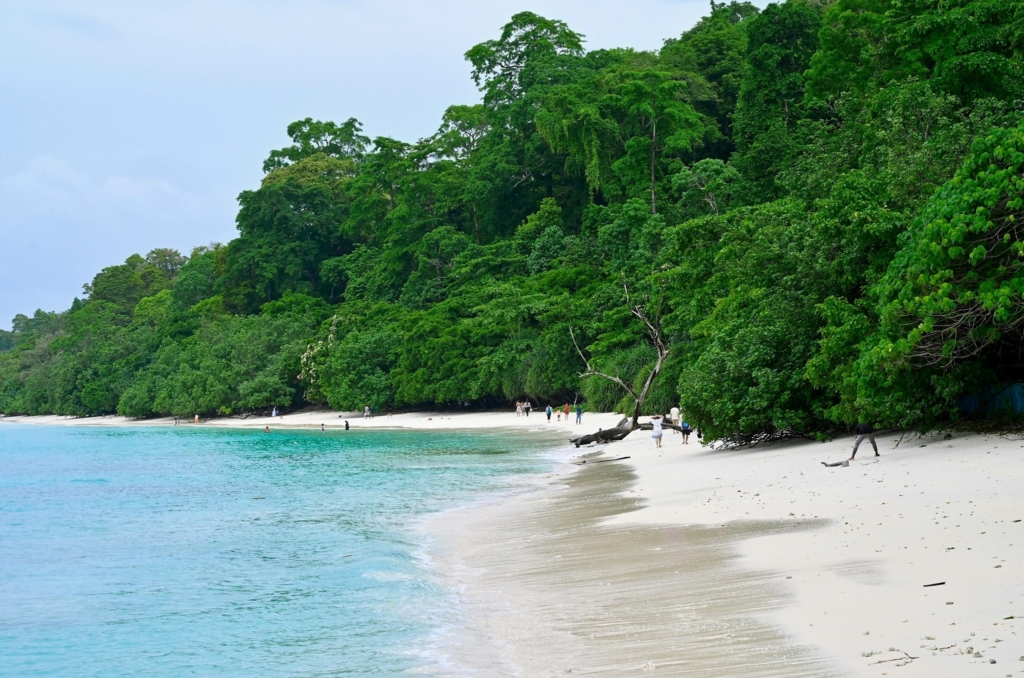
Radhanagar ranked #5 in Asia on TripAdvisor’s Travellers’ Choice 2025 and holds a Blue Flag certification – the global standard for clean, safe beaches. The 2-kilometre stretch of white sand and clear turquoise water is the single most photographed spot in Andaman.
Entry fee: Free
Timings: 5am–7pm (swimming only in marked zones after lifeguards are on duty, typically 9am–5pm)
How to reach: 12 km from Havelock jetty; ~25 min by taxi or scooter
Time required: 3–4 hours
Ideal for: Couples, families, photographers
Pro tip: Arrive before 10am — the sand is empty, and you’ll catch the golden early-morning light that makes Radhanagar famous.
2. Elephant Beach
Reached only by boat or a 2.5-km forest trek, Elephant Beach is Havelock’s snorkeling and water-sports hub. Shallow coral, calm water, and operator camps for jet ski, banana boat, and snorkeling sessions.
Entry fee: Free; shared fibre boat ₹1,000 per person return
How to reach: 30-min boat from Havelock jetty (shared or private); alternatively, 45-min trek
Time required: 3–5 hours
Ideal for: Snorkelers, water-sports first-timers
Pro tip: Shared boats are less than half the price of private charters. Book through a jetty-side operator in the morning – you’ll save ₹500+.
3. Kalapathar Beach
A quieter sunrise-facing beach on Havelock’s east coast, known for its black volcanic rocks contrasting white sand. Swimming is limited because of underwater rocks.
Entry fee: Free
Timings: Open 24 hours; best at sunrise
How to reach: 10 km from Havelock jetty; 20 min by scooter
Pro tip: Kalapathar at 6am is empty. A 30-minute visit here before heading to Radhanagar is the best morning route.
4. Scuba Diving Sites: Dixon’s Pinnacle, The Wall, Lighthouse
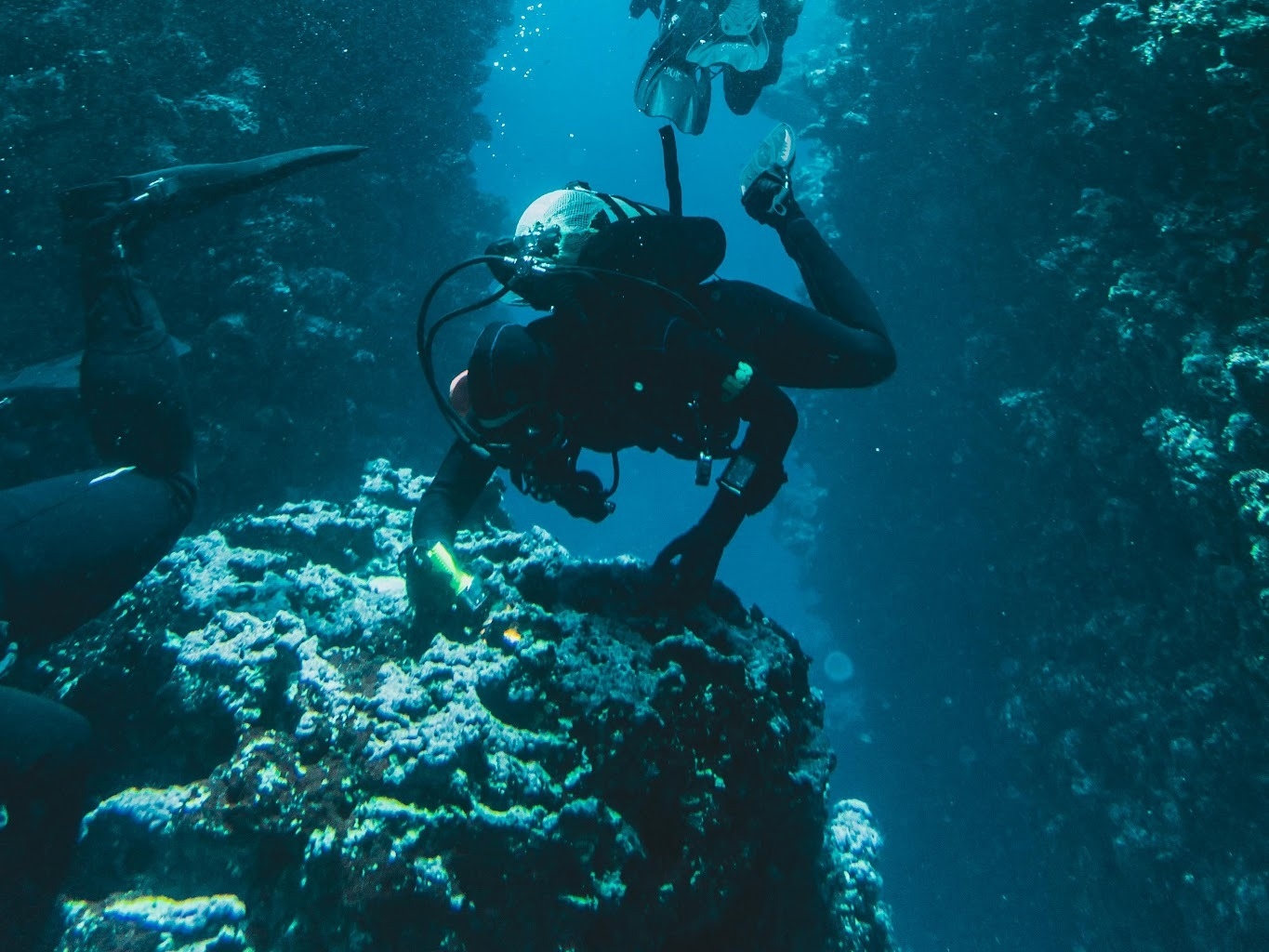
PADI recognizes 40+ dive sites across Andaman, with Havelock hosting the most famous PADI, 2025. Dixon’s Pinnacle is a coral tower popular with intermediate divers; The Wall is a sheer drop with reef sharks; Lighthouse is ideal for night dives.
Discovery dive: ₹3,500–4,500 (no certification needed)
PADI Open Water course: ₹20,000–25,000 (4 days)
Timings: Dive slots run 6am–4pm; book a day ahead
Best time: December–March (20–40m visibility)
Ideal for: First-timers (discovery dive) and certified divers
Pro tip: Compare at least three operators — Barefoot, Dive India, Scuba Andaman — before booking. Ask about group size (ideal: max 4 per instructor) and gear age.
5. Mangrove Kayaking (Night Bioluminescence)
Between October and February, bioluminescent plankton light up the mangroves on the right night. Night kayak tours launch from Havelock Beach No. 5.
Cost: ₹1,500–2,500 per person (operator-dependent – confirm at booking)
Timings: Tours run 7pm–10pm on selected new-moon nights
How to reach: Pickup from most Havelock hotels
Ideal for: Couples, small groups
Pro tip: Book only on dark nights close to the new moon. Full-moon nights wash out the glow entirely.
6. Havelock Beach Market & Night Eats
Not a single spot — a loose collection of shacks along Beach No. 5 serving fresh grilled fish, prawns, and cold beer. Rust Island, Anju-Coco, and Full Moon Cafe are the well-loved names.
Cost: ₹400–800 per meal
Timings: 6pm–11pm
Ideal for: Solo travelers, groups
Pro tip: Order the catch of the day, not the menu special. What just came off the boat is always better.
Radhanagar Beach on Havelock ranked #5 in Asia on TripAdvisor’s Travellers’ Choice 2025 (formerly rated the world’s 7th best by TIME in 2004) and holds Blue Flag certification. Havelock alone hosts more than 40 dive sites, with discovery dives from ₹3,500 and PADI certifications from ₹20,000.
Which are the top places to visit in Neil Island (Shaheed Dweep)?
Neil Island – officially Shaheed Dweep – is smaller, quieter, and cheaper than Havelock. A 60–90 minute ferry from Port Blair or 40 minutes from Havelock. Two days is enough; many travelers do it as a single night.
7. Laxmanpur Beach
Neil’s signature sunset beach, with shallow water extending 100+ metres at low tide and the famous natural rock formations. This is where you end every Neil day.
Entry fee: Free
Timings: Open 24 hours; arrive 45 min before sunset
How to reach: 3 km from Neil jetty; scooter or auto (~₹100)
Time required: 2 hours
Ideal for: Couples, photographers
Pro tip: Walk to the far right at low tide — there’s a rocky outcrop most tourists miss that gives you the sunset entirely to yourself.
8. Bharatpur Beach
The family-friendly side of Neil. Calm, shallow water, glass-bottom boat rides, jet ski rentals, and a short reef wade-able at low tide.
How to reach: 1 km from Neil jetty; walk or 5-min auto
Time required: 2–3 hours
Ideal for: Families with kids, first-time snorkelers
Pro tip: Glass-bottom boat rides are worth it only at low tide with calm water — ask for the noon slot.
9. Natural Bridge (Howrah Bridge)
A naturally formed coral rock arch, accessible only at low tide. One of Neil’s Instagram-famous spots, but completely underwater at high tide.
Entry fee: Free
Timings: Low-tide dependent — check local tide chart
How to reach: 5 km from Neil jetty
Time required: 1 hour
Ideal for: Photographers
Pro tip: Check the daily tide chart at your guesthouse before heading out. Arriving at high tide is the single most common Neil Island regret.
10. Sitapur Beach
Neil’s sunrise beach and the least-crowded of the three. Long, curved white-sand bay with casuarina trees.
Entry fee: Free
Timings: Open 24 hours
How to reach: 6 km from Neil jetty
Time required: 1–2 hours
Ideal for: Solo travelers, sunrise photographers
Pro tip: Pair a 5:30am Sitapur visit with breakfast at a Neil village tea shop on the ride back.
Neil Island sits 40 km south of Havelock, a 60–90 minute ferry from Port Blair via Makruzz or Nautika. Laxmanpur Beach is the island’s signature sunset point, while the Natural Bridge is accessible only during low tide — check tide charts before visiting.
What are the best places to visit in and around Port Blair?
Port Blair is where every trip starts and ends. Most guides say “do 1 day here” — that’s underselling it. Cellular Jail deserves 3 hours, and Ross Island plus North Bay is a full half-day of its own.
11. Cellular Jail National Memorial
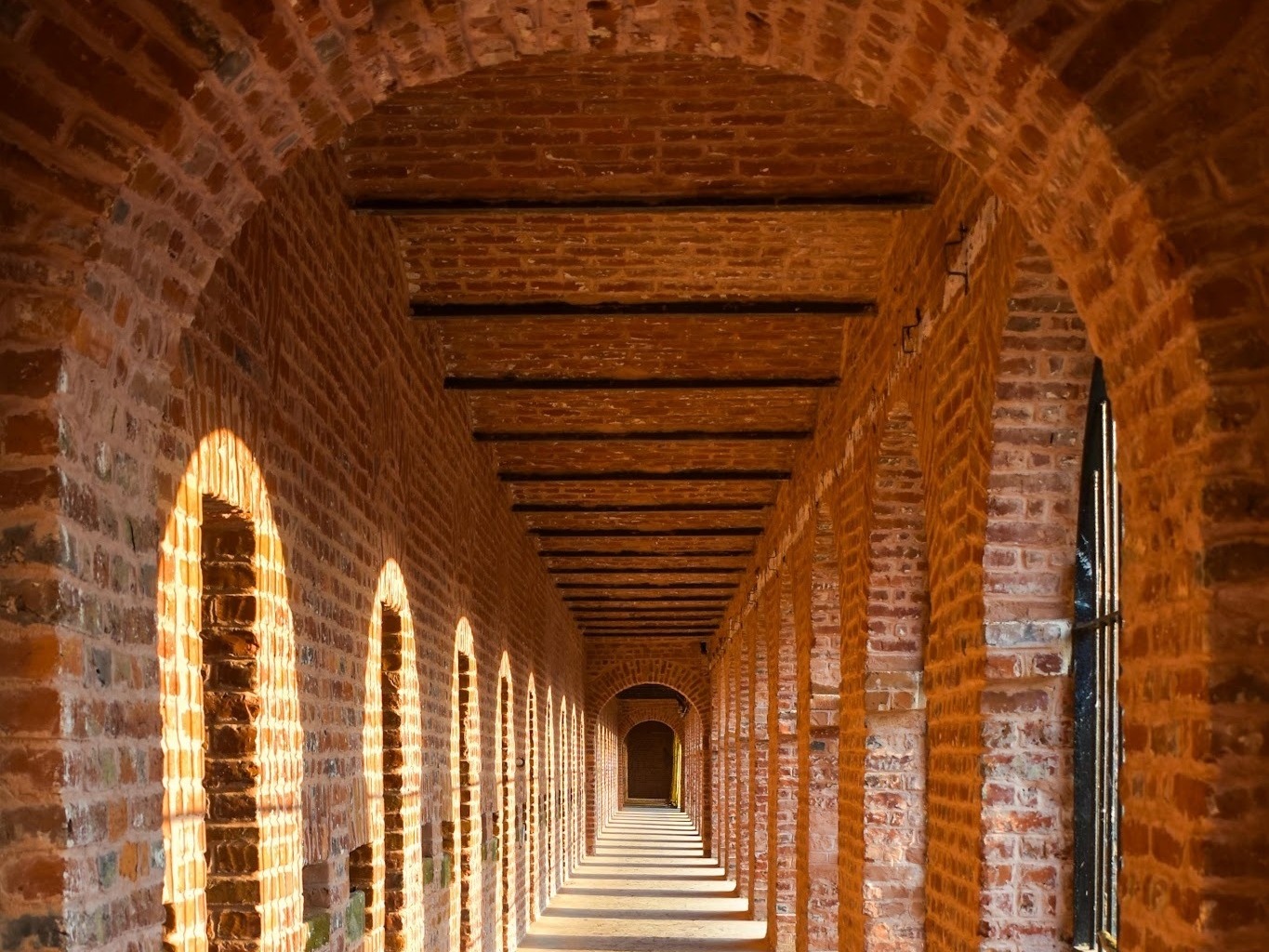
The colonial-era prison where India’s freedom fighters were held — now a national memorial. The evening Sound & Light show is the emotional heart of every Andaman trip.
Entry fee: ₹30 Indian adult, ₹200 foreign adult (children under 12 free); Sound & Light show ₹300 adult, ₹150 child (under 5 free)
Timings: 9am–12:30pm and 1:30pm–4:45pm; closed Mondays. Sound & Light show: Hindi 5:50pm & 7:50pm daily; English 6:50pm Mon/Wed/Fri
How to reach: 2 km from Port Blair centre
Time required: 2–3 hours + 1 hour for Sound & Light
Ideal for: All travelers — this is non-negotiable
Pro tip: Book the Sound & Light show online at least 2 days ahead. The English 6:50pm slot (Mon/Wed/Fri) is less crowded than the daily Hindi shows.
12. Ross Island (Netaji Subhash Chandra Bose Dweep)
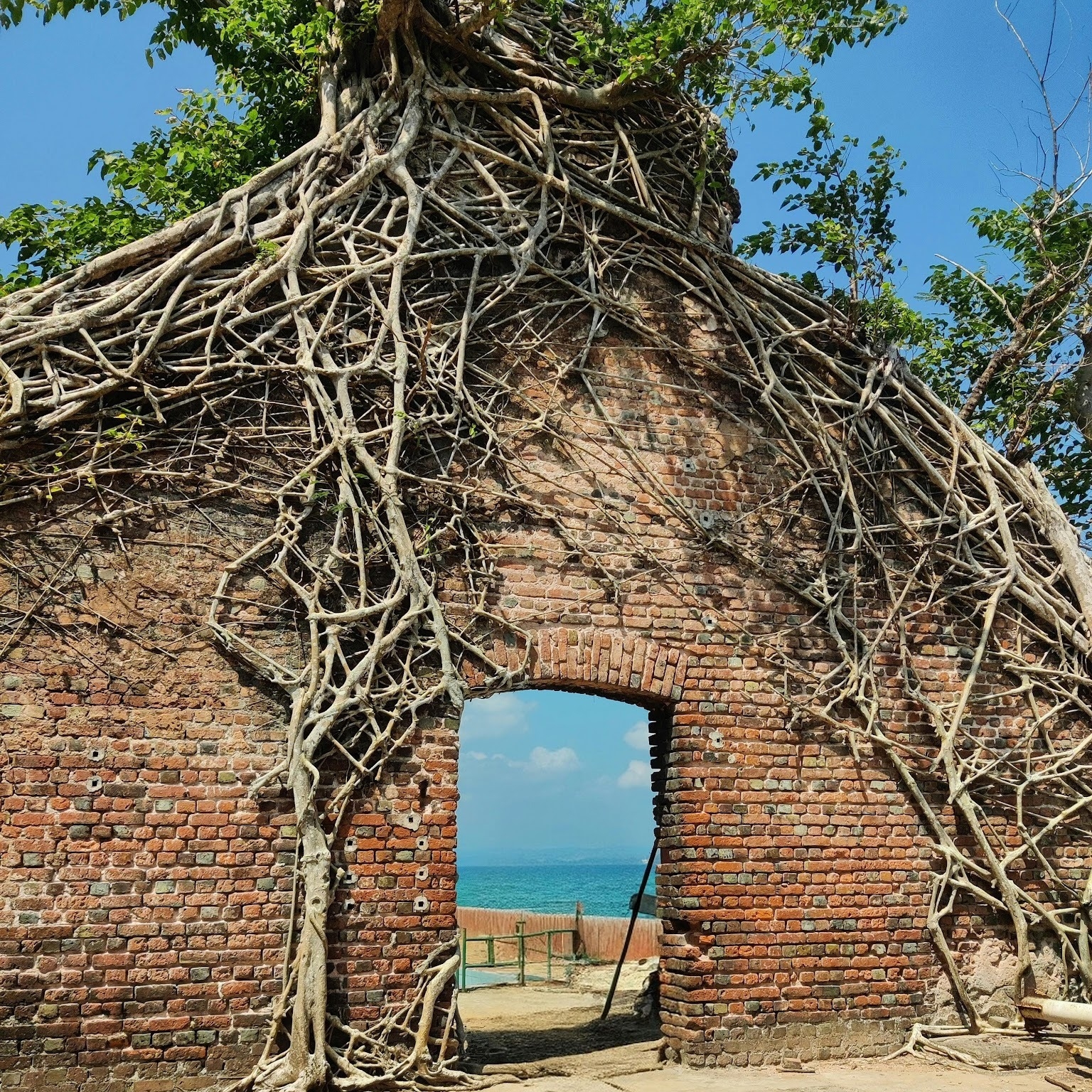
The former British administrative headquarters, now an atmospheric ruin of colonial buildings reclaimed by banyan trees and deer. A 15-minute ferry from Aberdeen Jetty.
How to reach: Ferry from Rajiv Gandhi Water Sports Complex, Aberdeen Jetty
Time required: 3 hours (often combined with North Bay)
Ideal for: History buffs, photographers
Pro tip: The combo Ross Island + North Bay Island ticket saves you ₹200 vs buying separately — ask the jetty counter.
13. North Bay Island
Snorkeling, sea walk, glass-bottom boat, and parasailing — Port Blair’s water-sports hub. Day trips depart from Aberdeen Jetty and combine easily with Ross Island.
Entry fee: Combo ticket with Ross Island ₹800 adult / ₹550 child (shared boat, return); activities ₹500–₹2,500 each
Timings: 9am–3pm
How to reach: 40-min ferry from Aberdeen Jetty
Time required: 4–5 hours
Ideal for: First-time snorkelers, families
Pro tip: Sea walk is overpriced for what it is. If you’re considering a scuba discovery dive in Havelock later, skip sea walk and save the ₹3,000 for the real dive.
14. Corbyn’s Cove Beach
The closest beach to Port Blair airport — 7 km — making it the obvious layover or last-day stop before your flight.
Entry fee: Free
Timings: Open 24 hours
How to reach: 7 km from Port Blair airport
Time required: 1–2 hours
Ideal for: Layover travelers, families
Pro tip: Shallow water and a long shoreline mean Corbyn’s Cove is kid-safe, but don’t expect Havelock-level beauty.
15. Chidiya Tapu (Sunset Point)
A 25-km drive south of Port Blair, Chidiya Tapu is both a biological park and Port Blair’s best sunset viewpoint. Also known for birdwatching.
Entry fee: Free at sunset viewpoint; ₹25 for Biological Park
Timings: 8am–6pm for the park; sunset viewpoint anytime
How to reach: 25 km from Port Blair; 45 min by taxi
Pro tip: Combine with Mahatma Gandhi Marine National Park (Wandoor) on the same day – it’s on the same route.
16. Samudrika Naval Marine Museum & Anthropological Museum
Two small but excellent museums for context on Andaman’s marine life and the islands’ five indigenous tribes – the Great Andamanese, Onge, Jarawa, Sentinelese, and Nicobarese.
Entry fee: Samudrika ₹50 adult / ₹20 child; Anthropological ₹10 adult / ₹3 student; camera ₹20 extra
Timings: Samudrika 9am–1pm & 2pm–5pm; Anthropological 9am–1pm & 1:30pm–4:30pm; both closed Mondays and public holidays
How to reach: Both in central Port Blair, within 2 km of each other
Time required: 1 hour each
Ideal for: Context-seekers, families with school-age kids
Pro tip: Anthropological Museum is the more memorable of the two. If you have time for only one, pick this.
Port Blair’s Cellular Jail National Memorial attracted 417,944 visitors to its nightly Sound & Light show in 2024, up from 267,327 in 2023 – a 56% jump. The show runs Hindi sessions at 5:50pm and 7:50pm daily, with an English session at 6:50pm on Monday, Wednesday, and Friday.
Which offbeat Andaman spots are worth adding to your trip?
These are the Andaman spots no package tour ticks off — which is exactly why they’re the most rewarding additions to a 7+ day trip. If you’re planning a second or third visit, start here.
17. Baratang Island – Limestone Caves & Mud Volcanoes
Baratang sits 100 km north of Port Blair, reached via a forest convoy through the Jarawa Tribal Reserve. Two signature sights: limestone caves (formed by millennia of groundwater) and India’s only active mud volcanoes.
Entry fee: Typically bundled in convoy tour (~₹2,250 per person including forest permit, boat to caves, and shared vehicle)
Timings: Convoys leave Jirkatang checkpoint at 4am, 6am, 9am, and 12pm only — no private travel through the reserve
How to reach: Road to Jirkatang (1.5 hrs), then convoy, then boat to caves
Time required: Full day (14–16 hours including travel)
Ideal for: Adventurous travelers with a spare day
Pro tip: Book the 4am convoy. Later ones mean you’re rushing the last boat back and skipping the mud volcanoes.
18. Diglipur / Saddle Peak (North Andaman)
Andaman’s highest peak at 732m, and the gateway to the twin-island sandbar of Ross & Smith. Reached by 12-hour road journey or overnight government ship from Port Blair.
Entry fee: ₹25 Indian adult / ₹10 child / ₹50 foreign national; still camera ₹10 extra
Timings: Trek 6am–4pm
How to reach: 300 km drive from Port Blair (12 hrs) or overnight government ship
Time required: 2 days minimum
Ideal for: Adventurous travelers, trekkers
Pro tip: Almost no competitor covers Diglipur — which is exactly why it’s untouched. Book government ship tickets 2 weeks ahead through the Directorate of Shipping Services.
19. Mahatma Gandhi Marine National Park (Wandoor)
A 281-sq-km marine park 29 km south of Port Blair, with coral reefs accessible via glass-bottom boat rides to Jolly Buoy or Red Skin islands.
Timings: 9am–3pm; boats close during rough weather
How to reach: 29 km from Port Blair; 1 hr by taxi
Time required: Half day
Ideal for: Families, snorkelers, couples
Pro tip: The park rotates between Jolly Buoy (open Oct–May) and Red Skin (open May–Sep) to protect the reef. Check which one is active before you go.
20. Barren Island – India’s Only Active Volcano
The most dramatic spot in the Andaman archipelago, and the most inaccessible. Last erupted in 2017; accessible only via liveaboard dive expeditions.
Cost: Dedicated liveaboards to Barren are limited in 2026 (MV Infiniti relocated to the Philippines); historical 6–7 night Andaman expedition rates ran USD 2,500–3,500 (~₹2–3 lakh). Check with Havelock dive operators for current availability.
Timings: Expeditions run October–April only
How to reach: 135 km northeast of Port Blair; dedicated expedition boat only
Time required: 3–5 day expedition
Ideal for: Advanced divers with 30+ logged dives
Pro tip: Barren Island is not for casual travelers – you need Advanced Open Water certification minimum. Dive India and Lacadives occasionally run expedition trips between November and March; book 3–6 months ahead.
Baratang Island’s limestone caves and mud volcanoes sit 100 km north of Port Blair via a forest convoy through the Jarawa Tribal Reserve – a full-day trip requiring a 4am departure. Barren Island, 135 km northeast, is India’s only active volcano and accessible only via advanced liveaboard dive expeditions.
How much does an Andaman trip cost in 2026?
A 5-day Andaman trip from Delhi costs ₹45,000–67,000 per person at the mid-range, broken down as: ₹12,000–18,000 flights, ₹16,000–24,000 accommodation, ₹3,000–5,000 ferries, ₹8,000–12,000 activities, and ₹6,000–8,000 food plus local transport. Monsoon season (May–September) can cut stays 50–70% – but ferry and dive cancellations are common
Tourist demand is climbing fast. Domestic arrivals grew from 235,061 in 2022 to a projected 887,996 in 2025 – a 3.8x jump in three years, driven by improved flight connectivity and the new 5-million-passenger airport terminal .
A note on monsoon travel: Most guides soft-pedal monsoon season. We won’t. May–September gets you cheaper stays, but you also risk 2-day ferry shutdowns, closed dive sites, and reduced sightseeing. If flexibility matters and weather doesn’t, go for it. If you’re travelling for scuba or beach time, skip monsoon.
How to plan your Andaman trip: 5-day, 7-day & 10-day framework
Here’s a simple way to pick your places based on trip length:
If you have 5 days (10 places): Cellular Jail + Ross Island + North Bay (Port Blair day), then ferry to Havelock for Radhanagar + Kalapathar + Elephant Beach + one discovery dive. Return via Neil for Laxmanpur + Natural Bridge + Bharatpur.
If you have 7 days (add 5 more): Add Chidiya Tapu sunset, Mahatma Gandhi Marine National Park (Wandoor), Samudrika Museum, Havelock mangrove kayaking, Neil Sitapur Beach.
If you have 10 days (add 5 more): Add Baratang Island (full day), Diglipur / Saddle Peak (2 nights), and — for certified divers — a 3-day Barren Island liveaboard.
Build 1 buffer day. Ferry schedules change with weather, and losing half a day to a cancellation is common in shoulder season.
Where to stay on your Andaman trip
Most Andaman accommodation clusters around Havelock Beach No. 5 and Port Blair – ranging from ₹2,500/night guesthouses to ₹15,000+ sea-facing resorts. For the kind of private, full-villa experience StayVista – India’s leading curated villa rental platform — is known for on mainland India, Andaman’s inventory is still limited. Many travelers build a beach-to-beach India trip by pairing Andaman with a Goa villa or Alibaug weekend home on the return leg – which is worth considering if you’ve got two weeks to play with.
Yes – and the data backs it up. Andaman welcomed 710,397 domestic tourists in 2024, a 120% jump from 323,619 in 2023, with the tourism department projecting another 25% surge in 2025. Radhanagar Beach ranked #5 in Asia on TripAdvisor Travellers’ Choice 2025. Flight connectivity keeps improving, so 2026 is a solid year to go.
How many days are enough for Andaman?
Five days is the practical minimum to cover Havelock, Neil, and Port Blair without rushing. Seven days is ideal — it lets you add Wandoor, an extra Havelock dive day, or a Baratang day trip. Ten days opens up North Andaman (Diglipur, Saddle Peak) or a Barren Island liveaboard for certified divers.
Which is better: Havelock or Neil Island?
Havelock wins for diving, iconic beaches (Radhanagar is unbeatable), livelier evenings and more food options. Neil wins for quiet beaches, sunrise/sunset spots, shorter trip length, and lower budget. If you can, do both – ferries connect them in 60 minutes and most travelers include 2 nights in Havelock plus 1 night in Neil.
Do Indians need a visa or permit for Andaman?
Indian nationals need no visa or permit for Andaman’s tourist zones. Foreign nationals need a Restricted Area Permit (RAP), issued free on arrival at Port Blair’s Veer Savarkar International Airport – valid for 30 days and extendable by 15 days. Since 2022, no form filling is needed – just passport and visa check. Nicobar Islands remain restricted to all tourists. Citizens of Afghanistan, China, and Pakistan require prior Ministry of Home Affairs approval.
What is the best month to visit Andaman?
December to March is peak season – temperatures 23–31°C, minimal rain, 20–40m dive visibility. November and April are excellent shoulder months with thinner crowds. October and May work but carry residual weather risk. Avoid June–September unless you want monsoon discounts and don’t mind ferry disruptions.
Is Andaman safe for solo travelers and honeymooners?
Yes. Andaman has a low crime rate, well-marked tourist zones, English and Hindi signage everywhere, and a visible police presence. Solo travelers (both men and women) report feeling safe, and honeymoon couples are common across Havelock and Neil. Mobile coverage has improved significantly since the 2020 undersea cable landed — though it’s still patchy on remote beaches.
The bottom line
Andaman in 2026 sits in a unique window. The islands are getting discovered fast – tourist arrivals tripled between 2022 and 2025 – but the infrastructure is still catching up. That’s good news for travelers who want to go before the crowds arrive and a practical reason to plan carefully.
Key takeaways from this guide:
Best time: October–May; peak Dec–Mar for diving
Duration: 5 days minimum, 7 ideal, 10 for offbeat coverage
Must-visit core: Radhanagar, Cellular Jail + Sound & Light, Elephant Beach, Laxmanpur, Ross Island
Budget: ₹45,000–67,000 per person for 5 days mid-range from Delhi
Book early: Private ferries, Sound & Light slots, and December-January flights go 2+ weeks ahead
If you’re planning an Andaman trip this year, your next step is locking the ferry schedule – because everything else builds off that. And if you’re pairing Andaman with a mainland stop, a Goa villa or a Lonavala weekend home for the return leg remains one of the classic India holiday combinations. Pack light, book ahead, and travel carefully – Andaman’s beauty is still quiet enough to reward those who plan properly.