
Coorg in Monsoon 2026: 18 Best Things to Do + Where to Stay
Last updated: June 2026
TL;DR: The best things to do in Coorg in monsoon (July–August 2026) are chasing full-spate waterfalls like Abbey, Iruppu and Mallalli, walking misty coffee estates, and visiting Raja’s Seat, Madikeri Fort and the Namdroling Golden Temple. Note: the elephant interaction and bathing at Dubare Elephant Camp are suspended after a fatal incident in May 2026 — only the stay/resort operates for now. IMD has forecast a below-normal 2026 monsoon (~90% of the long-period average), so expect heavy rain in spells rather than non-stop, with greener mornings between showers. Drive the Madikeri–Mangalore ghats in daylight and carry salt for leeches.
In this Blog
Coorg in monsoon at a glance
| Best time | Mid-June to September for green; July–August for peak waterfall spate |
| How to reach | Road only — ~5 hr from Bangalore, ~3 hr from Mysore, ~3.5 hr from Mangalore |
| Nearest airport/station | Airport: Mangalore (~140 km) or Kannur (~90 km); rail: Mysore (~120 km) |
| Ideal duration | 2–3 nights (a long weekend) |
| 2026 monsoon note | Below-normal (~90% of LPA, El Niño year) — rain in spells, fewer washouts, but ghats still slip |
What are the best things to do in Coorg during the monsoon?
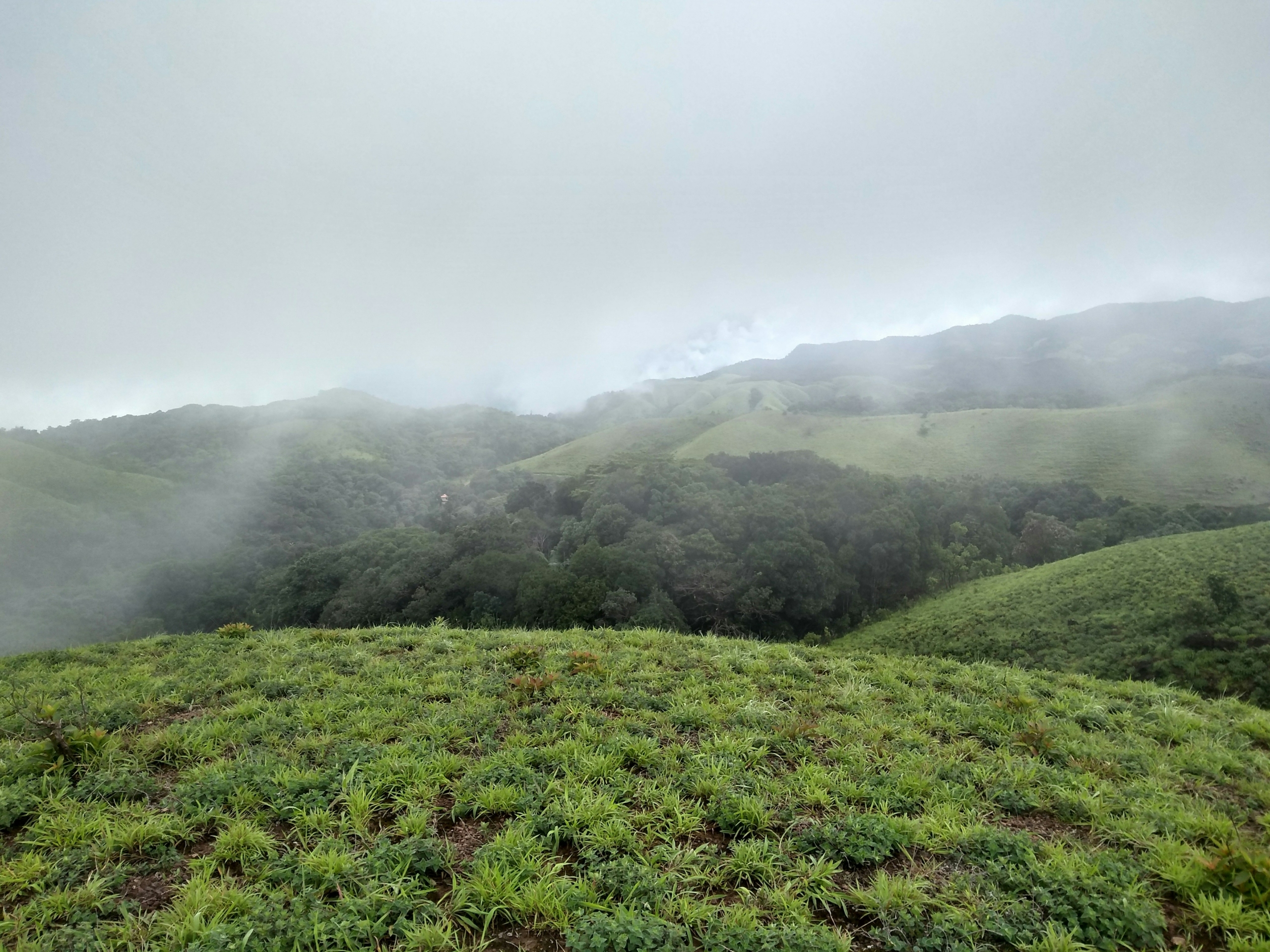
In monsoon, Coorg (Kodagu) does one thing better than almost anywhere in South India: water. The waterfalls that trickle in summer turn into roaring curtains, the coffee estates glow a deep wet green, and the whole plateau disappears into drifting mist by mid-morning. The trade-off is that some high treks close, rivers run dangerously full, and the ghat roads need respect. This guide covers 18 things to do in Coorg in the rains, each with entry fee, timings, how to reach, time needed and a pro tip — plus an honest read on what’s open in 2026 and where to stay.
A quick, important update first: as of June 2026, the elephant interaction, day-visit and bathing sessions at Dubare Elephant Camp are suspended following a fatal incident in May. We’ve kept Dubare on the list but flagged exactly what is and isn’t running, so you can plan around it. This is also the hub guide for our Coorg monsoon series — at the end you’ll find links to deeper pieces on the coffee estates, monsoon photography, and the Bangalore-to-Coorg drive.
Monsoon safety in Coorg (read before you go)
– Drive the ghats by daylight only. The Madikeri–Mangaluru route via Sampaje Ghat is landslide-prone in heavy rain — start early, never attempt these hairpins after dark or in a downpour, and check for closures locally before setting off.
– Respect waterfall spate. Abbey, Iruppu and Mallalli run fast and slippery; viewing decks only, no wading near the lip, and skip swimming entirely in July–August.
– Leeches are everywhere in plantation and forest undergrowth. Carry table salt or a salt-and-water spray, tuck trousers into socks, and wear closed shoes with grip — not slippers.
– High treks (Tadiandamol, Pushpagiri) get treacherous when wet; many are seasonally restricted. Treat them as monsoon-unsafe unless a licensed local guide confirms otherwise.
– Pack: rain jacket, dry bag for phones, two pairs of grippy closed shoes, quick-dry clothes, and a buffer half-day for rain delays.
1. Abbey Falls — Coorg’s monsoon showpiece
Just 8 km from Madikeri, Abbey Falls is the waterfall most people picture when they think of Coorg in the rains. Framed by coffee and spice plantations, it thunders down a rocky face into a pool you view from a hanging footbridge. In July–August the spray reaches the bridge itself — dramatic, but the railings get slick.
- Entry fee: ₹10–₹15 per person; parking ~₹50
- Timings: 9 AM – 5 PM, daily
- Best time to visit: Monsoon mornings (fewer crowds, softer light)
- How to reach: 8 km from Madikeri town; 15 min by car/auto, then a short stepped walk
- Time required: 45 min–1 hour
- Ideal for: Couples, families, photographers
- Pro tip: Go right at opening. By 11 AM tour buses arrive and the narrow bridge bottlenecks. Wipe your phone lens between shots — the spray fogs everything.
2. Iruppu Falls — the sacred cascade in Brahmagiri
Around 48 km south of Madikeri in the Brahmagiri range, Iruppu Falls (also called Lakshmana Tirtha) drops about 170 feet and carries real religious significance — there’s a Rameshwara temple at the base. The monsoon volume here is genuinely powerful, and the short forest climb to the viewing point runs alongside the river.
- Entry fee: ~₹50 per person (forest/temple charge)
- Timings: 8 AM – 5 PM
- Best time to visit: July–September for full flow
- How to reach: ~48 km from Madikeri (1.5 hr drive) toward Nagarhole/Nanjarayapatna; last stretch on foot
- Time required: 2–2.5 hours including the drive buffer
- Ideal for: Families, pilgrims, nature lovers
- Pro tip: Leeches are notorious on this trail in the rains — salt your shoes before the walk. The climb is steeper than Abbey, so closed grippy footwear matters.
3. Mallalli Falls — the monsoon-only giant
Near Somwarpet in north Coorg, Mallalli Falls is essentially a seasonal fall — it’s at its most spectacular only during and just after the monsoon, plunging in two tiers off the Pushpagiri foothills where the Kumaradhara river forms. Outside the rains it can be a disappointment; in August it’s the most underrated waterfall in Kodagu.
- Entry fee: Nominal/free (small parking charge may apply)
- Timings: Roughly 9 AM – 5 PM (daylight access only)
- Best time to visit: June–September — peak monsoon is the whole point
- How to reach: ~55 km from Madikeri via Somwarpet; the final access involves steps/a slippery path
- Time required: Half a day with the drive
- Ideal for: Adventurous couples, photographers, fit travellers
- Pro tip: The viewing steps get extremely slippery — do not descend to the base in heavy rain. The upper viewpoint is safer and still gives you the full two-tier shot.
4. Raja’s Seat — sunset garden over the valley
Raja’s Seat in Madikeri is the classic Coorg viewpoint, a manicured garden built where the Kodava kings once watched the sun set over rolling hills. In monsoon the “view” is often a sea of moving cloud — which, honestly, is its own kind of magic when the mist parts for a minute.
- Entry fee: ~₹20 per person; toy train ~₹30
- Timings: 9 AM – 8 PM (musical fountain around 7 PM)
- Best time to visit: Late afternoon for the (cloud-permitting) sunset
- How to reach: In Madikeri town, walkable or a 5-min auto from the bus stand
- Time required: 45 min–1 hour
- Ideal for: Families, couples, older travellers (easy access)
- Pro tip: Don’t expect a guaranteed sunset in July–August — go for the rolling-cloud drama instead, and carry an umbrella for the open garden.
5. Madikeri Fort — heritage in the rain
Right in town, Madikeri Fort is a 17th-century fort rebuilt in stone, now housing government offices, a small museum, a church and a couple of stone elephants. It’s a quick, sheltered stop — exactly what you want when a downpour hits and you need somewhere indoors with history.
- Entry fee: Free
- Timings: ~10 AM – 5:30 PM; closed Mondays
- Best time to visit: Any rainy afternoon between waterfall trips
- How to reach: Central Madikeri, walkable from Raja’s Seat (~1 km)
- Time required: 45 min
- Ideal for: History buffs, families, a rain-shelter break
- Pro tip: Pair it with the adjoining Omkareshwara Temple and Raja’s Seat — all three sit within a kilometre, so you can do the whole town cluster in half a damp morning.
6. Omkareshwara Temple — the Islamic-Gothic Shiva temple
A short walk from the fort, Omkareshwara Temple is unusual: a Shiva temple built in 1820 with Indo-Islamic domes and a central tank, looking more like a dargah than a typical South Indian shrine. The reflection of its domes in the rain-fed tank is a quiet, lovely sight.
- Entry fee: Free
- Timings: ~6:30 AM – 12 noon and 5 PM – 8 PM
- Best time to visit: Early morning aarti, or dusk
- How to reach: Central Madikeri, near the fort
- Time required: 30 min
- Ideal for: Couples, culture-minded travellers, families
- Pro tip: Dress modestly and remove footwear. The tiled courtyard is slippery in the rain, so step carefully near the tank.
7. Talacauvery & Bhagamandala — the source of the Cauvery
About 44 km from Madikeri, Talacauvery is the birthplace of the river Cauvery, a sacred tank on the slopes of Brahmagiri. On the way is Bhagamandala, the Triveni Sangama where three rivers meet. In monsoon the drive is pure green tunnel, though the summit is often fogged in — go for the atmosphere, not the panorama.
- Entry fee: Free (both sites)
- Timings: Talacauvery ~6 AM – 8:30 PM; Bhagamandala ~6 AM – 6 PM
- Best time to visit: Morning, before the cloud thickens at the summit
- How to reach: ~44 km from Madikeri (1.5 hr); combine both on one trip via Bhagamandala
- Time required: Half a day round trip
- Ideal for: Pilgrims, couples, scenic-drive lovers
- Pro tip: The final climb to the Talacauvery tank has open steps with no shade — carry rain gear, and don’t be disappointed by zero visibility at the top; the journey is the reward here.
8. Namdroling Monastery (Golden Temple), Bylakuppe
The Namdroling Monastery at Bylakuppe is one of the largest Tibetan Buddhist teaching centres in the world, and its Golden Temple — with three giant gilded Buddha statues and vivid murals — is the single most photogenic indoor space in the region. Being sheltered, it’s a perfect monsoon stop.
- Entry fee: Free
- Timings: ~7 AM – 8 PM
- Best time to visit: Mid-morning; time it for the monks’ prayer chants if you can
- How to reach: ~34 km from Madikeri near Kushalnagar; ~6 km off the main road
- Time required: 1.5–2 hours
- Ideal for: Families, couples, photographers, culture lovers
- Pro tip: Bylakuppe is a settlement that may require an inner-line/entry formality for foreign nationals — Indian travellers are fine. The Tibetan food stalls outside do excellent hot momos, ideal on a wet day.
9. Cauvery Nisargadhama — the island forest park
Nisargadhama is a river island near Kushalnagar reached by a hanging bridge, full of bamboo groves, sandalwood and a deer park. It’s an easy, family-friendly green walk. Note that boating and some river activities are often paused when the Cauvery runs high in peak monsoon — safety first.
- Entry fee: ~₹10 adults, ~₹5 children
- Timings: 9 AM – 5 PM, daily
- Best time to visit: Late June or September, when the river is full but activities still run
- How to reach: ~28 km from Madikeri, near Kushalnagar
- Time required: 1.5 hours
- Ideal for: Families with kids, easygoing couples
- Pro tip: Check on arrival whether boating/coracle rides are running — in heavy spate they’re suspended. The hanging bridge itself is the highlight and stays open.
10. Dubare Elephant Camp — current status (read this)
Dubare Elephant Camp, run by Jungle Lodges on the banks of the Cauvery, was long famous for letting visitors feed, scrub and bathe elephants. Important 2026 update: after a fatal incident in May 2026, the elephant interaction, day-visit and bathing programmes have been suspended, and trekking operations were paused pending a new safety protocol. Only the stay/resort component has been operating. We are not promising elephant encounters here — please verify the camp’s live status directly before planning a visit.
- Entry fee: Day-visit/interaction currently suspended — check the official operator
- Timings: Subject to the suspension; confirm before travelling
- Best time to visit: Not applicable while interactions are paused
- How to reach: ~28 km from Madikeri toward Kushalnagar; the camp is across the river by boat when operating
- Time required: Depends on what reopens
- Ideal for: —
- Pro tip: If interactions remain closed during your trip, Nisargadhama and the Golden Temple (both nearby) make an easy, ethical substitute for the same day. Always check the operator’s official channel for the current status rather than relying on older blog posts.
11. Mandalpatti — jeep ride to the cloud line
Mandalpatti is a viewpoint inside the Pushpagiri reserve, reached by a bone-rattling 4×4 jeep ride up a broken track. On a clear monsoon break it floats above a sea of cloud; in heavy rain it whites out completely. It’s a gamble worth taking on a dry-ish morning.
- Entry fee: ~₹50 per person; shared jeep ~₹1,500–₹2,500 per vehicle
- Timings: Roughly 6 AM – 5 PM (jeep operators set the last run)
- Best time to visit: Early morning on a rain-free window
- How to reach: ~20 km from Madikeri; the last ~7 km is jeep-only off-road
- Time required: 2.5–3 hours
- Ideal for: Adventurous couples, groups, photographers
- Pro tip: Only take the official jeeps — private cars cannot manage the monsoon track and self-driving here is genuinely unsafe. Hold on; the ride is rough.
12. Tadiandamol Peak — Coorg’s highest (admire, don’t trek now)
At 1,748 m, Tadiandamol is the highest peak in Kodagu and a bucket-list trek in the dry season. In monsoon, however, the trail turns slick and risky, and it’s widely advised to avoid this climb from June to September. We’re including it so you know where it is — and to be honest that the rains are the wrong time to summit it.
- Entry fee: Nominal forest charge when trekking is permitted
- Timings: Daylight trekking only
- Best time to visit: Post-monsoon (October) to spring — not peak monsoon
- How to reach: ~40 km from Madikeri via Kakkabe; trailhead near Nalknad Palace
- Time required: Full day (when conditions allow)
- Ideal for: Experienced trekkers, in the right season
- Pro tip: If you visit in monsoon, drive to the lush Kakkabe valley and Nalknad Palace at the base instead of attempting the summit — you get the scenery without the danger.
13. Barapole River — white-water rafting season
Monsoon is the reason to raft the Barapole in south Coorg. From roughly June to September the river swells and the rapids (graded up to III–IV) come alive — this is one of the best monsoon rafting experiences in South India. It runs near Kithu-Kakkathu, about an hour from Madikeri.
- Entry fee: ~₹1,000–₹1,500 per person for a guided stretch (operator-dependent)
- Timings: Morning slots, monsoon season; book ahead
- Best time to visit: July–August for the strongest rapids
- How to reach: Near Kithu, ~35–40 km south of Madikeri toward Virajpet
- Time required: Half a day
- Ideal for: Groups, thrill-seekers (minimum age/fitness limits apply)
- Pro tip: Book only with a licensed operator who provides certified guides, helmets and life jackets. Rapids are dictated by daily water levels, so trips can be called off at short notice — keep the day flexible.
14. Coffee-estate walks — the soul of monsoon Coorg
Coorg grows much of India’s coffee, and a guided plantation walk in the rains — past flowering pepper vines, dripping arabica and robusta rows, and drying yards — is the most quintessential thing to do here. Many estate homestays run their own tours. We’ve gone deep on this in our Coorg coffee-plantation monsoon guide, so here’s the short version.
- Entry fee: Often free for stay guests; ~₹300–₹800 for standalone estate tours
- Timings: Usually morning walks by arrangement
- Best time to visit: Any monsoon morning — the green is unreal
- How to reach: Estates are dotted across Kodagu; most homestays arrange pickups
- Time required: 1–2 hours
- Ideal for: Couples, families, slow travellers
- Pro tip: Salt your shoes — estate undergrowth is leech central in the rains. Buy fresh estate coffee and home-made wine/pepper directly from the growers.
15. Honnamana Kere — the quiet lake
Near Sulimalthe in the Doddamalthe area, Honnamana Kere is the largest natural lake in Kodagu, ringed by coffee estates and hills, with a small lakeside temple. It’s blissfully uncrowded — a place to sit, breathe and watch mist roll across the water rather than tick off a sight.
- Entry fee: Free (small parking/boating charge where available)
- Timings: Daylight hours
- Best time to visit: Monsoon mornings for the mist
- How to reach: ~30 km from Madikeri toward Somwarpet
- Time required: 1 hour
- Ideal for: Couples, solo travellers, anyone wanting calm
- Pro tip: There’s a small temple by the lake with local legend attached — combine it with a Somwarpet-side coffee estate or Mallalli Falls on the same loop.
16. Chelavara Falls — the lesser-known cascade
Near Cheyandane village, Chelavara Falls tumbles over a rock face shaped like an elephant’s foot. It’s quieter than Abbey, with a short uphill walk to the viewpoint, and rewards you with full flow and far fewer people in the rains.
- Entry fee: Free
- Timings: ~6 AM – 6 PM (daylight)
- Best time to visit: Monsoon, for volume
- How to reach: ~16 km from Virajpet, ~37 km from Madikeri
- Time required: 1–1.5 hours including the walk
- Ideal for: Couples, photographers, crowd-avoiders
- Pro tip: The rocks above the falls are dangerously smooth — admire from the marked point and do not climb out onto the lip, which has seen accidents.
17. Kote Abbey Falls — off the tourist trail
Often confused with the famous Abbey Falls, Kote Abbey (Kote Abbi) is a separate, much quieter waterfall reached via a short trek through forest and estate land. It’s for travellers who’ve already done the headline falls and want somewhere without a single tour bus.
- Entry fee: Free (you may pay a local guide)
- Timings: Daylight only; access via private/estate land
- Best time to visit: Monsoon, when it actually flows well
- How to reach: Off the Madikeri–Bhagamandala area; ask locally or take a guide — signage is poor
- Time required: Half a day with the walk
- Ideal for: Adventurous couples, repeat visitors
- Pro tip: The trail is unmarked and crosses private estates — hire a local guide rather than navigating alone, and never attempt the approach in a heavy downpour.
18. Pushpagiri Wildlife Sanctuary — birds, biodiversity, restricted trekking
Pushpagiri Wildlife Sanctuary protects a slice of the Western Ghats rich in endemic birds, the Malabar giant squirrel and rare amphibians that come alive in the rains. Hardcore trekking to Kumara Parvatha is generally restricted or unsafe in peak monsoon, but the sanctuary fringe and birding are a draw for naturalists.
- Entry fee: ~₹350 per person at the check post (subject to revision)
- Timings: Roughly 6 AM – 5/6 PM; confirm current hours
- Best time to visit: Monsoon brings frogs and lush forest, but core treks may be closed — check with the forest department
- How to reach: ~50+ km from Madikeri via Somwarpet/Subramanya side
- Time required: Half to full day
- Ideal for: Birders, wildlife enthusiasts (in permitted zones)
- Pro tip: Treks here need Forest Department permission and are weather-dependent — never enter core areas without an authorised guide and a confirmed permit, especially in the rains.
How to plan your Coorg monsoon trip (2-day & weekend itineraries)
Coorg is compact, so distances are short but the wet roads make everything slower. Build in buffer time and cluster sights by direction.
1-day (Madikeri core): Abbey Falls early → Raja’s Seat → Madikeri Fort + Omkareshwara Temple → a coffee-estate walk in the afternoon. Everything within ~15 km, ideal if rain limits long drives.
2-day weekend: Day 1 — Madikeri cluster (Abbey, Raja’s Seat, Fort, temple) + estate walk. Day 2 — head toward Kushalnagar for the Golden Temple and Nisargadhama, with Chelavara or Honnamana Kere on the way back. Save Iruppu/Mallalli for a third day, as they’re far and eat a half-day each.
3 nights (the relaxed version): Add Barapole rafting (July–August), Talacauvery, and one big waterfall day (Iruppu or Mallalli). Keep one half-day completely open for rain.
For travellers driving in from the city, our detailed Bangalore-to-Coorg monsoon road-trip guide covers the route, ghat sections and timing, and our monsoon photography guide helps you actually capture the mist. If you want to compare Coorg with other rain-season picks, see our roundup of places to visit in Karnataka in monsoon and our list of safe places to visit in India during the monsoon.
Travel-window tip: With IMD forecasting a below-normal 2026 monsoon, your odds of clear-view mornings are slightly better than a heavy year — but the ghats still slip in any single downpour. Front-load outdoor sights to the morning and keep afternoons flexible. (CTA 1 of 3.)
Where to stay in Coorg during monsoon (StayVista)
Monsoon is when a good Coorg stay earns its keep — you’ll spend whole afternoons indoors watching rain sheet across the estates, so the view from your window matters as much as the sights. We host a handful of homes set right inside the coffee country:
- Coffee & Mist — a 5-BHK villa on a 5-acre working coffee estate near Virajpet, with a private pool, balconies opening onto mist-wrapped hills, and complimentary breakfast. Ideal for a family or friends group wanting an estate-walk-from-the-doorstep base.
- Firefly by the River — a 5-BHK riverside home near Kushalnagar on the Harangi, spread across units amid paddy, bamboo and pepper. Best for travellers prioritising the Golden Temple/Nisargadhama side of Coorg and quiet river mornings.
- The Estate Villa — a 4-BHK villa near Suntikoppa with an indoor pool and plunge pool (a real bonus when it’s raining), close to the Harangi backwaters and an easy run to Madikeri. Good for couples-plus-family groups who want to swim regardless of the weather.
When booking any Coorg stay in the rains, ask whether the access road is sealed (some estate lanes turn to mud), whether the property runs its own estate walk, and whether meals are available in-house — you won’t always want to drive out for dinner in a downpour.
FAQ: Coorg in monsoon
Is monsoon a good time to visit Coorg?
Yes, if you want lush green estates, full waterfalls and lower crowds. Monsoon (June–September) is Coorg at its most atmospheric, with Abbey, Iruppu and Mallalli falls at peak flow. The trade-offs are frequent rain, slower travel, slippery treks and leeches — so it suits travellers happy to slow down rather than pack a tight sightseeing schedule.
What are the best months for Coorg in monsoon?
July and August deliver the heaviest rain and the most dramatic waterfalls and mist. Mid-June and September are gentler “shoulder” windows with plenty of green but more breaks between showers, which many travellers prefer for getting out and about.
Is it safe to travel to Coorg during monsoon 2026?
Generally yes on main roads and within stays, but take care on ghat sections like the Madikeri–Mangaluru route via Sampaje Ghat, which is landslide-prone in heavy rain. Drive in daylight, avoid swimming near waterfalls, treat high treks as off-limits unless a guide confirms otherwise, and keep a buffer day for delays. IMD has forecast a below-normal 2026 monsoon, which tends to mean fewer washouts — but never drive the hairpins in the dark or during a downpour.
Is the Dubare Elephant Camp open in 2026?
As of mid-2026, the elephant interaction, day-visit and bathing sessions at Dubare are suspended following a fatal incident in May 2026, and trekking was paused pending a new safety protocol; only the stay/resort has been operating. Verify the current status directly with the official operator before planning a visit, and don’t rely on older articles that still advertise elephant bathing.
Which Coorg waterfalls are best in the rains?
Abbey Falls (8 km from Madikeri, easiest access), Iruppu Falls (in the Brahmagiri range, ~48 km) and Mallalli Falls (near Somwarpet, essentially a monsoon-only fall) are the three standouts. Chelavara and Kote Abbey are quieter alternatives if you want to escape the crowds.
How many days do you need for Coorg?
Two to three nights is ideal. A long weekend covers the Madikeri cluster plus one waterfall and the Golden Temple side; a third night lets you add Barapole rafting, Talacauvery and a second big waterfall without rushing through the rain.
Can you go river rafting in Coorg during monsoon?
Yes — the Barapole river is rafted mainly during the monsoon (roughly June–September), when high water creates grade III–IV rapids. Book only with a licensed operator providing certified guides and safety gear, and expect trips to be cancelled at short notice on days when water levels run too high.
Are there leeches in Coorg during monsoon?
Yes, leeches are common in plantation and forest undergrowth in the rains, especially on waterfall and estate trails like Iruppu. Carry table salt or a salt spray, tuck trousers into socks, and wear closed shoes with grip. They’re harmless but unpleasant — salt makes them drop off instantly.
Conclusion
Coorg in the monsoon rewards a particular kind of traveller: one who’ll trade guaranteed sunshine for full-throated waterfalls, mist-soaked coffee hills and the cosy luxury of watching it all from a dry verandah. Stick to the Madikeri cluster and the lower waterfalls, drive the ghats by daylight, carry salt for the leeches, and check the Dubare status before you build a day around it. Plan loosely, keep a buffer for rain, and let Coorg set the pace — that’s exactly the point.