
12 Best Places to Visit in Karnataka in Monsoon 2026
Last updated: June 2026
TL;DR: Karnataka is one of India’s most rewarding monsoon destinations, when the Western Ghats turn emerald and the state’s great waterfalls — Jog, Shivanasamudra and Unchalli — thunder at full force. The best places to visit in Karnataka in the monsoon are Coorg, Chikmagalur, Agumbe, Jog Falls and Sakleshpur, all lush, green and (with sensible caution) accessible. A few things pause for the rains: most wildlife safaris at Nagarhole/Kabini are restricted, Dandeli’s water sports stop, the high Mullayanagiri and Kudremukh treks close, and the coast (Gokarna) is best left for winter. Plan around those and Karnataka delivers a spectacular green-season trip.
In this Blog
Karnataka in monsoon at a glance
| Best time | July–September for full waterfalls and peak greenery |
| Star sights | Jog Falls, Coorg, Agumbe, Chikmagalur, Shivanasamudra |
| Closed/limited in monsoon | Nagarhole/Kabini safaris, Dandeli water sports, Mullayanagiri/Kudremukh treks |
| Skip in monsoon | Gokarna & the open coast (rough seas) |
| Ideal duration | 3–6 days |
Why visit Karnataka in the monsoon?
When the southwest monsoon sweeps in off the Arabian Sea, it hits the Karnataka Western Ghats first and hardest — and the result is magnificent. Coffee and spice estates glow a deep green, mist pours through the valleys, and rivers that trickle in summer become roaring waterfalls. The crowds thin, tariffs drop, and the whole western half of the state feels freshly washed.
It pays to plan around what the rains close, though. Most jungle safaris and a few treks shut down, and the open coastline is rough and wet. Lean into the Ghats’ hill stations and waterfalls instead, travel the ghat roads in daylight, and you’ll see Karnataka at its most beautiful. For the wider context, see our safe places to visit in monsoon guide and monsoon treks in Karnataka.
Monsoon safety in the Karnataka Ghats
– View waterfalls from official decks only — the bases of Jog, Shivanasamudra and Unchalli are closed or unsafe at peak flow (slippery rocks, sudden dam releases).
– High treks (Mullayanagiri, Kudremukh) are best avoided June–August — landslides, leeches and poor visibility; they need forest permits and are better October onwards.
– Carry leech protection (salt or repellent, tuck trousers into socks) for any Ghat trail.
– Drive ghat roads by day and check conditions after heavy rain.
12 best places to visit in Karnataka in the monsoon
1. Coorg (Kodagu)
Karnataka’s coffee capital is the quintessential monsoon getaway — terraced estates wrapped in mist, the Abbey and Iruppu falls in full spate, and reliable main roads that make it one of the safer Ghat hill stations in the rains. It’s perfect for slow days of estate walks, filter coffee and the smell of wet earth.
– Best time: July–September. How to reach: ~250 km from Bengaluru; nearest airport Mangaluru (~140 km) or Kannur (~90 km).
– Time: 3 days. Ideal for: Couples, families, slow travellers. Safety note: Stick to Madikeri–Virajpet main roads when it’s pouring. Pro tip: Stay on a working coffee estate. Full guide: monsoon in Coorg.
2. Chikmagalur
The birthplace of Indian coffee, Chikmagalur offers Coorg-like greenery with fewer crowds — rolling estates, misty hills and waterfalls like Hebbe and Jhari. It’s best enjoyed in the monsoon as a coffee-and-estate retreat rather than a trekking base, since the high trails turn risky.
– Best time: July–September. How to reach: ~245 km from Bengaluru; nearest railhead Kadur (~40 km).
– Time: 2–3 days. Ideal for: Couples, solo travellers. Safety note: Mullayanagiri and Baba Budangiri treks are often closed/risky in peak monsoon. Pro tip: The Mudigere side is the quietest.
3. Agumbe
Nicknamed the “Cherrapunji of the South” for its colossal rainfall, Agumbe is a rainforest dream in the monsoon — dense, dripping jungle, the famous sunset point (on clear evenings), and king-cobra country immortalised in the TV serial Malgudi Days.
– Best time: July–September for the full monsoon mood. How to reach: ~95 km from Udupi; nearest airport Mangaluru.
– Time: 1–2 days. Ideal for: Nature lovers, photographers. Safety note: Roads are slick and remote — daytime travel, watch for leeches. Pro tip: Stay for the rainforest soundscape after dark.
4. Jog Falls
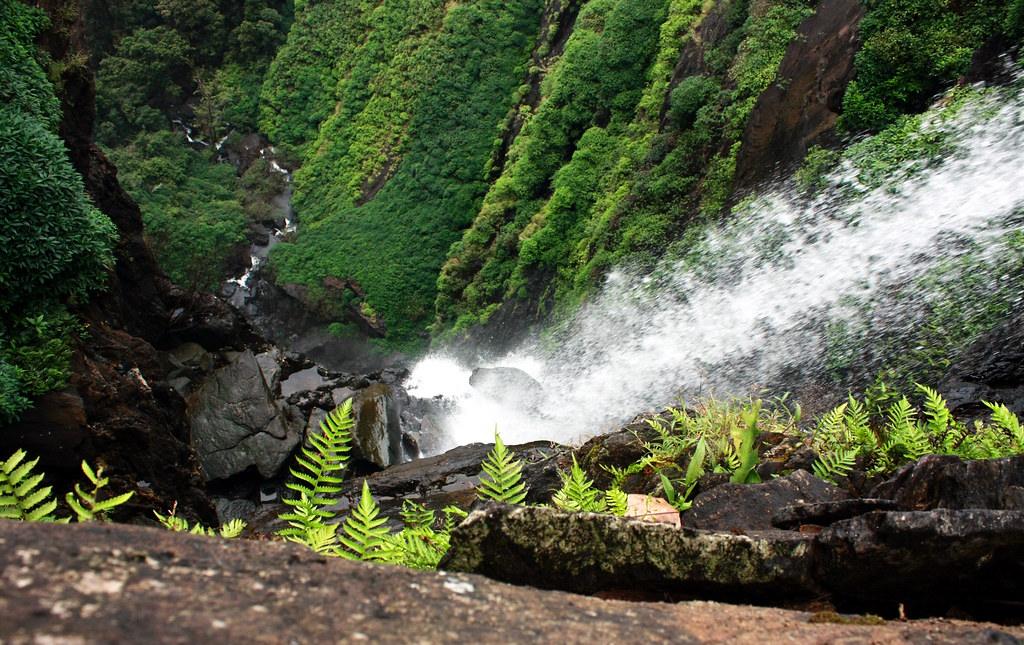
India’s second-highest plunge waterfall is at its jaw-dropping best in the monsoon, when the Sharavathi river surges over the cliff in four roaring streams. July to early October is prime time, with heavy spray and raw power.
– Entry: nominal (~₹10/person, plus parking); timings roughly 7:30 AM–9:30 PM. How to reach: ~380 km from Bengaluru; nearest railhead Shimoga/Sagara.
– Safety note: The ~1,400-step descent to the base is closed during the monsoon (high water and dam releases) — view from the upper decks. [VERIFY: status of the new viewing ropeway/elevator, which was under construction in 2025 — don’t promise it’s open.]
– Ideal for: Photographers, families. Pro tip: Mornings, before the cloud thickens, give the clearest view.
5. Sakleshpur
An offbeat Ghat hill station of cardamom and coffee estates, old railway trestle bridges and rolling green hills, Sakleshpur is a quieter alternative to Coorg and Chikmagalur — wonderful for a low-key monsoon escape.
– Best time: July–September. How to reach: ~220 km from Bengaluru; ~130 km from Mangaluru.
– Time: 2 days. Ideal for: Couples, offbeat travellers. Safety note: The famous Green Route railway trek along live tracks is unsafe and not advised. Pro tip: Estate stays here are excellent value in the green season.
6. Shivanasamudra Falls
Closer to Bengaluru and Mysuru, this segmented waterfall on the Kaveri splits into the twin cascades of Gaganachukki and Barachukki, both at their fullest from July to October.
– Best time: July–October. How to reach: ~135 km from Bengaluru; ~80 km from Mysuru.
– Time: Day trip. Ideal for: Families, day-trippers. Safety note: View from the designated points only — never enter the water at peak flow. Pro tip: Barachukki’s viewpoint is the more dramatic of the two.
7. Unchalli (Lushington) Falls & Sirsi
Hidden in the forests near Sirsi, the ~116-metre Unchalli Falls reward a short, lush trek with a thunderous monsoon spectacle — paired with the temple town of Sirsi and the karst rock formations of Yana (below).
– Best time: July–September. How to reach: ~50 km from Sirsi; nearest major hub Hubballi.
– Time: 1–2 days (with Sirsi/Yana). Ideal for: Adventurous travellers, photographers. Safety note: The forest trail is slippery — sturdy shoes, go with a local. Pro tip: Combine with Sirsi’s Marikamba Temple.
8. Yana Rocks
Two dramatic black karst-limestone monoliths rising out of dense Sahyadri forest, Yana is an atmospheric, lightly-trekked pilgrimage spot that turns mystical in the monsoon mist.
– Best time: July–September. How to reach: ~40 km from Sirsi; ~60 km from Gokarna.
– Time: Half-day. Ideal for: Trekkers, photographers, pilgrims. Safety note: The approach steps get slippery — watch your footing. Pro tip: Pair with Vibhooti Falls nearby.
9. Dandeli (with a monsoon caveat)
On the Kali river amid thick forest, Dandeli is a jungle-and-river destination — but its signature white-water rafting and water sports are suspended during the monsoon for safety. Come for the green jungle drives, birdlife and riverside calm rather than the adrenaline.
– Best time: Rafting reopens post-monsoon; the forest is green and birdy through the rains. How to reach: ~125 km from Hubballi; ~480 km from Bengaluru.
– Time: 1–2 days. Ideal for: Nature lovers, birders. Safety note: Confirm which activities are running before you book — river sports pause in the monsoon.
10. Murudeshwar (pair with Jog)
The coastal temple town with its towering Shiva statue makes a striking stop on a Jog Falls–coast itinerary, dramatic under brooding monsoon skies — though the sea itself is rough and not for swimming.
– Best time: As a stop, July–September; How to reach: ~165 km from Mangaluru on the coastal line.
– Time: Half-day. Ideal for: Pilgrims, photographers. Safety note: Rough seas — admire from the shore. Pro tip: Sunrise behind the statue is the shot.
11. Kabini (Nagarhole) — for the scenery, not the safari
The Kabini backwaters and forest fringe are gorgeous and green in the rains, but safaris at Nagarhole/Kabini are largely restricted in peak monsoon and sightings are poor. Visit for the lush riverside setting and a luxurious estate stay rather than guaranteed wildlife.
– Best time: Scenery in monsoon; safaris best October–May. How to reach: ~220 km from Bengaluru; ~80 km from Mysuru.
– Ideal for: Couples, nature lovers. Safety note: [VERIFY: exact Jul–Aug 2026 safari status with the Karnataka Forest Dept before relying on it.] Pro tip: A boat safari on the backwaters may still run when jeep safaris don’t.
12. Mullayanagiri & Kudremukh — admire, don’t trek (in peak monsoon)
Karnataka’s highest peaks are spectacular but their treks are best avoided June–August (landslides, leeches, zero visibility, and forest-permit suspensions). Save the summits for October onwards; in the monsoon, enjoy the views from the road and the estates below.
– Best time for trekking: October–February. How to reach: Mullayanagiri is ~25 km from Chikmagalur town.
– Ideal for: Trekkers (off-season). Safety note: Permits can be suspended without notice in the rains. Pro tip: In monsoon, treat Chikmagalur as a coffee-estate base instead.
(One to skip: Gokarna. Its beaches are rough, wet and largely shut in the June–August off-season — save this one for October–February.)
Karnataka’s monsoon waterfalls: when they’re at their best
Karnataka is arguably India’s finest monsoon-waterfall state, and timing is everything: Jog, Shivanasamudra, Unchalli, Abbey (Coorg), Hebbe (Chikmagalur) and Sathodi all peak from July to October, fed by the Ghats’ torrential rain. Earlier in the season the flow builds; by August they are at full thunder. The trade-off is access — base treks and riverbeds close at peak flow — so plan to admire them from the official viewpoints. If chasing waterfalls is the point of your trip, a Shimoga–Sagara base (for Jog) or a Sirsi base (for Unchalli and Sathodi) puts several within reach.
How to plan a monsoon Karnataka trip
- Coffee-country loop (3–4 days): Bengaluru → Chikmagalur → Sakleshpur, or → Coorg, for estates, mist and waterfalls.
- Waterfall run (3 days): Shimoga → Jog Falls → Sirsi (Unchalli/Yana), with a coastal night at Murudeshwar.
- Easy weekend (2 days): Bengaluru → Shivanasamudra → Mysuru, for big waterfalls without a long drive.
Travel the ghat roads in daylight, keep a buffer for weather, and book estate stays early in the green season.
Coffee, food and festivals: the other side of monsoon Karnataka
Karnataka’s monsoon is as much about flavour as scenery. The rains are the lifeblood of the coffee belt, so a plantation tour in Coorg, Chikmagalur or Sakleshpur is at its most evocative now — wet red earth, glossy green bushes and the smell of drying beans, finished with a cup of estate-fresh filter coffee. Many estates also grow pepper, cardamom and honey, and a guided walk explains how the monsoon shapes the harvest.
The food is a highlight in its own right. In Kodagu, seek out Kodava specialities like pandi curry (Coorg pork) and the rice dumplings called kadumbuttu. On the coast and in the Ghats, the Mangalorean and Malnad kitchens shine — neer dosa, ghee-roast, Mangalore buns, akki rotti and fiery seafood curries (the latter best inland in monsoon, when the sea is rough). Coastal Karnataka also celebrates Aati, the monsoon month, with traditional rain-season foods believed to boost immunity, and folk traditions like the Aati Kalanja dance.
A cup of South Indian filter coffee, a plate of hot bajjis and a window onto the rain is, honestly, one of the great simple pleasures of a Karnataka monsoon trip.
What to pack and how to get around the Ghats in monsoon
Pack for warm, very wet conditions: a good rain jacket and compact umbrella, waterproof shoes with grip, quick-dry clothing, and a dry bag for electronics. For any forest or estate walk, carry salt or anti-leech spray and tuck trousers into socks — leeches are common in the Western Ghats through the rains. A power bank is wise, given remote stretches and the odd monsoon power cut.
Getting around takes a little planning. The Ghat roads (the Shiradi, Charmadi and Agumbe ghats among them) are scenic but landslide-prone in heavy rain, so travel by daylight, keep a buffer day, and hire experienced local drivers rather than self-driving unfamiliar hairpins. KSRTC buses and trains connect the main towns, but estates and waterfalls usually need a car. Book your estate stays and any still-running safaris or activities ahead, as the green season is increasingly popular.
Where to stay in Karnataka (StayVista)
- Coorg: Tall Silver or Crystal Homestay — estate-style stays made for monsoon rain-walks and filter coffee, and an ideal base for the waterfalls and the coffee country.
Planning a green-season Karnataka trip? Browse StayVista’s homes and homestays around Coorg and the coffee belt — comfortable bases for the monsoon Ghats. (CTA 1 of 3.)
FAQ: Karnataka in the monsoon
Is monsoon a good time to visit Karnataka?
Yes — the Western Ghats turn lush and the state’s waterfalls (Jog, Shivanasamudra, Unchalli) are at their spectacular best from July to October. Hill stations like Coorg, Chikmagalur and Agumbe are wonderful, though some safaris, treks and water sports pause for the rains.
Which are the best places to visit in Karnataka in the monsoon?
Coorg, Chikmagalur, Agumbe, Jog Falls and Sakleshpur are the standouts, along with the Shivanasamudra and Unchalli waterfalls and the Yana rock formations.
Is Jog Falls full during the monsoon?
Yes — Jog Falls is at its four-stream best from July to early October. Note that the steps to the base are closed during the monsoon, so you view it from the upper decks.
Are Nagarhole and Kabini safaris open in the monsoon?
Safaris are largely restricted at Nagarhole/Kabini in peak monsoon, with poor sightings; the best safari season is October to May. Confirm the current status with the Karnataka Forest Department before booking.
Is it safe to trek Mullayanagiri or Kudremukh in the monsoon?
These high treks are best avoided from June to August due to landslides, leeches and poor visibility, and permits can be suspended. October to February is the safe trekking window.
Should I visit Gokarna in the monsoon?
Not ideally — Gokarna’s beaches are rough and largely off-season in June–August. Save the coast for October to February and focus your monsoon trip on the Ghats and waterfalls.
Choosing your monsoon base in Karnataka
Pick your base by what you most want from the trip. For coffee, mist and easy estate living, base in Coorg, Chikmagalur or Sakleshpur and take gentle drives to the nearby falls. For serious waterfall-chasing, a Shimoga or Sagara base puts Jog Falls within reach, while Sirsi opens up Unchalli, Yana and Sathodi. For rainforest immersion, Agumbe is unmatched. Whatever you choose, keep the rhythm slow and weather-aware: view the big falls from their official decks, travel the ghat roads by daylight, save the high treks for after the monsoon, and skip the rough coast until winter. Book estate stays early, as the green season is increasingly in demand. Get the base right and Karnataka rewards you with some of the most spectacular monsoon scenery in the country, all without the long-haul travel of the Himalayas.
Conclusion
Karnataka in the monsoon is a green, waterfall-soaked spectacle — Coorg and Chikmagalur’s coffee hills, Agumbe’s rainforest, and the thunder of Jog and Shivanasamudra. Plan around what the rains close, treat the waterfalls and ghat roads with respect, and base yourself on a misty coffee estate, and you’ll have one of South India’s most beautiful rainy-season trips. A comfortable StayVista stay in Coorg makes the perfect home base.