
Kaas Plateau 2026: Flower Bloom Dates, Booking & Entry Fee

Last Updated: 08 September 2026
TL;DR: Kaas Plateau is open now — the Kas Pathar Committee opened the plateau on 1 September 2026 and confirmed on 3 September that flowering has begun, with blooms increasing week on week. Entry is a flat ₹200 per person for 2026, and parking plus the shuttle bus from the parking area are now free. Children under 12 enter free. Book online at kas.ind.in/booking.php and carry a printed ticket — mobile screenshots are refused at the gate. Only 3,000 visitors are admitted per day across three slots, bookings cannot be cancelled, and the portal does not sell same-day tickets.
Every August, the Sahyadri hills west of Satara begin to change colour. By mid-September, a UNESCO-listed basalt plateau at 1,200 metres above sea level bursts into pink, purple, yellow and white – over 850 flowering plant species blooming within a four to six-week window. Kaas Plateau, also called Kaas Pathar or “Maharashtra’s Valley of Flowers”, is one of only a handful of places on the Deccan where you can walk through wild orchids, insectivorous sundews and the rare Karvi shrub (which flowers just once every seven years) all in one afternoon.
Because entry is capped and booking sells out on peak weekends, planning this trip is less spontaneous than most Maharashtra getaways. This 2026 guide gives you the confirmed season window, current entry fees, a step-by-step booking walkthrough, timing slots, transport routes from Pune and Mumbai, nearby attractions to combine with Kaas, and where to stay so you’re not driving three hours back after sunset. Our team has been sending StayVista guests to Kaas since 2019, so the notes below reflect what actually works on the ground.
In this Blog
Kaas Plateau Update: What Changed in the Last Two Weeks
Last updated: 8 September 2026. Four things changed between late August and today, and three of them affect what you pay and how you book. If you planned this trip from an older guide, read this section before you book.
1. Entry now costs ₹200 per person — with parking and the bus included (H3)
The Kas Pathar Committee revised entry to a flat ₹200 per person for the 2026 season, announced in the last week of August, explicitly to control crowding. The earlier ₹100-weekend and ₹50-weekday split no longer exists — you pay ₹200 whether you go on a Tuesday or a Sunday. In exchange, parking and the shuttle bus from the parking area up to the plateau are now completely free for everyone, where both were previously chargeable. For a family of four arriving in one car, the net change is roughly ₹400 more on tickets against about ₹210 saved on parking and bus fares.
2. The plateau opened on 1 September, and flowering has already started (H3)
Kaas opened to visitors on 1 September 2026. On 3 September the committee posted a notice on its official site confirming that the flowering season has begun at Kaas Plateau, with the number of blooms gradually increasing day by day. Early September is therefore genuinely worth visiting rather than a wasted trip — expect scattered colour and thin crowds now, building to full carpets by the last week of the month. The committee’s own field note is that the plateau changes colour every 15 to 20 days as the flowering cycle progresses, so a mid-September visit and an early-October visit show you two different plateaus.
3. Free entry now extends to children under 12, and students pay ₹40 (H3)
The free-entry age was raised from under-5 to under 12, which is a meaningful saving for families. School and college students can enter for ₹40 per person, but only with a letter from their principal, and the concession is not available on Saturdays or Sundays.
4. A printed ticket is now compulsory — screenshots are refused (H3)
The booking portal now states plainly that visitors must carry a printed copy of the ticket and that mobile screenshots will not be accepted at the gate. Bookings also cannot be cancelled under any circumstances once confirmed. Print your ticket before you leave home — there is no reliable printing facility on the Satara–Yavateshwar–Kaas road.
Quick Info Table
| Detail | Information |
|---|---|
| Status (8 Sep 2026) | Open — flowering underway, per committee notice dated 3 September 2026 |
| Season 2026 | Opened 1 September 2026; press reports indicate a close around 19 October 2026 (committee confirms nearer the date) |
| Peak bloom window | Last week of September to first week of October 2026 |
| Timings | 7:00 AM – 6:00 PM, three slots (7–11 AM, 11 AM–3 PM, 3–6 PM) |
| Entry fee | ₹200 per person, all days · free under 12 · ₹40 for students with a principal’s letter (not Sat/Sun) |
| Parking & shuttle bus | Free (new for 2026) |
| Booking | kas.ind.in/booking.php — printed ticket compulsory, no cancellations, no same-day booking |
| Daily visitor cap | 3,000 (1,000 per slot) |
| Nearest city | Satara, Maharashtra — 25 km |
| Nearest airport | Pune International (PNQ) — 140 km |
| Nearest railway station | Satara Railway Station — 30 km |
| Ideal duration | 1 full day for Kaas; 2 days if combining with Thoseghar or Sajjangad |
When Does Kaas Plateau Bloom in 2026?
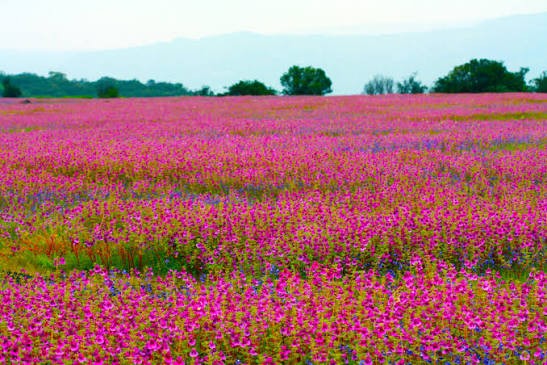
Kaas Plateau’s 2026 bloom season is expected to open around 18 September and close by 19 October 2026, with the peak flower carpet forming between 22 September and 8 October. These dates are set by the Kas Pathar Committee based on monsoon behaviour each year, so the official calendar is confirmed only 2–4 weeks before opening.
The bloom is driven by the retreating southwest monsoon. Flowers open in three overlapping waves that give visitors slightly different landscapes depending on when they go.
Week-by-week bloom calendar for 2026
- 18–24 September (opening week): First-wave blooms — yellow Smithia (Mickey Mouse flower), pink Impatiens and white Cyanotis begin covering the plateau. Crowds are lighter and slots are easier to book. Best for photographers who want less foot traffic on the trails.
- 25 September – 8 October (peak bloom): The full carpet effect. Purple Utricularia (bladderwort), pink Balsam and yellow Sonki wash across large patches. Weekend slots typically sell out 10–14 days in advance during this window. Weekday visits are strongly recommended.
- 9–19 October (closing weeks): Bloom density thins, but late species like the white Karvi (in its seven-year cycle when applicable) and endemic Ceropegia can still be spotted. Fewer buses and better light, but you’ll walk more to see fewer clusters.
Kaas Plateau blooms every year from mid-September to mid-October, with peak flower density occurring between late September and the first week of October. The exact season window is announced by the Kas Pathar Committee 2–4 weeks in advance based on monsoon conditions.
Bloom quality varies with rainfall. A strong August-September monsoon (like 2019 and 2022) produces the densest carpet; a weaker monsoon shortens the window. For 2026 bloom updates, monitor kas.ind.in and Maharashtra Forest Department announcements from late August onwards.
2026 Bloom Update
Early signs of flowering have started appearing across Kaas Plateau, with the official 2026 flower season expected to begin in early September. However, the plateau is likely to reach its most vibrant phase from mid-to-late September, with peak blooms expected towards the end of September and early October. Flowering remains dependent on rainfall and weather conditions.
Kaas Plateau Entry Fee 2026: Full Price List
Entry to Kaas Plateau in 2026 costs ₹100 per adult on Saturdays, Sundays and government holidays, and ₹50 per adult on weekdays. Children below five years enter free. The fee is collected by the Kas Pathar Committee, which uses it for conservation, path maintenance and local employment.
2026 fee breakdown
| Category | 2026 fee | Notes |
|---|---|---|
| Adult | ₹200 | Same rate all seven days — no weekday concession |
| Child under 12 | Free | Raised from under-5 in 2026 |
| School/college student | ₹40 | Principal’s letter mandatory; not available Sat/Sun |
| Car parking | Free | New for 2026 — previously chargeable |
| Two-wheeler parking | Free | New for 2026 |
| Shuttle bus (parking to plateau) | Free | New for 2026 |
| Guided tour | ₹200 per hour | One guide per ten people; arranged on site |
Parking is separate and typically ₹50 for a car, ₹20 for a two-wheeler. Local mini-bus shuttles between the parking area and the main flower zone cost approximately ₹40 return per person and are compulsory on peak weekends when private vehicles are turned back to reduce plateau traffic.
Pro tip: Weekday fees are half the weekend rate, but the bigger saving is time — weekend queues at the ticket gate can add 45–90 minutes even with a confirmed online booking. If you can go on a Tuesday, Wednesday or Thursday in the peak window, do.
How to Book Kaas Plateau Tickets Online (2026 Guide)
Kaas Plateau online booking is mandatory for all Saturday, Sunday and public holiday visits. On weekdays you can walk up and buy a ticket at the entrance, but during peak bloom even weekday slots fill by 10 AM, so booking ahead still makes sense.
Online registration opens on the official Kas Pathar Committee website — www.kas.ind.in — usually in the first week of September 2026.
Step-by-step booking process
- Go to the official portal at kas.ind.in/booking.php. This is the only official booking channel — the Kas Pathar Committee runs it and payment goes through CCAvenue. Ignore third-party sites reselling “Kaas passes.”
- Pick your visit date. The portal only opens a rolling window of roughly three weeks — as of 8 September 2026 the calendar accepts dates from 9 to 30 September only. October dates are released progressively, so check back rather than assuming the season has been cut short.
- Choose a time slot: 7–11 AM, 11 AM–3 PM, or 3–6 PM. Each slot takes 1,000 visitors. For the 3–6 PM slot you must report between 3 and 4 PM or you forfeit entry.
- Enter the number of adults and children separately. Adults are ₹200 each; children under 12 are free and do not add to the total.
- Fill in name, address, email and phone, clear the captcha, and pay online.
- Print the confirmation receipt. A printed copy is compulsory — mobile screenshots are not accepted at the gate.
Booking tips travellers often miss
You cannot book for today. The portal’s earliest selectable date is tomorrow, so a same-day decision to drive up from Pune will not work. Plan at least one day ahead.
Bookings are non-refundable and non-cancellable. The committee states this explicitly, so be certain of your date before paying — Kaas runs rain or shine, and Western Ghats weather in September frequently means both in one afternoon.
Weekday visits no longer save money, but they still save time. Since the ₹200 fee is flat, the only remaining reason to go midweek is crowds — and during peak bloom it is still the better call.
The 7–11 AM slot is the one to want. Morning light is best for photographs, many species open with the sun, and the mist off Kaas Lake usually clears by about 9 AM.
Carry cash for the guide. Guided tours are ₹200 per hour for up to ten people and are arranged on site, not through the portal.
Online booking for Kaas Plateau opens in early September each year on kas.ind.in, is mandatory for weekend and holiday visits, and typically sells out 10–14 days in advance during peak bloom.
Kaas Plateau Timings and Slot System
Kaas Plateau is open daily from 7:00 AM to 6:00 PM through the bloom season. Because the plateau is a fragile UNESCO reserve, visitors are not allowed to enter freely — they’re admitted in three timed slots.
| Slot | Timing | Best for |
| Morning | 7:00 AM – 11:00 AM | Photography, cooler weather, softest light |
| Midday | 11:00 AM – 3:00 PM | Families with kids (bright, easy visibility of flowers) |
| Evening | 3:00 PM – 6:00 PM | Sunset shots, quieter trails, cooler again |
Each slot allows a maximum of 1,000 visitors, and you must enter within your booked window (though you can stay slightly past the end while walking back to the exit). Plan around 1.5 to 2 hours on the plateau — enough for the two main marked trails without rushing. The reserve stays closed from about 20 October until the next season opens.
Best time within your slot: Between 8:00 AM and 10:30 AM if you take the morning slot. Flowers face the sun and colours are at their most saturated, and you avoid the tour-bus rush that arrives around 11:00 AM.
15 Flowers and Species to Spot at Kaas Plateau in 2026
Kaas is home to over 850 flowering plant species, 39 of which are endemic to the plateau. Here are 15 you can realistically identify on a single visit, with the best window to spot each.
1. Topli Karvi (Pleocaulus ritchiei)
Bloom window: Once every 7 years, next mass bloom expected 2026–2027. A dwarf shrub with pale-pink flowers that carpets entire hillsides during its mass flowering. If 2026 is a Karvi year, arriving in the first week of October is your best bet. Pro tip: Locals near Kaas village can confirm current Karvi cycles.
2. Smithia hirsuta (Mickey Mouse Flower)
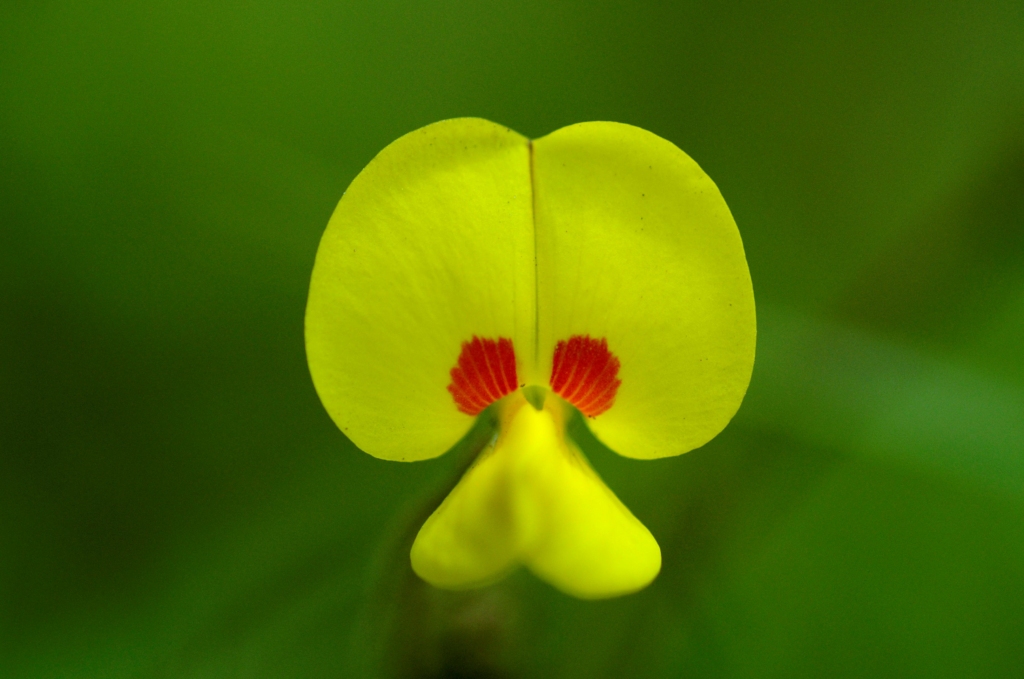
Bloom window: Mid-September to early October. Yellow petals with a red-spotted centre that resembles a cartoon face. One of the most photographed flowers on the plateau because it grows in dense clusters near the marked path.
3. Utricularia purpurascens (Purple Bladderwort)
Bloom window: Late September through mid-October. A carnivorous plant with tiny purple flowers held on delicate stems. Best spotted in waterlogged low patches — look near the second viewing point.
4. Drosera indica (Indian Sundew)
Bloom window: September. A carnivorous plant with sticky red-tipped hairs that trap insects. Small (5–15 cm) and easy to miss — look at the edges of the marked walking path where the soil stays wet.
5. Impatiens balsamina (Balsam)
Bloom window: September to early October. Pink and white balsam clusters that create the “meadow” look in Kaas photographs. Very common near the parking area itself.
6. Ceropegia media
Bloom window: Late September to early October. Rare lantern-shaped flowers in maroon and cream. An endemic species that fascinates botanists — ask the on-site guide to point them out.
7. Sonki (Senecio bombayensis)
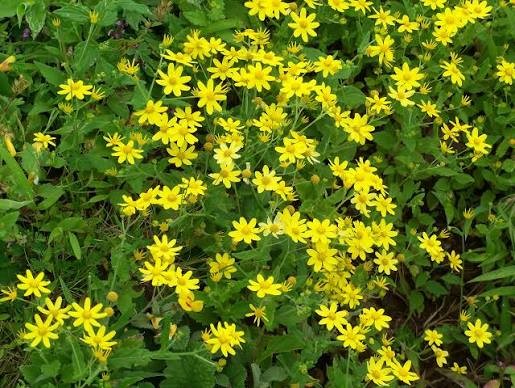
Bloom window: Early to mid-October. Yellow daisy-like flowers that dominate the plateau in the closing weeks of the season.
8. Cyanotis fasciculata (Blue Grass Lily)
Bloom window: September. Small violet-blue flowers that carpet the ground between larger species. Best seen mid-morning when petals fully open.
9. Habenaria heyneana (Terrestrial Orchid)
Bloom window: Late September. A ground orchid with white-and-green flowers. One of many wild orchids Kaas is famous for — over 20 orchid species have been recorded on the plateau.
10. Exacum lawii
Bloom window: September to mid-October. Purple star-shaped flowers with yellow centres. Endemic to the Western Ghats and locally abundant on Kaas.
11. Eriocaulon sedgwickii (Pipewort)
Bloom window: September through October. Tiny white pinhead flowers on thin stalks — creates a “starry” effect across low patches. Endemic to the northern Western Ghats.
12. Rotala ritchiei
Bloom window: Late September. Endemic aquatic plant with tiny pink flowers found in seasonal rock pools. Named after John Ritchie, the botanist who first described several Kaas endemics.
13. Murdannia lanuginosa
Bloom window: Mid to late September. Pale blue three-petalled flowers common along the main trail. Easy to spot but easily missed if you’re not looking down.
14. Adelocaryum coelestinum
Bloom window: September. Bright sky-blue flowers, often photographed alongside yellow Smithia for the classic Kaas colour contrast.
15. Rhamphicarpa longiflora
Bloom window: October. A white parasitic plant with delicate trumpet-shaped flowers. Prefers the drier southern edges of the plateau.
Kaas Plateau hosts over 850 flowering plant species, of which 39 are endemic. Notable species include the seven-yearly Karvi, insectivorous Drosera indica, and endemic Ceropegia media — all protected under UNESCO Natural Heritage status granted in 2012.
Pro tip: Pick up the free species pamphlet at the entry gate — it lists which flowers are peaking that specific week. Local guides (₹300–₹500 for a group of five) know exactly where each rare species has been spotted that morning.
How to Reach Kaas Plateau from Pune, Mumbai and Bangalore
Kaas Plateau sits 25 km west of Satara city in western Maharashtra, on a road that climbs steadily from the plains into the Sahyadri escarpment. The last 12 km after Kaas Lake is narrow and gets congested on peak weekends, so allow buffer time.
From Pune (136 km, 2.5–3.5 hours)
- By road (recommended): Take NH-48 (Pune–Bangalore highway) south to Satara. Exit at Satara and follow signs for Kaas–Bamnoli via the Satara-Yavateshwar-Kaas road. Total drive time is 2.5 hours on a good day; add 45–60 minutes on a bloom weekend.
- By train: Pune to Satara by Deccan Queen or Koyna Express — about 3 hours. From Satara station, hire a taxi (₹1,500–₹2,000 return) or a shared jeep (₹150–₹200 per person one way) to the plateau.
- By bus: MSRTC (Maharashtra State Transport) buses run frequently between Pune Swargate and Satara ST stand. From Satara, local buses to Kaas run every 2 hours during the bloom season.
From Mumbai (278 km, 5–6 hours)
- By road: Mumbai to Pune via the Mumbai-Pune Expressway (about 2.5 hours), then Pune to Satara on NH-48 (another 2.5 hours), then the 25 km climb to Kaas. Most Mumbai visitors either drive through the night to reach Kaas by dawn, or split the trip with an overnight stay in Panchgani or Mahabaleshwar.
- By train: Mumbai CST to Satara by Koyna Express, Sahyadri Express or Mahalaxmi Express — 5 to 6 hours. From Satara, hire a taxi to the plateau.
From Bangalore (700 km, 12+ hours)
- Not practical as a same-day trip. Fly to Pune or take an overnight train (Rani Chennamma or Udyan Express) to Satara, then continue by road.
From Kolhapur (135 km, 3 hours)
An underrated route — Kolhapur to Satara on NH-48 is scenic and often less crowded than the Pune approach.
Nearest airport: Pune International Airport (PNQ), 140 km. Kolhapur Airport (KLH), 135 km, is a valid alternative if flying from Bangalore, Hyderabad or Ahmedabad.
Nearest railway station: Satara Railway Station, 30 km from the plateau.
Route pro tip: From Satara, use the Satara-Yavateshwar-Kaas road, not the Bamnoli-Tapola route (which is longer and rougher). Google Maps sometimes defaults to the longer road during traffic — cross-check with locals.
12 Nearby Attractions to Combine with Kaas Plateau
Most travellers spend just 2–3 hours on the plateau itself, so pairing Kaas with nearby waterfalls, forts and viewpoints turns a single-day drive into a proper weekend. Distances below are from Kaas Plateau parking.
1. Thoseghar Waterfall (25 km · 45 min)
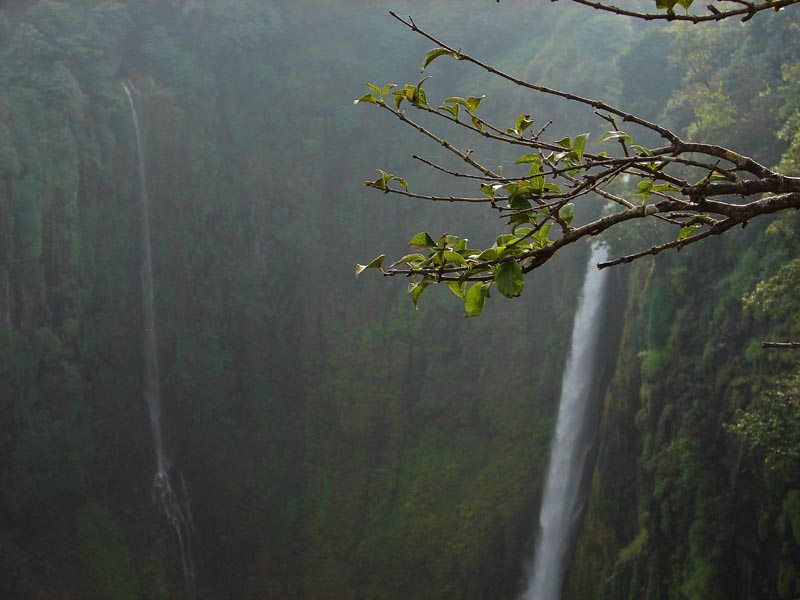
A series of cascades falling from up to 200 metres, thundering at full force during and just after the monsoon. Best visited in the same September–October window as Kaas. Entry: ₹30 per adult. Timings: 8 AM–5:30 PM. Ideal for: photographers and families. Pro tip: The viewing platform gets slippery — wear grippy shoes.
2. Vajrai Waterfall (10 km · 25 min)
Reputed to be Maharashtra’s tallest waterfall at 853 feet, three-tiered and set inside a forest reserve. A 30-minute walk from the parking area gets you to the base viewpoint. Free entry. Best time: August to October. Ideal for: nature walkers and trekkers.
3. Sajjangad Fort (30 km · 1 hour)
A 17th-century Maratha fort with the samadhi of Sant Ramdas, spiritual guide to Chhatrapati Shivaji Maharaj. A moderate 30–45 minute climb rewards you with valley views. Free entry. Timings: 6 AM–7 PM. Ideal for: history buffs and spiritual travellers.
4. Kaas Lake (2 km · 5 min)
A serene reservoir right below the plateau, ringed by hills and often reflecting the Sahyadris after light rain. Free entry. Best visited during the same trip as Kaas — 30 minutes is enough. Ideal for: quiet walks and picnic breaks.
5. Bamnoli & Shivsagar Lake (35 km · 1 hour)
Boating on the vast backwaters of Koyna Dam. Ferry rides to Tapola cost ₹100–₹200 per person. Best time: October to February. Timings: 8 AM–5 PM. Ideal for: couples and small groups.
6. Chalkewadi Windmill Farm (35 km · 1.25 hours)
One of the largest wind farms in Asia — hundreds of turbines dotted across rolling green hills at 3,700 ft. Free entry, best visited in the afternoon for the light. Ideal for: photographers and off-beat drives.
7. Ajinkyatara Fort (25 km · 45 min)
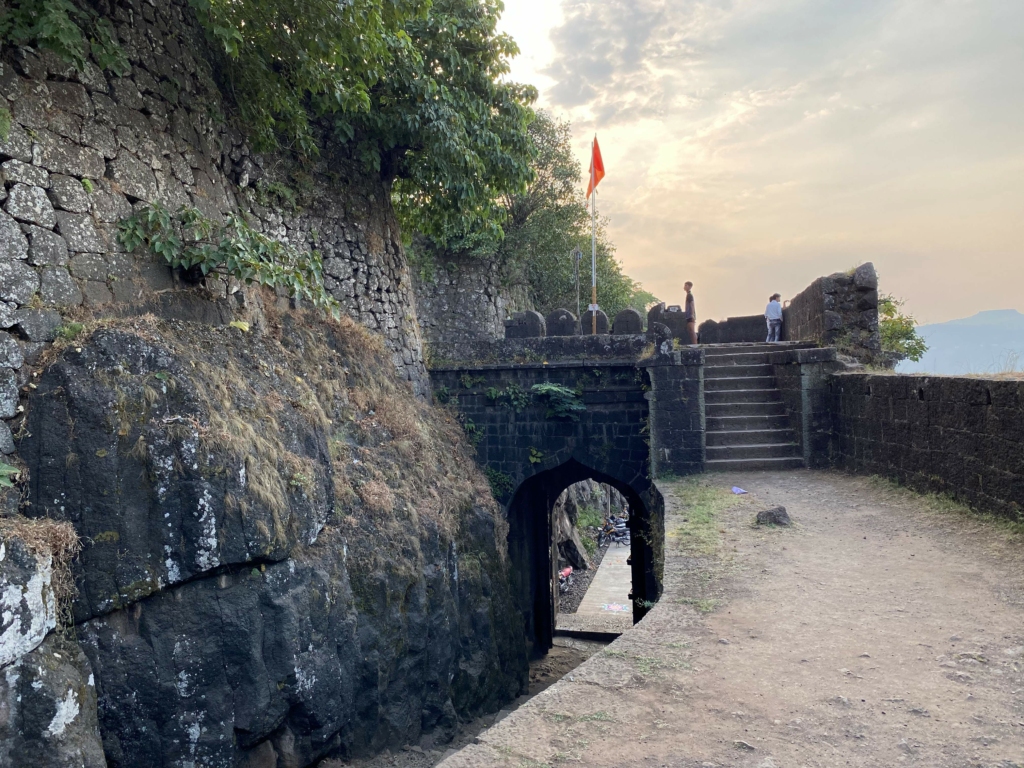
The fort that gives Satara its name (Sat + Tara = seven towers). Panoramic views over the city and the Kaas valley. Free entry, open sunrise to sunset. Ideal for: sunset-chasers.
8. Yavateshwar Temple (20 km · 40 min)
A quiet Shiva temple on the road to Kaas, with a viewpoint overlooking Satara. Free entry, sunrise to sunset. Ideal for: a quick stop en route.
9. Mahabaleshwar (65 km · 2 hours)
The best-known hill station of western Maharashtra, famous for strawberries, viewpoints and the Krishna river source. Perfect base for a 2-day Kaas trip.
10. Panchgani (55 km · 1.5 hours)
Table Land, Parsi Point and Sydney Point make Panchgani the second most-visited hill town near Kaas. Many StayVista guests base themselves here and drive to Kaas early.
11. Pratapgad Fort (85 km · 2.5 hours)
The site of Shivaji’s famous confrontation with Afzal Khan in 1659. Historic significance, expansive views. Free entry, timings 10 AM–6 PM.
12. Koyna Wildlife Sanctuary (50 km · 1.5 hours)
A UNESCO-recognised Western Ghats reserve with dense forest, langurs, and occasional leopard sightings. Entry through Bamnoli. Best for: dedicated wildlife enthusiasts with an overnight plan.
1-Day and 2-Day Kaas Plateau Itineraries
One-Day Kaas Plateau Itinerary (from Pune)
Best if you can only spare a weekend day and don’t mind a long drive.
- 5:00 AM — Leave Pune by car. Coffee stop at a Kolhapur-highway dhaba.
- 7:30 AM — Reach Satara. Quick breakfast (poha or misal) at a local udupi.
- 8:30 AM — Arrive at Kaas Plateau. Enter with the 7 AM slot (if booked) or catch the shuttle from parking.
- 8:30 AM – 11:00 AM — Walk both marked trails on the plateau. Take photos, spot species, buy a species pamphlet.
- 11:15 AM — Drive to Kaas Lake for a 20-minute break.
- 12:15 PM — Head to Vajrai Waterfall (25 minutes).
- 1:30 PM — Late lunch at a Bamnoli or Satara restaurant.
- 3:00 PM — Sajjangad Fort visit (2 hours including climb).
- 5:30 PM — Start the drive back to Pune.
- 9:00 PM — Home.
Two-Day Kaas Plateau Itinerary (from Mumbai or Pune)
The stress-free version, with an overnight stay at a Panchgani or Mahabaleshwar villa.
Day 1
- Morning drive from Mumbai/Pune to Panchgani (3–4 hours). Check in.
- Lunch at your villa or a local restaurant.
- Afternoon at Panchgani Table Land, Parsi Point and Sydney Point.
- Evening: strawberry farm visit or a walk around Venna Lake.
- Overnight at StayVista Panchgani or Mahabaleshwar villa.
Day 2
- 6:00 AM early breakfast.
- 7:00 AM depart for Kaas (55 km, 1.5 hours).
- 8:30 AM enter Kaas Plateau. Full morning slot.
- 11:30 AM Vajrai Waterfall.
- 1:00 PM lunch at Bamnoli.
- 2:00 PM Thoseghar Waterfall.
- 4:30 PM start return drive.
This version is what most StayVista guests choose — it turns a rushed day trip into a proper monsoon weekend without any 3 AM starts.
Rules for Kaas Plateau
The Forest Department and Kas Pathar Committee enforce strict rules to protect the plateau’s fragile ecosystem. Read these before you go.
- Stay on marked paths. Trampling flowers or straying off trails carries a ₹500–₹2,000 fine.
- Don’t pluck flowers or seeds. Every plant here is protected. Enforcement is active on peak weekends.
- No single-use plastics. Carry a reusable water bottle. Plastic bags are checked at the gate.
- No loud music or bluetooth speakers. Noise disturbs pollinators and other visitors.
- Drones are banned without prior written permission from the Forest Department. Camera drones will be confiscated.
- No smoking or open fires. Dry grass on the plateau is a fire risk.
- No pets. Even leashed dogs are not permitted inside the reserve.
- Carry a printed ticket. Mobile PDFs and screenshots are not accepted.
- Follow the shuttle system on peak days. Private cars beyond the parking lot are turned back on Saturdays and Sundays.
- Leave nothing behind. Litter attracts wildlife and damages micro-habitats.
Where to Stay Near Kaas Plateau
There are almost no hotels on Kaas Plateau itself — the closest villages have basic homestays and one government rest house. Most travellers stay in Panchgani (55 km · 1.5 hours) or Mahabaleshwar (65 km · 2 hours) and drive to Kaas at dawn. Both hill towns are 90 minutes from the plateau and offer significantly better food, service and comfort than staying in Satara city.
We recommend booking a StayVista villa in Panchgani or Mahabaleshwar – you get a full-house rental with a caretaker, meals on request, and a base that works whether you’re two people or a family of ten. Our Panchgani properties in particular are popular with Kaas travellers because they cut the plateau drive to 1.5 hours flat and let you leave by 6:30 AM without stressing about hotel breakfast timings.
What our team suggests:
- For couples: A 2-BHK villa in Panchgani with valley views. Cook breakfast at the villa, pack sandwiches for Kaas, be back by afternoon for the pool.
- For families: A 4–5 BHK villa in Mahabaleshwar with a caretaker who’ll pack a hot breakfast for you to take to Kaas. The kids can nap after the walk, and evenings are for Mapro strawberry visits.
- For groups of 8+: A pool villa in Panchgani or Wai. Splitting a large villa across a group is significantly cheaper than four hotel rooms and gives you a proper base for a two-day trip.
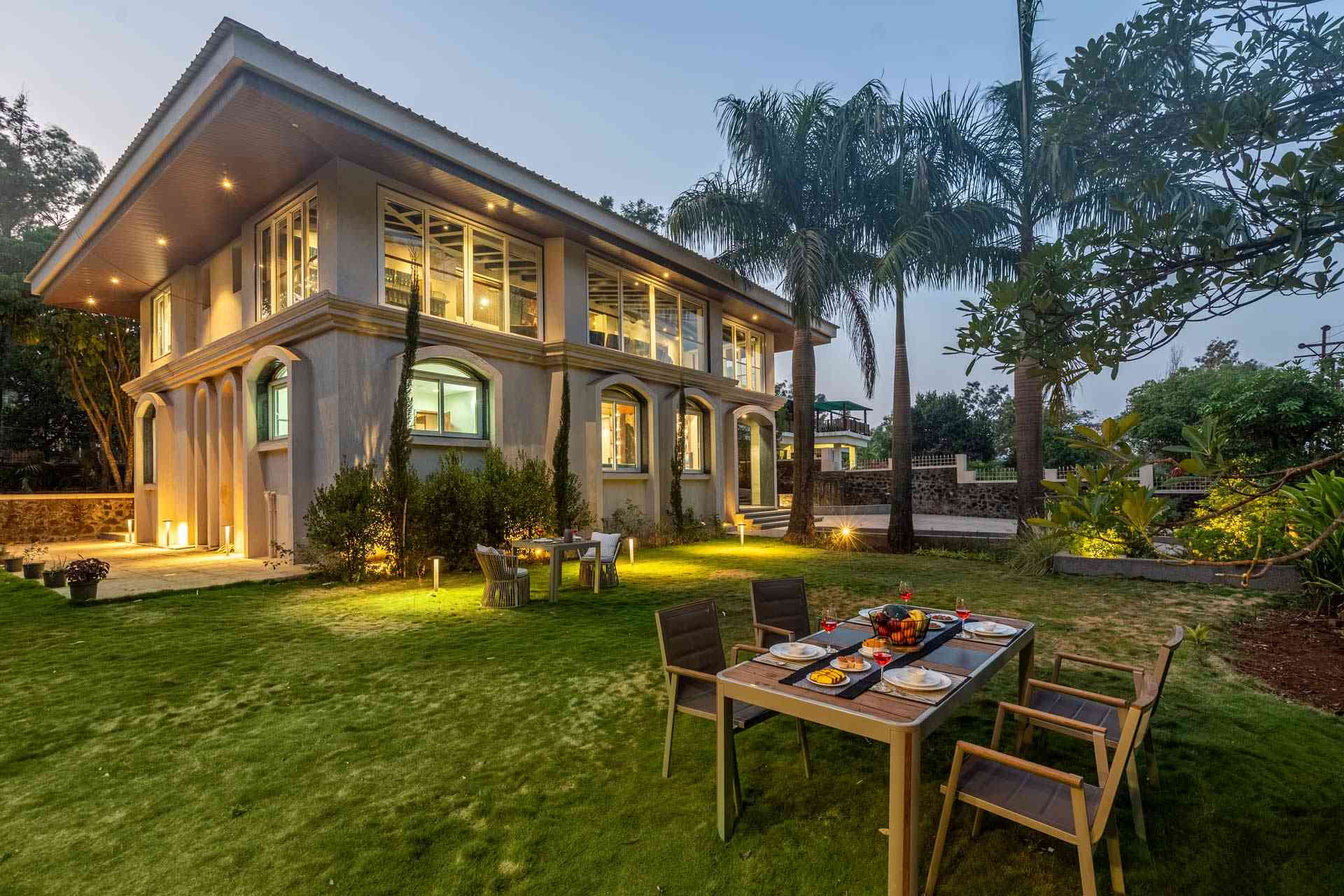
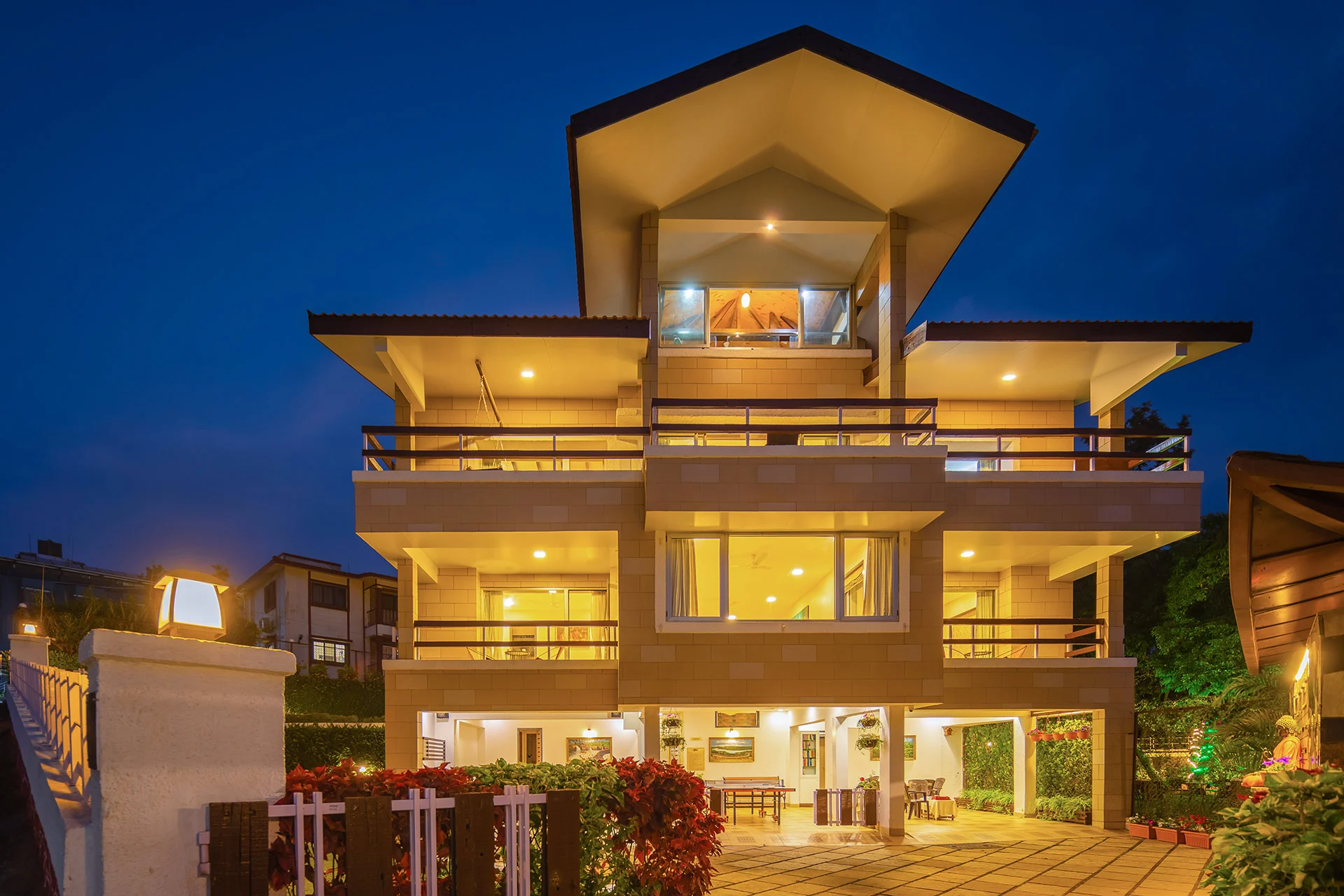
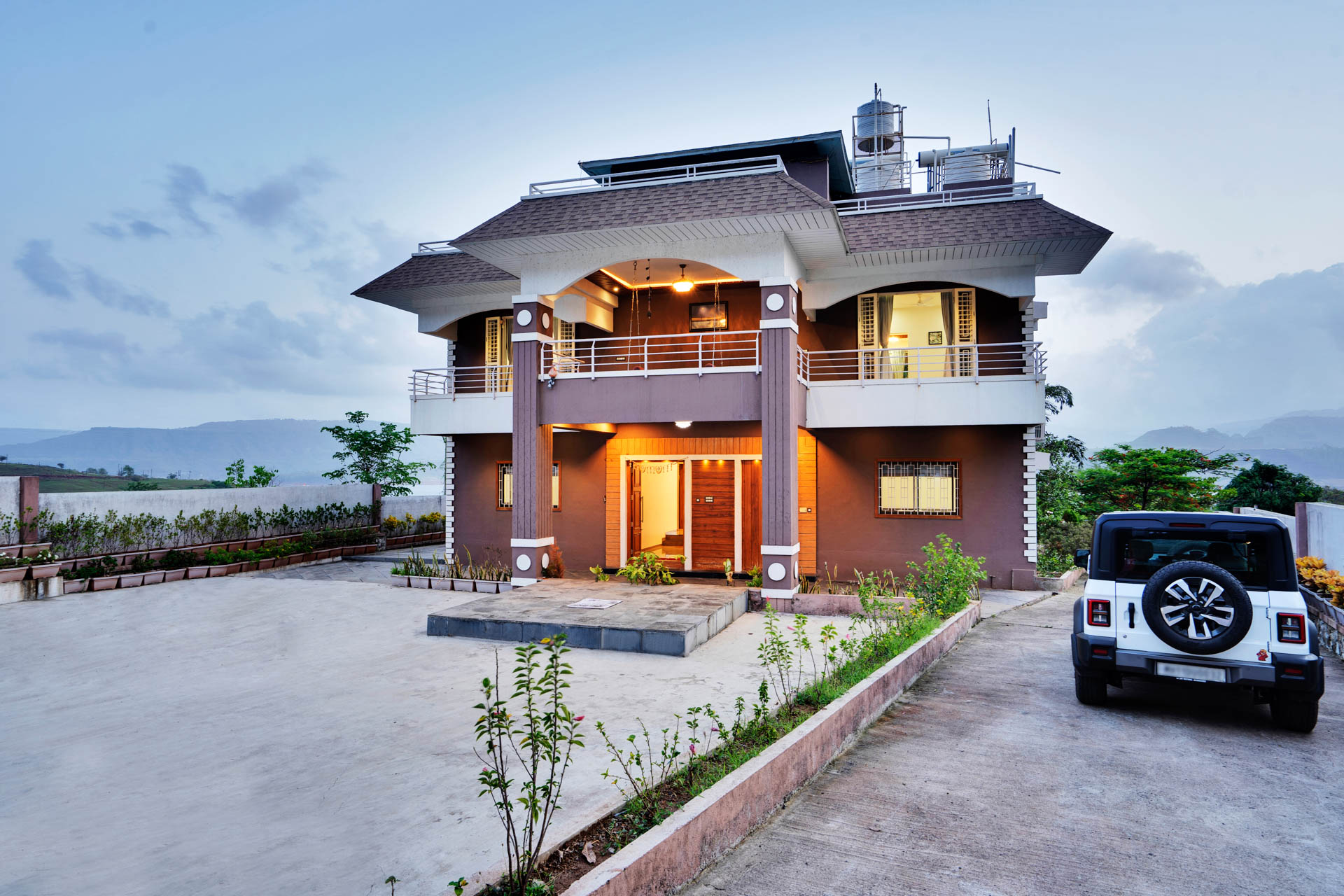
Browse our full range at StayVista Panchgani and StayVista Mahabaleshwar — most homes book out 3–4 weeks ahead in the September–October bloom window.
FAQs
Yes. Kaas Plateau opened for the 2026 season on 1 September 2026, and the Kas Pathar Committee confirmed on 3 September that flowering has begun. Press reports indicate the season will close around 19 October 2026, though the committee confirms the closing date nearer the time based on how the bloom holds.
The last week of September through the first week of October 2026 is peak bloom. Early September is already worth visiting — flowering has started and crowds are thinner. Since the ₹200 entry fee is now the same every day, choose weekdays for space rather than savings.
Entry to Kaas Plateau costs ₹200 per person in 2026, the same rate on all days. Children under 12 enter free, and students pay ₹40 with a letter from their principal on weekdays. Parking and the shuttle bus from the parking area to the plateau are free.
Yes. Book at kas.ind.in/booking.php and carry a printed copy of the confirmation — mobile screenshots are not accepted at the gate. Bookings cannot be cancelled once confirmed, and the portal does not issue same-day tickets, so book at least a day ahead. Tickets are best booked ahead on kas.ind.in.
A maximum of 3,000 visitors per day are allowed inside Kaas Plateau. This is divided into three time slots — 7:00–11:00 AM, 11:00 AM–3:00 PM and 3:00–6:00 PM — with a cap of 1,000 visitors per slot. This limit is set to protect the fragile ecosystem.
Kaas Plateau is 136 km from Pune, a drive of 2.5 to 3.5 hours via NH-48 to Satara and then the Satara–Yavateshwar–Kaas road. Add 45–60 minutes on peak bloom weekends due to traffic on the final stretch.
Technically yes – Kaas is 278 km from Mumbai and takes around 5–6 hours by road. But it makes for a very long day (12–14 hours round trip). Most travellers prefer to stay overnight in Panchgani or Mahabaleshwar and drive to Kaas at dawn on day two.
No. Drones are prohibited at Kaas Plateau without prior written permission from the Maharashtra Forest Department. Drones brought without a permit will be confiscated at the gate.
Kaas Plateau’s 2026 season is a narrow four-to-six-week window with a hard 3,000-visitor daily cap, so it rewards travellers who plan a few weeks ahead. The formula that works: book a weekday slot in the first week of October, drive up from Panchgani or Mahabaleshwar at first light, spend the morning on the plateau, and pair the afternoon with Vajrai Waterfall or Sajjangad Fort. Stay for two days if you can – one day for Kaas, one for the surrounding forts and falls – and base yourself at a villa in the hills so you’re not wasting time on hotel logistics.
If you’re planning a Kaas Plateau trip in 2026, browse our Panchgani villas or Mahabaleshwar homestays for a base that puts the plateau within a 90-minute drive. Book early – the September and October weekends fill up fastest.