

Araku Valley Travel Guide: Coffee Plantations, Tribal Museum & 2-Day Itinerary from Vizag
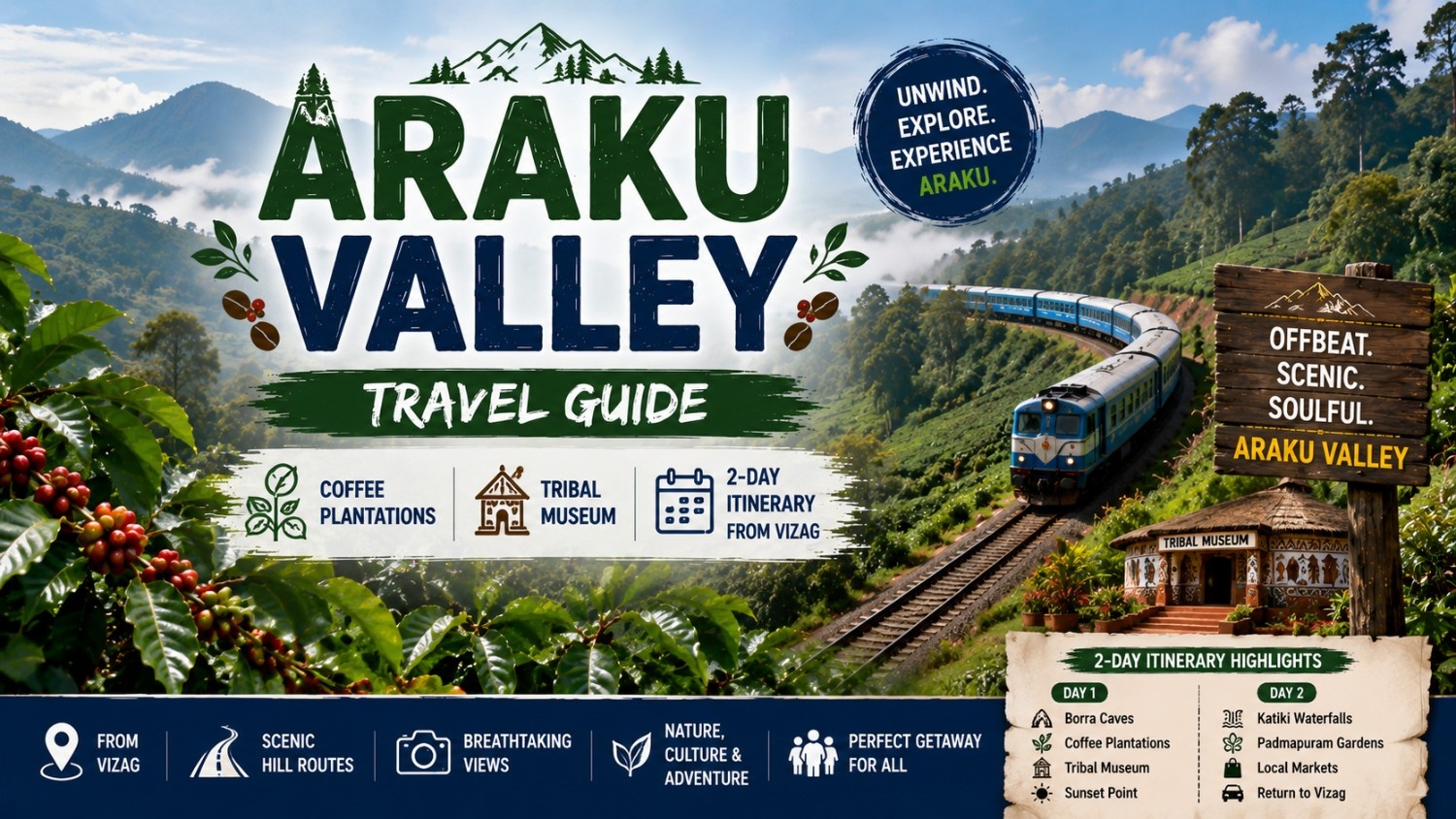
The coastal city of Visakhapatnam is famous for its beaches, but just a short distance inland, the hills of the Eastern Ghats rise up to provide a completely different experience. Moving away from the sea brings a change in climate and scenery, leading to a highland area that remains cool when the plains are warm. An Araku Valley travel guide for 2026 shows that this region is becoming a major focus for sustainable mountain tourism, supported by new national funding for ecological trails. Travelling here provides an excellent opportunity to experience the slow pace of hill life, traditional tribal heritages, and some of the finest agriculture in Southern India. A short break to this valley is highly popular for people who want to combine a coastal holiday with a refreshing mountain drive, making it a staple destination for regional holidaymakers.
A standard 2-day Vizag to Araku trip involves taking the morning Vistadome train past the mountain tunnels to see the Borra Caves and the tribal museum in Araku on the first day. The second day focuses on an Araku coffee estate tour, local viewpoints, and the Padmapuram Gardens before returning to the coast.
In this Blog
Exploring the Famous Araku coffee plantations
The agricultural identity of the valley is deeply tied to its famous shade-grown coffee, which has a distinct history. The local Araku coffee plantations are unique because they are entirely managed by indigenous tribal cooperatives, creating India’s first tribal growers’ organic coffee brand. Unlike standard commercial plantations that feature open, flat rows of plants, the coffee bushes here are integrated directly into the natural forest structure. The plants grow under the canopy of tall jackfruit, mango, and silver oak trees, which protect the delicate berries from direct sunlight and heavy rain.
Taking an organised Araku coffee estate tour allows you to walk along these shaded paths and learn how the beans absorb the complex flavours of the surrounding fruit trees. Visitors can watch the local farmers sort the coffee berries by hand, a traditional practice that ensures high quality and provides vital employment for the Adivasi communities of the region.
Immersive Heritage at the Tribal Museum in Araku
To truly understand the region, a visit to the official tribal museum in Araku is highly essential. Established to preserve the heritage of the Eastern Ghats, this mud-and-thatch-style building houses a rare collection of artefacts belonging to the indigenous Kondh, Savara, and Gadaba tribes. The exhibits do not just display old objects; they show realistic clay models of traditional tribal homes, original metal jewellery, and ancient hunting tools used for survival in the deep woods. A unique feature of the museum is its focus on living traditions, such as the rhythmic Dhimsa dance, which local women perform in colourful attire during the evening hours. Visitors can walk through the open courtyards to see how the tribal communities have used local forest resources sustainably for centuries, making it an educational stop that provides deep context for the entire journey through the valley.
The Perfect 2-Day Itinerary from Vizag
Day 1: Tunnels, Ancient Caves, and Tribal History
The first day of your 2-day Vizag to Araku trip begins early in the morning at the Visakhapatnam railway station. Boarding the 6:30 AM mountain train is highly recommended because the route features three specialised Vistadome glass-roof coaches that provide panoramic views of the hills. The train line is an engineering marvel, passing through more than fifty mountain tunnels and crossing high stone bridges before reaching the hills. Your first major stop after leaving the train is the Borra Caves, located about 36 kilometres from the main town. These karstic limestone caves are over a million years old and go down to a great depth, featuring unusual stalactite and stalagmite shapes that the local people have named after animals and religious symbols.
After exploring the cool interior of the caves, a short drive brings you into the main valley for lunch. The afternoon is spent visiting the central tribal museum in Araku, where you can spend a couple of hours looking at the ancient household tools and hand-woven garments. For your evening meal, you must try the famous local bamboo chicken, a traditional dish where marinated meat is packed tightly inside a hollow bamboo shoot and cooked over an open wood fire without any oil or water, locking in the natural juices.
Day 2: Coffee Trails, Botanical Gardens, and Water Cascades
The second day focuses on the rich natural products and scenic viewpoints of the valley. The morning begins with a guided Araku coffee estate tour, where you can see the coffee processing steps and purchase fresh, organic beans directly from the tribal cooperative shops. Right next to the fields is the specialised Coffee Museum, where you can sample dozens of unique local blends and try coffee-infused chocolates made on-site.
After your morning coffee experience, the itinerary takes you to the Padmapuram Botanical Gardens. This historic garden was constructed during the Second World War to grow fresh vegetables for soldiers, but today it houses rare species of flowers and unique wooden treehouse cottages. Children can enjoy a ride on the miniature toy train that winds through the rose gardens. Before beginning the drive back to the coast, a final stop at the Chaparai water cascade allows you to see the river water sliding over wide, smooth rock beds, a popular spot where local filmmakers often shoot song sequences. The return drive down the Ghat road provides a final look at the deep valleys as the sun goes down.
Finding the Right Accommodation: Booking a Villa in Araku
As tourism grows, the accommodation choices in the valley have expanded beyond simple budget guest houses. For families and large groups who value space and privacy, looking for a modern villa in Araku can provide a comfortable base for your holiday. Many independent properties are located near the pine forests or along the edges of the coffee fields, featuring large windows and open lawns where you can sit and watch the morning mist rise from the mountains. Booking these private spaces early is a smart move, especially for weekends, as they provide a quiet environment far away from the busy main market area.
Essential Things to Do in Araku Valley
When planning your daily schedule, the variety of things to do in Araku ensures that every member of the family finds something interesting. Beyond the standard sightseeing spots, the valley is a fantastic area for slow walking tours along the village footpaths, where you can see how local communities cultivate millets and seasonal vegetables on step-farms. For those who enjoy a physical challenge, joining a guided trek along the newly designated ecological mountain trails towards the Galikonda Viewpoint provides an excellent opportunity to see the highest peaks of the district. You can also visit the local weekly markets, known as Santhas, where tribal artisans bring handmade bamboo baskets, wild honey, and traditional earthenware pots for sale, providing a genuine look at the local barter systems that still exist in the hills.
Conclusion
A journey to the Eastern Ghats reveals a side of India that is rich in history, sustainable agriculture, and natural wonders. By following a structured 2-Day Itinerary from Vizag, visitors can easily experience the best of the mountains without needing a long vacation. The combination of walking through the shaded Araku coffee plantations, studying the ancient tools at the tribal museum in Araku, and viewing the limestone patterns inside the Borra Caves makes this trip highly balanced and satisfying.
The advancements in local infrastructure and the introduction of eco-tourism initiatives mean that the valley is well-prepared to welcome travellers who want to support local communities while enjoying a clean environment. Whether you are taking the scenic Vistadome train ride with friends or relaxing in a private villa in Araku with family, this hill station provides a memorable break that stays with you long after you return to the coastal plains.
Frequently Asked Questions
The best way is to take the morning Vistadome train from Vizag to Araku to enjoy the mountain tunnels and bridges, and then use a car or local jeep for your return journey to see the viewpoints along the Ghat road.
Yes, many of the Araku coffee plantations allow visitors to take guided walking tours through the trees. You can also visit the local cooperative outlets to see how the beans are roasted and packed.
The official tribal museum in Araku is open every day from 9:00 AM to 5:00 PM. It charges a small entry fee, which goes towards the maintenance of the building and supporting local tribal artists.
Yes, a 2-Day Itinerary from Vizag is the standard and most practical way to see the region. It provides enough time to visit the caves, the museum, the gardens, and take a quick coffee farm walk without feeling rushed.
The most famous local speciality is bamboo chicken. The chicken is seasoned with local spices, stuffed into a fresh green bamboo pole, and roasted over wood coals without using any artificial oils.
Yes, there are several private eco-villas and premium homestays available for rent near the plantation edges. These properties provide modern comforts, private campfires, and great views of the mountain ridges.
Adventure lovers can join guided treks along the new double-line mountain trails, go swimming in the pools near the Katiki Waterfalls, or explore the deep, unlit chambers of the ancient Borra Caves with a local guide.
Written By: Ruben Saha