
Banasura Sagar Dam: India’s Largest Earthen Dam — Boating, Timing & Fee
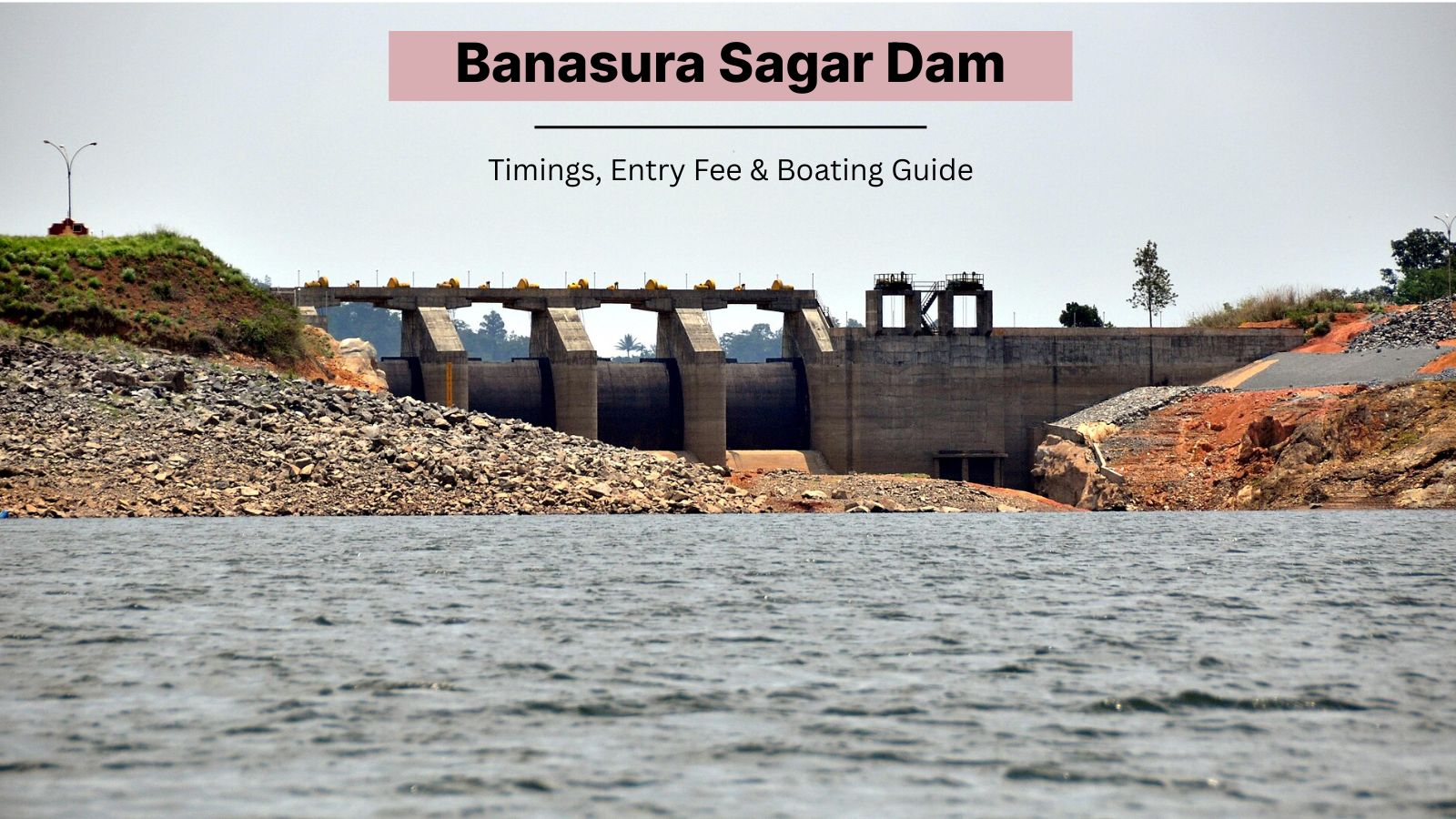
Banasura Sagar Dam is the largest earthen dam in India and the second largest in Asia — a wall of heaped stone and earth holding back a reservoir so wide it has its own islands. It sits at Padinjarethara near Kalpetta in Wayanad, Kerala, and right now, mid-monsoon, it’s at its photogenic best: mist on the water, the Banasura hills stacked in blue-grey layers behind, and speed boats tracing lines between drowned hilltops.
This guide covers everything the ticket counter won’t explain: current timings and fees, what each boat ride costs, the zipline, when the reservoir looks its fullest, and how to build a day (and a stay) around it — including two StayVista villas nearby, one of them just 6.6 km from the dam.
TL;DR: Banasura Sagar Dam is open 6 AM–6 PM daily; entry is ₹10 per person (₹20 still camera, ₹10 parking). Speed-boat rides cost ₹1,000 for up to 5 people and run till 4 PM; the zipline is ₹300. It’s 21 km from Kalpetta and ~90 km from Kozhikode airport. Monsoon and just after (July–October) is peak reservoir season.
In this Blog
Quick Info: Banasura Sagar Dam at a Glance
| Field | Details |
| What it is | India’s largest earthen dam, second largest in Asia — across the Karamanathodu, a tributary of the Kabini |
| Where | Padinjarethara, near Kalpetta, Wayanad district, Kerala |
| Timings | 6:00 AM – 6:00 PM, open daily (boating counters close by 4 PM) |
| Entry fee | ₹10 per person; ₹20 still camera; ₹10 vehicle parking |
| Boating | Speed boat ₹1,000 (up to 5 people); pedal boat ₹300 (4 people); coracle ₹450 (couple) |
| Zipline | ₹300 per person |
| Nearest town | Kalpetta — 21 km (~40 min) |
| Nearest airport | Kozhikode (Calicut) International — ~90 km (~2.5 hrs) |
| Time required | 2–3 hours (half a day with Karlad Lake) |
| Best time | July–October for a full reservoir; October–February for cool, clear weather |
What Are Banasura Sagar Dam’s Timings and Entry Fees?
Banasura Sagar Dam is open every day of the week from 6 AM to 6 PM, and entry costs just ₹10 per person — one of Kerala’s best-value tickets. Add ₹20 if you’re carrying a still camera and ₹10 for vehicle parking. Boating is the one activity that closes early: counters wind down around 4 PM, so plan the ride for the first half of your visit.
| Ticket / Activity | Price |
| Entry (per person) | ₹10 |
| Still camera | ₹20 |
| Vehicle parking | ₹10 |
| Speed boat (up to 5 people, per ride) | ₹1,000 |
| Pedal boat (up to 4 people) | ₹300 |
| Coracle ride (couple) | ₹450 |
| Zipline (per person) | ₹300 |
| Jeep from gate to boating point (per person) | ₹100 |
One practical note first-timers miss: the walk from the entrance to the dam top and boating point is a proper stretch — uphill in parts — which is why shared jeeps ply the route at ₹100 per person. In monsoon humidity, with kids or grandparents along, the jeep is money well spent. Keep small notes handy; counters are cash-friendly and queues move faster that way.
Is it crowded? Weekends and Onam/Christmas weeks, yes — the boating queue can eat an hour. On a weekday morning you’ll often have the dam walk nearly to yourself till the tour buses arrive around 11.
Why Is Banasura Sagar Called India’s Largest Earthen Dam?
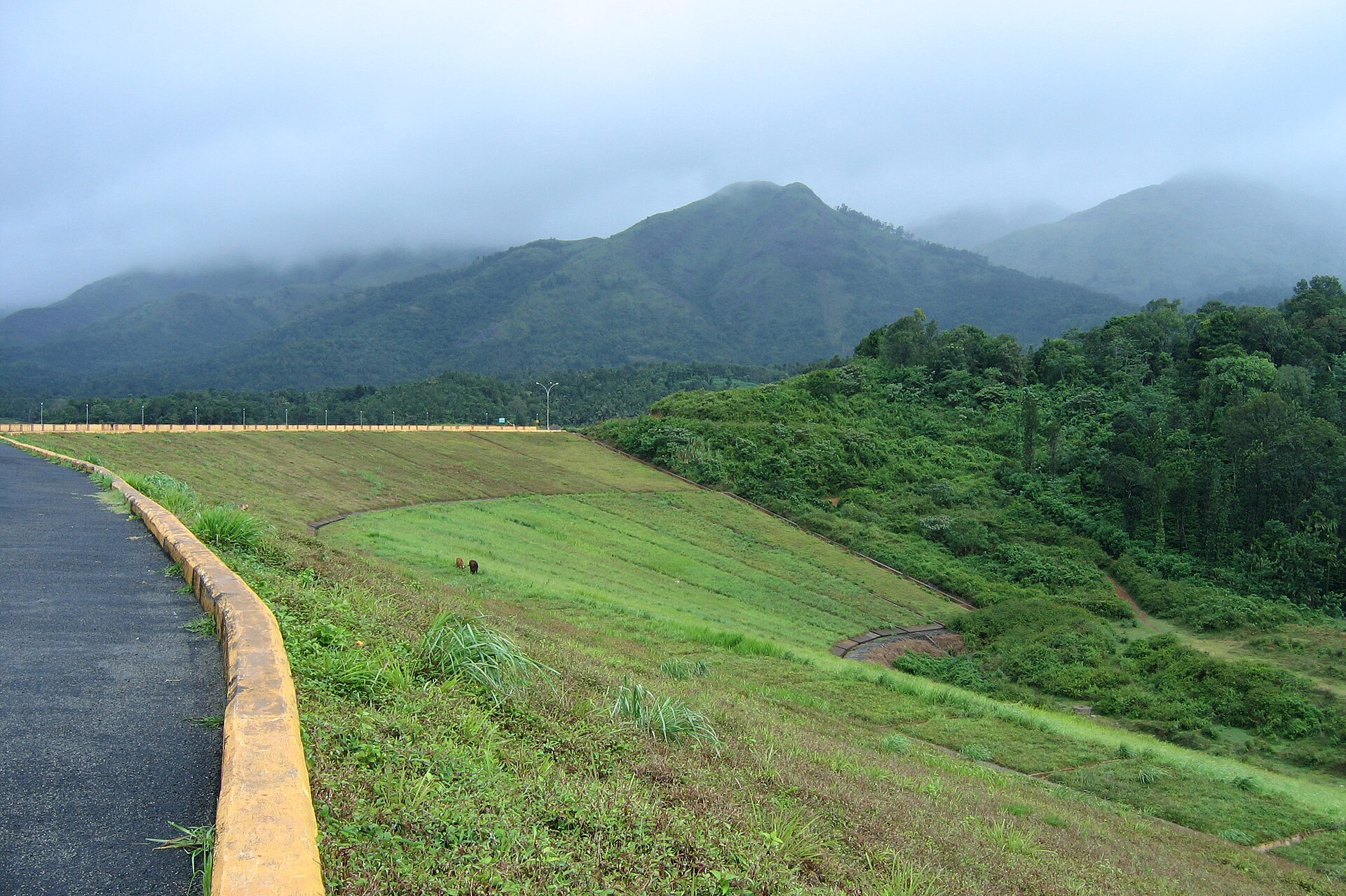
Because of how it’s built, not just how big it is. An earthen dam is made by compacting enormous quantities of stone, gravel and soil into a water-tight embankment — no concrete wall. Banasura Sagar, built across the Karamanathodu stream (a tributary of the Kabini river) as part of a hydroelectric and irrigation project, is the largest dam of this type in India and the second largest earthen dam in Asia.
The engineering has a scenic side-effect. When the dam filled, the rising water wrapped around the higher hillocks in the valley and turned them into islands — the signature view you’ll see from the dam top, and the reason the speed-boat ride here feels closer to an island-hopping run than a lake loop. Behind it all rises Banasura Hill, part of the Western Ghats and named, like the dam, after the mythological king Banasura, son of Mahabali.
Stand on the embankment and the scale sinks in: water on one side stretching toward the hills, the Wayanad plateau falling away on the other, and beneath your feet, a man-made ridge of earth doing the holding. It’s the rare engineering landmark that photographs like a landscape.
What Can You Do at Banasura Sagar Dam?
1. Take the Speed-Boat Ride Between the Islands
The headline act. Speed boats (₹1,000 per ride, up to 5 people — so ₹200 a head with a full boat) loop through the reservoir’s islands, and in full-water months the driver threads channels that simply don’t exist in summer. Prefer slow? Pedal boats (₹300) and coracle rides (₹450 for a couple) keep you closer to the water. Life jackets are provided and mandatory. Rides close by 4 PM — do this first.
2. Walk the Dam Top and Gardens
The embankment walk gives you the reservoir on one side and landscaped gardens with a children’s park below. Early morning is the photographer’s slot: mist sits on the water till about 8:30, and the crowds are still at breakfast. The viewpoint at the far end frames the islands against Banasura Hill — the shot on every Wayanad postcard.
3. Ride the Zipline
A ₹300 zipline runs high across the dam’s landscape — a short, loud burst of adrenaline with the reservoir spread beneath you. Weather-dependent in the rains; it pauses during heavy wind or downpours.
4. Add Karlad Lake (8 km)
Wayanad’s adventure annexe: kayaking, more ziplining and lakeside walks, 8 km from the dam. Pair the two and you have a full outdoor day sorted.
5. Trek Banasura Hill
Serious walkers can take on the Banasura Hill trails — a half-day trek through meadows and shola patches with panoramic views back over the reservoir. Go with a local guide, and skip it during active red-alert rain; trails get slippery and leeches come out in force (carry salt or leech socks in monsoon — they work).
For waterfall chasers, Meenmutty, Soochipara and Kanthanpara falls all sit within Wayanad’s southern circuit and combine well with the dam over two days — our guide to India’s best monsoon waterfall treks covers the trails.
When Is the Best Time to Visit Banasura Sagar Dam?
July to October is reservoir season — the dam at its fullest and greenest. The 2026 monsoon reached Kerala on 24 May, the earliest onset since 2009, so as of July 2026 the reservoir is already running high and the islands are at their most dramatic. Expect showers in bursts; carry a poncho, and treat the mist as a feature, not a bug.
October to February is the comfort window — cool, clear, 15–28°C, every activity reliably open. March to May works for a quieter visit, but the water level drops, the islands grow ankles, and afternoons get warm.
Two monsoon caveats worth knowing. Boating and the zipline pause during heavy wind or downpours — mornings are the safest slot, and it’s worth confirming boating status locally on red-alert days. And the spillway show (water released through the gates after sustained rain) is spectacular but unscheduled; if you’re staying nearby, ask your villa or homestay team — word travels fast when the gates open.
How Do You Reach Banasura Sagar Dam?
Banasura Sagar Dam is 21 km from Kalpetta, Wayanad’s district headquarters — a 40-minute drive via Padinjarethara. From Kozhikode (Calicut) International Airport, it’s roughly 90 km and 2.5 hours, climbing the Thamarassery ghat’s nine hairpins onto the Wayanad plateau.
- From Bangalore: ~290 km via Mysuru and Bathery (6–6.5 hrs). Start early; the Bandipur forest stretch closes to traffic from 9 PM to 6 AM.
- From Kozhikode: ~65 km to Kalpetta by NH-766 up the ghat, then the 21 km local road to Padinjarethara.
- By train: Kozhikode is the nearest major railhead (~85 km); taxis and KSRTC buses run up the ghat all day.
- Locally: autos and taxis from Kalpetta are easy; buses serve Padinjarethara town, 3 km from the dam gate.
Pair it with the rest of the district and you get the classic Wayanad loop: dam and Karlad Lake in the west, Pookode Lake and Lakkidi viewpoint on the ghat side, Edakkal Caves and the waterfalls to the south-east.
Where to Stay Near Banasura Sagar Dam
Here’s the quiet advantage of Wayanad’s western side: you can stay close enough to beat the tour buses to the boating counter. Two StayVista picks, both live and bookable:
Rivera — Lake Views, 6.6 km From the Dam
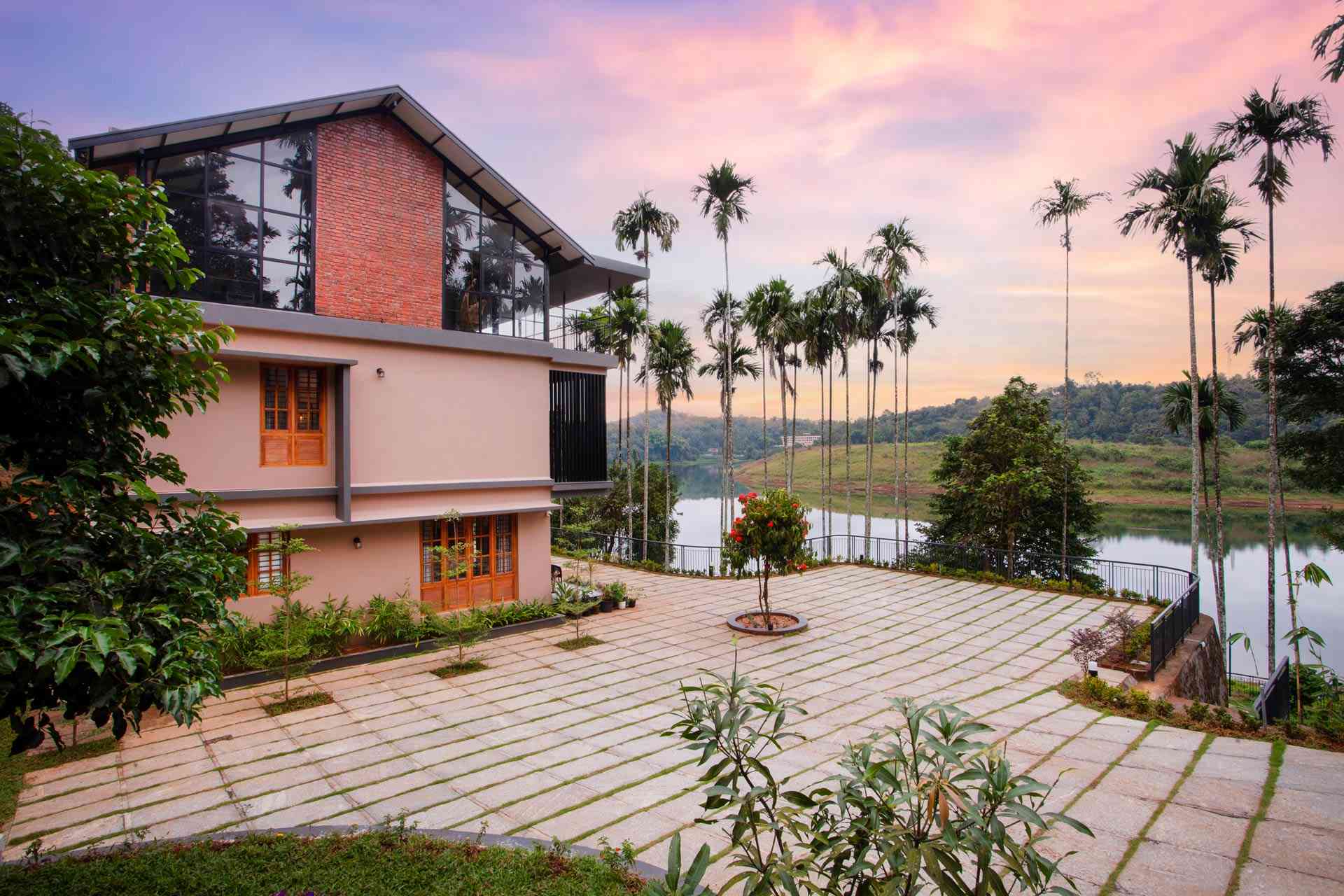
Rivera is the natural base: a 3-bedroom villa for up to 10 guests just 6.6 km from Banasura Sagar Dam, rated 4.5/5 across 73 reviews, with first-floor master bedrooms looking over the water and complimentary breakfast before you head out. Be at the dam gate by 8 AM, do the speed boat before the queues form, and be back on the patio for chai while the day-trippers are still parking. Kurumbalakotta viewpoint (15.4 km) and Lakkidi (23.8 km) slot neatly into the same stay; Kozhikode airport is 93 km door to door.
La Grove — the 19-Acre Estate Stay
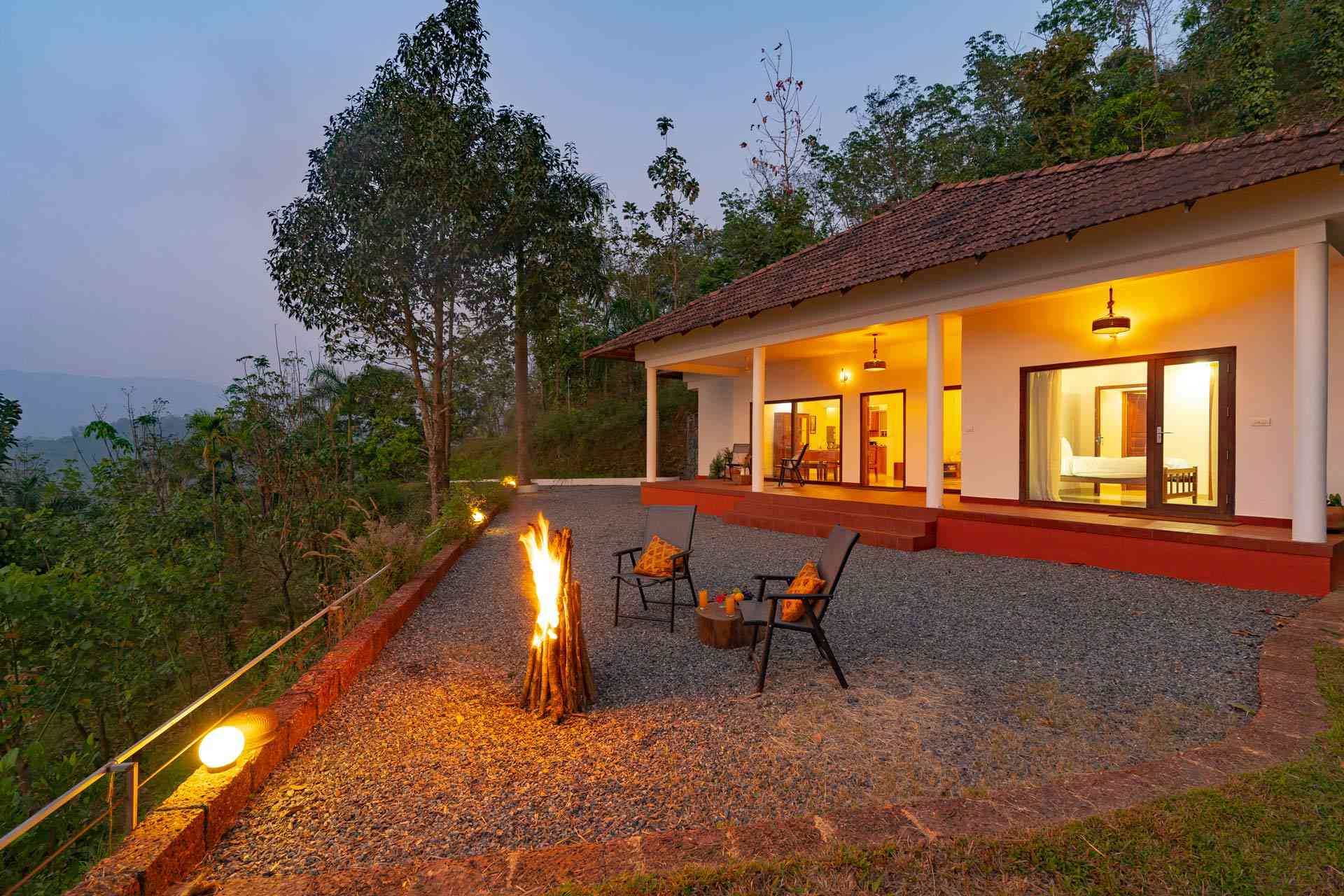
La Grove trades lake proximity for plantation immersion: a hillside home on 19 acres of working farmland growing rubber, pepper, coffee, cocoa, cashew, teak and banana, with a gazebo built for misty evenings. It’s the pick for slow mornings — estate walk, unhurried breakfast, then the dam as the day’s single outing. From ₹17,044/night (July 2026); StayVista’s Wayanad villas overall run ₹9,885–₹48,372 a night at current site prices.
Frequently Asked Questions
The dam is open 6 AM to 6 PM every day. Entry costs ₹10 per person, with ₹20 for a still camera and ₹10 for parking. Boating counters close around 4 PM, so keep the boat ride for the first half of your visit.
Speed-boat rides cost ₹1,000 per ride for up to 5 people (₹200 a head with a full boat) and run until about 4 PM. Pedal boats cost ₹300 for four people, and coracle rides ₹450 for a couple. Life jackets are provided and mandatory on all rides.
Banasura Sagar Dam in Wayanad, Kerala is India’s largest earthen dam and the second largest in Asia. It’s built from compacted stone and earth — not concrete — across the Karamanathodu, a tributary of the Kabini river, and its reservoir is famous for islands formed when the valley flooded.
July to October, when the monsoon fills the reservoir and the islands are at their most dramatic — though boating can pause during heavy rain. October to February offers cool, reliable weather with everything open. Summer visits work but water levels are lower.
The dam is 21 km from Kalpetta (about 40 minutes) at Padinjarethara. From Kozhikode city it’s roughly 85 km, and from Kozhikode International Airport about 90 km — around 2.5 hours up the Thamarassery ghat. Bangalore is ~290 km away via Mysuru.
Yes — a zipline runs across the dam’s landscape for ₹300 per person, with wide views over the reservoir. It’s weather-dependent and pauses during heavy wind or rain, so monsoon visitors should plan it for the morning and have boating as the backup.
No. Swimming is prohibited — the reservoir is deep, the bed drops away sharply near the islands, and water levels change with dam operations. Stick to the boats and life jackets; the coracle ride is the closest you’ll get to the water, and it’s close enough.
The Short Version
Banasura Sagar Dam earns the trip on three counts: the superlative (India’s largest earthen dam), the setting (an island-dotted reservoir under the Banasura hills), and the price (₹10 to get in, ₹200 a head for a full speed boat). Go before 9 AM, boat first, walk the embankment second, and give the afternoon to Karlad Lake or the ghat viewpoints.
Make a weekend of it — base yourself at a StayVista villa in Wayanad (Rivera puts you 6.6 km from the gate), and the dam becomes the easy first morning of a proper Wayanad loop: falls, caves, plantations and all.