
10 Best Places to Visit Near Nagpur in Monsoon 2026 (Safari Status + Weekend Trip Guide)
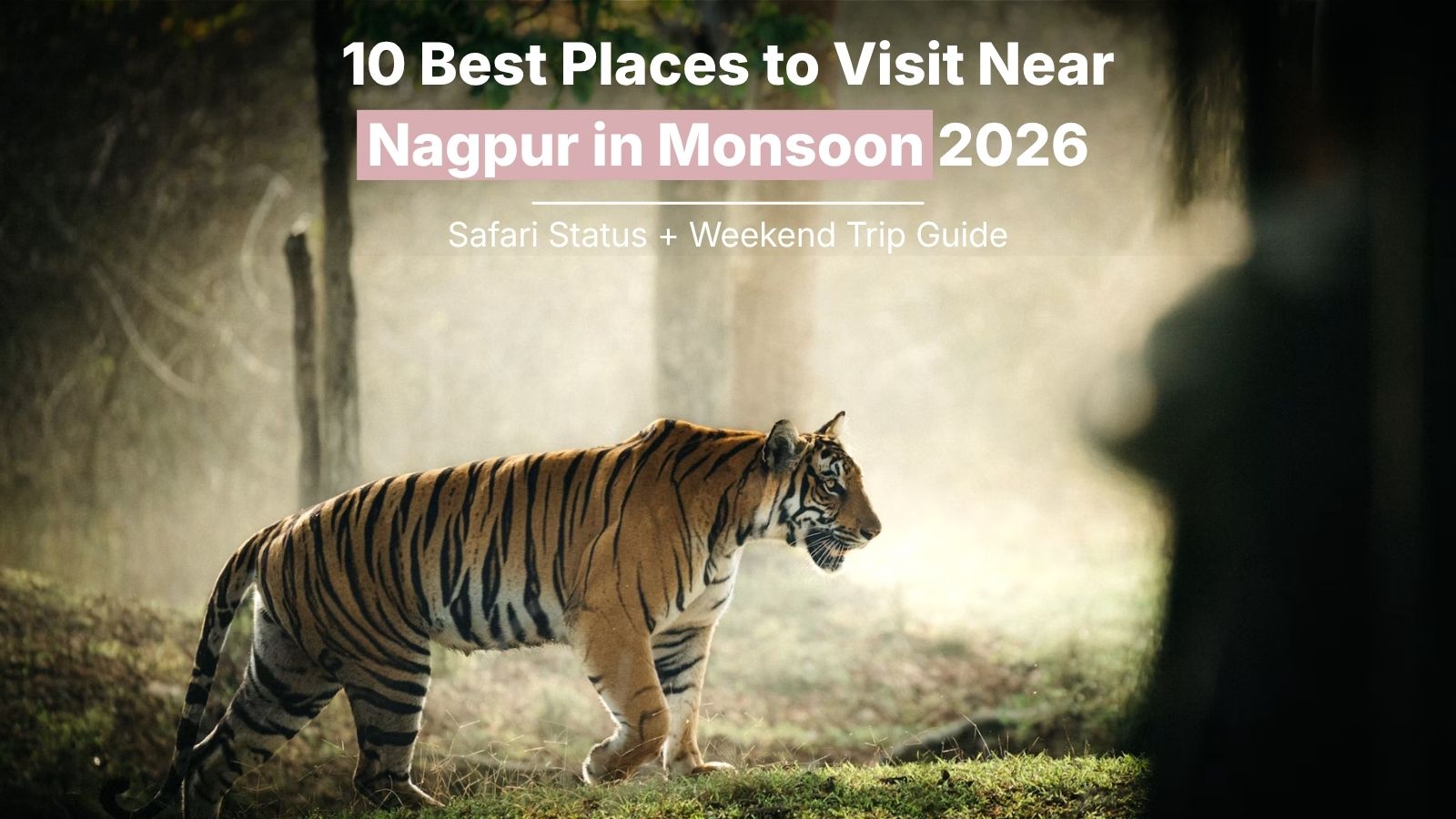
Nagpur ended June 2026 with a 31% rainfall deficit and a delayed monsoon start — but the IMD has forecast normal-to-above-normal rainfall for Vidarbha through July 2026, with a heavy-rain alert already issued for 13–14 July. Which means the region is finally getting the green, misty weekend you were waiting for.
The catch: half the usual Nagpur short-trip list — Tadoba’s core zone, Gorewada’s Jungle Safari — is shut for the season. The other half is at its most beautiful. This guide lists 10 places to visit near Nagpur in monsoon 2026 that are actually open right now, with fees, timings, distances and one honest villa pick per cluster.
Quick Answer: Nagpur monsoon weekend now runs on lakes, waterfalls and Maharashtra’s buffer-zone safaris — not core tiger zones. Tadoba’s core is closed 30 June–15 October 2026, but under Maharashtra’s first-ever monsoon-buffer policy, all buffer safaris at Pench, Bor, Umred and Tadoba stay open 15 June–30 September 2026 (subject to weather). Ramtek’s Khindsi Lake, Bor buffer, Khekranala waterfall and Chikhaldara are the highest-value picks within a 230 km drive.
In this Blog
Nagpur Monsoon Weekend at a Glance
| Question | Answer (July 2026) |
| Best months to visit | July, August, first half of September |
| Vidarbha Jun–Sep long-period rainfall average | ~1,065 mm (Nagpur Today) |
| Tadoba, Pench, Bor core-zone safari | Closed 30 June – 15 October 2026 |
| Buffer-zone safaris (Maharashtra) | Open 15 June – 30 September 2026 |
| Nearest airport | Dr Babasaheb Ambedkar International Airport (NAG), Nagpur |
| Nearest railway station | Nagpur Junction (NGP); Ramtek (RTK) for Khindsi cluster |
| Ideal trip length | 2 days / 1 night from Nagpur |
| Farthest weekend spot in this list | Chikhaldara (~230 km, 5 hr each way) |
Is Safari Open Near Nagpur in July 2026? (Live Status)

Short answer: Core-zone safaris at Tadoba, Pench and Bor are closed for the monsoon between 30 June and 15 October 2026. But for the first time in 2026, the Maharashtra Forest Department has kept all buffer zones of every tiger reserve in the state open 15 June to 30 September for tourism (The Hitavada, 26 May 2026). That single policy change is what makes a Nagpur monsoon weekend interesting again.
Here is the live status of every safari option within 150 km of Nagpur:
| Reserve / Park | Core zone | Buffer zone | Reopens |
| Tadoba-Andhari | Closed 30 Jun – 15 Oct 2026 | Open (Junona, Kolara buffer, weather-permitting) | Core: 15 Oct 2026 |
| Pench (Maharashtra) | Closed 1 Jul – 30 Sep 2026 | Open — Sillari, Paoni, Nagalwadi, Surewani gates | Core: 1 Oct 2026 |
| Pench (Madhya Pradesh) | Closed 1 Jul – 30 Sep 2026 | Open — Khawasa, Rukhad, Teliya | Core: 1 Oct 2026 |
| Bor Tiger Reserve | Closed | Open — Bordharan gate | 1 Oct 2026 |
| Umred-Paoni-Karhandla | Closed | Open in patches (Karhandla, Paoni) | 1 Oct 2026 |
| Gorewada Zoo & Safari | Jungle Safari CLOSED till 30 Sep 2026 | Zoo section open Tue–Sun; African Safari (Phase-II) not yet operational | 1 Oct 2026 |
As of July 2026, all core-zone tiger safaris near Nagpur — Tadoba, Pench, Bor — are closed for the monsoon and reopen between 1 and 15 October 2026. Under a new Maharashtra Forest Department policy, all buffer-zone safaris in the state remain open 15 June–30 September 2026, weather-permitting. Gorewada Zoo’s Jungle Safari is also closed till 30 September 2026, but the zoo section stays open Tuesday–Sunday.
How to book a buffer safari in monsoon: For Maharashtra reserves, use the official MahaEcoTourism portal. For Pench (MP), use MP Forest Online. Always check gate-status the morning of — buffer safaris are cancelled on IMD red-alert days.
The 10 Best Places to Visit Near Nagpur in Monsoon 2026
1. Khindsi Lake, Ramtek — the classic monsoon day-trip

Khindsi is what most Nagpurkars mean when they say “monsoon”. A large freshwater lake in the Ramtek block, ~52 km from the city, fringed by the Ramtek hills. In July, the surrounding forest is at its greenest, the boating lake fills up, and the whole strip smells of wet earth and pakoras. MTDC’s boat club runs pedal boats and rowing boats through the season, and there’s a small resort strip if you want to sit and watch the rain.
The lake handles a busy Sunday crowd but is nearly empty on weekday mornings. Pair it with Ramtek Fort Temple (Spot #2) for a full day out — the two are 5 km apart.
- Entry fee: No entry fee for the lake area; MTDC boating from ~₹100–₹300 per boat depending on type
- Timings: Lake open all day; MTDC boat club typically 09:00–18:00 (avoid the last hour if it’s raining hard)
- Best time in monsoon: 08:00–11:00 — before the mid-day rain window
- How to reach from Nagpur: ~52 km via NH-44 and Kanhan; 1 hr 15 min in dry conditions, allow 1 hr 45 min in rain
- Time required: 3–4 hours (half a day)
- Ideal for: Families, couples, first-time visitors
- Pro tip: Park at the resort strip on the eastern bank — better rain shelters and the best chai shacks are here
2. Ramtek Fort Temple & Kalidas Smarak — hilltop Vidarbha in the rain

The 6th-century Ramtek Fort Temple sits on a hillock above the town, said to be where Lord Rama rested after killing Ravana — “Ram-tek” literally means “Rama’s hill”. In monsoon it’s the single most photogenic spot in the belt: black basalt shrines, low clouds moving across the ramparts, and Khindsi Lake visible in the valley below. The Kalidas Smarak, dedicated to the poet Kalidasa who reportedly wrote Meghaduta here, sits just downhill.
You can drive nearly to the top and walk the last 200 steps. Combine with Khindsi for a full day.
- Entry fee: Free (temple); Kalidas Smarak ~₹10 per person
- Timings: 06:00–20:00 (temple); Smarak 10:00–18:00, closed Mondays
- Best time in monsoon: Early morning before the temple crowds, or after a mid-day rain when clouds descend on the fort
- How to reach from Nagpur: ~48 km via NH-44; 1 hr 15 min drive
- Time required: 2 hours
- Ideal for: Culture-first travellers, photographers
- Pro tip: The Kalidasa Meghaduta connection is genuine travel-history gold — India’s earliest recorded travel poem was inspired by this Ramtek monsoon
3. Gorewada Zoo (Jungle Safari is CLOSED — Zoo section is open)

Correcting the internet’s most common Nagpur-monsoon mistake: Gorewada’s Jungle Safari — the drive-through where you’d see tigers, leopards and bears in a semi-natural enclosure — is closed 1 July to 30 September 2026 for the monsoon. The zoo section, with the walk-through night house and rescue centre, stays open Tuesday–Sunday. The much-marketed African Safari (Phase-II) is not yet operational.
For a monsoon-safe animal outing inside Nagpur city, the zoo section is still worth 2–3 hours — especially with children.
- Entry fee: Zoo ~₹100 adult / ~₹50 child; safari section not available till 1 October 2026
- Timings: 09:00–17:00, closed Mondays
- Best time in monsoon: Weekday mornings (weekends get packed with school groups)
- How to reach from Nagpur: 12–15 km from Nagpur Junction; 30 min drive
- Time required: 2–3 hours
- Ideal for: Families with children, red-flag-rain-day backup plan
- Pro tip: Do not book any “Gorewada safari” package that promises tiger viewing between July and September — the safari drive is literally shut
4. Pench Buffer Safari (Sillari / Khawasa Gates) — the wild monsoon option
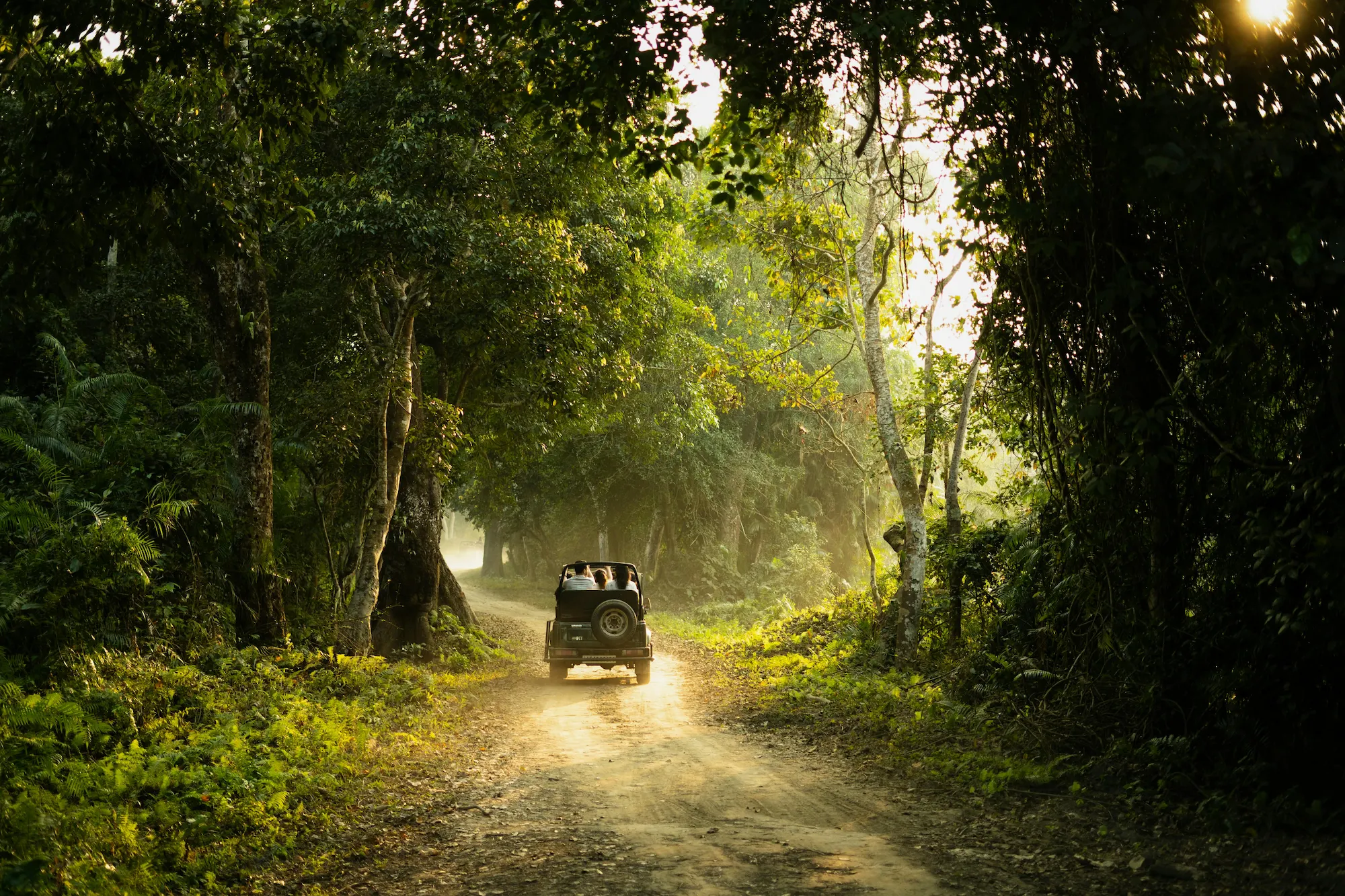
Pench is your best real-safari option this monsoon. The Maharashtra side of Pench runs buffer safaris out of Sillari, Paoni, Nagalwadi and Surewani gates through the season, and the MP side runs buffers from Khawasa, Rukhad and Teliya. In 2022, Pench-Maharashtra recorded 48 unique tigers and Pench-MP recorded 77 tigers in the All India Tiger Estimation — buffer safaris don’t guarantee tigers, but leopards, wild dogs, sloth bears and Indian gaur are common in the rains when the forest is at its densest.
- Entry fee: ~₹1,800–₹2,500 per jeep (up to 6 pax) plus guide fee ~₹350 and permit ~₹1,500 per vehicle; varies by gate
- Timings: Two shifts — morning 06:00–10:00, evening 15:00–18:30 (times shift by season)
- Best time in monsoon: Early morning safari; better wildlife activity, fewer weather cancellations
- How to reach from Nagpur: Khawasa gate ~88 km via NH-44 through Mansar; 2 hr drive; Sillari (MH) ~90 km
- Time required: Full day (1 safari) or overnight (2 safaris)
- Ideal for: Wildlife enthusiasts, photographers, safari-first travellers
- Pro tip: Book through MahaEcoTourism for MH gates or MP Forest Online for MP gates — avoid unofficial resellers who mark up 40–80%
5. Bor Tiger Reserve Buffer — India’s smallest tiger reserve

Bor is the underrated Nagpur weekender. At just 138.12 km², it’s India’s smallest tiger reserve, tucked between Wardha and Nagpur districts and rarely on the crowded-buffer-safari map. The Bordharan gate is ~65 km from Nagpur — closer than Pench — and the terrain here in monsoon looks like something out of a BBC documentary: teak, bamboo, low mist, and a small reservoir at the heart of the reserve.
Tiger sightings are unusual but leopards, wild dogs, sambar and nilgai are common. Consider it a “safari + reservoir picnic” outing.
- Entry fee: ~₹1,500–₹2,000 per jeep; permit ~₹800; guide fee ~₹300
- Timings: Morning safari 06:00–09:30; afternoon 15:00–18:00
- Best time in monsoon: Any morning; check status the day before at the range office
- How to reach from Nagpur: ~65 km to Bordharan gate via NH-361; 1 hr 30 min drive
- Time required: Half-day
- Ideal for: Wildlife travellers who want a Pench-style experience without the drive
- Pro tip: Bor has the lowest jeep queue of any Nagpur buffer — safaris get confirmed even on short notice in monsoon
6. Umred-Paoni-Karhandla Wildlife Sanctuary Buffer — leopard country

Umred-Karhandla is famous for one thing: Jai the tiger was born and photographed here before his disappearance in 2016. The sanctuary spans the Umred, Paoni and Karhandla ranges and is one of central India’s densest leopard territories. Buffer routes stay open through July under the state’s 2026 monsoon-buffer policy, though individual gates cancel more often than Pench when there’s heavy rain because forest roads are more basic.
- Entry fee: ~₹1,200–₹1,800 per jeep; permit and guide extra
- Timings: Morning 06:00–09:30; evening 15:00–18:00
- Best time in monsoon: Early morning on a light-rain day
- How to reach from Nagpur: ~80 km to Karhandla gate via NH-353D; 1 hr 45 min
- Time required: Half-day
- Ideal for: Leopard-focused wildlife travellers, birders
- Pro tip: Call the range office the morning of; Karhandla side gets cancelled first when the Wainganga swells
7. Khekranala Waterfall & Dam — the classic monsoon waterfall
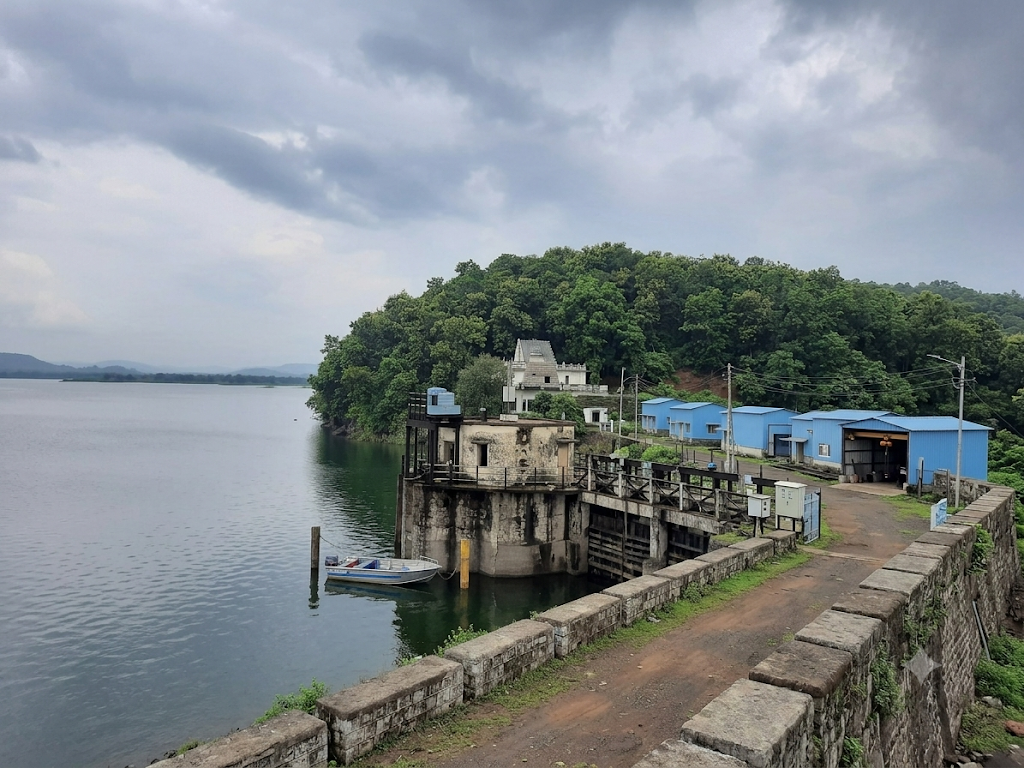
Khekranala is the Nagpur monsoon waterfall. A short drive from Ramtek, past teak forest and small millet fields, it’s a dam with a 12 m spillway that only flows in the rains. The picnic area below the dam is a Nagpur institution — Maggi, corn, chai, a small boating pond — and the waterfall itself thunders through July and August.
- Entry fee: Free (nominal parking fee ~₹20)
- Timings: Approach all day; food stalls typically 09:00–18:00
- Best time in monsoon: After 2–3 days of continuous rain, when the spillway is at full flow
- How to reach from Nagpur: ~60–65 km north via Patansaongi; 1 hr 30 min
- Time required: 3–4 hours (half-day)
- Ideal for: Families, day-trippers, food-first travellers
- Pro tip: Do not attempt to walk down to the spillway base — the rocks are slick and there have been fatalities in past monsoons
8. Salaimenda Waterfall — the offbeat one

If Khekranala feels too popular, Salaimenda is the offbeat alternative. A smaller waterfall in the Ramtek belt, best paired with the Ramtek Fort day. It doesn’t appear on most tourist lists, which is exactly the point — you can spend an hour here with the sound of the fall and nothing else. Reach only after a stretch of rain; on dry days it’s a trickle.
- Entry fee: Free
- Timings: Daylight hours only
- Best time in monsoon: Late July or August, after 3+ days of rain
- How to reach from Nagpur: ~55–60 km via Ramtek; last 3 km is rough kachcha road
- Time required: 2 hours
- Ideal for: Solo travellers, photographers, offbeat seekers
- Pro tip: Take a car with good ground clearance — the last stretch punishes low-slung sedans in the rain
9. Ambazari Lake & Botanical Garden — the rain-safe city backup

When the highways are red-flagged, Ambazari is your Sunday. Nagpur’s second-largest lake, with a well-maintained botanical garden and a walking promenade on the eastern edge. It’s technically inside the city, so a hard rain here just means dashing between shelters — no landslide risk, no road closures, no long drive home.
- Entry fee: Lake area free; garden entry ~₹15
- Timings: 06:00–20:00
- Best time in monsoon: Late afternoon; the light on the water is best around 16:30
- How to reach from Nagpur: 8 km from Nagpur Junction; 25 min drive
- Time required: 2 hours
- Ideal for: Families with children, rainy-day backup plan
- Pro tip: Combine with Futala Lake (5 km away) if the rain lets up in the evening — Futala’s musical fountain plays after sunset
10. Chikhaldara — Vidarbha’s only hill station

Chikhaldara is a serious weekend commitment: ~230 km from Nagpur, 5 hours of driving each way, in the Melghat range of Amravati district. But it’s the only genuine hill station in Vidarbha (altitude ~1,118 m per Maharashtra Tourism), and in monsoon the coffee plantations, viewpoints (Hurricane Point, Prospect Point) and the historic Gawilgarh Fort are exactly what you flew to Coorg for last year, minus the flight.
- Entry fee: Free town; viewpoints free; Gawilgarh Fort free
- Timings: All-day access; museum sections typically 10:00–17:00
- Best time in monsoon: July–early September; avoid mid-week if you can’t check road status
- How to reach from Nagpur: ~230 km via NH-53 to Amravati, then SH; 5 hr drive; check MSRDC for Amravati ghat status
- Time required: 2 days / 1 night minimum
- Ideal for: Long-weekend travellers, couples, cool-weather seekers
- Pro tip: The ghat section beyond Semadoh is landslide-prone — drive it in daylight only, never after dark in monsoon
The Perfect 2-Day Nagpur Monsoon Weekend Itinerary
Day 1 (Saturday): Leave Nagpur by 08:00 → Ramtek Fort Temple + Kalidas Smarak (Spot #2) by 09:30 → Khindsi Lake for boating and lunch (Spot #1) by 12:00 → check in to Asmita Farms, Ramtek by 15:00 → optional Salaimenda Waterfall (Spot #8) if it’s raining well → dinner at the villa.
Day 2 (Sunday): Early Bor buffer safari (Spot #5) from Bordharan gate by 06:00, wrapping by 09:30 → drive back via Khekranala Waterfall (Spot #7) for a Maggi-and-chai stop → Nagpur by 17:00.
Red-flag-rain alternate: If IMD issues a red alert (like the 13–14 July 2026 warning), swap Day 2 for Gorewada Zoo (zoo section) + Ambazari Lake + Futala — all inside the city, all safe.
Longer plan (3 days): Add Chikhaldara as the primary Day 2–3, and keep Khindsi + Ramtek as your Day 1 warm-up.
Where to stay on this route → Skip to Where to Stay Near Nagpur for three verified StayVista villa picks matched to each spot cluster.
Where Should You Stay in Nagpur for a Monsoon Weekend?
We verified every StayVista URL on 14 July 2026 before publishing. Three properties are live, monsoon-suitable and matched to the three main spot clusters in this list.
1. Asmita Farms, Ramtek for the Khindsi + Ramtek cluster
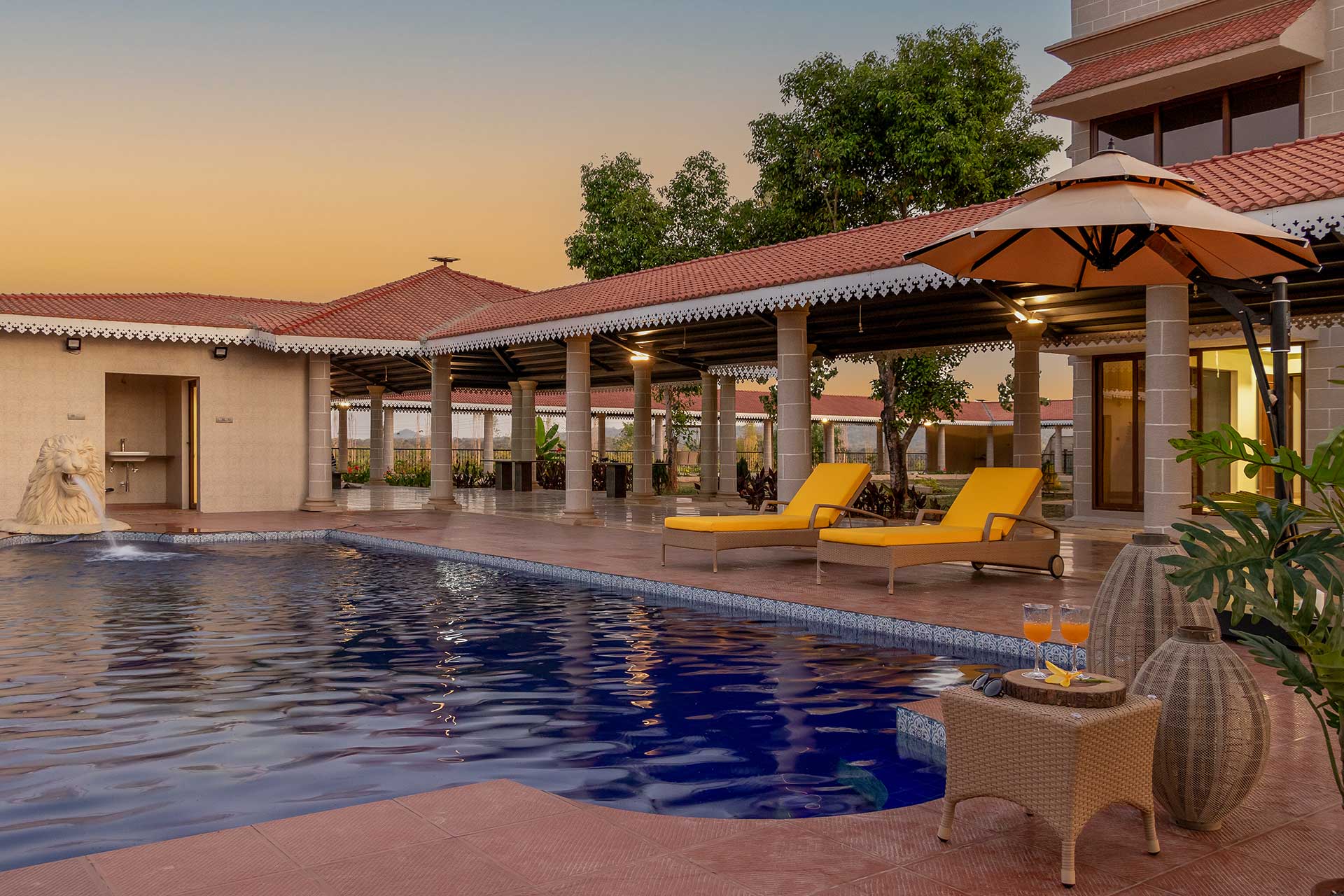
A premium villa on the Ramtek side of Nagpur, roughly 50 km NE of the city, with a private pool and generous lawns. It’s the closest StayVista to Khindsi Lake, Ramtek Fort Temple and Salaimenda — literally 15–20 minutes to each of these spots. Best-fit for family groups doing Day 1 of the itinerary above and who want to wake up looking at Vidarbha teak forest instead of the highway.
2. Green Embrace, Bazargaon for the Bor Reserve day

Villa with a pool and a rain-shower, on the Bazargaon side of Nagpur — about 30 km from the city and the closest StayVista to Bor Tiger Reserve’s Bordharan gate. If your monsoon plan is centred on the Bor buffer safari (Spot #5), this is the most efficient base. It also works as an alternate to the Ramtek cluster if Asmita is booked.
3. Suman Vatika, Khawasa (Pench gate) for the Pench buffer safari

Right at the Pench Khawasa gate on the MP side, 3 bedrooms, private pool and jacuzzi, ~88 km from Nagpur (about 2 hours via NH-44). This is the pick if a Pench buffer safari (Spot #4) is the anchor of your trip — you can walk out of the villa in the morning, be at the gate in ten minutes, and still make it back to Nagpur by lunch the next day.
Speak to a StayVista Nagpur planner if you’re combining more than one cluster — they’ll pair the villa to the itinerary rather than the other way around.
How Safe Is the Drive from Nagpur in Monsoon?

Vidarbha’s Jun–Sep long-period rainfall average is around 1,065 mm, and Nagpur district recently recorded 1,056.1 mm. Most of that arrives in July and August. A few road-status notes that matter more than any average:
- NH-44 (Nagpur–Jabalpur, for Pench): generally reliable; the ghat section past Khawasa can get slick after heavy rain
- NH-53 (Nagpur–Amravati, for Chikhaldara): watch for landslides in the Semadoh ghat; drive in daylight only
- SH-9 (Nagpur–Ramtek): generally fine; short stretches near Kanhan flood in heavy rain
- Bor / Umred forest roads: basic surface; buffer safaris can be cancelled on red-alert days
Always check IMD Nagpur the night before, and MSRDC / Google Maps live traffic the morning of. IMD has already issued a heavy-rain alert for 13–14 July 2026 across Vidarbha (LiveNagpur, 9 Jul 2026); postpone the Chikhaldara or Umred drive if the alert extends.
Basic monsoon travel kit for a Nagpur weekend: waterproof shoes with grip, plastic pouches for phones and cameras, insect repellent (buffer safaris are heavy on mosquitoes in July), a small torch, and dry clothes in a sealed bag. Fill the fuel tank in Nagpur — filling stations get patchy past Ramtek and Khawasa.
Where Are the Best Chai + Maggi Spots on the Route?
The pattern every Nagpur monsoon Reels ends up documenting: chai, Maggi, viewpoint, lake. These are the four dependable stops on the routes above:
- Khindsi Lake resort strip (Ramtek): the widest choice; several rain-shelter shacks
- Khekranala Dam parking: the classic Vidarbha waterfall-side Maggi setup; family-friendly
- NH-44 dhabas near Mansar: the pit stop on the Pench run; open through the night
- Futala Lake, Nagpur: in-city, evening chai + street food, with the musical fountain after sunset
None of these need a booking. Budget ₹150–₹250 per person for a full chai + Maggi + snacks stop.
Frequently Asked Questions
No. Tadoba’s core zone is closed for the monsoon between 30 June and 15 October 2026. However, buffer-zone safaris at Junona and Kolara buffer remain open through the season under Maharashtra’s 2026 buffer-open policy.
The core zone is closed 1 July – 30 September 2026 on both the Maharashtra and Madhya Pradesh sides. Buffer safaris are open through the monsoon — Sillari, Paoni, Nagalwadi and Surewani on the MH side; Khawasa, Rukhad and Teliya on the MP side.
No — the Jungle Safari (drive-through) is closed till 30 September 2026 for the monsoon. The zoo section is open Tuesday to Sunday. The much-marketed African Safari (Phase-II) is not yet operational at the time of writing.
Khekranala Waterfall (~60 km) and Salaimenda Waterfall near Ramtek are the top monsoon picks within 100 km. Both are best after 2–3 days of continuous rain.
The Ramtek + Khindsi Lake day trip is the best one-day monsoon plan from Nagpur — roughly 8–9 hours, covering Ramtek Fort Temple, Kalidas Smarak, Khindsi Lake and, if time permits, Salaimenda Waterfall.
Yes — Chikhaldara is Vidarbha’s only hill station (~1,118 m) and is genuinely at its best in monsoon. Budget a full 2 days because the drive from Nagpur is ~230 km / 5 hours each way via NH-53, and the Semadoh ghat is landslide-prone.
Yes — Khindsi Lake and its boating operations are open through the monsoon. The best hours are 08:00–11:00 before the mid-day rain window; MTDC boating typically runs 09:00–18:00.
Yes. Buffer safaris run on graded forest roads and are only cancelled on IMD red-alert days. Always check gate status the morning of — Umred-Karhandla is the first to shut in heavy rain; Pench and Bor stay operational longer.
The Bottom Line
Three things to take away from this guide:
- Core-zone safaris are shut across Tadoba, Pench, Bor and Umred until October — do not book a “Nagpur safari” package that promises core-zone tigers between now and 15 October 2026
- Buffer safaris are alive — Maharashtra’s 2026 policy has made this the first monsoon in years where you can actually book a legitimate wildlife weekend from Nagpur (Bor and Pench MH buffer are the best picks)
- Lakes and waterfalls are the real weekend win — Khindsi, Khekranala and Chikhaldara deliver more monsoon than any Instagram Reel prepared you for