
3 of Buddhism’s 4 Great Pilgrimage Sites Are Now World Heritage: The 2026 Buddhist Circuit in 7 Days
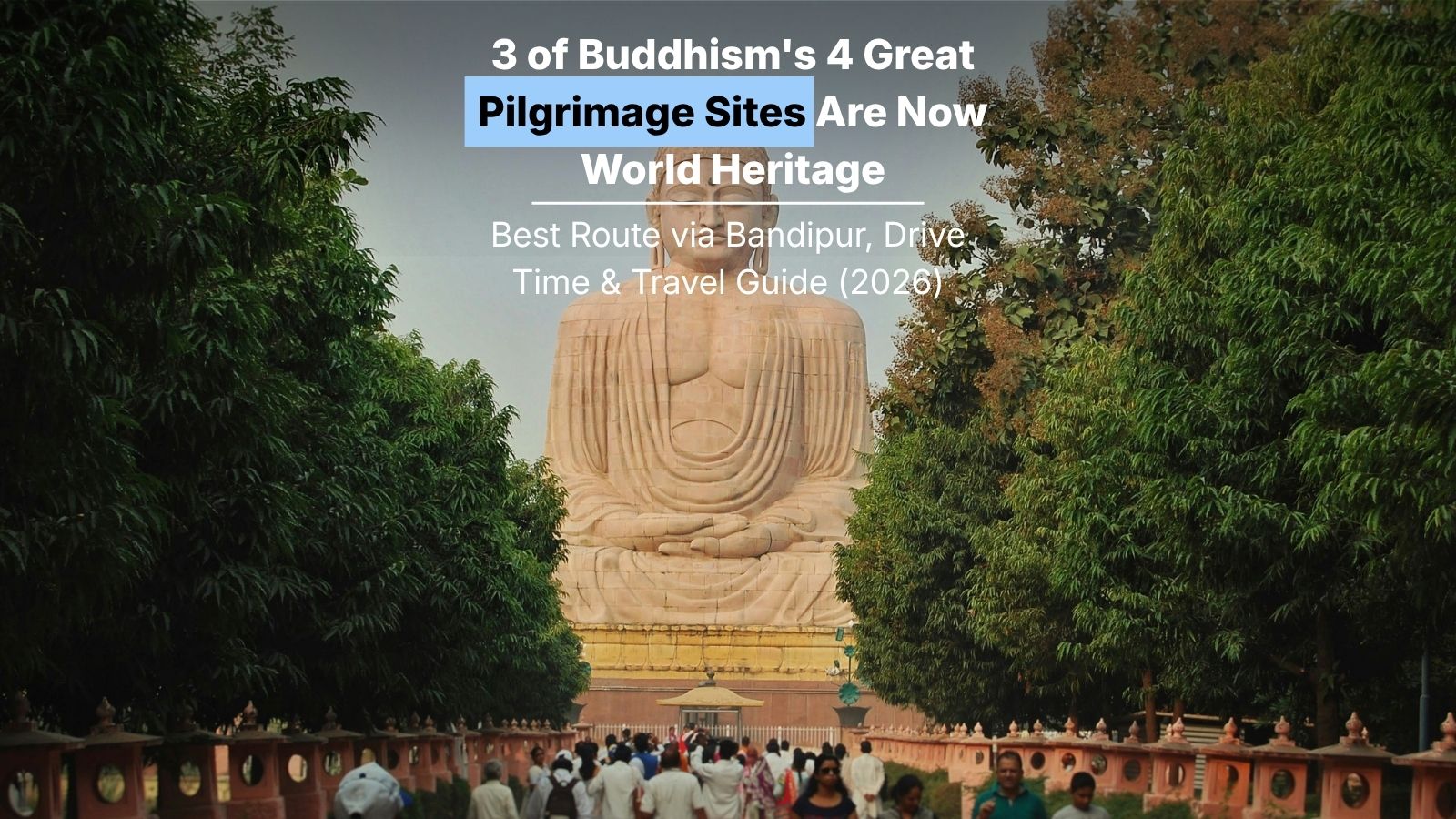
Buddhism’s four great pilgrimage sites — Lumbini, Bodh Gaya, Sarnath, and Kushinagar — mark the Buddha’s birth, enlightenment, first sermon, and death. As of July 2026, three of these four pilgrimage sites now hold UNESCO World Heritage status, after Sarnath’s inscription joined Lumbini and Bodh Gaya on the list. Only Kushinagar remains outside formal recognition. Here’s how to cover all four Buddha holy sites, plus two bonus stops, on a well-paced 7-day Buddhist circuit.
If you’ve been putting off a trip to Uttar Pradesh and Bihar’s spiritual heartland, this is the year to stop putting it off. UNESCO doesn’t hand out World Heritage tags casually — and a fresh listing usually means better roads, better signage, and a short window before the crowds catch up.
In this Blog
What Are Buddhism’s 4 Great Pilgrimage Sites?
The four great Buddhist pilgrimage sites are Lumbini (Nepal, birthplace), Bodh Gaya (Bihar, enlightenment), Sarnath (Uttar Pradesh, first sermon), and Kushinagar (Uttar Pradesh, death/Parinirvana). As of 2026, Lumbini, Bodh Gaya, and Sarnath are UNESCO World Heritage properties.
These four pilgrimage locations trace the Buddha’s life story in order, which is precisely why devout travellers try to visit them in sequence rather than jumping around. Each site corresponds to one of the four defining moments in the Buddha’s biography:
- Lumbini — where Siddhartha Gautama was born, now in modern-day Nepal
- Bodh Gaya — where he attained enlightenment under the Bodhi tree
- Sarnath — where he delivered his first sermon and set the “Wheel of Dharma” in motion
- Kushinagar — where he passed into Parinirvana at around age 80
For nearly three decades, only two of these four pilgrimage destinations carried UNESCO recognition. That changed dramatically this year.
Quick Facts: The Four Great Buddhist Pilgrimage Sites
| Site | Significance | UNESCO Status | Country/State |
| Lumbini | Birthplace of the Buddha | Inscribed 1997 | Nepal |
| Bodh Gaya | Site of Enlightenment (Mahabodhi Temple) | Inscribed 2002 | Bihar, India |
| Sarnath | First Sermon (Deer Park) | Inscribed July 25, 2026 | Uttar Pradesh, India |
| Kushinagar | Site of Parinirvana (death) | Not yet inscribed | Uttar Pradesh, India |
Why Sarnath’s UNESCO Listing Changes the Buddhist Circuit
Sarnath’s inscription came at the 48th Session of the World Heritage Committee, held in Busan, South Korea, on July 25, 2026. With this addition, Sarnath became India’s 45th World Heritage Site, following an inscription process that had been pending since Sarnath first appeared on UNESCO’s tentative list in 1998 — a 28-year wait.
The listing covers two archaeological zones roughly 626 metres apart: the Chaukhandi Stupa and the main archaeological remains, which include the Dhamek Stupa and Dharmarajika Stupa — together known as Deer Park, the site where the Buddha delivered his first sermon after attaining enlightenment.
Three of Buddhism’s four great pilgrimage sites are now UNESCO World Heritage properties — Lumbini, Bodh Gaya, and Sarnath. Kushinagar is the lone holdout, and there’s a reasonable chance it follows the same path in coming sessions, given how India’s heritage diplomacy has been actively repositioning the Buddhist circuit as a global-tier destination rather than a purely domestic one.
Practically, what does UNESCO status mean for a traveller? Expect improved conservation, better visitor infrastructure, and — inevitably — bigger crowds down the line. If you’re drawn to quieter, more contemplative pilgrimage sites, 2026 is a genuinely good window: the recognition is fresh, but the tourist surge hasn’t fully arrived yet.
Beyond the Big Four: The Eight Great Places of Buddhist Pilgrimage
Buddhist tradition actually recognises a wider circle known as Ashtamahasthana, or the eight great places of Buddhist pilgrimage. Beyond the four core sites, this list adds:
- Rajgir — where the Buddha spent several rainy seasons and delivered key teachings
- Vaishali — where he announced his impending Parinirvana
- Sravasti — site of the “Twin Miracle” and the Buddha’s longest residence
- Sankassa — where he is said to have descended from the Tavatimsa heaven
Most travellers doing a Buddha circuit tour for the first time stick to the core four, but if you have extra days, Rajgir and Vaishali sit close enough to Bodh Gaya to fold into an extended itinerary without much detour.
The 2026 Buddhist Circuit in 7 Days: A Day-by-Day Itinerary
This route prioritises the three now-UNESCO-listed pilgrimage sites while keeping travel times realistic. It assumes you’re flying into Varanasi and starting from there — the most practical gateway city for this region.
Day 1–2: Varanasi and Sarnath
Land in Varanasi and spend your first day acclimatising along the ghats — the Ganga Aarti at Dashashwamedh Ghat is worth the crowds. On Day 2, head to Sarnath, about 10 km northeast of the city centre, roughly a 25–40 minute auto-rickshaw ride. Walk the Deer Park complex, see the Dhamek Stupa and excavated remains, and visit the Sarnath Archaeological Museum, home to the original Lion Capital of Ashoka—later adopted as India’s national emblem.
Day 3–4: Kushinagar
From Varanasi, it’s roughly 170 km northeast to Kushinagar — about 3.5 to 4 hours by road. This is where the Buddha chose to lie down between two sal trees and pass into Parinirvana. The Mahaparinirvana Temple houses a striking 6-metre reclining Buddha statue dating to the 5th century CE. Spend a full day here; the site rewards a slow, unhurried visit rather than a quick stop.
Day 5–6: Bodh Gaya
Travel to Bodh Gaya in Bihar — roughly 250 km from Kushinagar via Varanasi, about 5–6 hours by road, or a short flight via Varanasi/Gaya airport if you’re short on time. This is arguably the most important of all the Buddha holy sites: the Mahabodhi Temple complex, a UNESCO World Heritage Site since 2002, rises 55 metres above the spot where Siddhartha Gautama attained enlightenment beneath the Bodhi tree. Early mornings here — monks and pilgrims circumambulating the tree in the mist — are unlike anywhere else on the Buddhist circuit.
Day 7: Optional Extension to Lumbini
If your itinerary allows an eighth day, Lumbini sits just across the Nepal border, roughly 300 km from Bodh Gaya (about 6 hours by road). This is where it all began — the Buddha’s birthplace and, alongside Bodh Gaya, one of the longest-recognised holiest Buddhist sites on UNESCO’s list.
“Sarnath’s temples, stupas, and monasteries bear witness to centuries of faith, devotion, and shared human heritage,” UNESCO noted in its 2026 inscription statement — a line that could just as easily describe the entire circuit.
How the Buddhist Circuit Compares to India’s Other Pilgrimage Routes
India isn’t short on sacred travel routes. The Chardham Yatra locations — Yamunotri, Gangotri, Kedarnath, and Badrinath — draw Hindu pilgrims into the Himalayas each summer, while the Amarnath Yatra site in Jammu & Kashmir pulls devotees to a remote ice-lingam cave shrine. Both are physically demanding, high-altitude journeys concentrated into a narrow seasonal window.
The Buddhist circuit is a different kind of pilgrimage destination altogether — flatter, more accessible year-round, and built around historical sites rather than natural formations. If the Chardham and Amarnath routes test physical endurance, the Buddhist circuit rewards patience and reflection instead. It’s arguably one of the more approachable multi-site pilgrimage locations in India for first-time religious travellers, families, and history enthusiasts alike — no trekking gear required.

Where to Stay: Basing Yourself in Varanasi for the Buddhist Circuit
Since Sarnath sits practically at Varanasi’s doorstep, and the city also functions as the logical hub for onward travel to Kushinagar and Bodh Gaya, it makes sense to anchor your trip here rather than hopping between budget hotels near each site.
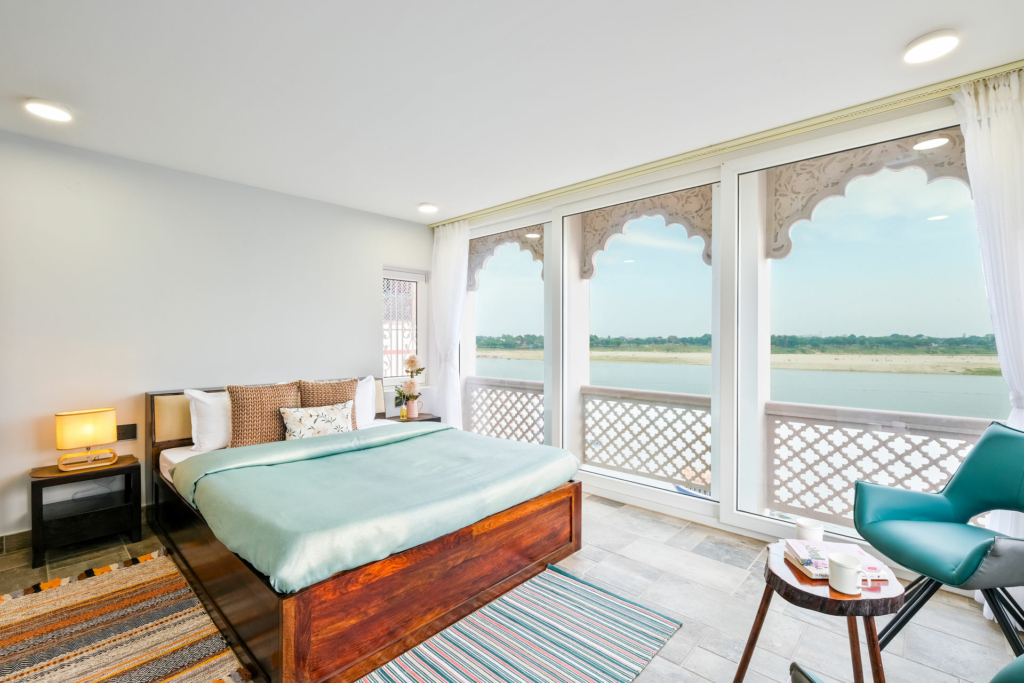
StayVista’s Vintage Varanasi by the Ganges is one option worth considering if you’d rather have a private, riverside base than a standard hotel room. It’s a 4-bedroom villa set along the Ganges near Assi Ghat, in the Shivala neighbourhood — close enough to the ghats to walk down for the evening aarti, but tucked into a quiet lane away from the main tourist crush.
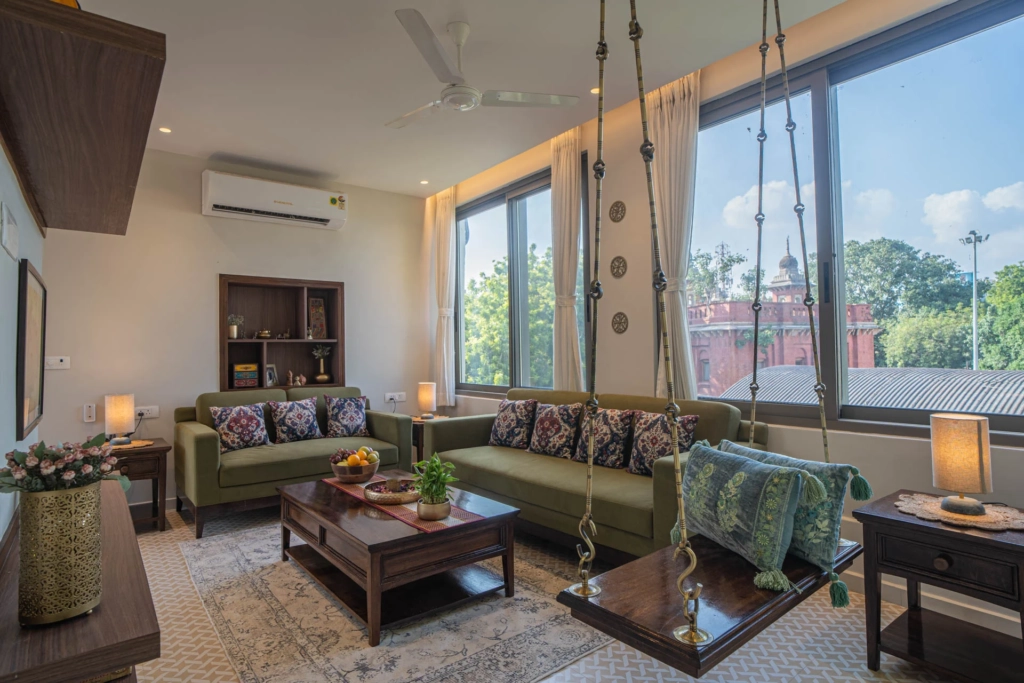
How to spend a day at the villa: Mornings typically start slow — the villa’s location by the river means you can watch the early boat traffic and the mist over the Ganges from close range before the city gets loud. The property has a dedicated meditation room, genuinely useful if you want a quiet space to sit with your thoughts before or after a day at Sarnath, plus a 300-year-old temple on-site for those who want a moment of prayer without leaving the property. Afternoons lend themselves to board games and downtime in the shared spaces; vegetarian, home-cooked meals are available in-house at an additional cost, which is a nice option after a long day of temple-hopping. Evenings often wind down with a rooftop or riverside view as the ghats light up.
- Location: Near Assi Ghat, Shivala, Varanasi — about 4.9 km from the city centre, roughly a 10–15 minute drive from Kashi Vishwanath Temple, and around 40 minutes by auto-rickshaw from Sarnath
- Average price: Rates for the 4-bedroom villa hover in the ₹45,000–₹50,000 per night range, though pricing shifts with season, occupancy, and GST — worth confirming current rates directly before booking
- How to get there: Fly into Lal Bahadur Shastri International Airport (VNS), Varanasi’s main airport, which connects to major Indian cities and select international routes; the villa is a straightforward taxi ride from the airport or Varanasi Junction railway station
- How to book: Reservations can be made directly through stayvista.com, where check-in is 2 PM, and check-out is 11 AM, with early check-in/late check-out subject to availability
If you’d rather stay right on the ghats, StayVista’s The Ganga House is another riverside villa option in Trilochan Ghat — worth comparing if Vintage Varanasi is booked out during your travel dates.
Best Time to Visit the Buddhist Circuit
October through March is the sweet spot for most of these pilgrimage sites — cooler temperatures make the long stretches of walking around stupa complexes far more manageable than the pre-monsoon heat of April through June. If your trip lines up with Buddha Purnima (usually May), expect Bodh Gaya and Sarnath to be considerably more crowded, but also more atmospheric, with monks from across the Buddhist world gathering for ceremonies.
FAQs: People Also Ask
Sarnath was the most recent addition, inscribed on July 25, 2026. It joins Lumbini (1997) and Bodh Gaya (2002), meaning three of the four pilgrimage sites now hold UNESCO status. Kushinagar has not yet been inscribed.
A focused Buddhist circuit tour package covering Sarnath, Kushinagar, and Bodh Gaya comfortably fits into 6–7 days, with an optional extra day or two if you extend into Lumbini across the Nepal border.
Varanasi is the most practical hub — it has an international airport, major rail connectivity, and sits roughly 10 km from Sarnath itself, making it the natural starting point for this pilgrimage destination.
Yes. These are as much historical and archaeological pilgrimage locations as they are active religious sites, and they welcome travellers of all backgrounds interested in history, architecture, and India’s UNESCO heritage.
The four great sites (Lumbini, Bodh Gaya, Sarnath, Kushinagar) mark the core milestones of the Buddha’s life. The eight great places of Buddhist pilgrimage add four more locations — Rajgir, Vaishali, Sravasti, and Sankassa — tied to other significant events in his teaching life.
Explore Buddhist Pilgrimage Sites Like Never Before
Three down, one to go. With Sarnath’s inscription, the Buddhist circuit has never been better positioned on the world stage — and Kushinagar’s turn may not be far behind. Whether you’re planning a purely spiritual pilgrimage or simply chasing UNESCO sites before the crowds do, this is the year to walk in the Buddha’s footsteps while the trail still feels quiet.